


You're standing outside a Halls Head home before its first appraisal. The authority is signed, the campaign date is approaching, and then you notice the balustrade bubbling beneath its paint. The air conditioner carries a faint salt crust, while the front gate and pool fencing show the pale bloom coastal owners know too well.
That moment changes the conversation. Coastal property solutions in Mandurah aren't a collection of cosmetic fixes. They're a sequence of decisions about corrosion, erosion information, budget, presentation, pricing, marketing and contract terms. Get the order wrong, and you can spend money where buyers won't see it, while leaving the defects that inspectors will notice untouched.
Table of Contents
- What Coastal Property Decisions a Mandurah Seller Actually Faces
- Understanding Salt Exposure and Corrosion Classifications
- Preparing a Coastal Home for Sale Without Overcapitalising
- Coastal Erosion Planning and Disclosure in WA
- Marketing Coastal Homes to the Right Mandurah Buyers
- Valuation Adjustments That Reflect Coastal Realities
- Closing Strategies for Coastal Property Sales in WA
What Coastal Property Decisions a Mandurah Seller Actually Faces
The first decision is whether the property needs a coastal condition audit before any styling or photography. In Halls Head, Falcon, Wannanup and coastal parts of Dudley Park, salt exposure can affect metalwork, fixings, air-conditioning components and outdoor entertaining areas long before a home looks obviously neglected.
The second decision concerns planning information. Western Australia's coastal planning framework identifies erosion as a material property issue, with the state-wide assessment recording 55 coastal erosion hotspots and 31 watch-list locations. The 55 hotspots cover less than 1% of WA's coastline but concentrate substantial exposure, including about $13.8 billion in built and natural assets plus recreational values over the next 75 years, as set out in the WA coastal hazards economic assessment.
Put the decisions in the right order
A sensible seller sequence looks like this:
- Audit the property: Identify visible corrosion, movement, leaks, failed coatings and vulnerable fixtures.
- Check hazard information: Confirm whether planning or coastal mapping affects the address.
- Set a preparation budget: Separate defects that protect saleability from upgrades buyers are unlikely to reward.
- Choose the marketing angle: Lead with the home's actual lifestyle strength, such as canal access, orientation, entertaining space or proximity to the coast.
- Set the price: Compare the property with homes in the same suburb and condition, rather than relying on a broad Mandurah median.
- Control the contract process: Prepare disclosures, reports and repair documentation before offers arrive.
These calls are linked. A corrosion repair may influence the appraisal, the appraisal determines whether the work is financially sensible, and the final condition of the home affects both photography and buyer negotiations. A coastal home should be treated as a property with a specific operating environment, not as an inland home with a beach-themed campaign.
The Mandurah coast real estate guide is useful background for owners comparing coastal lifestyle positioning with the practical realities of selling near the water. The strongest preparation protects value first, then improves appearance.
Understanding Salt Exposure and Corrosion Classifications
Coastal corrosion is easiest to manage when the seller stops treating distance from the beach as a simple yes-or-no test. The WA Government advises that sites within 5 km of the coast should be assessed for AS 4312 corrosivity, and sites that appear to fall into C4 or C5 require an AMPP-accredited corrosion technologist to define project-specific protection.
That matters across Mandurah because exposure varies between suburbs and even between streets. A home in Falcon facing stronger marine conditions won't experience exactly the same wear as a more sheltered property in Lakelands. Madora Bay, Halls Head, Wannanup and parts of Dudley Park near the Peel Inlet each need site-specific judgement rather than an assumption based on suburb name alone.
Translate the classifications into seller decisions
AS 4312 and related AS 2312 guidance provide a way to classify atmospheric exposure, moving from relatively mild inland environments through more demanding coastal and industrial settings. For a seller, the classification matters because it informs the specification of coatings, fasteners, cladding, balustrades and replacement hardware.
| Zone | Typical Mandurah localities | Seller implication |
|---|---|---|
| Lower inland exposure | Lakelands, Meadow Springs | Standard materials may perform adequately, but inspect exposed fixtures before listing |
| Coastal influence | Madora Bay, Halls Head, Falcon | Review outdoor metalwork, coatings, hinges and air-conditioning components |
| Higher marine exposure | Exposed coastal streets and salt-spray locations | Obtain project-specific advice before replacing major items or making claims about durability |
| Estuarine exposure | Parts of Dudley Park and Wannanup near waterways | Check whether sheltered conditions are offset by persistent moisture and airborne salt |
The WA guidance also states that if a site is C3 and the building is two storeys or more, materials must meet C4 or C5 requirements, while materials needing maintenance more often than every five years should be avoided. These requirements are explained in the WA coastal corrosion guidance.
Before listing, ask your agent to confirm three things:
- Balustrade coating system: Is bubbling paint hiding corrosion or loose fixings?
- Outdoor fasteners: Are screws and brackets suitable for the exposure, particularly on decks, gates and shade structures?
- Air-conditioner position: Is the condenser exposed to direct salt-laden air, and has it been serviced?
- Maintenance evidence: Can invoices show that repairs were completed rather than just painted over?
A buyer doesn't need a technical lecture. They need confidence that the seller understands the environment and has specified sensible materials. The coastal property maintenance guide can help owners frame that work as part of an ongoing property plan, rather than a rushed pre-sale reaction.
Preparing a Coastal Home for Sale Without Overcapitalising
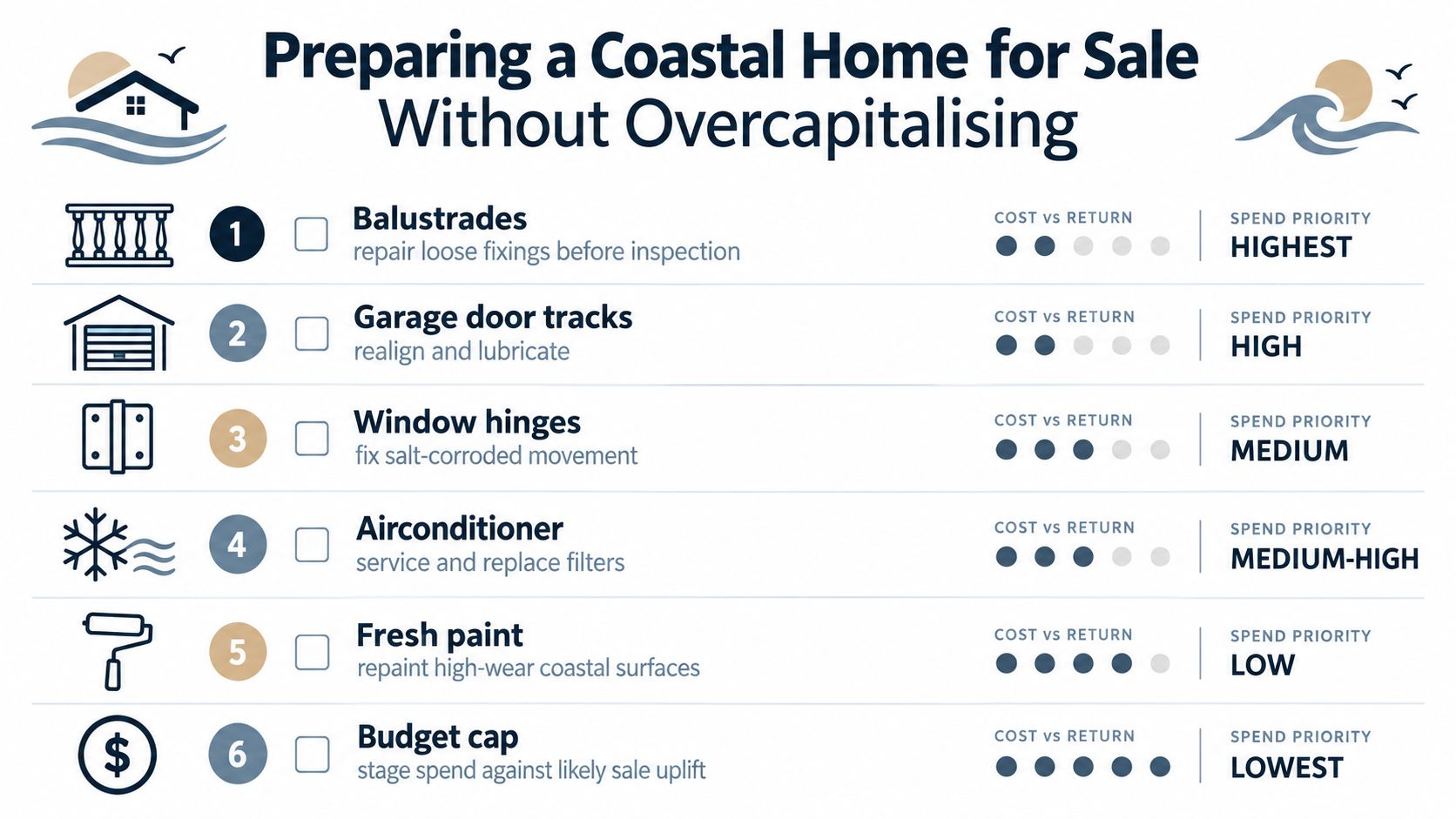
The most expensive preparation mistake is treating every visible imperfection as equally important. Coastal sellers should spend first on defects that raise safety, inspection or durability concerns, then on presentation items that help buyers imagine living in the home.
Start with the items that can turn into negotiation power:
- Balustrades: Repair loose fixings, bubbling coatings and corroded joins before inspections.
- Garage door tracks: Realign, lubricate and replace visibly damaged hardware.
- Window hinges: Restore movement where salt corrosion makes windows stiff or unreliable.
- Air-conditioning units: Service the system, clean the casing and replace filters.
- Hot-water units: Check external corrosion, pipework and the condition of protective covers.
- Outdoor fans: Confirm that blades, mounts and electrical housings operate cleanly.
Assess, treat, replace, style
Assess comes before a quote. Photograph defects, identify whether corrosion is surface-level or structural, and ask a qualified trade to separate cleaning from replacement. A front gate with white bloom may need preparation and recoating, while a pool fence with pitted posts may need a more serious response.
Treat the fixable areas. Salt deposits on decks, outdoor furniture and metalwork should be rinsed and removed using methods appropriate to the material. Don't use an aggressive cleaning product that strips a protective coating just to make the fixture look bright for a weekend.
Replace only where the buyer or inspector will see a meaningful difference. 316 stainless steel or hot-dip galvanised components can make sense for exposed marine applications, but specifying premium hardware throughout a home won't automatically create a premium sale price.
Style the outdoor areas last. Clean salt-fogged glazing, refresh tired entertaining spaces, remove irrigation stains from driveways and make the connection between indoor living and the Mandurah lifestyle obvious. Buyers in Halls Head and Falcon often respond to practical outdoor usability, not decorative clutter.
Practical rule: If a repair won't improve safety, inspection confidence, function or visible presentation at the home's price point, question it before spending.
The house preparation advice for sellers is a useful companion, particularly where a coastal maintenance issue overlaps with ordinary presentation work. The objective isn't to make an older coastal home look new. It's to ensure buyers don't mistake manageable maintenance for neglected ownership.
Coastal Erosion Planning and Disclosure in WA
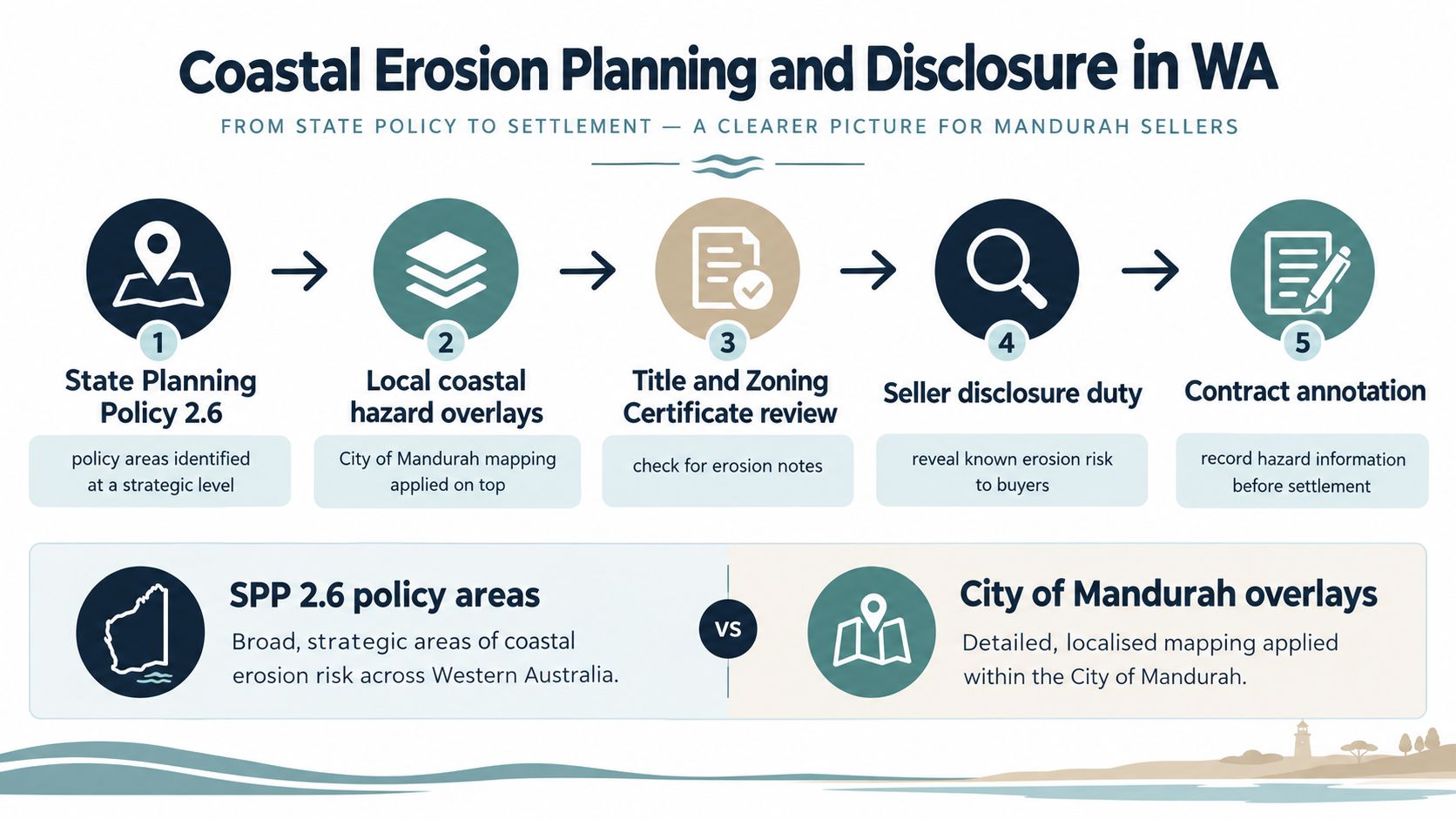
Erosion risk belongs in the seller's planning file, not in the final conversation after a buyer has already ordered an inspection. WA's coastal framework identifies locations where erosion may significantly affect public or private property and infrastructure within 25 years, and the state assessment recorded 15 metropolitan and 40 regional hotspots.
Mandurah sellers need to distinguish between strategic policy and property-specific mapping. State Planning Policy 2.6 provides a broad coastal planning framework, while local hazard overlays and planning information may show how risk applies to a particular address. A property on an exposed part of Halls Head, an estuarine edge in Falcon or channel frontage around Dawesville may require a different review from a home in Meadow Springs or Lakelands.
A practical disclosure sequence
- Check the latest mapping: Ask for current state and local coastal hazard information relevant to the address.
- Review planning records: Look for overlays, notations, conditions and restrictions that may affect future works.
- Obtain technical advice: If the property sits in an identified risk area, ask whether a coastal engineer or geotechnical assessment is appropriate.
- Prepare written disclosure: Provide known information in the vendor documentation before offers are negotiated.
- Keep supporting records: File reports, correspondence and completed mitigation work so the buyer can assess the issue clearly.
CoastWA supports adaptation through programs including Coastal Adaptation and Protection, Coastal Management Plan Assistance and Coastwest. The state notes that $33.5 million was invested over the first five years to accelerate adaptation and generate economic, social and environmental benefits, as described in the WA shoreline stabilisation and coastal hazards information.
The legal and commercial risk of silence is significant. WA guidance states that state and local governments have no legal obligation to protect private assets in coastal hazard areas or compensate owners for losses. Buyers' inspectors and finance valuers can access the same planning information, so a documented and explained risk is usually easier to manage than a surprise discovered after an offer.
Marketing Coastal Homes to the Right Mandurah Buyers
A coastal campaign works when it identifies the buyer's reason for purchasing, then proves the home delivers it. Broad phrases such as “beachside lifestyle” aren't enough in a market that includes downsizers, sea-changers, families and investors with different priorities.
A Halls Head home with a north-facing balcony should lead with its aspect and outdoor use. A Wannanup property with protected canal frontage should explain the relationship with the water without making unverified claims. In Falcon, the campaign may need to balance beach access with the home's practical maintenance profile. Madora Bay and Lakelands can appeal to buyers who want a newer suburban setting while remaining connected to Mandurah's coastal lifestyle, whereas Dudley Park may attract buyers comparing estuary access, convenience and property type.
Build the campaign around verified advantages
Use confirmed distances to boat ramps, dog-friendly beaches, the Estuary Bridge and local amenities. Don't guess walking times or describe a view as permanent unless the planning context supports that statement. Investors need clear information about layout, tenancy appeal and ongoing upkeep, while downsizers may care more about access, storage, stairs and outdoor maintenance.
The photography should show how the home lives. Include the connection between kitchen, alfresco and water or garden areas, but don't hide salt-affected fixtures with carefully cropped images. A short maintenance transparency statement can strengthen credibility by explaining recent servicing, repainting or replacement work.
Match the platform to the buyer
- realestate.com.au: Use it as the core campaign for broad buyer reach and complete property information.
- Domain: Give the listing a useful channel for investors comparing Mandurah property types.
- Instagram Reels: Show the coastal routine, such as morning light, outdoor entertaining and access to local lifestyle features, without turning the campaign into tourism content.
The same property may need different emphasis for a buyer in Perth considering a move to Mandurah and an investor assessing rental demand. Market coverage records Mandurah's median sales price at around $700,000, annual growth at 21.7%, rental growth at around 3.8%, and median rent near $550 per week, according to REIWA's Mandurah suburb profile. Those figures should inform the conversation, not replace a property-specific appraisal.
A structured property marketing plan should connect the home's physical strengths with the buyer group most likely to value them.
Valuation Adjustments That Reflect Coastal Realities
A coastal appraisal shouldn't begin with a suburb median and end with a percentage adjustment. It should compare like with like, then account for orientation, water access, construction age, condition, exposure, documentation and the quality of recent repairs.
Mandurah's product mix makes that discipline particularly important. One market snapshot recorded a median house price of $680,000 and a median unit price of $650,000, with units rising 24.4% over 12 months compared with 16.1% for houses, as reported in the Mandurah suburb market snapshot. That doesn't mean every unit has outperformed every house. It shows why a seller in Halls Head, Falcon or Dudley Park needs comparable sales for the same property type.
What buyers see first
A buyer may tolerate ordinary coastal maintenance when the home is priced and presented transparently. They're less forgiving when a visible defect suggests that hidden components have been ignored.
| Condition factor | Unprepared impact | Prepared outcome |
|---|---|---|
| Corroded balustrades or gates | Safety concern, inspection negotiation and reduced confidence | Repair documentation and a cleaner first impression |
| Salt-affected garage hardware | Functional defect that buyers can price into their offer | Serviced or replaced tracks with demonstrated operation |
| Tired air-conditioning casing | Suggests exposure and possible future servicing costs | Current service record and clear maintenance history |
| Unclear coastal hazard information | Finance and contract uncertainty | Current reports, transparent disclosure and informed negotiation |
| Worn entertaining area | Buyers struggle to picture coastal use | Clean, functional outdoor presentation that supports the lifestyle angle |
Preparation can improve saleability, but it doesn't guarantee a premium. Repainting with a suitable marine-grade system may support a stronger appraisal when the finish is sound and the work is documented. It won't compensate for poor layout, a difficult position or an unrealistic asking price.
The property valuation guidelines provide a useful framework for separating market evidence from emotional attachment. Two similar Halls Head homes can attract different outcomes when one vendor repairs the visible corrosion, organises current hazard information and prices against prepared comparables, while the other leaves defects for the buyer to discover. The difference isn't the suburb. It's the level of uncertainty transferred to the buyer.
Closing Strategies for Coastal Property Sales in WA
The contract stage deserves the same technical care as the preparation stage. In WA, the standard residential contract is an Offer and Acceptance, and the state has no mandatory cooling-off period. Once both parties sign, the agreement is generally binding unless a negotiated special condition applies, as explained in the Consumer Protection sale, offer and acceptance publication.
That makes pre-offer diligence decisive for coastal property. Buyers should have enough opportunity to consider building condition, timber pests, corrosion and relevant hazard information before they sign. Sellers should have reports and repair records ready, rather than relying on a verbal explanation after the contract is formed.
Write conditions that reflect the home
A finance condition should be clear about the approval process and timing. A building-and-pest condition should allow the buyer to investigate salt damage, timber movement, water entry and coastal fixtures, while giving both parties a defined path if a material issue appears.
For a seller, practical responses include:
- Repair quotes: Obtain written pricing from local trades before negotiations become urgent.
- Agreed credits: Consider a negotiated adjustment where the buyer prefers to complete the work after settlement.
- Vendor repairs: Use qualified trades and retain invoices, product details and photographs.
- Re-inspection terms: If the vendor completes work, record whether the buyer can inspect the rectification before settlement.
Don't promise a repair that hasn't been scoped. A quick coat of paint over a corroded balustrade may look tidy in a campaign but create a larger problem once an inspector tests the fixings.
Coordinate deposit and settlement carefully
Deposit arrangements should be written into the contract, not assumed from local custom. In the Mandurah market, deposits are often discussed in the range of 5% to 10%, but the agreed amount, due date and holding arrangements must be confirmed in the Offer and Acceptance.
Sellers also need to plan the timing of their next purchase. If the coastal home must settle before the replacement property, finance approval, access to funds and settlement dates should be coordinated early. A buyer who needs additional time for finance or inspection may still be suitable, but the vendor should understand exactly what flexibility is being exchanged.
Use a calm final-48-hour playbook
Before accepting a last-and-final offer, check:
- Disclosure timing: Ensure Form 137 information and relevant property disclosures have been supplied at the appropriate stage.
- Inspection findings: Separate safety or structural matters from minor maintenance observations.
- Finance confidence: If approval wobbles, prioritise certainty of finance and timing over a small headline increase.
- Repair concessions: Trade a defined credit or documented repair for a clear contractual outcome.
- Settlement coordination: Confirm that the proposed date works with the seller's next purchase and trade access.
A coastal sale closes well when both sides know what has been found, what will be repaired and what remains the buyer's responsibility. That clarity protects the transaction without pretending that salt exposure or coastal planning can be removed from the property's history.
David Beshay Real Estate offers Mandurah property appraisals, coastal-market guidance and practical support with preparation, disclosure and campaign strategy. If you're selling in Halls Head, Falcon, Wannanup, Madora Bay, Lakelands, Meadow Springs or Dudley Park, visit David Beshay Real Estate to discuss the condition and positioning of your property before it reaches the market.

