


Mandurah's median house price is currently being reported in a relatively tight but important range, from $651,000 based on recent annual sales tracking to about $700,000 to $710,854 depending on the dataset used, and homes have recently been taking a median 16 days to sell locally. In practical terms, the best appraisal preparation isn't guesswork. It's a mix of verified property records, targeted repairs, polished presentation and recent comparable sales from the same Mandurah micro-market.
If you're getting ready to sell in Mandurah, Lakelands, Madora Bay, Meadow Springs, Halls Head, Falcon, Wannanup or Dudley Park, you've probably already noticed that two homes with similar floor plans can land at very different appraisal figures. One has canal access, another catches more coastal wear. One sits in a stronger school pocket, another backs onto a busier road. One has a clean renovation file with permits and warranties, another has upgrades that are obvious but hard to verify.
That's why good appraisal prep isn't about trying to “push” a number. It's about making genuine value easy to see and easy to defend. A tidy home helps, but it's only one part of the picture. In Mandurah's coastal market, the stronger result usually comes from matching presentation with local evidence, sound documentation, and a realistic understanding of what buyers in your immediate pocket are comparing.
The eight home appraisal tips below focus on what matters in this area: waterfront nuance, growth corridors, maintenance history, school access, outdoor living, comparable sales, renovation quality and deferred maintenance. The final checklist pulls it all together into a practical pre-appraisal plan you can use before the valuer arrives.
Table of Contents
- 1. Understanding Mandurah's Waterfront Premium and Its Impact on Your Appraisal
- 2. The Lakelands and Meadow Springs Growth Factor
- 3. Presenting Your Home's Maintenance History
- 4. School Catchment Impact Across Mandurah Suburbs
- 5. Outdoor Living Spaces and Their Contribution to Mandurah Appraisals
- 6. Comparable Sales Analysis and Why Local Data Wins
- 7. Renovation Quality and Specification Levels
- 8. Addressing Deferred Maintenance Before Appraisal
- Mandurah Home Appraisal: 8-Point Comparison
- Your Mandurah Appraisal Preparation Checklist
1. Understanding Mandurah's Waterfront Premium and Its Impact on Your Appraisal
A seller in Wannanup can have the same bedroom count and a similar block size as a home a few streets back, yet the appraisal can shift sharply once water position is involved. In Mandurah, buyers do not treat all “waterfront” homes as one category. They compare canal frontage with estuary frontage, protected outlook with open exposure, and usable water access with a view that looks good in photos but adds little day-to-day utility.
That narrower buyer logic matters at appraisal stage. A canal home in Halls Head, Wannanup or parts of Madora Bay is usually judged on a different set of factors from an inland family home. Outlook width, privacy from passing boats or paths, afternoon sun, wind exposure, jetty condition, and how well the main living areas face the water can all shift the result.
Broad suburb averages rarely capture that properly. Heatmaps' Mandurah suburb profile shows a wide spread in value estimates across the suburb, which fits what local agents and valuers see on the ground. In waterfront pockets, small differences in orientation, frontage quality and access can create a meaningful gap between two homes that look similar on paper.
Prepare evidence for the exact type of premium your property has.
- Define the water relationship clearly: Direct canal frontage, estuary frontage, ocean-facing elevation, marina position, or a partial view from upper living areas should be described accurately.
- Show practical access, not just outlook: Private jetty access, boat mooring, a usable foreshore edge, or a floor plan that opens from kitchen and living spaces to the water usually carries more weight than a view from one secondary room.
- Disclose the trade-offs early: Coastal wear, retaining wall condition, exposure to salt and wind, privacy issues, easements, and any setback limits should be documented so they are assessed in context rather than treated as unknown risks.
- Separate appearance from utility: A wide canal aspect with good entertaining flow often rates better than a technically “waterfront” home with a narrow outlook, poor orientation or limited outdoor use.
One point sellers often miss is condition risk. Waterfront appeal can add value, but Mandurah buyers also look harder at corrosion, timber weathering, jetty maintenance, external paint life and whether windows, balustrades and fixings show salt exposure. If those items are well maintained, say so and have invoices or service records ready.
For canal properties, it also helps to review current Mandurah canal homes for sale so your appraisal is framed against the right buyer competition rather than against general Mandurah housing stock.
A careful waterfront appraisal should isolate the relevant micro-market first, then judge the home within that niche. That approach is usually more accurate than applying a generic Mandurah median and adding a rough premium for “water views.”
2. The Lakelands and Meadow Springs Growth Factor
Two homes can sit ten minutes apart in Mandurah and still be judged in different buyer pools. That is often the case with Lakelands and Meadow Springs, where appraisals are shaped by estate maturity, access patterns and family convenience more than broad suburb headlines.
A valuer assessing these areas is usually asking a practical question. Does this home compete with established family stock in a settled pocket, or with newer product still coming online nearby? That distinction affects how your evidence should be framed.
The common mistake is using Mandurah-wide commentary to support a price point in a very specific corridor. A median for the wider area may help set the background, but it does not explain whether your street sits closer to Meadow Springs Golf and Country Club, older sections with larger lots, newer Lakelands stages, or a pocket that buyers choose mainly for Kwinana Freeway access and day-to-day shopping convenience.
For these suburbs, I would prepare the appraisal almost like a short briefing note rather than a generic sales pack. Start with the nearest settled comparables from the same estate or an immediately competing pocket. Then add the details that change buyer behaviour locally. Walkability to Lakelands Shopping Centre, the ease of school drop-off, whether the street feels established, and whether surrounding construction has largely finished all matter because they affect how complete the area feels to owner-occupiers.
Recent settled sales matter more here than older headline growth stories. In fast-moving family corridors, six months can blur the difference between a home that looked competitive then and one that now sits behind better-presented stock with a more finished streetscape.
The second issue is presentation with context. A clean house helps, but in Lakelands and Meadow Springs the stronger result usually comes from showing where the home sits in its local tier. A basic four-by-two in an improving pocket will not be assessed the same way as a well-finished home near established amenity, even if the bedroom count is identical. Include a short summary of upgrades that improve family use, such as extra paving, better storage, enclosed outdoor space, solar, or a more practical kitchen layout. Those items are not dramatic, but they often influence buyer choice in these suburbs.
Sellers also need to be realistic about competition. If nearby buyers can choose between your home and a newer one with less wear, the appraisal should reflect that trade-off early. If your advantage is a larger block, a quieter street, established landscaping or faster access to schools and shops, make that case clearly and support it with relevant nearby sales rather than broad averages.
That is the growth factor in practical terms. It is not just price growth. It is how local amenity, estate completion and buyer comparison points shape value on your side of Mandurah.
3. Presenting Your Home's Maintenance History
The appraisal day problem is usually simple. The home presents well, but the evidence is thin.
That gap matters in Mandurah, especially in older coastal pockets such as Falcon, Halls Head and Dudley Park, where two houses can look similar from the street yet sit very differently on risk once a valuer starts asking what has been repaired, replaced or approved. Salt air, roofing condition, timber exposure, drainage and older additions all come under closer scrutiny here than they might in a newer inland estate.
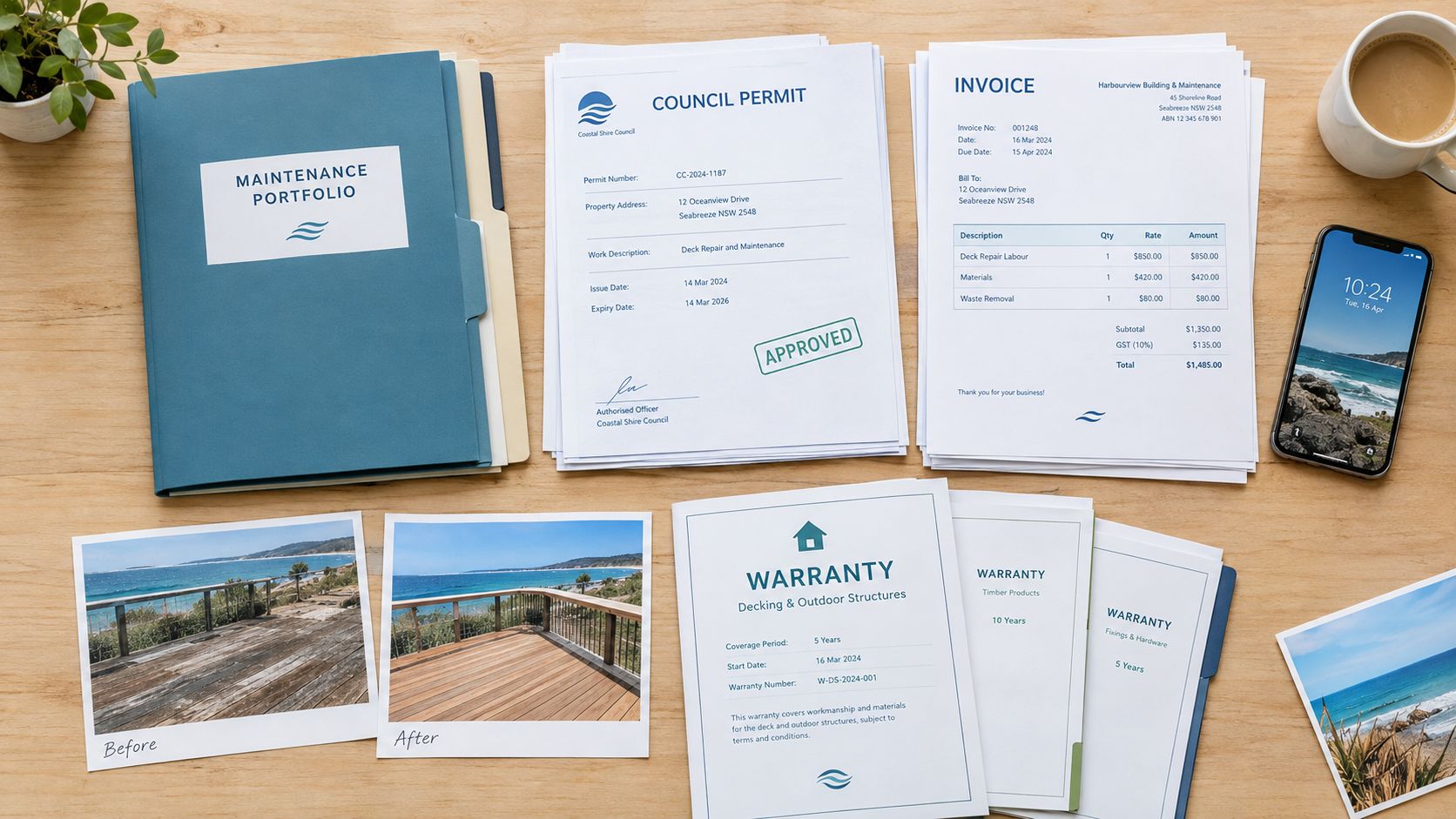
A valuer can see the fresh paint and the updated kitchen. What they cannot confirm from a quick walk-through is whether the patio was approved, when the hot water system was replaced, whether the roof restoration was cosmetic or substantive, or how recently the deck boards near the coast were re-fixed and sealed. Those details affect confidence, and confidence affects the final view of condition.
The practical fix is to prepare a maintenance file that answers the likely questions before they are asked. Keep it simple and specific:
- Dates of key work: roof repairs or replacement, plumbing updates, rewiring, bathroom and kitchen works, drainage, stormwater, retaining and structural repairs
- Proof of compliance: permits, council approvals, engineering sign-off and completion certificates where they apply
- Service and warranty records: solar, air conditioning, hot water, pool equipment, security systems and major appliances
- Photo evidence: before and after images for work that is now hidden, such as re-stumping, waterproofing, insulation or repaired water damage
- Trade invoices: especially for external works exposed to coastal wear, including gutters, fencing, decking, paving and roof plumbing
There is a trade-off here. A neat folder will not turn average work into premium value, and it will not erase dated finishes. It does, however, reduce uncertainty. That often helps a valuer place the property more fairly within its local Mandurah comparison set instead of building in a larger allowance for unknowns.
Presentation matters too. Hand over the file at the start of the appointment, marked with the most relevant items on top. If the home is near the water, lead with exterior maintenance and anything that addresses moisture, corrosion or wind exposure. If you have replaced rather than patched, say so clearly.
Owners who are unsure what can be proven before appraisal day can also organise a pre-sale property condition report. That helps separate genuine maintenance strength from work that still needs clarification.
4. School Catchment Impact Across Mandurah Suburbs
A family comparing two four-bedroom homes in Lakelands will often split the decision on school logistics, not just the kitchen or patio. Five extra minutes in the morning school run, a busy crossing, or uncertainty about enrolment can change how that buyer judges the property.
That matters at appraisal time because valuers look at real buyer behaviour in each pocket of Mandurah, not a generic family-home label across the whole city.
In Lakelands and Meadow Springs, catchment position often carries more weight than it does in lifestyle-driven parts of Halls Head or Falcon, where buyers may put beach access and outlook ahead of school proximity. The point is not to oversell education access. It is to show exactly where the property sits in its local family market.
A practical example helps. If a home is in Lakelands, confirm whether it falls within the current Lakelands Primary School intake area rather than assuming it does because the suburb name matches the school. For nearby high school options, check the WA Department of Education Schools Online finder and intake maps before the appraisal. That is the tool valuers and careful buyers can verify against, so it carries more weight than an old sales brochure or agent copy.
What to hand over if school access is part of the value story
Keep this part brief and precise:
- The exact public school catchment, verified on WA Schools Online
- Approximate walk or drive time to the relevant primary school
- Any practical family drawcards nearby, such as parks, Lakelands Shopping Centre, or straightforward Kwinana Freeway access for commuting parents
- If the home is outside the preferred catchment, the nearest realistic schooling alternative and why the location still works
Accuracy matters more than spin.
I would rather see an owner say, "The home is not in the Meadow Springs Primary School intake, but it has an easy route to school and strong access to parks and shops," than make a claim that falls over the moment the map is checked. Balanced information helps a valuer place the property properly against nearby comparables. Inflated wording does the opposite.
This section also has a rental angle in suburbs with steady family demand. Investors looking at Meadow Springs, Lakelands and parts of Dudley Park often favour homes that suit longer-term tenants with children, especially where school access is simple and easy to explain in a listing. That does not create a premium on its own, but it can strengthen demand within the right comparison set.
5. Outdoor Living Spaces and Their Contribution to Mandurah Appraisals
A valuer walking through a Halls Head or Falcon home will usually form an opinion about the outdoor area within minutes. In Mandurah, that judgement matters because buyers often expect the rear yard, alfresco, patio or pool zone to be part of daily living rather than occasional overflow space.

The local detail matters here. A protected entertaining area in Wannanup can carry more weight than a larger but exposed setup that cops the afternoon wind. In Madora Bay, a neat alfresco tied cleanly to the kitchen and living area will usually present better than an ambitious garden that looks expensive to maintain. Coastal homes also face a harsher test than inland stock. Rust, lifting deck boards, sun-faded shade cloth and salt-affected fittings stand out quickly.
The best outdoor improvements usually do three jobs at once. They make the space easier to use, easier to maintain and more consistent with the way Mandurah buyers live. Covered entertaining areas, well-drained paving, practical lawn for children or pets, and screening that gives privacy without blocking breezes tend to read well at appraisal. So do material choices that suit the coast, such as powder-coated aluminium, composite decking where appropriate, and planting that looks established without requiring constant water or trimming.
There is a trade-off. Owners sometimes spend heavily on bespoke landscaping, oversized water features or resort-style additions that suit their taste but narrow the buyer pool. Appraisals generally hold up better when the outdoor area feels broadly usable for families, downsizers or holiday-home buyers in that specific pocket.
A simple way to test your own setup is to ask two questions. Could someone use this area next weekend without extra work? Would they also see ongoing upkeep as reasonable?
Before the appraisal, walk the outdoor area in the same order a buyer would. Start at the back door and move outward. Clear away stored items, remove any rusty or broken furniture, pressure-clean paving if it needs it, and fix the faults that suggest deferred maintenance, especially loose gates, tired fencing, flaking timbers and corroded fixtures. If the home has a view, frame it. If it does not, focus on comfort, privacy and shelter.
In Mandurah, outdoor value is rarely about decoration alone. It comes from proving the space works in the local conditions and fits the suburb, the block and the likely buyer.
6. Comparable Sales Analysis and Why Local Data Wins
A seller in Mandurah can point to three homes that look similar online and still arrive at the wrong price range. One might sit closer to the foreshore, one may have canal influence without true waterfront value, and one may have sold with deferred maintenance that never showed in the listing photos. Those differences matter more than a suburb median.
That is why settled sales in the same micro-market carry far more weight than portal estimates, asking prices or broad averages. A Halls Head address west of Old Coast Road competes in a different buyer conversation from an inland home of similar size. In Falcon, two properties can sit only minutes apart but attract different demand if one suits permanent owner-occupiers and the other reads more like a holiday base.
REIWA's Mandurah suburb profile is still useful for context. It helps frame the wider market. It does not tell you what your street, your side of the estuary, or your pocket near the beach, marina or school zone is doing right now.
A better approach is to pressure-test each comparable sale before it goes into the appraisal file.
- Keep the search tight: Same pocket, same estate, or a clearly similar strip of housing stock.
- Match the buyer pool: Family homes, downsizer stock, holiday-oriented properties and investor-grade homes should not be blended together.
- Check the sale status: Settled sales matter more than active listings because they show what a buyer paid.
- Match the feature mix: Water glimpse, canal proximity, side access, workshop space, redevelopment angle and renovation standard can all shift value.
- Adjust for coastal condition issues: A neat sale with new external fixtures is not directly comparable to one with visible salt-weathering, tired roofing or corrosion around openings.
In practice, I would rather work from four well-chosen sales than a stack of loose examples from across Mandurah. Too many owners widen the map until they find a number they like. That usually weakens the case rather than strengthening it.
If you want to see the method behind this, a comparative market analysis gives a practical framework for sorting usable evidence from noise.
Before your appraisal, prepare your own shortlist and note why each sale is comparable. Include settlement timing, condition, land position and any coastal or lifestyle factors a valuer could reasonably adjust for. That gives the discussion a firmer base than quoting a suburb average that may have little to do with your exact part of Mandurah.
7. Renovation Quality and Specification Levels
Two homes can have the same floor plan, similar land, and the same suburb label on the portal. The renovated one does not automatically appraise higher. In Mandurah, the uplift usually depends on whether the work suits the buyer for that pocket and whether the finish holds up under a closer look.
A canal-side townhouse in Halls Head, for example, is judged differently from a family home in Lakelands. Buyers near the water often expect better joinery, stronger wet-area detailing and fixtures that can handle coastal air. In newer inland estates, they still want an updated home, but they are usually less interested in statement finishes than a kitchen, bathrooms and flooring that feel consistent and properly installed.
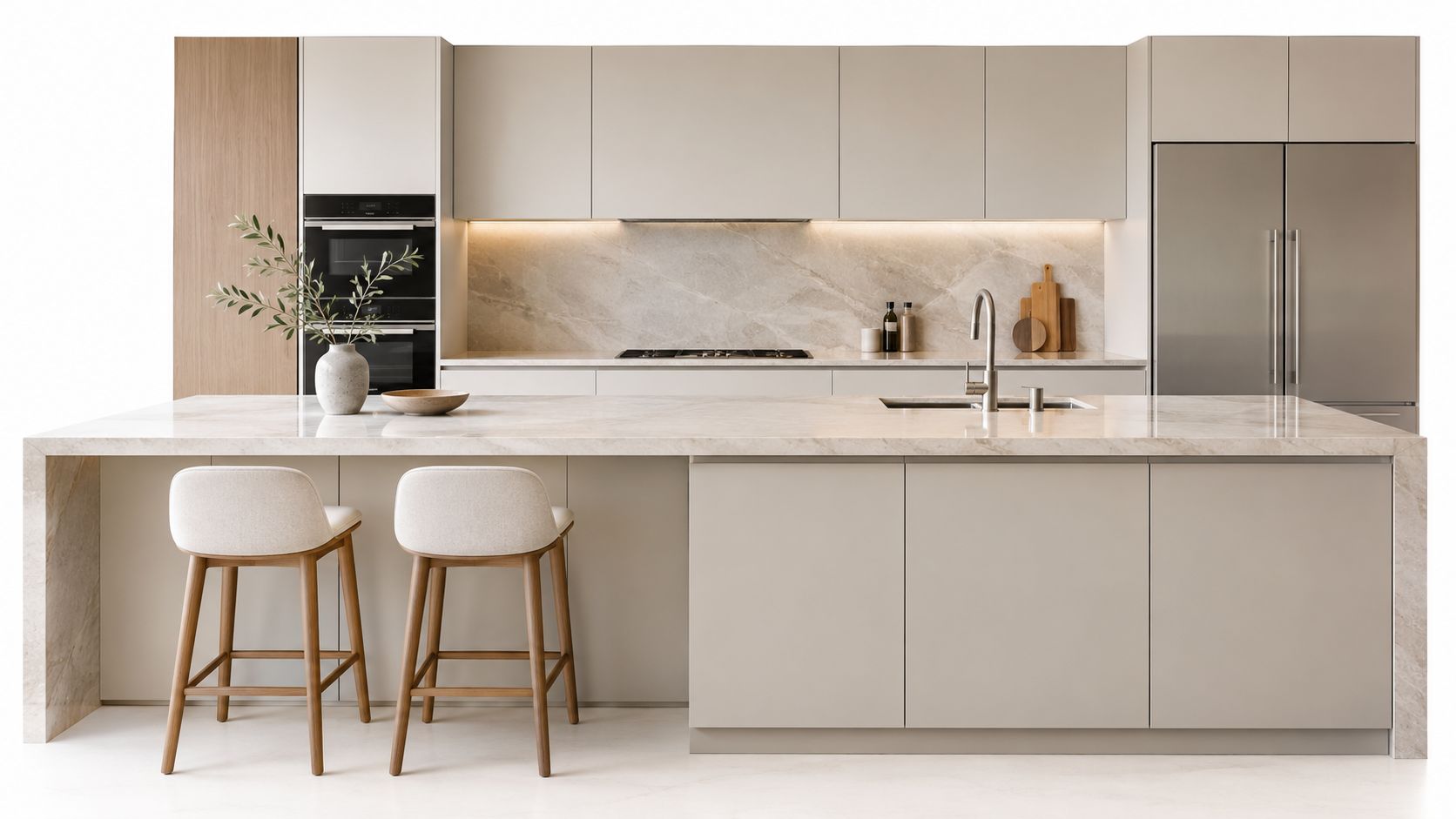
The main question is simple. Does the renovation read as a considered upgrade, or as a patchwork of separate jobs done at different standards?
Valuers and experienced agents pick this up quickly. One strong bathroom will not carry three tired bedrooms. Stone benchtops do less for value if the cabinetry is budget-grade, the splashback lines are uneven, or the lighting plan feels like an afterthought. I see the same issue with flooring changes from room to room. They make the home feel unsettled, even when each individual finish is new.
The best prep here is evidence, not hype.
Keep invoices, trade details, waterproofing records, appliance warranties and any council or strata approvals in one place if they apply. That paperwork helps show the difference between a cosmetic refresh and a proper improvement. It also matters more in coastal parts of Mandurah, where buyers and valuers may look harder at material choice around windows, wet areas, outdoor kitchens and metal fixtures.
Style still matters, but fit matters more. A highly personalised renovation can narrow the buyer pool if it clashes with the suburb, the price bracket or the age of the home. A cleaner result usually comes from restrained selections, repeat materials and finishes that make sense together.
The trade-off is straightforward. Spending heavily on premium specification can support value in parts of Halls Head, Wannanup or Madora Bay where buyers compare homes at a higher standard. The same spend can be hard to recover in a more price-sensitive segment if the rest of the property does not match it.
Before the appraisal, walk room by room and ask three practical questions. Was the work done properly. Does the finish level stay consistent across the house. Would a buyer in this part of Mandurah see these upgrades as durable and relevant, rather than decorative alone. Those answers usually shape the appraisal outcome more than the word renovated ever will.
8. Addressing Deferred Maintenance Before Appraisal
A common Mandurah appraisal problem looks like this. The home presents well at first glance, then a rusted patio post, swollen skirting near a wet area, or a stained ceiling patch shifts attention from value to risk. Once that happens, the valuer starts allowing for future cost, inconvenience and uncertainty.
Deferred maintenance matters most where it changes the buyer's sense of immediate livability or signals a larger defect behind the surface. In coastal parts of Halls Head, Wannanup and Falcon, salt exposure often shows up in external metalwork, fixings, garage doors, gutters and fencing before owners expect it. Inland areas can have the same issue, but waterfront and sea-breeze locations usually wear faster.
The practical question before an appraisal is not whether to fix everything. It is where a dollar spent is likely to remove a bigger discount.
Start with items that can affect structure, safety, moisture or finance approval. Active roof leaks, damaged flashings, electrical faults, plumbing leaks, loose balustrades, broken glazing, rising damp signs and significant timber rot sit in that group. These are the defects that make a valuer more cautious because they are hard to ignore and expensive for a buyer to inherit.
Cosmetic wear sits lower down the list. Faded paint, tired carpet, loose cabinet handles and dated light fittings can still affect presentation, but they rarely hurt an appraisal the way water entry or corrosion does. If the budget is tight, direct funds to defects that create doubt first and appearance second.
Sometimes the right move is disclosure rather than repair. A full replacement of an older air-conditioning system or a section of boundary fencing may not stack up before appraisal if the cost is high and the remaining life is still reasonable. In that case, obtain a current trade quote, keep any service records, and be ready to show exactly what the issue is and what rectification would involve. Clear evidence usually lands better than a rushed patch job.
I usually suggest owners test each item against three filters:
- Will a valuer see this as an immediate risk or future inconvenience?
- Could a buyer use it to argue for a larger discount than the repair would cost?
- Is the defect typical wear for this part of Mandurah, or does it suggest poor upkeep compared with nearby comparable homes?
If the answer is yes to the first two, repair it before the appraisal if practical. If the answer is mainly the third, the job may be more about framing and documentation than spending heavily.
For owners who are unsure where that line sits, a pre-sale home inspection before selling can help separate valuation risks from issues that are unlikely to change the result much.
A clean appraisal outcome rarely comes from hiding defects. It comes from dealing with the right ones, documenting the rest, and showing that the home has been managed with care.
Mandurah Home Appraisal: 8-Point Comparison
| Item | 🔄 Implementation complexity | ⚡ Resource needs / efficiency | 📊 Expected outcomes | 💡 Ideal use cases | ⭐ Key advantages |
|---|---|---|---|---|---|
| Understanding Mandurah's Waterfront Premium | High, specialist appraisal knowledge, council checks | High, recent waterfront comps, permits, detailed photos; moderate time | 15–25% premium typical; resilient lifestyle-driven value | Sellers/owners of waterfront or canal properties; buyers assessing premium | Scarcity-driven premiums; clear market justification |
| Lakelands & Meadow Springs Growth Factor | Medium, track infrastructure/timing and approvals | Moderate, infrastructure docs, recent sales, timing insight | 8–20% appreciation historically; uplifts after infrastructure announcements | Owners/investors in growth corridors; timing appraisals post-announcement | Documented growth narrative; strong family rental demand |
| Presenting Maintenance History | Low–Medium, organise and present records | Low, invoices, permits, photos; high efficiency for effort | Often justifies 5–10% valuation premium; increases appraiser confidence | Older homes, coastal properties, mortgage/insurance assessments | Demonstrates lower effective age; reduces contingencies |
| School Catchment Impact | Low, verify zones and performance data | Low, Dept of Education verification, school ratings | 10–15% premium for desirable catchments; consistent buyer demand | Family-targeted sales; investors focusing on rental yield | Documented, repeatable premiums; strong demand driver |
| Outdoor Living Spaces | Medium, requires quality design and maintenance | Moderate, construction/landscaping costs; often high ROI | $40k–$80k uplift or 5–8% (pools); improvements can exceed cost at appraisal | Coastal lifestyle listings; sellers prioritising entertaining appeal | High buyer appeal; increases usable living area and premiums |
| Comparable Sales Analysis | Medium, careful selection and adjustments required | Moderate, access to recent local sales data and valuer expertise | More accurate valuations; can change price by tens of thousands | Niche, unique, waterfront or micro-location properties | Most reliable valuation method; reduces appraisal uncertainty |
| Renovation Quality & Specification Levels | Medium–High, professional design and installation | High, licensed trades, quality materials; upfront costlier | High-spec often yields 120–150% ROI at appraisal; budget less effective | Sellers in aspirational suburbs; renovation-for-resale projects | Premium finishes deliver disproportionate appraisal returns |
| Addressing Deferred Maintenance Before Appraisal | Medium, strategic decision-making required | Variable, repair costs vs quotes; weigh timing vs benefit | Fixing critical items prevents 2–8% valuation reductions; reduces contingencies | Investor or mortgage-required sales; critical system remediation | Strengthens transaction certainty; avoids appraisal conditions |
Your Mandurah Appraisal Preparation Checklist
A sound appraisal in Mandurah isn't built from one trick. It comes from aligning evidence, condition, presentation and local market context so the valuer can place your home accurately within its real buyer pool.
That's particularly important in coastal suburbs, where broad averages often miss what drives value. A home in Falcon with outdoor entertaining and beach proximity may need a different evidence set from a family home in Lakelands. A canal-facing property in Wannanup needs a different approach again. The seller who prepares best is usually the seller who understands those distinctions early.
Use this as a practical pre-appraisal checklist:
Gather your records
- Invoices for major works
- Council approvals and permits
- Warranties for appliances, solar, hot water and air conditioning
- Before-and-after photos for renovations and outdoor upgrades
Handle targeted repairs
- Fix roof, electrical, plumbing or moisture issues first
- Resolve obvious safety concerns
- Avoid partial cosmetic patch jobs that draw attention to a bigger issue
- Obtain quotes for larger works you decide not to complete
Prepare for coastal scrutiny
- Check for salt-wear on metalwork, fencing, external fixtures and doors
- Note corrosion-resistant upgrades or replacement materials
- Document water views accurately
- Keep any setback, title or restriction documents ready for niche sites
Present outdoor areas properly
- Clean paving, decking and pool surrounds
- Stage the alfresco area so it looks usable
- Trim gardens and remove storage clutter
- Make sure exterior lighting, gates and screening work as intended
Verify local lifestyle details
- Confirm school catchment information
- Note proximity to shopping, parks, the foreshore and transport
- Identify whether the home suits families, downsizers, investors or lifestyle buyers most strongly
Prepare local sales evidence
- Focus on recent settled comparables from the same micro-market
- Match them by condition, location, feature set and buyer type
- Avoid relying on suburb medians alone
Support renovation quality
- List who completed the work
- Show consistent specification across key rooms
- Provide compliance records where relevant
Get inspection-day presentation right
- Clean thoroughly
- Open blinds and curtains
- Replace dead globes
- Make every room accessible
- Leave the property calm, tidy and easy to inspect
The local advantage matters here. Sellers in Mandurah, Lakelands, Madora Bay, Meadow Springs, Halls Head, Falcon, Wannanup and Dudley Park often get the clearest appraisal guidance when the advice comes from people who understand how those suburbs differ at street level, not just at postcode level. That's where a locally grounded agency such as Beshay Realty, or David Beshay Real Estate, can add practical value through suburb-specific appraisal guidance and evidence-based pricing discussions.
A good appraisal won't manufacture value that isn't there. It will, however, recognise value more clearly when the property is well prepared, well documented and positioned against the right local evidence.
David Beshay Real Estate offers locally informed appraisal guidance for homeowners across Mandurah and its coastal suburbs, including help with comparable sales evidence, presentation advice and pre-sale preparation. If you want a clearer view of how your property may be assessed in today's market, visit David Beshay Real Estate and review their Mandurah-focused property resources.

