


You're standing on the rear deck of a Halls Head canal home before the day has properly started. It's 5:45am, coffee warming your hand, while dolphins work through the shallows and the agent points towards the seawall, explaining how it was raised after the 2024 storm surge. The view is persuasive. The seawall detail is the part that deserves your full attention.
A blue water home is bought with the heart, but insured, financed and resold on evidence. In Mandurah, “blue water” doesn't only mean a beachfront trophy property. It includes homes shaped by proximity to Peel Inlet, the Indian Ocean, canal systems or estuary frontage, whether the water is directly outside the gate or visible from the main living area. Before you search things to do in Mandurah, decide which kind of water access you're paying for.

Table of Contents
- Walking a Mandurah Waterfront at Sunrise
- What Makes a Home a Blue Water Property
- Mandurah Coastal Price Bands in 2026
- Comparing Halls Head, Falcon, Madora Bay and Lakelands
- Inspecting and Valuing a Coastal Home
- Selling a Blue Water Home in Mandurah
- Investment Considerations for Coastal Buyers
- Next Steps and Local Appraisal
Walking a Mandurah Waterfront at Sunrise
That early inspection tells you more than the brochure. At sunrise, you notice how the living spaces face the water, where neighbouring boats sit, whether the outdoor entertaining area is exposed to wind and how quickly the eastern light enters the home. You also have a better chance of seeing moisture staining, salt residue and drainage problems before clever styling hides them.
The buyer in this example is looking at more than a view. They're weighing a lifestyle purchase against coastal exposure, maintenance, insurance and future resale. A canal frontage can provide boating access and privacy, but it also brings seawall obligations and a different inspection brief from a home several streets inland. A direct oceanfront property can command attention, but its position beside an active shoreline creates technical questions that a standard suburban inspection may miss.
My advice: If the view is the first thing you fall in love with, make the seawall, floor level and insurance history the first things you investigate.
Mandurah's market has enough depth to support a careful decision. The city has more than 100,000 people and is Western Australia's largest regional city, according to regional market coverage of Mandurah's coastal market. That scale matters. You're not buying into an isolated holiday pocket. You're buying into a major regional centre where owner-occupiers, downsizers, families and investors compete for different types of coastal stock.
The right question isn't whether you want blue water. It's which water category suits your budget, risk tolerance and daily life. The distinction becomes especially important across Halls Head, Wannanup, Dudley Park, Falcon, Madora Bay and Lakelands, where a home's relationship with the water can change its pricing, buyer pool and long-term obligations.
What Makes a Home a Blue Water Property
Mandurah's blue water market works in tiers. Treating every water-adjacent home as equivalent is one of the quickest ways to overpay.
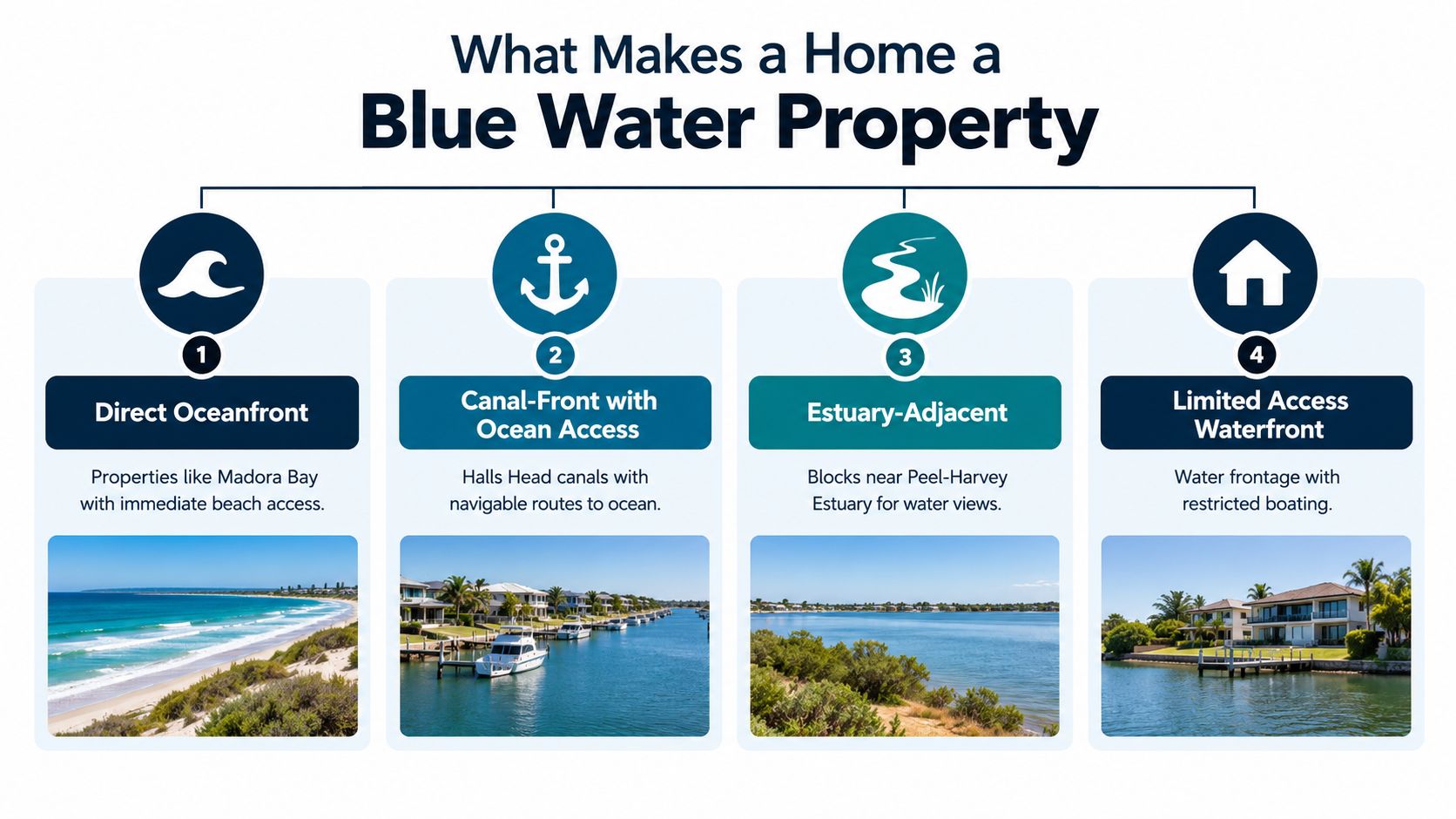
Four practical categories
Direct oceanfront homes sit closest to the Indian Ocean. Madora Bay and parts of Falcon's beach strip attract buyers who want immediate beach access, outlook and a strong lifestyle identity. The trade-off is straightforward. You're closest to the force of the coast, so dune movement, salt exposure, wind and erosion planning deserve more weight than a polished kitchen.
Canal-front homes with private moorage are the classic Halls Head and Dudley Park proposition. They appeal to boat owners, entertainers and buyers who want water at the back door without living directly beside an open ocean beach. Check navigability, berth configuration, seawall condition and the practical route from the property to broader waterways. A canal view isn't automatically a boating advantage.
Estuary-view properties look across Peel Inlet or related waterways without necessarily touching the water. Parts of Mandurah city and streets near the South Yunderup side of the waterways can attract this buyer. The value comes from sightlines, breezes, light and outlook, not private frontage. A protected view corridor may matter more than a small strip of unusable water frontage.
Water-adjacent homes sit a block or two back but still enter the blue water conversation. They can offer easier maintenance, more conventional insurance considerations and a broader buyer pool, while retaining a coastal marketing angle. Lakelands and selected streets around Madora Bay can suit buyers who want the coastal atmosphere without paying for direct frontage.
The category also includes apartments over the Mandurah marina. They're unit-titled, but buyers should assess them through the same coastal criteria: water outlook, wind exposure, corrosion, strata maintenance, parking, storage and the quality of shared facilities. A marina apartment may suit a downsizer or lock-and-leave owner better than a large canal house, particularly when the buyer values access to restaurants, walking routes and low-maintenance living.
For canal buyers, the practical difference between a decorative outlook and usable water access is substantial. Review Mandurah canal homes for sale with a clear checklist, not just a preference for a wide backyard view.
Mandurah Coastal Price Bands in 2026
Walk through a waterfront home in Halls Head and the asking price can look justified before you inspect the seawall, roof, windows or canal access. That is the trap. Mandurah's coastal market now includes trophy beachfront homes, marina apartments, established canal houses and family properties near the coast. Buyers must price the lifestyle and the exposure to erosion, flooding, salt and wind as separate decisions.
One market snapshot reported 22.2% price growth over the 12 months to February 2026, compared with 9.1% nationally. It also recorded Mandurah home prices rising from $404,000 in December 2015 to $800,000 by the end of 2025. See the reported Mandurah market snapshot for that context. Strong growth does not make every waterfront listing good value. Position, building condition and future repair exposure still decide the purchase.
Local data recorded a Mandurah median sales price of $700,000 and annual sales price growth of 21.7% as of September 2026, with a lower quartile of $630,000 and a higher reference point of $760,000, according to the REIWA Mandurah suburb profile. These figures use different dates and measures, so treat them as market benchmarks, not a price guide for a specific home.
| Price Tier | Median | Lower Quartile | 12-Month Growth |
|---|---|---|---|
| Mandurah market benchmark | $700,000 | $630,000 | 21.7% |
| Broader reported Mandurah dwelling benchmark | $665,000 | Not stated | 20.3% |
| Mandurah house benchmark | $703,000 | Not stated | Not stated |
The table draws on the REIWA data and the OpenAgent Mandurah market profile. Do not apply these figures to a waterfront property without checking comparable sales, water access and the cost of coastal repairs.
How I read the tiers
The upper tier is scarce direct oceanfront stock. Buyers pay for orientation, privacy, architecture, access and a dependable water outlook. A tired home can still be worth buying, but only when the land, planning position and remediation budget support the project.
The middle tier offers the strongest practical competition. Established canal homes in Halls Head, estuary-view houses and quality coastal family homes attract boat owners, downsizers and families. Usable water access, parking, outdoor living and a sound structure often matter more than a new bathroom.
The accessible tier includes units, water-adjacent homes and family properties in Falcon, Madora Bay and Lakelands. These buyers give up direct frontage and often gain easier maintenance and broader resale appeal. Review Mandurah coastal real estate by property type before paying a premium for a listing labelled “waterfront.”
Comparing Halls Head, Falcon, Madora Bay and Lakelands
A buyer comparing a canal apartment with an inland family home is solving two different problems. One property sells a daily water lifestyle, while the other may offer better space, simpler maintenance and less exposure to coastal repair risk. Compare the water connection, site conditions and likely resale audience, not just the suburb name.
| Suburb | Primary Water Access | Indicative Entry Price | Typical Buyer | Key Watch-Out |
|---|---|---|---|---|
| Halls Head | Canals, beach and coastal outlooks | Around the broader Mandurah market benchmark | Downsizers, boat owners, lifestyle buyers | Seawalls, corrosion and canal usability |
| Falcon | Ocean-side beaches and estuary-adjacent streets | Around the accessible to middle coastal range | Families, surfers, renovators | Older construction and salt exposure |
| Madora Bay | Beach access and newer coastal streets | Around accessible to upper coastal stock | Young families, new-home buyers, land-focused investors | Estate design, wind exposure and future maintenance |
| Lakelands | Water-adjacent coastal access rather than direct frontage | Around the accessible family-home range | Families and value-conscious investors | No direct water premium and less immediate outlook |
Halls Head is the established choice for buyers who want canals, beaches and mature streets. Streets near the marina and established canal precincts attract boat owners and downsizers, but seawall condition, corrosion and usable water access can change value quickly. Start with this Halls Head local property overview for local context, then inspect the individual frontage and building.
Falcon suits buyers who prefer a quieter coastal setting and are prepared to assess older housing. Larger blocks and renovation opportunities, particularly near estuary-adjacent streets, attract families, surfers and builders willing to trade newer finishes for land. Skip properties with unresolved salt damage or a renovation budget that ignores coastal construction costs.
Madora Bay offers newer estate-style homes, beach access and a contemporary coastal feel. It fits young families and buyers who want usable floorplans without paying for an established canal address. Check wind exposure, estate restrictions, landscaping and future maintenance before treating a newer home as automatically lower risk.
Lakelands is inland from the immediate shoreline, so it offers family functionality rather than a direct water outlook. That can suit buyers prioritising bedrooms, storage, parking and manageable upkeep over a waterfront premium. Its resale appeal depends more on the home, street and family demand than on blue-water views.
These are working search categories, not suburb medians. Price the water relationship, land, condition and buyer audience separately. A renovated Halls Head canal home should not be compared directly with a standard Lakelands family property.
For a downsizer, I'd inspect Halls Head or a marina-oriented apartment where low-maintenance access matters most. Young families should compare Madora Bay and Lakelands before accepting a compromised waterfront floorplan. Falcon suits renovation-focused buyers who will commission a proper coastal inspection.
Investors must choose between long-term rental, furnished coastal use and short stays before comparing properties. Each strategy brings different management, maintenance and approval requirements.
Inspecting and Valuing a Coastal Home
A coastal inspection should start outside, not in the kitchen. Buyers often get distracted by stone benchtops and water views before checking the elements that can create the largest ownership costs.
Start with the site
Walk the boundary slowly. Look for erosion scars, dune recession, cracked seawalls, salt-spray staining and damaged retaining structures. Check stormwater outlets and observe whether water is directed away from the home or towards low points near the slab, garage or rear walls. On canal properties, inspect the seawall from every accessible angle and ask whether repairs have been completed, recommended or deferred.
Mandurah's northern beaches are identified by the Western Australian coastal-erosion hotspot program as an area where erosion is expected to significantly affect public and private assets within the next 25 years, with possible responses including accommodation, ongoing annual bypassing, property buy-backs and easements. Read the coastal erosion hotspot report before treating beachfront access as an uncomplicated benefit.
Then inspect the building
Inside, compare finished floor levels with the highest known tide or flood information available for the site. Look for tide marks, swollen skirting, patched lower walls, lifting flooring and musty odours. Mould around bathroom and laundry fans can point to poor ventilation, while older hot-water units and air-conditioning condensers may show accelerated corrosion after years of salt exposure.
Western Australian planning policy sets a finished-floor benchmark of 0.5 metres above the 1% annual exceedance probability flood event, unless an endorsed local strategy specifies another standard. The WA water planning policy also identifies the Mandurah-to-Bunbury coastline as particularly susceptible to erosion over the long term.
Ask the selling agent about previous flooding, storm-surge insurance excesses, drainage complaints and the property's position within relevant City of Mandurah planning controls. Request documents rather than relying on a verbal reassurance.
Valuation rule: Compare like with like. Use three recent sales in the same water category, then adjust for orientation, view corridor, frontage, seawall condition, floor level and renovation quality.
A valuation for a canal-front home shouldn't be built from a nearby inland sale with a different risk profile. Use a valuer or local agent who has recently handled coastal Western Australian stock, and review property valuation guidance before setting an asking price.
Selling a Blue Water Home in Mandurah
Water sells the first inspection, but condition sells the second. Coastal buyers notice salt damage quickly because they know they'll inherit it.
Start with low-drama repairs that improve the property's visual and physical presentation. Rinse salt build-up from render, repaint weather-exposed timber screens, restore weathered decks and pressure-seal pavers. Replace corroded fasteners where appropriate, clean outdoor furniture and remove anything that blocks the main view axis from the living zone.
Build the campaign around the water
The best photography doesn't point a camera at the ocean. It shows how the home uses the setting.
- Use pre-dawn aerial footage to show the canal, beach or inlet in context, especially when the property's position is difficult to understand from street level.
- Photograph twilight exteriors with the water visible behind the entertaining areas, not lost in a dark background.
- Mark the view corridor on the floorplan so buyers can see the relationship between the main bedroom, kitchen, living space and water.
- Style for movement and use, with a clean deck, practical boat storage and outdoor lighting that supports the way coastal buyers imagine living.
Timing matters too. A morning open home can show the water, wind and street activity at their most informative. A later inspection can reveal how the property handles afternoon glare and whether the outdoor areas remain comfortable.
WA sellers also need to prepare for mandatory disclosure. The new requirements call for a mandatory disclosure statement and prescribed certificates before the sale contract is signed, as outlined in WA property reform coverage. Treat the disclosure process as a seller preparation exercise, not paperwork to rush through after an offer arrives. Known defects, flood and stormwater history and relevant coastal hazard information should be assembled with professional advice where needed.
A sensible campaign can begin with a quiet launch to a local buyer database, followed by open homes aligned with morning tide conditions and late-afternoon light. If genuine buyer interest clusters within a two-week window, a deadline-of-sale approach can create structure without replacing accurate pricing and clear disclosure.
Investment Considerations for Coastal Buyers
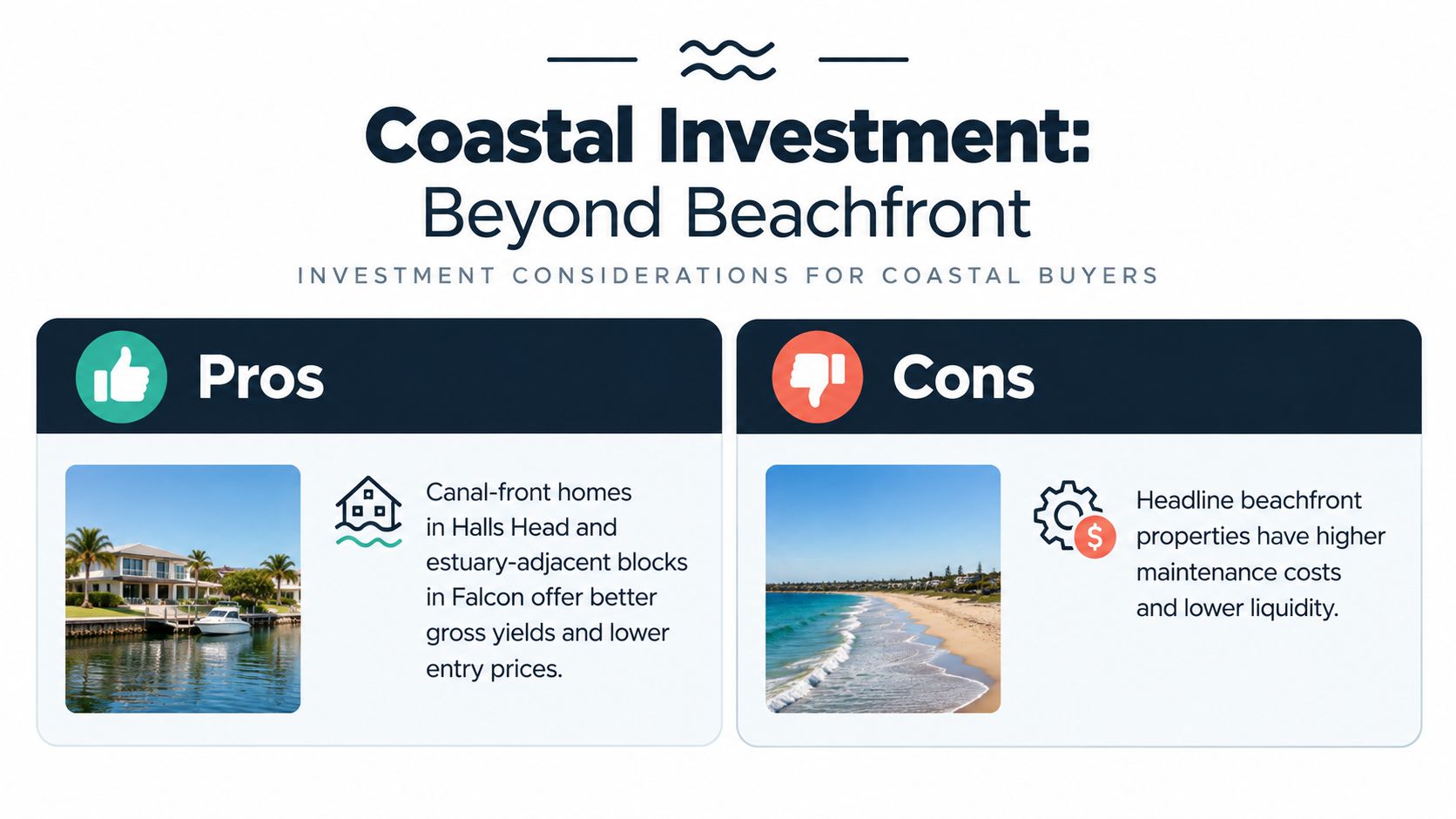
The most expensive coastal address isn't automatically the strongest investment. Direct beachfront homes carry an emotional premium, but they also face more exposure, more maintenance and a narrower resale audience.
My contrarian view is that a well-bought canal home in Halls Head or an estuary-adjacent property near Falcon can produce a more balanced investment case. These homes may offer a lower entry point than headline beachfront stock while still attracting lifestyle tenants, furnished-rental demand and buyers who value usable water access. That doesn't make every canal property a good investment. It means the investment question should start with the income, costs and resale audience rather than the photograph.
Three scenarios deserve an honest look
Madora Bay land banking can suit an investor focused on long-term ownership, newer housing and a coastal growth story. The key is selecting a property with a useful floorplan and durable appeal, not buying a generic house just because it's near the beach.
Halls Head short-stay accommodation can work where the home has genuine canal utility, strong outdoor living and a layout that suits visiting families or groups. Confirm local approval requirements for stays of 60 days or more before assuming your preferred rental model is permitted, and allow for cleaning, furnishing, management, repairs and vacancy.
Ageing seawalls and rising insurance costs should trigger caution. Ask for maintenance records, insurance documents and any engineering recommendations. A property can look inexpensive against a direct-water comparable while carrying a deferred obligation that changes the entire return.
REIWA reports Mandurah houses selling in a median of 14 days over the previous 12 months, with average house rents of $550 per week and annual rent growth of 3.8% in its Mandurah market profile. Those figures support investor relevance, but they don't replace a property-specific cash-flow assessment. Resale liquidity will depend heavily on transparent disclosure, condition, insurance and the quality of the water experience.
Next Steps and Local Appraisal
If you own a coastal home in Halls Head, Falcon, Madora Bay, Lakelands, Meadow Springs, Wannanup or Dudley Park, start with an appraisal based on the right comparable category. A canal home shouldn't be measured against a standard family property, and a water-adjacent home shouldn't inherit a direct-frontage premium just because the listing uses coastal language.
A practical appraisal should include a 30-minute walkthrough, a comparable-sales review across relevant Mandurah suburbs and a written report within 48 hours. Ask for the reasoning behind the price range, including how the agent has treated orientation, view, seawall condition, floor level, renovation quality and buyer demand. David Beshay Real Estate offers this type of local appraisal process for owners preparing to sell.
Coastal buyer questions
How does the WA offer and acceptance process work?
Buyers submit an offer using the relevant WA contract, with conditions, deposit terms and settlement details clearly recorded. Obtain legal or conveyancing advice before signing if you're unsure about any special condition.
What disclosure paperwork should sellers prepare?
Sellers must provide the mandatory disclosure statement and prescribed certificates before the sale contract is signed. Coastal owners should organise information about known defects, flooding, stormwater and hazard matters early.
How long will settlement take?
The settlement period is set out in the contract. Don't assume a standard timeframe, particularly if finance, title, strata or specialised coastal documents need review.
What should buyers request before offering?
Request available building and pest information, strata records for apartments, seawall or retaining-wall documents, insurance details, planning information and any records relating to flooding, drainage or coastal hazards.
Blue water homes for sale in Mandurah deserve a sharper process than a view-led inspection. Get the property's water category, physical condition, ownership costs and resale audience clear before you commit.
David Beshay Real Estate provides local appraisals, coastal property sales advice and buyer guidance across Mandurah, including Halls Head, Falcon, Madora Bay and Lakelands. Visit David Beshay Real Estate to arrange a no-obligation conversation about your property's value, presentation and sale strategy.

