


A Mandurah auction can look straightforward from the street. The home is presented, buyers arrive, the auctioneer calls for bids, and the highest offer appears to determine the result. In practice, a seller in Halls Head, Lakelands or Madora Bay can lose valuable momentum through weak presentation or an unsupported reserve, while a buyer can commit beyond their comfort level before checking finance, title or the contract.
The strongest outcomes come from a coordinated process: coastal property preparation, suburb-specific pricing, purposeful marketing, buyer engagement, financial readiness, legal review, disciplined bidding and a clear post-auction plan. These auction tips and tricks follow that journey across eight practical stages, with the local differences between Meadow Springs, Falcon, Wannanup, Dudley Park and the wider Mandurah market kept firmly in view.
For sellers, Beshay Realty's local appraisal, campaign and auction guidance can help turn market information into a defensible strategy. For buyers, the same preparation creates clarity before the pressure of auction day begins.
Table of Contents
- 1. Strategic Property Preparation for the Mandurah Market
- 2. Precision Pricing by Suburb and Property Type
- 3. Premium Marketing That Builds Buyer Depth
- 4. Open Homes That Create Confidence and Momentum
- 5. Bidding Strategy for Mandurah Buyers
- 6. WA Legal Checks Before You Bid
- 7. Auction Day Execution and the Pass-In Plan
- 8. Post-Auction Negotiation and Settlement Protection
- Mandurah Auction Strategies, 8-Point Comparison
- Turn Auction Pressure Into Informed Decisions
1. Strategic Property Preparation for the Mandurah Market
Mandurah buyers respond to homes that make coastal living feel practical, comfortable and well considered. That applies differently across the area. A Halls Head home may need to present its outdoor entertaining and water connection with care, while a family property in Lakelands or Meadow Springs may need to make storage, garden space and everyday flow immediately obvious.
Preparation isn't just about making a home look clean. Walk through the property as a buyer would and identify what could create hesitation. Salt residue on windows, weathered outdoor fixtures, tired decking, poor ventilation and neglected garden edges can suggest ongoing maintenance concerns, even when the underlying home is sound.
Start with the areas buyers encounter first:
- Front arrival: Clear the entry, refresh visible hardware and make the approach feel cared for.
- Main living spaces: Remove excess furniture so room proportions and natural light are easy to read.
- Outdoor areas: Treat the alfresco, deck or garden as part of the home rather than an afterthought.
- Coastal wear: Address salt-air effects on windows, exterior timber, metal fixtures and outdoor furniture.
- Light and air: Open curtains, improve dark bathrooms and bedrooms, and make ventilation visible during inspections.
A Wannanup lifestyle property may benefit from a calm, uncluttered presentation that lets buyers focus on outlook and privacy. In Madora Bay, families may pay closer attention to durable finishes, outdoor space and how the home supports daily routines. Lakelands homes should show the relationship between the garden, living areas and broader family lifestyle.
Practical rule: Repair visible maintenance issues before adding decorative styling. Buyers can forgive a restrained colour palette, but they may price uncertainty into a weathered exterior or poorly maintained entertaining area.
A professional clean can be worthwhile, particularly where salt residue has built up on glass or exterior surfaces. If you're preparing a home for sale, this Mandurah home preparation guide can help you prioritise work before photography and open homes.

2. Precision Pricing by Suburb and Property Type
An auction reserve should reflect what qualified buyers are likely to support, not what the owner hopes the property might achieve. That distinction matters in Mandurah because nearby suburbs can attract different buyers and command different responses. A waterfront or highly finished home in Halls Head doesn't compete in exactly the same market as a family property in Meadow Springs, a newer home in Lakelands or a lifestyle holding in Falcon.
REIWA lists Mandurah's median sales price at $700,000, based on the 12 months to August 2026, with the profile updated on 30 September 2026. That figure is a useful local reference, but it isn't a valuation for an individual property. REIWA's Mandurah suburb profile should sit beside recent comparable sales, property condition, land size, aspect and buyer demand.
Suburb-level variation is just as important. Recent market coverage lists Madora Bay houses at $920,000, Halls Head units at $665,000, Falcon houses at $790,000 and Dudley Park units at $590,000. Those benchmarks from Mandurah suburb market coverage reinforce why a generic Mandurah price guide can mislead.
Use a pricing discussion that separates evidence from opinion:
- Recent sold evidence: Study achieved prices, not only advertised prices.
- Property adjustments: Allow for views, renovations, aspect, condition, land, parking and position.
- Buyer profile: Consider whether the likely audience is a family, downsizer, investor or lifestyle buyer.
- Campaign response: Treat enquiry quality, inspection feedback and repeat visits as pricing signals.
- Reserve discipline: Set a reserve that protects value without disconnecting the auction from the market.
National auction conditions also deserve context. Australia's combined capital-city clearance rate fell below 50% in June 2026 for the first time since April 2020, and the weighted average later reached only 48.2%, with fewer than half of listed homes selling under the hammer in 12 of the previous 13 weeks, as reported by MPA Magazine's auction clearance coverage. That doesn't dictate a Mandurah reserve, but it does argue against assuming that auction format alone will create competition.
A thorough property valuation approach for Mandurah sellers combines suburb evidence with the specific strengths and limitations of the home.
3. Premium Marketing That Builds Buyer Depth
A property shouldn't enter an auction campaign with a generic description and a collection of disconnected photographs. Buyers need to understand what kind of life the home supports, where it sits within Mandurah and why its features matter to them.
The audience may be broad, but the message should be precise. A Halls Head family home can lead with school routines, entertaining and usable living zones. A Falcon property may appeal through outdoor space, privacy and coastal access. A Wannanup home may need a quieter, more architectural presentation, while Meadow Springs and Lakelands campaigns may speak more directly to family practicality, community and investment fundamentals.
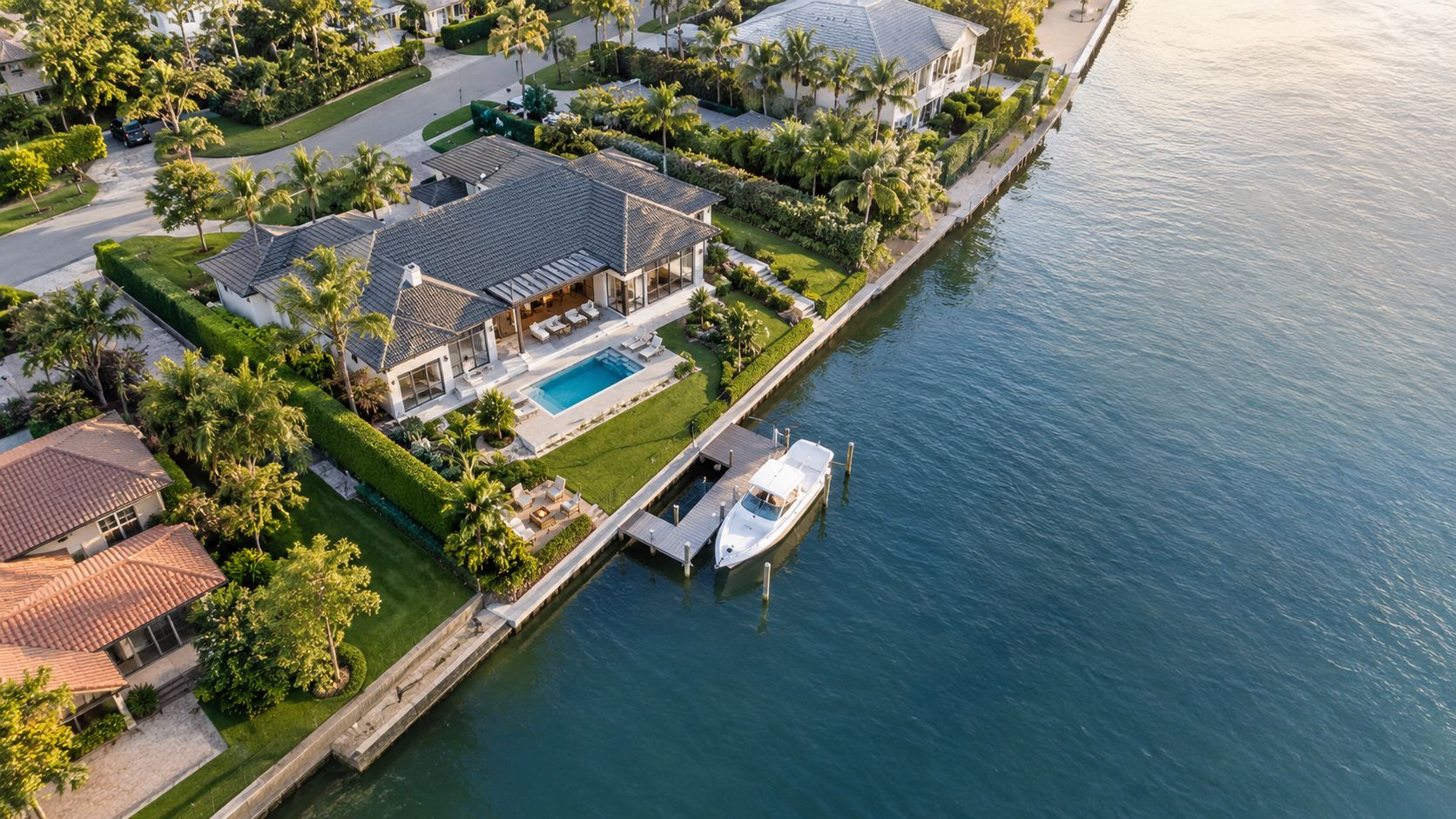
Professional photography should show the home in natural light and give buyers a reliable sense of scale. Video can demonstrate the movement between kitchen, living, alfresco and garden areas in a way that still images can't. Aerial imagery may add context where the property's outlook, canal position, garden or relationship to the suburb is a genuine part of its value.
The campaign should also answer practical questions early. Include floor plans, relevant inclusions, outgoings where appropriate, auction terms and clear inspection opportunities. Buyers who can't quickly understand the property may not progress from casual interest to serious preparation.
Use the marketing period to build a qualified buyer list rather than just chase online attention:
- Define the audience: Separate owner-occupiers, investors, downsizers and lifestyle buyers.
- Match the story to the home: Don't market a compact unit like a waterfront family residence.
- Keep the visual language consistent: Photography, video, signage and digital advertising should feel like one campaign.
- Retarget engaged buyers: Reconnect with people who viewed the listing or attended an inspection.
- Time the campaign carefully: Create enough lead time for finance, inspections and contract review before auction day.
The Mandurah property marketing strategy should make the home's point of difference clear without overstating it. Premium positioning comes from accuracy, restraint and strong execution, not from decorative language.
4. Open Homes That Create Confidence and Momentum
An open home is both a presentation opportunity and a market test. Buyers are assessing the property, but the selling team is also learning whether the price, campaign message and presentation are attracting the right people.
The experience should feel calm and easy to move through. Set the temperature comfortably, let in natural light, reduce personal clutter and arrange furniture around movement rather than maximum seating. Outdoor entertaining areas deserve particular attention in Mandurah. Clean the deck, remove tired furniture, trim garden edges and make the transition from internal living to alfresco space feel natural.
Small details influence confidence. Strong odours, excessive fragrance, dark rooms, crowded hallways and visible maintenance items can distract buyers from the property's strengths. Fresh air and subtle presentation are safer than trying to mask a concern.
Open homes should also be scheduled around the likely audience. Weekend sessions may suit families considering Halls Head, Madora Bay or Lakelands, while weekday opportunities can be useful for investors and buyers with more flexible schedules. Repeated inspections help serious buyers return with a partner, adviser or building professional.
A quiet open home isn't automatically a failed campaign. The more useful question is whether the visitors are qualified, whether they understand the value and whether their objections point to presentation, pricing or contract concerns.
During each inspection, observe behaviour rather than relying only on compliments. Do buyers spend time in the outdoor areas? Do they revisit the kitchen or main bedroom? Are they asking about settlement, inclusions, title or the auction process? Those questions reveal readiness.
This guide to staging your home can help owners decide which improvements will support the campaign and which projects are unlikely to change buyer perception.
Follow up promptly with interested buyers, provide requested information and keep communication factual. The purpose isn't to pressure people into bidding. It's to remove avoidable uncertainty before auction day.
5. Bidding Strategy for Mandurah Buyers
The best auction bidding strategy starts before you enter the room. Research comparable sales, inspect the contract and decide what the property is worth to you. Then separate that figure from the emotional value of winning.
Mandurah's auction environment can change sharply because local buyer pools are often narrow. In one national snapshot, Perth recorded a 40% clearance rate, while Sydney was at 47.4%, Melbourne at 50.6%, Brisbane at 33.3% and Canberra at 47.1%, according to The Guardian's Australian auction market report. Later reporting recorded Perth at 31.5% in one week. Those figures shouldn't be treated as a valuation tool for a home in Madora Bay or Halls Head, but they show why a buyer shouldn't assume every auction will become a bidding war.
Write down three thresholds before the auction:
- Perfect price: The figure that would feel like an excellent purchase.
- Realistic price: The amount supported by comparable sales and the property's condition.
- Walk-away limit: The hard maximum that you won't exceed, even if another bidder appears determined.
Observe the opening pace. A confident early bid can signal intent, but it can also reveal your interest before you understand who else is prepared to compete. Waiting briefly lets you read the room. Once bidding slows, smaller deliberate increments can help you stay within control rather than allowing the auction's rhythm to dictate your budget.
Canstar's auction bidding guidance also supports using a written cap, watching competing bidders and adjusting increments strategically. The auctioneer's language may create urgency, but it doesn't change your finance approval, due diligence or maximum price.
Bidder's discipline: If winning requires you to ignore your written limit, you haven't secured the property. You've secured an obligation at a price you already decided was too high.
For a buyer considering a Meadow Springs investment, test the purchase against rent, costs and future maintenance before bidding. For a family targeting Lakelands, decide which features justify moving higher and which are only desirable. This auction bidding guide can help you prepare a clear approach without confusing assertiveness with overpayment.
6. WA Legal Checks Before You Bid
Auction buyers in Western Australia need to complete their due diligence before bidding, not after the hammer falls. Consumer Protection WA guidance states that auction purchases can't be made conditional on finance approval, so pre-approved finance, a deposit arrangement and a settlement agent or lawyer should be organised in advance. Buyers should also understand title restrictions, strata costs and possible development implications before making an unconditional commitment, as explained in WA online auction guidance.
Western Australia has no mandatory cooling-off period for property purchases, including auction sales. Once the hammer falls, the contract is generally binding unless a written condition provides otherwise, according to WA property buying guidance.
Before auction day, ask your conveyancer or solicitor to review:
- The contract: Check inclusions, settlement terms, deposit requirements and any special conditions.
- The title: Look for easements, encumbrances, restrictions and other matters affecting use.
- Building and pest information: Arrange inspections before bidding where possible, particularly for coastal homes exposed to moisture and salt air.
- Strata documents: If you're considering a unit in Halls Head or Dudley Park, examine levies, maintenance responsibilities and proposed works.
- Future development: Check whether nearby land, road changes or planning controls could affect outlook, access or privacy.
- Insurance: Confirm when cover begins and what happens between auction and settlement.
Sellers need legal preparation too. Known defects, building work, pool compliance issues and title matters shouldn't be left for the buyer to discover during negotiation. Accurate documentation protects the campaign and reduces the risk of a dispute after the sale.
Don't rely on a verbal assurance about a repair, inclusion or settlement arrangement. If it matters to your decision, have it recorded in the contract or confirmed in writing by the appropriate professional.
7. Auction Day Execution and the Pass-In Plan
Auction day should feel like the final stage of a prepared campaign, not a day for improvisation. Sellers need the auctioneer, conveyancer and agency team aligned on the property story, buyer feedback, contract terms and reserve position. Buyers need their finance confirmation, identification, bidding authority and maximum limit ready before they arrive.
Confirm the reserve with the relevant decision-makers before the auction. The number should be defensible against the evidence gathered during the campaign, not changed in response to a single anxious conversation. The auctioneer should know which features matter to likely buyers and which comparable properties support the positioning.
Watch the auction's momentum without overreacting to every bid. A strong opening can indicate competition, while a slow start may reflect a high reserve, limited buyer depth or uncertainty about value. If bidding stops below reserve, the seller can decide whether to negotiate with the highest bidder, adjust terms or continue marketing. The highest bidder often becomes the strongest post-auction negotiator, so the seller should understand that position before the auction begins.
Australia's auction conditions have remained volatile. Cotality's final weighted average clearance rate for the week ending 2 August 2026 was 48.9%, down from 49.7% the week before, as reported in LJ Hooker's auction buying guidance. That context supports a practical approach: an auction is a pricing mechanism under pressure, not a guarantee that a property will sell under the hammer.
Use this sequence on the day:
- Reconfirm the contract and reserve.
- Check registered bidders and finance readiness.
- Brief the auctioneer on buyer feedback and campaign evidence.
- Monitor whether the bidding reflects genuine competition.
- Move quickly into a prepared negotiation plan if the property passes in.
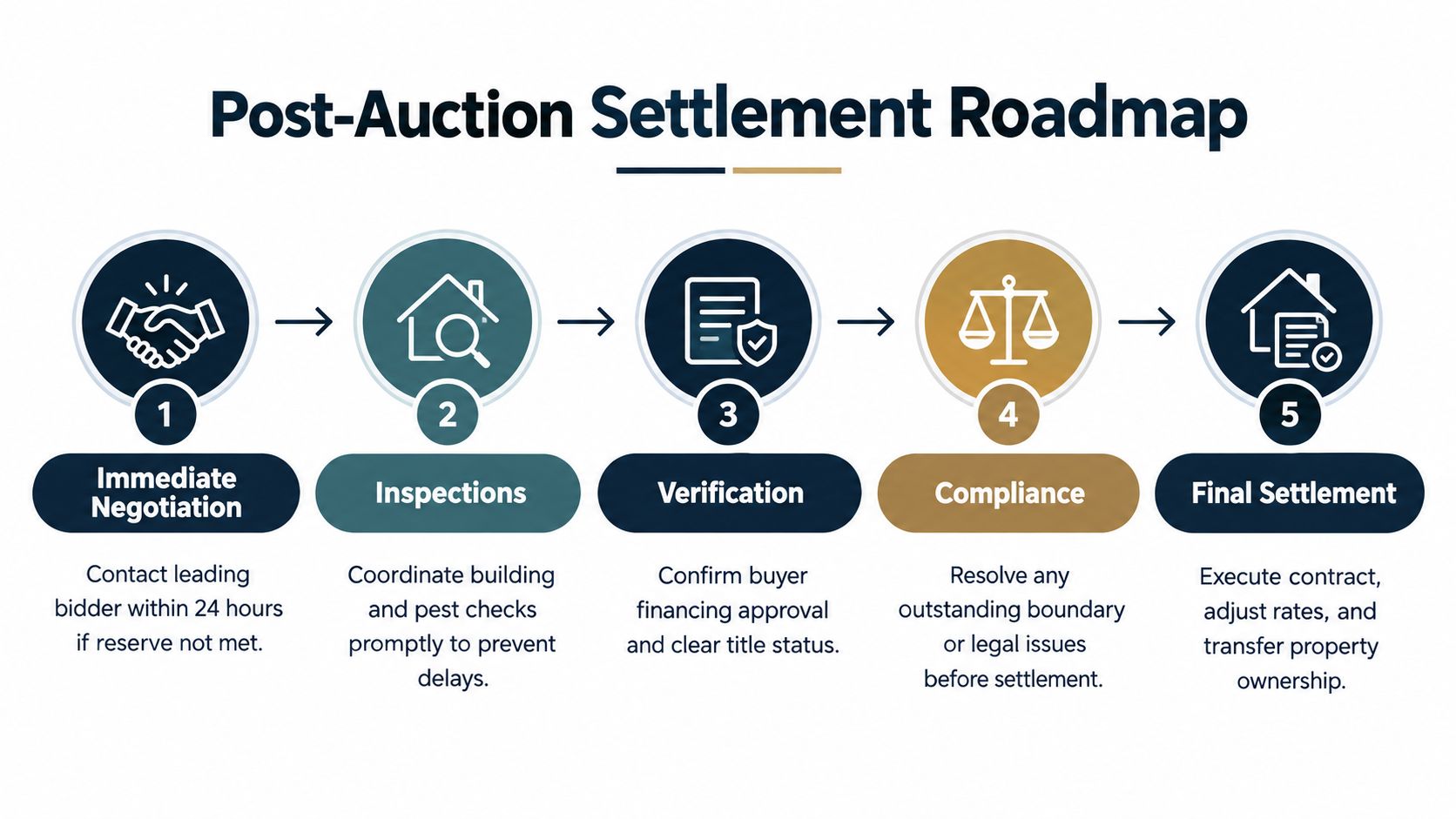
A pass-in isn't automatically a failure. It is a change from public competition to private negotiation, and the seller's next decisions should protect both price and certainty.
8. Post-Auction Negotiation and Settlement Protection
The auction result changes the negotiating environment, but it doesn't remove the need for discipline. If the reserve isn't reached, the seller may be dealing with one serious bidder rather than several competing parties. That buyer now knows the bidding history, the level of competition and possibly the seller's urgency.
Prepare negotiation boundaries before auction day. Know which terms matter most, such as price, settlement timing, inclusions or a deposit arrangement. A seller may accept a different combination of terms if it improves certainty, while a buyer should distinguish between a genuine contract benefit and a concession that creates unnecessary risk.
Private treaty deposits in WA are negotiated rather than automatically fixed by law. Consumer Protection WA explains that the deposit is generally no more than 10 per cent, often less, and is usually paid to the seller's agent into a trust account, with part commonly paid when the offer is accepted and the balance often due within seven days, as set out in the WA sale by offer and acceptance guidance. Auction contracts can contain their own requirements, so the signed contract remains the controlling document.
After agreement, keep the process moving:
- Conveyancing: Confirm that both parties' settlement representatives have exchanged the required documents.
- Inspections: Complete any agreed building, pest or final inspection within the contract timeframe.
- Finance: Buyers should keep their lender engaged and sellers should respond promptly to reasonable requests.
- Property condition: Maintain the home in the agreed condition and preserve included fixtures.
- Settlement logistics: Confirm access, keys, utilities and any agreed possession arrangements early.
For a buyer purchasing in Falcon, Wannanup or Dudley Park, title and property condition still deserve attention after an apparently successful bid. For a seller in Halls Head or Madora Bay, clear communication reduces the chance that avoidable uncertainty will reopen negotiations.
A successful auction is only valuable when the contract proceeds to settlement on terms both parties understand. Keep every material agreement in writing and let the conveyancer or solicitor manage legal changes.
Mandurah Auction Strategies, 8-Point Comparison
| Item | Implementation complexity 🔄 | Resource requirements ⚡ | Expected outcomes ⭐📊 | Ideal use cases 💡 | Key advantages ⭐ |
|---|---|---|---|---|---|
| Strategic Property Preparation: The Mandurah Market Advantage | 🔄 Medium–High, coordinated trades, staging and coastal repairs | ⚡ High, budget for repairs, professional staging, time for maintenance | ⭐📊 Higher perceived value; faster sale; reduces buyer negotiation on visible wear | 💡 Waterfront and lifestyle homes (Lakelands, Madora Bay); poorly maintained coastal properties | ⭐ Aligns with coastal aesthetic; mitigates salt-air issues; commands premium pricing |
| Precision Pricing Strategy: Market-Based Valuation for Mandurah Properties | 🔄 Medium, data analysis and regular review | ⚡ Low–Medium, market data, valuer or agent expertise | ⭐📊 Attracts qualified buyers; shortens campaign; maximises realistic sale price | 💡 All listings; critical for variable-value suburbs and auction campaigns | ⭐ Data-driven defensible pricing; increases buyer confidence; creates competitive tension |
| Premium Marketing Strategy: Positioning Mandurah Properties for Maximum Exposure | 🔄 High, multi-platform campaign, creative production and targeting | ⚡ High, pro photography, drone/video, ad spend, copywriting | ⭐📊 Greater reach and engagement; higher inquiry rates; potential premium sale | 💡 High-value waterfront and lifestyle properties; listings needing wide exposure | ⭐ Strong lifestyle narrative; targeted buyer reach; boosts perceived value |
| Open Home Staging and Experience Design: Creating Buyer Engagement | 🔄 Medium, staging, sensory design, logistics and hosting | ⚡ Medium, staging items, staff, ongoing cleaning and hosting time | ⭐📊 Increased attendance and feedback; builds auction momentum; uncovers objections | 💡 Family homes, entertaining-focused properties; suburbs where buyer footfall matters | ⭐ Generates urgency; collects buyer data; improves perceived livability |
| Auction Bidding Strategy for Mandurah Buyers: Reading the Market | 🔄 Medium, research, psychological discipline and tactical bidding | ⚡ Low, time for comparable research and auction attendance | ⭐📊 Better purchase discipline; reduces overpaying; identifies value opportunities | 💡 Buyers targeting competitive suburbs (Lakelands, Madora Bay) or auction purchases | ⭐ Protects budget; leverages market insight; enables tactical bidding |
| Legal Framework Navigation: Essential Requirements for Mandurah Property Auctions | 🔄 High, legal compliance, disclosure and contract complexity | ⚡ Medium–High, solicitor/conveyancer fees, title searches, documentation | ⭐📊 Reduced legal risk; smoother settlement; prevents post-sale disputes | 💡 All auctions and sales; properties with compliance, boundary or safety issues | ⭐ Ensures compliance; protects parties; identifies title/defect risks early |
| Auction Day Execution: Timing, Preparation, and Post-Auction Strategies | 🔄 High, coordination of venue, auctioneer, buyers and messaging | ⚡ High, venue/auctioneer costs, marketing, staff and pre-auction prep | ⭐📊 Clear market signal; potential to drive sale price above negotiated sales | 💡 Properties in active markets where auction will create competition | ⭐ Creates urgency and transparency; can maximise competitive bidding |
| Post-Auction Negotiation & Settlement Management: Protecting Value Through Final Stages | 🔄 Medium–High, negotiation, inspections and settlement coordination | ⚡ Medium, conveyancer, inspections, potential remediation costs | ⭐📊 Secures completion; resolves defects; protects sale value and timelines | 💡 Unsold auctions, deals requiring inspections or legal resolution | ⭐ Prevents failed settlements; manages adjustments; preserves sale value |
Turn Auction Pressure Into Informed Decisions
A successful Mandurah auction is built well before the auctioneer asks for the first bid. Sellers who wait until the final inspection to address salt-air wear, poor lighting, clutter or garden presentation may find that buyers have already formed a view of the home's condition. Owners who set a reserve from aspiration rather than comparable evidence can also make a well-marketed campaign harder to convert.
The seller's practical sequence is clear. Start with a local appraisal that separates suburb evidence from the property's individual strengths. Review the presentation through a coastal buyer's eyes, then address the visible issues that could create maintenance concerns. Approve a campaign that reflects the likely audience in Lakelands, Madora Bay, Meadow Springs, Halls Head, Falcon, Wannanup or Dudley Park rather than using one generic message across every suburb.
Next, review the contract and disclosure material with a qualified WA conveyancer or solicitor. Set a reserve that can be defended by recent evidence and campaign response. Decide in advance what happens if the property passes in, including who will negotiate, which terms are flexible and how quickly the leading bidder will be contacted.
Buyers need an equally structured approach. Study comparable sales and inspect the property more than once if necessary. Confirm pre-approved finance and cash requirements, arrange building and pest checks where possible, and obtain professional advice on title, strata, settlement and contract terms. Write down the perfect price, realistic price and hard walk-away limit before you attend.
The broader market should inform your thinking without replacing local judgement. National clearance rates have moved below the level many sellers would consider comfortable, while Perth results can vary sharply from one reporting period to another. WA auction volumes are also small, with auctions representing about 1% of listings and Perth recording fewer than 20 auctions a week in 2026, according to The West's WA auction analysis. A headline about Australia or Perth cannot tell you whether auction is the right format for a particular coastal home.
That decision depends on buyer depth, property appeal, pricing evidence and the seller's tolerance for uncertainty. A broad-appeal family home with strong inspection engagement may suit an auction campaign. A highly specialised property with a narrow buyer pool may need a different approach, even if the home is beautifully presented.
For local auction guidance, begin with an appraisal and a candid conversation about strategy. Beshay Realty can help Mandurah homeowners and buyers assess presentation, suburb positioning, campaign structure, contract readiness and the practical decisions that sit behind an auction result.
David Beshay Real Estate provides local appraisals, campaign planning and auction guidance for homeowners and buyers across Mandurah, Lakelands, Madora Bay, Meadow Springs, Halls Head, Falcon, Wannanup and Dudley Park. If you're preparing to sell or bid, visit David Beshay Real Estate to discuss the property, the evidence and the next practical step.

