


The most popular home marketing advice is also the least complete: put the property everywhere, create as much attention as possible, and let the market decide. In Mandurah, that approach can create activity without creating competition. A premium home needs the right price, the right audience, the right presentation and a launch sequence that protects buyer confidence from the first inspection.
Mandurah remains a compelling coastal market, but sellers are no longer operating in the same extremely fast environment seen earlier in the year. REIWA records a median sales price of $701,000 for Mandurah, with data updated on 4 October 2026, while recent commentary describes a more balanced market. Mandurah's REIWA suburb profile is a useful starting point, but an appraisal must still account for the property's street, condition, outlook, floor plan and buyer appeal.
Table of Contents
- Redefining Exposure for the Mandurah Market
- The Financial Impact of Strategic Property Styling
- Curating a Premium Visual Identity
- Targeting Distinct Coastal Buyer Personas
- Selecting the Right Sales Campaign
- Executing a Flawless Launch Strategy
Redefining Exposure for the Mandurah Market
Maximum exposure is not always the goal. If the price is wrong, broader visibility just gives more buyers a reason to reject the property before they inspect it. In Mandurah's balanced premium market, campaign reach must support a credible position rather than attempt to create value that the evidence does not support.
Suburb and property context determine which channels deserve attention. A contemporary coastal home in Halls Head may need to lead with water access, entertaining areas and architectural character. A family property in Falcon may compete through privacy, practical living and access to everyday amenities. Lakelands, Meadow Springs and Dudley Park attract different buyer priorities, even where the homes share a similar bedroom count.
Home marketing is not a volume exercise. It's a positioning exercise.
Attention isn't the same as intent
The national portal picture supports a selective approach. REA buyer-behaviour research, based on 1.3 million Australian sales and billions of interactions, found that realestate.com.au attracts the buyer on 9 in 10 properties that sell on the platform. REA's research into buyer behaviour on realestate.com.au demonstrates why portal presence matters, while also showing that identical exposure plans are unlikely to suit every property.
A portal listing begins the decision process. Buyers assess the lead image, price guide, floor plan and location before deciding whether an inspection deserves their time. The campaign must therefore make the home's value legible quickly, particularly when competing listings offer similar lifestyle benefits.
A selective approach to portal and channel selection is explained in more detail in our guide to advertising property for sale.
The practical question is: which buyers need to understand this property, and what must they see before they commit to an inspection?
Price positioning protects momentum
An ambitious launch price can weaken a campaign in a balanced market. Buyers comparing premium homes recognise when a competing property offers stronger value, and those who dismiss the listing early may not return after a later reduction. The first presentation of price affects both enquiry quality and the urgency created around the launch.
This is especially relevant in Madora Bay and Wannanup. Lifestyle appeal can support a meaningful premium, but that premium must be evidenced through land, outlook, build quality, entertaining capacity, privacy and scarcity. Strong photography and polished copy cannot justify a figure that sits beyond the property's competitive set.
Practical rule: use exposure to reinforce a credible position, not to compensate for an unsupported one.
Set campaign measures before launch. Judge performance by qualified inspection numbers, enquiry quality and buyer feedback in the first fortnight, not by total listing views. This provides a clearer basis for adjusting the message, the channel mix or the price position while buyer attention is still active.
The Financial Impact of Strategic Property Styling
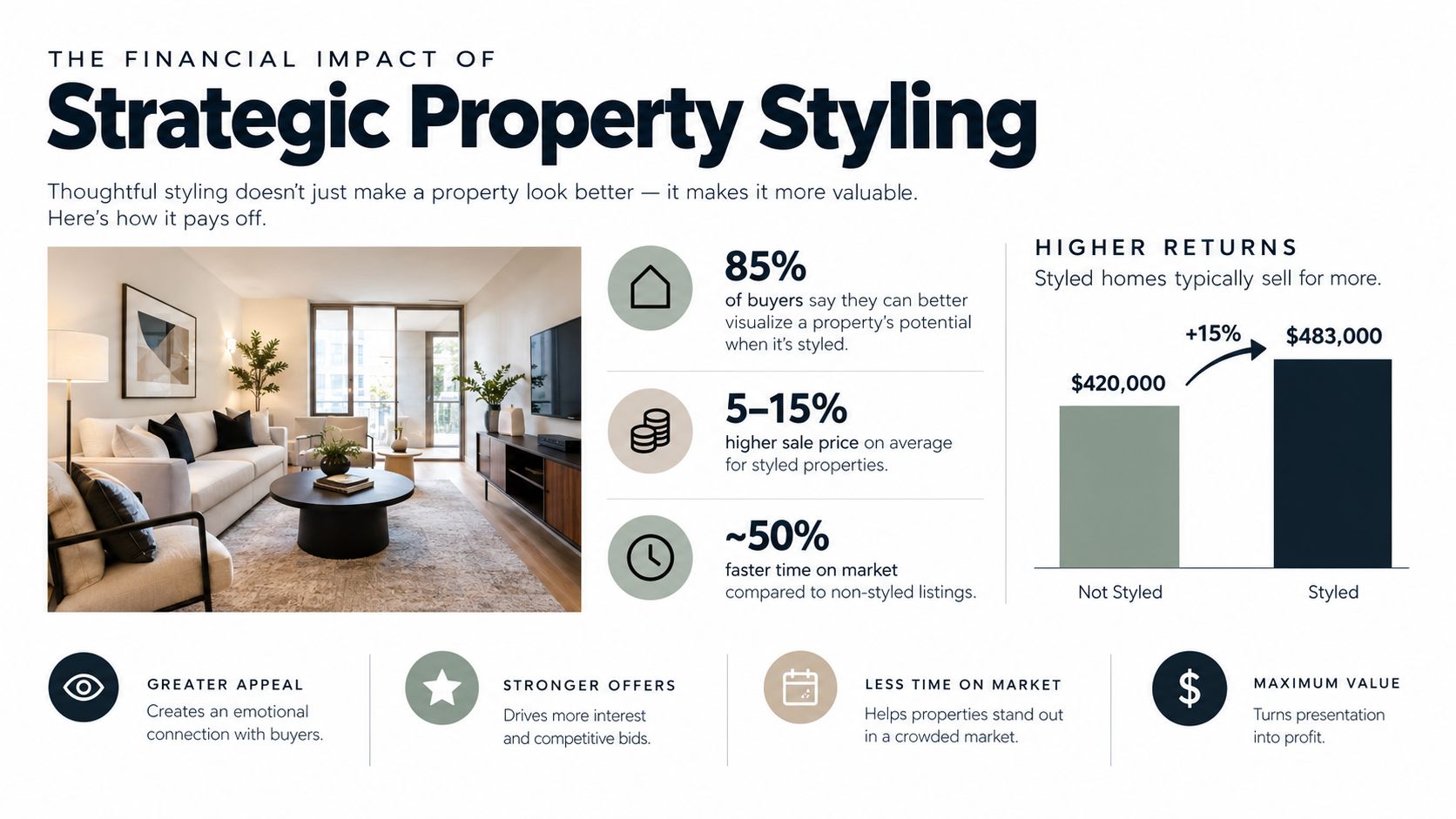
Styling is often treated as an optional finishing touch. For a home competing in Mandurah's lifestyle market, that view can be expensive. Presentation affects how quickly buyers understand the home's potential, how confidently they compare it with alternatives and whether the asking position feels supported.
Australian industry reporting found that 98% of LJ Hooker's top 50 agents believed styling helps achieve a higher sale price, while 83% said it can add more than 2.5% to the final sale figure. More than half estimated an uplift of up to 5%. These figures come from Australian property styling return-on-investment reporting, and they provide a useful commercial lens for sellers considering the pre-sale budget.
Styling changes the buyer's reading of space
A buyer doesn't experience an empty room as a neutral canvas. They may see awkward proportions, uncertain furniture placement or a renovation task. Carefully selected furniture and restrained decoration show scale, movement and purpose without asking the buyer to solve the room themselves.
That matters in Meadow Springs and Lakelands, where family buyers may be comparing several homes with similar accommodation. Clear zones for dining, work, relaxation and storage help them assess whether the property can support their routine. In coastal homes, the same principle applies outdoors. A shaded alfresco area, pool setting or balcony should look usable, not merely exist in a floor plan.
Good styling isn't about filling every corner. It should remove distractions, create visual order and draw attention to the property's strongest attributes.
Time on market has a financial cost
The historical Australian data is also relevant to campaign timing. One widely cited study reported that 49% of staged homes sold in the first week, 66% within two weeks and 87% within four weeks. The same sample recorded an average premium of $69,017, with around 30% of properties achieving more than $100,000 above baseline, as reported in Australian home-staging market data.
These figures aren't a promise for an individual Mandurah property. They do show why presentation should be assessed as a commercial decision rather than a decorative one. A property that launches well has a better chance of converting early attention into inspections while the listing still feels fresh.
Buyers don't pay a premium for cushions. They pay when presentation makes the home's value easy to recognise.
Allocate the preparation budget intelligently
Styling shouldn't replace necessary maintenance. A leaking tap, tired paintwork or neglected garden can undermine the effect of beautifully arranged furniture. The order of work matters.
- Resolve visible defects: Repair items that raise questions about maintenance or future expense.
- Edit the contents: Remove excess furniture, personal collections and pieces that make rooms feel smaller.
- Clarify the lifestyle: Set the dining area, alfresco, study or main suite according to the most natural use of the home.
- Keep the palette controlled: Soft ivory, deep slate, muted seafoam and natural timber tones can complement coastal architecture without becoming themed.
- Coordinate the photography: Styling should be planned with the image list, not completed after the photographer has already arrived.
Sellers considering the cost and scope of preparation can review house staging costs and planning considerations before deciding where professional input will have the greatest effect. The objective is not superficial polish. It's to make the home's value legible, quickly and consistently.
Curating a Premium Visual Identity
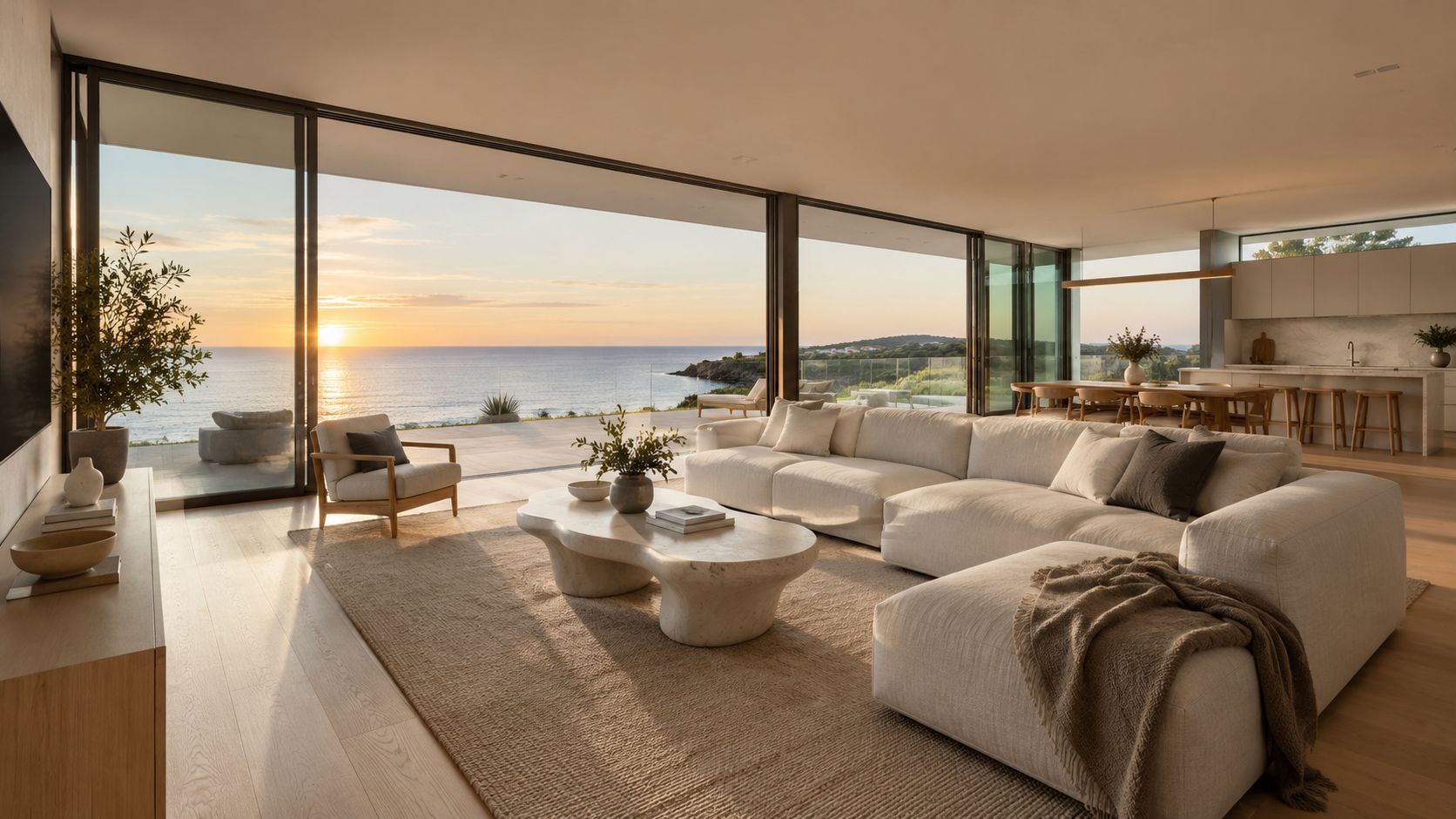
A premium listing shouldn't look like a collection of unrelated photographs. It should feel like a considered editorial account of the property, moving from first impression to detail, then from interior life to the surrounding coastal setting.
Start with the hero image. It needs to communicate the home's strongest proposition without exaggeration. For a Wannanup or Madora Bay property, that may be a refined exterior, an outlook or an indoor-outdoor connection. For a home in Dudley Park or Halls Head, the strongest opening may be an architectural angle, a beautifully proportioned living area or a sequence that makes the floor plan immediately understandable.
Build the visual sequence deliberately
The photography brief should identify the buyer's likely questions before the camera is lifted.
- Establish arrival: Show how the home presents from the street, driveway or entry. This sets expectations for architectural quality and maintenance.
- Explain connection: Move through the main living areas in a sequence that demonstrates how the rooms relate to one another.
- Show scale: Include enough furniture and composition to make room proportions clear, particularly in open-plan areas.
- Lead outdoors: Capture entertaining areas, gardens, pool spaces and balconies in a way that shows how they function.
- Finish with detail: Use selected images for stone, timber, lighting, joinery, bathroom finishes or coastal outlooks. Detail should support the larger story, not replace it.
A cinematic video can add movement and atmosphere, but it shouldn't become a substitute for clear information. Buyers still need a floor plan that explains flow, room dimensions and practical separation. A well-produced video earns attention, while a precise floor plan helps a buyer decide whether the home deserves an inspection.
Match style with the property
Muted luxury tones usually work better than aggressive editing. Strong colour casts, excessive wide-angle distortion and over-bright skies can create a gap between the online impression and the physical inspection. That gap weakens trust.
For a coastal-modern home, natural light, pale materials, textural finishes and outdoor transitions can carry the visual identity. A traditional home may need warmth, craftsmanship and proportion to take priority. A family property in Falcon or Meadow Springs should feel generous and liveable, not staged for a magazine with no evidence of daily function.
The Mandurah real estate photography service should be briefed around this distinction. Ask the creative team to identify what makes the home valuable, then build a consistent set of images around that answer. The result should feel polished, but still credible.
Targeting Distinct Coastal Buyer Personas
The same property description won't speak equally well to every buyer. A list of bedrooms and bathrooms provides necessary information, but it rarely explains why a home suits a particular stage of life.
A downsizer in Dudley Park may care about secure, low-maintenance living, storage and proximity to the estuary or town centre. A growing family in Madora Bay may focus on separation between living zones, outdoor play, practical traffic flow and the ease of hosting relatives. An investor assessing Mandurah may read the same listing through rental demand, upkeep and future tenant appeal.
Mandurah Suburb Buyer Profiles
| Suburb | Primary Buyer Persona | Key Lifestyle Drivers |
|---|---|---|
| Lakelands | Growing families and established owner-occupiers | Functional floor plans, school and community access, storage, outdoor living |
| Madora Bay | Coastal lifestyle buyers and families | Modern design, beach-oriented living, entertaining areas, low-maintenance finishes |
| Meadow Springs | Families, professionals and practical owner-occupiers | Space, convenience, flexible rooms, gardens and everyday amenity |
| Halls Head | Lifestyle buyers, downsizers and established households | Coastal access, outlook, entertaining, quality renovations and privacy |
| Falcon | Families, lifestyle buyers and buyers seeking a relaxed coastal setting | Land, outdoor use, separation, local character and durable finishes |
| Wannanup | Waterfront and boating-oriented lifestyle buyers | Water access, outlook, entertaining, storage and indoor-outdoor connection |
| Dudley Park | Downsizers, professionals and investors | Low-maintenance design, convenience, functionality and rental appeal |
Write for the decision behind the search
A Madora Bay listing should make its relationship with the coast clear without relying on tired lifestyle language. Explain whether the home supports morning walks, outdoor dining, guest accommodation or a low-maintenance routine. For Wannanup, practical boating or water-related features may matter more than a generic statement about location.
In Lakelands, copy should help families understand how the home works at busy times of day. Is there a second living area? Can children move between the yard and living spaces? Is there a useful study or storage solution? Meadow Springs buyers may respond to a similar level of practicality, especially where a property offers flexibility for work, guests or teenagers.
A buyer should be able to recognise their life in the home before they inspect it. That doesn't mean inventing a story. It means selecting the details that make the existing property relevant.
Use local knowledge without narrowing the audience
Local language should add clarity, not create assumptions. Halls Head can be presented through its coastal lifestyle and established streetscapes, Falcon through its space and relaxed character, and Dudley Park through its practical connection to Mandurah's broader amenities. Each message should remain accurate to the specific address.
The coastal property agents serving Mandurah can help refine this positioning because suburb knowledge influences more than the headline. It affects the order of images, the inspection conversation, the likely objections and the evidence used during appraisal.
The strongest campaigns don't force a property into a buyer persona. They identify the home's natural audience, then make its most relevant qualities impossible to miss.
Selecting the Right Sales Campaign
Private treaty, auction and expression of interest campaigns each create a different negotiating environment. The correct choice depends on the home's distinctiveness, the depth of likely demand, the seller's timing and the quality of the available pricing evidence.
Private treaty
Private treaty suits many established family homes where comparable sales provide a sensible guide and buyers expect a conventional negotiation. It gives the seller control over the asking range and allows qualified buyers to make an offer when they're ready.
The risk is that an ambitious price can sit untouched while the listing loses freshness. Buyers may wait for a reduction rather than compete, particularly if similar homes are available. Private treaty works best when the pricing position is credible, the presentation is complete and the agent has a clear plan for reviewing feedback.
Auction
Auction can suit a distinctive waterfront property, architecturally significant home or tightly held offering where competition is more valuable than a fixed public price. It creates a defined decision point and can expose the strength of buyer intent in a transparent setting.
It also demands preparation. Buyers need enough information to assess the property, finance arrangements and sale terms before the auction date. If the campaign doesn't generate a genuine group of committed participants, the public event may expose a lack of depth rather than create it.
Expression of interest
Expression of interest can work for a premium home where the market needs to reveal value, particularly when the property has unusual attributes that make direct comparison difficult. It gives qualified buyers an opportunity to present terms, timing and price in a structured way.
The method can create uncertainty if the instructions aren't clear. Buyers should understand the closing process, what information to provide and how the seller will assess offers. Used without discipline, it can feel like an invitation to guess.
| Campaign method | Strongest fit | Principal advantage | Main trade-off |
|---|---|---|---|
| Private treaty | Comparable family and lifestyle homes | Clear price framework and flexible negotiation | Buyers may wait if the price lacks credibility |
| Auction | Distinctive or highly competitive properties | Defined deadline and visible competition | Requires sufficient qualified buyer depth |
| Expression of interest | Unusual premium homes | Allows detailed offers and market discovery | Poor communication can create uncertainty |
The decision should also reflect the seller's risk tolerance. Someone with a firm settlement requirement may prefer the control of private treaty. Someone selling a unique Wannanup or Halls Head property may accept a more structured competitive process to test demand. The auction versus private sale comparison provides useful context, but the final recommendation should come from the property's evidence and buyer pool.
Campaign structure can't repair poor preparation. Before choosing a method, confirm the appraisal, complete the visual assets, identify the likely audience and agree on how feedback will change the strategy. A campaign should feel intentional from the first buyer contact.
Executing a Flawless Launch Strategy
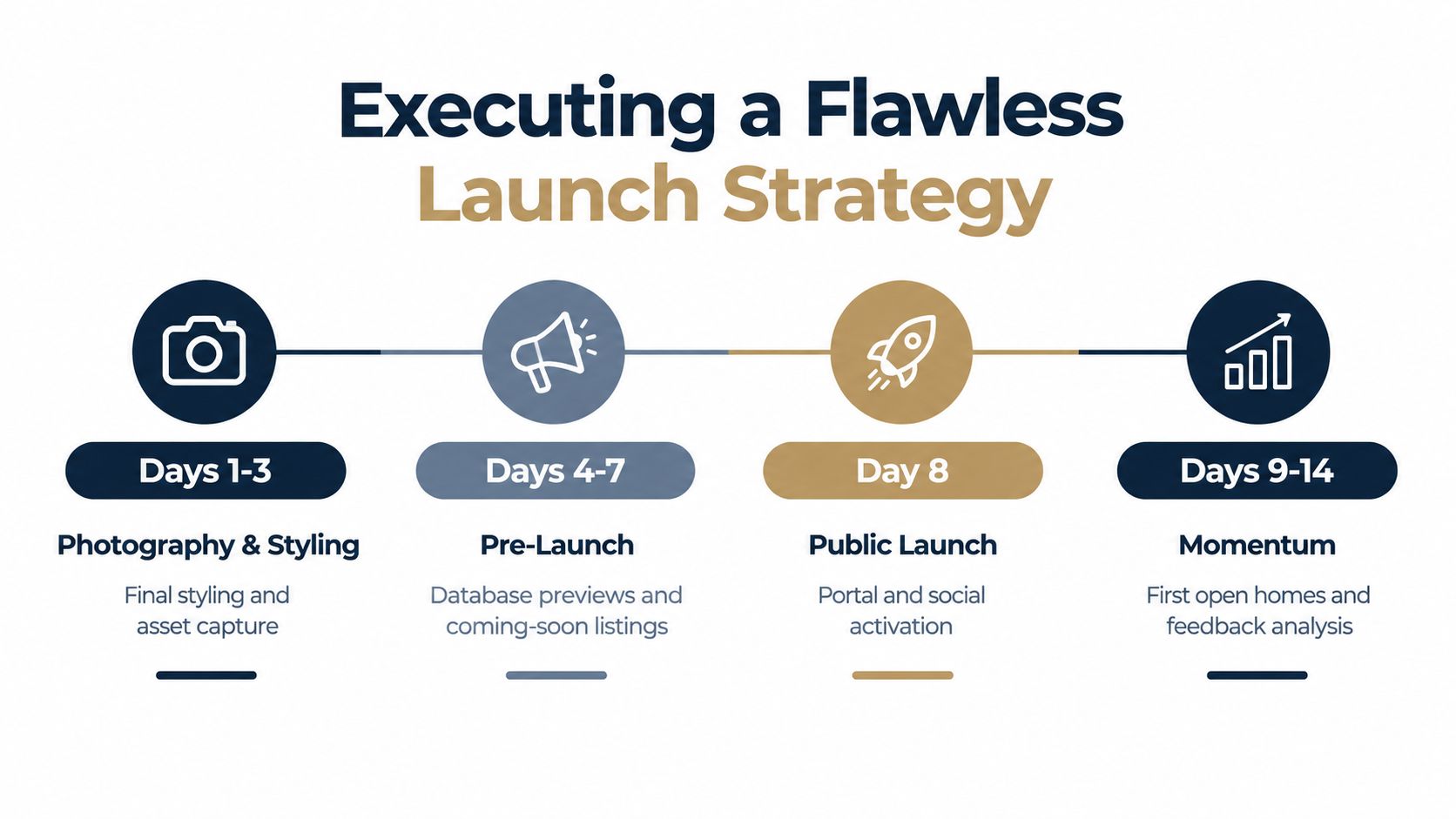
The first 14 days deserve deliberate management because early buyers form the market's initial view of value. They compare the listing with other available homes, discuss it with family and advisers, and decide whether to inspect now or wait for a change in price.
That doesn't mean a seller should rush an unfinished property to market. It means preparation needs a fixed sequence. A delayed launch with complete presentation is usually stronger than an early launch followed by missing photography, weak copy or an uncertain price.

Before the listing goes live
Begin with an appraisal that distinguishes between evidence and aspiration. Review comparable homes, the property's condition, its most persuasive attributes and the likely objections. A home in Falcon with generous land may need a different comparison set from a renovated apartment-style property in Dudley Park.
Then prepare the physical and digital presentation together:
- Complete the high-impact work: Address maintenance, decluttering, garden presentation and any visible defects.
- Approve the visual brief: Confirm the hero image, photography style, video requirements and floor plan accuracy.
- Write for the likely buyer: Lead with the home's strongest lifestyle or practical proposition, then support it with factual detail.
- Select the campaign method: Choose private treaty, auction or expression of interest according to market depth and seller priorities.
- Brief the database: Give suitable buyers and local contacts a clear preview without creating confusion about the public launch.
The first two weeks
At launch, the listing should appear consistently across the selected portal, social channels, database communication and relevant local promotion. Consistency matters. If the price, description or imagery varies between channels, buyers begin to question the campaign.
After the first inspections, collect specific feedback rather than broad impressions. Ask whether buyers understood the value, which features influenced them, what created hesitation and how the property compared with alternatives. The agent should separate a presentation objection from a price objection, because each requires a different response.
Overpricing is the most common threat to momentum. A seller may believe a later reduction will attract the same audience, but buyers who rejected the property early may already have moved on. A price change should be based on clear evidence, not impatience or a desire to preserve an original expectation.
A launch price is a strategic decision, not a test of how much the seller hopes to receive.
Review and adjust with discipline
By the end of the initial campaign period, the seller should know whether the listing is attracting the intended audience, whether inspections are converting into offers and whether the market understands the property's position. If those signals are weak, adjust the right variable.
Sometimes the issue is a missing floor-plan explanation or an unconvincing lead image. Sometimes the home needs another preparation step. Sometimes the price is ahead of buyer evidence. Treating every problem as an exposure problem wastes time and can make the listing look increasingly reactive.
David Beshay Real Estate offers campaign planning, listing presentation, photography, copywriting, floor plans, video and launch sequencing for sellers across Mandurah and nearby coastal suburbs. For an informed home marketing strategy, arrange an appraisal that considers your property's presentation, buyer audience, suburb position and the sales method most likely to protect momentum.

