

A neighbour's sale result can change the way a Mandurah homeowner sees their own property overnight. One day, the family home feels comfortably valued against an older purchase price. The next, a result from Halls Head, Falcon or Madora Bay suggests the local market has moved further than expected, raising an immediate question: is this the right time to sell, or is there more value to wait for?
The answer depends less on a single headline and more on where the property sits, what it offers and which recent homes provide a fair comparison. Western Australia's broader market has created a strong tailwind. The Australian Bureau of Statistics recorded a mean residential dwelling price of $1.014 million in WA in the December quarter of 2025, up from $914,500 in June 2025 and $943,700 in September 2025. WA's mean dwelling price rose 7.8% during the December quarter, compared with 2.7% nationally, and annual growth reached 16.8% in the year to December 2025, the highest rate among Australia's states and territories (Australian Bureau of Statistics dwelling-price data).
That statewide movement doesn't tell you what your Lakelands family home, Madora Bay coastal property or Meadow Springs investment is worth. It does explain why older purchase prices and historic suburb averages can now mislead. This is a local reading of property prices rising in Mandurah, with practical guidance for homeowners, buyers and investors across Halls Head, Falcon, Wannanup, Dudley Park and the surrounding coastal market.
Table of Contents
- A Quiet Auction in Halls Head and the New Market Reality
- Why Mandurah Prices Are Still Climbing
- What the Numbers Look Like Across Mandurah Suburbs
- What Rising Prices Actually Mean for Buyers and Sellers
- Getting an Appraisal That Reflects the Real Market
- Why the Next Few Months Matter for Mandurah Sellers
- Practical Next Steps for Mandurah Homeowners
- Reading the Mandurah Market Like a Local
A Quiet Auction in Halls Head and the New Market Reality
The auction itself may have felt ordinary. A few neighbours stood near the verge, buyers moved through the home, and the selling agent called for bids. The surprise came later, when the result landed well above the figure a nearby homeowner had kept in mind from an earlier sale.
That reaction is common in a rising market. Owners often use a familiar benchmark, such as what they paid, what a similar home sold for several years ago or a broad Mandurah median. Buyers, however, are making decisions against today's available stock. If a well-presented home has the right bedroom count, outdoor living, orientation or coastal connection, competing buyers can push the result beyond an older mental reference point.
The Western Australian figures provide the wider context. A $1.014 million mean residential dwelling price in WA in the December quarter of 2025, compared with $914,500 in June 2025, shows how quickly the state-level backdrop changed over six months (ABS residential property data). The ABS recorded a 10.9% increase across that six-month period, while WA's annual mean dwelling-price growth reached 16.8%.
The state tide and the local decision
That tide affects Mandurah, Lakelands, Madora Bay, Meadow Springs and Halls Head, but it doesn't lift every property by the same amount. A canal-side home in Wannanup, a renovated coastal residence in Halls Head and a standard family home in Meadow Springs attract different buyer groups and should be compared with different evidence.
The campaign method matters too. A property with strong emotional appeal and clear buyer competition may suit an auction, while another home may perform better through a carefully managed private sale. Homeowners weighing the two approaches can review this practical explanation of auction versus private sale before deciding.
Local rule: A rising market improves the backdrop. It doesn't remove the need for accurate pricing.
Why Mandurah Prices Are Still Climbing
Mandurah's price movement has a straightforward foundation. More households are competing for housing, while new supply takes time to move from approval through construction and into a completed, market-ready dwelling.
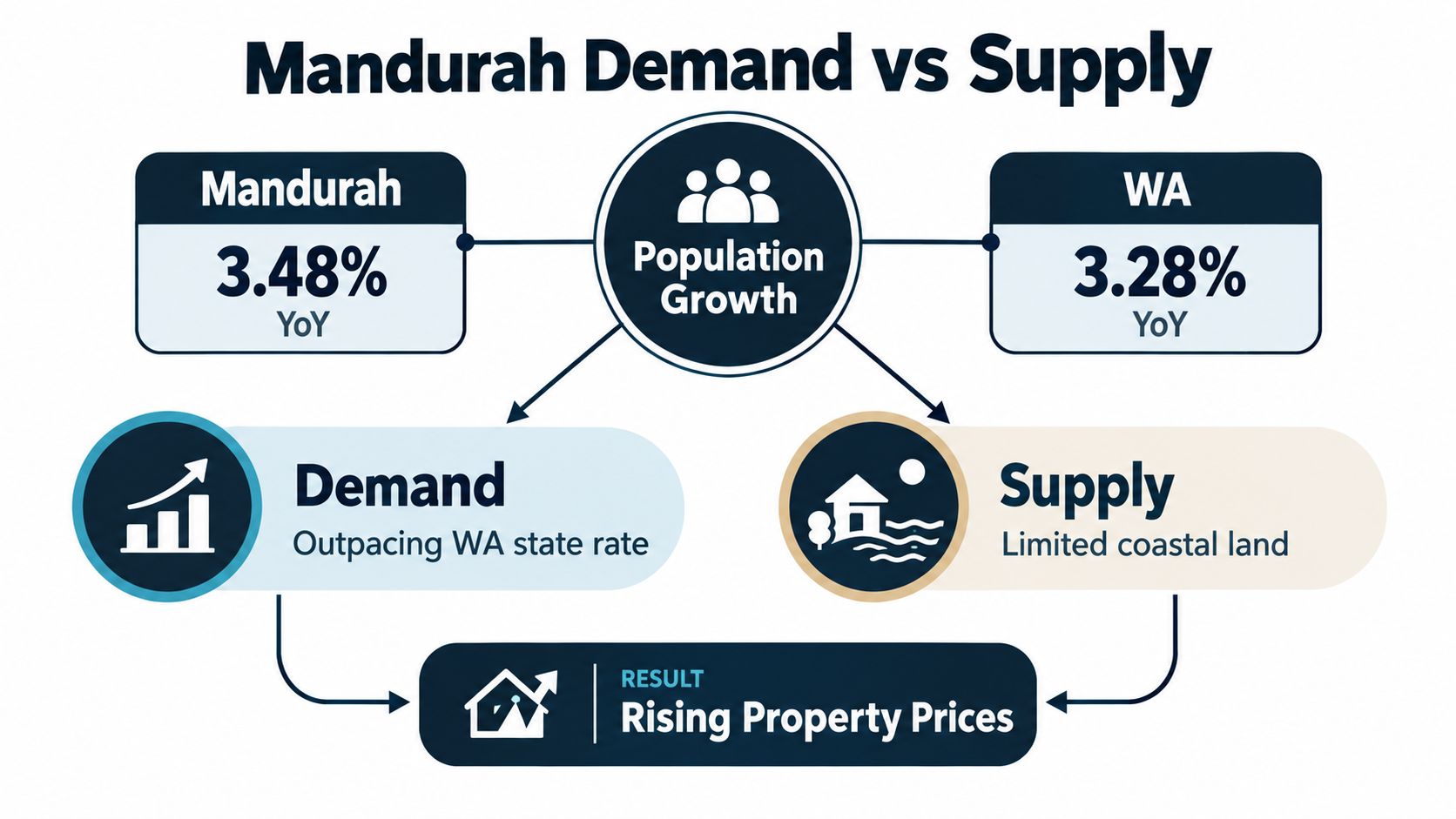
Mandurah's population was reported at 45,983, with year-on-year growth of 3.48%, ahead of Western Australia's 3.28% growth rate (Mandurah population and housing information). That difference matters because even modestly faster household growth can increase pressure on established homes, rentals and new subdivisions.
Western Australia recorded 1,915 residential dwelling approvals in the cited 2024–25 financial-year-to-date period (WA Parliament Mandurah document). An approval is not the same as a finished home with landscaping, services, title and an owner ready to move in. Construction lead times, titled land, infrastructure sequencing and local availability all affect when that future supply can compete with existing listings.
Why growth corridors feel the pressure
Lakelands, Meadow Springs and the newer coastal strips near Madora Bay can experience this pressure differently. Buyers may want newer homes and contemporary floor plans, yet the available choice at any given time can remain narrow. When several buyers want the same type of property, they compete more directly, particularly if the home is cleanly presented and priced against relevant sales.
This is why property prices rising isn't a matter of confidence or opinion. It's a competition effect. When demand grows faster than immediately available stock, buyers have fewer substitutes, sellers gain more negotiation power and negotiation windows can shorten.
For readers wanting broader context on Perth and its surrounding markets, this guide to Perth property offers a useful comparison point. Mandurah still needs to be read locally, though. A Perth-wide view can't account for the differences between coastal land, established amenities and individual suburb supply.
The same principle applies when considering the broader Perth housing market's upward climb. The direction may be supportive, but the sale plan must still be built around the specific home and its local buyer pool.
What the Numbers Look Like Across Mandurah Suburbs
A Mandurah-wide median can establish direction, but it's too broad to price an individual property. The useful question is narrower: what are comparable three-bedroom or four-bedroom homes achieving in this suburb, with similar land, presentation, location and buyer appeal?
The available suburb data shows why that distinction matters.
| Suburb | Median Sale Price | Annual Growth | 3-Bed Median | 4-Bed Median | Median Rent (pw) |
|---|---|---|---|---|---|
| Lakelands | $820,000 | 19.7% | $750,000 | $850,000 | $665 |
| Madora Bay | $1.038 million | 30.6% | $903,000 | $1.06 million | $690 |
| Halls Head | $935,000 | 16.9% | $800,000 | $975,000 | $680 |
The figures for Lakelands cover the 12 months ending September 2026. The suburb recorded a median sales price of $820,000, annual sales-price growth of 19.7% and a median rent of $665 per week, up 7.3% (REIWA suburb search data). Its lower quartile was $760,000 and upper quartile $865,000, while three-bedroom houses sat around $750,000 and four-bedroom houses around $850,000.
Bedroom count changes the comparison
That bedroom split is more than a statistical detail. A four-bedroom Lakelands home competes for a different family buyer than a three-bedroom property. The additional room may support a study, children's accommodation or multigenerational living, but the value only appears when the floor plan, condition and presentation support that buyer expectation.
Madora Bay's median reached approximately $1.038 million, with annual growth of 30.6% for the same period (REIWA Madora Bay and Mandurah market reporting). Three-bedroom houses were around $903,000, while four-bedroom houses were around $1.06 million. The premium reflects more than the suburb name. Coastal proximity, newer construction, entertaining areas, finish quality and the scarcity of directly comparable homes all influence the result.
Halls Head recorded a median of $935,000 and annual growth of 16.9%. Three-bedroom houses were around $800,000, four-bedroom houses around $975,000, and median rent was $680 per week (REIWA Halls Head profile). A renovated four-bedroom home near the beach, estuary or established amenities shouldn't be benchmarked against a smaller inland property just because both sit within Halls Head.
Meadow Springs, Falcon, Wannanup and Dudley Park need the same discipline. For a fuller local review before selling or buying, use a current Mandurah property market report alongside property-specific comparable sales.
What Rising Prices Actually Mean for Buyers and Sellers
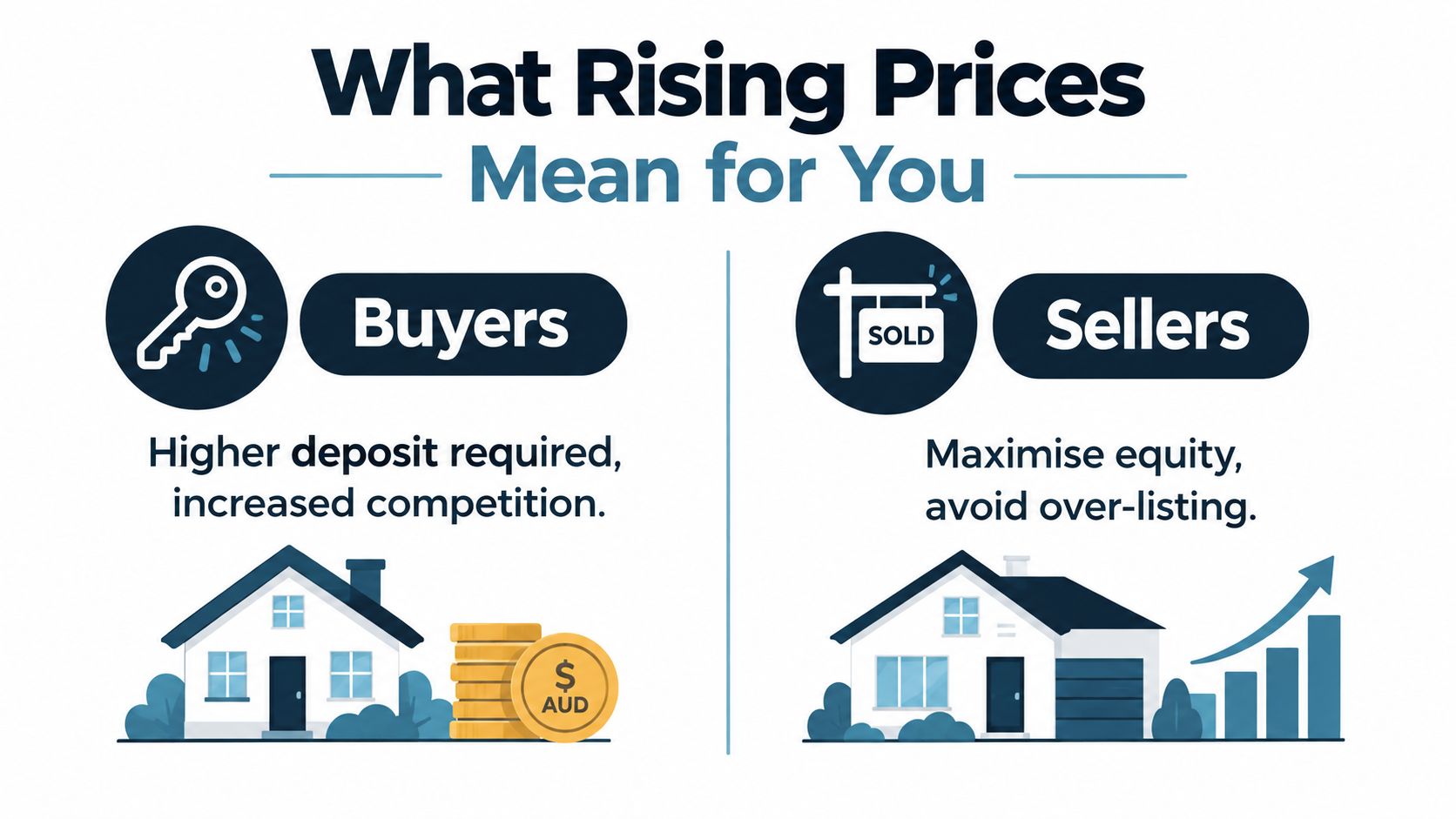
A rising market creates opportunity, but it also changes the practical mathematics of a move. Sellers may hold more equity, yet the next purchase can cost more. Buyers may see their preferred suburb gaining value, while the deposit and borrowing capacity required to enter it become harder to manage.
For a Lakelands owner, the key question isn't whether the suburb's median has risen. It's whether the property belongs with the three-bedroom, four-bedroom, lower-quartile or upper-quartile evidence. A family home with a strong floor plan and polished presentation may compete near the upper end, while deferred maintenance can pull it towards the middle or lower part of the relevant range.
Sellers need discipline as much as confidence
The temptation is to add the strongest suburb growth figure to an older valuation and list above the evidence. That strategy often creates a stale campaign. Buyers compare the asking price with fresh alternatives, and a home that remains available can quickly become the property they negotiate hardest against.
Buyers face a different trade-off. Stretching into a higher price band may secure the location or bedroom count they want, but it can also mean accepting dated interiors, a smaller block or future maintenance. Finance approval should be confirmed before inspections become serious, and repayments should be stress-tested rather than based on the maximum a lender is prepared to offer. A practical explanation of how rate decisions affect property ownership is available through this guide to understanding interest rates.
Investors must separate growth from holding income
Lakelands' $665 weekly median rent provides a useful reference for investors, but rent alone doesn't determine suitability. In Madora Bay, $690 per week against an approximately $1.038 million median sale price indicates an indicative gross yield of roughly 3.5% before costs, vacancies, financing and management, based on the available suburb figures (REIWA Madora Bay data). Halls Head's $680 weekly median against a $935,000 median equates to an indicative gross yield of about 3.8% before expenses and vacancy (REIWA Halls Head data).
Those figures suggest that an investor may be relying on lifestyle demand, property quality and long-term positioning as much as headline rental return. A Madora Bay coastal home, a Halls Head renovator and a Lakelands family property can all be sound considerations, but they serve different investment strategies.
For owners preparing to sell, discoverability also matters. Accurate suburb language, strong photography and useful property information can help a campaign rank higher in local searches, but search visibility can't compensate for an unsupported price.
Getting an Appraisal That Reflects the Real Market
A credible appraisal starts with the property, not the headline. The Mandurah median, a statewide average and an old purchase price can provide context, but none can account for a view block in Wannanup, a renovated kitchen in Halls Head or a newer four-bedroom design in Madora Bay.
The contrast between Halls Head and Madora Bay makes the point. Halls Head's median was $935,000, while Madora Bay's was approximately $1.038 million for the reported 12 months ending September 2026 (REIWA Halls Head profile). That spread reflects how buyers capitalise coastal proximity, dwelling quality, land size, construction age and presentation differently.
What a defensible appraisal includes
Ask an agent to show the evidence behind the figure. A useful appraisal should identify:
- Relevant suburb: Start with the same suburb and, where possible, the same micro-location.
- Comparable dwelling: Match bedroom count, land characteristics, condition and floor plan as closely as possible.
- Recent settlement evidence: Prefer completed transactions over old listings or optimistic asking prices.
- Adjusted differences: Explain how a pool, water outlook, renovation, additional living space or inferior presentation changes the comparison.
- Buyer positioning: Connect the likely price range with the people most likely to compete for the home.
A good comparison isn't necessarily identical. It's adjusted transparently. A renovated four-bedroom Halls Head home near established coastal amenities may warrant a different benchmark from a three-bedroom property requiring significant work, even if both sit within the same suburb.
Ask this before signing: Which settled sales support the proposed range, and what adjustments have been made for condition, land, outlook and accommodation?
For a practical explanation of why an in-person review matters, homeowners can read this guide to property appraisal in Mandurah. The aim is to avoid two expensive errors: leaving equity behind through an understated price, or overreaching and losing buyer momentum.
Why the Next Few Months Matter for Mandurah Sellers
Selling sooner doesn't automatically mean selling better. The sensible argument for acting in the coming months is not urgency. It's preparation. A well-positioned home can take advantage of current buyer interest, while an owner who waits until the property needs to be sold may have fewer choices around repairs, styling, photography and campaign timing.
Mandurah's longer market movement shows why owners should keep their records current. The Peel Region's Construction and Housing Snapshot reported the median house price rising from $480,000 in the 2021–22 financial year to $605,000 in 2023–24 and $710,000 in 2024–25, a total increase of approximately 47.9% (Peel Region housing snapshot reporting). The latest period accounted for a rise of approximately 17.4%.
Those figures don't guarantee that every home will sell quickly. Settlement volumes, available listings and days on market still shape the campaign. A poorly presented property can sit longer even when its suburb is performing strongly, because buyers at the upper end have higher expectations and can compare more critically.
The headline belongs to the suburb, not the home
Lakelands' 19.7% annual growth and Madora Bay's 30.6% are market indicators, not automatic price adjustments for every individual property (REIWA Mandurah-area search data). A home with dated paint, weak photography or an awkward campaign message won't inherit the full suburb result just because it carries the same postcode.
Halls Head's 16.9% annual growth tells a similar story. A premium coastal home may outperform the suburb median, while a property needing substantial work may attract buyers only after the asking price reflects that work (REIWA Halls Head data).
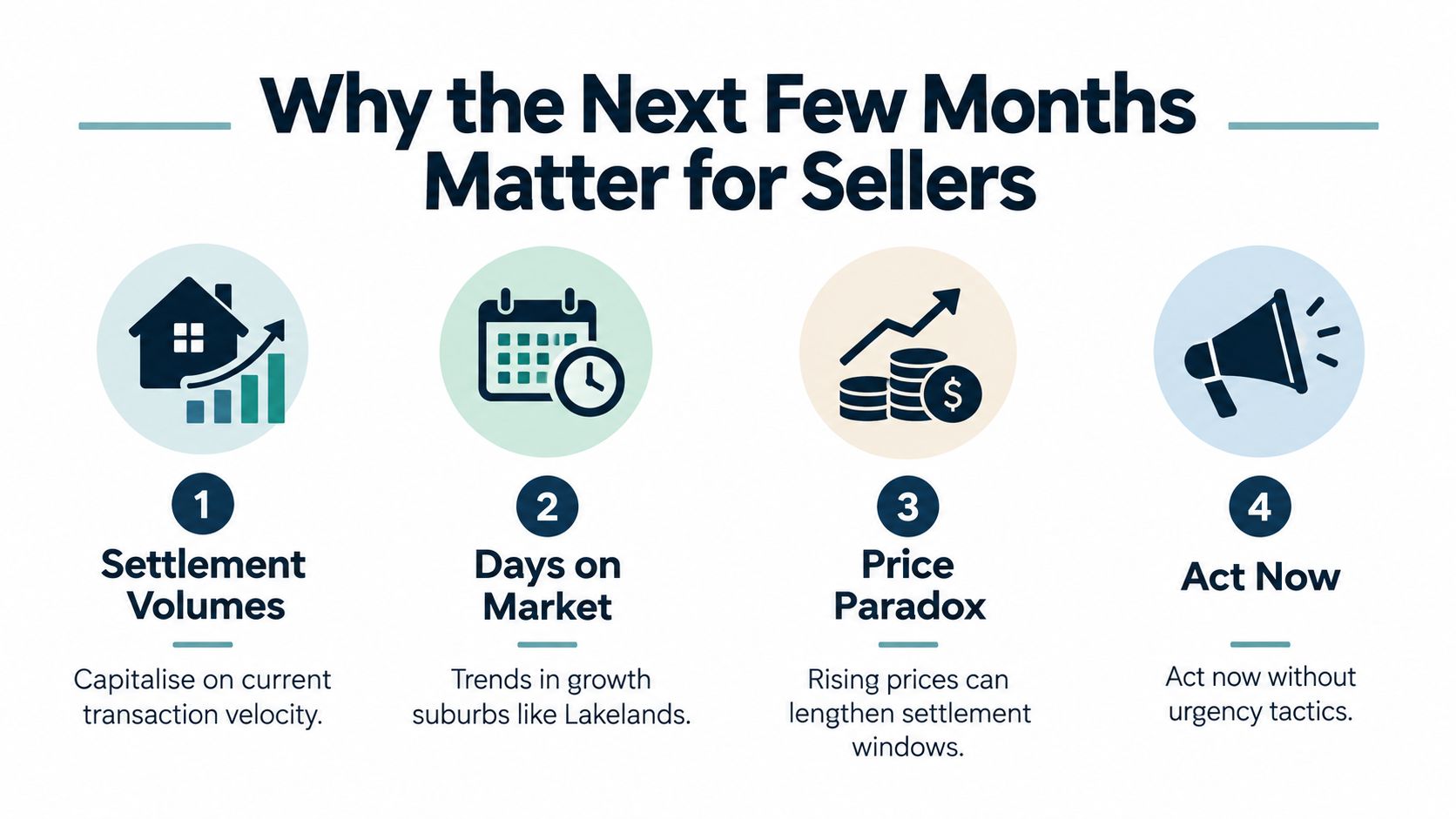
The right question is not “Can I sell before the market changes?” It's “Can I prepare this property properly while the current buyer pool is active?” That framing gives owners room to make informed decisions without manufacturing pressure.
Practical Next Steps for Mandurah Homeowners
A homeowner considering a sale doesn't need to make every decision at once. A calm sequence reduces guesswork and helps separate valuable preparation from cosmetic spending that won't change buyer perception.
Start with evidence
Collect settled sales from the same suburb and property type. For a four-bedroom Lakelands home, prioritise four-bedroom Lakelands comparisons. For a coastal Halls Head property, examine homes with similar outlook, renovation standard, land characteristics and proximity to local amenities. Don't anchor the conversation to an old Mandurah-wide median.
Then arrange an appraisal that explains the adjustments. Ask how the proposed range changes if the home has a better view, weaker presentation, extra accommodation or more extensive renovation than the selected comparables.
Spend where buyers can see the difference
Presentation doesn't mean replacing everything. Focus first on the features that influence the buyer's first impression and the property's position within its relevant range.
- Exterior arrival: Improve entry presentation, garden order and visible maintenance.
- Living areas: Remove excess furniture so room proportions and natural light read clearly.
- Kitchen and bathrooms: Address obvious wear before considering major renovation.
- Outdoor entertaining: Present patios, courtyards and coastal outdoor areas as usable extensions of the home.
- Marketing assets: Use professional photography and a campaign description that identifies the property's actual buyer appeal.
For some homes, a small improvement may help the property compete in a stronger quartile. For others, major spending won't be recovered, particularly where buyers are primarily purchasing land, outlook or location.
Match the campaign to the buyer pool
Auction and offer-and-acceptance campaigns can both work in coastal Mandurah. The choice should reflect the property's emotional appeal, likely competition, seller flexibility and the quality of the comparable evidence. An auction may suit a distinctive Wannanup waterfront home, while a carefully structured private campaign may better suit a buyer who needs time to assess a Lakelands or Meadow Springs family property.
Finally, confirm the next move. Review available equity, deposit requirements and borrowing capacity before committing to a campaign. Selling well is only one part of the decision if the next purchase creates avoidable finance stress.
Reading the Mandurah Market Like a Local
The numbers tell a consistent story when read at the right scale. Western Australia's mean dwelling price reached $1.014 million in the December quarter of 2025, while Mandurah's median house price rose from $480,000 in 2021–22 to $710,000 in 2024–25 (ABS WA dwelling-price data; Peel Region housing snapshot). The suburb-level results then separate the market further, with Lakelands at $820,000, Halls Head at $935,000 and Madora Bay at approximately $1.038 million in the reported data (REIWA Mandurah-area suburb data; REIWA Halls Head profile).
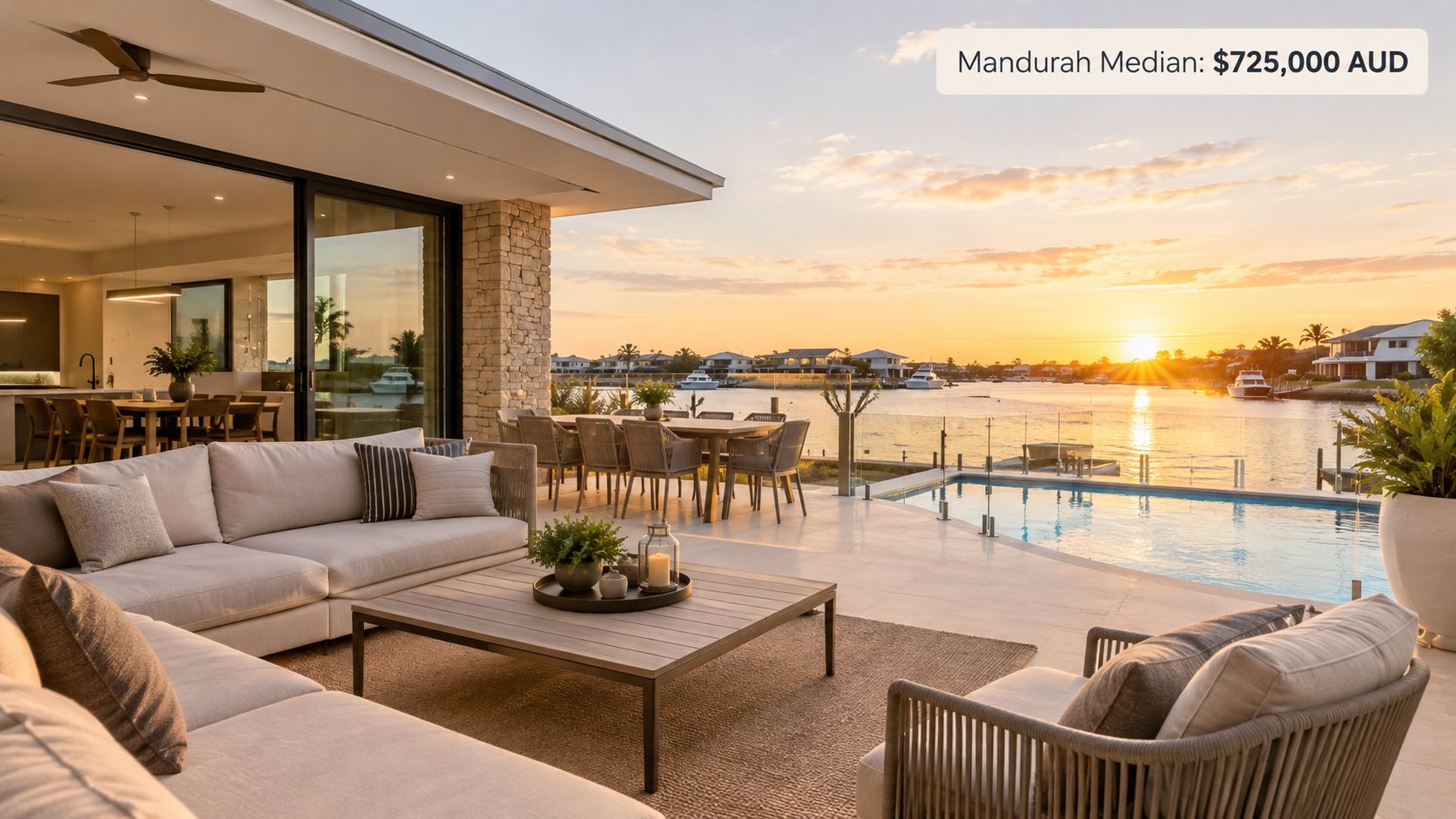
The decision frame for an owner is simple: the wider market is supportive, but the property's value comes from recent, adjusted, suburb-specific transactions. A four-bedroom Lakelands home shouldn't be priced from the Mandurah median. A Madora Bay coastal property shouldn't be compared casually with an older inland dwelling. A Halls Head home near the water needs evidence that recognises outlook, condition, land and buyer expectations.
The local reading
Investors can use rental medians and indicative gross yields as starting points, but must allow for costs, vacancy, finance and property management. Buyers should compare the home in front of them with the next realistic alternative, not just a suburb headline. Sellers should treat presentation, photography, campaign structure and pricing discipline as the levers they control.
Owners who want a broader framework for interpreting local transactions can also review this RealEstateCRM market analysis, then apply the same discipline to Mandurah's more specific coastal conditions.
David Beshay Real Estate works with homeowners across Mandurah, Lakelands, Madora Bay, Meadow Springs, Halls Head and Falcon on local appraisals, pricing advice and campaign preparation. The practical objective is clear: understand where your property sits inside its real buyer market before deciding what to do next.
For a suburb-specific view of your home's current position, contact David Beshay Real Estate for a data-driven appraisal and practical advice on pricing, presentation and campaign strategy. Bring your questions about comparable sales, timing and your next move, and receive a clear local assessment without relying on a broad Mandurah headline.

