

A landlord in Halls Head may be watching the lease end date approach while wondering whether to wait, ask the tenant to leave, or launch the property now. In Lakelands, the same decision can look different if the home suits an investor who values an established tenancy. The practical question isn't whether you can sell. It's which sale strategy protects the tenancy, reaches the right buyer and keeps the campaign well presented.
Selling property with tenants in Mandurah requires more coordination than selling a vacant home, but it doesn't automatically mean accepting a weaker result. Coastal lifestyle buyers may want vacant possession and freedom to move in, while investors looking across Mandurah, Meadow Springs, Falcon or Dudley Park may see an occupied property as an immediately income-producing asset. The lease, the home's presentation and the likely buyer pool all matter.

A considered campaign starts with three decisions:
- What does the tenancy allow? Review whether the lease is fixed-term or periodic, and identify the lawful path if vacant possession is needed.
- Who is the likely buyer? An owner-occupier and an investor will assess the same property differently.
- How will access work? Agreeing a controlled inspection schedule is better than repeatedly disrupting the tenant.
Mandurah's market includes established family homes, coastal residences and investment properties, so one formula won't suit every address. A property in Madora Bay or Wannanup may depend heavily on lifestyle presentation, while a well-positioned rental in Lakelands may appeal to buyers who want continuity of income. Before making a timing decision, sellers should also understand how presentation, pricing and campaign preparation work together in this guide to selling your home.
The aim is to plan calmly, not rush the tenant out or postpone a sensible sale without reason. With the right appraisal, buyer positioning and communication plan, an occupied home can be marketed professionally while the tenancy remains protected.
Table of Contents
- Introduction to Selling a Tenanted Home in Mandurah
- How WA Tenancy Law Shapes Your Sale Options
- Choosing Between Selling Vacant and Selling With Tenants in Place
- Marketing and Inspections That Respect Tenant Rights
- Negotiation Settlement and Handover When Tenants Remain
- Your Mandurah Sale Plan and Next Steps With Beshay Realty
Introduction to Selling a Tenanted Home in Mandurah
A landlord in Halls Head may be weighing two competing priorities. The property is ready for a conversation about sale, but the tenant's lease still has time to run, and the owner doesn't want to lose a well-managed tenancy or create unnecessary disruption. In Lakelands, that same owner may also recognise that an investor could prefer buying the home with a tenant already in place.
That tension is common in Mandurah's coastal market. Properties attract different kinds of buyers, from households looking for a home near the water to investors seeking a practical rental asset. A tenanted sale doesn't suit every property, but vacancy isn't automatically the superior option either.
The first useful distinction is between legal permission and commercial strategy. WA law allows a property to be sold while a tenant remains in occupation. The sale itself doesn't automatically end the tenancy, so the campaign needs to be built around the lease terms and lawful access arrangements.
Local observation: The strongest campaign is usually the one that identifies its buyer before it decides whether vacancy is necessary.
For a premium home in Madora Bay, a buyer may place a high value on seeing the home without furniture or occupancy constraints. A property in Meadow Springs, Falcon or Dudley Park may instead attract attention from investors who want the lease, rental history and management arrangements explained clearly. Neither path should be chosen by habit.
Start with the lease, not the listing date
Before photography, advertising or private inspections, obtain the complete tenancy documentation. Confirm the lease end date, rent, any relevant notices, property management arrangements and the tenant's preferred communication channel. This information lets the selling agent shape an honest campaign and prevents a buyer from discovering important conditions late in the negotiation.
The property's condition also deserves a practical assessment. A tenant may keep a home beautifully, yet the owner won't have complete control over styling, storage, photography windows or inspection times. That doesn't prevent a polished presentation, but it does require earlier planning.
A sale can work without forced vacancy
When a tenancy remains in place, the seller can still market the property, negotiate an offer and settle the transaction. The buyer generally steps into the landlord's role from settlement if the tenancy continues, which makes accurate disclosure and a clean handover essential.
This guide focuses on the decisions that matter locally: whether to sell with tenants or wait, how to protect presentation while arranging access, and how to manage the contract and settlement process. Sellers in Halls Head, Lakelands, Madora Bay, Meadow Springs, Falcon, Wannanup and Dudley Park can use that framework to plan a campaign around the property's real buyer pool rather than an assumed preference for vacancy.
How WA Tenancy Law Shapes Your Sale Options
WA tenancy law gives sellers room to proceed, but it sets clear limits on how vacancy can be created. A property can be sold while it is still tenanted. The first question is whether the contract requires vacant possession at settlement.
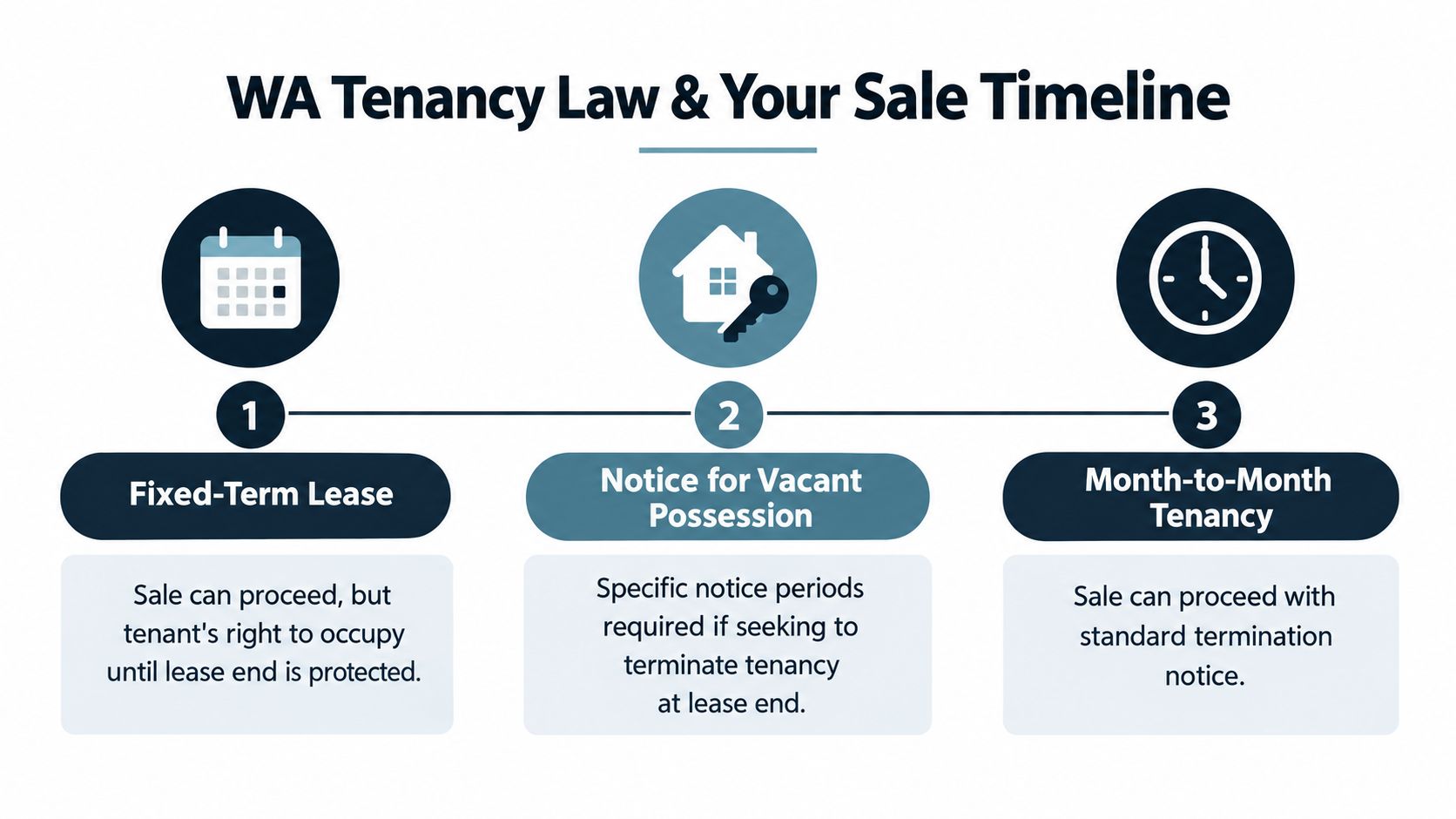
If vacant possession is required, the landlord must give at least 30 days' notice using a Form 1C notice of termination, and that notice applies when the contract of sale requires the property to be vacant. The Consumer Protection WA guidance on ending a tenancy sets out this sale-related process and confirms that a fixed-term tenant can generally remain until the lease ends. The tenancy paperwork, including the residential rental contract, should be checked before any campaign dates are fixed.
Identify the tenancy type
A fixed-term lease sets the first boundary. If the property sells during that term, the tenant can generally stay until the lease ends, and the buyer becomes the landlord from settlement. A seller should not promise a vacant handover unless the lease position and sale contract support it.
A periodic tenancy gives more room to plan around the sale. If vacant possession is required, periodic arrangements generally involve 30 days' written notice, subject to the applicable WA requirements and the exact circumstances. A property manager or tenancy adviser should confirm the correct process before notice is served.
A sale does not give the landlord a general right to remove the tenant immediately. It also does not allow unrestricted access for marketing or inspections. The Residential Tenancies Act 1987 governs the broader framework, including access and occupancy protections.
Match the contract to the legal position
The safest approach is to decide the intended possession outcome before an offer is accepted. A contract can be negotiated around a continuing tenancy, or it can specify vacant possession with a realistic date. The selling agent, conveyancer and property manager should work from the same instructions.
That matters in Meadow Springs and Falcon, where an investor may be comfortable taking over the lease, just as it matters in coastal areas where an owner-occupier may need a clear move-in date. Buyer preference shapes the negotiation, but the lease and legislation decide what can lawfully happen.
Allow for the buyer's new role
When a tenanted property settles, the buyer assumes the landlord responsibilities from settlement if the tenancy continues. Rent arrangements, property records, bond information and tenant notices need to be transferred accurately.
Keep a written record of the lease documents and communications. If the intended outcome is uncertain, obtain specific advice before making representations to a tenant or buyer. A well-organised legal and property-management file gives the campaign a solid foundation and reduces the risk of confusion at settlement.
Choosing Between Selling Vacant and Selling With Tenants in Place
The vacant-versus-tenanted decision is commercial, not ideological. A vacant home can offer more control over presentation and access. A tenanted home can offer continuity for an investor and avoid the cost, delay or risk associated with ending a tenancy.
Mandurah's local context makes the choice especially relevant. REIWA's Mandurah suburb profile records a median dwelling price of about $700,000, based on transactions over the 12 months to August 2026 and updated on 18 September 2026. The same local profile should be treated as a benchmark for appraisal discussions, not as an automatic price for a particular home. Separately, REIWA market information identifies a median rent of $550 per week for Mandurah, which may make an income-producing property relevant to investor buyers. See REIWA's information services for the cited rental benchmark.
A coastal home in Madora Bay or Wannanup may need the visual freedom that vacant presentation provides. An investment-grade property in Mandurah or Lakelands may be more naturally positioned with the tenant in place. The agent should test the likely audience before recommending a path.
Decision matrix for Mandurah sellers
| Factor | Sell With Tenants | Sell Vacant |
|---|---|---|
| Likely buyer | Investors seeking an established rental arrangement | Owner-occupiers wanting immediate flexibility |
| Lease timing | Works when the lease continues beyond the campaign and buyer accepts it | Works when lawful vacancy aligns with the lease and settlement |
| Presentation | Requires careful photography and controlled inspections around occupancy | Gives greater control over styling, cleaning and access |
| Income continuity | The tenant may remain and the buyer takes on the landlord role from settlement | Rental income ends when the tenancy ends |
| Campaign message | Emphasise tenancy information and investment suitability | Emphasise lifestyle, move-in readiness and presentation |
| Main risk | Limited access or buyer concern about inheriting the tenancy | Delay, vacancy costs or an unrealistic possession promise |
Choose the buyer before choosing the condition
A seller shouldn't assume that every buyer values vacant possession in the same way. Investors may ask for the lease, rental payment history and management details, while owner-occupiers may focus on when they can occupy the home. These questions aren't objections to overcome. They're signals about the campaign's correct audience.
A fixed-term lease can make the tenanted route more practical because the tenancy has a defined end date. If the lease end is close, waiting may open the campaign to owner-occupiers, but the decision should still be tested against the home's condition, current buyer enquiry and the seller's holding costs.
Consider the property's role in the market
A family home in Meadow Springs may appeal to both groups, so appraisal advice should examine how each campaign would present the property. A Falcon home with lifestyle appeal may need carefully timed photography to show outdoor areas at their best, even if the tenant remains. A Dudley Park investment may be easier to explain through income and tenancy continuity.
For a more detailed buyer-side perspective, sellers can review how buying a house with tenants affects expectations after settlement. The key is not to promise a premium or predict a particular time on market without evidence. Instead, compare the likely buyer pool, the lease timing and the level of presentation control each route offers.
Marketing and Inspections That Respect Tenant Rights
A tenanted campaign needs a tighter operating rhythm than a vacant campaign. The objective isn't to show the home constantly. It's to make each access opportunity count, while giving the tenant proper notice and preserving a respectful living environment.
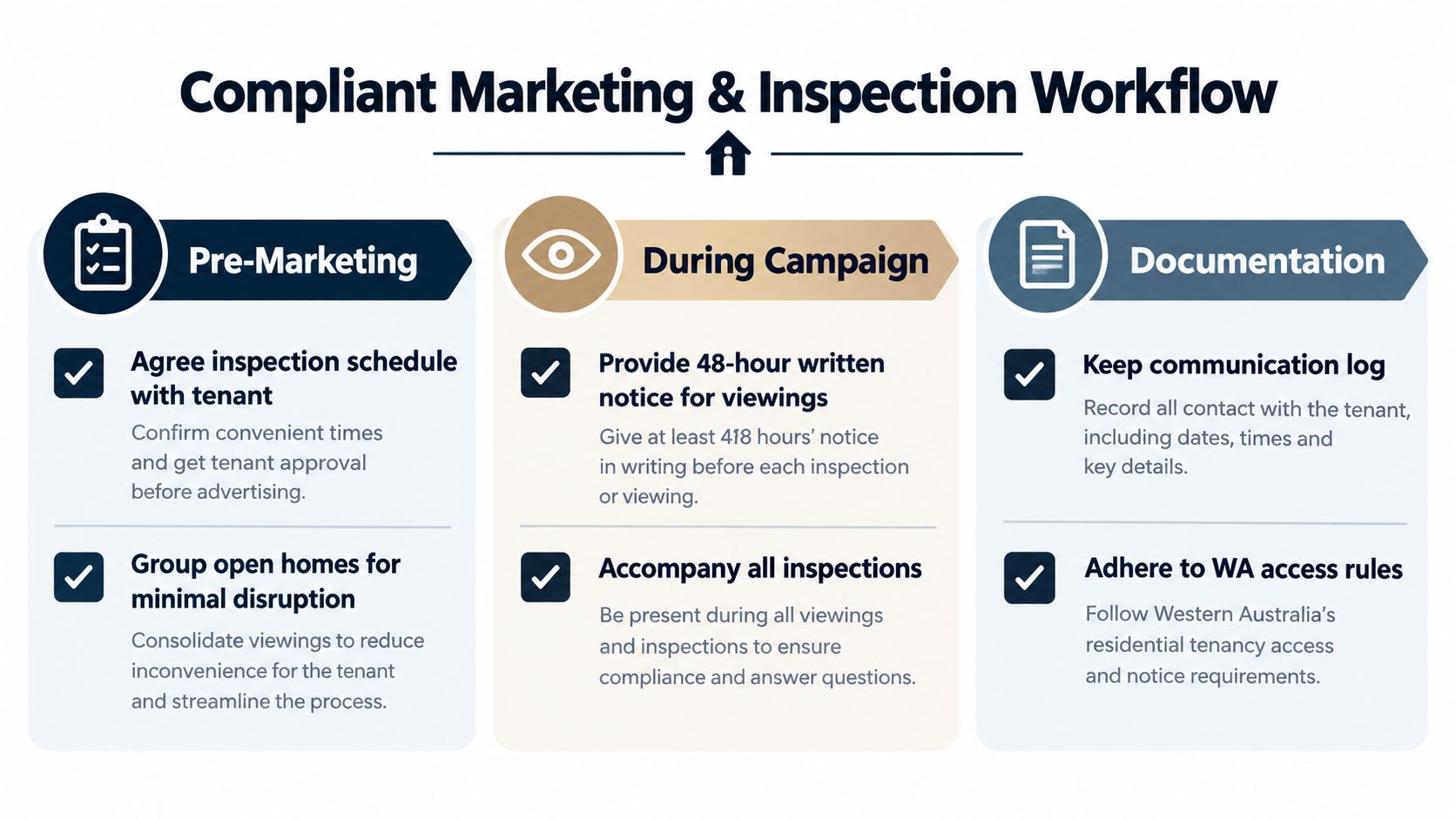
WA guidance requires reasonable written notice before entry. Government guidance refers to at least 72 hours' notice for many inspections and 7 days' notice for home opens or private viewings in some guidance summaries, while the legislation requires showings to occur at reasonable times and on a reasonable number of occasions. Sellers should confirm the precise requirement for the proposed inspection with their property manager or adviser.
Build the access plan before photography
Start with a meeting involving the tenant, property manager and selling agent. Agree practical windows for photography, private appointments and grouped home opens. A tenant who understands the plan is more likely to keep the property presentable and raise concerns early, rather than disengage after repeated unexpected requests.
The plan should identify:
- Photography windows: Select a time that suits the tenant and shows the coastal light, outdoor entertaining areas and key living spaces at their best.
- Grouped inspections: Cluster qualified buyer appointments where possible, instead of requesting multiple isolated entries.
- Notice records: Keep copies of every written notice, confirmation and response in one campaign file.
- Accompanied access: Ensure the agent controls the inspection and buyers don't wander through the property without supervision.
Fewer inspections can create a better campaign
Over-inspecting is one of the most common mistakes. WA access rules limit entry to reasonable times and a reasonable number of occasions, and Consumer Protection guidance states that rent inspections are limited to no more than four times a year, with 7 to 14 days' notice at a suitable time. Those rent-inspection rules are distinct from sale inspections, but the broader lesson is clear. Access must be managed, not assumed.
The Consumer Protection WA information on rent inspections and privacy rights also notes that if proper notice has been given and the tenant doesn't object to the time, entry can proceed even if the tenant is absent. That doesn't justify casual access. It reinforces the need for clear written communication and accurate records.
Practical rule: One well-organised open with serious buyers is more useful than a string of poorly timed requests that leaves the tenant tired and the home less presentable.
Protect presentation without blaming the tenant
Premium marketing doesn't require a vacant home, but it does require realistic styling. Keep the brief focused on decluttering, light, clean surfaces and the home's strongest architectural or lifestyle features. Don't promise magazine-style presentation if the tenant's belongings must remain in place.
If the tenant becomes fatigued or uncooperative, respond with structure rather than pressure. Reduce unnecessary appointments, provide earlier notice where possible, and have the property manager address any formal tenancy issue. Sellers should also understand the tenant's rights before proposing changes to access or occupancy. The tenant guide for a property going on the market can help frame that conversation in practical terms.
Negotiation Settlement and Handover When Tenants Remain
The sale becomes vulnerable when the buyer, seller and tenant hold different expectations about possession. A buyer may assume the home will be empty, while the contract or lease points to a continuing tenancy. Those assumptions need to be resolved before the offer becomes binding.
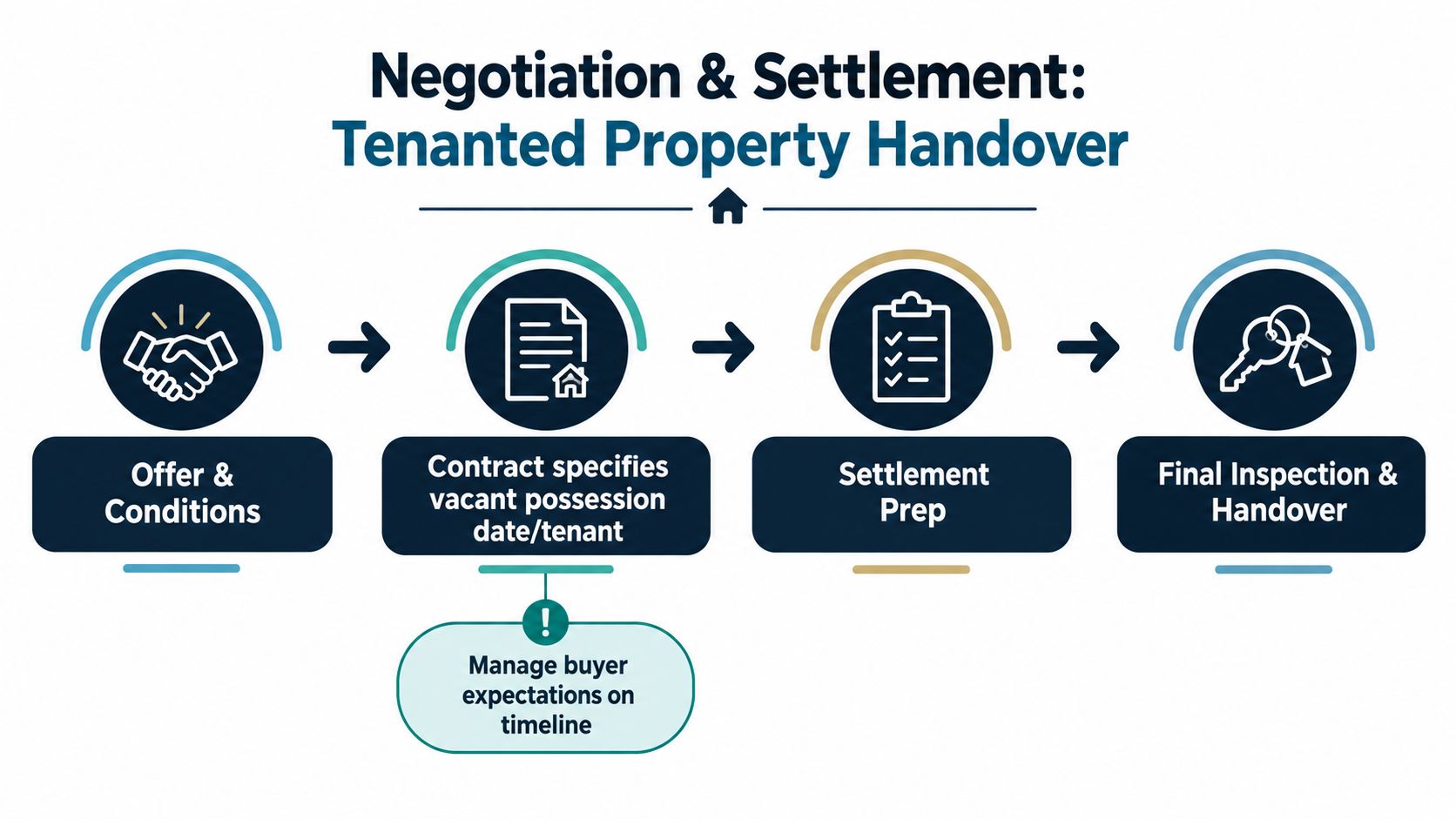
The offer should state whether the property is being sold with the tenancy continuing or with vacant possession. If the tenancy continues, the contract and disclosure material should identify the relevant lease terms, rent arrangements and handover responsibilities. If vacancy is required, the settlement date must align with the lawful termination process and the tenant's rights.
Make the possession outcome unmistakable
A clean contract conversation should answer four questions:
- Who occupies the property at settlement? State whether the tenant remains or whether vacant possession is required.
- What documents will the buyer receive? Prepare the lease, rent details, property condition records and relevant notices.
- Who manages the tenancy after settlement? Confirm whether the existing property manager continues or whether the buyer appoints another manager.
- What happens to money held for the tenant? Coordinate bond information, rent adjustments and any other tenancy records through the appropriate professionals.
Rent apportionment and bond transfer shouldn't be improvised at the last minute. The conveyancer and property manager should agree how the figures and records will be exchanged, then communicate the outcome clearly to the tenant.
Coordinate the professional team
The selling agent handles buyer expectations and campaign communication. The conveyancer confirms the contract position. The property manager manages tenancy records and tenant communication. The tenant deserves accurate information about the ownership change and future rent arrangements.
If the sale is in Dudley Park or Falcon and the lease remains in place, the buyer should understand that the new landlord responsibilities begin from settlement. That includes the practical administration of rent, repairs, notices and access. If the buyer needs the property for occupation, the parties should resolve that requirement before accepting an offer rather than relying on an informal promise.
Prepare for the final inspection
A final inspection isn't an opportunity to renegotiate the tenancy. It confirms that the property is in the agreed condition and that the contractual handover can occur. Arrange the timing through the agent and respect the tenant's lawful occupancy and privacy.
Use a written checklist covering keys, remotes, access devices, property documents, appliances included in the contract and the tenancy file. The guide to how long settlement takes can help sellers frame the broader settlement conversation, but the exact timetable remains a matter for the contract, finance and conveyancing process.
A smooth handover is designed before the offer is accepted, not assembled on settlement morning.
Your Mandurah Sale Plan and Next Steps With Beshay Realty
Selling property with tenants in Mandurah works best when the owner makes the strategic decision early. Start with the lease, then assess the property's likely buyer, the level of presentation control available and the seller's preferred settlement outcome. That sequence avoids the common mistake of advertising a home to owner-occupiers while expecting an investor to accept the tenancy, or promising vacancy before the law and lease allow it.
The local benchmark provides context, not a shortcut. REIWA's Mandurah suburb profile records a median dwelling price of about $700,000, using transactions over the 12 months to August 2026 and data updated on 18 September 2026. An appraisal still needs to account for the individual home's condition, land, improvements, outlook, tenancy terms and buyer audience. A waterfront-facing home in Halls Head, a family property in Lakelands or a coastal residence in Madora Bay shouldn't be priced from a suburb figure alone.
A practical local checklist
- Review the tenancy file: Confirm whether the agreement is fixed-term or periodic, identify the lease end date and collect the relevant records.
- Choose the campaign audience: Decide whether the property is better suited to investors, owner-occupiers or both.
- Set the possession position: Confirm whether the buyer will take over the tenancy or whether a lawful vacant-possession path is available.
- Plan presentation early: Coordinate photography, cleaning, styling and inspection windows with the tenant.
- Prepare the contract information: Make lease, rent, bond and management details available through the appropriate professionals.
- Appraise the property properly: Compare the home's specific attributes with current local evidence across Mandurah, Meadow Springs, Falcon, Wannanup and Dudley Park.
Lakelands and Meadow Springs may suit campaigns that explain functionality and rental appeal. Madora Bay, Halls Head and Wannanup may require stronger lifestyle presentation and carefully managed access to show outdoor entertaining, light and coastal character. Falcon can attract both lifestyle and investment attention, so buyer targeting needs to reflect the actual property rather than the suburb label alone.
The right decision may be to sell with the tenant in place. It may be to wait for the lease end and present the home vacant. The valuable advice is the advice that explains the trade-off clearly, documents the lawful process and builds a campaign around the buyer most likely to act.
David Beshay Real Estate offers local appraisals, campaign planning and buyer targeting for tenanted and vacant homes across Mandurah and surrounding coastal suburbs. Visit David Beshay Real Estate to discuss your lease timing, presentation options and the sale strategy that best fits your property.

