


When you sign a lease, you’re not just getting a set of keys—you’re entering into a residential rental contract. This is the legally binding document that sets out all the rules of the game for both the landlord and the tenant. Think of it as the foundational agreement that protects everyone involved by clearly stating who is responsible for what, how much rent is due, and for how long.
Your Tenancy Agreement: More Than Just Paperwork
A tenancy agreement isn't something to be skimmed over and signed. It’s the blueprint for the entire rental relationship. Its whole purpose is to create a clear, fair, and legally sound framework that stops small misunderstandings from turning into big disputes later on. From who covers the water bill to how you end the lease, this document is the single source of truth.
For landlords, particularly those with properties in sought-after spots like Mandurah, a solid contract is your best protection. It’s what secures your investment by spelling out the tenant's obligations in black and white. For tenants, it’s a safeguard for your rights, ensuring you have a safe, liveable home and the right to enjoy it peacefully. Skipping over the details is like trying to build a house without looking at the plans—you’re just asking for trouble down the track.
The goal here is to swap rental stress for rental confidence. By breaking down what goes into a residential rental contract, we want to empower property owners and renters across Western Australia. When you know your rights and responsibilities from the very beginning, you set the stage for a smooth, drama-free tenancy.
So, what does a rental contract actually do?
- Defines the Parties: It clearly states who the landlord, tenant, and property manager (if there is one) are.
- Sets Financial Terms: It specifies the exact rent amount, when it’s due, how it should be paid, and all the details about the security bond.
- Outlines Responsibilities: It details who is on the hook for maintenance, repairs, and the general upkeep of the property.
- Establishes the Tenancy Period: It locks in the start and end dates of the lease, giving both sides certainty about the timeline.
A well-crafted residential rental contract does more than just list rules; it builds a foundation of mutual respect and clarity. It means that when issues pop up—and they always do—there’s already a clear, agreed-upon process to sort them out fairly. That’s the key to a positive rental experience in WA.
The Must-Have Clauses in Every WA Lease
Think of your residential rental contract as the rulebook for your tenancy. Each clause spells out exactly how the relationship between you and your landlord will work. While every lease can have its own quirks, there are a few non-negotiable clauses that form the backbone of any solid agreement in Western Australia. Getting your head around these is the best way to protect your rights and make sure everyone is on the same page from day one.
These essential parts of the contract ensure there's fairness and clarity for everyone involved. The contract is the central document that connects the landlord, the tenant, and the property manager (if there is one) into a single, legally recognised relationship.
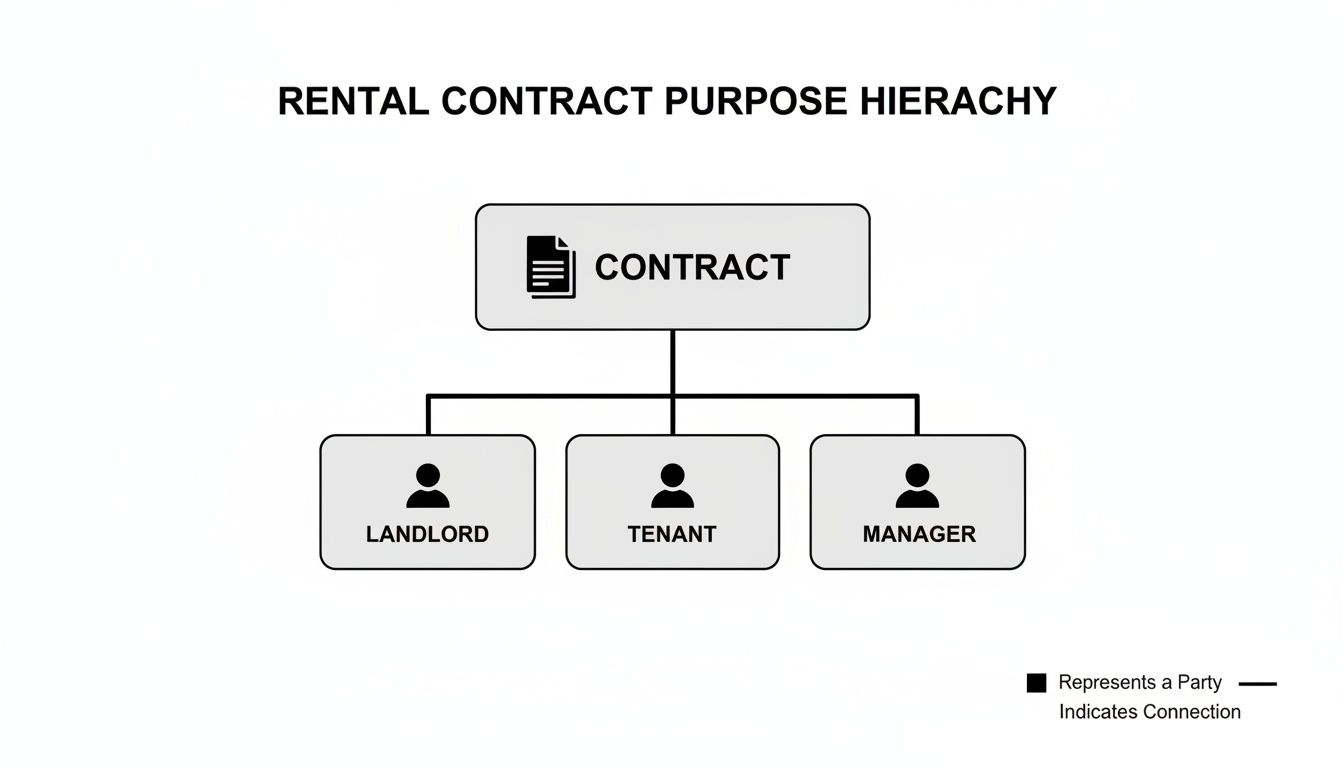
As you can see, the contract sits at the heart of it all, defining who is responsible for what so there are no grey areas or guesswork down the track.
To help you get familiar with the lingo, here's a quick rundown of the most important clauses you'll come across in a standard WA lease.
Key Clauses in a WA Residential Rental Contract at a Glance
| Clause | What It Covers | Key Consideration for Tenants | Key Consideration for Landlords |
|---|---|---|---|
| Lease Term | The duration of the agreement. It's either a fixed term (e.g., 12 months) or periodic (rolling month-to-month). | A fixed term offers stability and predictable rent. A periodic term offers flexibility if your plans are uncertain. | A fixed term guarantees rental income for a set period. A periodic term allows you to end the tenancy more easily if needed. |
| Rent | The exact amount of rent due, when it's due (e.g., weekly, fortnightly), and how it must be paid. | Ensure the amount and frequency match what you agreed upon. Never pay in a way that can't be traced. | Clearly state all rent details to avoid payment disputes. Offer legally acceptable payment methods like bank transfer. |
| Security Bond | A security deposit held in trust to cover potential damages or unpaid rent at the end of the tenancy. | Make sure the amount is legal (max. 4 weeks' rent if rent is under $1,200/wk) and that you get a receipt. | You must lodge the bond with the state's Bond Administrator within 14 days. This is not your money to hold. |
| Repairs & Maintenance | Outlines who is responsible for fixing things. Landlords handle urgent/major repairs; tenants handle minor upkeep. | Know how to report maintenance issues and what is considered an "urgent repair" under WA law. | Understand your legal obligation to keep the property in a reasonable state of repair and respond to requests promptly. |
| Inspections | The landlord's right to enter the property for routine inspections, typically up to four times a year. | You must be given "reasonable notice" before an inspection—usually 7 to 14 days in writing. | Follow the legal notice periods strictly. Inspections are for checking the property's condition, not invading privacy. |
| Termination | The legal process and notice periods required for either the landlord or tenant to end the lease. | Understand how much notice you need to give for your lease type to avoid breaking the lease and facing costs. | You must follow the exact legal procedures and notice periods to terminate a tenancy lawfully. |
| Subletting | Rules around whether you can rent out a room or the whole property to someone else. | You almost always need the landlord's written permission first. Subletting without it can get you evicted. | Your contract should clearly state your policy on subletting to prevent unauthorised occupants. |
Getting these clauses right from the start is what separates a smooth, stress-free tenancy from one filled with headaches and disputes. Now, let's dive a little deeper into the most critical ones.
Lease Term: Fixed vs Periodic
The very first thing to lock down is the lease term. This isn't just a date on a calendar; it dictates your stability and flexibility. In WA, you'll almost always see one of two types:
-
Fixed-Term Lease: This is like signing a contract for a set period, usually six or twelve months. It gives both sides security—your rent can't go up during this time (unless it's written into the agreement), and you have a guaranteed roof over your head. For landlords, it means stable, predictable income.
-
Periodic Lease: This agreement just keeps rolling, usually on a month-to-month basis. It's all about flexibility, as either you or the landlord can end the tenancy by giving the correct amount of notice. This often happens automatically after a fixed term ends and no one signs a new one.
A fixed-term lease is about security. A periodic lease is about flexibility. The right choice really comes down to your personal situation and what you see happening in the near future.
Rent and Security Bond Rules
The money clauses are where things can get heated, so it pays to have them crystal clear. Your rental contract must state the exact rent amount, how often you need to pay it (e.g., weekly or fortnightly), and the approved ways to pay.
Just as important is the security bond. This is a financial safety net for the landlord, not a personal slush fund.
In Western Australia, the law is very strict about security bonds. For any property where the weekly rent is under $1,200, the absolute maximum a landlord can ask for is four weeks' rent.
And that bond money doesn't just sit in the landlord’s bank account. Within 14 days of you paying it, the landlord or property manager is legally required to lodge your bond with the state's Bond Administrator. This system makes sure your money is held safely and impartially right up until you move out.
The Critical Property Condition Report
Before you even think about moving a single box in, another document takes centre stage: the Property Condition Report (PCR). This isn't some optional checklist; it's a mandatory part of every single WA residential rental contract. The PCR is basically a detailed photo album in writing, capturing the property's exact state right at the start of your tenancy.
The process is simple but absolutely vital:
- The landlord or agent fills out the report and gives you two copies.
- You then have seven days to go through it with a fine-tooth comb, add your own notes about any existing issues (like that chip in the paint or the dodgy lock on the back door), and return one signed copy.
- This signed document now becomes the official record of how the property looked when you moved in.
Skipping the PCR is a massive gamble. Without it, you could be blamed for damage that was already there, which could put your bond refund at risk. It’s your single best piece of evidence to prove you left the place in the same condition you found it, minus a bit of fair wear and tear.
Your Rights and Responsibilities as a Tenant or Landlord
A residential rental contract is much more than a piece of paper that says who pays the rent. Think of it as the rulebook for a partnership, governed by Western Australian law.
This framework is there to make sure both landlords and tenants hold up their end of the deal, creating a tenancy that’s fair, safe, and respectful. Understanding these duties is the secret to heading off common disputes before they even have a chance to start.
When you break it down, each person has clear roles that keep the rental relationship healthy. For a landlord, the main job is to provide and maintain a property that is safe, secure, and genuinely liveable. For a tenant, it's about looking after that property and, of course, meeting their financial commitments.
The Landlord's Core Obligations
A landlord's duties go way beyond just cashing the rent cheque. They are legally on the hook for the property’s structural safety and ensuring it meets all health and safety regulations. This isn't just about being a good person; it's a legal requirement.
Here are the big ones:
- Providing a Habitable Home: The property must be in a reasonable state of cleanliness and good repair right from day one. This means making sure all locks, doors, and windows are secure and working properly.
- Managing Repairs Promptly: Landlords have to get onto maintenance issues quickly, especially urgent repairs. A burst water pipe or a major electrical fault isn't something that can wait.
- Respecting Tenant's Quiet Enjoyment: This is a big one. A landlord or their agent can't just drop in whenever they feel like it. They must give proper written notice for routine inspections, which is typically between 7 and 14 days in WA.
A landlord’s legal responsibility is to ensure the property remains a safe and functional home throughout the tenancy. This means proactively maintaining the premises, not just reacting when something breaks.
The Tenant's Fundamental Duties
Tenants have a clear set of responsibilities too, all laid out in their rental contract and under WA law. These duties are all about maintaining the property and keeping the lines of communication open with the landlord or property manager.
A tenant's key obligations include:
- Paying Rent on Time: This is non-negotiable. Rent must be paid by the due date in the agreement. Consistently paying late can be grounds for termination.
- Keeping the Property Clean: Tenants are expected to keep the place in a reasonably clean condition, taking into account how it looked when they moved in.
- Reporting Maintenance Issues: If the oven gives up or a tap starts leaking, the tenant needs to tell the landlord or agent straight away. This helps prevent a small problem from turning into a big, expensive one.
- Seeking Permission for Alterations: Want to paint the walls or install new shelves? You can't just go ahead and do it. Tenants must get the landlord's written permission first.
Juggling these responsibilities can feel a bit much sometimes, especially when things go wrong out of the blue. For property owners here in Mandurah, knowing the local expectations and legal details is crucial. Getting expert advice on Mandurah property management can give landlords the support they need to stay compliant and keep the landlord-tenant relationship positive, protecting their investment while doing the right thing.
Ultimately, when both sides know their roles and respect the rules, the tenancy runs smoothly for everyone involved.
Handling Repairs, Maintenance, and Property Inspections
Few things can sour a landlord-tenant relationship faster than a dispute over repairs or a surprise inspection. A leaking pipe or an unexpected knock at the door can create real friction. The key to navigating these situations smoothly is to understand the clear, legally defined processes we have here in Western Australia.

Think of it like owning a car you’ve lent to a friend. They’re responsible for keeping it clean and telling you if the oil light comes on, but you’re the one who has to pay for a major engine repair. In a tenancy, it's much the same. The tenant handles general cleanliness and minor upkeep, while the landlord is responsible for fixing structural problems and major breakdowns.
Distinguishing Urgent and Non-Urgent Repairs
Western Australian law draws a very clear line between urgent and non-urgent repairs. This distinction is crucial because it dictates exactly how quickly a landlord must respond.
Urgent repairs are problems that make the property unsafe, insecure, or could cause serious damage. This isn't a wobbly doorknob; we're talking about serious issues like:
- A burst water pipe or a major roof leak
- A blocked or broken toilet
- A dangerous electrical fault or a suspected gas leak
- A total failure of an essential service like hot water, power, or gas
When something this critical happens, the tenant needs to let the landlord or property manager know immediately. From that moment, the landlord has just 24 hours to get a qualified repair person on the job.
Non-urgent repairs cover everything else—things like a dripping tap, a broken cupboard latch, or a faulty blind. While they aren't emergencies, they still need to be sorted out reasonably quickly, typically within 14 to 30 days after the tenant puts the request in writing.
The Property Inspection Process
Routine inspections are a standard part of managing a tenancy. They give the landlord a chance to check that the property is being looked after and identify any maintenance needs. However, these inspections come with strict rules designed to protect the tenant's right to quiet enjoyment of their home.
A landlord or agent can carry out up to four inspections per year. Before popping over, you must give the tenant written notice at least 7 days ahead of time, clearly stating the proposed date and time. Remember, an inspection is purely to check the property's condition, not to go through a tenant's personal belongings. To make sure you cover all the bases, check out our helpful home inspection checklist for Australia.
At the end of the day, managing repairs and inspections is all about good communication and playing by the rules. When the process is clearly laid out in the rental agreement, it stops small issues from blowing up into big arguments and helps build a respectful relationship.
Striking the right balance between property maintenance costs and rental income is always a delicate act, and it’s heavily influenced by the market. For instance, Sydney's unit rental market recently saw its median weekly rent climb to a record $740, even as vacancy rates started to creep up. This shows how market dynamics can shift, which is why having rock-solid maintenance clauses in your agreement is so important for protecting everyone’s interests, no matter what the market is doing.
How to End a Tenancy or Break a Lease in WA
Whether your lease is coming to a natural end or life throws you a curveball and you need to move unexpectedly, it’s vital to handle it by the book. A residential rental contract doesn't just stop the moment you hand back the keys; there's a formal process governed by Western Australian law that protects both landlords and tenants from unnecessary headaches and financial stress.

How you navigate the end of a tenancy really comes down to the type of agreement you're in. The rules for a fixed-term lease are quite different from those for a periodic, or month-to-month, arrangement.
Ending a Fixed-Term Agreement
With a fixed-term lease, the tenancy has a clear end date written into the contract. To wrap things up on this date, either the tenant or the landlord needs to give at least 30 days' written notice before the agreement expires.
What happens if nobody says anything? The lease doesn’t just end. It automatically rolls over into a periodic tenancy, which has its own set of rules for bringing it to a close.
Ending a Periodic Agreement
A periodic tenancy gives you a bit more flexibility. A tenant can end the agreement at any time simply by giving the landlord at least 21 days' written notice.
A landlord can also terminate a periodic lease but has to provide a longer heads-up of at least 60 days' written notice. This notice doesn't need to state a specific reason. It's worth noting that special rules might apply if the property is being sold. You can get the full rundown in our tenant's guide to a property being sold.
Breaking a Lease Early
Life happens, and sometimes you just have to move out before your fixed-term lease is up. While it’s possible, "breaking the lease" usually comes with some financial strings attached. You’re on the hook for compensating the landlord for losses they incur because you’ve left early.
When you break a lease, you are typically required to cover the landlord's costs until a new tenant is found. This includes paying the rent until the new lease starts and covering reasonable advertising and re-letting fees.
However, it's not a one-way street. The landlord also has a legal duty to mitigate their losses. This means they can't just let the property sit empty and charge you rent for the rest of the term. They must actively and quickly advertise the property to find a replacement tenant. The goal is to make the transition as fair and swift as possible, keeping costs down for everyone involved.
Common Questions About Residential Rental Contracts
Rental agreements can feel a bit like wading through legal jargon. To make things clearer, let's tackle some of the most common questions that pop up for both landlords and tenants across Western Australia.
Can a Landlord Increase Rent During a Fixed-Term Lease?
In short, no. A landlord can't raise the rent midway through a fixed-term tenancy unless a specific clause was written into the original agreement from day one, detailing exactly how much it would increase or the formula used to calculate it.
For periodic (month-to-month) leases, the rules are different. Rent can be increased, but only once every six months, and the landlord must provide at least 60 days' written notice.
It's no secret that market conditions, especially in a tight market like Perth, play a huge role. While Australia's combined capital city median rent recently held steady at $650 per week, the national vacancy rate is hovering at a tiny 1.2%. This keeps the pressure on for anyone under a residential rental contract. You can find more insights on Australian residential market trends to stay informed.
What Is a Property Condition Report and Why Is It So Important?
A Property Condition Report (PCR) is a non-negotiable document that acts as a detailed snapshot of the property's condition right before a tenant moves in. The landlord gives the tenant two copies, and the tenant has seven days to look it over, add their own notes or photos, and hand one copy back.
Think of the PCR as your most important piece of evidence when the tenancy ends. It protects everyone from arguments over whether that scuff on the wall was already there and is the main document used to decide how the bond is refunded.
What Happens If I Need to Break My Lease Early in Mandurah?
Life happens, and sometimes you need to end a fixed-term lease sooner than planned. If this occurs, you're responsible for covering the landlord's costs until a new tenant can be found and moved in. These costs usually include the rent for the vacant period plus any reasonable advertising or re-letting fees.
The first step is to tell your property manager in writing as soon as you know. They have a legal duty to act quickly and do everything they reasonably can to find a suitable new tenant to keep your costs to a minimum.
Getting the details of a residential rental contract right requires local know-how. For expert advice and professional property management in Mandurah, you can trust David Beshay Real Estate. Let us help you safeguard your investment and make sure every tenancy runs smoothly. https://realestate-david-beshay.com.au

