


So, how long does conveyancing actually take in Mandurah?
It’s the million-dollar question every buyer and seller asks. Realistically, you should block out anywhere from six to twelve weeks in your calendar from the day you sign the contract to the moment you get the keys. This isn’t a hard and fast rule, but it’s a solid ballpark figure that covers all the essential legal steps.
Your Mandurah Conveyancing Timeline Explained
Think of it like planning a trip down to the Mandurah foreshore. You know the destination, but your arrival time can be thrown off by traffic on the Kwinana Freeway, unexpected roadworks, or even just finding a car park. Conveyancing is much the same. The timeline is influenced by things like how quickly your finance is approved, what the property searches turn up, and how smoothly all the parties involved work together.
Knowing the typical journey from the get-go helps manage expectations and keeps the stress levels down. It’s not a single event but a series of crucial stages, each with its own timeframe. By breaking it down, you’ll have a clear roadmap of where you are in the process and what’s coming up next.
If you’re just starting out and need a refresher on the basics, we’ve put together a handy guide that explains in simple terms what is conveyancing in real estate.
Visualising the Key Milestones
This timeline gives you a great visual snapshot of the journey, from signing on the dotted line to finally popping the champagne in your new Mandurah home.
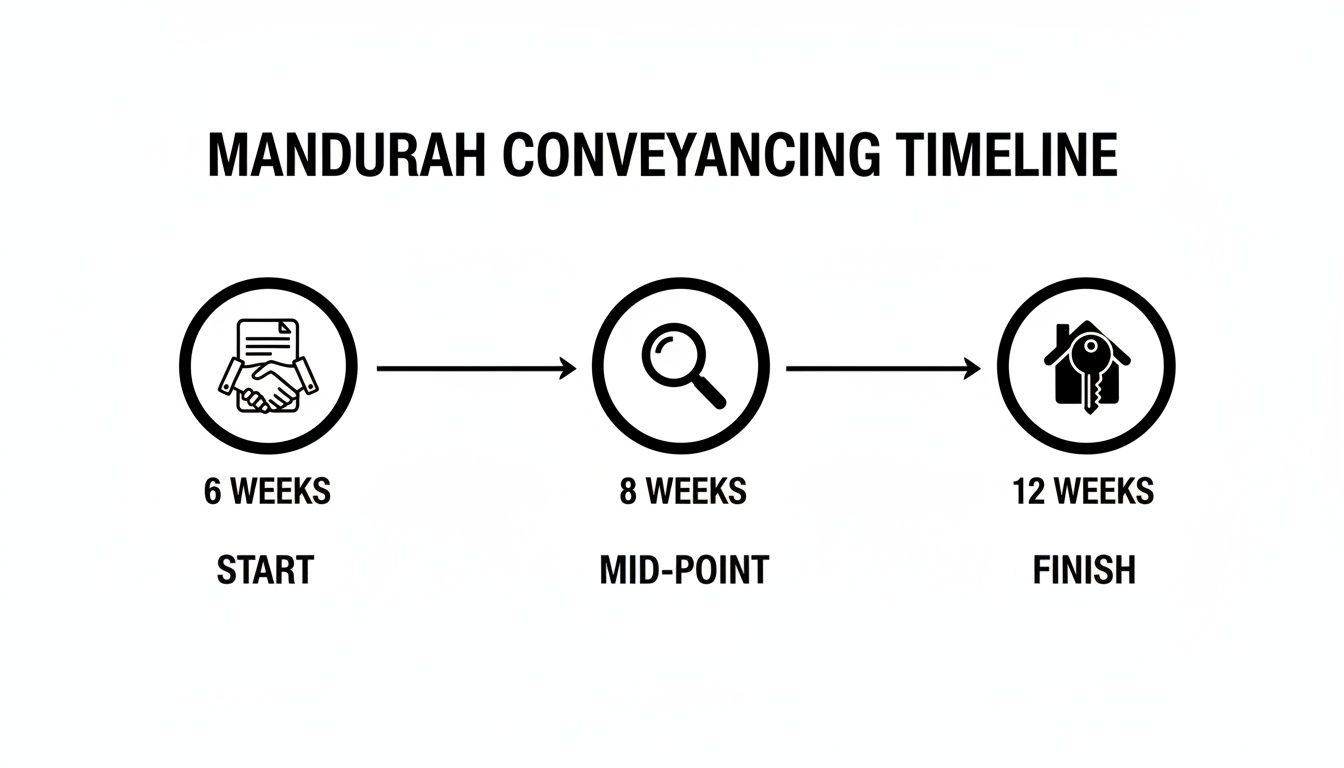
As you can see, a straightforward six-week settlement is definitely achievable, but it's also common for little hurdles to push things closer to the twelve-week mark.
Here in Western Australia, we generally see a settlement period of at least six weeks, which puts us somewhere in the middle compared to other states. Across the country, the average timeframe sits between four to twelve weeks, really depending on how complex the sale is.
To give you a clearer idea of what’s happening behind the scenes, here’s a quick overview of each phase.
Typical Conveyancing Timeline in Mandurah WA at a Glance
This table breaks down the main stages of the conveyancing process, giving you a high-level look at what happens and how long each part usually takes for a standard property sale in WA.
| Phase | Typical Duration | Key Activities |
|---|---|---|
| Pre-Contract & Due Diligence | 1-2 Weeks | Contract review, building and pest inspections, getting the finance clause agreed upon. |
| Finance & Property Searches | 2-6 Weeks | Securing unconditional loan approval, conducting title searches, checking council rates and water information. |
| Final Steps & Settlement | 1-2 Weeks | Conducting the final property inspection, coordinating funds with the banks, and completing the online settlement via PEXA. |
As the table shows, the first couple of weeks are all about preparation and checks. The middle chunk of time is dedicated to the deeper investigation and getting final approvals, while the last leg is all about execution and the official handover. Every step is vital to make sure the property transfer is secure and successful.
The Critical First Steps: Contract and Due Diligence
The first one to two weeks of the conveyancing journey really set the stage for everything that follows. Think of it like a pilot doing essential pre-flight checks before takeoff; getting these initial steps right makes for a much smoother flight to settlement day.
This is where your conveyancer or settlement agent immediately proves their worth. Their first job is to pour over the Offer and Acceptance contract, which is the legal bedrock of the entire deal between you and the other party.
For sellers here in Mandurah, this means you'll be working with your agent and conveyancer to prepare the contract, making sure every detail is accurate. For buyers, it’s all about getting that contract reviewed by a professional before you even think about signing.
Why a Pre-Signature Review is Non-Negotiable
Getting a professional to check the contract isn't just a box-ticking exercise—it’s your number one risk-management move. A good conveyancer can spot ambiguous clauses or potential traps that could cause massive headaches later.
This initial legal review can head off expensive misunderstandings and ensures the contract's conditions—like finance approval or building inspections—are actually there to protect you. It's the single best way to start on solid ground.
Nailing this stage has a huge impact on the overall timeline. A sloppy or unclear contract is a surefire recipe for delays while everyone tries to figure out the details later on.
Setting Clear, Achievable Conditions
The conditions in your Offer and Acceptance contract are your safety nets. In Western Australia, there are a few standard ones, but they have to be worded correctly to work for you.
Subject to Finance Clause: This is a big one for buyers. It needs to give you a realistic timeframe to get your unconditional loan approval sorted. A period of 21 to 28 days is pretty standard, but you should chat with your mortgage broker and conveyancer to set a date that doesn’t put you under the pump.
Building and Pest Inspections: This clause lets you get the property checked for any structural problems or termite trouble. It's vital that the wording is crystal clear on what counts as a "major structural defect" so you aren't stuck arguing over minor issues.
Other Specific Conditions: You might also add conditions tied to the sale of your current home or getting the seller to complete certain repairs before you take over.
Every condition needs a firm deadline. Your conveyancer will be all over these dates, because missing one could land you in breach of contract. By setting clear and achievable conditions from the very start, you build a strong foundation for a smooth, on-schedule settlement.
Navigating Finance Approval and Property Searches
Alright, let's get into what is often the longest and most unpredictable part of the whole property-buying journey. This stage, which usually takes anywhere from two to six weeks, has two crucial things happening at the same time: getting your final, unconditional finance approval sorted and running all the important property searches.
Think of your conveyancer as your personal detective, digging deep into the property's history to make sure there are no nasty surprises waiting for you. They aren't just ticking boxes; they’re on the lookout for anything that could cause you a headache down the track.
At the same time, you’ll be working closely with your lender or mortgage broker to turn that initial pre-approval into a rock-solid, formal loan offer. There are a lot of moving parts here, and knowing how they all fit together is the secret to keeping everything on schedule.
The Detective Work Your Conveyancer Does
Once that contract is signed, your conveyancer springs into action. Their main job is to carry out a series of official enquiries, known as property searches. This is where their local Mandurah knowledge really pays off, as they know exactly what to look for in the Peel region.
These searches are all about checking the legal health of the property. The key investigations include:
- Title Search: This is the big one. It confirms the seller legally owns the property and, more importantly, reveals any restrictions or claims on the title. We're talking about things like mortgages that need to be cleared, or easements that give someone else rights over your land (like the Water Corp needing access to a pipe).
- Council and Water Rates: Your conveyancer will check with the City of Mandurah and the Water Corporation to see if there are any outstanding rates or orders on the property. If there are, they become your problem after settlement, so we want to find them now.
- Zoning and Planning Information: They’ll also verify that the property's use (e.g., residential) complies with local planning schemes and check for any proposed developments nearby that could affect its value or your lifestyle.
This whole investigation phase is your safety net. Uncovering an unapproved patio or a restrictive covenant before settlement saves you from inheriting a costly and stressful legal mess. It’s all about making sure the property you think you're buying is the one you actually get.
Securing Your Unconditional Finance Approval
While your conveyancer is busy with the searches, your focus shifts to your home loan. If your contract has a 'subject to finance' clause, this is the make-or-break period where you have to get unconditional approval from your lender.
A pre-approval is a fantastic start, but it's not the final green light. The lender still needs to do its own due diligence on the actual property. The biggest step here is the bank valuation. The lender will send an independent valuer to the property to make sure it's worth the amount you want to borrow against it.
If the valuation comes in lower than what you offered, it can create a shortfall, which is a common reason for delays. You might need to renegotiate with the seller or figure out a way to cover the gap.
Why This Stage Varies So Much in Length
This middle part of the conveyancing timeline is where most of the variables pop up. The property searches and finance approval are central to how long conveyancing takes, often stretching things out for 2 to 6 weeks. During this time, your conveyancer is running multiple checks, and delays can easily happen if issues like zoning problems or old claims on the title are discovered.
For Mandurah buyers, the finance process itself can span 2 to 4 weeks. If you're a first-home buyer without a solid pre-approval, you should be prepared for potential hold-ups if your loan documents aren't 100% in order. You can learn more about these critical timelines from Australian conveyancing specialists.
To keep things moving, communication is everything. Stay in regular contact with your mortgage broker and conveyancer, jump on any requests for information they send you, and don't be afraid to ask questions. Being on the ball now will pave the way for a much smoother run into settlement day.
The Final Countdown to Your Settlement Day

Once your finance is unconditionally approved and all the property searches have come back clear, you’re officially on the home stretch. This final phase, which usually takes about one to two weeks, is all about locking in the last few practical steps before the property legally becomes yours. It’s an exciting time, but a few critical tasks still need careful attention to make sure settlement day goes off without a hitch.
Think of it like the final checks before a flight lands. The main journey is over, but the landing sequence needs precise coordination from everyone involved. Your conveyancer is now working closely with your lender and the seller’s team to get everything ready for the transfer of funds and the legal change of ownership.
This is also when you, as the buyer, get one last chance to walk through the property before it becomes yours. It’s a crucial step to ensure everything is exactly as you agreed in the contract.
The All-Important Final Inspection
One of the most important pre-settlement jobs for any buyer is the final inspection. This usually happens in the week leading up to settlement day. It’s not another building and pest inspection; the goal here is simply to confirm two key things:
- The property is in the same condition as when you signed the contract, allowing for normal wear and tear.
- All the special conditions have been met – for example, agreed-upon repairs have been done, or items that were meant to be included (like the dishwasher or curtains) are still there.
If you spot an issue during this inspection, like a new dent in the wall or an appliance that’s suddenly stopped working, you need to tell your conveyancer straight away. They can then sort it out with the seller’s agent before settlement goes ahead.
How Digital Settlements Have Changed the Game
In the old days, settlement day was a physical meeting where solicitors and bank reps would gather around a table to exchange paper documents and bank cheques. Thankfully, things are much more streamlined now, largely thanks to platforms like PEXA (Property Exchange Australia), which handle secure online settlements.
PEXA allows conveyancers and banks to finalise the transaction in a shared digital workspace. This means money is transferred electronically and the change of ownership is lodged with Landgate almost instantly. It dramatically cuts down on delays and the risk of human error.
This modern approach gives everyone more transparency and certainty, letting you know the exact moment the property is officially yours. You can dive deeper into the specific steps in our detailed article on how long settlement takes in WA.
Your Pre-Settlement Checklist
As settlement day gets closer, both buyers and sellers in Mandurah have a to-do list to make sure the handover is seamless.
For Buyers:
- Arrange Utilities: Get in touch with providers to connect your electricity, gas, and internet so they’re ready to go from the settlement date.
- Organise Insurance: Make sure your building insurance policy is active from the settlement date. Your lender will almost certainly require this.
- Confirm Funds: Double-check that you have enough funds ready for any final costs, like stamp duty and registration fees.
For Sellers:
- Arrange Disconnections: Schedule your utilities to be disconnected for the day after settlement to avoid any last-minute problems.
- Provide Keys: Make sure all keys, remotes, and access codes are left with the real estate agent before the scheduled settlement time.
- Final Clean: Leave the property in a clean and tidy state, as is generally expected.
And a final, crucial piece of advice for both sides: do not book the removalists until your conveyancer gives you official confirmation that settlement is complete. Delays can and do happen, and booking too early can lead to some very expensive cancellation or waiting fees.
Common Roadblocks That Can Delay Your Settlement

Even with the best preparation, the road to settlement isn’t always a straight line. Think of it as your early warning system—knowing the potential detours before you hit them is the secret to keeping your property purchase on track.
These roadblocks aren't just minor speed bumps; they can add weeks or even months to your timeline. It’s all about being proactive, not reactive, so you and your conveyancer can find solutions quickly and keep the stress levels down.
Finance and Valuation Hurdles
One of the most common delays we see comes from finance approval. A buyer might have a pre-approval in their pocket, but that’s not the final word. The lender always needs to do their own independent valuation of the property before they officially sign off on the loan.
If the bank's valuer decides the home is worth less than what you’ve agreed to pay, you’ve got a valuation shortfall. This is a big deal. The lender will only loan you money based on their lower figure, which can leave you scrambling to find the extra cash or trying to urgently renegotiate the price with the seller. This can put the entire process on hold.
Another classic issue is missing or incorrect paperwork. Lenders are incredibly thorough, and something as simple as a misplaced payslip or an undeclared credit card can send your loan application straight to the back of the queue.
Surprises Uncovered During Property Searches
Property searches are your safety net. They're designed to dig up the complete legal history of the property, but sometimes they uncover problems the current owner didn't even know existed.
Common discoveries include:
- Unapproved Structures: That lovely patio, shed, or extension might look great, but if it was built without the proper council approval, it becomes a huge red flag for both buyers and their banks.
- Restrictive Covenants or Easements: These are old rules attached to the property's title that can limit what you can do. It could be anything from restricting the type of fence you can build to giving utility companies the right to access your land.
- Outstanding Rates or Land Tax: Any unpaid council rates or land tax bills tied to the property have to be paid in full before the title can officially change hands.
Finding these issues doesn't have to be a deal-breaker, but sorting them out takes time. It often means going back to the seller to negotiate a solution, whether that’s getting them to fix the problem (a process called rectification) or agreeing on a price reduction.
This is where a sharp conveyancer is worth their weight in gold. They can tell you how serious the issue is and negotiate a practical way forward, turning a potential disaster into a manageable task.
The complexity of these searches is one of the reasons the industry is feeling the pressure. The Australian conveyancing market is facing some real capacity challenges, with recent research showing 15% of conveyancers have actually left the profession in the last two years. For buyers and sellers here in Mandurah, this just goes to show how important it is to act quickly and maintain clear communication with your chosen professional. You can read more about these industry shifts and how they affect transaction times.
Administrative and Human Errors
Sometimes, the things that trip up a settlement are just simple, preventable mistakes. A name spelled wrong on a legal document, a missed signature, or someone who is just slow to respond to emails can bring everything to a grinding halt.
For instance, if a seller takes weeks to get back to the buyer's questions, it delays the entire chain of events. Likewise, if one of the parties is travelling or just plain hard to get in touch with, it can feel almost impossible to move forward.
These issues really highlight why having an organised and experienced local team in your corner is so important. A tiny administrative slip-up can have a surprisingly big impact on your settlement timeline, as you’ll see below.
Smooth vs. Delayed Conveyancing Timeline Example
This table paints a clear picture of how a few common hurdles can dramatically change the answer to the question, "how long does conveyancing take?"
| Conveyancing Stage | Timeline for a Smooth Transaction | Timeline with Common Delays | Potential Cause of Delay |
|---|---|---|---|
| Finance Approval | 2-3 Weeks | 5-6 Weeks | Bank valuation comes in low, requiring renegotiation or finding extra funds. |
| Property Searches | 2 Weeks | 4-5 Weeks | An unapproved patio is discovered, and the seller must apply for retrospective approval from the council. |
| Final Settlement | 1 Week | 2-3 Weeks | The seller is slow to sign and return final documents, causing settlement to be rescheduled. |
| Total Timeframe | ~6 Weeks | ~12 Weeks | A combination of finance, search, and administrative issues. |
As you can see, a few seemingly small problems can easily double the settlement period. This is exactly why choosing a responsive and diligent conveyancer is one of the most critical decisions you'll make on your property journey.
Your Proactive Checklist for a Faster Conveyancing Process
You have more control over the conveyancing timeline than you might think. While some delays are simply out of your hands, getting organised on your end can easily shave weeks off the entire process. Think of this as your game plan for dodging the common roadblocks that trip so many people up.
By taking a few key steps upfront, you can help ensure your property transaction is smoother, faster, and a whole lot less stressful. Here’s a simple checklist for both buyers and sellers in the Mandurah area.
For Sellers: Your Head Start Checklist
Getting your ducks in a row before a buyer even walks through the door is the single best thing you can do for a speedy settlement.
- Engage a Conveyancer Early: Don't wait until you've accepted an offer. The smart move is to hire a conveyancer the moment you decide to sell. They can start preparing the sale contract and spot any potential title issues well ahead of time.
- Gather Your Documents: Start pulling together all the essential paperwork now. This means finding things like building approval documents for that patio you added, compliance certificates for the pool, and any strata information if you're in a complex.
- Address Property Issues: Do you know that granny flat out the back was never officially signed off by the council? It's far better to start the process for retrospective approval now. Fixing these known issues before you list saves a mountain of time and painful negotiations later.
For Buyers: Your Preparation Checklist
As a buyer, being ready to act decisively is your superpower. Good preparation is what separates a smooth purchase from a frustratingly delayed one.
- Secure Finance Pre-Approval: This one is non-negotiable. Walking in with a formal mortgage pre-approval means you can make an offer with total confidence. It also dramatically cuts down the time needed for your unconditional finance approval once the seller says yes.
- Choose Your Conveyancer in Advance: Do your research and pick your Mandurah conveyancer before you start seriously house hunting. That way, the second your offer is accepted, you can send the contract straight to them for review without losing a single precious day.
- Have Your Deposit Ready: Make sure your deposit funds are sitting in an account you can access instantly. You'll need to pay this very soon after your offer is accepted, and any hold-ups in transferring the money can stall the whole process right from the get-go.
By ticking off these simple steps, both buyers and sellers shift from being passive onlookers to active drivers of the process. This kind of preparation is exactly what turns uncertainty into confidence, leading to a faster and more predictable settlement day.
Your Top Conveyancing Questions Answered
Jumping into the property market always stirs up a lot of questions. To help you feel more confident, we've put together answers to the most common queries we hear from buyers and sellers right here in Mandurah.
This section gets straight to the point, tackling those nagging questions to give you the clarity you need to move forward.
When Is the Best Time to Hire a Conveyancer in WA?
Ideally, you should have a conveyancer on your team before you even think about signing the Offer and Acceptance contract. It’s a crucial step that often gets overlooked in the heat of the moment.
For sellers, they can get the contract of sale drafted correctly from the get-go, making sure all the necessary disclosures are in place. For buyers, they'll review that same contract to protect your interests, suggesting essential conditions like a solid finance clause.
Getting a professional involved early is the single best way to sidestep simple mistakes that can blow up into major delays down the track.
What Happens If the Settlement Is Delayed?
If one party’s actions (or lack thereof) cause a delay in settlement, the other party might be able to charge penalty interest for every day the process is held up. The exact details are all laid out in your contract of sale.
In more serious cases, long or repeated delays could even give the innocent party the right to terminate the contract completely. This is where your conveyancer really proves their worth; they’ll explain your rights and map out the best course of action if things start to go off schedule.
Clear communication with your conveyancer is key if a delay looks likely. They can often negotiate a fix, like a formal extension, to keep the deal on track and help everyone avoid penalties.
Can I Do My Own Conveyancing in Western Australia?
While you legally can do your own conveyancing in WA, it's something we strongly advise against unless you have a deep background in property law. The process is a minefield of legal jargon and strict deadlines.
One small slip-up, like misreading a title search or missing a key date, can lead to devastating financial losses or legal trouble. When you weigh up the risks, the professional fee for a good conveyancer is incredible value for the peace of mind it brings. If you're curious about the numbers, check out our guide on how much conveyancing costs.
Does Buying a Strata Property in Mandurah Take Longer?
Yes, it often can. Buying a strata title property—like an apartment, unit, or townhouse—involves a few extra hurdles that can stretch out the conveyancing timeline.
Your conveyancer has to dig into all the relevant strata documents. This means carefully reviewing:
- Minutes from past strata meetings
- The complex's current by-laws
- The financial records of the body corporate (the strata company)
This extra layer of due diligence is vital. It makes sure you know exactly what you’re buying into, from the financial health of the building to any internal disputes or big repair projects on the horizon. This deep dive can easily add a week or more to the process, so it's smart to factor that extra time into your plans.
At David Beshay Real Estate, we believe a well-informed client is an empowered one. If you're thinking about buying or selling in the Mandurah area and have more questions, our team is here with the local expertise you need. Contact us today for a free, no-obligation property appraisal.

