


If you've ever considered a career in real estate that offers stability and variety, becoming a property manager in Australia is a fantastic choice. But it’s not a path you can just stumble into. It's a regulated profession that demands specific qualifications and a deliberate approach to make sure you're equipped to handle everything from tenancy law to client relationships.
Your Career Path to Property Management
So, what does it actually take to manage a portfolio of properties? The journey is less about who you know and more about what you know. It’s built on a foundation of formal education, proper licensing, and real-world experience.
You'll be juggling a lot. One day you might be marketing vacant units and screening potential tenants, and the next, you're coordinating maintenance and managing budgets. It's a dynamic role that requires a unique blend of sharp organisational skills, financial know-how, and top-notch customer service.
Key Milestones on Your Journey
In Australia, the pathway to becoming a property manager is quite structured. While requirements can vary slightly from state to state, they all centre around a core qualification: the Certificate IV in Property Services (Real Estate). This nationally recognised course is your non-negotiable ticket to legally managing properties for others.
From there, it's about putting that knowledge into practice. This infographic breaks down the three fundamental stages you'll move through.
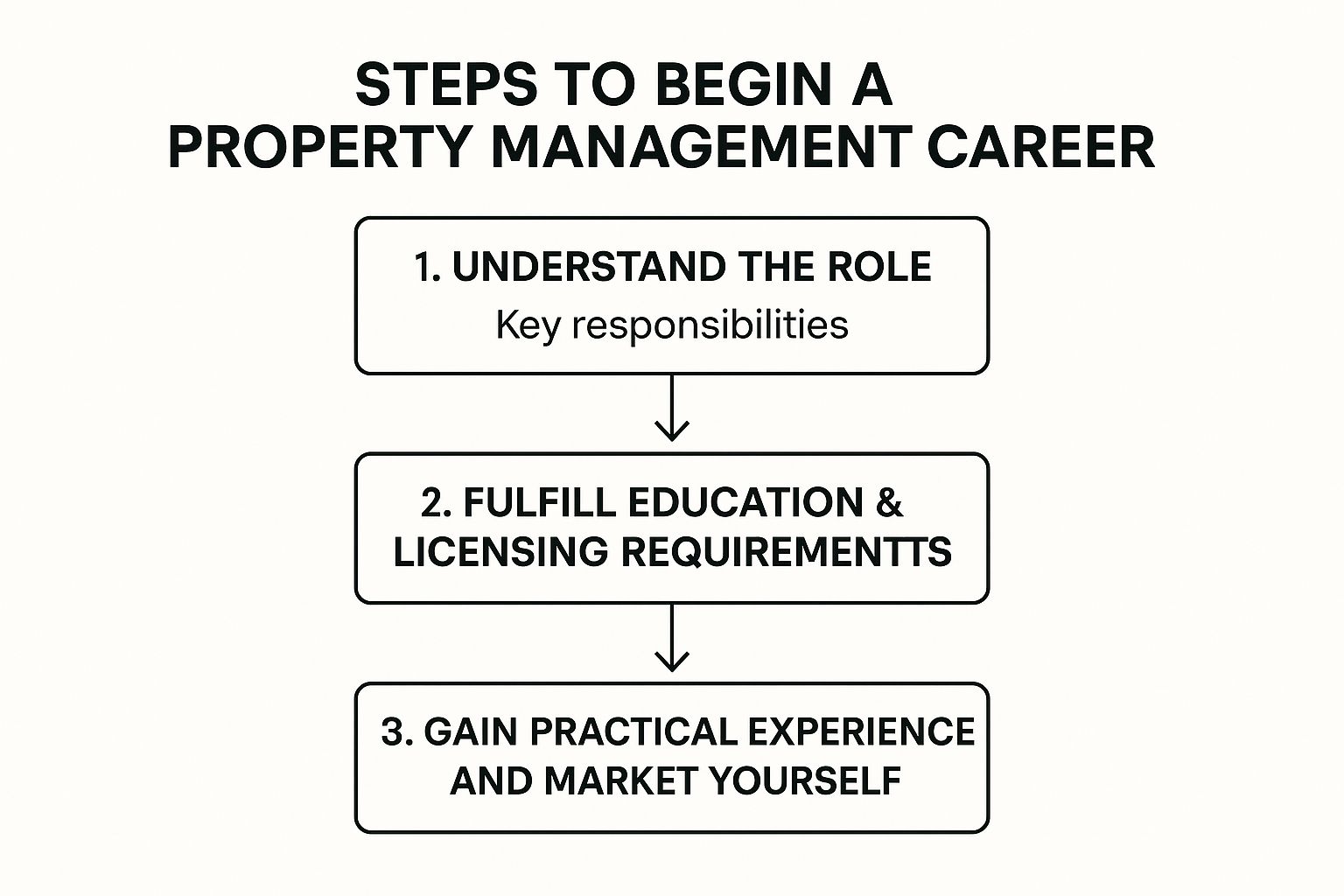
Think of this as your roadmap. It shows a clear progression: start by getting a solid grasp of the role, tackle the mandatory education and licensing, and then build your career through hands-on experience.
The following table provides a quick summary of the key milestones you'll need to hit along the way.
Key Milestones to Become a Property Manager
| Milestone | Description | Typical Timeframe |
|---|---|---|
| Complete Certificate IV | Enrol in and successfully complete the Certificate IV in Property Services (Real Estate) through a registered training organisation (RTO). | 6-12 months |
| Obtain State Licence | Apply for your real estate licence or registration with the relevant regulatory body in your state or territory. | 1-3 months |
| Gain Practical Experience | Secure an entry-level role, such as a property management assistant or leasing consultant, to apply your skills. | Ongoing |
| Build Your Network | Attend industry events, connect with experienced professionals, and build relationships with landlords, tenants, and tradespeople. | Ongoing |
Each step builds on the last, creating a solid foundation for a long and successful career in property management.
The best property managers I've known don’t just chase rent payments. They build genuine relationships and solve problems before they escalate. Your ability to communicate clearly with landlords, tenants, and contractors is just as critical as any certificate you hang on the wall.
This is where the theory ends and your career really begins. Look for entry-level positions like a leasing consultant or property officer. These roles are the perfect stepping stone, giving you invaluable exposure to the day-to-day operations of an agency and helping you build a professional network from the ground up.
For more insights and tips on navigating the real estate industry, have a look at our real estate blog. It’s packed with practical advice to help you start your journey with confidence.
Securing Your Qualifications and Licence

Alright, you’ve got a good handle on what the career looks like. Now for the first real step: getting the right credentials.
In Australia, you can't just decide to become a property manager one day and start collecting rent the next. The industry is regulated for a very good reason—you'll be handling people's homes and significant financial assets. That requires a proven level of competence and a strong ethical compass.
The cornerstone qualification you'll need across the country is the Certificate IV in Property Services (Real Estate). This isn't just a box-ticking exercise. Think of it as your apprenticeship in property law, trust accounting, and client relations, all rolled into one nationally recognised program that arms you with the fundamental knowledge to operate legally and effectively.
What You Will Actually Learn
The Certificate IV is designed around the real-world tasks you'll be doing every single day. It goes beyond dry theory to give you a solid, working knowledge of the essentials.
You’ll get skilled up in critical areas like:
- Tenancy Law and Legislation: This is the big one. You'll learn how to draft lease agreements, lodge bonds correctly, and navigate the legal minefield of ending a tenancy.
- Trust Accounting: This teaches you how to handle other people's money—rent, bonds, and landlord payouts—in a transparent and legally compliant way. Get this wrong, and you're in a world of trouble.
- Conflict Resolution: You'll be prepared for those tough conversations, whether it's mediating a dispute between neighbours or negotiating a payment plan for a tenant in arrears.
- Property Marketing: Learn the practical strategies to advertise a vacant property effectively, attracting high-quality tenants and minimising costly vacancy periods.
Mastering these skills during your studies will make your first year on the job infinitely smoother and far more successful.
Navigating State-Specific Licensing
Here’s where things get a bit tricky. While the Certificate IV is a national standard, how you use it to get licenced is different in every state and territory. This is a crucial detail that many aspiring PMs miss. What gets you over the line in Victoria won't cut it in New South Wales.
Let's break down the differences in the key eastern states:
| State | Licensing Requirement | Key Details |
|---|---|---|
| New South Wales | Complete a Certificate IV to apply for a Class 2 Real Estate Agent Licence. | You have to start as an Assistant Agent and get 12 months of experience before you can upgrade to a Class 2 licence. |
| Victoria | Complete the Certificate IV to apply to become a Licenced Estate Agent. | The Business Licensing Authority (BLA) manages the application process and has pretty strict eligibility criteria. |
| Queensland | Complete the Certificate IV to apply for a Full Real Estate Agent Licence. | This licence lets you work as a fully qualified property manager or even run your own agency. |
Understanding your local regulations isn't just a good idea—it's essential. Before you even think about enrolling in a course, jump on the website for your state's fair trading or consumer affairs body to confirm the exact pathway to getting your licence.
Doing this upfront research ensures the course you pick offers the right units of competency that your local regulator demands. Choosing a quality Registered Training Organisation (RTO) with a strong industry reputation can also give you a massive leg-up when you start looking for work.
Your qualification is the key that unlocks the door to a career in property management. Make sure it's the right one.
Developing Skills That Set You Apart

While a certificate gets your foot in the door, the skills you pick up on the job are what truly shape your career. The best property managers I’ve met are more than just administrators—they’re expert negotiators, communicators, and problem-solvers. This is where you move past the textbooks and build the real-world competence that agencies and landlords genuinely value.
Your real skill shows in how you handle the tough stuff. Think about it: navigating a chat with a tenant who is constantly behind on rent requires a delicate balance. You need to uphold the tenancy agreement while also showing empathy and trying to find a solution that works for everyone. It’s a tightrope walk.
It's the same when you're negotiating with a plumber for a better rate on a big repair. It’s not just about saving a few dollars. It’s about building a network of reliable tradespeople who will put your properties first in an emergency. These are the practical abilities that separate an average property manager from a great one.
Mastering Essential Soft Skills
The day-to-day life of a property manager is a constant test of your soft skills. These aren’t just buzzwords for your resume; they're the core tools you'll use every single day to build relationships and manage conflicts. Without them, even the most organised professional will find themselves struggling.
Here are three soft skills you absolutely must work on:
- Proactive Communication: This is all about giving landlords updates before they have to ask and keeping tenants in the loop about maintenance. One simple email can prevent a dozen anxious phone calls down the line.
- Creative Problem-Solving: When a tenant’s air conditioner dies on a 40°C day, your ability to think on your feet is what counts. Can you quickly source a temporary portable unit while the proper repairs are organised? That’s what makes a difference.
- Time Management Mastery: Juggling routine inspections, urgent repair calls, and lease renewals all at once requires a solid system. You’ll constantly be refining your ability to prioritise tasks based on what's most urgent and impactful.
Building Your Hard Skill Toolkit
Alongside your people skills, you need a firm grasp of the technical side of the job. These hard skills are measurable, teachable, and non-negotiable for your day-to-day operations.
Getting comfortable with industry-standard property management software is a must. Most agencies live and breathe on platforms like PropertyMe or Console Cloud. They handle everything from collecting rent to logging maintenance requests, so you need to know your way around them.
You also need to be financially literate. This means you can read a landlord's financial statement, explain expenses clearly, and understand trust accounting principles to ensure all money is handled legally and ethically. This kind of financial savvy isn't just for managing rentals; it can also help you understand different sales strategies. You can explore a related topic by reading our guide on what is an off-market sale and what's the pros and cons.
Landing Your First Property Management Role
Alright, you’ve done the hard yards and have your qualifications in hand. Now comes the exciting part: breaking into the industry and landing that first crucial role. This is where your training meets the real world.
Most successful property managers I know didn't just walk into a senior role. They started on the ground floor, building a solid foundation of practical experience.
Think about positions like a leasing consultant or a property management assistant. These entry-level jobs are the perfect launchpad into a long-term career. As a leasing consultant, you’ll be on the front lines, mastering the art of marketing properties, showing them to prospective tenants, and handling applications. An assistant role is just as valuable, putting you right beside a senior manager where you'll learn the ins and outs of inspections, maintenance requests, and tenant communication.
Crafting a Winning Application
Your resume and cover letter have one job: to tell a story about why you’re the perfect fit for that specific role at that agency. Simply listing your new Certificate IV isn’t enough. You need to connect the dots for them.
Here’s how to make your application impossible to ignore:
- Highlight Your Transferable Skills: Did your last job involve customer service, dealing with tricky situations, or just solid admin work? Frame these experiences in property management terms.
- Tailor Every Single Application: A generic resume gets a generic response—usually none at all. Read the job ad carefully. If they mention specific software or tasks, make sure you address them directly in your application.
- Show You Know the Area: Mentioning your familiarity with the local suburbs and rental market in your cover letter is a small touch that makes a huge difference. It shows you're not just looking for any job, but a career in that community.
A great application doesn’t make the hiring manager guess. Don't just say you have retail experience. Explicitly state: "My time resolving customer complaints has prepared me to handle tenant issues with professionalism and efficiency."
Networking and Interviewing with Confidence
Building a professional network isn't just a buzzword; it's how things get done in this industry. Start by giving your LinkedIn profile a professional polish and connect with real estate professionals in your target areas. Better yet, show up. Attending local real estate institute events or seminars can put you face-to-face with the very people who do the hiring.
When you score an interview, be ready to talk specifics. Hiring managers want to see that you've done your homework on the current market. Data shows that rising rental demand and population growth are fuelling the need for skilled property managers, particularly in major cities. You can find more detail on these commercial property management salary and demand trends.
If you can confidently talk about local vacancy rates or recent changes to tenancy laws, you’re proving you're engaged and ready to hit the ground running. It’s that kind of proactive attitude that separates a good candidate from a great one.
Mapping Your Salary and Career Growth
Before you dive headfirst into any career, it's only natural to wonder about the long-term potential. What does the money look like? Where can this path take you? In property management, the good news is that your career and your paycheque are directly tied to your performance, experience, and the kind of properties you oversee.
Your first salary is exactly that—a starting point. Straight out of your certification course, you'll be looking at an entry-level wage. But don't let that fool you; this is a field where dedication pays off, and that number can climb quickly as you build your reputation.
Recent data shows a general property manager's salary in Australia can sit anywhere between AUD 46,000 and AUD 77,000 per year. Some figures even put the national average closer to AUD 82,979. You can dig deeper into the numbers with detailed property manager salary data on Payscale.com.
This wide range really shows how much your strategic choices matter. A job in a major city like Sydney or Melbourne will almost always pay more than one in a regional town, simply because of the higher cost of living and property values.
What Does the Career Path Look Like?
When you first start, you might feel like you're just treading water, but after a few years of solid experience, the doors really start to open. This is your chance to specialise, move into a leadership role, and seriously boost your income.
Common steps up the ladder include:
- Senior Property Manager: After you've proven you can handle the day-to-day, you can take on a bigger or more complex portfolio of properties. This comes with a nice pay bump.
- Department Head or Team Leader: This is where you shift from managing properties to managing people. You'll oversee a team of property managers, set performance goals, and guide the department's strategy.
- Commercial Property Specialist: Making the jump from residential to commercial property can be a game-changer for your bank account. It involves higher-value assets and more intricate lease negotiations.
Your long-term success is shaped by the decisions you make early on. My advice? Get really good at residential management first, but always keep your eyes open for those opportunities to specialise or lead. That forward-thinking mindset is what will set you apart from the crowd.
Property Manager Salary Expectations in Australia by Experience
To give you a clearer picture, here’s a breakdown of what you can expect to earn at different stages of your career. Keep in mind these are averages, and factors like location and specialisation can push these numbers higher.
| Career Stage | Average Annual Salary (AUD) | Notes |
|---|---|---|
| Entry-Level (0-2 years) | $55,000 – $65,000 | Typically an Assistant or Junior Property Manager role, focusing on administrative tasks and learning the ropes. |
| Mid-Level (3-5 years) | $65,000 – $85,000 | A competent Property Manager managing a full portfolio. Strong client relationship skills are key. |
| Senior (5-10 years) | $85,000 – $110,000 | Senior Property Manager or Team Leader. Involves managing complex portfolios or a small team. |
| Expert/Director (10+ years) | $110,000+ | Department Head, Director, or specialist roles (e.g., Commercial). Focus on strategy and business growth. |
As you can see, the growth potential is significant. Your ability to negotiate, solve problems, and build a strong professional network will be the biggest drivers of your salary growth over time.
It's also crucial to stay on top of the bigger economic picture. Things like interest rate changes directly impact your landlords and tenants, and being able to explain what's happening makes you a valuable advisor, not just a manager. For a better handle on this, have a read about the impact of rising interest rates in Australia. The more you know, the more you're worth.
Of course. Here is the rewritten section, adopting the expert, natural, and human-like tone from the provided examples.
Common Questions About a Property Management Career
As you get closer to jumping into a new career, it’s natural to have a few last-minute questions. It's smart to want the full picture of the road ahead. This section tackles some of the most common queries we hear from aspiring property managers, giving you clear, straightforward answers to help you move forward.
Think of this as tying up the loose ends. We’ll cover those specific questions that might not have fit neatly into other sections, making sure you’re fully prepared for what’s next.
How Much Can I Realistically Earn?
Let's be honest, this is often the first question on everyone's mind—and for good reason. While salary bands give you a ballpark figure, it's more useful to understand the why behind the numbers. Your earning potential is directly tied to your experience, location, and the kinds of properties you manage.
For instance, a property manager in a high-demand city like Sydney will almost always earn more than someone in a smaller regional town. This simply reflects the higher cost of living and, of course, the greater value of the properties being managed.
The type of portfolio you handle also plays a huge part. While most people start in residential property management, specialising can really boost your income. Commercial property managers, who handle business or office spaces, often earn more, with an average salary sitting around AUD 73,740 a year. That higher figure is because you’re dealing with more complex commercial leases, larger facilities, and business-grade financial tracking.
You can dive deeper into the numbers by exploring the Australian property manager salary insights on Payscale.com.
What Does a Typical Day Look Like?
One of the best things about this job is that there’s rarely a "typical" day. If you're looking for a predictable 9-to-5 desk job, this isn't it. The role is incredibly dynamic, and you have to be ready to adapt on the fly. Most days, however, will be a mix of office tasks and getting out and about.
A day could look something like this:
- Morning: You’ll likely start by clearing out urgent emails and responding to tenant maintenance requests that came in overnight. After that, you might process rental payments or prepare a quick daily report.
- Mid-day: Time to head out. You might have a routine inspection at one property, followed by a meeting with a new landlord to sign them up.
- Afternoon: Back in the office, you could be screening tenant applications, chasing up quotes from tradies for a repair, and getting lease renewal documents ready to send.
The one constant in property management is problem-solving. From the moment your day starts until it ends, you'll be juggling competing priorities—like an urgent repair versus an important call with a landlord. How well you handle that balancing act will define your success.
Is Property Management a Stressful Job?
Let’s be real: yes, it definitely can be. You are the go-between for two parties—landlords and tenants—whose interests don't always line up. Managing difficult conversations, dealing with emergencies like a burst pipe on a weekend, and the constant pressure of deadlines can certainly take a toll.
But that stress is often balanced out by incredible job satisfaction. There’s a real sense of accomplishment that comes from placing a great tenant in a home, sorting out a complex maintenance issue, or getting a simple "thank you" from a happy landlord.
The key to managing the stress is developing solid organisational systems, becoming a great communicator, and learning not to take things personally. Being part of a good agency with a supportive team also makes a world of difference.
Can I Work for Myself Eventually?
Absolutely. For many ambitious property managers, this is the long-term goal. Once you’ve built up significant experience and a strong professional reputation, you can get your full real estate licence and open your own agency.
This path takes more than just property management skills. You'll need a solid business plan, marketing savvy, and the capital to get started. It’s a challenging leap, but it’s also incredibly rewarding, offering total autonomy and unlimited earning potential. Most successful agency owners spend at least 5-10 years working for others first, learning the ropes from the inside out before they decide to go it alone.
Are you ready to take the next step in your real estate journey, whether you're buying, selling, or considering a career in the industry? At David Beshay Real Estate, we provide expert guidance and personalised strategies backed by in-depth local knowledge of the Mandurah market. Get in touch with us today for a free property appraisal or to discuss your real estate goals.

