


Mandurah is already behaving like a yield-supported market, with vacancy sitting around 0.9% to 2.1% and gross yields landing roughly between 4.6% and 6% depending on the property and suburb. That means buyers looking at investment property for sale here are usually weighing income first, then growth.
For Mandurah, Lakelands, Madora Bay, Meadow Springs, Halls Head, Falcon, Wannanup and Dudley Park, that balance matters more than a headline price rise. The strongest purchases tend to be the ones that can carry themselves well today and still make sense in a few years.
Table of Contents
- Why Mandurah Is Worth Watching for Investors
- How Mandurah's Rental Demand Supports Investment Returns
- Houses Versus Units for Mandurah Investment Properties
- Growth Versus Yield in Mandurah's Current Market
- How to Test Cash Flow Before Buying Investment Property
- Using Appraisals to Price Investment Properties Accurately
- Settlement Scenarios for Different Purchase Types
- Making the Right Investment Decision in Mandurah
Why Mandurah Is Worth Watching for Investors
A$550 per week is the median house rent in Mandurah, compared with A$380 per week for units. Vacancy is near 2.1%, keeping pressure on available rental stock (Rentsmart Aus). The same data shows house rents up 11.1% year-on-year and 38.5% over three years, indicating sustained demand rather than a short-lived spike.
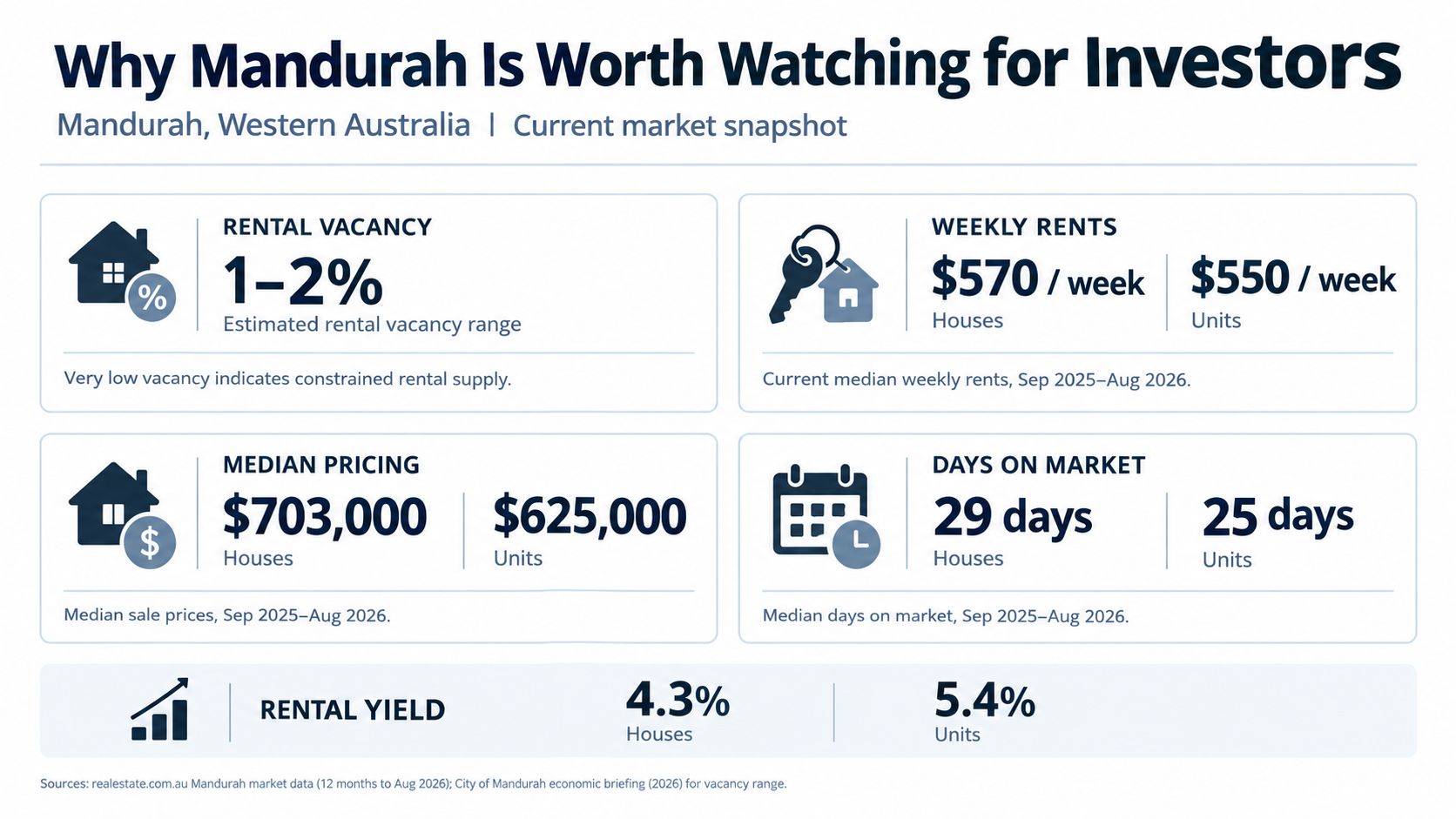
What the current market is saying
Current conditions favour well-presented properties that tenants can choose easily and landlords can manage without excessive upkeep. Low-maintenance houses in established pockets may suit investors seeking broader tenant appeal, while units need closer scrutiny of strata costs and building condition. The purchase should remain defensible if growth is slower than expected.
Practical rule: If rent is doing the heavy lifting, examine the purchase closely. If the numbers work only after optimistic growth assumptions, the deal is too soft.
National ownership data provides useful context, but it is not a direct measure of Mandurah. The Reserve Bank of Australia reported about 2.3 million individual housing investors in Australia as at 2022/23, around 10% of the working-age population. About 70% owned one investment property, while the remaining 30% owned multiple properties and collectively held around half of all investment properties (RBA).
For Mandurah buyers, the practical implication is stock concentration. If several multi-property owners sell during the same period, established coastal segments such as Halls Head, Falcon and Wannanup can experience a cluster of competing listings. Buyers should compare each property's rent, maintenance profile and resale appeal rather than treating suburb-level momentum as a guarantee.
Mandurah Investment Snapshot
| Metric | Value |
|---|---|
| Median house rent | A$550 per week |
| Median unit rent | A$380 per week |
| Vacancy rate | 2.1% |
| House rent growth, 1 year | 11.1% |
| House rent growth, 3 years | 38.5% |
The better question is whether the property can keep producing acceptable rent without becoming a maintenance drag. The local evidence supports that approach, provided the stock continues to meet tenant expectations. Buyers needing a more detailed review can use this investment property guidance for Mandurah buyers before comparing individual opportunities.
How Mandurah's Rental Demand Supports Investment Returns
Western Australia's rental market is still tight enough to support income-focused buying. SQM-linked reporting showed WA vacancy sitting around 0.66% to near 1% in 2026, while private investment in WA rose 0.5% in the year to the June quarter 2025 and dwelling construction spending increased 6.2% (WA market snapshot). That combination matters because it tells you demand for rentals is staying strong even as new supply is being built.
Why tight vacancy helps landlords
Low vacancy usually gives landlords more pricing power and less downtime between tenants. It does not guarantee easy returns, but it does improve the odds that a decent property will stay occupied and that leasing decisions can be made with a bit more confidence. In markets like Mandurah, that tends to favour homes with broad tenant appeal rather than niche layouts that sit for too long.
The local investor lens should stay practical. Strong rental demand supports cash flow, but it also raises the standard for presentation, pricing and property selection. A home that looks good online and feels low-fuss on inspection has a better chance of attracting quality tenants quickly, which is where the true advantage shows up.
A property can look cheap on paper and still underperform if it sits empty or needs constant attention.
Supply and demand are both active
The WA Government's investment and construction mix suggests the market is not frozen. More dwelling construction spending can help create future housing supply, but in the short term the rental market still feels tight enough to reward disciplined buyers. For investors scanning coastal suburbs in the southern corridor, that means the opportunity is not just about chasing the cheapest entry point.
It's about buying where a tenant pool already exists and where the property sits comfortably inside that pool. That's why Mandurah often works better for investors who want a steady hold than for buyers trying to force an outsized speculative return.
Cash flow considerations for Mandurah property investors
Houses Versus Units for Mandurah Investment Properties
The house-versus-unit decision in Mandurah usually comes down to two things, management effort and how much growth you want to capture over time. Mandurah's gross rental yield sits around 4.61%, with average WA yields near 4.8%, and affordable coastal and outer-metro markets such as Mandurah often returning roughly 5% to 6% (Estait). That puts both houses and units in a range where the quality of the asset matters as much as the label on the listing.
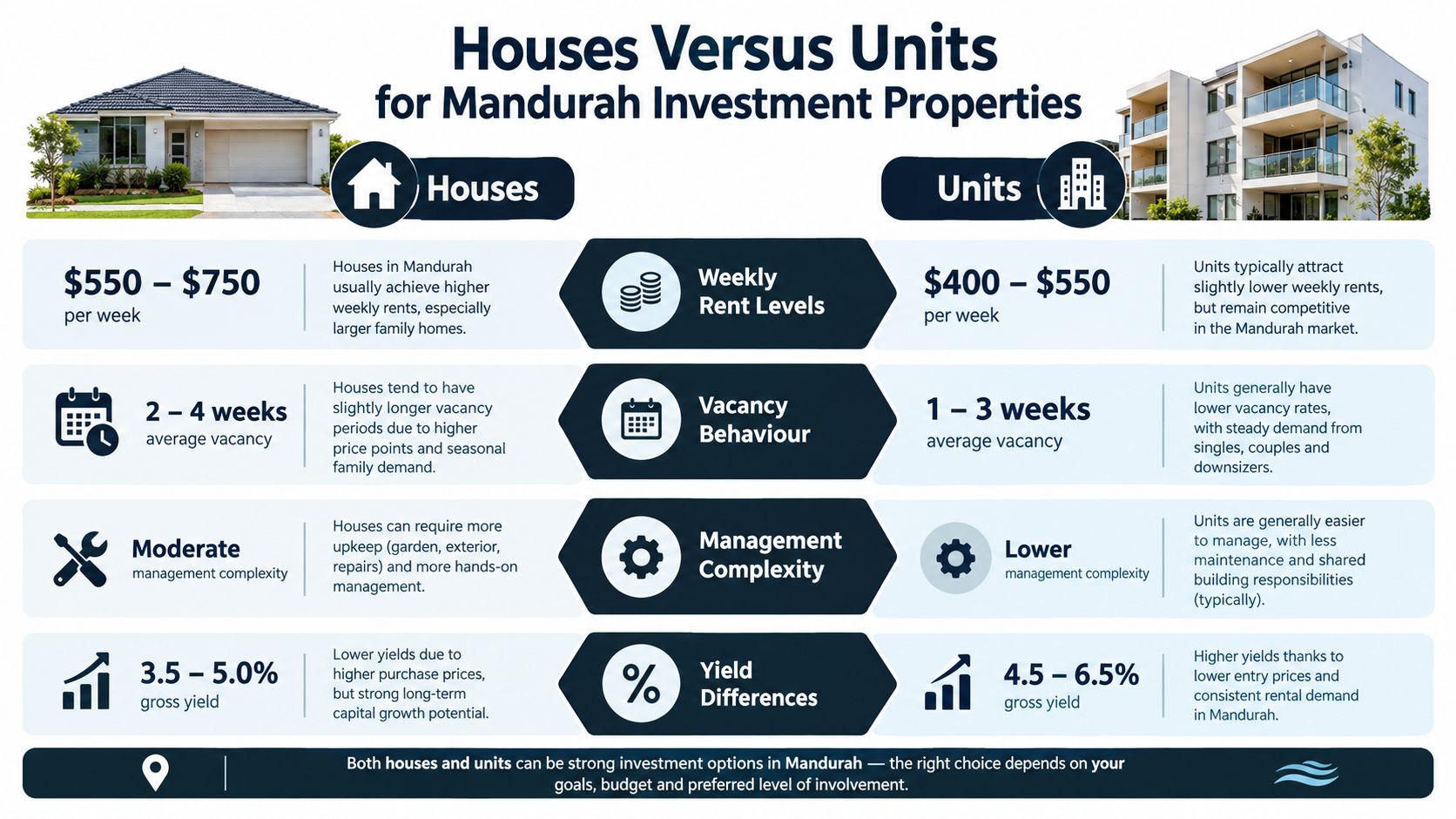
Houses tend to suit longer holds
Houses in suburbs such as Halls Head, Falcon, Madora Bay and Lakelands usually appeal to buyers who want land component, family demand and a clearer path to capital growth. They can be more expensive to maintain, but they also tend to attract a broader owner-occupier pool when it's time to exit. That matters if your strategy is to hold through cycles and sell into a market that values family appeal.
Units usually lean harder into yield
Units, especially in better-located pockets of Dudley Park and tighter-established coastal areas, can be easier to lease and easier to manage. They're often better suited to investors who want a simpler entry, lower maintenance exposure and a cleaner cash-flow profile. The trade-off is that body corporate rules, shared areas and narrower buyer demand can affect resale flexibility.
House vs Unit Investment Comparison
| Factor | House | Unit |
|---|---|---|
| Weekly rent profile | Usually stronger total rent | Usually lower entry rent, often more accessible |
| Vacancy behaviour | Broad tenant appeal if well presented | Can lease well when location and presentation are strong |
| Management complexity | More maintenance responsibility | Often simpler day-to-day upkeep |
| Growth profile | Better land-led growth potential | More yield-focused, less land upside |
A useful way to think about it is this. If the property must be maximised for income from day one, a good unit can be the cleaner fit. If the aim is to build wealth across a longer horizon, a house in a solid family suburb usually gives you more to work with.
Unit market guidance for Perth and surrounding areas
Growth Versus Yield in Mandurah's Current Market
Mandurah has not become a pure growth chase. It's moving into a more balanced phase where capital gains matter more than they did earlier, but the income case is still respectable. Recent data shows Mandurah's median house price at $643,250, median rent at $570 per week, gross rental yield at 4.61%, 12-month growth of +16.95%, days on market of 11, and vacancy rising from 1.18% in March 2026 to 1.38% in August 2026 (Australian Property Experts).
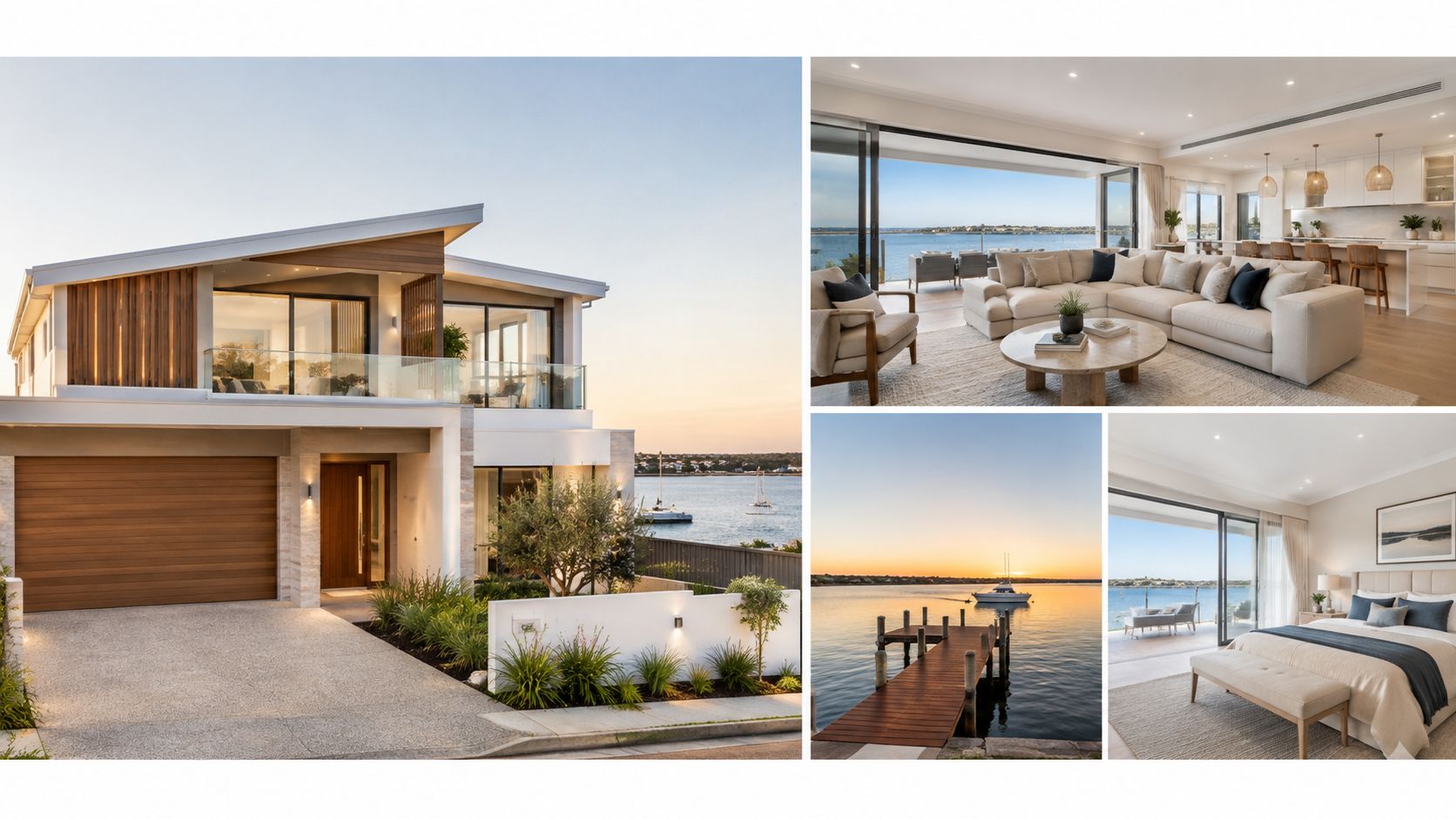
What that mix means for buyers
The number that stands out most is the relationship between rent and price. When the price moves faster than rent, yields can compress, and that's exactly the kind of shift investors need to watch closely. Mandurah still produces decent income, but buyers can't rely on yield alone the way they might in a more purely cash-flow-driven regional town.
Where growth still makes sense
That doesn't mean growth is the wrong objective. It means the property has to be chosen carefully, with an eye on land value, tenant depth and resale quality. Well-located homes in areas with enduring lifestyle appeal can justify a lower starting yield if they offer stronger exit prospects later.
Good investor habit: Buy the property you'd still want to own if rent growth paused for a while.
The cleanest way to read Mandurah right now is this. It's not a market for buyers who need maximum yield at any cost, and it's not a market that should be treated as pure momentum either. It sits in the middle, where the best outcomes come from buying quality, holding discipline and accepting that both rent and resale value have to be reasonable, not perfect.
How to Test Cash Flow Before Buying Investment Property
A Mandurah purchase should be tested on the numbers before anyone gets attached to the suburb or the block. Start with achievable rent, not aspirational rent. Then compare that against the actual purchase price and the ongoing cost of ownership, including management, maintenance, insurance and financing pressure.
A simple investor check
- Compare the asking price to realistic rent. Use current local rent levels as the anchor, not what a listing agent hopes the property might earn after improvements.
- Allow for ongoing costs. A property that looks strong on gross rent can weaken quickly once management and maintenance are added.
- Check tenant depth. Broad appeal matters more than cosmetic flair if you want the property leased consistently.
- Stress-test the hold. Ask whether the deal still works if rent growth slows or one repair bill lands early.
The point is not to model a perfect spreadsheet. It's to stop overpaying for a lifestyle narrative that doesn't translate into reliable income. If a property only works when every assumption leans optimistic, the deal is too fragile.
A clean purchase is one that still works after the first unexpected bill.
For buyers who want a more structured way to assess this, a calculator can help compare holding costs against rent assumptions before the property is even shortlisted. David Beshay Real Estate's property investment calculator is one tool that can sit alongside your own due diligence, but the local listing, tenant demand and likely resale market still need a human read.
In Mandurah, that read often decides the outcome. Two properties can look similar online and perform very differently once you account for location, upkeep and how easy they are to lease. The numbers matter, but the asset quality matters just as much.
Using Appraisals to Price Investment Properties Accurately
Accurate pricing protects both sides of the transaction. For sellers, it prevents a strong investment property from sitting too long and going stale. For buyers, it keeps the purchase grounded in local evidence rather than a hopeful guide price or an automated estimate that misses the street-level nuances.
A proper appraisal weighs recent sales, buyer depth and how the property sits within the local market, rather than relying on a simple algorithm. That matters in Mandurah and nearby suburbs because small differences in presentation, land size, layout and renovation quality can shift the result meaningfully. An in-person appraisal is often the cleaner approach when the property is a serious income asset, not just a place to live.
What to look for in an appraisal
- Recent local sales: Not just broad suburb medians, but comparable homes that match the property's real features.
- Rental alignment: The price should make sense against the rent the home can command.
- Exit realism: A buyer should think about who would purchase the property later, because that affects how safely the asset can be held.
The best appraisals don't chase the highest number. They explain it. That distinction matters when you're comparing an investment property for sale in Halls Head, Falcon or Lakelands against something in Dudley Park or Madora Bay, because the market can reward one location and discount another for reasons that don't always show up in a portal estimate.
If the appraisal feels detached from the rent, the likely buyer pool or the condition of the home, it usually isn't reliable enough for investment decisions.
Settlement Scenarios for Different Purchase Types
Settlement terms can change the risk profile of an investment property for sale, especially when the buyer is relying on finance or a quick rental start. In Western Australia, a private sale does not legally require a deposit. The amount is negotiable, generally no more than 10% of the purchase price, and the transaction completes at settlement once the required checks and transfer documents are handled (Consumer Protection WA). That flexibility can help a buyer structure conditions around finance, inspections or existing tenancy arrangements.
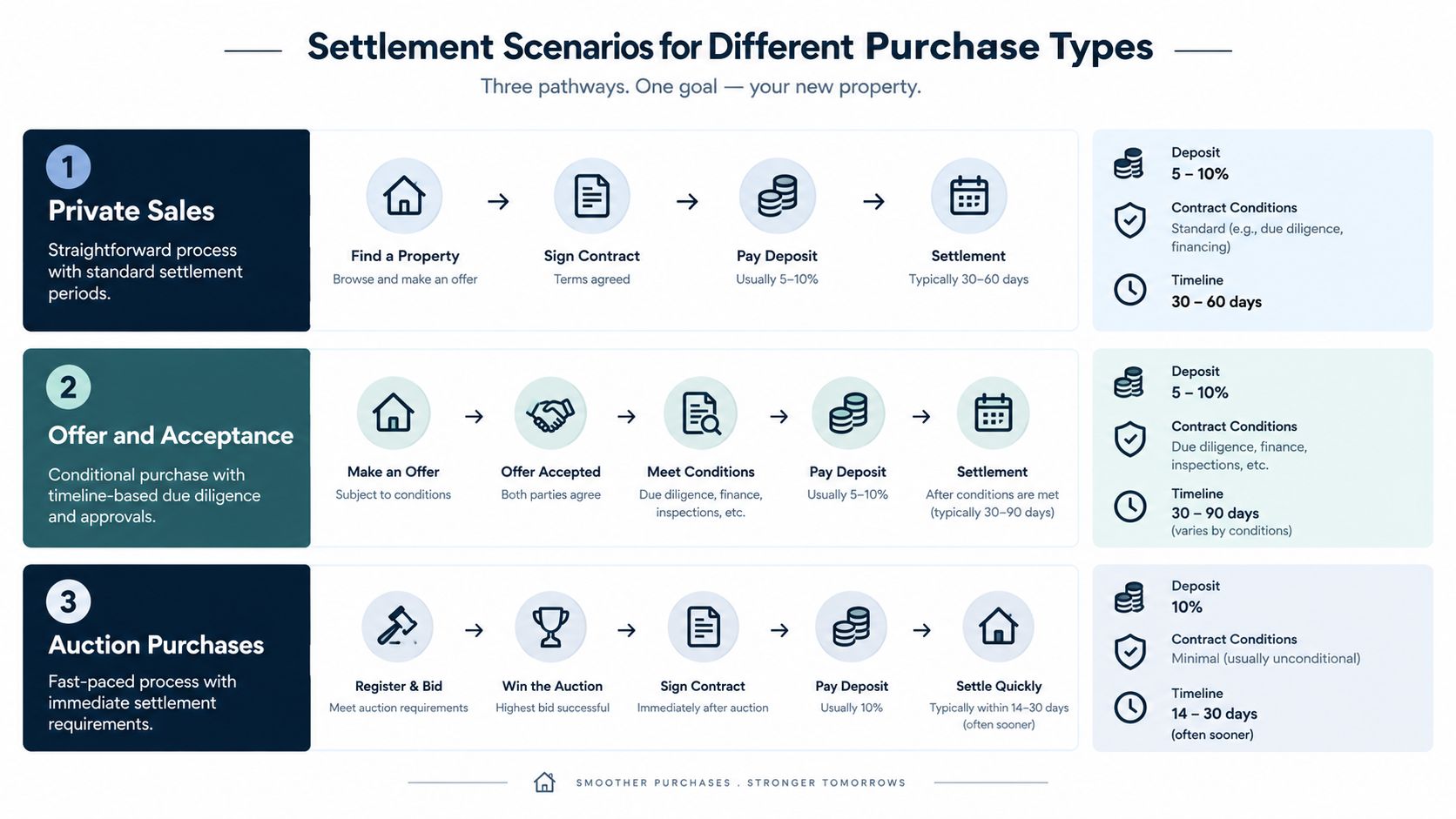
What changes by sale method
With offer and acceptance, no deposit is required by law, but at least some deposit is due within seven days of acceptance. If the deposit exceeds $20,000, or settlement extends beyond 60 days, the buyer can request in writing that it be held in a separate interest-bearing account, as outlined by Consumer Protection WA.
Auction purchases allow less room to adjust the timetable. The deposit is required when the auction closes, usually at about 10%, and the remaining balance is generally due within 30 days (Consumer Protection WA).
A Halls Head or Lakelands investor should check finance readiness before bidding. A 30-day auction settlement can arrive while a lender is still completing approval, valuation or final documentation. The buyer may also need to arrange insurance, conveyancing and a property manager before settlement. A lower auction price does not compensate for a deposit shortfall or delayed finance.
If the seller is ready to settle and the buyer cannot complete on the agreed date or within three business days, penalty interest may apply (Consumer Protection WA). Confirm the deposit source, finance status and settlement buffer before signing, then match the purchase method to the investor's actual cash-flow capacity.
Making the Right Investment Decision in Mandurah
The best Mandurah investment is rarely the one with the flashiest headline. It's the one that fits the investor's holding power, maintenance tolerance and exit horizon. If you want cleaner income, a well-selected unit can make sense. If you want stronger long-term upside, a house in a proven family suburb usually deserves more attention.
Suburb choice matters as much as property type. Lakelands and Madora Bay can suit buyers looking for newer-feeling stock and family demand. Halls Head and Falcon often appeal to those who want coastal lifestyle appeal with broader resale recognition. Dudley Park can work for investors who want easier access to central Mandurah demand, while Wannanup can be more selective and should be judged on the property itself rather than the postcode alone.
The right question is not “Is Mandurah good?” It's “Which Mandurah property is good for my strategy?” That's where discipline pays off. A sound purchase has acceptable rent, a realistic appraisal, tolerable holding costs and a buyer pool that won't disappear when the market slows.
If you're weighing an investment property for sale in Mandurah or the surrounding coastal suburbs, David Beshay Real Estate can help you assess the numbers, compare suburb-level options and price the property against local demand. Visit David Beshay Real Estate to take the next step with a local appraisal and a clearer investment view.

