


Thinking about adding a pool to your backyard? The first question on everyone's mind is always the same: what's it actually going to cost?
In Australia, the price for a fully installed inground pool can be anywhere from $25,000 to well over $100,000. The final number really comes down to the type of pool you choose, its size, and any custom features you can't live without.
Understanding Australian Pool Installation Costs
That dream of a backyard oasis starts with a realistic budget. The answer isn't a single figure, but a spectrum heavily influenced by the three main types of pools. Think of it like buying a car—you could go for a reliable hatchback, a versatile SUV, or a completely custom luxury vehicle. Each comes with a different price tag and its own set of perks, and your pool choice works much the same way.
Each option brings its own set of financial and practical things to think about. To give you a clear picture of what you're looking at, here’s a quick rundown of the big three in Australia.
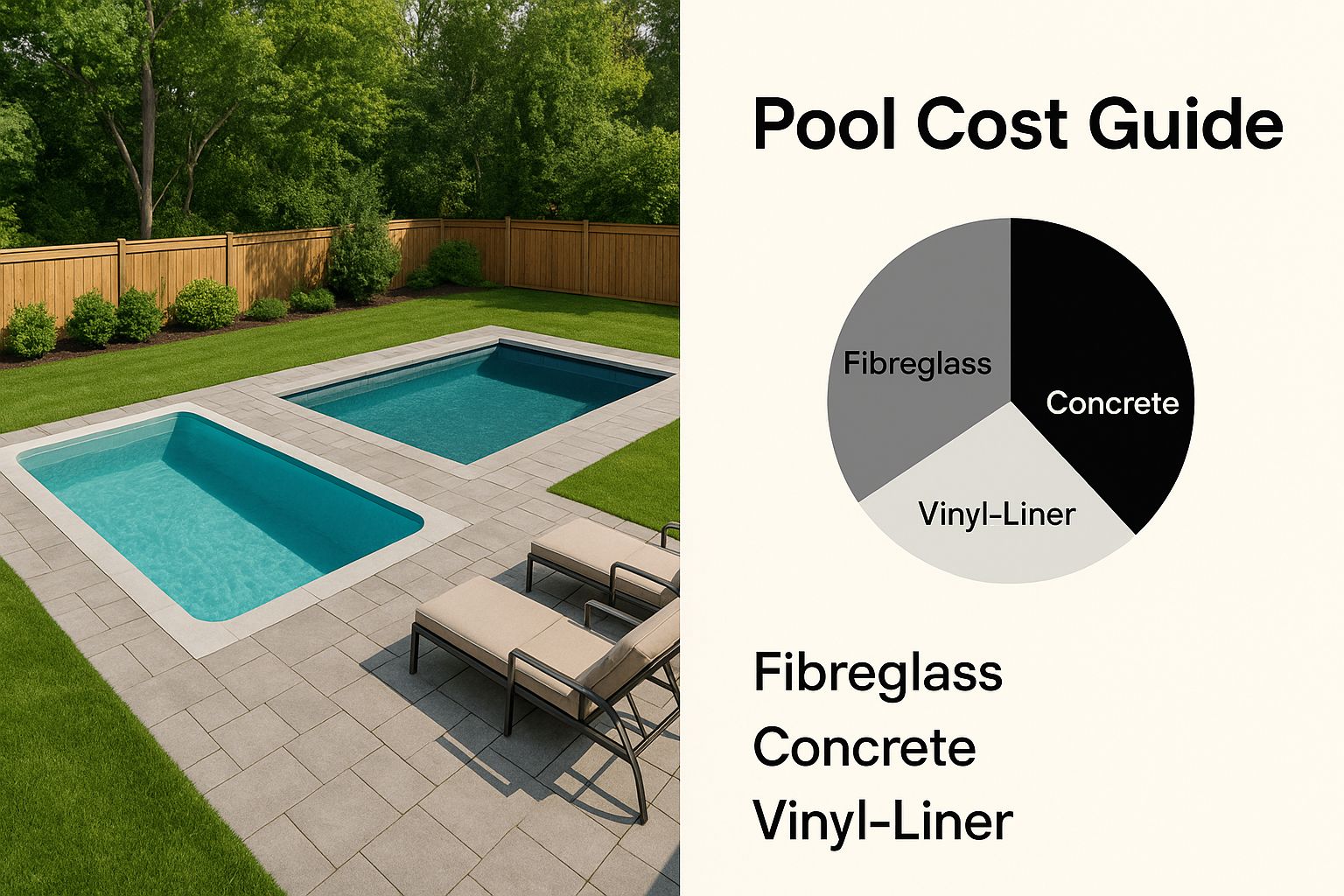
As you can see, your initial decision between fibreglass, concrete, and a vinyl-liner sets the entire financial groundwork for the project.
At-a-Glance Pool Installation Cost Comparison
To make things even simpler, here's a quick comparison of the average installation costs and benefits for the most popular pool types across Australia.
| Pool Type | Average Installation Cost (AUD) | Key Advantage | Best For |
|---|---|---|---|
| Vinyl-Liner | $20,000 – $35,000 | Most affordable upfront cost | Budget-conscious families and first-time pool owners. |
| Fibreglass | $25,000 – $45,000 | Quick installation and smooth finish | Homeowners looking for a balance of speed, quality, and value. |
| Concrete | $50,000 – $100,000+ | Complete design freedom and durability | Those wanting a custom shape, size, or high-end finish. |
This table gives you a great starting point for figuring out which pool type aligns best with your vision and your wallet.
Breaking Down the Numbers
Let's dig a bit deeper into those figures. The most affordable way to get an inground pool is with a vinyl-liner model, which will generally set you back between $20,000 to $35,000. They're a fantastic entry point into pool ownership without breaking the bank.
Fibreglass pools sit comfortably in the mid-range and are incredibly popular for their speedy installation and silky-smooth finish. For a fibreglass model, you can expect the total installation cost to be somewhere between $25,000 and $45,000, though this can vary with size and how tricky your site is to work with.
Concrete pools are the premium choice, offering limitless customisation. While the average cost is around $50,000, their bespoke nature means the price can start at $30,000 and easily climb past $100,000 for intricate designs and luxury finishes. You can get more great insights into what drives these prices by checking out this handy pool guide from Zodiac Australia.
Getting a handle on these baseline figures is the first real step in creating a budget that works for your backyard transformation. From here, we can start to look at all the other factors that add to these initial costs.
What Really Drives Your Final Pool Cost
Ever wondered why one pool quote can look so different from another, sometimes by tens of thousands of dollars? The secret is in the details—everything that happens beyond the pool shell itself.
Think of your pool cost installation like building a custom home. The basic structure is just the starting point. The real cost gets shaped by the unique conditions of your property and the decisions you make along the way.
The size and shape are the most obvious factors, of course. A larger, deeper pool needs more digging, more materials, and more labour, which naturally bumps up the price. And a simple rectangle will always be easier on the wallet than a custom freeform shape with tricky curves that demand more complex work.
The Foundation Your Price Is Built On
Beyond just the dimensions, the material you pick sets a very clear baseline for your budget. Kicking things off with a $62,400 fibreglass shell is a completely different financial conversation than starting with a fully customised concrete build. But that's just the first layer.
The next major variable is your own backyard. The specific conditions of your property can seriously swing the final bill, and this is often where those unexpected costs like to hide.
- Site Access: Can a big excavator actually get to the pool site? Tight access might mean using smaller gear, which takes longer and drives up labour costs. Sometimes, you even need to hire a crane just to lift the pool shell into your yard.
- Soil Type: Digging into soft, sandy soil is a dream run. Hitting hard clay, rock, or dealing with a high water table complicates everything. Excavating difficult ground requires specialised equipment and a lot more time, adding thousands to the job.
- Slope of Your Land: A sloping block isn't a deal-breaker, but it almost always means building retaining walls to create a level area for the pool and deck. These are major structural additions and a significant expense that's essential for the install but separate from the pool itself.
Uncovering the Hidden Costs
Once the hole is in the ground, a bunch of other critical tasks come into play that all add to the final price. These aren't optional extras; they're non-negotiable jobs needed to make your pool safe, functional, and compliant with local Mandurah regulations.
Think of your pool quote as an itemised receipt. The "pool" is just one line item. The final price includes everything from earthmoving and electrical work to the crucial step of hauling away tonnes of excavated soil.
For instance, you'll need a licensed electrician to connect the pool pump and lighting to your home's power. That alone could be between $4,000 and $6,000. If you're adding a heater, running gas lines is another significant expense.
Understanding every one of these components is the key. It empowers you to look at any quote with confidence, knowing exactly where every dollar is going.
Budgeting for Fencing, Landscaping and Permits
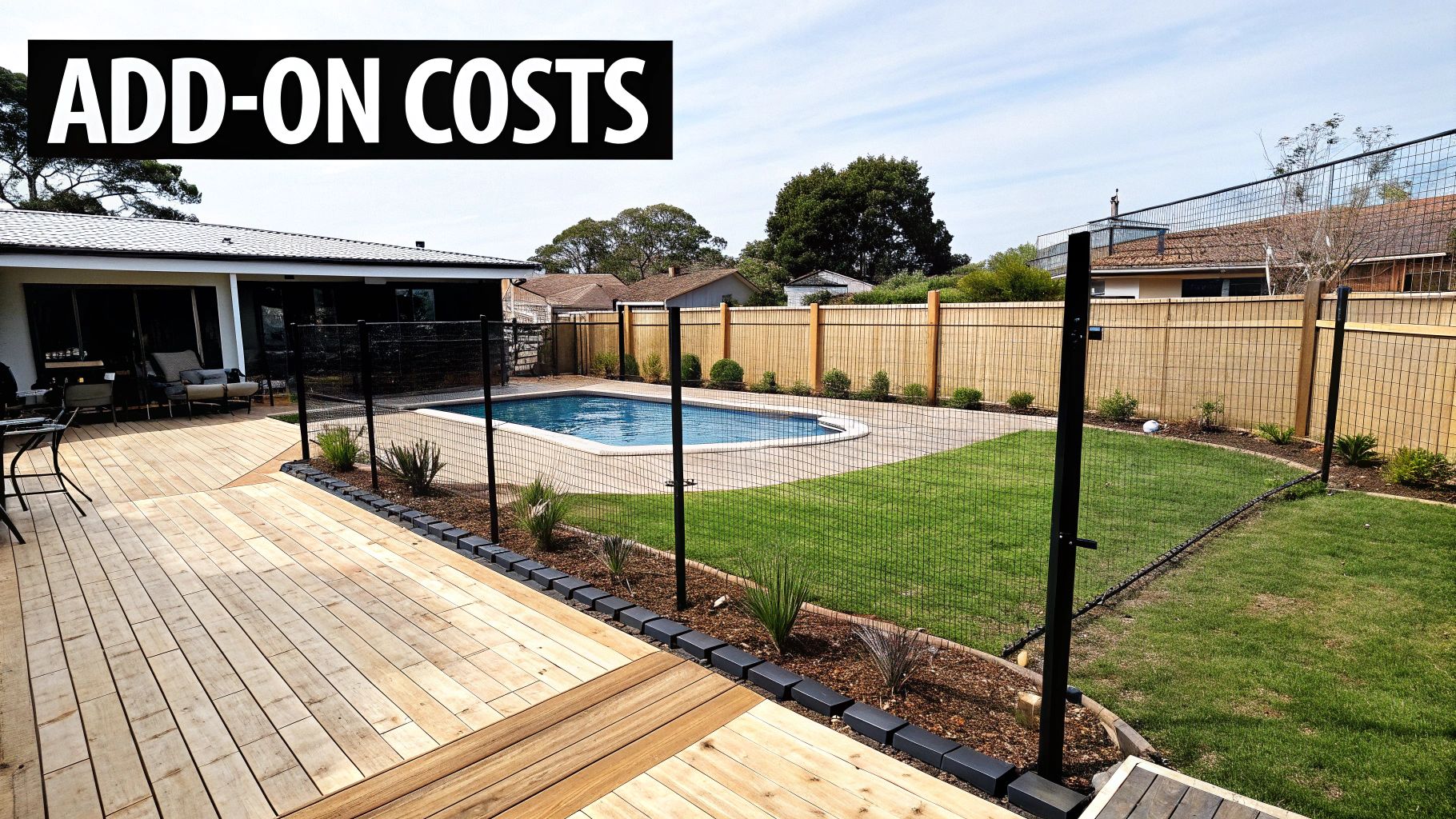
Getting the final quote for your pool shell and its installation is a massive step forward, but it's not the end of the budgeting journey. A decent chunk of your total pool cost installation budget needs to be earmarked for the essentials that turn a construction site into a safe, legal, and stunning backyard oasis.
These aren't just optional add-ons; they are critical parts of the project. We’re talking about fencing, landscaping, and all the necessary council permits. Forgetting to account for these can lead to some nasty budget blowouts and delays, turning your dream project into a headache.
Think of the pool itself as the main event. The fencing, landscaping, and permits are the crucial supporting acts—you really can't have one without the others. Let’s break down what you need to plan for.
The Non-Negotiable Cost of Pool Fencing
In Australia, compliant pool fencing isn’t just a good idea—it's the law. The safety regulations are incredibly strict, and your pool area must be fully secured with a barrier that meets both national and local standards before a single drop of water can go in. This is a cost you simply cannot avoid.
The material you pick will be the biggest driver of the final price.
- Aluminium Fencing: This is the go-to for many homeowners and the most budget-friendly choice. You can typically expect it to cost around $200 to $300 per linear metre, installed. It's tough, low-maintenance, and does the job perfectly.
- Glass Fencing: If you're after that seamless, high-end look, frameless or semi-frameless glass is a very popular premium option. Just be ready to open your wallet a bit wider, as it usually falls between $500 to $800 per linear metre.
It’s a simple equation: the total cost hinges on the perimeter of your pool area. A bigger space means more fencing, which directly scales up your budget.
From Dirt Patch to Dream Oasis: Landscaping
Once the excavators and trades have packed up and gone, you'll be left with a beautiful new pool sitting in the middle of a whole lot of dirt. Landscaping is what bridges that gap, turning a blank canvas into a functional and inviting retreat. The costs here can swing wildly depending on your vision.
Simple concrete or paved surrounds are the most economical way to go, often starting from around $10,000 to $15,000. But if you’re picturing something a bit more luxe, like natural stone, warm timber decking, or lush garden beds, the cost can easily climb past $25,000.
Navigating Council Permits and Fees
Before anyone can even think about digging, you need the green light from your local council. This process involves submitting detailed plans and engineering documents to prove your project ticks all the boxes for building codes and safety regulations.
The fees for these applications, permits, and the required inspections are a necessary part of the process. While the exact amount varies from one council to the next, it's smart to set aside $1,500 to $3,000 to cover all the paperwork and official sign-offs needed to make your pool 100% legal and compliant.
Understanding Long Term Pool Ownership Costs
Once you've made that final payment to your builder, the journey with your new pool is really just beginning. Think of the installation cost as the ticket to entry; the real, long-term cost of a pool unfolds over years of ongoing operational expenses. Getting your head around these future costs is the key to a stress-free experience, ensuring your backyard oasis remains a joy for years to come.
It's a bit like owning a car. You don't just buy it and that's it—you've got to budget for fuel, regular servicing, and insurance. A pool is no different. These aren't one-off surprises but regular, predictable costs you'll want to factor into your annual household budget. If you don't, that dream retreat can quickly become a source of financial strain.
These ongoing expenses generally fall into a few key categories that every new pool owner gets to know very well.
The Big Three of Annual Pool Expenses
The main recurring costs you'll face are for chemicals, electricity, and routine maintenance. Each one is absolutely vital for keeping your pool clean, safe, and running smoothly.
-
Chemicals and Water Balance: Keeping your pool water sparkling and hygienic means a steady supply of chemicals. We're talking chlorine, pH balancers, and algaecides. Annually, you can expect to spend somewhere between $500 and $1,000 just to keep the water chemistry perfectly balanced.
-
Electricity Consumption: The pool pump is the heart of your pool's circulation system, and it has to run for several hours every single day. That constant energy use can add anywhere from $500 to over $2,500 to your yearly power bill, depending on how efficient your pump is and what you're paying for electricity.
-
Routine Maintenance: This covers everything from cleaning out filters and servicing equipment to bigger jobs down the line. For example, if you have a vinyl pool, you'll need to plan for a liner replacement every 8-12 years, which can set you back $5,000 to $7,000. Even if you handle the weekly cleaning yourself, it’s smart to have a fund set aside for professional servicing and the odd repair.
Investing Upfront to Save Down the Track
The good news is you can make some clever decisions during the installation phase that will dramatically slash these long-term costs. A bit of forward-thinking here can save you a bundle over the life of your pool.
Making a smarter investment at the installation stage can lead to thousands of dollars in savings over the life of your pool. It’s about balancing the upfront cost with the long-term operational savings.
One of the best moves you can make, especially here in Australia with our rising electricity prices, is to invest in solar heating. A solar heating system for a standard 30 cubic metre pool will cost around AUD 2,750 for the panels. For a larger 60 cubic metre pool, you're looking at about AUD 6,350, not including installation. If you pair this with a solar pump for an extra AUD 200 to AUD 800, you can cut your energy consumption right down. You can find more detailed breakdowns on solar pool heating costs over on Canstar.
Ultimately, viewing your pool as a long-term asset means planning for its upkeep from day one. Before you finalise anything, it's also a great idea to get a professional opinion on your property's overall condition; our guide on the building inspection cost Perth can offer some valuable insights here. This kind of forward-thinking approach is what ensures your investment remains a joy, not a burden.
Does a Pool Increase Your Property Value?
Beyond the simple joy of a backyard swim, many homeowners find themselves asking if a pool is a smart financial move. Does the significant pool cost installation actually translate into a higher property value when it's time to sell?
The answer isn't a straightforward yes or no—it's more about striking a balance between a lifestyle upgrade and a strategic investment.
A beautifully designed and well-kept pool can absolutely boost your home's appeal, especially in a sun-drenched place like Mandurah. It completely transforms the backyard into a sought-after lifestyle feature, creating a powerful emotional pull for potential buyers who can easily picture themselves relaxing by the water.
This addition serves as both a personal luxury and a potential long-term asset. When you look at it this way, the upfront cost becomes part of a much bigger picture—one that enriches your daily life while potentially adding a premium to your home’s market price.
Calculating the Return on Investment
It's important to be realistic. You might not recoup 100% of the installation cost in added value, but having a pool can be the one thing that makes your property stand out in a crowded market.
The real key is to match the pool's quality and style to the overall value of your home. A high-end, resort-style pool is the perfect complement to a luxury property, just as a modest, family-friendly design is a perfect fit for a suburban home.
A pool is much more than just an expense; it's a feature that delivers a serious "wow" factor. For the right buyer, a home with a ready-made oasis is worth a whole lot more than one without, saving them the time, money, and hassle of installing one themselves.
The Australian swimming pool market certainly reflects this strong appeal. Valued at roughly USD 37.52 million in 2025, the market is set for steady growth. This trend is driven by a strong Aussie focus on outdoor living and creating wellness spaces at home. For a closer look at these market trends, you can discover more insights on the Australian swimming pool market.
Maximising Your Pool's Value
To make sure your pool adds as much value as possible, think about how it fits in with the rest of your property.
- Landscaping Matters: A pool surrounded by beautiful, practical landscaping is far more attractive than one sitting in a barren yard. Think decking, shade, and low-maintenance plants.
- Maintenance is Key: A sparkling, well-maintained pool is a major asset. On the flip side, a neglected one can be a huge red flag for a buyer.
- Modern Features: Things like energy-efficient pumps or solar heating are big wins, appealing to buyers who are conscious of running costs.
Ultimately, a pool can be a fantastic way to elevate your property's appeal. For a deeper dive into other home improvements that make a real impact, check out our guide on how to increase home value. By making smart choices, you can ensure your pool is a rewarding investment for both your lifestyle and your finances.
How to Choose the Right Pool Builder
Picking the right builder is easily the most important decision you'll make on this entire pool journey. This single choice dictates the quality of the finished product, how smoothly the installation goes, and whether your investment truly pays off. A great builder brings peace of mind; the wrong one can turn your dream project into a long, drawn-out nightmare.
Think of it like choosing a surgeon. You wouldn't just pick the cheapest option, would you? You'd want someone with a proven track record, fantastic references, and the right qualifications. Your pool builder deserves that same level of scrutiny.
Vetting Your Potential Partners
Start by drawing up a shortlist of at least three reputable builders in the area. When you meet with them, don't let the price tag be your only focus. A tempting low quote can sometimes be a sign of a builder who's about to cut corners.
Instead, go into these meetings armed with a checklist of questions designed to get a real sense of their expertise and reliability.
- Licensing and Insurance: The first thing you should ask for is their builder's licence number and proof of public liability insurance. This is an absolute must-have. It protects you from any potential mishaps on your property.
- Experience and Portfolio: How long have they been installing pools specifically in the Mandurah area? Ask to see a portfolio of their completed jobs, and pay close attention to pools that look similar to what you have in mind.
- Client Testimonials: Don't be shy about asking for contact details for a few recent clients. A quick chat with past customers gives you unfiltered insight into their experience, from communication to the final build quality.
Your goal is to find a partner, not just a contractor. A reputable builder will be transparent, patient with your questions, and focused on delivering a high-quality outcome that aligns with your vision and budget.
Comparing Quotes and Spotting Red Flags
When the quotes start coming in, make sure they are itemised and detailed. A vague quote is often a red flag. It should clearly break down every single component of the pool cost installation, from digging the hole and the cost of materials to the electrical work and getting rid of the excess soil.
Be wary of high-pressure sales tactics or any builder who seems hesitant to give you detailed information. A true professional will be happy to walk you through every line item. For more advice on dealing with local professionals, our guide on navigating local trades in Mandurah has some valuable tips. By doing your homework now, you can confidently choose a builder who will bring your backyard vision to life.
As we get to the end of our guide, you probably still have a few questions buzzing around. Deciding to put in a pool is a massive step, and feeling sure about every part of the pool cost installation is key to moving forward with confidence. Here are some straightforward answers to the questions we hear most often from homeowners just like you.
Our aim is to clear up any final bits of confusion so you can feel totally ready for the exciting project ahead.
How Long Does a Typical Pool Installation Take?
There’s no single answer here, as the timeline really depends on the type of pool you choose. For example, a prefabricated fibreglass pool can be surprisingly quick. From the first dig to filling it with water, you could be looking at as little as one to three weeks. That speed is a huge part of their appeal.
On the other hand, a custom concrete pool is a much bigger undertaking. These projects often take anywhere from three to six months to complete. This is because of the time needed for construction, letting the concrete cure properly, and applying the final finishes. Don't forget that things like bad weather, tricky site access, or even delays with council approvals can stretch out the timeline for any pool project.
Are Financing Options Available for Pool Installation?
Absolutely. A lot of homeowners choose to finance their pool, and it's a very common way to manage a big investment like this without needing all the cash upfront.
It's worth remembering that many banks and lenders see a pool as a significant home improvement. Because of this, there are often specific loan products designed for these kinds of projects, which can make them more accessible than you might think.
The usual routes people take include refinancing their home loan to tap into existing equity, applying for a dedicated home improvement loan, or even using a personal loan. Some of the larger pool companies might also offer their own financing plans, so it's always a good idea to ask them directly. The most important thing is to shop around and compare the interest rates and terms from different lenders to find a deal that works for your budget.
Will Installing a Pool Increase My Home Insurance Premiums?
More than likely, yes. When you install a pool, your home and contents insurance premiums will probably go up. Legally, a pool is considered an "attractive nuisance," which basically means it adds a level of liability risk to your property, and insurers will adjust your policy to reflect that.
You must tell your insurance provider as soon as the pool is installed. This ensures you have the right public liability coverage in place. While the increase in your premium is usually pretty reasonable, failing to notify your insurer could be a costly mistake. If a pool-related incident were to happen, they could refuse your claim, leaving you completely exposed financially.
Feeling more confident about your property decisions? At David Beshay Real Estate, we provide the clarity and local expertise you need. Get your free, no-obligation property appraisal today

