


Thinking about selling your Mandurah property privately? It’s a route that can save you thousands in agent commissions, but it's not a walk in the park. This path requires your time, your effort, and a solid understanding of the local market. The big upside? You're in the driver's seat, with complete control over the sale price, negotiations, and when you open your doors for viewings.
Why Choose a Private Sale for Your Mandurah Home
Going down the private sale route is more than just a money-saving move; it’s a strategic decision for homeowners who want to be hands-on with the entire transaction. While saving on agent commissions is often the biggest draw—and that's a hefty sum on a Mandurah property—the advantages run much deeper. You get total control over every single detail of the sale.
Being this involved means you call the shots on viewing times, you decide who to negotiate with, and you have the final say on the contract terms. There's no middleman filtering communication, which allows for honest, direct chats with potential buyers. This can be a massive plus, especially when you know your home and the neighbourhood inside and out in a way an agent never could.
Who Is a Private Sale Best For
Let's be clear: selling privately isn't for everyone. It's a great fit for people who are naturally organised, proactive, and don't shy away from a bit of negotiation.
Ask yourself if you have the following:
- Time to Commit: You’ll need to set aside serious time for marketing, fielding calls and emails, and hosting viewings, which often means giving up your evenings and weekends.
- Market Savvy: Having a good grasp of the current Mandurah property market is non-negotiable for setting a price that’s both realistic and competitive.
- Confidence in Negotiation: You need to be ready to handle offers, counter-offers, and sometimes tricky conversations to get the best result.
This infographic breaks down the core benefits of taking charge of your sale.
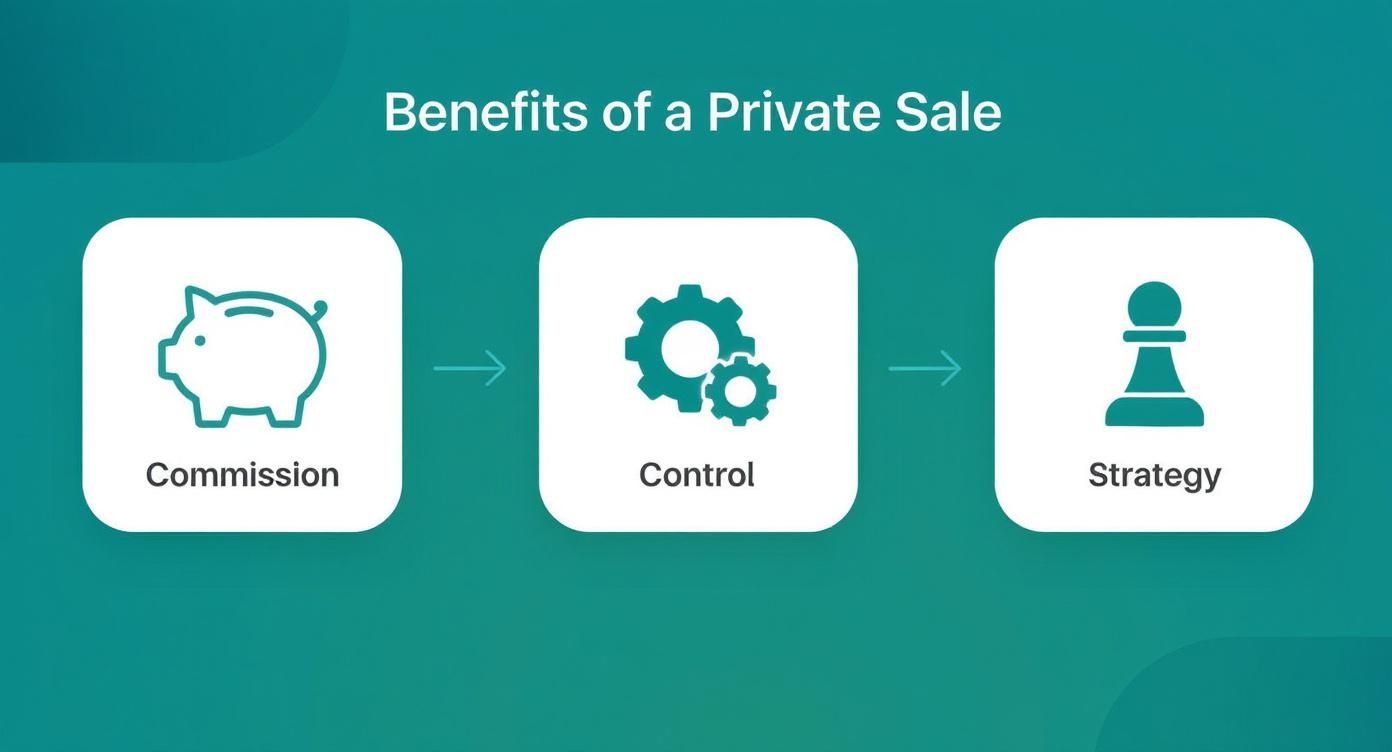
You can see how everything flows together—from saving on commission to gaining full control and dictating your own strategy. It's a process that really rewards sellers who are well-prepared and proactive.
A Strategic Alternative
For some, the thought of managing a full-blown private sale can feel a bit overwhelming, but they still crave more privacy than a public marketing campaign offers. This is where knowing about different sales methods really pays off. Looking into strategies for selling your home off-market can be a fantastic middle ground, giving you discretion while still using targeted marketing to find the right buyer.
A private sale gives you the power to tell your home's story directly to buyers. Your personal connection to the property and the neighbourhood can build a level of trust and authenticity that's tough for any agent to replicate.
Setting the Right Price for Your Mandurah Property

Let's be blunt: getting the price right is probably the single most important decision you'll make when selling your Mandurah home privately. Nail it, and you’ll have serious buyers lining up. Price it too high, and you'll be hearing crickets for months. Go too low, and you’re just leaving your hard-earned cash on the table for someone else.
Pricing your home isn't about plucking a number out of thin air; it’s about solid, data-driven strategy. Sure, online valuation tools can give you a ballpark figure, but treat them as a starting point, nothing more. Their algorithms can’t possibly appreciate your brand-new kitchen, the beautiful garden you've cultivated, or the fact you’re on the best family-friendly street in the suburb.
They provide a baseline. Now the real work begins.
Diving Into the Local Mandurah Market
Your mission here is to become an expert on comparable sales—or 'comps' as we call them in the business. These are homes in your immediate area that are genuinely similar to yours in size, age, and features, and that have sold recently. You need to be looking for sales within the last three to six months in suburbs like Halls Head, Falcon, or Dudley Park to get a true reading of the current market pulse.
But this is more than just glancing at the final sale price. You need to dig a little deeper to understand what buyers in your specific pocket of Mandurah are actually willing to pay for.
- Property Condition: Was that comp fully renovated with all the bells and whistles, or was it a bit of a fixer-upper needing some love?
- Unique Features: Did it have that coveted side access for a boat or caravan? A modern alfresco area for entertaining? Those killer ocean views?
- Time on Market: How long did it take to sell? A property that sells quickly is often a sign it was priced perfectly from the start.
This hands-on research will give you a realistic price bracket. To sharpen that price even further, start thinking like a buyer. Get out there and visit some open homes in your neighbourhood. See what your direct competition looks like and critically assess how their asking prices stack up against their presentation and features.
A classic mistake private sellers make is pricing their home based on emotion or what they need to get from the sale. A buyer doesn't care about your next move; they only care about fair market value. Your most powerful tool is objective data from recent, comparable sales.
Putting a Value on Your Home's Unique Features
Once you've got a solid market baseline, it's time to factor in what makes your place special. Not all features add value equally, and understanding this difference is the final piece of the pricing puzzle. For a bit more insight on this, it's worth understanding what a professional property appraisal covers, as it can give you some valuable context.
Think about the high-impact features that really resonate with the Mandurah lifestyle:
- Waterfront Access: It goes without saying that canal frontage or direct estuary access commands a significant premium here.
- Quality Renovations: Modern, well-executed kitchens and bathrooms are always huge selling points that buyers notice immediately.
- Outdoor Living: A fantastic, well-designed alfresco area or a sparkling pool can add serious appeal and value.
To help you get granular, here's a checklist to work through.
Mandurah Property Valuation Checklist
Use this table to objectively assess where your property sits in the market. It will help you move from an emotional price to a data-backed one.
| Valuation Factor | High Impact Features | Moderate Impact Features | Notes for Private Sellers |
|---|---|---|---|
| Location & Access | Canal/estuary frontage, ocean views, walk to beach | Quiet cul-de-sac, park-facing, good school zone | Proximity to the Mandurah Forum or train station can be a big plus. Highlight these in your listing. |
| Renovations | Full kitchen/bathroom renovation (within 5 years) | Fresh paint, new flooring, modern light fittings | Document major works. Buyers will ask for receipts and warranty info for big-ticket items. |
| Outdoor Living | In-ground pool, large covered alfresco with built-ins | Reticulated gardens, paved entertaining area, garden shed | Side access for a boat or caravan is a huge selling feature in Mandurah. Make it a headline. |
| Size & Layout | Second living area/theatre room, 4+ bedrooms | Good-sized bedrooms with built-in robes, open-plan living | Flow is important. An awkward layout can deter buyers even if the square meterage is high. |
| Energy & Eco | Solar panels, rainwater tanks, solar hot water | Quality window treatments, good insulation | Mentioning low power bills can be a surprisingly effective selling point. |
This checklist isn't about ticking every box. It's about helping you build a clear, evidence-based case for your asking price.
By combining broad market data with an honest assessment of your home's unique attributes, you can set a price that not only attracts the right buyers but ultimately puts the maximum amount of money in your pocket.
Crafting a Compelling Marketing Campaign
When you’re selling property privately, you're not just the homeowner anymore. You're now the chief marketing officer, and your ability to create a buzz falls squarely on your shoulders. It might sound daunting, but don't worry—a professional-level campaign is well within your reach, and it doesn't have to break the bank.
The absolute cornerstone of your entire campaign is top-notch photography. In the online world we live in, photos are your first impression, and you only get one shot at it. Skimping here is a classic false economy; blurry, poorly lit smartphone pictures will sink your listing before it even has a chance to float.
Hiring a professional property photographer is one of the smartest investments you'll make in this process. They have the gear, the eye, and the know-how to capture your home's best angles, making every space look bright, spacious, and inviting. This single step can dramatically boost buyer interest and the perceived value of your home.
Writing Ad Copy That Sells the Mandurah Lifestyle
Once you've got those stunning photos, you need compelling words to match. Your ad copy shouldn't be a boring list of features. It needs to sell the dream of living in your Mandurah home. What makes your spot special? Weave that local flavour into every sentence.
Instead of the dry "3-bedroom, 2-bathroom house," try a headline that grabs attention and speaks to a lifestyle:
- "Your Family's Coastal Retreat Awaits in Halls Head"
- "Enjoy Canal Living & Sunsets from Your Falcon Entertainer's Deck"
- "Walk to the Estuary from This Perfectly Located Dudley Park Gem"
In the description, paint a vivid picture for the reader. Talk about enjoying a morning coffee on the sun-drenched patio, the short stroll to the local beach for a summer swim, or how handy it is being so close to the Mandurah Forum. You're not just selling bricks and mortar; you're selling a way of life.
Choosing Your Battlegrounds Online
Your fantastic photos and ad copy need to be seen by the right people. Now, as a private seller, you can't just list directly on major players like Realestate.com.au or Domain. But that's where "For Sale By Owner" (FSBO) platforms come in. For a flat fee, these services will get your listing up on those essential websites, giving you the same exposure as any agent-listed property.
And don't underestimate the power of social media. Local Mandurah community groups on Facebook are absolute goldmines for targeted marketing. Share your listing with your best photos and a friendly, engaging caption. It's free, it's direct, and it reaches thousands of local residents who might be looking to move or know someone who is.
A well-planned marketing calendar is your secret weapon. Map out your launch day, schedule your first open for inspection, and plan weekly posts for social media. Consistency keeps your property top-of-mind for potential buyers.
A simple calendar might look something like this:
- Week 1: Launch your listing on the FSBO platform. Post a "Coming Soon" teaser on local Facebook groups to build anticipation.
- Week 2: Host your first Saturday open for inspection. Put up a reminder post on Friday and maybe share a quick video tour of the highlights on Sunday.
- Week 3: Create a post focusing on a specific feature that buyers would love, like the newly renovated kitchen or the beautiful garden.
- Week 4: Promote the next open for inspection. If enquiries have been a bit slow, you might consider a slight price adjustment and mention it.
This structured approach keeps your marketing efforts consistent and effective, giving your private sale the best possible chance of success.
Managing Enquiries and Hosting Successful Viewings

Once your marketing kicks in, your phone will start buzzing and your inbox will ping. This is it. You're no longer just a marketer; you're now a relationship manager, and how you handle these first interactions can make or break a potential deal. When you're selling property privately, remember that your personal touch is your secret weapon.
Every single enquiry is a chance to build a connection. You’re not an agent juggling a dozen listings; you can give each person your undivided attention and a genuine insight into your home. The key is to be prepared, professional, and approachable from the moment you say hello.
The First Contact
When a potential buyer calls, they're sizing you up as much as they are the house. Keep a notepad and pen by the phone to scribble down names, numbers, and any specific questions they throw at you. It’s a simple thing, but it shows you're organised and that you're taking their interest seriously.
It helps to have a relaxed opening line ready so you don't feel put on the spot. Something like, "Thanks for calling about the house on Smith Street. It's been a great home for us. What was it about the listing that caught your eye?" This gets the conversation flowing and focuses it on what they value.
Qualifying Buyers to Save Time
Let's be honest: not every call will be from a serious buyer ready to make an offer. Learning how to gently qualify people is a skill that will save your weekends from being filled with time-wasters. It's all about asking the right questions to figure out where they're at.
You can weave a few polite questions into the chat:
- "Are you looking for a home to move into, or is this more of an investment for you?"
- "Have you already spoken with a bank and been pre-approved for finance?"
- "What kind of settlement timeframe works best for you?"
This isn’t about giving them the third degree. It’s a friendly chat to see if your property aligns with their needs. Genuine buyers will get it; they'll appreciate your professionalism.
Hosting a successful viewing isn’t about being a slick salesperson. It’s about being a fantastic host. You want people to feel so welcome and at ease that they can’t help but imagine themselves living there.
Perfecting the Home Viewing
When it’s time for a viewing, whether it's a private appointment or a weekend open home, preparation is everything. Your goal is for your home to look just as good—if not better—than it did in the photos.
You need to create a welcoming vibe from the second they step out of the car. Throw open the windows for some fresh Mandurah air, have some quiet, low-key music playing in the background, and make sure the house is at a comfortable temperature. It's the small things, like a bowl of lemons on the kitchen bench or fresh, fluffy towels in the bathroom, that make a lasting impression.
As you guide them through, let the property do most of the talking. You don't need a constant sales pitch. Instead, point out the features they might otherwise miss, like the brilliant storage in the garage or the automatic reticulation system that keeps the garden looking lush.
The real magic, though, comes from sharing your personal stories. Tell them how the morning sun streams into the kitchen, making it the perfect spot for a coffee, or how the back patio is your go-to for family barbecues. An agent can’t share that. This is what builds an emotional connection, and often, that’s the final nudge a buyer needs to make an offer.
Navigating Offers and Negotiation Like a Professional
Getting that first offer is a genuinely thrilling moment. After all the effort you've poured into pricing, marketing, and showing your property, this is where the rubber meets the road. But this is also a critical junction in the journey of selling property privately, a time when a cool head and a smart strategy are absolutely vital to getting the best result.
In Western Australia, it’s crucial to understand that a written offer—usually on an "Offer and Acceptance" form—becomes a legally binding contract the moment you sign it. This isn't a handshake deal; it's the real thing. Before your pen even touches that paper, you need to go through every single clause with a fine-tooth comb. Pay special attention to conditions like "subject to finance" or "subject to a building and pest inspection."
These common conditions are essentially the buyer's safety net, giving them a way out if their loan application falls through or if an inspection turns up serious problems. Your job is to make sure the timeframes for these conditions are fair and reasonable.
Handling Different Offer Scenarios
You'll quickly find that not all offers are the same. A bit of preparation will help you navigate the common scenarios you’ll almost certainly encounter, stopping you from making rash decisions in the heat of the moment.
-
The Low-Ball Offer: Try not to take it personally; it's a classic negotiation tactic. A surprisingly low offer is often just a buyer's way of testing the waters to see how firm you are. Rather than an outright rejection, a professional response like, "Thank you for your offer, but it's well below what we're prepared to accept," is much more effective. It keeps the conversation alive and invites them to come back with a more serious figure.
-
The Conditional Offer: This will be the most frequent type of offer you receive. The buyer is keen, but they need to sort out a few things first, usually getting their finance formally approved. The key here is to assess the strength of the conditions. An offer subject to finance from a buyer who is already pre-approved is a world away from one who hasn't even had a chat with their bank.
Negotiation is a conversation, not a battle. The goal is to find a middle ground where both you and the buyer feel you've achieved a fair outcome. A positive, respectful tone can make all the difference in getting a deal across the line.
Mastering the Art of the Counter-Offer
So, what do you do when an offer is close but doesn't quite hit the mark? It's time to make a counter-offer.
This is a delicate dance. The aim is to nudge the price up without spooking the buyer and making them walk away. A good rule of thumb is to only change one major element at a time—and that's almost always the price.
For example, if they've offered $580,000 on your $600,000 property, you could counter at $595,000. This signals that you're open to negotiating and encourages them to meet you closer to your goal. Always put your counter-offer in writing. You do this by simply amending the original contract, initialling the changes, and sending it back to the buyer with a clear expiry time. This creates a sense of urgency and keeps the whole process professional and on track.
Remember, the incentive for managing this process yourself is significant. Selling your property privately is the most direct way to save on agent commissions, which can be substantial. For context, agent fees typically range from 2% to 3% of the sale price. On a property around the national median dwelling price, this could mean saving over AUD 18,000—a powerful motivator to hone your negotiation skills. You can discover more insights about the Australian property market and its trends.
The Legal Path to Settlement
Once you have a signed Offer and Acceptance contract in hand, you're officially on the home stretch. This final stage of selling property privately is all about the legal transfer of ownership—a process known as conveyancing.
While you've managed the sale brilliantly on your own up to this point, navigating this legal phase without a professional isn't an option in Western Australia. It’s time to hand the baton over.
You must engage a licensed settlement agent or conveyancer. Their job is to make sure every single legal and financial box is ticked, protecting both you and the buyer. They’ll prepare the crucial Transfer of Land document, coordinate with the buyer’s bank, and ensure all funds land exactly where they should on settlement day. Trust me, this isn’t a step to cut corners on; their expertise is absolutely essential for a smooth, legally sound closing.
The Settlement Timeline
The time between the contract being signed and the official settlement day is typically somewhere between 30 and 90 days. During this period, several key milestones have to be met. While they are mostly the buyer's responsibility, you need to be aware of the timeline.
- Finance Approval: The buyer usually has a set timeframe, often 14-28 days, to get formal, unconditional finance approval from their lender.
- Inspections: If your contract is conditional on building and pest inspections, these will also need to be wrapped up within a specified period.
- Final Inspection: Just before settlement, usually in the week leading up to the big day, the buyer has the right to a final inspection. They’re just checking that the property is in the same condition as when they first made the offer.
Your conveyancer is your guide through this entire process. They will liaise with the buyer’s representative, keep you informed of progress, and tell you exactly what you need to sign and when.
This phase is largely procedural, but staying organised is key. For a deeper understanding of what goes on behind the scenes, you can learn more about the conveyancing process in real estate, which breaks down the journey from contract to completion.
In a market as significant as ours, having this legal framework managed professionally is vital. The Australian housing market reflects a residential dwelling stock value of approximately AUD 11.56 trillion, which really highlights the financial and legal weight of these transactions. You can discover more insights about these housing statistics on the ABS website.
Common Questions About Selling Privately
Got questions about going it alone? You're not the only one. Here are some of the most common queries I hear from Mandurah homeowners considering a private sale.
Do I Really Need an Agent to Sell My House in WA?
Legally speaking, no. You're not required to have a real estate agent on board to sell your property in Western Australia.
However, what's not up for debate is the need for a licensed settlement agent or conveyancer. These professionals are essential. They handle all the critical legal paperwork and make sure the money side of things is handled correctly, ensuring a smooth and successful settlement.
What are the Biggest Risks I'm Taking On?
The main pitfalls of selling property privately often come down to two things: pricing and exposure. Get the price wrong—either too high or too low—and you could either scare off buyers or leave money on the table.
Without an agent's network, you'll also have a smaller pool of potential buyers. You're also stepping into the ring for direct negotiations, which can be an emotional rollercoaster. And if you're not a marketing pro, your property could end up sitting on the market for a lot longer than you'd like.
How Do I Get My House Listed on Realestate.com.au or Domain?
This is a common roadblock for private sellers. You can't just create an account and list your property directly on the major portals like Realestate.com.au or Domain.
Instead, you'll need to go through a third-party ‘for sale by owner’ platform. These services act as the middleman, offering packages that get your property listed on the big sites. They usually throw in a ‘For Sale’ sign and some other marketing bits and pieces to help you out.
Navigating a private sale takes confidence, and that confidence comes from having the right information. If you're thinking about selling in Mandurah and just want an honest, expert opinion on what your property is worth, we're here to help.
David Beshay Real Estate provides complimentary, no-strings-attached appraisals to give you the clarity you need to get started.

