


A Halls Head homeowner is preparing a coastal property for photography when a simple question changes the sale plan: does the garage sit inside the title boundary? The fence says yes. An older deposited plan and a boundary check suggest otherwise. Suddenly, the issue isn't paintwork or presentation. It involves the survey, title, neighbour, contract and potentially the buyer's lender.
That situation is common in established Mandurah homes. Older patios, garages, retaining walls, sheds, driveways, eaves and fences can sit differently from the legal boundary shown on the deposited plan. If you're selling in Falcon, Wannanup, Dudley Park, Lakelands, Madora Bay or Meadow Springs, the safest approach is to investigate before the campaign starts, not after an offer has been accepted.
Selling property with encroachment isn't automatically impossible. It does require an organised decision pathway. Confirm the boundary, identify the affected land, obtain the right advice, document the solution and only then decide whether to rectify, regularise or disclose the issue as part of the sale.
Table of Contents
- When a Boundary Surprise Hits a Mandurah Sale
- What the Law Treats as an Encroachment in WA
- The Pre-Listing Workflow a Mandurah Seller Should Follow
- Comparing the Resolution Options Available in WA
- How Encroachment Affects Value, Marketing and Negotiation
- Pre-Listing Checklist and Pitfalls Worth Avoiding
- How Beshay Realty Steers Encroachment Sales in Mandurah
When a Boundary Surprise Hits a Mandurah Sale

The first conversation is usually casual. A seller walks the property with an agent, points out the patio and garage, and explains that the fence has been in the same position for years. Then a title search, buyer enquiry or boundary check raises a problem. The retaining wall may cross onto a neighbour's lot, the driveway may sit partly over a right-of-way, or a rear structure may extend beyond the surveyed line.
The seller's instinct is often to ask whether the fence can be moved. That question comes too early. A fence isn't proof of ownership, and moving it without confirming the legal boundary can create a second problem instead of solving the first.
Practical rule: Don't market land as part of the property until the title, deposited plan and survey evidence agree.
The issue can surface in homes across Halls Head and Falcon, particularly where additions and outdoor improvements have been made over time. In Wannanup and Dudley Park, driveways, garages and access arrangements can require careful attention. In newer coastal areas such as Madora Bay, Lakelands and Meadow Springs, a seller shouldn't assume that a relatively recent structure is automatically positioned correctly.
A useful first step is to understand how digital tools can support an initial property investigation. Resources covering boundary lookup APIs for real estate can help explain how location and parcel data are used, but they don't replace a licensed cadastral survey. For the legal position, a seller should also understand what a property title search reveals, and what it doesn't establish by itself.
An encroachment is therefore more than a disagreement between neighbours. It can affect what the agent says to buyers, how the contract is drafted and whether a buyer or lender is comfortable proceeding. Start before photography, advertising and open homes. Once a buyer has formed a view of the property, late discovery gives the issue unnecessary negotiating power.
What the Law Treats as an Encroachment in WA
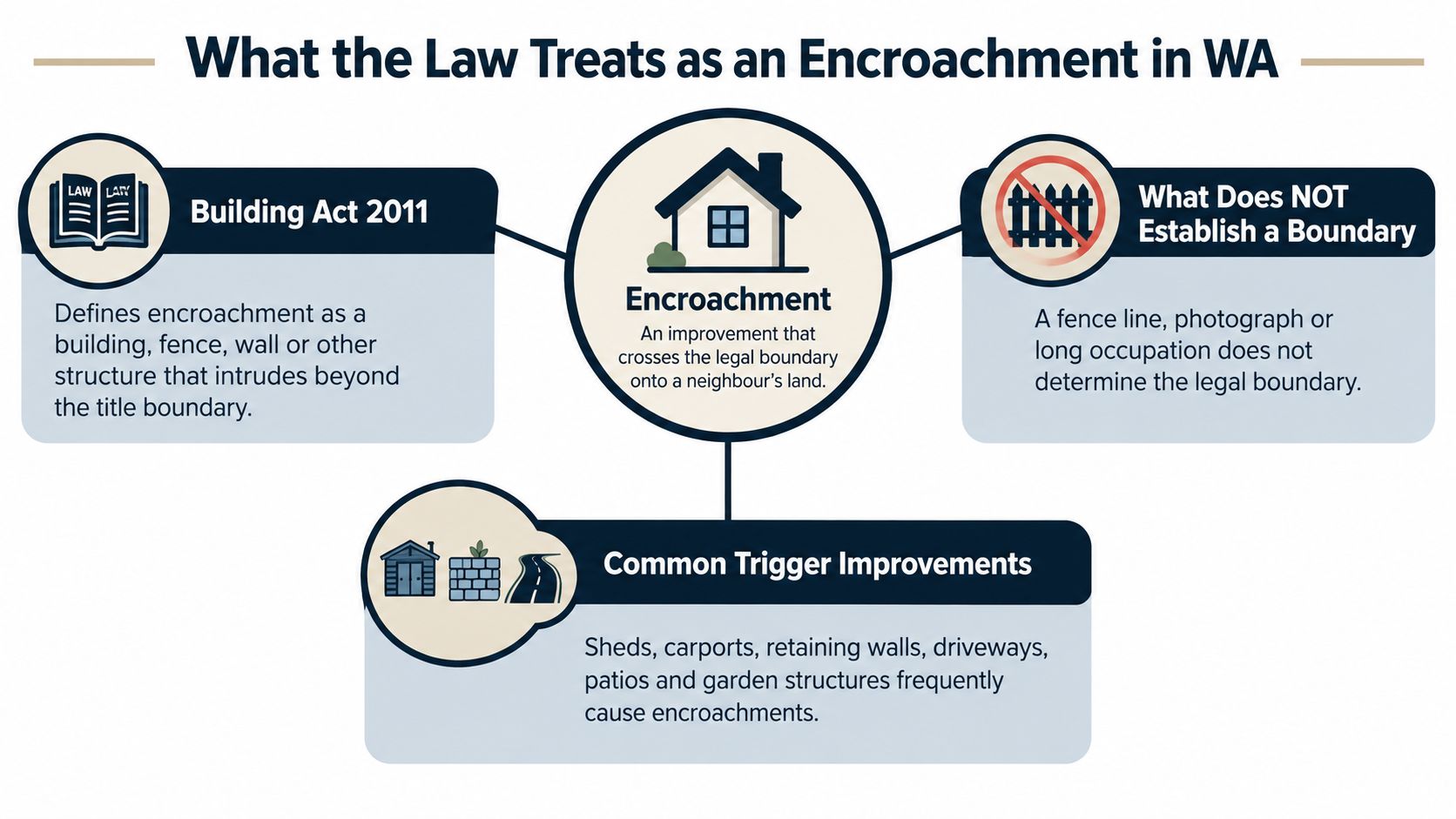
In Western Australia, an encroachment occurs when part of a building or associated structure extends beyond the land on which the work is being carried out. The structure might be substantial, such as a garage or retaining wall, or relatively modest, such as an eave, patio edge, fence or driveway improvement.
Under the Building Act 2011, the person responsible for building or demolition work must not encroach onto or adversely affect land beyond the worksite boundary without notifying and obtaining the consent of each affected owner. The relevant framework is set out in WA building guidance on work affecting other land.
That rule matters even where the structure has existed for years. A neighbour's tolerance doesn't automatically create a registered right, and a photograph doesn't prove where the title boundary sits.
The fence is evidence of occupation, not ownership
A fence can show how owners have used the land. It doesn't necessarily show the legal boundary. The same applies to landscaping, paving, a line of trees or the position of an old shed.
In a sale, that distinction becomes important because the buyer is acquiring rights defined by the title and associated registered interests, not the area that appears enclosed. A survey is needed where the occupation on the ground differs from the legal records.
The affected owner must receive proper notice where building or demolition work will affect adjoining land. The practical value of written consent is clear. It gives the parties a documented position and helps the seller explain what has happened, what rights exist and who remains responsible for the structure.
Classify the affected land early
First identify whether the improvement crosses onto:
- A private adjoining parcel, where an easement, agreement, boundary adjustment or other title solution may be required.
- A road or right-of-way, where access and ownership questions can affect use and settlement.
- Land connected with unapproved building work, where building approval and neighbour-consent issues may sit alongside the title problem.
A garage in Halls Head, a patio in Falcon or a retaining wall in Madora Bay may look like ordinary sale details. Once the structure crosses the legal boundary, the seller needs a survey and professional advice before describing the land in advertising.
The strongest position is to identify the issue, document it and choose the solution before a buyer discovers it. That keeps the seller in control of the explanation and avoids turning a manageable boundary matter into a last-minute contract dispute.
The Pre-Listing Workflow a Mandurah Seller Should Follow
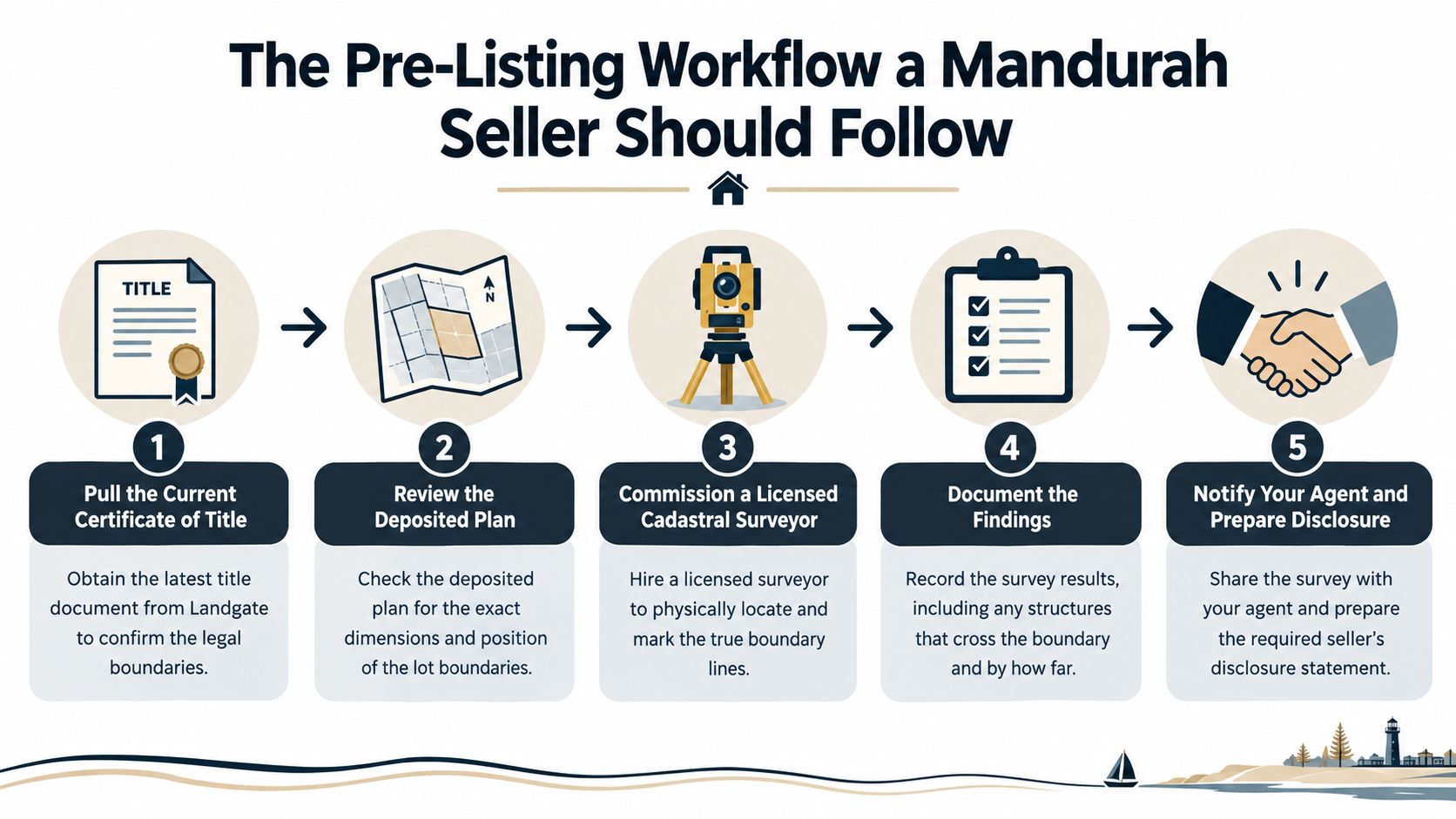
The order of work matters. Sellers often start with a neighbour conversation or ask a contractor for an opinion. That reverses the process. Establish the evidence first, then obtain legal advice, then discuss practical solutions.
Start with the records
Obtain the current Certificate of Title and deposited plan. The title shows the registered ownership and interests affecting the land, while the deposited plan helps establish the parcel configuration and dimensions. Review registered easements, covenants and other interests before assuming that a strip of land belongs to the property being sold.
A title search is essential, but it won't necessarily reveal the full practical position of a structure on the ground. That is why the plan and physical survey must be considered together.
Commission the right survey
Engage a licensed cadastral surveyor to re-establish the legal boundary and connect the position of the improvement to permanent survey marks. Request a boundary or feature survey that identifies the affected structure, its dimensions and the land it crosses.
Landgate states that a non-surveyor sketch isn't accepted for an adverse-possession application, and that a feature survey should identify and reference encroaching improvements where occupation differs from the true boundary. The relevant Landgate guidance on possessory applications and survey requirements should be reviewed with the surveyor and solicitor.
Document before negotiating
Record the structure, affected land, approximate extent, access implications and any existing neighbour correspondence. Don't rely on a real-estate photograph, an old hand-drawn plan or a verbal assurance that “everyone has always agreed”.
If you're also preparing the house for removal or storage, practical resources on budgeting and packing for your move can help with the broader moving plan. That logistical work should sit behind the boundary investigation, not replace it.
Obtain legal advice, then brief the agent
A WA property solicitor or experienced settlement agent can assess whether the position calls for an easement, boundary adjustment, neighbour agreement, adverse-possession pathway, rectification or disclosure. The agent then needs the written material before preparing advertising and contract instructions.
Sellers should also organise a home inspection before selling, while keeping the inspection separate from the cadastral survey. A building inspection can identify condition concerns, but it doesn't establish the legal boundary.
The clean sequence is simple: title and plan, licensed survey, written legal advice, neighbour discussions, then marketing.
This sequence reduces the risk of advertising a garage, driveway or outdoor area as included land when the title evidence hasn't yet been reconciled. It also gives the seller time to decide whether a documented sale is preferable to physical rectification.
Comparing the Resolution Options Available in WA
The right fix depends on the structure, affected land, neighbour relationship, building history and sale timeline. In Mandurah, sellers should choose the pathway only after checking the deposited plan, title position and survey evidence.
| Option | Neighbour Cooperation | Speed | Title Outcome | Best Fit |
|---|---|---|---|---|
| Registered easement | Usually required | Depends on documents and registration | Creates a recorded right for the structure or use | A permanent structure that should remain |
| Boundary adjustment | Required from affected parties and authorities | More involved | Changes the registered land position | A material strip of land that should be transferred |
| Adverse possession pathway | Evidence and process required, with professional advice | Not a quick marketing solution | May support a claim to land if the criteria and process are satisfied | Long-standing occupation requiring specialist assessment |
| Physical remediation | May still require neighbour access or coordination | Depends on the work | Removes or reduces the encroachment | A fence, driveway or minor structure that can be altered |
A registered easement can be the sensible commercial choice where removing a garage, roof or retaining wall would cost more than the problem justifies. It creates a formal right that can bind future owners, rather than relying on an informal conversation. The surveyor and solicitor should define the affected area, permitted use, maintenance duties and access arrangements.
A boundary adjustment is more direct when a strip of land should be transferred into the seller's title. It requires cooperation from affected parties, authority involvement and a lodged plan. It is not a casual change to the fence line.
Adverse possession needs careful legal assessment. Section 122 of the Property Law Act 1969 allows either the encroaching owner or adjoining owner to apply to the Court. The Court may vest an estate or interest in the affected land, create an easement or allow the encroaching owner to retain possession. These remedies remain discretionary, so the Property Law Act 1969 should be considered with a WA property lawyer.
Physical remediation often suits a fence, driveway edge or small garden structure. It may be the wrong response for a substantial retaining wall or integrated building addition. Do not demolish or alter anything before confirming the boundary, building approval position and title consequences.
For a plain-English overview of how surveyors approach boundary disputes, see Corinthian Surveyors boundary dispute help. WA sellers should then apply the WA instruments and professional advice relevant to their property.
Selling before full rectification can also be defensible. The seller must document the known position, obtain advice and give buyers clear contractual information instead of presenting uncertainty as a clean title outcome.
The contract pack should contain the documents supporting the chosen path, such as the survey, registered easement, consent, plan, legal advice or a carefully drafted condition. Buyers and settlement agents need certainty about land, access, maintenance, insurance and future dealings, which is why understanding what conveyancing involves in a property sale helps sellers prepare the right documents.
How Encroachment Affects Value, Marketing and Negotiation
An encroachment doesn't have one automatic effect on value. The commercial result depends on what crosses the boundary, whether the position is surveyed, how it is resolved and how confidently the buyer can understand the rights being transferred.
A documented easement is different from an unresolved garage crossing a side boundary. A surveyed retaining wall with a clear maintenance arrangement is different from a driveway that appears to use a right-of-way without supporting documents. Buyers, lenders, insurers and settlement agents assess certainty, not just appearance.
Disclosure changes the negotiation
Western Australia doesn't impose a mandatory seller disclosure statement for ordinary property sales. However, Consumer Protection WA states that a real estate agent must find out or verify pertinent facts and promptly communicate them to prospective buyers. The relevant WA sale, offer and acceptance guidance also encourages buyers to examine title information and make their own enquiries.
That means a known boundary concern shouldn't be buried beneath polished photography or vague advertising. The agent should describe the property accurately and provide the appropriate documents through the sale process.
Consider three Mandurah examples:
- In Lakelands, a pool fence crosses the rear boundary. If the survey confirms the position and the fence can be moved without affecting the pool, the practical solution may be straightforward.
- In Madora Bay, a retaining wall sits along a side boundary. The commercial question may involve maintenance, access and whether an easement or written arrangement is needed.
- In Dudley Park, a driveway apron overlaps a right-of-way. The buyer needs to understand the registered access rights and whether the paved area changes the practical use of the land.
Price follows certainty
A seller may choose rectification where the work is manageable and the improvement adds little complexity. In another case, the cost, delay or risk of physical alteration may outweigh the benefit, particularly if a formal easement or documented consent provides a workable outcome.
The marketing language must reflect the legal position. Calling a side area “your land” when the survey shows otherwise invites objections. Describing a documented right accurately gives the buyer a defensible understanding of what they're purchasing.
For sellers weighing the broader pricing picture, what affects property value remains relevant, but an encroachment adds a specific layer of title and settlement risk. The best price strategy is based on the resolution chosen, the quality of the documentation and the confidence those documents give the next owner.
Pre-Listing Checklist and Pitfalls Worth Avoiding
A seller should be able to answer the following before launching the campaign:
- Confirm the records: Obtain the current Certificate of Title, deposited plan and relevant registered interests.
- Commission the survey: Use a licensed cadastral surveyor to re-establish the boundary and locate the improvement.
- Describe the issue: Record the structure, affected land, dimensions, access requirements and maintenance implications.
- Check building history: Ask whether the structure has the required approval, and obtain specialist advice where older work may be unapproved.
- Seek legal guidance: Have a WA property solicitor assess easement, boundary adjustment, adverse possession, rectification and disclosure options.
- Document neighbour discussions: Treat verbal tolerance as a conversation, not as a registered right.
- Prepare the contract material: Give the agent and settlement agent the survey and supporting documents before accepting offers.
- Set the negotiation position: Decide whether you're resolving the issue, selling with a documented solution or pricing for a known limitation.
The most common mistake is relying on the fence. The next is assuming that because a neighbour hasn't complained, consent exists. Neither approach gives a buyer, lender or settlement agent the certainty they need.
Unapproved building work creates a separate compliance risk. WA guidance states that the affected owner generally has 28 days to respond to a formal notice about encroaching building work, and proceeding without required consent can expose the responsible party to a penalty of up to $25,000. Those figures are set out in WA guidance on work affecting other land.
Don't let the buyer become the first person to assemble the evidence. By then, your campaign, price and settlement timetable are already exposed.
Avoid accepting an unconditional offer before the survey and legal documents are ready where the encroachment is material. A seller should have a licensed surveyor, WA property solicitor and settlement agent involved early, especially for older homes in Halls Head, Falcon and Wannanup or properties with substantial outdoor structures.
How Beshay Realty Steers Encroachment Sales in Mandurah
A boundary issue should be managed as part of the sale strategy, not handed to the buyer after the first offer. The agent's role is to coordinate the commercial process around the technical advice: obtain the survey evidence, brief the solicitor and settlement agent, prepare accurate marketing language and make sure buyers receive a clear explanation.
That doesn't mean the agency replaces a surveyor or lawyer. It means the campaign is built around their conclusions. Photography should present the property clearly, the contract should reflect the agreed position and negotiations should start with documents rather than assumptions.
The most important decision remains the first one: investigate before launch. A seller who understands the boundary, chooses a realistic resolution and prepares the contract pack retains far more flexibility than one who waits for a buyer to raise the problem.
This approach is particularly useful across Halls Head, Falcon, Wannanup, Lakelands, Meadow Springs, Madora Bay and Dudley Park, where homes can include coastal additions, outdoor entertaining areas, driveways, retaining structures and older improvements. A confidential appraisal should account for the documented property position, not just the visible house and land.
David Beshay Real Estate offers confidential Mandurah appraisals and practical campaign advice for properties affected by boundary, title or encroachment questions. Visit David Beshay Real Estate to arrange a conversation before you commission marketing or accept an offer.

