


Before you buy a property, you need to be absolutely certain the person selling it actually has the right to do so. That’s where a property title search comes in—it's essentially a background check on the property itself.
The whole point is to confirm the seller can legally transfer ownership to you and, just as importantly, to uncover any hidden problems that could mess with your rights as the new owner. Think of it as making sure the property doesn't come with any unwanted baggage.
Understanding a Property Title Search

You wouldn't buy a used car without checking its service history or seeing if there's still money owing on it, right? A property title search applies that exact same logic to what is probably the biggest investment you'll ever make. It's a non-negotiable step that involves digging into public records to verify a property's true legal ownership and its history.
This deep dive goes through past deeds, tax records, and a whole host of other legal documents tied to the property. The goal is simple: piece together a clear chain of ownership and sniff out any potential issues before they become your problem.
What Does the Search Confirm?
At its core, a title search gives you peace of mind by answering a few make-or-break questions about the home you're about to buy. A professional conveyancer or property lawyer will meticulously sift through the records to ensure two critical things:
- The Seller Has the Right to Sell: This confirms the person selling the property is, in fact, the legal owner and has the full authority to hand the title over to you.
- The Title Is "Clear": The search is designed to find any "clouds" or defects on the title. These are unresolved claims or nasty surprises that could challenge your ownership down the track.
A title search is your first line of defence against inheriting someone else's legal or financial drama. It protects your ownership rights and ensures the property you buy is truly yours—free and clear.
Why a Title Search Is a Non-Negotiable Step

Honestly, skipping a property title search is like walking through a minefield with a blindfold on. It’s your single best line of defence against a whole host of financial and legal headaches that could easily turn your dream home into a long-term nightmare.
This isn't just about ticking a box on a checklist. It's about making sure your ownership is secure.
Without this vital step, you could find yourself inheriting the previous owner's baggage. Imagine, months after you've moved in, discovering you're on the hook for thousands in unpaid council rates. Or worse, finding out a neighbour has a legal right of way—an easement—running straight through what you thought was your private backyard.
You could even face claims from a surprise heir you never knew existed, or a party with a financial claim against the property, known as a lien. These problems can spiral into expensive legal battles and, in the worst-case scenario, threaten your ownership of the property altogether. A proper search drags all these hidden dangers into the light before you sign on the dotted line.
Securing Your Biggest Asset
Let's face it, the stakes in Australia’s property market are incredibly high. With home ownership rates sitting at around 66% of households, getting into the market is a massive achievement. Protecting that investment is absolutely critical. You can explore more about home ownership statistics in Australia from the latest property data.
A title search gives you the certainty you need. It’s what guarantees that when you finally get those keys in your hand, your ownership is clear, absolute, and undisputed.
A clean title is the very foundation of secure property ownership. It verifies that the property you are buying is free from any third-party claims, debts, or restrictions that could diminish its value or your right to enjoy it.
From Due Diligence to Peace of Mind
At the end of the day, a property title search is just good, essential due diligence. It answers the most important question in the whole transaction: is the seller legally allowed to sell this property, and will I receive a clear, undisputed title?
By investing in this process, you’re not just buying a house; you’re safeguarding your financial future and building your home ownership journey on a solid legal foundation. It’s a non-negotiable step that provides invaluable peace of mind.
What a Property Title Search Actually Uncovers

Think of a property title search as a comprehensive background check on a house. It’s a deep dive into the property’s official records, peeling back the layers of its legal and financial history. The whole point is to make sure there are no nasty surprises waiting for you after you’ve signed on the dotted line.
This isn't just a box-ticking exercise; it’s a critical legal step that protects you from all sorts of potential headaches, like fraudulent sales or issues the seller conveniently forgot to mention. A proper search uncovers the details that directly impact your right to own and enjoy the property. You can find a detailed overview of title searches on cockatoo.com.au that explains how this process underpins the transparency of Australia's property market.
So, what exactly does this investigation turn up? Let's break down the key pieces of information.
Ownership and Financial Burdens
First and foremost, the search verifies the chain of title. This confirms who the current registered owner is and, crucially, that they have the legal authority to sell the property. It traces the history of ownership to ensure there are no gaps or other people who might have a claim to it.
Beyond that, the search is designed to find any financial strings attached to the land itself. These can include:
- Outstanding Mortgages: It will show if the current owner's home loan is still active on the title. This is a big one. That mortgage must be discharged (paid off) at settlement, so you don’t end up inheriting their debt.
- Liens and Caveats: This is where you find out if a third party has lodged a financial claim against the property. It could be for anything from unpaid council rates and strata levies to a builder who never got paid for their work.
A title search is your financial safeguard. It ensures that the property you are about to purchase is free from the previous owner's debts, protecting your investment from day one.
Key Information Revealed in a Title Search
To give you a clearer picture, here’s a quick summary of what a title search looks for and why each detail is so important for a buyer.
| Information Type | What It Means | Why It's Important |
|---|---|---|
| Current Registered Owner | Confirms the legal name(s) of the person or entity selling the property. | Prevents fraud and ensures you're dealing with the legitimate owner. |
| Mortgages | Shows any active home loans registered against the property. | Guarantees the seller's mortgage is paid off before the title is transferred to you. |
| Easements | Details any rights given to others to use a part of your land (e.g., for utility access). | Informs you of any restrictions on how you can use the entire property. |
| Covenants | Lists rules or restrictions on the property (e.g., building material limits). | Prevents you from unknowingly breaching land-use rules that could be costly to fix. |
| Caveats or Liens | Reveals financial claims lodged by third parties against the property. | Protects you from inheriting debts for things like unpaid taxes or construction bills. |
This table covers the essentials, but every property is different. The key takeaway is that you need a complete picture before you commit.
Land Use Restrictions
Finally, a title search brings to light any registered limitations on how you can actually use the property. These are legally known as easements and covenants.
An easement might give Western Power the right to access a corner of your block to maintain infrastructure, or it could grant a neighbour the legal right to use your driveway to access their property. Covenants, on the other hand, are specific rules or restrictions on what you can do. They might limit the height of your home, dictate the type of fencing you can install, or even prevent you from using certain building materials.
Uncovering these details is just as important as knowing the property's financial value, which is usually determined in a separate process. You can learn more about how a property's worth is assessed in our guide explaining what is a property appraisal.
How a Property Title Search Is Conducted
Knowing the theory behind a property title search is one thing, but seeing how it works in practice is another. This isn't a DIY job you’d tackle on a weekend. In Australia, this crucial investigation is handled by qualified professionals like conveyancers or property lawyers who know their way around complex legal records.
While many property records are technically public information, making sense of them requires a trained eye. Your conveyancer doesn’t just download a few documents; they meticulously analyse findings from various government registers. They are trained to spot inconsistencies or potential red flags that an untrained person would easily miss, turning a pile of raw data into a clear picture of the property's legal health.
This professional oversight is your safety net. It’s their job to piece together the property's history and give you a heads-up on any issues that come to light.
The Role of Your Legal Expert
So, what does your conveyancer or solicitor actually do? The process involves a few key steps:
- Initiating the Search: First, they access the relevant state-based land title registry. For us here in WA, that’s Landgate.
- Document Retrieval: They then pull the current Certificate of Title along with any related historical documents, plans, and registered interests that might affect the property.
- Analysis and Reporting: This is where their expertise really shines. They scrutinise every detail for things like liens, easements, or covenants and then compile a report that explains everything in plain English.
This infographic breaks down the most common types of title defects a professional search can uncover.
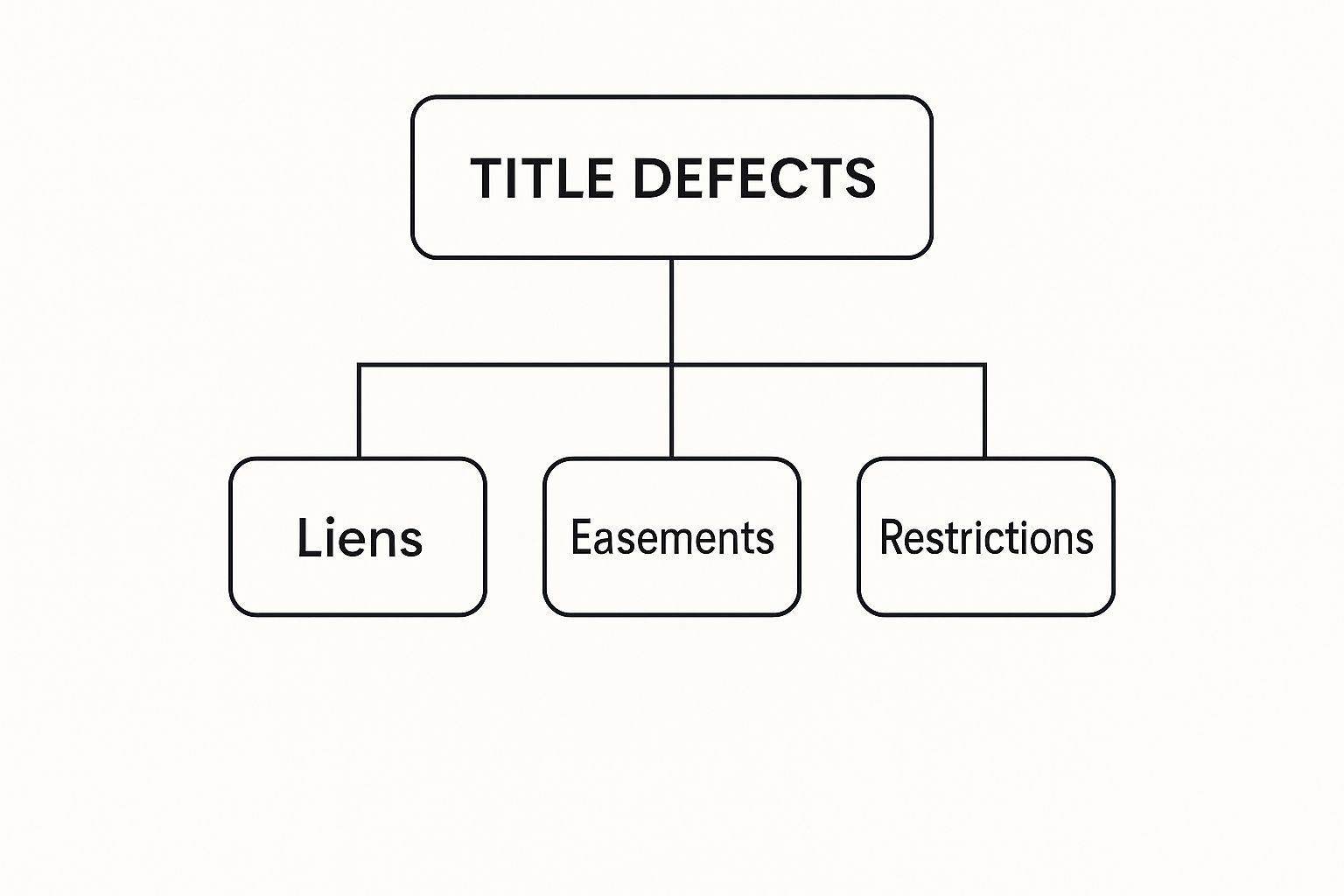
Each of these issues represents a potential restriction or financial claim against the property. The good news is that once they're identified, they can usually be sorted out before settlement.
A conveyancer's role goes beyond simple document retrieval. They act as your legal advocate, interpreting complex information to ensure the title you receive is clear and secure, providing a smooth path to settlement.
Navigating Red Flags and Common Title Issues
A perfect property title is the dream, but what happens when the search uncovers a few bumps in the road? Finding an issue isn’t a reason to panic; it’s a reason to have a great legal team on your side.
Think of it like finding a small electrical fault during a building inspection. It's a problem that, once you know about it, can almost always be fixed before you commit to the purchase. The whole point of a title search is to bring these potential hurdles into the light so they can be dealt with proactively.
Common Issues a Title Search Can Find
A red flag on a title can show up in many forms, from simple administrative mistakes to more complex claims on the property. Each one needs a specific strategy to resolve, making sure the title is crystal clear before it’s transferred into your name.
Some of the most frequent issues we see include:
- An Undischarged Mortgage: This is when a previous owner's home loan was paid off, but the mortgage was never officially removed from the title. It’s a surprisingly common oversight.
- Unexpected Easements: You might discover a utility company has a registered right to access part of your backyard, which could get in the way of your plans for that new pool or shed.
- Caveats or Liens: A third party, like a builder or creditor, may have lodged a formal claim over the property because of an unpaid debt from the current or a previous owner.
- Boundary Discrepancies: The official survey plan might not perfectly match where the fences are on the ground, creating potential headaches with your new neighbours.
With so many properties changing hands, these checks are more important than ever. In FY25 alone, nearly 722,000 properties were settled across Australia's five mainland states, a 3.2% increase from the previous year. You can discover more insights about these settlement trends on the PEXA Group website.
An issue found during a title search is not a dead end. It is a crucial piece of information that empowers your legal team to negotiate a solution, protecting your interests before you finalise the purchase.
Fixing these problems is a standard part of the conveyancing process. Your settlement agent will work with the seller's representatives to make sure any outstanding mortgages are paid, caveats are removed, and you’re fully aware of any easements before settlement day. This is exactly why hiring a settlement agent is crucial for a smooth, stress-free transaction.
Your Top Questions About Property Title Searches, Answered
Even when you have a good handle on the basics, a few practical questions always pop up when you're getting ready to buy a home. Getting straight answers is the key to feeling confident and knowing exactly what’s happening as you head towards settlement.
Let’s tackle some of the most common queries we hear about property title searches.
How Much Does a Title Search Cost?
The good news is that a property title search in Australia is very affordable, especially when you think about the massive financial risk it helps you avoid. While the exact cost can shift a bit depending on the state and how complex the search is, you can generally expect a basic title search to set you back between $30 and $100.
Most of the time, this fee is simply rolled into the overall costs from your conveyancer or settlement agent. It’s a tiny price to pay for the peace of mind that comes with knowing your ownership is secure and won't be challenged later.
When Is the Right Time to Do a Title Search?
Timing is everything. A property title search is one of the very first tasks your conveyancer or solicitor will tackle right after you've signed the Offer and Acceptance contract. It all happens during the due diligence period – that critical window of time before the contract becomes set in stone.
This is non-negotiable. It gives everyone a chance to spot any potential problems, like an unexpected easement or a lien on the property. Finding these issues early means the seller has time to resolve them before you're legally locked into the purchase, keeping the whole settlement process on track.
It's easy to mix them up, but a title search is an investigation into the property's past, while title insurance is a policy that protects you from financial loss if an old, undiscovered issue pops up in the future.
Do I Need a Title Search for an Auction Property?
Yes, without a doubt. In fact, you could argue it’s even more critical when you’re planning to bid at an auction. Auction contracts are almost always unconditional. That means you buy the property "as is," with no cooling-off period and very limited options if you discover a problem after the hammer falls.
Because of this, it's absolutely essential to get a title search done before auction day. This arms you with the full picture of what you’re bidding on, including any restrictions or financial claims tied to the title. Your legal expert can go through the search results and flag any red flags beforehand, which is vital for deciding your bidding limit. Having a sharp local professional in your corner can make all the difference here; our guide on how to choose a real estate agent has some great tips for finding the right one.
Making your way through the world of real estate doesn't have to be complicated. At David Beshay Real Estate, we make sure every detail is handled with care, so you can buy or sell in Mandurah with total confidence. Contact us today for a free property appraisal.


Pingback: Land for Sale Mandurah WA Your Expert Buying Guide - David Beshay Real Estate - The Agency
Pingback: Selling Property with Encroachment in Mandurah - David Beshay Real Estate - Beshay Realty