


Ever heard the term "strata title" and wondered what it actually means? You're not alone. In simple terms, a strata title is a way of owning property in multi-unit complexes, like apartment buildings or townhouse developments.
Think of it this way: you get the title deeds for your individual unit (your 'lot'), but you also share ownership and responsibility for all the common areas with everyone else in the building.
Decoding Strata Title Ownership

When you buy a strata property, your ownership is really split into two distinct parts. Getting your head around this division is the key to understanding the whole concept.
The Two Pillars of Strata Ownership
- Your Lot: This is your private slice of the property, the part you own exclusively. It typically covers the internal space of your apartment or unit—the bedrooms, kitchen, bathroom, and often a balcony or courtyard. It’s your personal domain.
- Common Property: This is everything else. It includes all the shared areas and infrastructure everyone uses, like lobbies, lifts, swimming pools, gyms, gardens, driveways, and even the building's core structure.
This shared ownership model has become a massive part of Australian housing. It was first introduced back in New South Wales in 1961 and has since boomed. Today, approximately 1 in 6 Australians call a strata or community title property home. This system makes higher-density living possible and gives residents access to great amenities that would be out of reach with a traditional house. You can dive deeper into the numbers in the latest Australasian Strata Insights report.
Owning a strata title is like being a shareholder in a small community. You have your private space, but you also have a collective stake in the entire property's success and maintenance.
Key Differences from Traditional Ownership
The biggest difference between a strata title and a classic freehold title (like a standalone house) is that you don't own the land the building sits on by yourself. Instead, all the lot owners collectively own it through a legal body known as the owners corporation or body corporate.
This is why, before you even think about buying, it's crucial to check the health of this entity. A deep dive into what is in a strata report is non-negotiable. This document is your window into the scheme's financial status, ongoing issues, and future plans, giving you a crystal-clear picture of what you're investing in.
How a Strata Scheme Is Managed
So, you understand what a strata title is in theory, but how does it actually work day-to-day? A strata scheme doesn’t just run itself. Think of it like a small, self-governing community where every owner has a say. There's a structured system in place to make sure the property is properly maintained, the finances are handled correctly, and the community rules are followed.
This whole setup operates through a clear hierarchy. It involves all the owners, an elected committee to handle the details, and often, a professional manager who brings it all together.
This diagram shows how the individual lot owners and the common areas they share all fall under the umbrella of the strata company.
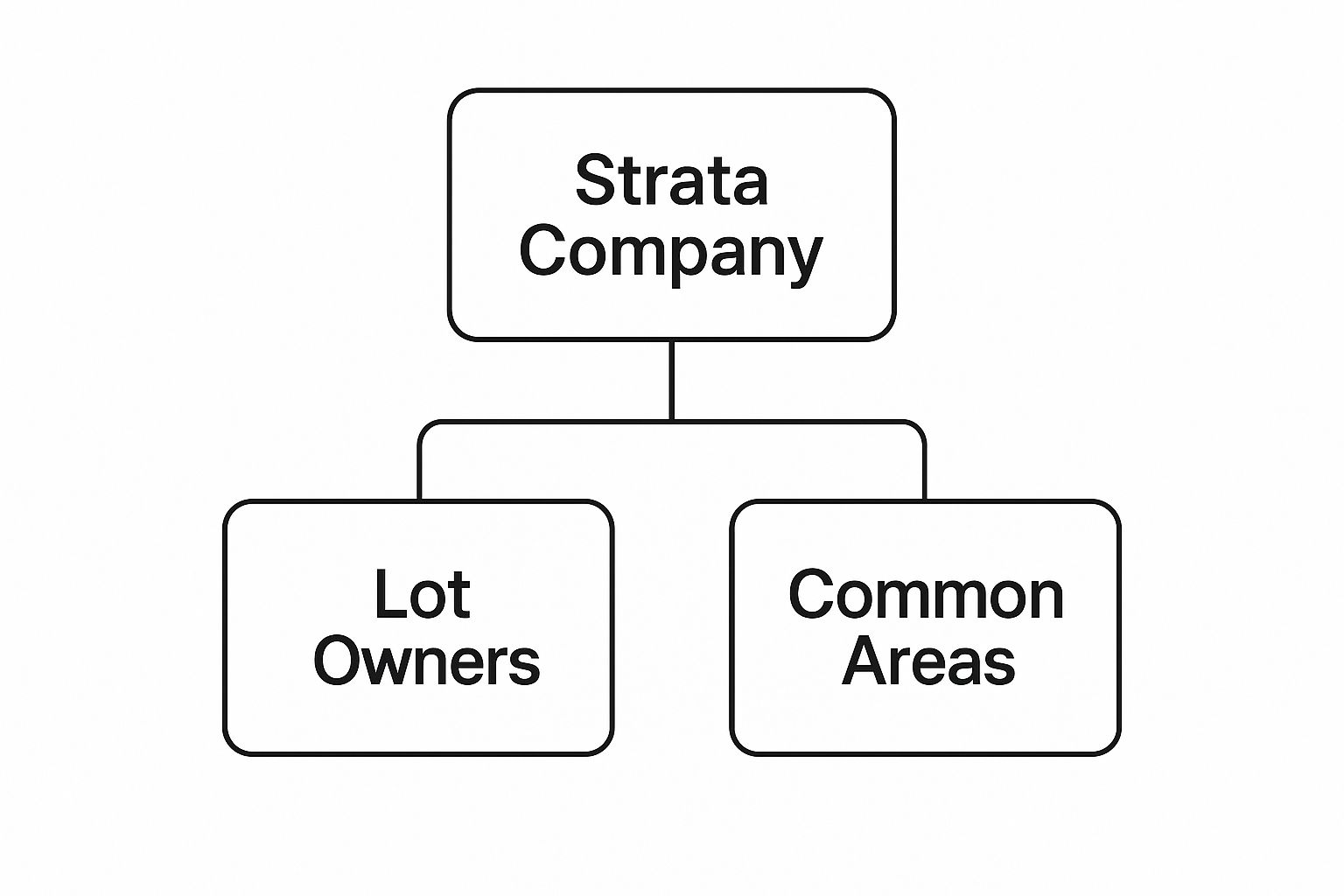
It’s a great visual reminder that while you have exclusive rights to your own unit or ‘lot’, you’re also part of a larger company responsible for all the shared spaces.
The Key Players in Strata Management
Managing a strata property involves a few key roles, each with its own set of responsibilities. At the top, you have the collective group of all owners, which then delegates some of its power to a smaller, more nimble committee for easier decision-making.
1. The Owners Corporation (or Strata Company)
This is the legal body made up of every single lot owner in the building or complex. This group holds the ultimate power and responsibility for the entire property. Their main jobs include:
- Setting the annual budget and deciding on the strata levies everyone pays.
- Making the big calls on major repairs or upgrades to common property.
- Creating and enforcing the scheme’s by-laws (the community rules).
2. The Strata Committee (or Council of Owners)
Let's be realistic—getting every single owner together for every small decision would be a nightmare. That's why the owners corporation elects a smaller group of representatives, known as the strata committee. This group acts like an executive council, tasked with making the day-to-day decisions and putting the broader plans of all the owners into action.
The Role of a Professional Strata Manager
While a few very small schemes might try to manage themselves, most bring in a professional strata manager. This is a specialist firm hired by the owners corporation to take care of the complex administrative and operational tasks involved in running the scheme.
A good strata manager is like a guiding hand. They bring expertise in legal compliance, financial management, and even dispute resolution. Crucially, they work for the owners corporation—not the other way around—to ensure everything runs smoothly and by the book.
Their typical duties include:
- Financial Admin: Sending out levy notices, managing the bank accounts, and preparing the annual financial statements.
- Meeting Coordination: Organising and taking minutes for Annual General Meetings (AGMs) and strata committee meetings.
- Compliance and Record-Keeping: Making sure the scheme follows all the relevant state laws and properly maintains all official records.
- Maintenance Coordination: Getting quotes and arranging for tradespeople to handle repairs and upkeep of common areas, as directed by the committee.
By outsourcing these jobs, the volunteer strata committee can focus on the big-picture governance and decision-making, leaving the nitty-gritty admin to an expert. This professional oversight is vital for protecting the value and liveability of any strata property.
Navigating Strata Levies and Finances

If you're going to own a strata property, getting your head around the finances is a must. This is where strata levies come into the picture. Think of them as the regular contributions every owner makes to keep the entire complex running smoothly, safely, and looking its best.
It’s a bit like a shared household budget for the whole property. Just as you’d put money aside for bills, groceries, and future repairs in your own home, the owners corporation does the same for the common areas.
These fees aren't just pulled out of thin air. They're carefully planned and agreed upon by all the owners at the Annual General Meeting (AGM). The goal is to cover all the expected costs for the year ahead, making sure the property remains a valuable and great place to live.
The Three Types of Strata Levies
Your total strata levy is usually split into three different funds, and each one has a specific job. Understanding this breakdown shows you exactly where your money is going and why it’s so vital for the long-term health of the building.
-
Administrative Fund Levies
This is for all the day-to-day, operational costs. It’s the fund that pays for the recurring expenses needed to keep the lights on and the property in good working order. Think of it as the 'daily spending' account. It covers things like building insurance, cleaning services for common areas, gardening, utility bills for shared spaces, and paying the strata manager. -
Capital Works Fund Levies
This is the property's long-term savings plan. A slice of your levies goes into this fund, which is set aside for major capital works and future projects. It’s there to cover big-ticket repairs or replacements that will eventually be needed, like putting on a new roof, repainting the entire building, or upgrading the lift. A healthy capital works fund (what used to be called a sinking fund) is a massive green flag for a well-managed scheme.
A strong capital works fund prevents financial shock. It ensures money is already set aside when a major, expensive project comes up, avoiding the need for a large, sudden financial hit to owners.
- Special Levies
These are much less common and are only raised for unexpected, urgent costs that aren't covered by the other two funds. For instance, if a massive storm causes major structural damage that goes beyond the insurance payout or what’s in the bank, the owners corporation might vote to raise a special levy to cover the difference.
Why Paying Levies on Time Matters
Paying your strata levies on time isn't just a personal responsibility; it's a critical part of your duty to the collective. When payments are late or missed, it can seriously disrupt the scheme’s cash flow. This can delay essential maintenance, which could lead to a decline in the property's condition and, ultimately, its value.
If payments are missed, the owners corporation has the right to take action to recover the debt. This might involve charging interest on the overdue amount or even taking legal action. At the end of the day, consistent contributions from every owner ensure the financial stability of the strata scheme, protecting your investment for years to come.
The Rules of Strata Living: By-Laws
Living happily in a strata community is about more than just being a good neighbour; you need to understand and follow a common set of rules. These rules are called by-laws, and they’re the legal nuts and bolts that govern daily life for everyone in the building or complex. Think of them as the community’s own constitution.
These regulations aren't there to be difficult. They exist to protect everyone's rights, keep the property in good shape, and make sure residents can peacefully enjoy their homes and the shared common areas. They create clear guidelines for everything from pet ownership to parking, stopping small disagreements from turning into big arguments.
What Do By-Laws Typically Cover?
Every strata scheme will have its own specific set of by-laws, but most of them tackle a similar range of everyday issues. It's so important to read and understand these rules before you buy, because they’ll have a direct impact on how you live in your new home.
Most by-laws will have something to say about:
- Pets: Is the building pet-friendly? If so, what types or sizes of animals are allowed, and are there conditions you need to meet?
- Noise Levels: There will almost always be rules about noise, especially late at night or early in the morning. This covers things like parties, loud music, or even renovations.
- Parking: Rules for how resident and visitor parking spots are used are a must. There will also be consequences for anyone who doesn't park where they're supposed to.
- Renovations: Thinking of updating your kitchen or knocking down a wall? The by-laws will tell you what changes you can make to your own apartment or unit, spelling out the difference between minor cosmetic updates and major works that need formal approval.
By-laws are not just a list of restrictions; they're about mutual respect. They ensure that one person’s idea of freedom doesn't unfairly impact the comfort and safety of their neighbours, ultimately protecting everyone's investment.
By-laws provide a practical framework for day-to-day life. Here’s a quick look at some common rules and what they mean for you as a resident.
Common Strata By-Laws and What They Mean for You
| By-Law Category | Common Rule Example | Why It Exists |
|---|---|---|
| Noise & Nuisance | No loud music or construction noise between 10 pm and 8 am. | Ensures all residents can enjoy peaceful living without being disturbed by their neighbours. |
| Pets | Owners must seek written permission from the strata committee before bringing a pet onto the property. | To manage the number and type of animals, preventing issues like damage to common areas or noise complaints. |
| Parking | Visitor car spaces are for bona fide visitors only and cannot be used by residents. | Prevents residents from monopolising limited visitor parking, ensuring guests have a place to park. |
| Renovations | Any structural changes or alterations to the external appearance of a lot require strata committee approval. | Protects the building’s structural integrity and maintains a consistent, appealing look for the entire property. |
| Common Property | Personal items (e.g., bikes, pot plants) cannot be left in hallways, stairwells, or on common lawns. | Keeps shared areas clear, safe, and tidy for all residents to use and enjoy. |
These examples show how by-laws create a fair and predictable environment for everyone.
Changing By-Laws and Handling Disputes
By-laws aren’t set in stone. If enough owners agree, they can be changed. This usually requires a special resolution at a general meeting, which means a high percentage of owners—often 75%—must vote in favour of the proposed change.
So, what happens if someone breaks a rule? The strata committee will typically issue a formal notice asking them to comply. If a dispute comes up, the first step is usually just talking it out. If that doesn't work, there are formal internal processes and, as a last resort, mediation through state-based tribunals to help resolve the conflict fairly.
These rules are just as critical as the financial side of things. To get a full picture of your commitments, it's also worth learning about what body corporate fees cover.
Weighing the Pros and Cons of Strata Ownership

Strata living comes with its own unique lifestyle, and it’s one you really need to understand before jumping in. There are some fantastic advantages but also a few potential drawbacks, so it pays to look at both sides of the coin to see if it’s the right fit for you.
For many people, strata properties are a brilliant way to get a foot on the property ladder, especially in sought-after areas around Mandurah where a traditional house might be out of reach. Plus, you often get access to perks like swimming pools, gyms, and immaculate gardens that would cost a fortune to maintain on your own.
The Upsides of the Strata Lifestyle
Perhaps the biggest win is waving goodbye to endless weekend maintenance. You won't be spending your Saturdays mowing a massive lawn or stressing about a leaky roof. Those big-ticket jobs are handled by the owners corporation and paid for through your regular levies.
Here are a few other key advantages:
- Enhanced Security: Many strata buildings come with built-in security features like gated entries, intercoms, and cameras, giving you an extra layer of peace of mind.
- Community Atmosphere: When you live closer to your neighbours, it's easier to build connections and foster a real sense of community.
- Predictable Costs: While you have to pay levies, these fees cover most of the major running costs. This makes budgeting for your property’s upkeep far more predictable than the surprise expenses that can pop up with a standalone house.
The Potential Downsides to Consider
Of course, strata ownership isn’t without its challenges. The most obvious is the ongoing cost of strata levies. These fees are mandatory and can rise over time to cover inflation or unexpected major repairs.
You also trade a bit of your independence for the convenience. Big decisions are made as a group, and you have to follow the scheme's by-laws. These rules can cover everything from what kind of renovations you can do, whether you can have pets, or even where you’re allowed to park.
For investors, these ongoing costs are an important part of the equation. It's well worth exploring our guide on what is negative gearing to see how levies might fit into your overall investment strategy.
Strata living is a trade-off: you exchange some individual freedom and a portion of your privacy for convenience, affordability, and access to shared amenities.
It's also a world that's always evolving. For example, new legislation is shaking things up in Queensland with stricter disclosure rules for sales and updated standards for digital record-keeping. You can get a sense of where things are heading by reading this detailed analysis on industry trends. Staying aware of these shifts is smart, as changes in one state often signal what’s to come in others.
Here is the rewritten section, crafted to sound human-written and align with the provided examples:
How Modern Strata Laws Are Evolving
The world of strata living isn't static. Just like our homes need updates, the laws governing them also have to adapt to modern life. For anyone who owns or is thinking about buying into a strata scheme, keeping an eye on these changes is crucial—it’s all about understanding your rights and what’s expected of you.
Governments across Australia have realised that with more of us choosing apartment or townhouse living, the old rules don't always cut it. The recent wave of reforms is all about boosting transparency, making it easier to sort out disagreements, and holding owners corporations more accountable. For property owners, this is great news, as it’s designed to build more trust and confidence in the system.
A Push for Greater Transparency
One of the biggest shifts we're seeing is a demand for clearer and faster communication. Let's be honest, owners have a right to know where their levy money is going and what decisions are being made on their behalf. The days of residents being left in the dark are numbered, with much stricter requirements coming into play.
For instance, New South Wales has been rolling out some major reforms to its strata legislation. Starting from July 1, new rules are forcing owners corporations to be more open. Key changes include getting financial statements out promptly after meetings and making sure meeting minutes land in every owner's inbox within 14 days. It's worth digging into the details of these important NSW strata reforms to see exactly how they might affect you.
These aren't just minor administrative tweaks. They represent a real shift towards empowering individual owners with information, making the whole strata scheme feel a lot more democratic.
Modernising Strata Management
Beyond just being more open, the laws are catching up with how we live and work today. That means officially recognising and setting standards for things like digital communication and online records.
Here are a few key areas getting a modern makeover:
- Electronic Voting: This makes it so much easier for owners to have their say on important motions, even if they can't physically show up to a meeting.
- Digital Records: We're finally moving away from dusty filing cabinets to secure digital archives. This means better access and more efficiency for both owners and strata managers.
- Dispute Resolution: The new focus is on providing clearer, less intimidating ways to resolve conflicts, often pushing for mediation before things escalate to a formal tribunal.
These changes are all about making strata schemes run more smoothly and fairly. By updating the legal nuts and bolts of what is strata title property, governments are working to protect your investment and make community living a better experience for everyone.
Got Questions About Strata Properties?
Alright, let's wrap this up by tackling some of the questions that always come up when people are looking at strata properties. Getting straight answers to these can make the whole journey feel a lot less daunting.
These are the practical, day-to-day things you’ll want to know about living in and managing a strata property.
Can I Renovate My Strata Unit?
Yes, you absolutely can, but it’s not as simple as just grabbing a sledgehammer. The trick is knowing that renovations are split into different categories, each with its own set of rules.
Simple cosmetic tweaks, like slapping on a new coat of paint or laying down new carpet, usually don't need anyone's permission. For anything more involved, though, you'll need to dig out your scheme's by-laws and probably ask for the green light.
Major changes, especially anything that messes with structural walls, plumbing, or the outside look of your unit, will almost always need formal approval from the owners corporation before you even think about starting.
The usual process involves sending your plans over to the strata committee for them to look over. This is just to make sure your grand design won't mess with the building's structure or create a headache for your neighbours. Always, always check first—it'll save you from some very expensive mistakes and potential fights down the line.
What Happens If There's a Dispute?
Disagreements are a part of life in any community, and strata schemes are no exception. The good news is there's a clear process for sorting things out fairly.
The first step is always the simplest: have a chat. A quick, respectful conversation with your neighbour or a committee member often nips the problem in the bud. If that doesn't get you anywhere, you can follow the formal process laid out in your by-laws, which might mean lodging a written complaint.
For the really tricky issues that can't be sorted out internally, you can bring in outside help. This usually means trying mediation or, as a last resort, taking the matter to a state-based tribunal—like the State Administrative Tribunal (SAT) here in Western Australia—for an impartial and legally binding decision.
How Do I Check a Strata Scheme's Health Before Buying?
Doing your homework is hands-down the most important thing you can do before buying a strata property. You need to dig into the scheme's financial and administrative health to make sure you're not walking into a mess.
Start by getting your hands on the key documents. A professional strata inspection report is worth its weight in gold, as it gives you a deep-dive into the scheme’s records. You should also take a good look at:
- Minutes from recent Annual General Meetings (AGMs)
- The scheme's current budget and financial statements
- The 10-year capital works fund plan
These documents are where the skeletons are buried. They’ll show you any red flags like ongoing legal battles, a history of surprise special levies, major unresolved maintenance problems, or a seriously underfunded capital works fund. A healthy scheme is one that’s well-run, financially sound, and on top of its game.
Navigating the Mandurah property market requires local expertise and a clear understanding of all ownership types. For personalised guidance on buying or selling a strata property, get in touch with David Beshay Real Estate for a free, no-obligation appraisal today. Visit us at https://realestate-david-beshay.com.au.

