


Finding the perfect block of land for sale in Mandurah WA is where the dream of building your own coastal home really begins. Whether you're picturing a home in an established suburb near the city centre or on a sprawling new estate with ocean glimpses, the region is full of opportunities for families, retirees, and savvy investors.
Why Mandurah Is a Prime Location for Your New Build
The secret’s out—Mandurah’s appeal is undeniable, and its property market has been on a sustained run of high demand and growth for good reason.
The "sea change" phenomenon is a massive driver here. We're seeing more and more people swapping the inner-city grind for a relaxed, waterfront lifestyle without giving up on convenience. The Mandurah Train Station offers a direct line into the Perth CBD, making it a genuinely viable option for commuters who want the best of both worlds.
This blend of lifestyle and accessibility has created a really dynamic market. Recent data shows the Peel district is experiencing rapid population growth, which directly fuels the demand for new housing and vacant land. For anyone looking to buy, this means securing a block in a great spot isn't just a lifestyle choice—it's a solid investment. You can dig deeper into the numbers on REIWA's Mandurah suburb profile.
Understanding Mandurah's Different Flavours
Before you jump into your search, it really helps to get a feel for the distinct character of Mandurah's various pockets. Where you choose to buy will define your day-to-day life, from the school run and shopping trips to how you spend your weekends.
- Central and Established Suburbs: Think Mandurah proper and Halls Head. These areas give you that close-to-everything feeling, with the foreshore, established infrastructure, and a vibrant community atmosphere right on your doorstep. Infill blocks are like gold dust here but are highly sought after when they pop up.
- New Coastal Estates: Suburbs like Madora Bay and Lakelands are booming, known for their modern, master-planned communities. These areas often feature larger, flatter blocks that are perfect for today’s contemporary home designs.
- Canal and Waterfront Living: If you're dreaming of a jetty at your back door, suburbs like Wannanup and Halls Head's Port Mandurah precinct offer that exclusive, boat-friendly lifestyle with prime canal-front land.
My biggest piece of advice? Look beyond the block itself and really consider the community. Spend a weekend in the suburbs you're eyeing. Grab a coffee at a local café, walk through the parks, and just get a genuine feel for the lifestyle on offer.
This initial groundwork is so important for narrowing down your options. Once you’ve identified the 'flavour' of living that feels right for you, your search becomes much more focused and you can make a decision with real confidence.
Mandurah Suburb Snapshot A Quick Comparison
To help you get started, here’s a quick look at a few popular Mandurah suburbs. Think of it as a starting point to help you match your lifestyle goals with the right location.
| Suburb | Best For | Typical Block Size | Proximity to Amenities |
|---|---|---|---|
| Halls Head | Established family living, beach access, and proximity to the city centre. | 450m² – 700m² | Excellent. Close to major shopping centres, schools, and the beach. |
| Madora Bay | Modern coastal lifestyle in a newer, master-planned community. | 375m² – 550m² | Good. Growing local shops, parks, and direct beach access. |
| Lakelands | Young families and commuters seeking affordability and new infrastructure. | 350m² – 500m² | Very good. Has its own train station, shopping centre, and schools. |
| Wannanup | Waterfront enthusiasts and those after a resort-style canal lifestyle. | 500m² – 800m²+ | Good. A quieter feel but still close to Falcon and central Mandurah. |
This is just a snapshot, of course. Each area has its own unique pockets and advantages, so it always pays to explore them in person before making any big decisions.
Mastering Your Budget and Uncovering Hidden Costs

Before you let yourself fall in love with a particular block of land for sale in Mandurah, you absolutely have to get your finances in order. The price you see on the listing is just the beginning; there’s a whole raft of other costs that can sneak up on you if you’re not prepared. A rock-solid budget is your best defence against nasty surprises down the line.
The first big ticket item after the purchase price is stamp duty. It’s a state government tax that can add a hefty sum to your upfront costs. After that, you've got the professional fees to think about.
You’ll need a settlement agent, or conveyancer, to handle all the legal paperwork for transferring the property title into your name. Here in Western Australia, you can expect those fees to be somewhere between $1,000 and $2,000, give or take, depending on how straightforward the sale is. And don’t forget the smaller bits and pieces like mortgage registration fees and bank charges—they all add up.
Beyond the Purchase Price: Bracing for Building Costs
Once the ink is dry and the land is officially yours, a whole new set of expenses pops up before a single brick is even laid. These are the costs tied to getting the block ready for construction, and they can vary wildly from one site to the next.
One of the most common budget blowouts I see is people underestimating site works. A block might look perfectly flat, but it could still need serious earthworks, retaining walls, or soil removal. That can easily add tens of thousands of dollars to your build cost before you've even started.
It's absolutely critical to factor in these variables:
- Getting Connected: In new estates, services like water, power, and the NBN are often already run to the boundary. But that’s not a given. On an infill or rural-residential block, you might have to pay to get those services connected from the nearest main, which can be a massive expense.
- Site Works and Surveys: This covers everything from clearing trees and scrub to grading the surface for your slab (known as "cut and fill") and testing the soil. A contour survey is a non-negotiable step to understand the slope of the land and plan for any retaining walls you might need.
- Bushfire Attack Level (BAL) Assessment: A lot of areas around Mandurah are close to coastal bushland, which means a BAL assessment is often required. If your block gets a high rating, you’ll be hit with stricter—and more expensive—building codes for materials like windows and cladding.
Don't Forget the Ongoing Expenses
Your financial planning doesn't just stop when the house is built. The moment you become a landowner, you’re on the hook for ongoing costs.
Local council rates and water rates are the main ones. These are calculated based on your land's value and will be an annual bill you need to budget for from the day of settlement. If you're a first-time buyer trying to get your head around all these new responsibilities, our comprehensive first home buyer guide has detailed checklists to help you stay organised.
By flagging these "hidden" costs early on, you can build a budget that's realistic and thorough. This way, you can move forward with your land purchase in Mandurah feeling confident and in control, not stressed about unexpected bills.
Conducting Due Diligence to Avoid Costly Mistakes
Finding a great block of land is exciting, but the real work—the part that protects your investment—happens before you even think about signing on the dotted line. This is your due diligence phase. It’s your chance to uncover any hidden problems that could turn your dream build into a nightmare of unexpected costs.
Think of it as a deep dive into the details, verifying everything to make sure the land you're eyeing can actually support the home you’ve got planned. It’s about more than just a quick look; it involves digging into council regulations and property records to get the full story. Nailing this part of the process is the mark of a savvy buyer looking for land for sale in Mandurah WA.
Uncovering Rules That Restrict Your Build
Your first call should be to the City of Mandurah's planning department. You need to get concrete answers on two key things: zoning regulations and the building envelope. Zoning tells you what kind of structure is allowed, while the building envelope maps out the exact footprint on the block where your home must sit, including setbacks from the boundaries.
But it doesn't stop with the council. Many of the newer estates come with their own restrictive covenants. These are private agreements that can control a surprising amount of your build, such as:
- The specific building materials you're allowed to use (goodbye, Colorbond fence).
- Minimum or even maximum home sizes.
- The exact colour palette you can use for your roof and exterior walls.
Getting this wrong can mean being forced to make expensive changes after the fact.
A crucial piece of advice: never assume something is okay just because you've seen a similar thing down the street. Always get confirmation in writing from the developer or the local council. It's a simple step that can save you a world of frustration and money.
Checking for Easements and Site Specifics
Next up, you need to investigate anything that could limit how you use the land. A big one is an easement, which gives someone else—often a utility company—the right to access a part of your property for things like underground pipes or power lines. This can seriously restrict where you can build, put a pool, or even plant large trees.
A thorough check of the property's legal status is non-negotiable. Our guide on what a property title search involves breaks down what to look for. This search confirms who legally owns the land and flags any registered easements or other burdens on the title.
Don't forget what's underfoot, either. A geotechnical soil report is vital; it analyses the soil composition and dictates the engineering needed for your foundation slab. Alongside this, a contour survey will map out the slope of the land. A steep block might have amazing views, but it will also send your site work costs soaring with the need for retaining walls and major earthworks. These reports are worth every cent for the clarity they provide on potential costs before you commit.
The Mandurah property market has a long and interesting history. Sales data going all the way back to 1988 shows a huge volume of transactions, charting its journey from a quiet holiday spot to the bustling city it is today. This wealth of information helps buyers see the long-term trends in land value. You can explore decades of property sales data via Landgate yourself to get a feel for how the local market has performed over time.
Securing Your Block: The Offer and Settlement Process
You've done the hard yards—you've sorted your budget, scouted the suburbs, and ticked off your due diligence checklist. Now, you’ve found that perfect plot of land for sale in Mandurah WA, and it's time to make it yours. This is where the rubber hits the road, moving from searching to legally securing your block.
In Western Australia, this all happens through a formal contract known as the 'Offer and Acceptance' (O&A). This isn't just a handshake agreement; it's a legally binding document that lays out every single term of the purchase. It covers everything from the price you're offering to any specific conditions that need to be met before the sale can go ahead.
Crafting a Compelling Offer
A winning offer is about more than just throwing a big number at the seller. It needs to be clean, clear, and presented with confidence. Your real estate agent is your best asset here, helping you prepare the O&A so that all the crucial details are included and professionally presented.
This is your chance to specify any conditions of the sale. Two of the most common—and most important—clauses you'll come across are:
- Finance Condition: This clause makes the sale conditional on you getting formal loan approval from your lender within a specific timeframe, usually around 21-28 days. It's an essential safety net, allowing you to walk away from the contract without penalty if your finance doesn't come through.
- Settlement Date: This is the big day—the date when ownership officially transfers from the seller to you. In WA, a typical settlement period is 30 to 60 days from when the contract goes unconditional. This gives both you and the seller enough time to get everything in order.
The image below shows how this final step fits into the whole land-buying journey.
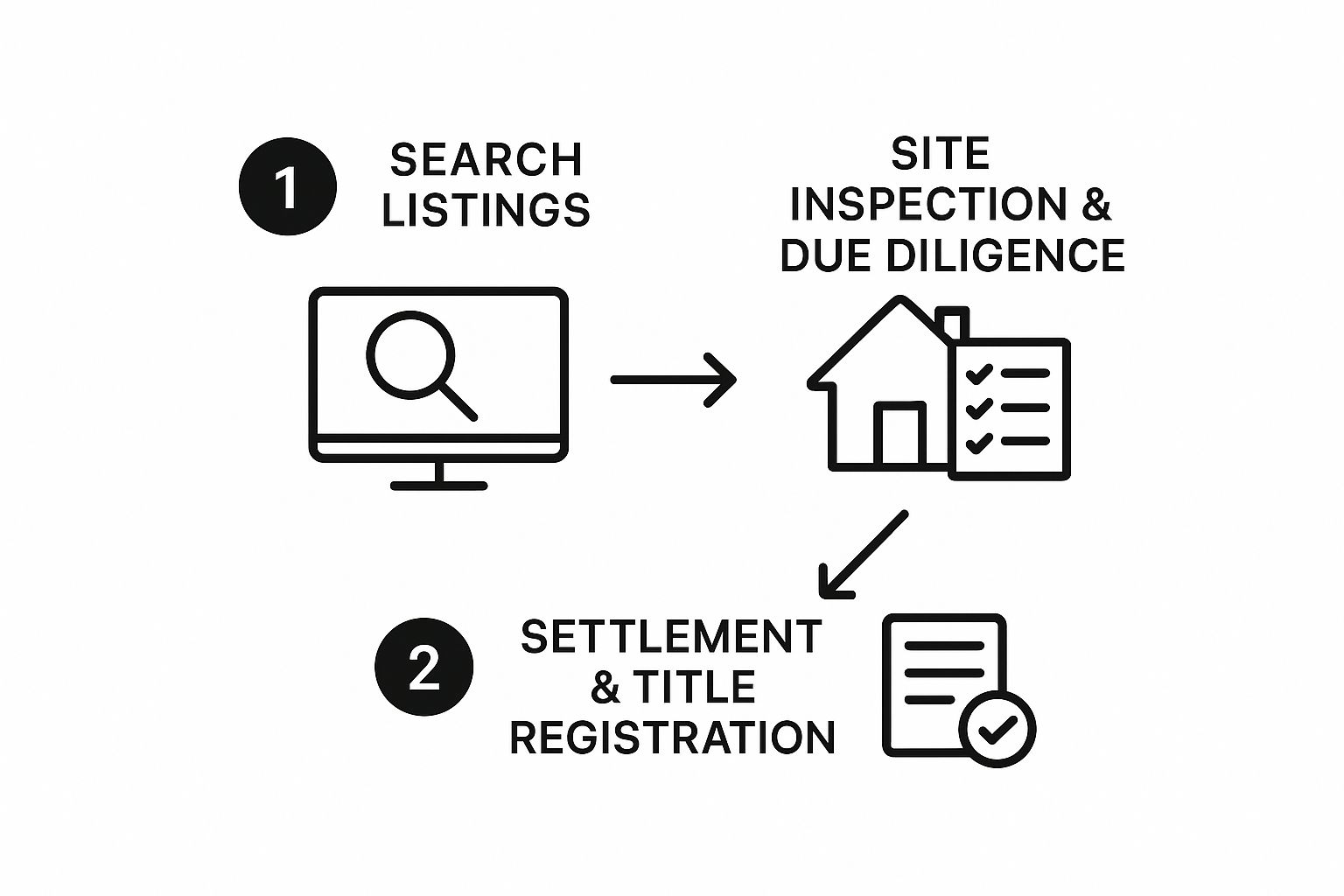
As you can see, settlement is the culmination of all your research and hard work, finally turning your dream into a tangible asset.
Navigating the Settlement Process
Once your offer is accepted by the seller and all your conditions (like getting finance approval) are met, the contract becomes "unconditional." This is when your settlement agent, or conveyancer, steps up to the plate.
In Western Australia, you must use a settlement agent to handle the legal transfer of the property title. Their job is to manage all the behind-the-scenes coordination to ensure a smooth, hiccup-free handover.
Think of your settlement agent as the conductor of an orchestra. They work with your bank, the seller's bank, and the seller's settlement agent to make sure all the legal documents and funds are in the right place at the right time for a seamless settlement.
They'll prepare the transfer documents, adjust council and water rates so you only pay from the day you take ownership, and check that the seller has cleared any debts tied to the property.
The process of buying land involves several distinct stages, each with its own timeline. Here's a quick look at what you can expect.
Key Stages of the Land Purchase Process
| Stage | Key Action | Typical Duration |
|---|---|---|
| Offer & Acceptance | Submitting the O&A contract with all terms and conditions. | 1-7 days |
| Conditional Period | Fulfilling conditions like finance approval or inspections. | 21-28 days |
| Unconditional | All conditions are met; the contract is now fully binding. | – |
| Pre-Settlement | The settlement agent prepares all legal and financial documents. | 2-4 weeks |
| Settlement Day | Funds are transferred, and ownership is legally changed to your name. | 1 day |
While the process might seem complex, having a good settlement agent makes all the difference. Their fees are generally a fixed cost, usually under $1,000 in WA, and it's money well spent for the peace of mind that comes with knowing the legal side of things is being handled by an expert.
Thinking About Commercial Land in Mandurah?
While residential blocks get a lot of attention, Mandurah's booming economy is creating incredible opportunities for sharp investors and business owners. This city is more than just a beautiful place to live; it's a rapidly growing commercial hub. For anyone looking past building a family home, exploring commercial land for sale in Mandurah WA could be a very smart move to get in on the region's growth.
This means wearing a different hat. Instead of thinking about school catchments and local parks, your focus will shift to things like traffic flow, customer access, and how close you are to major industrial or retail areas. The homework you need to do is a bit more involved, requiring a solid grasp of commercial realities.
Finding the Right Commercial Pockets
Mandurah has several distinct commercial and industrial zones, and each one is a better fit for different types of businesses. Nailing the right location is your first, most important job.
- Retail and Hospitality Hotspots: Think about areas near the Mandurah Foreshore, right in the city centre, or around major shopping destinations like Mandurah Forum. These are gold for businesses that need plenty of foot traffic. Cafes, boutique shops, and professional service offices thrive here.
- Light Industrial and Service Commercial Areas: The precincts in Greenfields and Halls Head are zoned specifically for light industrial use. These spots are perfect for workshops, trade suppliers, showrooms, and storage facilities that need bigger blocks and easy access for trucks and commercial vehicles.
Here’s a pro tip: always look at future infrastructure plans. Before you even think about putting in an offer, check out the City of Mandurah's long-term structure plans. A planned new road or a future public transport link could massively boost a commercial block's value and make your business far more viable.
Getting Through the Commercial Due Diligence
The checks and balances for commercial land are a whole different ball game compared to a standard residential block. Zoning classifications are far more specific, laying out rules for everything from the type of business you can run to your operating hours, what kind of signage you can have, and how much customer parking you need to provide.
For example, a 'Service Commercial' zone might be perfect for a mechanic's workshop but could completely forbid a standalone retail shop. You absolutely have to confirm that what you want to do with the land lines up perfectly with its specific zoning. Getting this wrong can be an incredibly expensive mistake, one that could shut down your project before a single sod is turned.
The level of economic activity in the area is a great sign of its potential. Recent data shows a real buzz in commercial real estate, with over 500 commercial properties changing hands in the Mandurah 6210 postcode alone. This isn't just random; it reflects the growing service industry needed to support the city's expanding population. You can learn more about recent commercial property sales in Mandurah to get a feel for market trends and what things are worth.
Sizing Up a Commercial Site’s Potential
Once you've zeroed in on a potential site, it's time to get forensic with your analysis. Practical stuff becomes king. How will customers and delivery trucks actually get in and out? Is there enough room for parking and for a truck to turn around? These aren't minor details; they're fundamental to running a successful commercial operation.
Something that often gets overlooked is visibility. For a lot of businesses, just being seen from a main road is a huge plus. Look at the traffic counts on the roads next to the block and think about how effective your signage could be. A corner block, for instance, gives you double the exposure and is often a top prize for retail or service businesses. It's this kind of strategic thinking that turns a simple piece of dirt into a powerful commercial asset.
Got Questions About Buying Land in Mandurah? We've Got Answers
Buying a block of land always brings up a bunch of questions, especially when you're getting into the nitty-gritty details. To give you some clarity, we’ve tackled some of the most common queries we hear from people looking for land for sale here in Mandurah WA. Think of it as your cheat sheet for those tricky bits.
What Is a BAL Rating and Why Does It Matter in Mandurah?
A BAL, or Bushfire Attack Level, is a formal assessment of how exposed a property could be to a bushfire. Since Mandurah is blessed with so many beautiful suburbs tucked alongside coastal bushland and nature reserves, a BAL assessment is a standard part of the process for new builds here.
The rating itself runs from BAL-LOW all the way up to BAL-FZ (Flame Zone), and it's a huge factor in your construction plans. A higher rating means you’ll have to use specific, tougher building materials for everything from your windows and cladding to your decking, all to make your home more fire-resistant. This is one of those details you need to lock down during your due diligence, because a high BAL rating can easily add a serious chunk of change to your build budget.
Understanding your block's BAL rating early on is non-negotiable. It prevents major budget blowouts and ensures your future home is built to the correct safety standards for its specific location.
How Much Does It Cost to Connect Services to a Block?
The cost of hooking up essentials like water, electricity, sewerage, and the NBN can swing wildly from one block to the next. It really all comes down to where and what you're buying.
- New Master-Planned Estates: In most of the newer developments, the developer has already done the heavy lifting and run the main service lines right to the boundary of your block. These costs are usually rolled into the land's sale price. Your builder's job is just to handle the final connection from the boundary into your new home.
- Infill or Rural-Residential Lots: Now, if you're looking at an older, established area or a bigger lifestyle block, you could be on the hook for the entire cost of running services from the nearest mains. We're talking anywhere from a few thousand dollars to tens of thousands, depending on how far the connection needs to travel and how complex the job is. Before you even think about committing, get quotes directly from Western Power, Water Corporation, and NBN Co.
Are There Government Grants for Building a New Home in WA?
Yes, but they do tend to change, so you’ve got to stay on top of the latest information. The one most people know about is the First Home Owner Grant (FHOG), which gives a nice financial leg-up to eligible first-timers who are building or buying a brand-new home.
On top of that, there are sometimes other state-based schemes or stamp duty concessions that pop up. Your best move is to head straight to the source—check the official government websites, like RevenueWA, for the most current details on who’s eligible and how to apply. These grants can genuinely make a big difference to your bottom line.
What Is the Difference Between Green Title and Strata Title Land?
Getting your head around the title type is absolutely fundamental when you’re buying land in Mandurah.
A 'green title' (also called freehold) is what most people think of when they picture owning land. It's the most straightforward type of ownership. It means you own the block and everything on it, completely and outright. There’s no shared property or common areas to worry about.
A 'strata title' block is something you’ll often see in higher-density spots or developments with smaller lots. With a strata title, you own your specific lot, but you also share ownership of—and financial responsibility for—common property, like a shared driveway. This means you become part of a strata company and pay regular levies for maintenance, which is a key ongoing cost you need to factor into your budget.
Navigating these questions is much easier with an expert by your side. At David Beshay Real Estate, we provide the local knowledge and professional guidance you need to make informed decisions. Start your journey today.

