


So, what exactly is a property manager? Put simply, they're the professional you hire to run the day-to-day operations of your investment property. Their mission is twofold: maximise your returns and minimise your stress.
Think of them as the CEO of your property. They handle everything from finding great tenants and collecting rent to coordinating maintenance and navigating the maze of legal compliance, all to protect your valuable asset.
Understanding the Essential Role of a Property Manager
A property manager is the critical link between you (the owner) and your tenants. Their whole purpose is to make sure your investment runs smoothly and profitably, saving you a massive amount of time and helping you sidestep expensive mistakes. This isn't just a simple admin job; it demands a unique mix of financial know-how, maintenance coordination, and a rock-solid grasp of Australian tenancy laws.
For many investors, this partnership is a game-changer. It's especially true if you live far from your property or are juggling multiple investments. A seasoned professional transforms your property from a demanding second job back into what it was always meant to be: a passive source of income. They give you peace of mind by getting ahead of risks and sorting out issues before they snowball.
By handling the complexities of tenant management and property upkeep, a good property manager not only preserves but can enhance the value of your asset over time.
Their duties are pretty extensive and cover several core areas, each needing specialised knowledge and an eye for detail. Exploring options for professional Mandurah property management can show you just how these services are fine-tuned to fit the local market.
A Property Manager’s Core Responsibilities at a Glance
To give you a clearer picture, let's break down the key responsibilities a property manager juggles. While every day is different, their work generally falls into these four critical areas.
| Area of Responsibility | Key Tasks Involved |
|---|---|
| Tenant Management | Advertising vacancies, screening applicants, managing lease agreements, and handling all communication. |
| Financial Oversight | Setting competitive rent, collecting payments, managing expenses, and providing detailed financial reports. |
| Maintenance & Repairs | Coordinating routine upkeep, responding to emergency repair requests, and conducting regular inspections. |
| Legal Compliance | Ensuring the property adheres to all state and federal regulations, including the Residential Tenancies Act. |
As you can see, their role goes far beyond just collecting rent. They are the strategic partner dedicated to ensuring your investment performs at its best.
Mastering the Tenant Lifecycle

Managing people is easily the most dynamic part of a property manager's job. They are the central coordinator for the entire tenant journey, a process that kicks off long before anyone signs a lease and doesn't end until well after the keys are handed back. This complete oversight is what we call the tenant lifecycle.
Think of your property manager as a talent scout for your investment. Their first task is to create compelling property listings with professional photos and engaging descriptions, all designed to attract a deep pool of high-calibre applicants. They don’t just throw an ad online; they market your property strategically to keep those costly vacancy periods as short as possible.
Once the applications start rolling in, the real work begins with a rigorous screening process. This isn't just a box-ticking exercise; it's a critical step in protecting your asset and locking in reliable rental income.
Attracting and Vetting the Right Tenants
Finding a tenant is easy. Finding the right one? That requires a methodical approach. A good property manager meticulously vets every application to make sure you get a responsible and reliable person living in your property. This isn't about gut feelings; it's a data-driven process.
The screening process usually involves several key checks:
- Rental History Verification: They get in touch with previous landlords to confirm a history of on-time rent payments and check for any past issues with property damage or disputes.
- Employment and Income Checks: This step confirms the applicant has a stable income that can comfortably cover the rent, which dramatically reduces the risk of arrears down the track.
- Background and Reference Checks: A comprehensive check helps paint a much fuller picture of an applicant's reliability and character.
All of this is handled while strictly following Australian fair housing laws, ensuring the process is both thorough and equitable. This diligence is what sets the stage for a positive, long-term tenancy from day one.
Managing the Tenancy from Start to Finish
Once the right tenant is chosen, the property manager shifts gears, becoming a relationship manager and administrator. They’ll handle the preparation and signing of the lease agreement, making sure every legal requirement is met and that both you and the tenant clearly understand your rights and obligations.
From there, their day-to-day responsibilities take over. They establish a straightforward system for collecting rent and are diligent in following up on any late payments to protect your cash flow. They also act as the main point of contact for the tenant, fielding all enquiries and maintenance requests promptly and professionally.
A property manager acts as a professional buffer, resolving tenant issues efficiently so you don't have to. This saves you an incredible amount of time and stops minor problems from escalating into major headaches.
When it's time for the tenant to move on, they manage the entire move-out process. This involves conducting a final inspection, carefully comparing the property's condition against the initial report, and managing the bond return process fairly and transparently. By overseeing every single stage, they ensure a smooth, professional experience for everyone and get the property ready for the next lifecycle to begin.
Driving Your Investment's Financial Performance
Beyond just finding tenants, a property manager’s real job is to act as the financial guardian of your investment. Their goal isn't simply to collect rent; it's to actively manage your property's financial health to boost your bottom line. Think of them as a strategic partner focused on maximising your cash flow and keeping costs in check.
This all starts with setting the right rental price. A skilled manager doesn’t just pull a number out of thin air. They conduct a thorough market analysis, comparing your property to similar listings in the area to land on a competitive rate. The sweet spot is a price that attracts quality tenants quickly without leaving money on the table.
Getting this strategic pricing right has a huge impact on your property's performance. You can get a better sense of this by checking out our guide on how to calculate rental yield, which really breaks down how crucial the right rent is to your overall return.
Managing Income and Expenses
Once the rent is set, the manager takes over all the financial admin. In Australia, they're legally required to manage a trust account to securely handle all funds related to your property. This covers everything from collecting rent and processing tenant bonds to paying for property expenses on your behalf.
These regular outgoings can include a whole range of things, such as:
- Council and water rates
- Strata levies or body corporate fees
- Landlord insurance premiums
- Invoices for any approved maintenance and repairs
By handling all these payments, they make sure every bill is paid on time, avoiding late fees and keeping your investment ticking over smoothly. This sort of meticulous management is exactly why the Australian property management sector, recently valued at USD 8.1 billion, is projected to hit USD 11.0 billion by 2033. More and more investors are seeking out this specialised financial oversight. You can find more insights on this growing market over at imarcgroup.com.
A property manager brings professional precision to your investment's finances, turning a complex mess of transactions into a clear, predictable cash flow statement.
Providing Clear Financial Reporting
Transparency is absolutely essential for a good partnership. Your property manager will provide detailed financial reports that give you a complete picture of how your investment is performing. You should expect a monthly statement that clearly outlines all income and expenses.
Then, at the end of the financial year, they’ll give you a comprehensive summary report. This single document is invaluable. It consolidates all the information your accountant needs for your tax return, saving you hours of painful admin and helping ensure you claim every single eligible deduction. This reporting is a critical part of what a property manager does—they deliver the financial clarity you need to make smart decisions and maximise your returns.
Protecting Your Asset and Ensuring Compliance

Beyond the day-to-day of dealing with tenants and crunching the numbers, a huge part of a property manager's job is protecting the physical integrity of your investment. Think of them as the custodian of your asset, tasked with keeping its value up and making sure it remains a safe, appealing place to live. This responsibility really breaks down into two crucial areas: proactive maintenance and rock-solid legal compliance.
On the maintenance side, they’re the central point for all repairs and upkeep. This isn't just about reacting to a call about a leaky tap. A sharp manager runs a complete maintenance strategy, handling everything from urgent, after-hours emergencies to scheduling preventative work that stops little issues from snowballing into expensive structural nightmares.
This forward-thinking approach is what preserves your property’s value. By managing a network of trusted, insured tradespeople, they make sure every job is done to a high standard. You'll never have to chase up a quote or an invoice yourself.
Navigating Legal and Safety Requirements
This is where a property manager’s expertise really shines and becomes invaluable. Australian property law is a tangled web of national, state, and local rules that are always changing. A manager’s job is to make sure your property ticks every single box, shielding you from some serious legal and financial headaches.
They conduct regular, documented inspections not just to check the property's condition, but to verify it meets all health and safety standards. This covers critical obligations like:
- Smoke Alarm Compliance: Making sure all alarms are installed correctly, tested regularly, and meet the current legislation.
- Pool Safety: Checking that pool fences and gates are secure and compliant with strict state laws to prevent tragic accidents.
- General Safety: Looking for potential hazards like dodgy wiring, structural problems, or anything else that could put a tenant at risk.
A property manager acts as your compliance shield, staying on top of the ever-changing legislation so you don't have to. Their diligence helps you sidestep hefty fines, potential legal action, and ensures your investment operates fully within the bounds of the Residential Tenancies Act.
The Growing Need for Professional Oversight
The importance of this role is only going to grow. Right now, property managers in Australia look after about 31% of the country's 9.3 million households. With projections showing the number of households ballooning to over 14 million in the next 50 years, the need for professional management to maintain compliance and protect assets at scale is going to be massive. You can explore more about the future of property management and its expected growth.
Ultimately, this proactive management of both the physical asset and its legal standing is a core function that delivers incredible peace of mind for any property investor.
Choosing the Right Property Manager
Knowing what a property manager does is one thing, but finding the right one is what really makes the difference to your investment's success. It’s not a one-size-fits-all service, so it pays to do your homework and find a professional who truly gets your goals and your type of property.
Think of it like hiring a crucial business partner. You want someone with genuine local market expertise who understands the ins and outs of the Mandurah rental scene—from pricing trends to what local tenants are looking for. Their experience should also be a good fit for your property; managing a large apartment complex is a completely different ball game to looking after a single family home.
Key Questions to Ask Potential Managers
Once you've got a shortlist, the interview is your chance to really see what they're made of. Don't hold back—ask detailed questions to get a feel for their professionalism and how they operate. A top-notch manager will have clear, confident answers ready to go.
Here are a few must-ask questions for your checklist:
- Fee Structure: "Could you give me a complete breakdown of all your management fees? I'm talking letting fees, admin costs, and any other charges I should know about."
- Maintenance Protocol: "How do you manage maintenance, both for routine jobs and emergencies? Do you already have a network of trusted local tradies?"
- Technology and Communication: "What systems do you use for things like owner statements and inspection reports? And how often will I hear from you with updates?"
- Tenant Screening: "What's your exact process for vetting tenants to make sure we get someone reliable in the property?"
The image below gives you a snapshot of the key compliance metrics a professional manager stays on top of. It’s a great visual reminder of the value they bring by preventing costly mistakes.
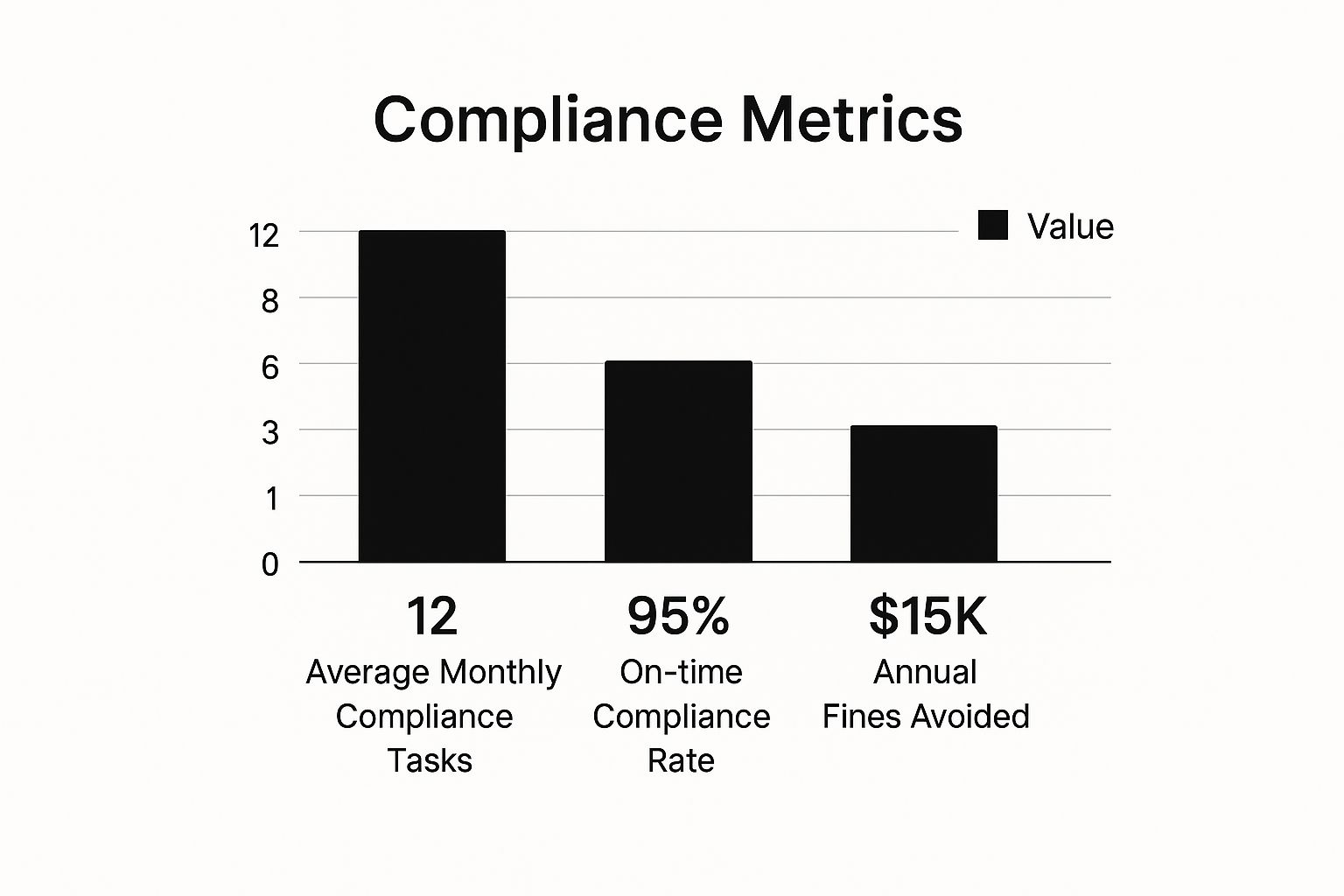
As you can see, a great manager is constantly juggling compliance tasks every month. This directly leads to better on-time payment rates and saves you a fortune in potential fines.
Self-Management vs Professional Property Management
To manage or not to manage? That's the big question for every landlord. Going it alone can definitely save you on management fees, but it's a massive commitment of your time and requires you to be an expert in tenancy law. If you're new to the game, it’s worth checking out our guide on how to become a property manager just to see the full scope of what's involved.
Handing over the reins to a professional means you’re essentially buying back your time and paying for peace of mind. It shifts your property from being a second job into a genuine passive investment.
Ultimately, the best path for you comes down to your own expertise, how much time you have, and how hands-on you want to be.
To make it clearer, here’s a straightforward comparison between the two approaches.
Self-Management vs Professional Property Management
| Aspect | Self-Management | Professional Management |
|---|---|---|
| Time Commitment | High; you’re on call 24/7 for any issues | Low; the manager is the first point of contact for everything |
| Expertise | Requires constant learning and staying on top of tenancy laws | Professional, up-to-date knowledge and industry experience |
| Tenant Screening | Relies on your own gut feeling and basic checks | Uses established, compliant, and thorough vetting processes |
| Stress Level | Can be high, as you deal directly with every problem | Low, as you have a professional buffer between you and tenants |
Weighing these points should give you a much better idea of which option aligns with your investment strategy and lifestyle.
Got Questions About Property Management? Let's Talk Specifics
Even when you know what a property manager is supposed to do, a few practical questions always pop up. It’s completely normal. This section dives into the common queries we hear from property owners, covering everything from costs and contracts to the nitty-gritty of the owner-manager relationship. Getting these details straight will help you move forward with confidence.
How Much Do Property Managers Charge in Australia?
There’s no one-size-fits-all answer for property management fees in Australia, but the structure is fairly consistent across the board. The main cost you'll see is the management fee, which is a percentage of the weekly rent. This usually lands somewhere between 5% and 12%.
On top of that, you can expect a few other charges for specific jobs. These often include:
- A letting fee: Think of this as a finder's fee for securing a new tenant. It’s typically the equivalent of one or two weeks' rent.
- Advertising costs: This is a fixed fee to get your property listed and seen on the major rental websites.
- Other fees: You might see smaller charges for things like lease renewals, organising inspections, or if the manager has to represent you at a tribunal.
Before you sign any management agreement, it's absolutely crucial to ask for a full, detailed schedule of all potential fees in writing. This creates total transparency and saves you from any nasty surprises down the track.
Can I Switch Property Managers If I Am Unhappy?
Yes, you absolutely can. If you're not getting the service you expect, you are never locked into an agreement forever.
The first step is to pull out your current management agreement and have a good read. You’re looking for the termination clause, which will spell out the notice period you need to give. This is often between 30 and 90 days. You’ll need to send your current manager written notice saying you want to end the contract. The great news? Your new property manager can usually handle the entire switch for you, making it a surprisingly smooth process.
Switching managers is more straightforward than you might think. A good new agent will coordinate everything with the old one—collecting keys, documents, and letting the tenant know—to make sure there’s zero disruption.
What Happens If a Tenant Damages My Property?
This is exactly where a sharp property manager really earns their keep. If a tenant causes damage that goes beyond normal wear and tear, your manager will jump into action with a clear, methodical plan.
First, they’ll document the issue with photos and detailed notes, comparing it against the original property condition report from when the tenancy began. From there, they'll negotiate directly with the tenant to sort out repairs or compensation. If a fair agreement can’t be reached, the manager will formally claim the cost of repairs from the tenant's rental bond. And if the dispute drags on, they will represent your interests at the relevant state tribunal to get a legally binding resolution, protecting your asset and your bottom line.
Ready to experience the peace of mind that comes with expert property management? The team at David Beshay Real Estate offers unparalleled local knowledge and a commitment to maximising your investment's potential. Get in touch today for a free property appraisal.

