


Thinking about selling? Your first question is probably, "What's my place actually worth?" A free property appraisal online is the perfect way to get a quick, data-driven answer. These reports give you a solid estimate of your home's value in minutes, pulling from recent sales figures and what's happening in the local market. It's an ideal starting point for any homeowner just testing the waters.
What a Free Online Appraisal Really Tells You

Before you jump in, it's really important to know what an online property estimate can—and can't—do. These tools are often called Automated Valuation Models (AVMs). They're not just plucking numbers out of thin air; they are sophisticated algorithms that crunch through huge databases to give you a snapshot of your home's potential market value.
The Data Behind the Estimate
So, how does an AVM come up with its figure? It’s all about the data. Here's a look at what goes into the calculation:
- Recent Comparable Sales: The system looks at what similar homes in your immediate neighbourhood have sold for recently. This is one of the most significant factors.
- Suburb Statistics: It also considers broader trends in your suburb, like the average time a house spends on the market and the median house price.
- Property Data: The basics you provide are key, too—things like the number of bedrooms, bathrooms, and the size of your land.
These online tools have become a go-to resource for Aussies wanting a fast property valuation. They use massive, up-to-the-minute Australian property data to generate an estimate almost instantly. A few years ago, getting this kind of insight would have meant paying for a time-consuming expert appraisal.
Setting Realistic Expectations
It’s crucial to remember that an AVM is not the same as a formal bank valuation. Think of it as a fantastic starting point, but it can't "see" the unique features of your home.
An online estimate is a data-backed starting point. It offers an objective look at the market but doesn't account for your new kitchen, the condition of your roof, or the stunning view from your deck.
A bank valuer or a real estate agent like myself, on the other hand, will actually visit your property. We conduct a physical inspection and factor in the home's condition, any renovations you've done, specific location advantages, and how well it presents.
For a deeper dive into this difference, check out our detailed guide on what a property appraisal involves. An online appraisal tells you the "what," while an in-person assessment explains the "why."
Getting Your Instant Online Property Estimate
Getting your free online property appraisal is simple, but the accuracy of the estimate really depends on the details you give us. Think of it this way: our online tool is the expert chef, but you're providing the ingredients. The better the ingredients, the tastier the final dish.
The first thing you’ll do is head over to our easy-to-use portal. We’ve designed the whole process to be fast – most people are done in less than two minutes. The most critical information you’ll enter is your property's core features, as these details directly feed into the algorithm's calculations.
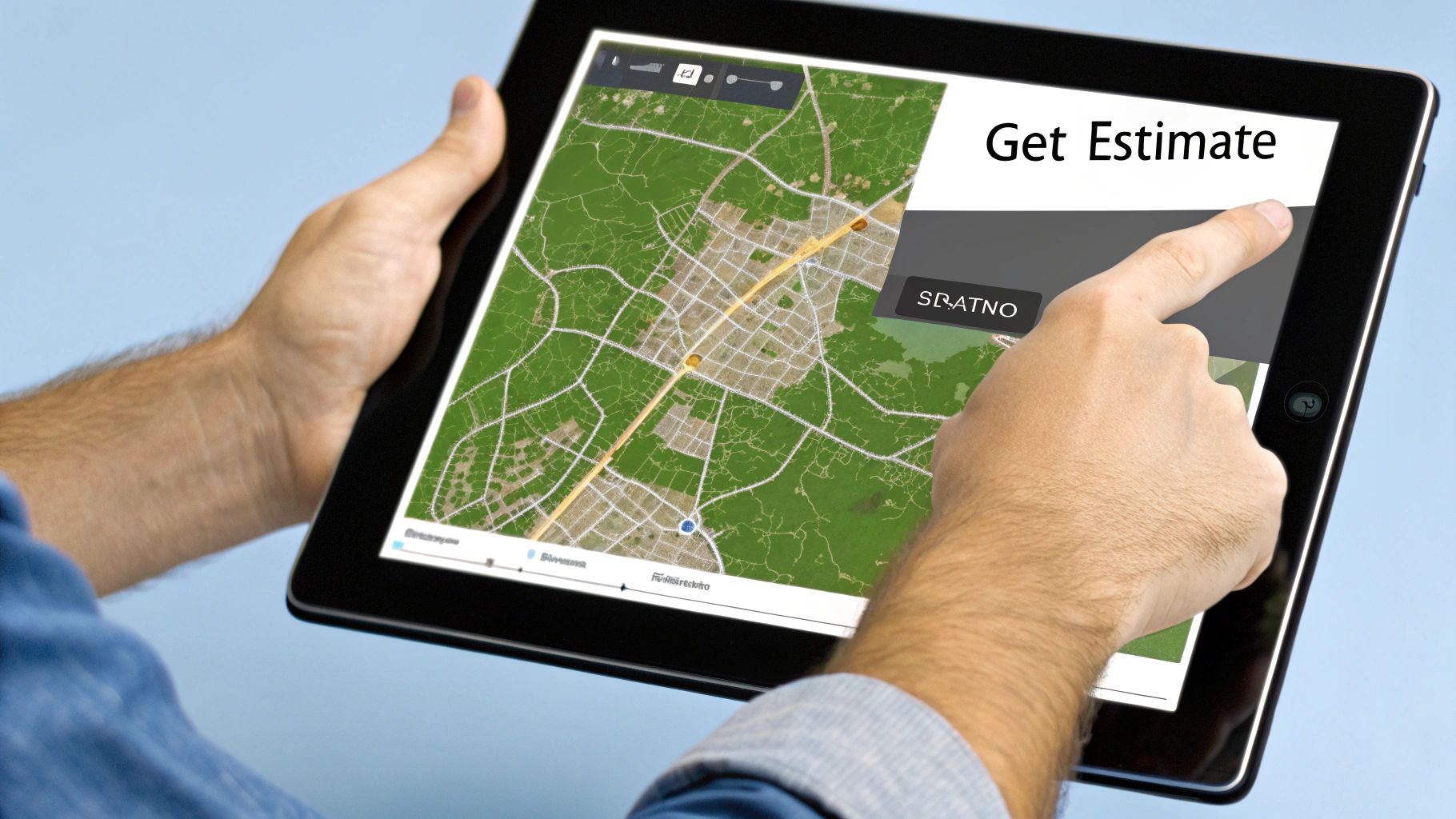
As you can see, our form asks for the basic details that are absolutely essential for an accurate automated valuation.
Why Every Detail Matters
Precision is everything when you're filling out the form. Getting the number of bedrooms or bathrooms wrong can significantly throw off the result, simply because the system compares your home to others with similar specs.
Here’s a look at what our system prioritises:
- Property Address: This is the anchor. It allows the tool to zero in on hyper-local sales data right in your neighbourhood.
- Bedrooms and Bathrooms: The count for each is a primary driver of value in any market. A four-bedroom home is valued very differently than a three-bedroom with a study.
- Car Spaces: Garages, carports, and even dedicated off-street parking spots add real, tangible value that the algorithm needs to account for.
Be honest and accurate with your inputs. The whole point of this tool is to give you a realistic starting point, and that can only happen with the right information. It’s far better to have a true baseline than an inflated, misleading figure.
For instance, listing a small study as a full bedroom might give you a temporary ego boost, but that number won't line up with what actual buyers in the Mandurah market are willing to pay. This initial data-driven report is your first step toward a successful sale, so starting off on the right foot with accurate info is crucial.
Getting Your Home Ready for an In-person Appraisal
Your online property appraisal gives you a solid, data-backed starting point. But the next step is where you can really make a difference to your home's final valuation. When an agent like me comes to visit for an in-person assessment, those first impressions are incredibly powerful.
This isn't about splashing out on expensive renovations; it’s all about showcasing your home's true potential. You're shifting from data to presentation, and a few smart, strategic efforts can have a huge impact on the final figure. Always remember, an agent is looking at your property through the eyes of a potential buyer.
The image below shows just how much time and money our clients save by using an online appraisal as their first step, leading to really high satisfaction.
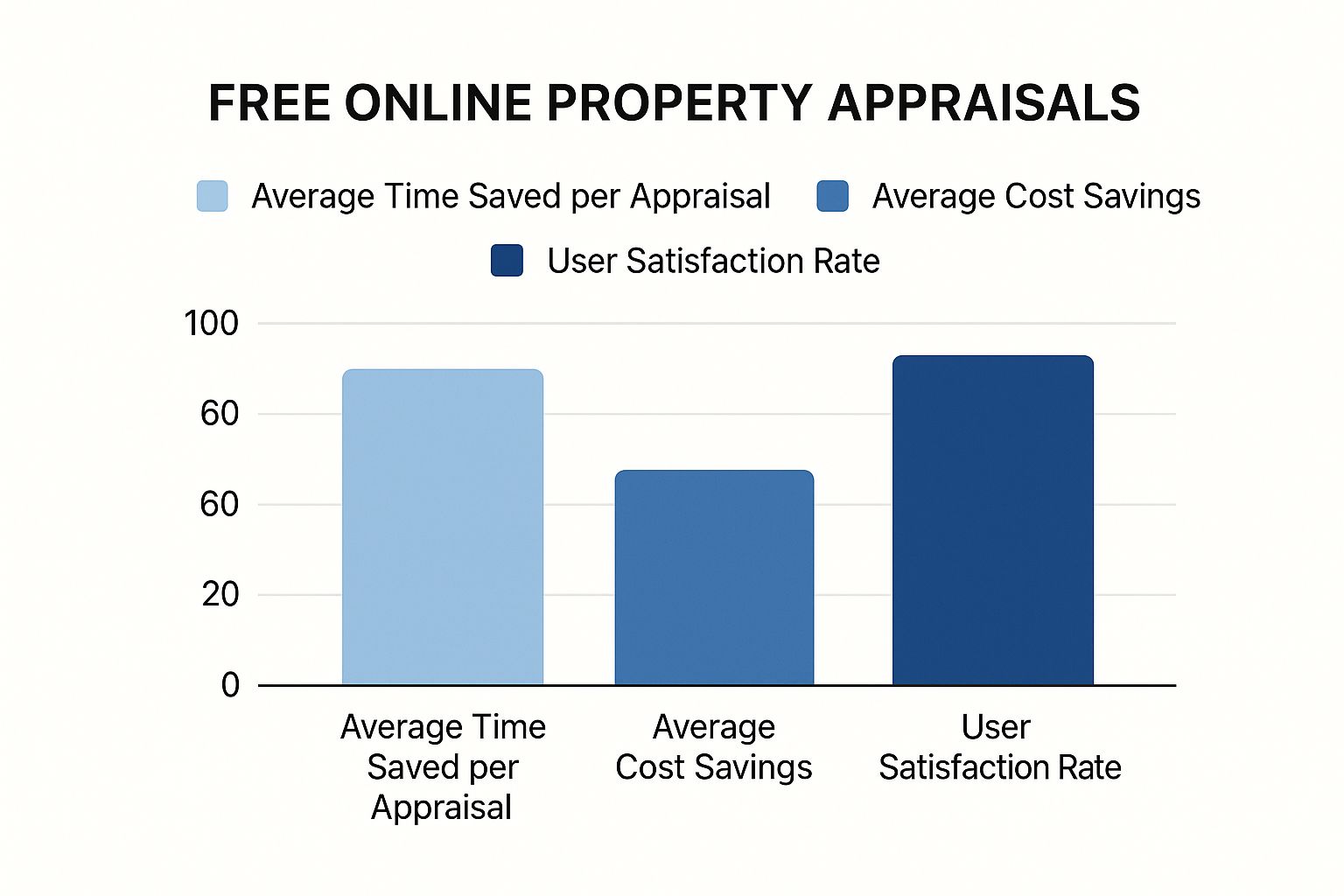
This data really drives home the efficiency of the online process. It frees you up to put your energy where it counts: preparing the property for the all-important in-person follow-up.
Focus on High-Impact Tasks
The main goal here is to get rid of any distractions so the agent can clearly see the great layout and solid bones of your home. A cluttered or messy space can subconsciously drag down an agent's valuation because it can hint at bigger issues, even when there aren't any.
Here are a few high-impact, low-cost jobs to tackle first:
- Declutter Every Single Room: Clear off those benchtops, remove any bulky or unnecessary furniture, and get storage areas organised. An agent will absolutely look inside pantries and wardrobes, so tidy cupboards are a great way to show off your ample storage space.
- Dial Up the Kerb Appeal: The outside of your home is the very first thing an agent sees. Simple things like mowing the lawn, pulling out weeds, and giving the front windows a good wash can make a world of difference.
- Tackle Those Minor Fixes: A leaky tap, a door that sticks, or a cracked tile might seem small, but they all add up. Fixing them shows the property is well-cared for and properly maintained.
Think of it this way: you're setting the stage. You want the agent to see the property at its absolute best, which helps them justify a higher appraisal value based on its excellent condition.
To help you get started, we've put together a comprehensive checklist. Our guide on how to prepare a house for sale has dozens of practical tips that are perfect for getting ready for an appraisal.
To help you prioritise, here's a quick look at tasks that offer the biggest bang for your buck.
High-Impact vs. Low-Cost Preparation Tasks
| Preparation Task | Estimated Cost | Potential Impact on Appraisal | Time Commitment |
|---|---|---|---|
| Deep Clean | $0 – $400 | High | 1-2 Days |
| Decluttering & Organising | $0 – $100 | High | 1-3 Days |
| Kerb Appeal Basics | $50 – $200 | High | 1 Day |
| Minor Repairs | $100 – $500 | Medium-High | 1-2 Days |
| Fresh Paint Touch-Ups | $50 – $150 | Medium | 1 Day |
As you can see, the tasks that have the biggest influence on an agent's perception often cost very little, just a bit of your time and effort.
The Little Details Matter
It's often the small things that leave the most lasting impression. Take an hour to touch up any scuffed paint on the walls and skirting boards, replace any burnt-out light bulbs, and make sure the whole house has had a thorough clean.
A home that's clean, bright, and well-organised simply feels bigger and more valuable. These straightforward steps don’t demand a huge budget, but they can pay off handsomely by helping you secure a more accurate and favourable final appraisal.
Making Sense of Your Appraisal Report

Once your David Beshay Real Estate appraisal lands in your inbox, you’ll notice it’s much more than just a single number. Think of this report as a detailed snapshot of your property's current position in the market. Understanding what’s inside is the key to making smarter decisions, as it translates complex market data into something clear and actionable.
The heart of any good appraisal is comparable sales, or ‘comps’ as we call them in the industry. These are properties in your immediate area—similar in size, age, and condition—that have sold recently. We don't just pull random listings; we carefully select the exact kinds of homes a potential buyer would be looking at alongside yours.
For instance, if you have a 3-bedroom, 2-bathroom home in Lakelands, your report will line it up against other 3-bedroom places that have changed hands nearby in the last few months. This direct comparison is still the most reliable way to gauge what your property is worth right now.
Decoding Key Market Metrics
Beyond just looking at past sales, your report digs into a few other data points that give the numbers some crucial context. These metrics help explain the why behind the valuation.
- Days on Market (DOM): This tells you the average time it’s taking for a home like yours to go under offer in the current climate. A low DOM is a great sign—it means the market is hot and buyers are moving quickly.
- Suburb Growth Trends: We also analyse how prices have been moving in your suburb. Are they trending up, holding steady, or dipping? This gives you a real sense of the market’s momentum.
These elements are so important because they reflect the balance of local supply and demand. A suburb with a low DOM and strong quarterly growth, for example, points to high buyer competition, which naturally pushes your property’s estimated value up. It's a key distinction you can explore further when understanding the difference between bank evaluations and agent appraisals.
Your online appraisal isn’t a static document. It’s dynamic, constantly updated to reflect the very latest market shifts so the information you get is timely and genuinely useful for your planning.
We back this up with broader market analysis. To give you an idea, recent data from CoreLogic's Home Value Index showed a 1.0% jump in national dwelling values in just one quarter. That’s a fast-moving market. Our online systems factor in these kinds of statistical trends to keep our valuations sharp and accurate.
So, you've got your online property appraisal. What now?
Receiving your free appraisal is a fantastic first step, giving you a solid, data-backed idea of where your home sits in the current market. But that figure is just the beginning. The real value comes from what you do with this information—how you use it to map out a smart plan for your future, whether that involves selling, refinancing, or simply getting your financial ducks in a row.
Think of this valuation as your launchpad for creating a savvy pricing strategy. If you're considering selling, it helps you land on a realistic asking price that will attract genuine buyers without underselling your asset. Knowing your home's approximate worth gives you the confidence to time your market entry perfectly.
Turning Data into Decisions
With your appraisal in hand, you can start making some real moves. The key is to see how this number fits into the bigger picture of the Australian property market.
- Financial Planning: Use the valuation to get a clear picture of your net worth or to figure out your equity for a potential refinance.
- Market Timing: How does your home's value stack up against local trends? This will help you decide if now is the right time to make a move.
- Setting a Sale Price: This appraisal is the perfect starting point for a conversation with a real estate agent about a final listing price.
The total value of residential homes in Australia recently touched a staggering $11.37 trillion, with the average price pushing past the $1,002,500 mark. It’s a market with immense value, and your appraisal shows you exactly where your property fits in. You can dive deeper into these national property trends with data from the ABS.
Your appraisal isn't just a number; it's a powerful tool. Use it to kickstart important conversations about your goals and make informed decisions that align with where you want to be financially.
Got Questions About Online Appraisals?
It's completely normal to have a few questions when you're thinking about getting a free property appraisal online. After all, your home is likely your biggest asset, and you want to be sure you're making a smart move. Let's clear up some of the most common queries we hear from homeowners just like you.
The big one is always about accuracy. An online estimate is a fantastic starting point, giving you a solid, data-driven valuation based on what similar homes in your area have recently sold for.
But here’s the reality: an automated tool can't see that beautiful new kitchen you just installed or know the exact condition of your roof. For a pinpoint-accurate figure, the online report is best followed up with a quick visit from an agent.
Is There Any Obligation?
Another question we get a lot is whether asking for an appraisal locks you into selling. The short answer? Absolutely not.
Requesting a free property appraisal from us at David Beshay Real Estate is a no-strings-attached service. We believe in empowering homeowners with the information they need to understand their asset's value. What you do with that information—whether you sell now, in a few years, or never—is entirely up to you.
Think of it as a financial health check for your property. Our goal is simply to give you valuable information so you can make the best choice for your family and your future.
How Often Should I Get My Home Valued?
The property market never sits still, so it's wise to keep up with your home's value. But how often is enough?
- Just Keeping an Eye on Things? If you're not planning a move anytime soon, getting an updated appraisal every 12-18 months is a great way to track your investment's performance.
- Thinking About Selling? If a sale is on your radar, getting a fresh appraisal about 3-6 months before you plan to list is ideal. This gives you a clear picture of the current market and leaves plenty of time to get your home ready to shine.
Regular check-ins like this ensure your financial plans are always based on the most up-to-date property data.
Ready to find out what your property is worth in today's market? Get a fast, accurate, and completely obligation-free online appraisal from David Beshay Real Estate. Visit our online appraisal page to get started.


Pingback: How to Get House Valued in Australia: Expert Tips - David Beshay Real Estate - The Agency