


When you're buying a home, the building and pest inspection is your single most important piece of due diligence. Think of it as an expert's assessment of the property's health, from the roof right down to the foundations, designed to uncover any hidden problems before you sign on the dotted line. This small upfront cost can save you from a world of financial pain down the track and gives you some serious negotiating power.
Why You Can't Afford to Skip a Home Inspection

It’s easy to see a home inspection as just another box to tick and an extra expense. That's a dangerous way to look at it. In reality, it’s a financial safety net. It’s the difference between buying with confidence and just crossing your fingers, hoping for the best after you get the keys.
Imagine finding out the "move-in ready" home you just bought has a slow leak in the roof that requires a $20,000 replacement. Or discovering hidden termite damage that’s been silently eating away at the home's structure. These aren't just horror stories; they are real-world situations I've seen buyers face when they decided to skip this crucial step.
Uncover Hidden Problems and Safety Hazards
A professional inspector is trained to see what the average buyer can't. They look past the fresh coat of paint and the nice staging to get to the heart of the home's condition.
They're trained to investigate key areas, including:
- Structural Integrity: Looking for tell-tale signs of trouble like foundation cracks, sagging rooflines, or other hints of serious structural stress.
- Plumbing and Electrical Systems: Spotting outdated wiring, leaky pipes, and the subtle signs of water damage that could lead to a massive mould problem.
- Roof and Attic Condition: Checking the age and state of the roof, the quality of insulation, and ventilation to head off future leaks and high energy bills.
- Safety Issues: Pinpointing hazards like dodgy DIY electrical work or a lack of safety switches that could put your family at risk.
This detailed check-up gives you a true picture of the property’s health, not just its good looks.
Gain Powerful Negotiation Leverage
The inspection report isn't just a list of problems—it's your best negotiation tool. When the report uncovers significant issues, you've got options. You can go back to the seller and ask them to fix the problems before settlement, or you can negotiate a price reduction to cover the cost of repairs yourself. If you're wondering what a building inspection costs in Perth, you'll quickly see how that fee stacks up against potential savings.
A few hundred dollars for an inspection can easily save you tens of thousands in unexpected repairs. It shifts the power dynamic, allowing you to make informed requests backed by an expert's documented findings.
Take a look at how a small upfront cost compares to the potential financial headaches it can help you avoid.
Inspection Cost vs. Potential Repair Costs
| Common Issue Found | Average Inspection Cost | Potential Repair Cost |
|---|---|---|
| Minor Roof Leaks | $400 – $800 | $1,500 – $5,000+ |
| Faulty Electrical Wiring | $400 – $800 | $3,000 – $10,000+ |
| Hidden Termite Damage | $400 – $800 | $5,000 – $25,000+ |
| Foundation Cracks | $400 – $800 | $10,000 – $50,000+ |
As you can see, the inspection fee is a tiny fraction of what you might have to spend if these issues go unnoticed. It’s a smart investment in your financial future.
With the property market expected to see activity increase by 12-15%, it's no surprise that inspection bookings are projected to climb by 22% year-on-year. More and more buyers are realising it's an essential step for a savvy purchase.
Finding a Truly Independent Building Inspector
Choosing the right building inspector is easily one of the most important calls you'll make when buying a home. The reality is, not all inspectors are the same, and your mission is to find a professional whose only loyalty is to you and the hard facts.
An independent inspector works for you—not the seller, not the agent. Their job is to give you an unbiased, thorough assessment of the property.
It's common for a seller's agent to recommend an inspector, and while some are fantastic professionals, you have to approach this with a bit of healthy scepticism. The agent's main goal is to get the sale across the line. This can create a conflict of interest, sometimes leading them to suggest inspectors known for producing "softer" reports that won't spook a buyer.
Vetting Your Inspector
Before you hire anyone, you need to do your homework. Pick up the phone and have a chat. Think of it as a job interview, because that's exactly what it is—you're hiring someone for a crucial role.
A properly qualified inspector should have no problem providing you with:
- Proof of Insurance: Ask to see their current Professional Indemnity and Public Liability insurance certificates. This is non-negotiable. It protects you if something goes wrong.
- Relevant Experience: How long have they been inspecting homes specifically in Mandurah or the wider Perth area? Local knowledge is gold for spotting issues common to our region's climate and building styles.
- Sample Reports: Any good inspector will be happy to show you their work. You're looking for a detailed report with high-quality photos and clear explanations, not just a generic checklist.
This initial screening is your first line of defence. It helps you weed out the less experienced or under-equipped candidates and gets you closer to finding a genuine expert.
An inspector's job isn't to help a sale go through; it's to give you a clear, unvarnished look at the property's condition so you can make an informed financial decision. A truly independent inspector prioritises your interests above all else.
Spotting Red Flags
Beyond the paperwork, pay attention to their behaviour. If an inspector seems rushed on the phone or dodges your detailed questions, that's a major red flag about how they'll approach the actual job.
Be wary of anyone promising a suspiciously fast inspection. A thorough, proper job takes time.
Online reviews are your best friend here. Look for detailed feedback from other buyers that mentions the inspector's thoroughness, communication, and professionalism. To give you a head start, we've put together a list of the best building inspectors in Perth who are known for their diligence and independence.
Taking that extra bit of time to find the right person will give you the peace of mind that your potential new home has been put under the microscope.
What Really Happens On Inspection Day
The day of the home inspection often comes with a mix of excitement and a few nerves. This is the moment when the property you've set your heart on gets a thorough once-over, and understanding what to expect can turn that anxiety into a valuable learning experience.
The inspector's process is methodical and comprehensive. They'll usually start with the exterior, meticulously checking the roof, gutters, walls, and the foundation itself. What they're looking for are the tell-tale signs of water issues, structural movement, or just general wear that could hint at bigger, more costly problems waiting for you down the track.
Once the outside is done, they head indoors. Here, they put on their detective hat, testing everything from the taps and toilets to the electrical outlets and the heating and cooling systems. They'll get into the roof space to check the framing and insulation, and crawl into the subfloor area to look for pests, dampness, or any structural red flags.
Your Role Attending the Inspection
It’s one thing to read about a "minor plumbing leak" in a report, but it’s completely different to see it dripping with your own eyes. This is why we always recommend you attend the last hour or so of the inspection. It's not about looking over the inspector's shoulder; it's about being there for the summary so you can ask questions and see things for yourself.
Being on-site transforms a static, 50-page report into a dynamic conversation. You gain an understanding of the home’s quirks and maintenance needs that a document alone can never provide.
This is your prime opportunity to see any issues firsthand. The inspector can physically point out the location of a problem, explain how serious it is, and give you a general idea of what kind of tradesperson you'd need to call for a fix. That context is absolutely priceless.
The process of finding and hiring a great inspector is a critical step in itself.
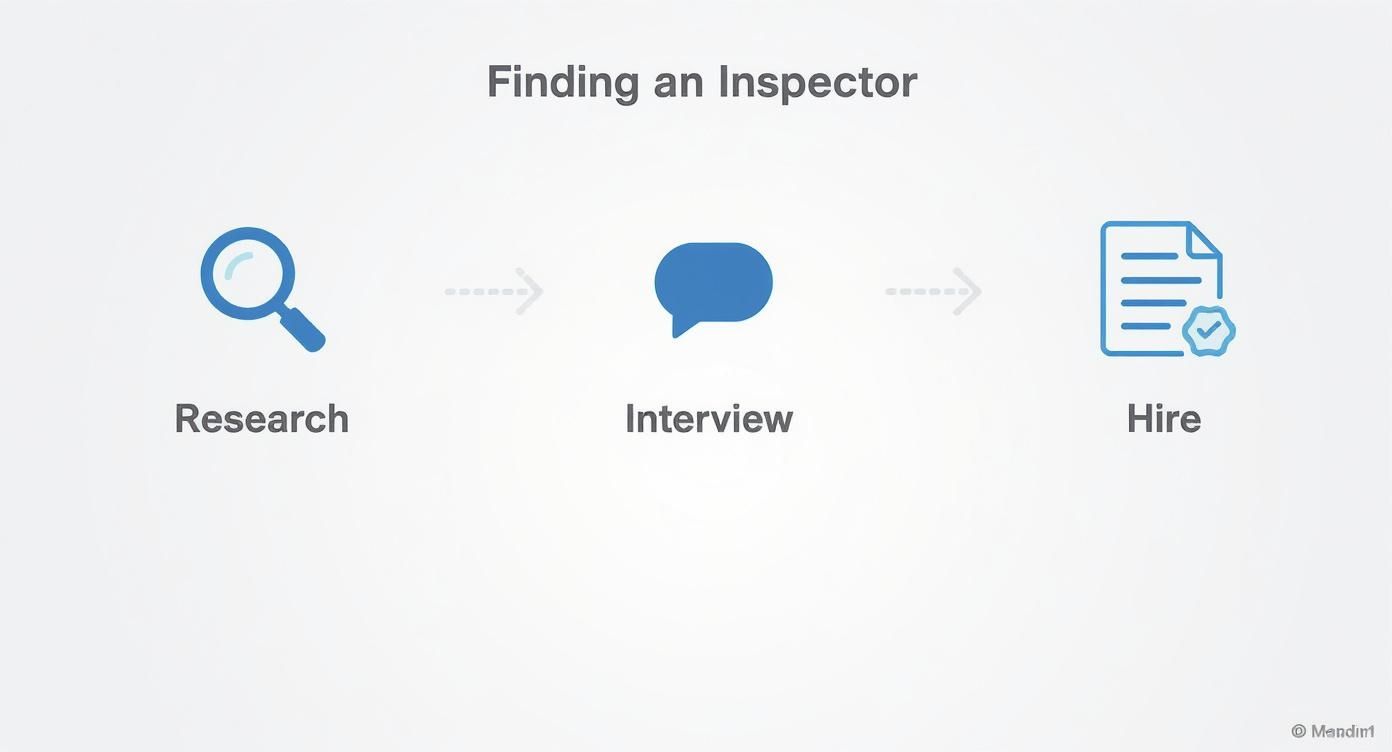
This simple flow shows just how important it is to do your research, chat with a few candidates, and then formally lock in the right professional for the job.
What to Look For Alongside the Expert
While the inspector is the technical expert, being there allows you to get a real feel for the property's condition and what future upkeep might look like. You're not there to do their job, but to absorb as much as you can.
Keep an eye out for these things:
- Major Systems: Don't be shy. Ask the inspector to show you the main water shut-off valve and the electrical switchboard. Knowing the basics from day one is just part of being a responsible homeowner.
- Maintenance Items: They might point out things that aren't technically "defects" but will need your attention soon. Think cracked grout in a shower or sealant around windows that's seen better days.
- The Big Picture: Step back and get a sense of the home's overall state. Does it feel well-cared-for, or are there little signs of neglect everywhere you look?
This direct observation helps you build a mental to-do list for your potential new home. To get ahead of the game, it's a great idea to review a comprehensive home inspection checklist for Australia so you have an idea of what areas will be covered.
Ultimately, the goal of the day is clarity. You should walk away from the property with a much sharper picture of your potential investment, armed with the knowledge to make a truly confident decision.
How to Read Your Inspection Report
When that detailed, 50-page inspection report finally hits your inbox, it’s completely normal to feel a bit swamped. It'll likely be packed with technical jargon, photos of things you don't recognise, and a seemingly endless list of flagged items.
The first rule is: don't panic. Your goal here is to cut through the noise and focus on what truly matters for your decision.
Most reports are structured to guide you. They usually begin with a summary highlighting the most significant findings. Make this your starting point—it gives you the big-picture view before you dive into the nitty-gritty of each section, from the roof right down to the subfloor.
Differentiating Major from Minor Issues
Not every item flagged in your report is a deal-breaker. A good inspector documents everything, from a wobbly doorknob to a major structural crack. Your job is to learn how to put these findings into the right categories.
Think of it this way:
- Minor Issues: These are the typical maintenance and small repair jobs that come with owning any home. We're talking dripping taps, cracked window sealant, or a sticky door. They’re good to know about but rarely a reason to walk away from a deal.
- Major Defects: These are the big-ticket items that can seriously affect the home's safety, structure, or liveability. Think evidence of major water damage, an old roof that needs immediate replacement, or dangerously outdated electrical wiring.
Getting your head around this distinction is the key to making a calm, rational decision. The report is a tool for understanding, not a reason for alarm.
A lengthy report doesn't automatically mean you're buying a "bad" house. It often just means you hired a very thorough inspector who is doing their job properly by documenting every single detail.
Identifying Critical Safety Hazards
Beyond the cost of repairs, that report is your number one safety check. You need to pay special attention to anything that could pose an immediate risk to you and your family. These are the non-negotiables that absolutely must be addressed.
Scan the report for keywords related to safety, such as:
- Asbestos: Often found in older Mandurah homes in roofing, insulation, and flooring.
- Faulty Wiring: Any mention of exposed wires, an old fuse box, or a lack of modern safety switches (RCDs).
- Structural Instability: Notes about foundation movement, significant cracks in load-bearing walls, or compromised roof trusses.
- Mould and Water Damage: This can point to serious ventilation or plumbing problems and pose real health risks.
When you see these red flags, it's time to pause and assess the situation carefully. This is exactly where a home inspection before buying proves its incredible value, turning hidden dangers into known factors you can actually do something about.
Knowing When to Call a Specialist
Your building inspector is a generalist expert. They have a fantastic breadth of knowledge and are trained to spot problems across all of a home's systems, but they aren't specialists like a licensed plumber, electrician, or structural engineer.
A good report will often recommend getting a second opinion from a qualified tradesperson. Don't ignore this advice.
If the inspector notes "evidence of possible termite activity" or "irregularities in the main electrical panel," your very next call should be to a specialist for a detailed assessment and quote. This gives you a clear, accurate cost for fixing the problem, which is vital information for your negotiation strategy.
Here in Australia, this is just part of the due diligence process, and the cost of an inspection is a tiny price to pay for clarity. A typical building inspection for a standard 3-bedroom house can range from AUD 450 to AUD 650. Many savvy buyers opt for a combined building and pest inspection, which costs around AUD 550 to AUD 850, to get the full picture. You can learn more about building inspection costs in Australia.
By breaking the report down into manageable chunks—summary, major vs. minor issues, safety hazards, and specialist recommendations—you can turn an intimidating document into a clear roadmap for your next steps.
Turning Inspection Findings Into Negotiation Power
Getting your building inspection report isn't the end of the road; it's where your negotiation strategy really kicks into gear. This document is much more than a simple laundry list of problems—it’s the most powerful tool you have for making sure you pay a fair price for the property in its current state.
When you're armed with an expert's findings, you can negotiate from a position of strength. The aim isn't to scare the seller or nitpick every tiny flaw. It's about professionally addressing the significant issues that directly impact the home's value, safety, and your future costs.
Choosing Your Negotiation Approach
Once you’ve gone through the report and pinpointed the key issues, you generally have three strategic paths to consider. Your final choice will probably hinge on how severe the problems are, the seller's eagerness to sell, and the current market conditions right here in Mandurah.
-
Request Specific Repairs: This is the most direct approach. You simply ask the seller to fix certain major items before settlement. For instance, you might request they hire a licensed electrician to sort out a faulty switchboard or get a plumber to repair a leaking shower recess.
-
Negotiate a Price Reduction: This is often the cleanest option for everyone involved. Instead of having them organise repairs, you ask for a reduction in the sale price to cover the cost of you getting the work done later. The big advantage here is that you get to control the quality of the work and choose your own tradespeople.
-
Ask for a Seller Credit: This is similar to a price reduction, but instead, the seller agrees to credit you a certain amount at closing to cover repair costs. From a mortgage perspective, this can sometimes be a smoother process than officially changing the sale price.
Whatever you decide, it's absolutely crucial to present your requests professionally. You need to back them up with specific page numbers from the inspection report and, even better, get a couple of quotes from qualified local tradies. This instantly shifts your request from being just an opinion to a negotiation point grounded in hard facts.
Your home inspection report transforms a potential financial risk into a calculated business decision. It allows you to address problems with evidence, not emotion, ensuring the final deal is fair and transparent for both sides.
The Power of an Informed Decision
In a competitive market, a proper home inspection before buying is more critical than ever. The Australian housing market has shown incredible strength, with median property values consistently climbing. You can get a feel for the bigger picture by reviewing the latest Australian property market trends and values. This steady rise in house prices just makes the financial stakes that much higher, as an undiscovered defect can turn into a massive financial hit down the track.
Ultimately, that inspection report gives you the clarity you need to make one of three final calls: push ahead with the purchase as-is, negotiate a better deal, or walk away entirely. Knowing when to back out is your ultimate safety net. If the report uncovers problems that are just too big, too expensive, or too complicated for you to take on, exercising your right to withdraw from the sale is often the smartest move you can make.
Your Top Home Inspection Questions Answered
Buying a home brings up a lot of questions, especially when it comes to the inspection. Getting the right answers is key to feeling confident and making sure there are no nasty surprises waiting for you down the track. Here are the most common queries we hear from Mandurah buyers.
How Long Does a Home Inspection Usually Take?
You should set aside between two and four hours for a proper, professional home inspection. The final time really depends on the property itself—its size, age, and what kind of condition it’s in.
An older, larger home with more complex systems will naturally take longer to assess than a brand-new apartment. Be a bit wary of any inspector who promises to be in and out in an hour. A rushed job is a red flag that important details might get glossed over. A good inspector will always give you a realistic time estimate when you book.
What Is the Difference Between a Building and Pest Inspection?
This is a critical one to understand, especially here in WA. A building inspection is all about the structural health and functional parts of the home. Think of things like the roof, the foundation, the plumbing, and the electrical systems. The main goal is to check the physical integrity of the house itself.
A pest inspection, on the other hand, is laser-focused on finding timber pests and other wood-destroying critters. This means looking for termites, borers, and any significant fungal decay (like wood rot). Because these pests can cause enormous structural damage that’s often hidden from view, this inspection is an absolute must.
For genuine peace of mind, the standard approach—and what we always recommend—is to book a combined building and pest inspection. This gives you the full picture of the property's health, covering both its construction and any potential threats from unwanted guests.
Can a Property Fail an Inspection?
It's a common misunderstanding, but a home can't actually "fail" an inspection. It’s not a pass-or-fail exam. A better way to think of it is as a detailed health check-up for the property.
The inspector's job is to give you an objective, factual report on the home's condition on that particular day. The report will list everything they find, from minor maintenance jobs to major structural problems, but it won’t give the house a "passing" or "failing" grade.
The power is all in your hands. It’s up to you, the buyer, to use that information to decide what to do next. You might:
- Go ahead with the purchase as planned.
- Try to renegotiate the price to cover the cost of repairs.
- Ask the seller to fix certain issues before settlement day.
- Walk away from the deal if the problems are just too big to take on.
The report is simply the tool that gives you the knowledge you need to make the best call for your situation.
Navigating the Mandurah property market is so much easier with an expert on your side. At David Beshay Real Estate, we're here to guide you through every step, from that first viewing right through to settlement. For personalised advice and a seamless home-buying experience, get in touch with our team today.

