


When you're buying a house in Western Australia, you can generally expect to pay between $900 and $2,200 for a conveyancer or from $2,000 to $4,000 for a solicitor. These fees cover the crucial legal work required to transfer the property ownership into your name, making sure the entire process is above board and secure from start to finish.
Your Guide to Legal Costs When Buying a Home
The sticker price of a new home is just the beginning. Among the various other costs you'll need to budget for, legal fees are one of the most important—and often, one of the most confusing.
Think of your conveyancer or solicitor as the experienced captain of your ship on this real estate voyage. They're there to navigate the tricky legal waters, steering you clear of potential hazards and ensuring you arrive safely at your destination: settlement day.
Understanding lawyer fees for a house purchase really comes down to knowing what you're paying for. The final bill is usually broken into two main parts:
- The Professional Fee: This is what you pay for their time, expert knowledge, and the hands-on legal work of managing your purchase. It covers everything from checking over the contract to liaising with banks and making sure every legal document is perfect.
- Disbursements: These are simply the out-of-pocket costs your representative pays to other parties on your behalf. This includes things like government searches, title registration fees, and getting council rate information.
Conveyancer vs Solicitor: Which Is Right for You?
Here in Western Australia, you have two main options for handling the legal side of things: a licensed conveyancer (who you’ll often hear called a settlement agent) or a property solicitor. Both are qualified to handle the transfer of property, but they suit slightly different situations and come with different price tags.
A conveyancer is a specialist who focuses only on the administrative and legal steps of property transfers. They are absolute experts in this niche, which often makes them a really cost-effective choice for standard, straightforward property deals.
A solicitor, on the other hand, is a lawyer who can offer broader legal advice. If your purchase is a bit more complicated—maybe it has tricky contract clauses, a potential for legal disputes, or is part of a deceased estate—a solicitor’s wider expertise can provide an invaluable layer of protection.
Here's a look at how their typical fees stack up in WA.
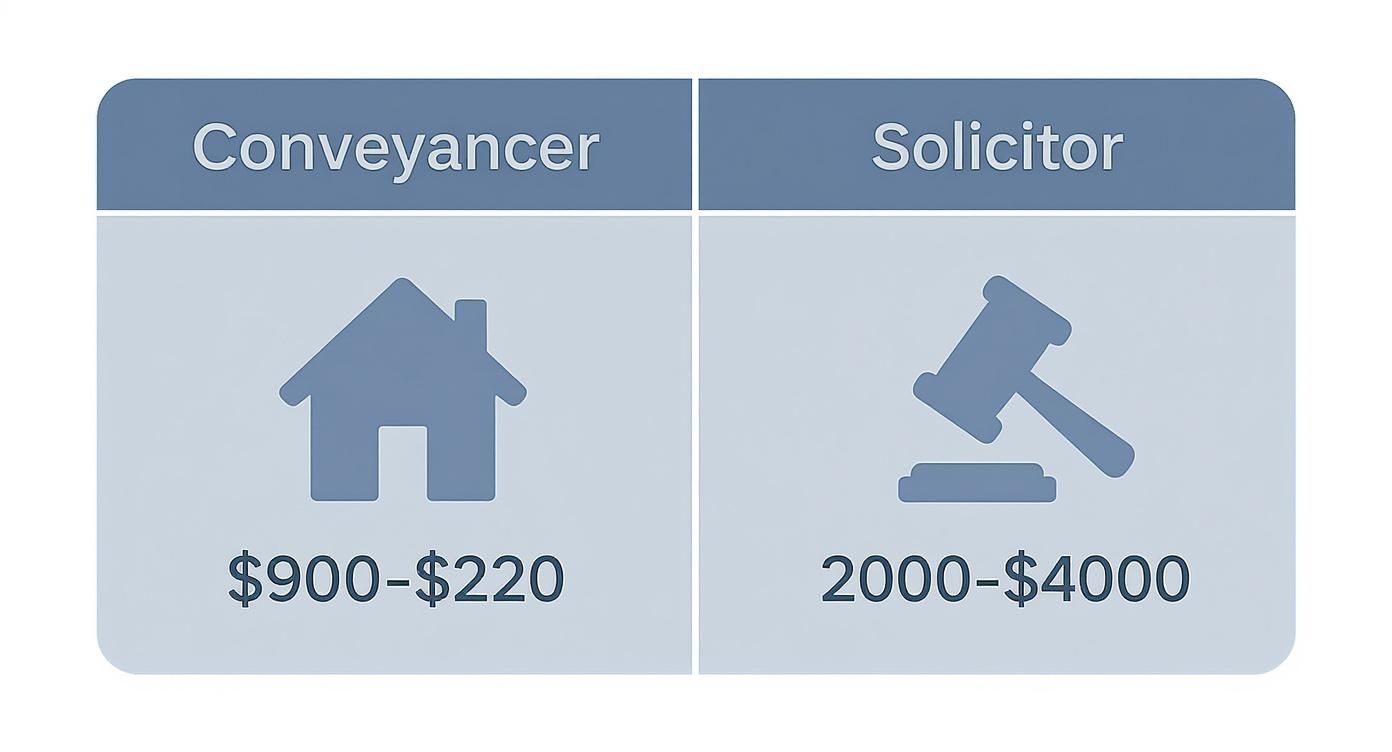
As you can see, solicitors tend to charge a bit more because they can provide that deeper legal counsel. Conveyancers offer a more focused—and often more affordable—service that's perfect for most standard home purchases.
To give you a clearer picture, let's break down the typical fee ranges you might encounter.
Typical Legal Fee Ranges for a WA Property Purchase
| Service Provider | Typical Fee Range (AUD) | Best For |
|---|---|---|
| Licensed Conveyancer | $900 – $2,200 | Standard, straightforward residential property purchases. |
| Property Solicitor | $2,000 – $4,000 | Complex transactions, commercial properties, or purchases with potential legal issues. |
Ultimately, this guide is here to walk you through every cost involved, explain what these fees actually cover, and help you make a smart, confident financial decision for your property journey.
What the Professional Fee Actually Covers

When you get a quote for the professional fee, it's natural to ask, "So, what am I actually paying for?" The easiest way to think about it is like booking a premium travel package. You pay one fee, and an expert takes care of all the tricky logistics, paperwork, and coordination needed to get you to your destination—in this case, your new home.
This fee is for the time, expertise, and sheer diligence your solicitor or conveyancer puts in to protect you. They are your legal shield, making sure every single step is handled correctly so you're not exposed to unnecessary risks or costly mistakes down the track. This is the real value behind the lawyer fees for a house purchase; it’s an investment in your security and peace of mind.
From the second you hire them until the day you get the keys, your legal expert is working hard behind the scenes. Let's break down exactly what that professional fee typically covers.
Contract Review and Legal Advice
Before you're legally locked in, your representative will go through the Offer and Acceptance contract with a fine-tooth comb. They're trained to spot unfair clauses, hidden risks, or vague wording that could spell trouble later. This is a critical first step to ensure the agreement you're signing is solid and protects your interests as a buyer.
They’ll explain any special conditions, deadlines for things like finance approval or building inspections, and clarify your obligations. This isn't just a quick skim-read; it's a deep legal dive designed to prevent future headaches.
Your legal expert is your personal advocate, translating complex legal jargon into plain English. Their main goal is to make sure you understand exactly what you are signing, so you can move forward with total confidence.
Due Diligence and Property Searches
A huge chunk of their work involves carrying out essential searches on the property. This is the detective work phase, where they uncover the property's legal history and current status. Key searches include:
- Title Search: This confirms the seller actually owns the property and reveals any existing mortgages, caveats (a legal notice), or easements that might impact your ownership.
- Strata Plan Searches (if applicable): If you're buying an apartment or townhouse, they'll dig into the strata company's records, finances, and by-laws to make sure there are no nasty surprises.
- Government Enquiries: They’ll check with local councils and water authorities for things like outstanding rates, zoning compliance, or any planned developments nearby that could affect the property.
These searches are absolutely vital to ensure you receive a "clear title," which means the property is free from any unexpected legal claims or problems.
Document Preparation and Coordination
Throughout the settlement process, your conveyancer or solicitor prepares and manages all the necessary legal paperwork. This includes drafting the official Transfer of Land document, which is the instrument that legally passes ownership from the seller to you.
They also become the central hub for communication, coordinating with everyone involved in the transaction:
- The seller's settlement agent or solicitor
- Your bank or mortgage broker
- The real estate agent
- Relevant government bodies
This coordination is crucial for making sure your finance is approved, all contract conditions are met, and everyone is on the same page for settlement day. They manage the entire timeline, chasing people up and preventing delays that could put your purchase at risk. By handling every last detail, they ensure the final transfer of ownership is seamless, secure, and legally watertight.
Looking Beyond the Professional Fee: Disbursements and Other Costs
When you hire a conveyancer or solicitor, their professional fee covers their time and expertise. But that's not the only cost involved in the legal side of buying a house. You'll also come across a category of expenses called disbursements, and it's vital to get your head around them to avoid budget blowouts.
Think of it this way: your legal expert is like a project manager for your purchase. They need to order various official reports and certificates from third parties to make sure everything is above board. Disbursements are simply you reimbursing them for these out-of-pocket expenses. They pay for them on your behalf and pass the exact cost on to you—no markup, no profit.
These are essential, non-negotiable costs required to get the deal done.
What Disbursements Can I Expect in WA?
While every property is a bit different, a standard purchase in Western Australia will almost always include these common disbursements:
- Title Search Fees: A must-do check with Landgate (WA's land authority) to confirm the seller legally owns the property and to uncover any existing mortgages or claims against the title.
- Council and Water Rate Enquiries: Your representative contacts the local council and the Water Corporation to find out if there are any unpaid rates that need to be cleared at settlement.
- Strata Reports: If you're buying a unit, apartment, or townhouse, this is non-negotiable. It involves getting reports from the strata company to check its financial health, insurance coverage, and by-laws. You don't want to buy into a poorly managed complex!
- Land Registry Charges: These are government fees paid to Landgate to officially register the Transfer of Land into your name and register your new mortgage on the title.
These are just the standard pass-through costs. You can dive deeper into our complete guide on how much conveyancing costs to see the full financial picture.
The Other Big Costs of Buying a Home
Your professional fees and disbursements are just one piece of the puzzle. To really build a realistic budget and avoid that dreaded pre-settlement panic, you need to account for several other significant expenses you'll pay directly.
Getting a handle on these major costs early is probably the single most important thing you can do. It turns a stressful, overwhelming process into a clear, manageable plan and guarantees no nasty surprises on settlement day.
Itemized Breakdown of Potential WA House Purchase Costs
To help you visualise it all, here's a table breaking down the typical costs you'll need to budget for when buying a home in Western Australia. It separates the professional fees from the disbursements and other major expenses.
| Cost Category | Item Example | Estimated Cost (AUD) |
|---|---|---|
| Professional Fees | Conveyancer or Solicitor's Fee | $800 – $2,200 |
| Disbursements | Title Search, Strata Report, Council Enquiries | $400 – $800 |
| Government Charges | Stamp Duty (Transfer Duty) | Varies (e.g., ~$17,765 on a $500k home) |
| Government Charges | Mortgage Registration Fee | $178 (WA specific) |
| Inspection Costs | Building & Pest Inspection | $400 – $1,000 |
| Lender Costs | Lender's Mortgage Insurance (LMI) | 1-4% of loan amount (if deposit < 20%) |
This table provides a great starting point, but remember that costs like Stamp Duty are calculated on your specific purchase price.
Other Major Property Purchase Costs Explained
Here’s a closer look at the other big-ticket items you need to factor in:
- Stamp Duty (Transfer Duty): This is usually the biggest extra cost you'll face. It's a WA state government tax on the property purchase, calculated as a percentage of your home's value. Don't underestimate this one.
- Mortgage Registration Fees: Your bank needs to officially register its mortgage against your property's title, and this government fee makes it happen. It's how the lender secures their interest in the property. Government charges vary wildly across Australia. While some states sting you with high fees, WA is quite reasonable with a $178 mortgage registration fee and a $453 transfer fee. You can see more on how these costs compare between states over at bargotirealestate.com.au.
- Building and Pest Inspections: These aren't legally required, but skipping them is a huge gamble. A building inspection can uncover hidden structural problems, and a pest inspection checks for termites and other timber-destroying pests. The few hundred dollars you spend here could save you tens of thousands down the track.
- Lender's Mortgage Insurance (LMI): If your deposit is less than 20% of the purchase price, your lender will almost certainly make you pay for LMI. It’s important to know this insurance protects the lender—not you—in case you can't make your repayments.
Choosing Between a Solicitor and a Conveyancer
When you’re buying a property in Western Australia, one of the first decisions you'll face is who will handle the legal side of things. You have two main choices: a licensed conveyancer (often called a settlement agent here in WA) or a property solicitor. Both are pros at finalising your purchase, but they fit slightly different needs.
Think of it this way: a conveyancer is like your local GP. They are an absolute specialist in one area—the health of your property transaction—and are perfectly equipped to handle the vast majority of standard purchases with skill and efficiency.
A solicitor, on the other hand, is more like a specialist consultant. They have a much broader legal background and can step in to handle more complex or unusual issues. While they manage everyday transactions just fine, their real value shines when your purchase has legal quirks that fall outside the norm.
Understanding Their Roles and Qualifications
In WA, both conveyancers and solicitors are licensed professionals who can legally manage the transfer of property. Their core jobs overlap a lot, covering things like reviewing contracts, running property searches, and coordinating the final settlement.
The real difference comes down to their training and the scope of advice they’re allowed to give.
- Licensed Conveyancers (Settlement Agents): These experts have completed specialised training focused entirely on property law and the conveyancing process. They are masters of the specific documents, deadlines, and procedures involved in transferring a title.
- Property Solicitors: A solicitor is a fully qualified lawyer who has decided to specialise in property. Their training covers the entire legal spectrum, so they can offer advice on issues that go beyond the standard transfer, like complex tax implications, estate planning, or potential legal disputes.
Picking the right professional isn't about finding the "better" option; it's about finding the right one for your situation. For a straightforward purchase, a conveyancer offers amazing value and targeted expertise. If things get complicated, a solicitor provides an invaluable safety net.
How Cost Structures Differ
This difference in scope is naturally reflected in the lawyer fees for a house purchase. Conveyancers, with their streamlined focus, usually offer a more budget-friendly fixed-fee service. Solicitors might also offer fixed fees, but they can sometimes work on an hourly rate, especially if the deal gets tricky.
Be aware that hourly billing can really add up. Junior solicitors in Australia often charge between $300 and $400 per hour, while senior solicitors can command rates from $400 to $700 per hour. Locking in a fixed-fee arrangement can lead to big savings, potentially cutting your costs by 20% to 50% compared to paying by the hour.
When to Choose Each Professional
So, which one is for you? Let's break it down with some real-world scenarios to help you decide.
You should definitely consider a conveyancer if:
- You’re buying a standard residential house or apartment on a registered title.
- The contract of sale is straightforward with normal conditions.
- There are no known disputes with neighbours or weird planning issues.
- You’re not a foreign investor and the purchase doesn't involve complex trust structures.
It's a smart move to hire a solicitor if:
- The property is part of a deceased estate or a family law settlement.
- You need to add unusual or very specific clauses to the contract.
- The property has a commercial element or is being bought through a complex entity like a self-managed super fund (SMSF).
- There's a chance of a legal stoush, like a disagreement over a boundary line or an unapproved structure.
At the end of the day, both professionals have the same goal: to make sure you get clear and undisputed ownership of your new home. For a deeper dive into their day-to-day responsibilities, check out our guide on what conveyancing in real estate truly involves. It will give you the full picture of the essential work they do behind the scenes to protect your biggest asset.
How to Keep Your Legal Costs in Check
Legal fees are a necessary investment to protect what’s likely your biggest purchase, but that doesn't mean you have no control over the final bill. Being proactive and organised can make a real difference, helping you manage—and even lower—your overall costs without cutting corners where it counts.
The smart money management starts before you even hire someone. It’s crucial to shop around and get a few different quotes. This isn’t just about finding the cheapest option; it’s about comparing what you get for your money. A slightly higher fee might come with a more experienced professional or include more services, which could easily save you headaches and cash down the track.
Lock in a Fixed-Fee Agreement
The single best way to get a handle on your legal budget is to go for a fixed-fee arrangement. This locks in the cost for your conveyancer or solicitor’s time and skill, meaning you won’t get hit with a bigger bill if your purchase has a minor hiccup that needs a few extra phone calls or emails to sort out.
It gives you cost certainty right from the get-go, which is a huge relief when you're juggling all the other expenses of buying a home. When you get a fixed-fee quote, you know exactly what the core lawyer fees for your house purchase will be, making your budget far more reliable and taking the guesswork out of hourly billing.
Always ask for that fixed-fee quote in writing. It's a simple step that prevents any misunderstandings and gives you a clear, predictable cost for the professional legal help you're paying for.
Ask for a Detailed Cost Estimate Upfront
A fixed professional fee is just one piece of the puzzle. The other part is disbursements—the out-of-pocket costs your representative pays on your behalf for things like property searches. These can add several hundred dollars to your final invoice, so to avoid any nasty surprises, you need to ask for a detailed estimate of all expected costs before you agree to anything.
This document, often called a "costs disclosure" or "costs agreement," should clearly break down two things:
- The fixed professional fee for their work.
- An estimated list of all potential disbursements, like title search fees, council rate enquiries, and strata reports if you're buying a unit.
This level of transparency lets you see the full picture and budget properly. It also gives you the perfect opportunity to ask questions about any fees that aren't clear, so you know exactly what you’re in for from day one.
Stay Organised to Avoid Extra Charges
Believe it or not, how efficient you are can directly affect your legal bill. Delays caused by missing paperwork or slow replies can create extra work for your conveyancer or solicitor. If the process gets more complicated than a standard transaction because of disorganisation, they may have to charge for the extra time spent chasing things up or fixing preventable problems.
To keep everything running like clockwork and sidestep extra fees, just make sure you:
- Get back to emails and phone calls promptly.
- Hand over all requested documents, like your ID and signed mortgage papers, as soon as you can.
- Keep your representative in the loop about your finance approval and any other key steps.
By being an organised and communicative client, you help your legal expert do their job efficiently. This simple teamwork not only makes for a smoother settlement but can also stop your final bill from creeping up.
Your Settlement Timeline and Final Payments

Understanding the legal costs is one thing, but knowing when you actually need to pay them is just as important for your budget. The good news? The bulk of your legal fees aren't an upfront cost. They’re typically handled right at the finish line on settlement day.
Think of the settlement period as the crucial final leg of a marathon. This is where your solicitor or conveyancer does some of their most important work, coordinating everyone to ensure a smooth finish. From the moment your offer is accepted, a typical settlement in Western Australia takes anywhere from 28 to 90 days. During that time, your legal expert is working diligently behind the scenes.
This period isn’t just a quiet waiting game; it’s a hive of activity where your representative is ticking off a long list of critical tasks to protect your interests.
Mapping the Journey to Settlement Day
So, what exactly are they doing during this time? Let's walk through the key milestones that happen between signing the contract and getting your keys. This shows you exactly what your professional fee is paying for.
A standard settlement process involves several key stages:
- Contract Execution and Review: The moment the Offer and Acceptance contract is signed by both you and the seller, the settlement clock officially starts. Your legal expert immediately gets to work, making sure all the terms are legally sound.
- Satisfying Conditions: Most contracts have conditions that must be met, like securing formal finance approval or getting satisfactory building and pest inspections done. Your representative keeps a close eye on these deadlines so you don't risk losing your deposit.
- Conducting Final Searches: In the lead-up to settlement, they perform final checks on the property title. This is to make absolutely sure no new claims or issues have popped up since the initial searches.
This systematic approach ensures every legal box is ticked, preventing nasty surprises that could derail your purchase at the last minute.
The Big Day: Your Final Payments
This brings us to the most common question I get from buyers: "When do I actually pay the lawyer?" The answer is simple: on settlement day.
A few days before the big day, you’ll receive a crucial document from your legal team called a settlement statement. This is the complete financial breakdown of the entire transaction.
The settlement statement is your final, itemised bill. It clearly lists the purchase price, subtracts your deposit, and then details all adjustments for council and water rates, plus the final professional fee and any outstanding disbursements.
This statement shows the exact amount you need to have ready for the final transfer. You'll typically move this final amount into your conveyancer's or solicitor's trust account a day or two before settlement.
On settlement day itself, your representative orchestrates all the final payments. They’ll use the funds from your lender, combined with the money you transferred, to pay the seller, clear government charges like stamp duty, and finally, pay their own invoice.
It’s a streamlined process designed for security and convenience, so you don’t have to worry about paying the legal bill until the very end. To get a better handle on this important document, you can learn more about what is a settlement statement in our detailed guide.
A Few Common Questions About Legal Fees
When you’re buying a home, the numbers can start to feel overwhelming, especially the legal side of things. Let’s clear up some of the most common questions buyers have right here in Western Australia so you can move towards settlement day feeling confident and prepared.
This is all about giving you some quick, straightforward answers to help you finalise your budget and make sense of the process.
When Do I Pay the Lawyer Fees?
This is easily one of the first questions on every homebuyer's mind. The good news is that your professional legal fees aren't an upfront cost you need to worry about at the start. You'll almost always pay your solicitor or conveyancer on the day of settlement.
A few days before the big day, you’ll get a final settlement statement. This document neatly lays out all the costs, including the professional fee and any outstanding disbursements, so you know the exact final figure needed to get the keys to your new home.
Can I Do My Own Conveyancing to Save Money?
Legally, yes, you can handle your own conveyancing in WA. But honestly? It's strongly advised against. The whole process is a maze of strict legal deadlines and complex paperwork, and it carries some serious financial risks if you're not an expert.
One tiny mistake or a missed deadline could spiral into a costly dispute, hit you with financial penalties, or even cause the entire purchase to fall through. Think of the lawyer fees for a house purchase as an investment in professional skill, insurance, and your own peace of mind.
It’s a bit like trying to perform your own complex surgery to save on medical bills. The risk of a catastrophic mistake is just too high. The same logic applies when you're protecting what is likely your biggest financial asset.
What Does a Fixed-Fee Service Actually Include?
A fixed-fee service is a great way to get some certainty around your costs. It means you pay one flat amount for your representative's professional work, no matter how many hours they end up putting in to get your purchase over the line.
But it’s absolutely vital to ask what that fee really covers. In Australia, professional conveyancing fees can sit anywhere between $700 and $2,500, but that figure doesn't include disbursements. You can get a better sense of these national cost variations and what's behind them in this detailed conveyancing fee guide. Always ask for a full cost breakdown that separates the fixed professional fee from the estimated disbursements. That way, there are no nasty surprises on settlement day.
Getting your budget right is one of the most important steps in buying a home. For expert guidance and some powerful tools to help you get prepared, get in touch with David Beshay Real Estate. Use our free calculators to get a clear financial picture today at https://realestate-david-beshay.com.au.

