


When you're looking to buy a house, a pre-purchase building inspection is one of those non-negotiable steps. In Australia, you can typically expect this to cost between $400 and $600 for a standard, average-sized home.
Of course, this isn't a one-size-fits-all figure. For smaller properties like units or apartments, the cost might be as low as $300. On the flip side, for larger or more complex houses with multiple levels or outbuildings, the price can easily climb past $800. It all comes down to getting a crystal-clear picture of the property's health before you sign on the dotted line.
A Practical Guide to Inspection Costs
It's easy to see the inspection fee as just another expense in a long list of costs. But that's a common mistake. A far better way to look at it is as a critical investment in your financial future.
Think of it this way: this upfront cost is your best line of defence against discovering tens of thousands of dollars in hidden repair bills after you've already moved in. It's a small price for genuine peace of mind and gives you serious leverage when it comes to negotiating the final sale price.
This fee pays for a professional's trained eye to spot the things you can't see—potential structural problems, safety hazards, and major defects lurking just beneath the surface. Going without one is a huge gamble on what is likely your biggest financial asset. It's just one piece of the puzzle, and it’s vital to understand all the hidden costs of buying a house to create a realistic budget.
Understanding the Price Tiers
The cost of a pre-purchase building inspection in Australia generally follows a pretty logical structure based on the size and complexity of the property.
To give you a clearer idea, here's a quick breakdown of what you can generally expect to pay.
Quick Guide to Average Inspection Costs
This table offers a snapshot of typical inspection costs for various property types, helping you quickly estimate your potential investment.
| Property Type | Average Cost Range (AUD) |
|---|---|
| Small Unit/Apartment | $200 – $300 |
| Average-Sized Home | $400 – $500 |
| Large or Complex Home | $500 – $1,200+ |
As you can see, the pricing is straightforward. A smaller property requires less time to inspect thoroughly, while a larger, more intricate home demands a more detailed and time-consuming assessment.
The chart below gives you a simple visual of how these costs scale up.
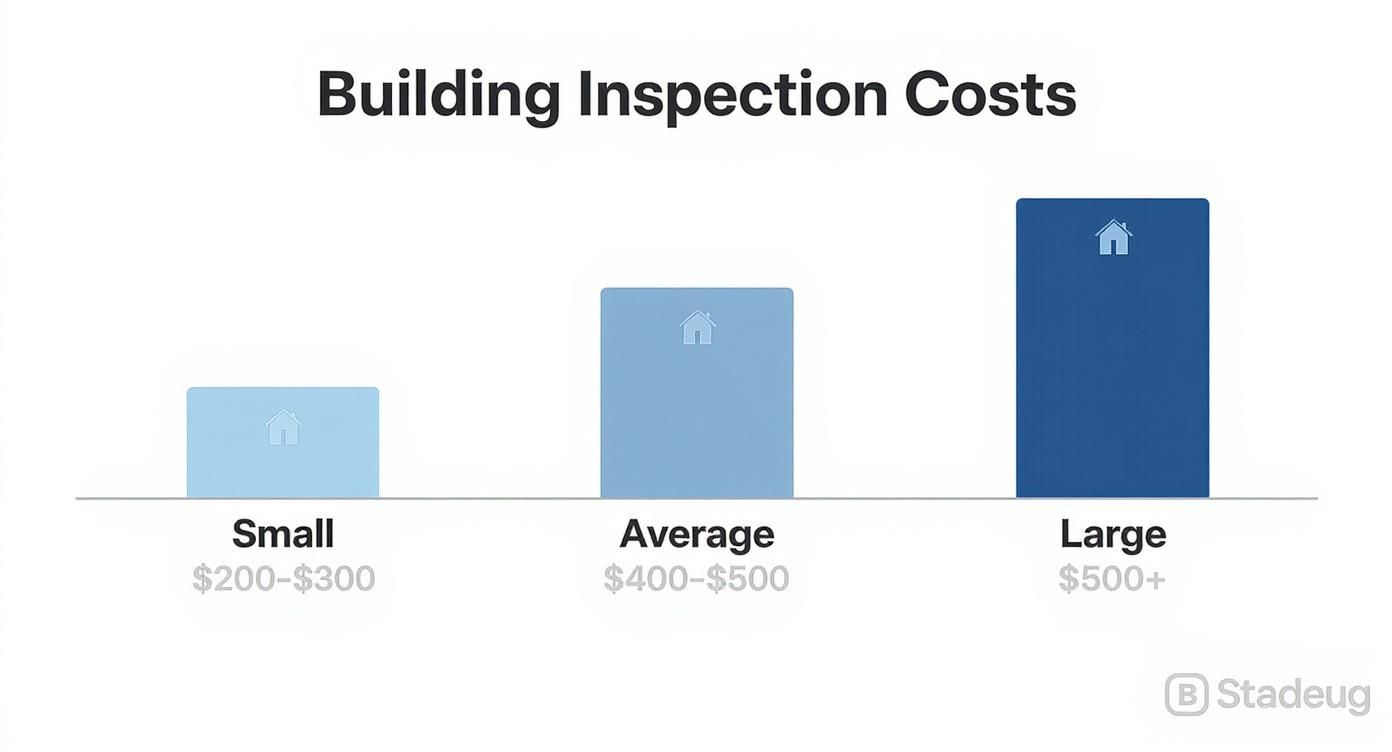
As the chart shows, the price scales logically with the property's size, reflecting the increased time and effort required for a comprehensive inspection. This framework helps you set realistic budget expectations, whether you're eyeing a compact unit in Mandurah or a sprawling family home in the Perth hills.
Ever wondered why you can get two wildly different quotes for what seems like the same job? It's a common head-scratcher. But when it comes to pre-purchase building inspections, the cost is rarely a one-size-fits-all fee. It’s a tailored calculation, carefully worked out based on the unique character of the property you’re looking to buy.
Think of it less like an off-the-shelf product and more like a bespoke service. Each house has its own story and its own set of potential challenges, and the price reflects the time and expertise needed to uncover them.
The biggest driver of your quote is, unsurprisingly, the property's size and type. A compact two-bedroom apartment has a much shorter checklist than a sprawling five-bedroom house with a shed, a granny flat, and a pool. Your inspector needs to allocate enough time to cover every square metre, from the roof cavity right down to the sub-floor, so a larger footprint naturally means more work and a higher fee.
Property Age and Construction Complexity
Beyond just the sheer size, a property’s age plays a massive part in the final price. An older character home, for instance, is a different beast entirely and often demands a more intricate investigation. These homes may have seen various renovations over the decades, feature outdated construction methods, or contain materials that require a specialist’s eye.
An inspector might need to spend a lot more time checking for common age-related gremlins like deteriorating foundations, old-school wiring, or original plumbing systems that are nearing the end of their life. It's a stark contrast to a modern build, which is usually a more straightforward assessment against current building codes.
A professional quote is a direct reflection of the time, risk, and expertise needed to do the job properly. It’s a sign that you’re getting a comprehensive deep-dive, not just a quick walkthrough.
The complexity of the build itself also has an impact. A simple, single-storey brick home is far easier to get around than a multi-level home with a complex roof design or funky architectural features. Every unique element adds another layer to the inspection puzzle.
Access and On-Site Challenges
Finally, there are the practical, on-the-ground factors that directly affect the pre purchase building inspection cost. To give you a complete report, an inspector needs to be able to safely get into all the key areas of the property. If they can't, you're left with blind spots.
A few common access issues can bump up the quote:
- Steep or High Roofs: These often call for special safety gear like harnesses or even drones to inspect properly without risking life and limb.
- Restricted Crawl Spaces: Super low or tight sub-floor areas can make it incredibly difficult and time-consuming to check for dampness, pests, or structural problems.
- Outbuildings and Granny Flats: Every separate structure on the block—sheds, workshops, studios—has to be assessed on its own merits, adding to the total inspection time.
These variables help explain why quotes can differ so much. A standard inspection will always cover core areas like the structure, roof, drainage, and signs of dampness, all compiled into a detailed report with recommendations. If you want to see exactly what you’re paying for, you can explore a full breakdown of what a typical inspection report includes in Australia to really understand the value behind the price.
What’s Actually in Your Standard Inspection Report?
When you fork out for a pre-purchase building inspection, you’re not just paying for a quick walk-around. You’re buying peace of mind. The report you get back is a comprehensive breakdown of the property’s health, giving you the hard facts you need to make a smart financial decision. Think of it as your roadmap, highlighting the good, the bad, and the areas that need a closer look.
So, what exactly is the inspector hunting for? Imagine them as a property doctor, giving the house a full physical. They systematically go through all the visible and accessible parts of the home, from the roof to the foundations, looking for red flags that an untrained eye would almost certainly miss.
Core Components of the Inspection
A standard report gives you a thorough evaluation of the property's main structures and systems. The inspector follows a methodical checklist to make sure nothing gets overlooked.
Here are the key areas they’ll always cover:
- The Building Exterior: This is all about checking the walls for cracks or signs of movement, assessing the state of windows and doors, and looking over structures like verandas, patios, and balconies.
- The Roof Exterior: The inspector will get a good look at the roof material (tiles, tin, etc.), gutters, downpipes, and flashings to spot any deterioration or potential water damage.
- The Roof Space: Up in the roof cavity, they’re checking the timber framing, insulation, and searching for any sneaky leaks that might not be visible from the outside.
- The Building Interior: Every single room is examined for defects. This includes things like cracking walls, sagging ceilings, or problems with the flooring.
- The Sub-Floor Space: This is a crucial one. Under the house, inspectors look for foundation issues, poor drainage, dampness, and, of course, timber pests.
The inspector’s mission is to pinpoint any significant defects, safety hazards, and unapproved building work that could turn into a major headache down the track. For a more detailed look at what gets checked, our comprehensive home inspection checklist for Australia breaks it down room by room.
What's Typically Not Included
Knowing the limits of a standard inspection is just as important as knowing what it covers. It helps you manage your expectations and figure out if you need to call in other specialists. At its core, a standard building report is a visual inspection of the property's condition on that particular day.
A building inspection is designed to find significant structural defects and major safety issues, not to test every light switch or tap. It provides a broad overview of the home's health, flagging areas that may need a specialist's attention.
Because of this, certain things are generally not part of the deal. These often require a licensed tradie to give a proper assessment.
Common Exclusions:
- Appliance Functionality: The inspector won't be testing the oven, dishwasher, or air conditioning units to see how well they work.
- Electrical Systems: While they’ll note obvious hazards, a deep dive into the wiring and circuits requires a licensed electrician.
- Plumbing and Gas: A plumber is needed for in-depth checks of pipes, drains, and gas fittings.
- Pest Infestations: A standard report will mention visible signs of timber pests, but a separate, specialised pest inspection is always highly recommended.
Understanding these boundaries helps you see the complete picture. The report arms you with the vital info to decide if the property is a solid investment or if you need to dig a bit deeper with specialist trades before you sign on the dotted line.
When to Invest in Specialist Inspections
Think of a standard building inspection as a thorough check-up with your GP. It gives you a fantastic, big-picture view of a property's overall health. But sometimes, that check-up flags a symptom that needs a specialist's opinion.
When your initial report mentions something that makes your gut clench, that's your cue to dig deeper before you commit.
Ignoring these red flags is a massive gamble. A vague note about "potential termite activity" or "significant wall cracking" isn't something you can just gloss over. This is exactly when a specialist inspection shifts from a "nice-to-have" to an absolute must-do. It's about swapping out that nagging uncertainty for cold, hard facts.
This extra step gives you the detailed analysis you need to understand the true scope of the problem and the real pre purchase building inspection cost to fix it. That's powerful leverage when it comes time to negotiate.
Common Specialist Inspections and Their Costs
When your standard report highlights specific concerns, several specialists can give you the clarity you need. Each one is an expert in their field, offering a level of detail that goes way beyond a generalist's assessment.
Here are some of the most common specialist reports you might end up needing:
- Combined Building and Pest Inspection: This is easily the most popular add-on. For an extra $100 to $250, a licensed pest inspector will do a deep dive, hunting for timber pests like termites, borers, and wood decay fungi.
- Structural Engineer’s Report: If the inspector finds major cracks, foundation movement, or sagging structures, getting a structural engineer involved is essential. You can expect to pay between $600 and $1,200 for their expert opinion on the building's structural integrity.
- Electrical Safety Inspection: An electrician can check the switchboard, wiring, and outlets for safety and compliance. This usually costs between $200 and $400 and is an absolute lifesaver for older homes with dated systems.
- Plumbing and Drainage Inspection: For those slow drains or mysterious water stains, a plumber can use a CCTV drain camera to see exactly what’s happening inside the pipes. This can set you back anywhere from $300 to $600.
If you're looking at a property managed by a body corporate, it’s also smart to understand the building's shared history and financial health. Learning what is in a strata report can uncover upcoming special levies or past major works that could directly impact your investment.
Bundling a pest inspection with your building report is almost always the most cost-effective move. Most firms will offer a discount for the combined service, saving you both time and money while covering the two biggest risks for any property buyer.
At the end of the day, while these specialised services add to your upfront costs, they provide priceless protection. Bundling a pest inspection might add $100 to $150, but a standalone, comprehensive termite inspection could go as high as $750. A structural engineer’s report can cost $600 to $1,200 or more, but that’s a small price to pay when you consider it could help you dodge a six-figure repair bill down the track.
Right, so the building inspection report has just landed in your inbox. It's easy to see it as just a final health check on the property, but experienced buyers know it's something more: it's your single most powerful negotiation tool.
This is where you shift gears. Stop thinking about it as just a list of problems and start seeing it as concrete evidence that can save you thousands. The report transforms a potentially emotional chat with the seller into a straightforward, factual discussion about the property's true value.
Of course, you need to know which battles to pick. A dripping tap or a cracked bathroom tile? That’s a weekend fix, not a reason to go back to the negotiating table. But when your report flags major issues like active water leaks, significant structural cracks, or a roof that's seen better days—those are high-cost problems that absolutely justify reopening the conversation.
Prioritising Your Negotiation Points
Before you even think about picking up the phone to the agent, grab a coffee and categorise the issues from the report. This isn't just about making a list; it's about building a clear, logical case that’s easy for the seller to understand.
- Major Defects (Your High-Priority List): These are the showstoppers. We're talking about things like structural movement, widespread damp, or unapproved extensions that could cause headaches down the line. These are your strongest bargaining chips.
- Minor Defects (Good to Know): This bucket is for general wear and tear. Think stiff window frames, cosmetic marks on the walls, or a loose door handle. While you'll want to add them to your to-do list after you move in, they rarely justify asking for a price drop.
Getting this sorted first means you can walk into the negotiation with confidence, focusing only on the items that genuinely impact the property's value and safety.
Choosing Your Negotiation Strategy
With your priority list sorted, you've got three clear paths you can take. Which one you choose really depends on how serious the problems are, how motivated the seller is, and whether you're up for managing repairs yourself.
-
Request a Price Reduction: This is the most common route. Get a couple of quotes from qualified tradies for the major defects flagged in the report. If a roofer quotes you $8,000 to fix a failing roof, you can present that quote to the agent and ask for that exact amount off the purchase price. It’s hard to argue with a formal quote.
-
Ask the Seller to Complete Repairs: If you'd rather not deal with the hassle of repairs yourself, you can ask the seller to get the major issues fixed before settlement. This needs to be written into the contract as a special condition, spelling out exactly what work needs to be done and the standard it must be completed to.
-
Walk Away from the Deal: Sometimes, the problems are just too big or too expensive. If the inspection uncovers massive structural damage or a can of worms you simply don't have the budget to fix, your building inspection clause is your get-out-of-jail-free card. It allows you to terminate the contract and get your deposit back, no strings attached.
Think of it this way: a basic inspection might spot cosmetic flaws, but a proper structural inspection can uncover foundation issues that could cost you five or even six figures to fix later on. Skipping this step is a huge gamble, and the report is your best insurance policy. To get a better sense of this, you can discover more insights about the demand for professional building inspectors and their impact.
Why the Cheapest Inspector Is a Costly Mistake
Choosing a building inspector based on price alone is one of the biggest—and potentially most expensive—gambles you can make when buying a property. It’s tempting, I get it. You're already juggling a deposit, stamp duty, and a dozen other costs, so a cheap inspection looks like a smart way to save a few hundred dollars.
But this isn't the place to cut corners. Your inspector is your last line of defence against buying a home riddled with hidden, wallet-draining problems.
Think of it this way: a cheap inspection is like a doctor who only checks your temperature but skips the blood pressure and heart rate check. They might give you a clean bill of health, but they’ve missed the critical data that could reveal a serious underlying condition. A proper inspector gives you the full diagnostic, leaving no stone unturned to reveal the true health of the property.

Hallmarks of a Qualified Inspector
When you’re looking at the pre purchase building inspection cost, remember you're paying for expertise, not just a piece of paper. A true professional is a property detective, armed with the experience and tools needed to spot issues an untrained eye would easily miss.
Here are the non-negotiables to look for in any inspector you consider:
- A Registered Builder’s Licence: This is crucial. It proves they have hands-on construction experience and a deep understanding of how a home is actually put together.
- Professional Indemnity Insurance: This protects you if something goes wrong. It’s a clear sign of a legitimate, professional business that stands by its work.
- Extensive Local Experience: An inspector who knows Mandurah and WA inside-out understands the common problems tied to our local climate, soil conditions, and building styles.
- Sample Reports: Any reputable inspector will be happy to share examples of their reports. Look for ones that are detailed, easy to understand, and packed with clear photos.
Be wary of those bargain-basement inspections advertised for under $300. These are a major red flag. Often, they’re offered by inspectors who don't have a building background or the proper licensing. This dramatically increases the risk of them missing major structural defects, hidden water damage, or termite activity—issues that could leave you with tens of thousands of dollars in repair bills down the track. You can learn more about how inspector qualifications impact costs to see why paying for expertise makes sense.
The right expertise isn’t an expense—it’s your best protection against buying a money pit. The higher fee covers the inspector's training, insurance, and the time required for a truly comprehensive assessment.
Your Pre Purchase Inspection Questions Answered
Buying a property brings a flood of questions, and when it comes to the pre-purchase building inspection, you want crystal clear answers. It’s a critical step, and knowing what to expect is key to moving forward with confidence. Let's tackle some of the most common queries we hear from buyers.
Can I Attend the Pre Purchase Building Inspection?
Absolutely—in fact, we highly recommend it. While you don't need to be there for every minute, making yourself available for the inspector's final wrap-up is incredibly valuable.
Being there in person allows you to see any potential issues with your own eyes and ask important questions right on the spot. It gives you a much deeper understanding of the property's condition than a written report ever could.
How Quickly Will I Receive the Inspection Report?
A true professional will get a comprehensive digital report over to you within 24 hours of the inspection. This should be packed with high-resolution photos and detailed notes explaining their findings.
This quick turnaround is vital. Your purchase contract usually includes an inspection clause with a tight deadline, often just 7 to 14 days, so every day counts.
A prompt and thorough report is a sign you’re dealing with a top-notch inspector. It gives you the time you need to digest the findings, get quotes for any necessary repairs, and make a smart decision before your deadline runs out.
Do I Really Need an Inspection for a New Home?
Yes, it's one of the smartest things you can do. A handover inspection on a brand new build is your last line of defence. It’s designed to catch defects, incomplete work, or sloppy workmanship that often go unnoticed by the average person.
Think of it as your final opportunity to hold the builder accountable. They are contractually obligated to fix these issues before you officially take the keys and the property becomes your responsibility.
Navigating the Mandurah property market takes local knowledge and a steady hand. If you're ready to make your next move with confidence, get in touch with David Beshay Real Estate for a free property appraisal and expert guidance.


Pingback: New House Checklist: 10 Mandurah Move-In Steps - David Beshay Real Estate - Beshay Realty