


Kicking off the home selling journey means getting your property looking its best, figuring out what it's worth, and picking the right person to guide you through it all. It’s a mix of strategic preparation and smart financial moves designed to get you the best possible price in today’s market.
Laying the Groundwork for a Smooth Property Sale
Starting the process of selling your home can feel massive, but when you break it down into smaller, manageable steps, it goes from overwhelming to completely doable. A successful sale isn’t just about putting a sign up; it’s about creating a solid foundation through careful prep work that grabs the attention of serious buyers from day one.
This early stage is your best shot at making a killer first impression. Put yourself in a buyer’s shoes. When they walk through that door, you want them to see their future, not your past.
This is more than just a quick tidy-up. It's about creating a neutral, inviting space. Here’s what that usually involves:
- Meaningful Decluttering: This isn't just surface cleaning. It’s about depersonalising the rooms, clearing off every countertop, and making sure the cupboards are neat. Trust me, potential buyers will peek inside closets.
- Tackling Critical Repairs: That leaky tap you’ve been ignoring? The small scuff on the wall? Now’s the time to fix them. Small issues can add up in a buyer's mind, making them think there's a long list of projects waiting for them.
- Boosting Kerb Appeal: First impressions happen before anyone even steps inside. A freshly mown lawn, sparkling clean windows, and a welcoming entryway can make a world of difference.
Are You Really Ready to Sell?
Beyond getting the house ready, you need to check in with yourself. This means getting your financial and emotional ducks in a row. Have you thought about the costs of selling? Do you know where you’re moving next? Answering these questions early on saves a lot of last-minute stress.
The Australian property market has been on a steady climb. The median home value recently hit AUD 815,912, which is a 6.55% jump in just one year. This is largely because housing supply is tight—only about 165,000 new homes were started in the last year, which creates a competitive buzz among buyers. These market conditions can definitely work in your favour, but you need to understand them to time your sale just right.
Selling a home is as much an emotional journey as it is a financial one. Getting yourself mentally prepared for the ups and downs helps you make clear-headed, logical decisions when the offers start rolling in.
Creating Your Pre-Listing Checklist
A simple checklist will keep you organised and on track. Before you even think about calling an agent, try to get these things done:
- Gather Your Documents: Find your property title, recent council rate notices, and any compliance certificates for renovations or additions you've done.
- Do a Deep Clean: This means carpets, windows, and all those spots you usually forget, like skirting boards and light fittings.
- Depersonalise Your Space: Take down the family photos and personal mementos. You want buyers to imagine their life in the home, not yours.
- Start Researching Agents: Finding the right partner is probably the most important step of all. A great agent offers expert advice right from the start. To get a handle on what to look for, you can check out our detailed guide on how to choose a real estate agent.
By getting on top of these foundational tasks, you’re not just preparing a house for sale—you’re creating a compelling product for the market. This proactive approach smooths out potential bumps in the road and sets you up for a successful and profitable sale.
How to Price Your Home for a Competitive Market
Pricing your home correctly is probably the single most important decision you'll make when you decide to sell. It's a real balancing act. If you price it too high, you risk your property sitting on the market, invisible to buyers who have set their search filters just below your asking price. Go too low, and you could be leaving serious money on the table.
This is where we cut through the noise of those instant online valuers and gut feelings. Finding that sweet spot isn't guesswork; it's a careful blend of hard data, local market knowledge, and a bit of strategy to attract immediate interest and get strong, competitive offers rolling in from the get-go.
The groundwork you lay before even thinking about a price is what truly sets you up for success.
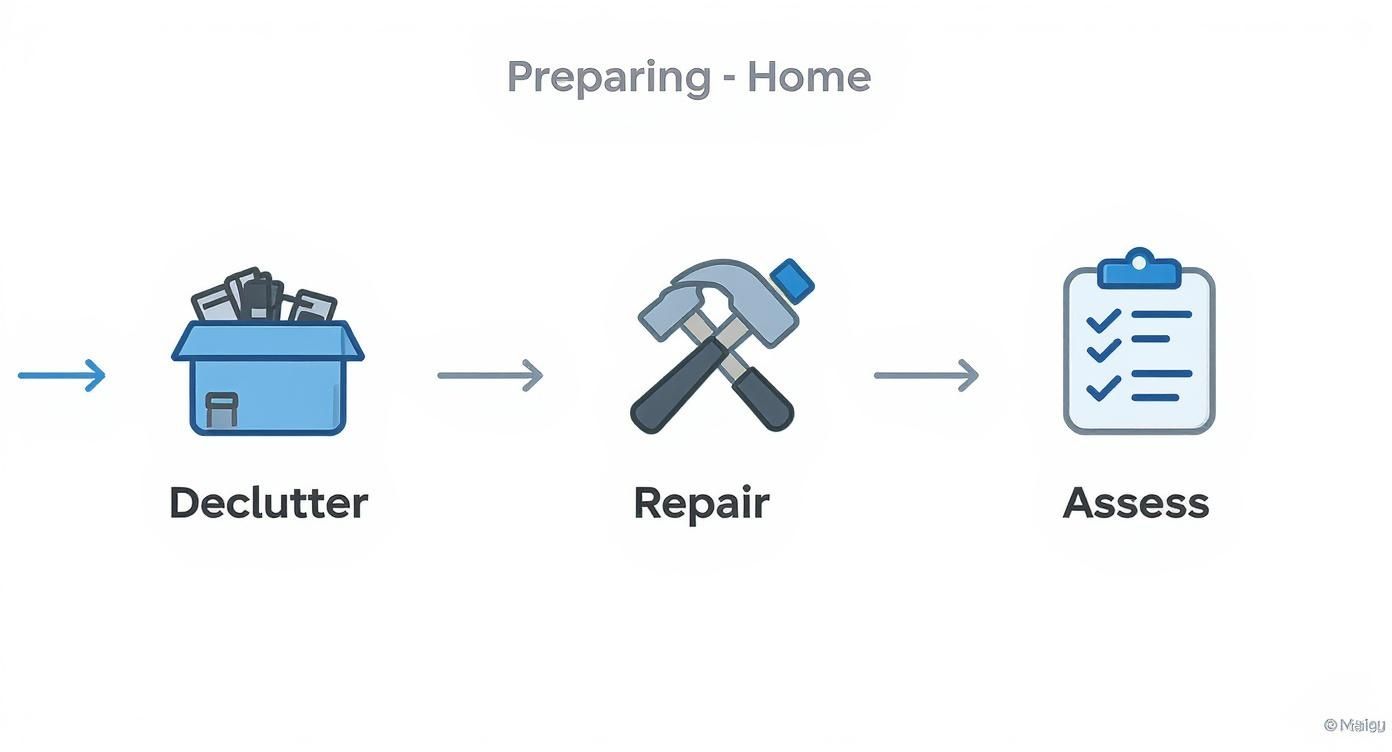
As you can see, simple actions like decluttering, tackling those little repairs, and taking an honest look at your home's condition all directly feed into its market value and, ultimately, the pricing strategy we build together.
Understanding Your Market Analysis
A proper property appraisal is so much more than a quick price estimate. Think of it as a deep dive into exactly where your home fits within the current Mandurah market. A good agent doesn't just pull a number out of a hat; we build a pricing strategy based on a few key pillars.
These include:
- Recent Comparable Sales: This is our best indicator of value. We look at what similar homes in your immediate neighbourhood have actually sold for recently. I’m talking about properties with a similar land size, number of bedrooms, and overall condition to create a solid baseline.
- Active Competition: What else is for sale right now in your suburb? Knowing your direct competition helps us position your property to stand out, whether that's on price, presentation, or those unique features your home has.
- Broader Market Dynamics: We also have to look at the bigger picture. Things like interest rates, how many buyers are out there, and the general economic health all create the environment we're selling in.
The Australian property market has been incredibly dynamic. To give you an idea, recent data from the Australian Bureau of Statistics showed the total value of all residential dwellings shot up by AUD 213.8 billion to hit a massive AUD 11.564 trillion. Western Australia, in particular, saw a strong quarterly rise of 2.7%, which shows just how robust the current conditions are for sellers.
Factors That Directly Influence Value
While the market data gives us the context, it’s the specifics of your property that really dial in the final price. Buyers in Mandurah aren't just looking for a house; they're buying a lifestyle.
Here’s what really moves the needle on your home's price:
- Location: Being close to good schools, the beach, shops, and transport is always a massive plus.
- Condition and Age: It’s simple—a well-looked-after, modernised home will always fetch a higher price than one that needs a lot of work. Buyers are mentally adding up the cost of renovations.
- Size and Layout: The square meterage, number of bedrooms, and the overall flow of the home are fundamental. An open-plan living area, for example, is almost always in high demand.
- Unique Features: Do you have a fantastic outdoor entertaining area? A workshop? That coveted side access for a boat or caravan? These are the standout features that justify a premium price.
Setting a realistic, data-backed price from day one is the most effective marketing tool you have. It ensures your property is seen by the largest pool of qualified buyers and creates a sense of urgency that often leads to faster, better offers.
At the end of the day, pricing is a strategic decision, not an emotional one. A thorough, honest evaluation is the first step towards a great result. To see how this works in more detail, have a look at our guide on what a property appraisal involves and how it gives you the power to make an informed choice. By combining market intelligence with your home’s unique strengths, we can build a pricing strategy that gets the job done.
Nailing the Presentation and Marketing of Your Property
Once we’ve locked in a smart pricing strategy, it’s time to move into the most creative part of the selling process: crafting a marketing campaign that potential buyers simply can't ignore.

In today's highly visual market, the quality of your home's presentation is everything. It's the difference between someone booking a viewing or just scrolling on by. This is where we make your home a must-see property.
Our focus is on creating an emotional connection with buyers before they even set foot through the door, making it easy for them to picture their future life within its walls.
The Art of Staging Your Home for Success
Staging is one of the most powerful tools we have. It’s not about covering up flaws; it’s about showcasing your home’s best features and highlighting its true potential. We want to create a clean, welcoming, and stylish space that appeals to the widest possible audience.
It’s amazing how a few simple changes can dramatically lift a property's perceived value. Think of it as setting the stage for a great story—the story of the next owner's life in your beautiful home.
Here are the core principles I always advise my clients to follow:
- Depersonalise: Buyers need to be able to see themselves living in the space. That means temporarily packing away family photos, unique collections, and bold artwork to create a more neutral canvas for their imagination.
- Declutter: This is more than just a quick tidy-up. We're talking clear kitchen and bathroom benchtops, removing excess furniture to make rooms feel bigger, and organising cupboards to show off all that great storage space.
- Define Your Spaces: Every room should have a clear, single purpose. If you've got an awkward nook, let's stage it as a cosy reading corner or a small home office. Show buyers how every square metre can be used effectively.
Creating a Killer First Impression Online
Long before anyone decides to visit in person, they’ll have thoroughly checked out your property online. Your listing is essentially your 24/7 open home, so high-quality visuals are absolutely non-negotiable.
A well-known study found that homes with professional photography sell 32% faster than those without. It's an investment that pays for itself by grabbing more buyer interest right from the get-go.
We go way beyond just standard photos to build a complete digital showcase. A modern marketing plan that gets results includes a few key elements:
- Professional Photography: We bring in expert photographers who know all the tricks of lighting, angles, and composition to make every room look its absolute best.
- Engaging Videography: A walk-through video or drone footage offers a dynamic perspective that photos just can't match. It’s perfect for highlighting the property's flow and unique features.
- Compelling Listing Descriptions: The words we use are just as important as the images. We'll tell a story, painting a picture of the lifestyle your home offers—from morning coffees on the patio to weekend strolls to nearby parks.
- Targeted Social Media Campaigns: We don't just sit back and wait for buyers. We actively push your listing on platforms where engaged buyers are already spending their time, using targeted ads to reach people with the right interests and demographics.
By combining meticulous staging with a robust digital marketing strategy, we ensure your property doesn't just blend in—it stands out in the Mandurah market. This approach isn't just about attracting more viewers; it's about attracting the right viewers—motivated buyers ready to make a serious offer.
Navigating Offers and Negotiation Strategies
Receiving that first offer is an exhilarating moment. All the hard work has paid off. But this is where a cool head and a clear strategy become your most valuable assets. The negotiation phase is a delicate dance, and understanding the steps is key to turning that initial interest into a successful, binding contract that works for you.

It’s never just about the dollar figure. A strong offer is a complex document with several moving parts that all need careful consideration. Let's break down what you'll be looking at.
Deconstructing a Purchase Offer
When an offer lands in your inbox, it will detail much more than the proposed price. Each component can impact the deal's strength and, ultimately, your final outcome.
Here’s what you need to scrutinise:
- The Price: This is the obvious starting point, but it should always be viewed in the context of the other terms.
- Deposit Amount: A larger deposit often signals a more serious and financially secure buyer, which significantly reduces the risk of the deal falling through.
- Finance Clause: Most offers are 'subject to finance'. A shorter timeframe for the buyer to secure their loan is generally better for you, as it minimises your time in limbo.
- Settlement Date: Does their proposed date align with your own timeline for moving? A buyer who can be flexible here is a huge advantage.
- Special Conditions: This could include anything from a building and pest inspection to the sale of their own property. Fewer conditions typically mean a stronger, cleaner offer.
The strongest offer isn't always the highest. An unconditional cash offer for slightly less might be far more attractive than a higher offer tied to multiple complex conditions that could cause delays or collapse the sale entirely.
Evaluating Multiple Offers
In a competitive market like Mandurah's, you may find yourself in the fortunate position of having several offers on the table. This is where an agent's expertise really shines. We’ll lay them all out, comparing not just the price but the overall strength and risk profile of each one.
A common scenario is weighing a top-dollar offer with a lengthy finance clause against a slightly lower offer from a pre-approved buyer. The pre-approved buyer presents significantly less risk, which can often be worth more than a few thousand extra dollars in the long run.
The current market dynamics play a big role here. Recent data shows a fascinating tension: while new home sales saw a slight dip, building permits have surged by 15.3% year-on-year. This supply-demand imbalance keeps the market competitive. It’s essential to understand buyer behaviour within this context, and you can get more details on these Australian residential market trends to see how they might affect your sale.
Crafting a Winning Counter-Offer
If an offer is close but not quite right, a counter-offer is your next move. This isn't about starting a battle; it's about finding that sweet spot where both parties feel they've achieved a great outcome. Your counter-offer can adjust any of the original terms—not just the price.
For example, you might accept the buyer's price but propose a shorter settlement date that suits your needs better. Or, you could agree to their requested settlement date in exchange for them removing a particular condition. The key is to negotiate on the terms that are most important to you while remaining reasonable enough to keep the buyer engaged.
This strategic back-and-forth is a normal part of the process. With clear communication and an experienced negotiator on your side, you can navigate this final hurdle with confidence, securing a fantastic result that lets you move forward to your next exciting chapter.
Your Essential Settlement and Closing Checklist
Accepting an offer is a huge moment, but the journey isn't quite over. Now, we move into the settlement period—that final, crucial phase where all the legal and financial threads are tied up before you hand over the keys.
Think of this stage as the administrative sprint to the finish line. It’s a well-defined process handled by professionals, and your main job is to stay organised, responsive, and ready for closing day. A bit of planning here ensures a smooth handover, free from any last-minute surprises.
The Role of Your Conveyancer or Settlement Agent
Once the contract is signed by both you and the buyer, it's legally binding. This is when your conveyancer or settlement agent really steps up to manage the official transfer of ownership. They are the independent experts making sure every legal box is ticked, representing your interests right through to the end.
Their core jobs include:
- Liaising with the Buyer's Team: They'll be in constant contact with the buyer's settlement agent and their bank to make sure everything is tracking on schedule.
- Conducting Property Searches: They run all the necessary checks to confirm there are no outstanding issues or claims against your property's title.
- Managing Financial Adjustments: They calculate and adjust for things like council rates, water rates, and strata levies, so you only pay for the exact period you owned the property.
- Arranging Mortgage Discharge: They work directly with your bank to prepare the formal discharge of your existing home loan, ensuring it's paid out on settlement day.
Your main task is simply to provide them with any documents they ask for promptly and sign the transfer papers when it's time. Good, clear communication with your settlement agent is key.
Understanding the Financials of Closing
While your settlement agent is doing the legal heavy lifting, you need to have a clear picture of the numbers. This is where all the final costs are tallied up and the proceeds from your sale are calculated.
The settlement statement you receive from your conveyancer is the most important financial document in this phase. It provides a clear, itemised breakdown of all incoming funds and outgoing payments, showing you the exact net amount you will receive.
Here are the key financial elements to be aware of:
- Mortgage Payout: The biggest deduction will usually be the final payout figure for your existing mortgage. Your conveyancer sorts this out directly with your bank.
- Agent Commission and Fees: The real estate agent's commission and any outstanding marketing costs are typically paid from the sale proceeds at settlement.
- Legal and Settlement Fees: Your conveyancer's professional fees will also be deducted.
- Capital Gains Tax (CGT): If the property you sold was an investment, you might be up for Capital Gains Tax. It's crucial to have a chat with your accountant to understand what you owe. This isn't handled by the settlement agent but will impact your next tax return.
Your Pre-Settlement Checklist
As closing day gets closer, your focus will shift to the practical side of handing over the property. The buyer is entitled to a final inspection, usually in the week before settlement, just to make sure the home is in the same condition as when they first saw it.
To prepare for a seamless handover, run through this checklist:
- Leave the Property Clean: The home should be left in a reasonably clean and tidy state. A professional clean can be a great investment for peace of mind.
- Remove All Belongings: Double-check you haven't left anything behind unless it was specifically included in the sale contract.
- Organise Keys and Remotes: Gather up all the keys—including for windows and the mailbox—plus any garage door remotes. These will be given to the real estate agent on settlement day.
- Disconnect Utilities: Arrange for your electricity, gas, and internet to be disconnected or moved to your new address. Just remember to leave the power on for the buyer's final inspection.
- Cancel Home Insurance: Once settlement is officially complete and the property is no longer legally yours, you can go ahead and cancel your home and contents insurance policy.
Navigating this final phase is all about clear steps and good organisation. For a more detailed look at the mechanics of this stage, explore our guide on what settlement in real estate involves for a deeper understanding. With careful preparation, you can close your sale confidently and celebrate a successful result.
Got Questions About Selling Your Home? We've Got Answers
Even with the best game plan, selling your home will always bring up a few questions along the way. It's completely normal. Think of this section as a chat with an expert, tackling those "what if" and "how long" queries that pop up for most Mandurah sellers.
These are the practical, real-world questions that can make or break your confidence. Getting them answered upfront keeps the process smooth and stress-free.
How Long Does It Actually Take to Sell a House?
This is the big one, and honestly, the answer isn't set in stone. Every home is different. But in the current Mandurah market, you can generally expect your home to be listed for about 30 to 60 days before you accept the right offer.
After that, you've got the settlement period. This is the time between signing the contract and handing over the keys, and it typically adds another 30 to 90 days to the timeline. Of course, a well-presented home priced sharply from day one can definitely move faster, sometimes getting snapped up in the first couple of weeks.
What speeds things up or slows them down? It usually comes down to three things:
- Property Condition: A home that's ready for someone to move straight into will always create more urgency.
- Price Point: Nailing the price from the get-go is crucial. It ensures you're on the radar of serious, qualified buyers immediately.
- Marketing Effectiveness: Amazing photos, a story that connects, and getting your listing in front of the right people builds momentum fast.
Working with an agent who knows the local market inside and out is the best way to get these factors aligned and cut down your time on the market.
What Are the Biggest Mistakes I Should Avoid When Selling?
Knowing what not to do is just as important as knowing what to do. The most common slip-ups we see are almost always preventable with a bit of forward-thinking.
The absolute number one mistake? Overpricing the property right out of the gate. It's the quickest way to kill your campaign. That initial flood of buyer interest is gold, and if your price is too high, you miss it completely. Homes that start too high often end up sitting on the market, needing price drops that make buyers suspicious.
Another huge one is skipping over essential repairs or decluttering. Small, nagging issues and cluttered rooms can make a home feel less valuable, both online and during a walkthrough. Buyers have a mental calculator running, adding up the cost of every little job they'll have to do.
Finally, getting too emotional during negotiations can cloud your judgment. It's tough, but you have to treat the sale like a business deal. Lean on your agent to handle the back-and-forth logically and keep the end goal in sight.
Is Professional Home Staging Really Worth the Money?
While it's not something you have to do, professional staging is one of the most powerful marketing tools you can use. It's about so much more than just making a house look pretty. It's about creating a feeling, an emotional tug that helps buyers genuinely see themselves living there.
Time and time again, industry data shows that staged homes don't just sell faster—they often fetch a higher price than similar, non-staged properties. The money you invest in staging usually comes back to you, and then some.
Even a little bit of staging can make a world of difference. It could be as simple as decluttering, rearranging furniture to make rooms feel bigger, and adding some neutral, modern touches. This is what creates that "wow" factor in your online photos and makes your open homes unforgettable. It gives you a serious edge.
What Are the Main Costs I Need to Budget For?
Knowing exactly where your money is going is key to a stress-free sale. The main expenses are pretty straightforward, and there shouldn't be any hidden surprises.
You’ll typically need to budget for:
- Real Estate Agent's Commission: This is your biggest cost and is calculated as a percentage of the final sale price.
- Marketing and Advertising: This covers things like professional photos, floor plans, and promoting your listing on major websites.
- Legal and Conveyancing Fees: This is what you pay your settlement agent to handle all the legal paperwork for transferring ownership.
On top of these, you might have some smaller upfront costs for minor repairs or staging to get your home looking its best. You'll also need to pay out the remaining balance on your mortgage, and some banks charge a discharge fee for this. The best thing to do is ask your agent and conveyancer for a detailed breakdown of costs right at the start. That way, you know exactly what to expect on settlement day.
Ready to move forward with your home sale, backed by real expertise? At David Beshay Real Estate, we build tailored strategies that get results in Mandurah. Get your free, no-obligation property appraisal today!

