


When you're buying or selling a property, "settlement" is the term you'll hear for the grand finale. It's the official, final step where the deal is sealed, money changes hands, and ownership is legally transferred.
Think of it as the moment everything you've worked for comes together. The buyer pays the remaining balance for the property, and in return, the seller hands over the legal title. All the legal and financial threads are finally tied up.
What Is Settlement in Real Estate
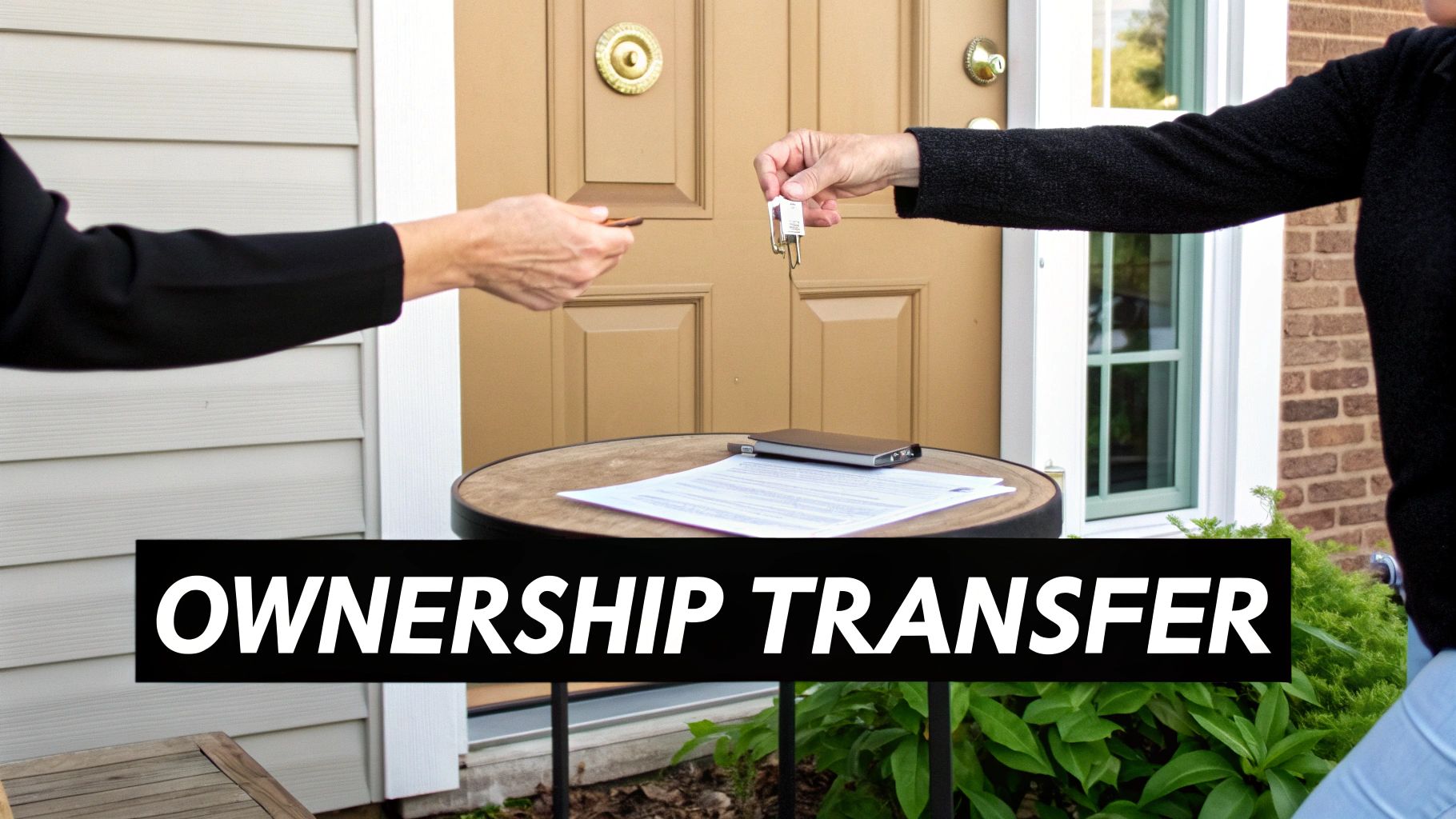
Imagine a carefully planned exchange. On one side of the table, you have the funds ready to buy your dream home. On the other, the seller holds the legal title—the proof of ownership. Settlement is the formal process where these two are swapped. It's the exact point you officially become the new legal owner.
This crucial event is the culmination of a journey that starts the moment the purchase agreement is signed. If you want to get your head around the initial paperwork that kicks everything off, you can learn more about what is a contract of sale in our detailed guide. Everything leading up to settlement day is just preparation for this final handover.
The Core Exchange Explained
The entire settlement process is meticulously designed to ensure the transfer is secure and legally airtight. At its heart, it really only accomplishes two main things:
- For the Buyer: You receive a clear, unencumbered title to the property. This means it's free from any of the seller's old debts or mortgages, confirming your undisputed ownership.
- For the Seller: They receive the agreed-upon sale price in full, officially ending their financial connection to the property.
Think of it as the ultimate checkout counter for a home. The property is scanned, the final payment is made, and you walk away with the keys and a receipt—the property title—proving it's now yours.
This simple table breaks down the key actions that take place on settlement day and what they mean for everyone involved.
The Settlement Exchange at a Glance
| Action | What It Means for the Buyer | What It Means for the Seller |
|---|---|---|
| Final Funds Transfer | The remaining purchase price (plus any adjustments) is paid from your bank to the seller. | The full sale price is received, clearing any outstanding mortgage on the property. |
| Title Transfer | The property's legal title is officially registered in your name with Landgate. | Your name is removed from the title, and you no longer have any legal claim to the property. |
| Key Handover | The real estate agent is authorised to release the keys, and you can take possession. | You've officially handed over the property and can no longer access it. |
| Rates & Utilities Notified | Local councils and utility providers are notified of the change in ownership. | You're no longer responsible for future rates, water bills, or other property charges. |
At the end of the day, settlement is the legal mechanism that makes the dream of homeownership a reality, ensuring both buyer and seller get exactly what they agreed to in the contract.
Why Is Settlement Such a Big Deal?
It’s easy to think of settlement as just the final bit of paperwork, but it’s so much more than that. The real estate settlement process is the legal bedrock that protects everyone involved in a property sale. It’s not just an administrative chore; it's the official, legally binding event that cements you as the new owner and secures what is likely your biggest investment.
This process gives both the buyer and the seller complete financial and legal certainty. For sellers, it’s their guarantee they'll get paid in full and be officially freed from obligations like their old mortgage. For buyers, it’s your absolute assurance that you’re receiving a clear and undisputed title to the property. No lingering claims, no nasty surprises.
Securing Your Legal Ownership
Think of settlement as the final, non-negotiable safeguard against any future arguments or potential fraud. It’s the moment an agreement on paper transforms into a legally recognised reality. Without this formal procedure, ownership would be a messy, ambiguous affair, leaving both sides wide open to huge financial and legal risks. It’s the critical step that makes the whole deal stick.
The settlement process is the ultimate legal handover. It’s where the seller’s right to the property ends and yours officially begins, providing a clear line in the sand that is recognised by law.
The sheer scale of this process highlights just how crucial it is. In Australia, the total value of property settled nationwide recently hit a staggering $726.6 billion, with around 722,000 properties legally changing hands in a single year. These numbers show that settlement isn't just a small detail—it's a cornerstone of the entire national property market. You can dig into more of this data on Australian property settlement volumes.
At the end of the day, getting your head around what settlement is and why it matters is key. It helps you appreciate just how your ownership is protected, making the entire journey from making an offer to getting the keys feel secure and, most importantly, final.
Who Are the Key Players in a Property Settlement
Getting a property settlement over the line isn't a one-person job; it's more like a well-coordinated team effort. Think of it as a relay race where each player has to nail their part perfectly to get you across the finish line. When you understand who these players are and what they do, the whole 'behind the scenes' process starts to make a lot more sense.
The most obvious players are, of course, the buyer and the seller. One is bringing the money to the table, and the other is signing over legal ownership. But they don't handle all the complex legal and financial footwork alone. That’s where their representatives come in to do the heavy lifting.
Your Professional Support Team
Both the buyer and seller will bring in their own specialist to handle the property transfer. This is usually a conveyancer or a settlement agent—professionals who live and breathe the property transfer process. Their entire job is to make sure every legal document is spot on, deadlines are hit, and your rights are protected from start to finish. If you're a first-time buyer, you can find out more about why hiring a settlement agent is crucial for your property purchase in our dedicated guide.
The other major players are the banks:
- The Buyer's Bank: This is the lender putting up the mortgage funds needed to complete the purchase.
- The Seller's Bank: This is the bank that holds the seller's current mortgage, which needs to be paid out before the title can be cleared and transferred.
These financial teams orchestrate the movement of hundreds of thousands of dollars, making sure the funds are transferred securely at the exact right moment.
The whole thing is a symphony of coordination. Your conveyancer talks to the seller's conveyancer, who then talks to both banks to get the finances aligned, all while preparing paperwork for the government's land title office. It's a surprisingly intricate dance.
Finally, you have the Land Titles Office—in WA, this is Landgate. They are the official government body that registers the change of ownership. When they put their stamp on it, the transfer becomes legally binding, and the property is officially yours.
In today's world, most of these players connect and get the job done through a secure online platform called PEXA.
PEXA is the digital workspace used across Australia where conveyancers, lawyers, and banks come together to finalise the deal electronically. It makes the entire process faster, safer, and cuts down the risk of the old-school manual errors.
Your Step-by-Step Settlement Timeline
So, you understand what settlement is, but knowing how the timeline actually plays out is what gives you real control. The journey from signing on the dotted line to finally getting those keys follows a pretty structured path, usually set for 30, 60, or 90 days. Each phase has its own set of milestones you need to hit to keep everything moving smoothly.
The moment the seller accepts your offer and you both sign the Contract of Sale, the clock officially starts ticking. Think of it as the starting pistol for the settlement period. Your conveyancer immediately jumps into action, lodging paperwork and starting the conversation with the seller’s team and your bank.
This whole process is a coordinated dance between the key players—you and the seller, your respective legal teams, and the banks.
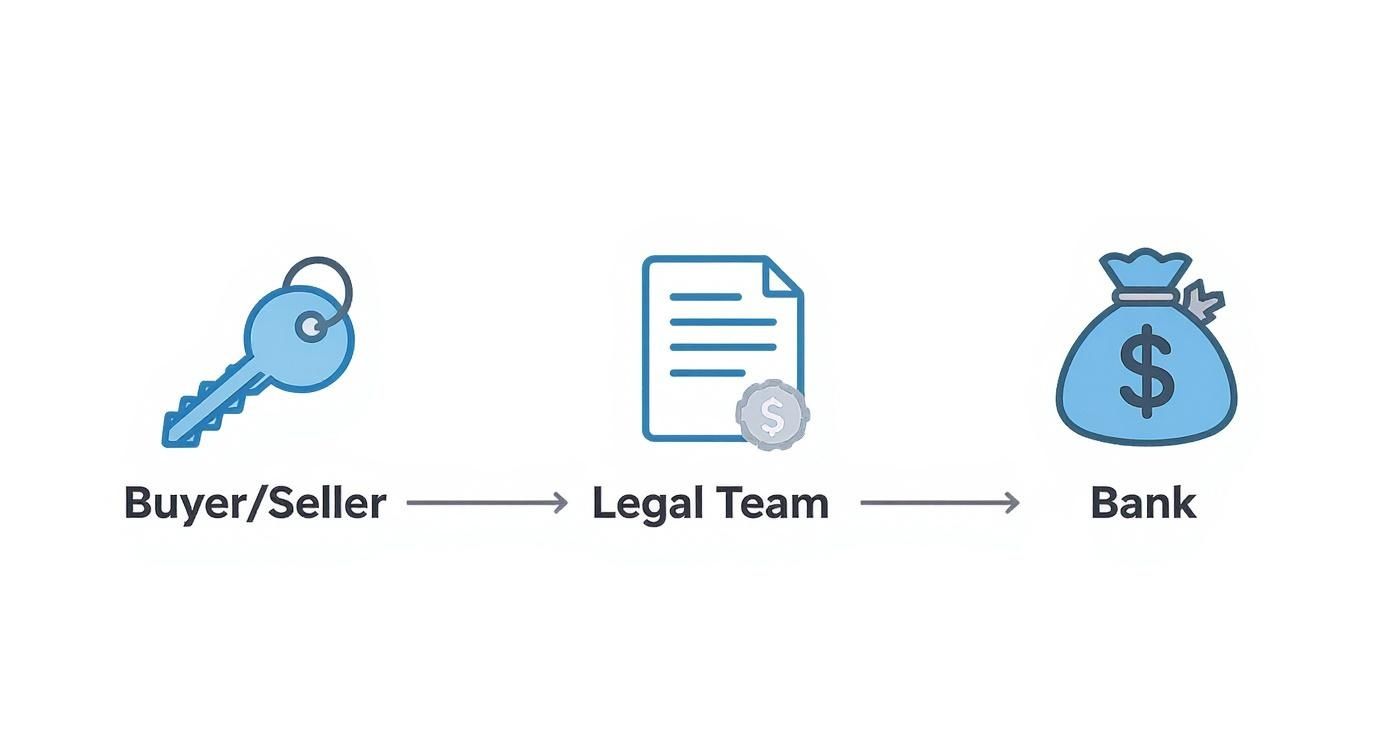
As things move forward, your legal team will be busy making sure all the contract conditions are met, while your bank gets the money ready for the big day.
To give you a clearer picture, here’s a quick breakdown of what a typical settlement timeline looks like.
Key Stages of the Settlement Timeline
| Stage | Typical Timeframe | Key Actions for Buyer | Key Actions for Seller |
|---|---|---|---|
| Contract Exchange | Day 1 | Sign Contract of Sale, pay the initial deposit. | Sign Contract of Sale, provide property documents. |
| Finance Approval | First 14-21 days | Work with your lender to get unconditional loan approval. | Wait for the buyer's finance to be confirmed. |
| Due Diligence | First 21-28 days | Organise building and pest inspections. Review strata reports if applicable. | Provide access for inspectors. Address any major issues found. |
| Pre-Settlement | Final week | Conduct final inspection of the property. Sign transfer documents. | Ensure the property is in agreed condition. Sign transfer documents. |
| Settlement Day | The final day | Your conveyancer and bank handle the final payment. | Your conveyancer and bank receive the funds. |
This table is just a guide, of course. Every property sale is a bit different, but it shows you the critical steps that need to happen to get you over the finish line.
The Critical Pre-Settlement Phase
This middle period is where most of the heavy lifting happens. It’s a flurry of activity, filled with important checks and financial arrangements. Your main job here is to make sure any special conditions written into your contract are satisfied.
There are a few key steps you'll be focused on:
- Securing Finance: This is the big one. You need to get unconditional finance approval from your lender. This is the bank’s official confirmation that they are ready and willing to fund your purchase on settlement day.
- Building and Pest Inspections: You’ll need to bring in the professionals to give the property a thorough once-over. They’ll check that it’s structurally sound and free from nasty surprises like termites. If they find any major problems, you might need to head back to the negotiating table with the seller.
- Finalising Paperwork: While you're busy with the above, your conveyancer is managing all the legal documents, like the Transfer of Land, and getting everything ready for the final transfer of funds.
The pre-settlement period is all about due diligence. It's your last chance to tick every box and ensure the property is exactly what you agreed to buy, preventing any unwelcome surprises on the big day.
Countdown to Settlement Day
In the final week, the pace really picks up. You'll carry out a pre-settlement inspection, which is your chance to walk through the property one last time. You’re checking that everything is in the same condition as when you first signed the contract and that all the agreed-upon inclusions are still there.
On settlement day itself, you generally don't even need to show up. Your conveyancer and bank will be your representatives, managing the electronic transfer of funds and lodging the legal documents that officially register you as the new owner.
Once it's all done, you’ll get that exciting call: the property is officially yours, and you can go and collect the keys!
The exact timeframe for all this can shift a little depending on your situation, so it's always helpful to understand how long settlement takes in different scenarios.
Navigating the Costs of Property Settlement

Thinking the purchase price is the final figure you'll pay for your new home is a common mistake. As you approach the final stage of buying property, it's vital to budget for the extra costs that pop up during settlement. These expenses sit outside your deposit and home loan, but they are absolutely essential to getting the deal done.
Getting a handle on these costs early on saves a world of last-minute financial stress. Think of them as the fees for all the crucial legal and admin work required to officially transfer the property into your name.
A Breakdown of Common Settlement Expenses
Several key fees make up the total cost of your settlement. Some are fixed, but others—especially stamp duty—can swing dramatically depending on your property's value. These costs don't exist in a vacuum; they're tied directly to the wider property market.
For example, with Australia's average residential property price recently ticking over the $1 million mark, the associated settlement costs have naturally climbed as well. This milestone is part of a national property market now valued at a staggering $11.4 trillion, showing just how closely your individual transaction costs are linked to these huge national figures. You can read more about Australia's evolving housing system for a deeper dive.
Here are the main costs you should be ready for:
- Stamp Duty (Transfer Duty): This is usually the big one. It’s a state government tax on the property purchase, and the amount you pay is calculated on a sliding scale based on the sale price.
- Conveyancing or Settlement Agent Fees: This is what you pay your legal professional or settlement agent to manage the entire process and make sure everything goes smoothly on your behalf.
- Bank and Mortgage Fees: Don’t forget your lender. They often charge fees for things like setting up the loan, property valuations, or other administrative tasks tied to your new mortgage.
- Government and Registration Fees: These are official charges from Landgate for legally registering the title transfer and lodging your mortgage documents.
- Rate Adjustments: You'll need to pay your share of council and water rates. This is calculated on a pro-rata basis, covering the period from settlement day until the next bill is due.
Of course. Here is the rewritten section, crafted to sound like an experienced human expert, following the provided style guide.
Common Settlement Problems and How to Avoid Them
Even with the best-laid plans, the settlement process can hit a snag. Knowing the common roadblocks is the best way to prepare for them, ensuring a small hiccup doesn't snowball into a major delay that puts your property dreams on hold. A smooth settlement really just boils down to proactive communication and getting ahead of potential issues before they have a chance to pop up.
Most problems fall into a few key categories, but almost all of them can be managed with good preparation. From finance falling through at the eleventh hour to unwelcome discoveries during the final walkthrough, being aware is the first step toward a stress-free settlement day.
Last-Minute Finance Delays
One of the most common headaches in the settlement process is a last-minute issue with finance. It’s a classic scenario: a buyer has pre-approval, but the lender’s final, unconditional approval gets held up by a last-minute credit check or just an administrative backlog. This is a seriously high-stress situation that can throw the entire timeline into chaos.
The single best way to avoid financing issues is to secure unconditional loan approval as early as possible in the settlement period. Don't leave it to the last week; make it a priority right after signing the contract.
To keep yourself out of trouble, stay in constant contact with your mortgage broker or lender. Make sure they have every single document they need well in advance and ask them to confirm that everything is on track for the settlement date you’ve all agreed on. A little bit of persistence here can go a very long way.
Final Inspection Surprises
The pre-settlement inspection is your last chance to check that the property is in the same condition as when you agreed to buy it. Unfortunately, this is exactly when unpleasant surprises can surface. Maybe an appliance that was meant to be included is suddenly missing, or you spot new damage to a wall that definitely wasn't there before.
To sidestep these dramas, you need to be meticulous during your final inspection.
- Use a Checklist: Bring a copy of your contract and systematically check off all the agreed-upon inclusions (like the dishwasher or specific curtains) to make sure they're present and working.
- Test Everything: Don't be shy. Turn on the taps, flick all the light switches, and open and close every door and window to ensure everything is functioning as it should.
- Report Issues Immediately: If you find a problem, don't wait. Contact your conveyancer straight away. They need to communicate with the seller's representative to sort out a solution before settlement day arrives.
Paperwork and Administrative Errors
With so many documents changing hands, simple human errors can cause significant delays. Something as small as a misspelled name, an incorrect property address, or a missing signature on a crucial form can bring the whole process to a grinding halt. While your conveyancer is managing this, staying engaged yourself is key.
Your settlement agent is your greatest asset here. Always respond to their requests for information as soon as you can and double-check any documents you need to sign. By working closely with your professional team, you can catch potential errors early and make sure every detail is correct, paving the way for a successful and on-time settlement.
Of course. Here is the rewritten section, crafted to sound completely human-written and natural, following the provided style guide and examples.
Your Top Real Estate Settlement Questions Answered
When you’re nearing the finish line of a property sale, a lot of questions can pop up, especially if it’s your first time. Getting clear answers is the best way to demystify these final steps, giving you the confidence to move forward without any nagging doubts. Let's tackle some of the most common queries we hear from clients.
What's the Difference Between Settlement and Closing?
Here in Australia, you’ll often hear the terms "settlement" and "closing" used to mean the same thing: the final stage of a property sale. "Settlement," however, is the more common and technically correct term we use in Western Australia.
It specifically refers to the official legal process where the money changes hands and the property title is transferred into your name. "Closing" is a term that’s more popular in American real estate but points to the exact same outcome. So, if you hear either term, just know they both mean that exciting day you officially get the keys.
Can We Change the Settlement Date?
Yes, the settlement date can be changed, but there's a catch: it requires the agreement of both the buyer and the seller. Life happens, and sometimes unexpected things like a hiccup with your finance or a personal emergency can make the original date impossible to meet.
If one party needs an extension, their conveyancer has to formally request it from the other side. If everyone agrees, a new date is set and locked in. But if an agreement can't be reached, the party who can't settle on time could be up for penalty interest or other consequences outlined in the contract.
It's a common misconception that the settlement date is a casual guideline. In reality, it's a legally binding deadline. Any changes must be mutually agreed upon in writing to avoid breaching the contract.
Every single settlement is also a small piece of the bigger property puzzle. For example, recent figures show the total number of residential dwellings in Australia grew by 53,600 in just one quarter, while the average dwelling price hit $1,016,700. You can dive deeper into the trends by checking out the latest data on Australian dwelling values to see how individual sales like yours shape the national market.
Ready to navigate the Mandurah property market with an expert by your side? At David Beshay Real Estate, we provide the clear guidance and dedicated support you need from your first inspection to a successful settlement. Whether you're buying or selling, let's make your next move your best one. Get in touch with David today for a free property appraisal.

