


At its core, a reserve bid auction is a property sale where the seller decides on a confidential minimum price, known as the reserve. The property simply won't sell unless the bidding hits or climbs past this secret floor price. It's a critical safety net for the owner.
This ensures your property isn't sold for a cent less than you’re comfortable with.
Understanding the Reserve Bid Auction Process
Think of a reserve bid auction like a high-stakes game where one crucial card—the seller's absolute bottom-line price—is kept face down. This single, hidden element creates a dynamic environment that feels secure for the seller while encouraging transparent, open competition among buyers. It's no surprise this is the most common way property is auctioned in Australia, as it perfectly balances the thrill of bidding with the assurance of a fair outcome.
The process itself is quite straightforward, but it has distinct stages that are important for both buyers and sellers to get their heads around. The real work actually starts long before the auctioneer calls for the first bid.
The Key Players and Their Roles
Every auction has three main parties who bring the event to life, each with a specific job to do:
- The Seller (Vendor): This is the property owner who has chosen to sell. Their most important task is working with their real estate agent to set that confidential reserve price before auction day.
- The Auctioneer: A licensed professional hired to conduct the auction. They are a neutral party whose role is to manage the bidding, make sure everyone follows the rules, and ultimately, bring the hammer down to finalise the sale.
- The Bidders (Buyers): These are the potential buyers who have registered to participate. Their goal is simple: outbid the competition and secure the property for a price they’re happy to pay.
This simple infographic breaks down the essential flow of auction day.
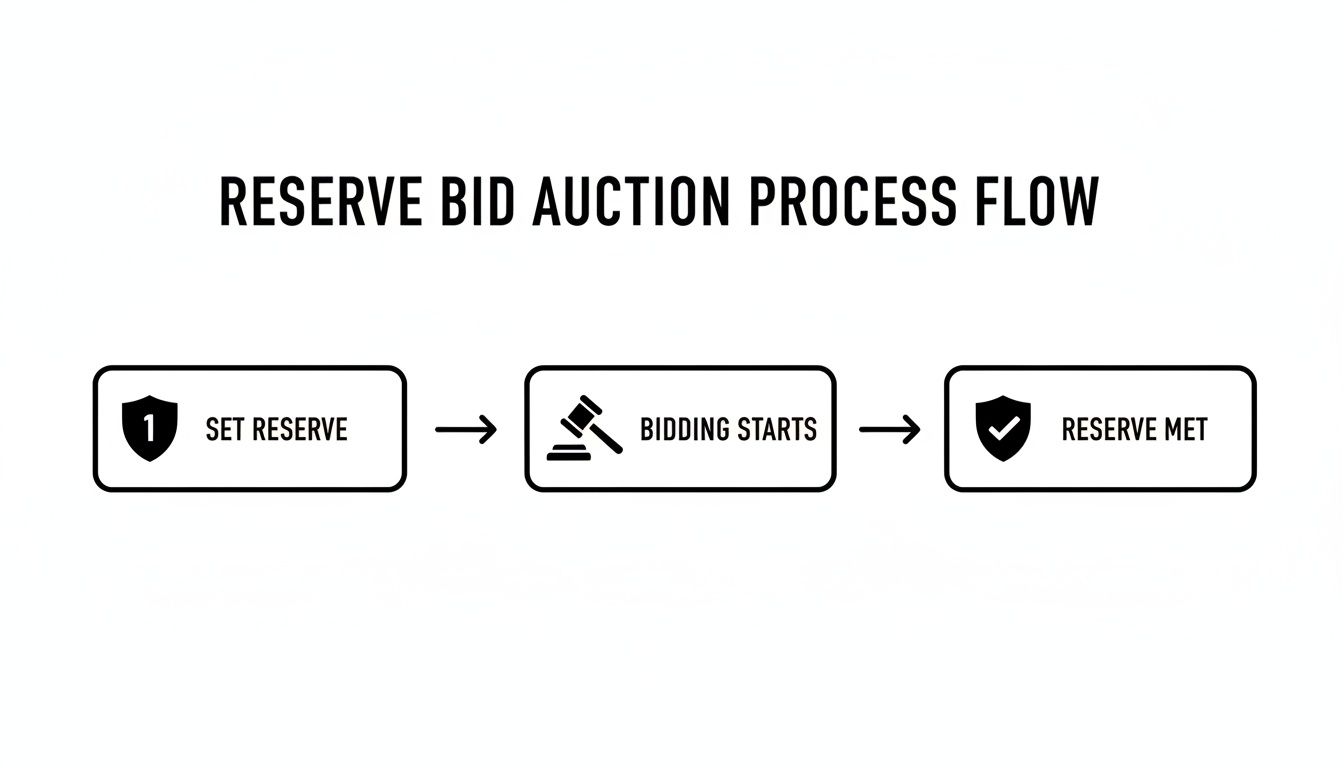
As you can see, the entire competitive process builds towards one thing: crossing that confidential reserve threshold.
From Bidding to Sold
Once the auction kicks off, the auctioneer will invite an opening bid. From there, bidding moves up in increments, building momentum and excitement. During this initial phase, the property isn't technically "for sale" just yet.
The real turning point in any reserve auction is the moment the bidding surpasses the secret reserve price. You'll often hear the auctioneer declare the property is 'on the market.' This is the signal to every bidder that the home is now going to be sold to whoever places the final, highest bid.
What if the bidding stalls before hitting the reserve? In that case, the property is "passed in." But that doesn't mean it's all over. The highest bidder is typically given the first exclusive right to negotiate privately with the seller. More often than not, a deal is hammered out right there, just moments after the public auction finishes. This structure protects the seller from a low price while still paving a clear path to a successful sale.
The Seller’s Playbook for Setting the Right Reserve Price

Setting the reserve price for your auction is easily one of the biggest calls you'll make when selling your home. It’s so much more than just picking a number out of thin air; it's a careful strategy that has to balance what you need financially with what the market is actually doing. This one figure can completely change the energy on auction day, influence how bidders behave, and ultimately decide whether that hammer falls on a successful sale.
Think of your reserve as your line in the sand. It’s your absolute, non-negotiable walk-away number and the lowest price you’re legally prepared to accept. It's your safety net. Get it right, and you create the perfect storm for competitive bidding to drive the final price way past it. Get it wrong, and you could be looking at a silent auction room and a disappointing "passed-in" result.
Balancing Realism with Aspiration
First things first: setting a smart reserve means grounding your expectations in hard data, not just wishful thinking. Of course, you have a price you’d love to get, but it’s the market that decides what’s truly achievable. This is where getting professional advice is non-negotiable.
An experienced local agent brings a crucial, objective eye to the table. They’ll give you a detailed appraisal of your property, looking not just at its features but where it sits within the current Mandurah and wider Perth property market. This analysis is the foundation of your entire pricing strategy.
Here are the key things that must inform your decision:
- A Professional Appraisal: A data-driven valuation from your real estate agent is your most important starting point. This isn’t a guess; it’s a professional assessment based on deep local knowledge.
- Comparable Sales Analysis: You absolutely must look at what similar homes in your suburb have sold for recently. For the most accurate picture, focus on sales from the last 90 days.
- Current Market Conditions: Is it a seller's market where demand is high and stock is low? Or is it a buyer's market where purchasers have the upper hand? The answer directly impacts how aggressive bidders will be.
The Psychology of a Reserve Price
Setting a reserve is also a bit of a mind game. If your price is seen as way too high, it can scare off potential buyers before they even register to bid. They might just assume your property is out of their league, which means fewer people competing on auction day.
On the other hand, a realistic reserve that lines up with market expectations sends a strong signal: this seller is serious. That builds confidence among buyers, letting them know their time and effort won't be wasted. A well-set reserve encourages more people to participate, and participation is the magic ingredient for auction success.
A well-priced property attracts more bidders, and more bidders create more competition. It is this competition—not an unrealistically high reserve—that drives the final price upward and unlocks your property’s true market value.
That’s why the goal isn't to set the reserve at your dream price. The goal is to set a reserve that gets the bidding started and builds momentum.
When it Makes Sense to Disclose the Reserve
Traditionally, the reserve price is a top-secret number, only revealed when the auctioneer announces the property is officially "on the market." But there's a more modern, transparent approach that’s gaining popularity here in Western Australia: telling interested buyers the reserve price before the auction.
This tactic can be incredibly effective in the right market. By taking the guesswork out of it, you give buyers total clarity and a clear target to aim for. They can come prepared to bid with confidence, knowing exactly what it’ll take to secure the property. This transparency can make the whole process less intimidating for first-time buyers and attract a wider audience, leading to a more competitive auction. Your agent is the best person to advise whether this strategy is the right move for your home and the current market climate.
Reserve Bid Auctions vs Other Ways to Sell Your Home

Choosing how to sell your property is a huge decision. The method you pick doesn't just affect the final price—it shapes the entire experience, from your timeline to your stress levels.
While a reserve bid auction offers a fantastic mix of competitive energy and a solid safety net, it’s just one of the tools in the toolkit. To make the right call for your situation, you need to understand the alternatives. The main contenders are absolute auctions (or 'no-reserve' auctions) and the ever-popular private treaty sale. Each has its own rhythm and rules.
The High-Risk High-Reward Absolute Auction
An absolute auction is the purest form of the game—there's no reserve price. The property is guaranteed to sell to the highest bidder on the day, no matter how high or low the final bid lands.
This can be a brilliant way to create a huge buzz and attract a crowd, as buyers know a sale is a certainty. But the risk is real. If the market is a bit soft or the right buyers simply don't show up, you could be forced to let your home go for a price far below its true value. It’s a bold move, best reserved for unique properties with massive appeal or for sellers who need a guaranteed, fast sale above all else.
The Control and Pace of Private Treaty
A private treaty sale is the most common way homes are sold in Australia. You set an asking price, and your agent negotiates privately with interested buyers. This approach gives you maximum control. You can take your time considering offers, negotiate specific terms, and ultimately say yes or no to any proposal.
The flip side? It can be slow, sometimes dragging on for weeks or even months. Without the ticking clock of an auction, buyers might not feel the urgency to put their best offer forward straight away. You also miss out on that transparent, competitive environment an auction creates, which can sometimes leave you wondering if you truly got the best price possible. Our guide on auction versus private sale dives deeper into these two popular methods.
A reserve bid auction strikes a unique balance. It captures the urgency and competitive spirit of an auction while providing the seller with the non-negotiable financial protection of a private treaty sale.
This hybrid approach is precisely why it’s such a popular choice, especially in dynamic markets like ours.
Why Reserve Auctions Thrive in Western Australia
Here in Western Australia, particularly around Perth and Mandurah, reserve bid auctions have become a go-to strategy for sellers looking to maximise their sale price. The numbers speak for themselves.
In the Mandurah region, properties sold at auction achieved an average clearance rate of 68%. Better yet, when at least three serious bidders were in the mix, the final hammer price soared past the reserve by an average of 7.2%.
This shows that when it's managed correctly, a reserve bid auction doesn't just protect your bottom line—it actively helps you smash through it. It blends the deadline of an absolute auction with the control of a private sale, offering a strategic middle ground that works exceptionally well for so many sellers in our local market. By understanding each option, you can confidently choose the path that best aligns with your financial goals and gives you peace of mind.
Winning Bidding Strategies for Savvy Buyers
Walking into an auction can feel like stepping into a high-stakes arena, buzzing with nervous energy and fast-paced action. It's an intimidating prospect for a lot of buyers. But with the right preparation and a clear strategy, you can confidently navigate the process, place winning bids, and secure your dream home without paying a dollar more than you planned.
Success at a reserve bid auction isn't about luck; it's about doing your homework and sticking to your game plan. Before you even think about raising a bidding paddle, the most important work needs to be done. This pre-auction diligence is your secret weapon.
Building Your Foundation Before Auction Day
Your confidence on auction day is built on the groundwork you lay in the weeks leading up to it. Rushing this stage is the number one mistake buyers make. A calm, decisive bidder is always a well-prepared one.
Here’s your essential pre-auction checklist:
-
Secure Your Finances: This is non-negotiable. Get a formal pre-approval for your home loan. This tells you your absolute maximum spending limit and shows sellers and agents you are a serious, qualified buyer ready to sign a contract.
-
Do Your Due Diligence: Auction sales are almost always unconditional. That means you buy the property "as is," with no cooling-off period. You must complete your building and pest inspections before the auction to uncover any hidden issues that could impact your offer.
-
Research the Market Value: Don't rely on the agent's price guide alone. Your most powerful tool is independent research. Analyse recent comparable sales in the area to form your own unbiased opinion of the property's true market value. This research will anchor your bidding limit.
Once you have a crystal-clear understanding of the property's worth and your own financial ceiling, you can set a firm bidding limit and walk into the auction with a solid plan. For more detailed advice, our comprehensive guide on how to bid at auction offers an even deeper look into preparing for the big day.
Mastering Auction Day Tactics
With your preparation complete, it's time to focus on your performance. The way you bid can directly influence the actions of other bidders and the overall momentum of the auction.
Projecting confidence, even if you’re nervous, is a powerful psychological tool. Stand in a clear position where the auctioneer can see you, make eye contact, and call out your bids in a loud, clear voice. Timid, hesitant bidding can signal to others that you’re near your limit, potentially encouraging them to bid higher.
Your bidding style is also a key part of your strategy. You can open with a strong, confident bid to show you’re a serious contender, or you can wait until the auction finds its rhythm before jumping in. There is no single right way, but decisive, quick bids often create pressure and can unsettle less-prepared competitors.
Reading the Room and Seizing Opportunity
A savvy buyer pays close attention to the auctioneer's language. Listen for vendor bids—bids made by the auctioneer on the seller’s behalf. These must be announced and are used to move the bidding towards the reserve. The most critical phrase you'll hear is when the auctioneer declares the property is "on the market." This is your cue that the reserve has been met, and the next bid could be the winning one.
But what happens if the bidding stops short of the reserve? This is where a "passed in" property becomes a golden opportunity.
As the highest bidder, you will almost always be given the exclusive first right to negotiate with the seller privately. This is a powerful position. You know the market's highest offer, and the seller is highly motivated to make a deal. Go in with your pre-determined limit, negotiate calmly, and you might just walk away with the property at a price that works for you.
Navigating Auction Rules in Western Australia

To make a confident move in the property market, you absolutely need to know the local rules. Here in Western Australia, our auction process is tightly regulated to protect everyone involved—sellers, buyers, and agents. It’s all about creating a fair, transparent playing field so you can set a reserve or place a bid without any guesswork.
The biggest rule, and one that’s strictly enforced, is the absolute ban on 'dummy bidding'. This is an illegal tactic where fake bids are thrown in by people connected to the seller, all to create a false sense of competition and drive the price up. WA law has zero tolerance for this, ensuring every bid you hear comes from a genuine, registered buyer.
However, the law does provide a legal and transparent way for sellers to protect their interests without misleading anyone.
The Role of the Vendor Bid
This is where the 'vendor bid' comes in. It’s a bid made by the auctioneer on the seller’s behalf, and unlike a dummy bid, it’s completely above board. An auctioneer must declare it loud and clear, using phrases like "the bid is with me" or "vendor’s bid". Think of it as a strategic tool.
It’s often used to:
- Kick things off if the room is a bit quiet.
- Nudge the bidding closer to the seller’s confidential reserve price.
- Clearly signal the price point below which the seller won't entertain offers.
But here's the crucial part: a vendor bid can never be the final, winning bid. It’s just a mechanism to help guide the auction toward a successful outcome. If you’re keen to get your head around this, you can learn more about what a vendor bid is and how it really works.
In Western Australia, transparency is everything. From the way vendor bids are handled to the contract of sale, the entire process is designed to give every party clear, honest information. It’s about building trust and ensuring the final price is a true reflection of the market.
Transparency and the Contract of Sale
The focus on fairness extends well beyond the bidding. In WA, the contract of sale is a critical document. Before the auction even starts, every registered bidder must have the chance to read through the full contract, which details all the terms and conditions of the sale—from the settlement date to any unique clauses.
Remember, auction sales are unconditional. There's no cooling-off period. When that hammer falls, your successful bid creates a legally binding contract on the spot. That’s why having that upfront access to the contract is such a vital piece of consumer protection.
Building Trust Through Disclosure
These days, the best auction practices in WA are moving towards even greater transparency. We’re seeing a real shift in the Mandurah region, where reserve bid auctions are helping to stamp out underquoting and boost buyer confidence.
A 2025 REIWA auction review found that in Perth's southern corridor, including Mandurah, a massive 81% of vendors voluntarily disclosed their reserves before auction. This is a practice I champion in my own sales strategies, and the results speak for themselves: these auctions saw 9% fewer pass-ins compared to those where the reserve was kept secret. By understanding these local nuances, both buyers and sellers can navigate the auction process with confidence and achieve a great result.
Your Reserve Bid Auction Questions Answered
Jumping into a reserve bid auction can feel a little daunting, whether you’re selling for the first time or you’re a seasoned buyer. It’s only natural to have questions.
We’ve put together direct answers to the most common queries we hear day in and day out. Think of this as your quick-fire guide to get you feeling confident and ready for auction day.
What Happens if the Bidding Stops Before the Reserve Is Met?
This is probably the most common question we get, and it’s a situation that happens all the time. If the bidding fizzles out before hitting the seller’s confidential reserve price, the property is officially "passed in."
But that’s far from the end of the story.
What happens next is a critical part of the process. The auctioneer will turn to the highest bidder and invite them to negotiate exclusively with the seller, right then and there. This is a golden opportunity. You’ve shown you’re the most serious buyer in the room, and the seller is clearly motivated. More often than not, a deal is struck in those crucial minutes after the auction.
If you can't reach an agreement, the agent might then open the floor to other bidders or simply list the property for private sale.
Can the Seller Change the Reserve Price During the Auction?
Absolutely. The seller can adjust their reserve price at any point while the auction is live. This isn't just possible; it's a powerful and frequently used strategy.
Picture this: the bidding has been strong but stalls just a fraction below the reserve. Seeing plenty of keen buyers in the crowd, the seller can give their agent the nod to lower the reserve to match the current highest bid.
By lowering the reserve mid-auction, the property is instantly put 'on the market.' When the auctioneer announces this, a new wave of energy often surges through the room. Everyone now knows the property will be sold, encouraging that last round of bids needed to seal the deal.
It’s a strategic move that can turn a near miss into a fantastic result on the day.
As a Buyer, How Can I Find Out the Reserve Price?
You can’t. In a classic reserve bid auction, the reserve price is kept strictly confidential between the seller and their agent. This is by design—it allows competitive bidding to determine the property's true market value, rather than having everyone anchored to a pre-set number.
So, how do you bid with confidence? It all comes down to doing your homework before the auction.
- Do Your Research: Get a feel for the local market by analysing recent sales of similar properties. This will help you form your own realistic idea of what the home is worth.
- Set Your Limit: Based on your research and your finance pre-approval, decide on the absolute maximum you're willing to pay and commit to sticking to it.
- Listen for the Magic Words: The clearest sign you’ll get is when the auctioneer declares the property is "on the market."
Once you hear that phrase, the safety net is gone. The property is officially selling, and every bid from that point on is playing for keeps.
Is a Vendor Bid a Real Bid From a Buyer?
No, a vendor bid is not a bid from a buyer and it can't win the auction. It’s a bid made by the auctioneer on behalf of the seller (the vendor).
Here in Western Australia, the rules are very clear to ensure transparency. The auctioneer must always announce a vendor bid, making it obvious to everyone that it hasn't come from a registered bidder in the crowd.
Vendor bids serve a couple of important, and perfectly legal, purposes. They can be used to get the ball rolling if bidding is slow to start, or to help the auction progress towards the seller's reserve price. Think of it as the seller signalling a price below which they aren't prepared to sell. It’s a standard practice that helps keep the auction flowing smoothly.
Are you thinking about selling your home in Mandurah or the surrounding areas? Understanding the market and choosing the right sales strategy is the first step towards a successful result. At David Beshay Real Estate, we provide a free, no-obligation property appraisal to help you understand your home's current value and discuss the best path forward.

