


A private treaty sale is the most common way to sell property in Western Australia. You set the price and chat directly with buyers, giving you real flexibility and total control over the process.
Breaking Down A Private Treaty Sale
Think of your home as an exclusive piece in a boutique gallery rather than a nail-biting auction stage. You decide the list price, invite inspections and offers, and then quietly weigh up each proposal. There’s no countdown clock, just your timeline to secure the right deal.
Before we dive deeper, here’s a quick snapshot of what makes a private treaty sale tick:
Private Treaty Sale at a Glance
| Characteristic | Description |
|---|---|
| Asking Price | Seller sets a clear price or price range |
| Negotiation | Private back-and-forth between buyer and seller |
| Inspection | Scheduled viewings at the seller’s convenience |
| Confidentiality | Offers remain private until the contract is signed |
| Timeline | Flexible settlement dates to suit both parties |
This table highlights the core traits that give sellers the upper hand in a private treaty sale.
The Core Elements Of The Process
At its heart, a private treaty sale follows a straightforward yet adaptable path. Each step builds on the last, ensuring you stay in control from start to finish.
- Setting the Price: You and your agent pin down a target price or range to attract genuine interest.
- Marketing the Property: Your home goes live on major real estate sites and local networks.
- Receiving Offers: Buyers lodge written offers, giving you the chance to accept, decline or counter.
- Negotiation: Through your agent, you negotiate price and conditions directly with interested parties.
- Final Agreement: Once both sides shake on the details, a formal contract is signed and the wheels move towards settlement.
A private treaty sale hands you the driver’s seat. You choose who to negotiate with, when to inspect and how far you’re willing to move on price.
Why Is This Method So Popular
Private treaty sales dominate Australian property transactions, making up roughly three times more sales than auctions. That popularity isn’t by accident—it’s about comfort and confidence.
Many buyers find the low-pressure environment more approachable than the dramatic highs and lows of an auction. For sellers, it means fewer nerves and more certainty as you navigate offers at your own pace. In Mandurah’s laid-back market, this familiar format often delivers smoother negotiations and a clearer path to settlement.
Your Step-By-Step Guide to the Private Treaty Process
Selling your home can feel like a massive undertaking, but when you break it down, it’s really just a series of clear, logical steps. Think of this guide as your roadmap for selling in Mandurah via private treaty, taking you all the way from the initial valuation to the final handshake.
Following this path turns what seems overwhelming into a series of confident, well-informed decisions. Each stage builds on the last, creating the momentum you need for a fantastic sales result.
Stage 1: Setting the Foundation
The real work starts long before a "For Sale" sign goes up. The absolute first step is getting an accurate property appraisal from a local real estate agent who truly knows the Mandurah market. This isn't a vague guess; it's a careful analysis based on recent sales of similar homes in your area, current market demand, and all the unique features that make your property special.
Armed with this information, you and your agent can decide on a strategic asking price. You need to hit that sweet spot – a price that’s competitive enough to draw in serious buyers, but high enough to reflect your home’s true value. This stage is all about positioning your property to capture the right attention from the very first day.
Stage 2: Preparing for Showtime
With the price locked in, it's time to focus on presentation. Getting your home ready for sale is more than a quick tidy-up. It's about creating a warm, inviting atmosphere where buyers can easily picture themselves living their lives.
This usually involves:
- Decluttering and Depersonalising: This helps buyers see the space as a blank canvas for their own future.
- Fixing Minor Issues: That leaky tap or cracked tile? Getting these small repairs done shows the home has been cared for.
- Boosting Kerb Appeal: Never underestimate a great first impression. A neat garden and a welcoming entryway make a huge difference.
- Professional Photos and Marketing: In today's market, amazing photos and a compelling online description are non-negotiable. They're what make your home stand out.
This prep work ensures your home looks its absolute best during inspections and gives buyers the confidence to make a strong offer.
Stage 3: Engaging with the Market
Now for the exciting part. With your property prepped and polished, it’s time to launch the marketing campaign and open the doors to potential buyers. This is where your agent’s deep knowledge of the Mandurah market really comes into play, as they manage all the enquiries and schedule viewings or home opens.
Throughout this phase, your agent is gathering invaluable feedback from everyone who walks through. This helps us understand what buyers are thinking and allows us to tweak the strategy if needed. It’s an active time of showcasing your home and connecting with genuine contenders.
This simple diagram breaks the core journey down into three key actions.
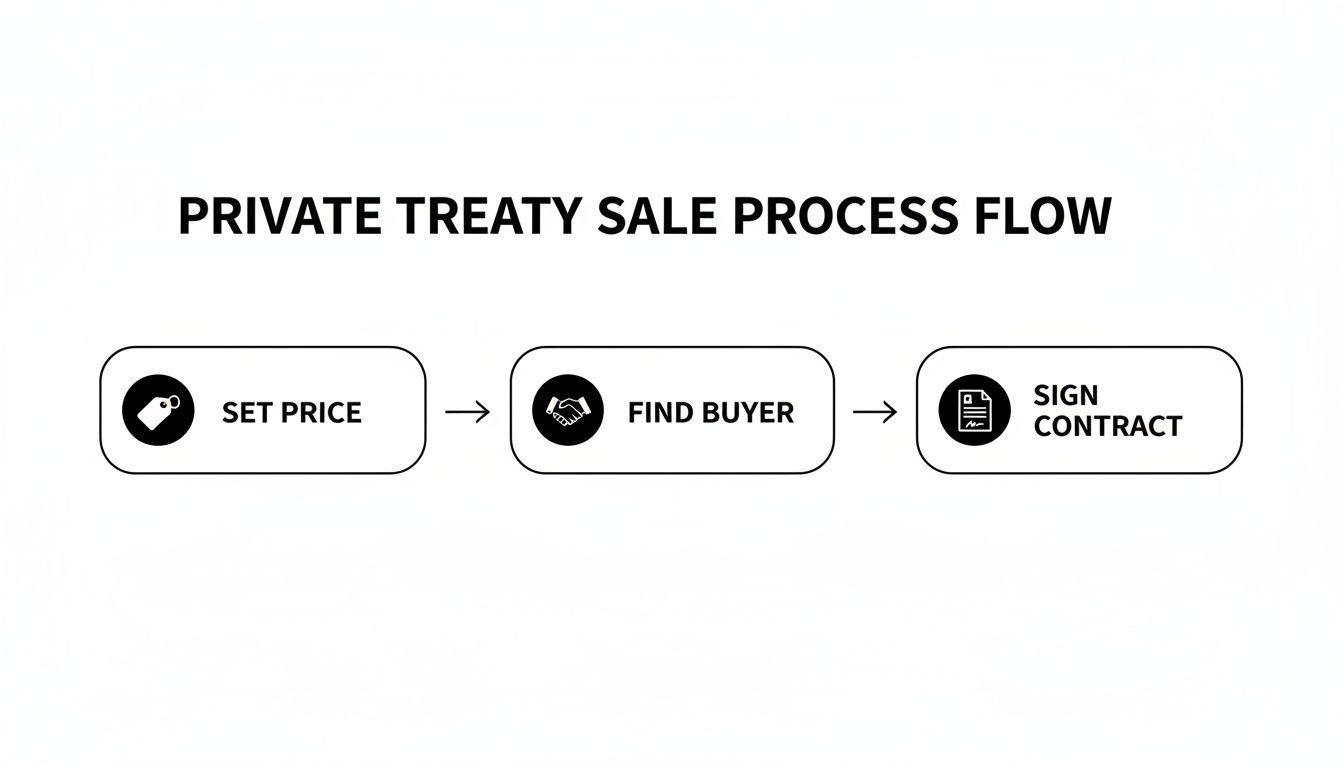
As you can see, once the price is set, the main job is to find the right buyer, which leads directly to the final contract stage.
Stage 4: Navigating Offers and Negotiation
This is where things get serious and is often the most critical part of the private treaty sale. When a buyer wants to move forward, they'll submit a formal written offer through your agent. In Western Australia, this is done using the Offer and Acceptance contract, which details their proposed price and any special conditions.
When an offer lands, you have three main choices:
- Accept it: If you're happy with the price and terms, you can sign on the dotted line.
- Reject it: If the offer is simply too low or has conditions you can't agree to, you can decline it.
- Make a Counter-Offer: This is the most common scenario. You might propose a higher price or a different settlement date, which kicks off the negotiation.
Negotiation is a delicate art. Your agent acts as your strategist, communicating with the buyer's side to reach a mutually agreeable outcome while protecting your interests.
This back-and-forth conversation continues until everyone is happy. A skilled negotiator can often secure a final price that’s significantly better than the initial offer, making this stage crucial for maximising your sale price.
Stage 5: Finalising the Agreement
Once a verbal agreement has been reached, it's time to lock it in. Both you and the buyer will sign the final Offer and Acceptance contract. At this moment, your property is officially "under offer."
The signed contract is then sent to your respective settlement agents (conveyancers), who handle all the legal paperwork to transfer ownership. Any conditions included in the contract, like the buyer getting finance approval or completing a building inspection, must be met by their deadlines.
Once all conditions are satisfied, the sale becomes unconditional. From there, it's a straightforward path to settlement day when you hand over the keys and celebrate a successful sale.
Deciding Between a Private Treaty and an Auction
Choosing the right way to sell your Mandurah home is one of the most important decisions you'll make in the entire process. Think of it like this: are you looking for a quiet, behind-the-scenes negotiation or a fast-paced, public bidding war? Both private treaty and auction have their moments to shine, and the best path for you really boils down to your specific property, your personal goals, and what the market is doing right now.

Getting a handle on these differences is the key to picking a strategy that lines up with what you want to achieve. Let's break down where each method excels so you can make a call with confidence.
Control and Privacy
A private treaty sale is all about discretion and control. You’re in the driver's seat. You set the asking price, and every negotiation happens privately, away from public view. From inspection times to the final settlement date, you have the final say without the immense pressure of an auction day looming. This privacy is a huge plus if you’d rather keep your financial details to yourself.
Auctions are the complete opposite—they’re public theatre. The bidding is out in the open, which can be fantastic for creating a sense of competition. The flip side is that your potential sale price is discussed for all to hear. There’s also the risk of the property "passing in" if the reserve isn't met, and that result becomes public knowledge.
In short, a private treaty gives you total control for careful, private discussions. An auction creates an urgent, competitive atmosphere designed to get a result on one specific day.
Timelines and Urgency
The timeline is where these two methods really part ways. An auction runs on a strict schedule. You’re typically looking at a four-week marketing blitz that builds towards the big day. This hard deadline forces serious buyers to get their act together and have their finances sorted, creating a real sense of urgency.
On the other hand, a private treaty sale offers far more flexibility. There's no ticking clock. This gives you the breathing room to wait for the perfect offer to land on your table. It can definitely be a less stressful route, but it also means the process might drag on if the market is a bit slow or if the initial asking price isn't quite right.
Buyer Pool and Negotiation Dynamics
Each method naturally attracts a different crowd. The structured yet negotiable process of a private treaty sale appeals to a much wider range of buyers. This includes people who need to get their finance approved or even sell their own home first. It opens the door to conditional offers, which can massively expand your pool of potential buyers.
Auctions tend to draw in highly committed, unconditional buyers who are ready to sign on the dotted line, no strings attached. The bidding frenzy can certainly push the price up, but it can also lock out buyers who aren't in a position to bid without conditions. This is a massive factor to weigh up, as a smaller buyer pool can sometimes mean less competition. For a deeper look at these dynamics, our complete guide has more insights into the auction vs private sale debate.
The Financial Outcome
At the end of the day, it's all about getting the best possible price for your home. The high-stakes environment of an auction is specifically engineered to squeeze every last dollar out of the market on that day. In fact, comprehensive research found that homes sold at auction can achieve prices around 9.5% higher than similar properties sold via private treaty. This "auction premium" often comes from the transparency and competitive fire that auctions ignite.
But that's not a guarantee for every property. A skilled agent negotiating a private treaty can also secure an incredible price, especially when juggling interest from multiple buyers. The real key is figuring out which environment—the controlled negotiation or the open competition—is most likely to make buyers put their best foot forward for your unique Mandurah property.
Mastering Negotiation to Maximise Your Sale Price
This is where the magic happens. The negotiation stage is where a solid offer turns into an exceptional result. In a private treaty sale, this isn't some high-pressure public showdown; it's a strategic, behind-the-scenes conversation where every single detail counts. Getting this part right is the key to unlocking your property's true value and achieving the best possible outcome for your Mandurah home.

Think of it as a delicate dance of psychology and strategy, with your agent leading the way to ensure you always have the upper hand.
Setting the Stage with Smart Pricing
Your initial asking price sets the tone for every negotiation that follows. It's the first signal you send to the market, and it has a massive impact on the kind of buyers you attract.
- Fixed Price: This is the no-nonsense approach. It tells buyers exactly what you expect and works brilliantly in a stable market where values are clear. You'll attract serious, qualified buyers who are ready to meet your price.
- 'Offers Above' or Price Range: A hugely popular strategy here in a competitive market like Mandurah. It's designed to invite multiple offers and create a bit of healthy competition, which often pushes the final sale price well beyond what a fixed price might have achieved.
An experienced agent will help you pick the right pricing tactic for your specific property and the current market pulse, making sure you get the right kind of attention from day one.
The Art of the Counter-Offer
Getting that first offer is exciting, but it's just the opening move. Rarely is the first offer the best one, and a sharp, well-timed counter-offer is your most powerful tool. This is precisely where your agent's expertise really shines.
A strong counter-offer isn't just about asking for more money. It’s about looking at the entire deal—the settlement date, the deposit amount, and any special conditions. The goal is to improve your position without scaring off a genuinely keen buyer.
Remember, the aim of a counter-offer is to keep the conversation moving forward. It’s a signal that you’re serious about selling but that you also know what your property is worth.
Your agent will guide you on how to respond, helping you decide whether to counter on the price, the conditions, or a bit of both. This strategic back-and-forth is the heart of a private treaty sale and can often add thousands of extra dollars to your pocket.
Managing Multiple Offers Effectively
In a hot market, you might find yourself in the fantastic position of having several buyers vying for your home. While it’s a great problem to have, it needs to be managed carefully to get the absolute best result without losing anyone in the process.
A skilled and ethical agent handles this by:
- Being transparent: Letting every interested party know that there is competing interest.
- Calling for the best: Inviting all buyers to submit their "best and final" offer by a firm deadline.
- Presenting all options: Clearly laying out all the final offers for you, so you can compare them based on both price and conditions.
This process is fair, transparent, and motivates buyers to put their strongest foot forward. For a deeper dive into these tactics, our guide offers some fantastic insights on how to negotiate house price like a pro. By handling this crucial stage with confidence, you can secure a premium price that truly reflects your home’s worth.
Navigating Timelines and Legal Requirements in WA
Understanding the timeline and legal side of things is your key to a smooth, stress-free property sale. A private treaty sale in Western Australia follows a fairly predictable path, which is great because it gives you clarity from the moment you accept an offer right through to settlement day.
Let's break down exactly what to expect.
Once you and the buyer sign the contract, the clock officially starts ticking on what’s called the settlement period. Think of this as the crucial window of time where all the important legal and financial work happens behind the scenes.
In WA, this period is negotiable but usually lands somewhere between 30 and 90 days. This flexibility is built-in, allowing both you and the buyer enough time to get everything sorted for the property to legally change hands.
Key Milestones in a Typical Timeline
The journey from "under offer" to "sold" isn't a single leap; it's a series of important steps. While every sale has its own unique quirks, most follow a similar structure to ensure all legal boxes are ticked properly.
Here’s a snapshot of how it usually unfolds:
- Contract Execution: It all starts here. Both you and the buyer sign the Offer and Acceptance contract, which makes the agreement official.
- Finance Approval: If your buyer needs a loan, their offer will almost always have a finance condition. They typically get 28 days to lock in formal approval from their bank.
- Building and Pest Inspections: Buyers will often include a condition for building and pest inspections to make sure there are no nasty surprises. This usually needs to be done within 7 to 14 days of the offer being accepted.
- Conditions Met: Once all the conditions (like finance and inspections) are satisfied, the sale becomes "unconditional." This is a huge milestone—it means the deal is fully locked in and moving forward.
- Settlement Day: This is the finish line. The buyer's money is transferred, the property title is officially put in their name, and you hand over the keys. The sale is complete!
This structured process is there to protect everyone involved and make sure there’s enough time to get everything done right.
Understanding the Legal Paperwork
The single most important document in this whole process is the Offer and Acceptance contract. This is a legally binding document that lays out every single detail of the sale, from the price and settlement date to any special conditions. It's the blueprint for the entire transaction.
In Western Australia, a handshake deal won't cut it. To be legally enforceable, every part of a property sale agreement must be in writing and signed in the Offer and Acceptance contract.
Because this document is so critical, getting professional guidance is non-negotiable. Your real estate agent will prepare the initial offer, and your settlement agent (or conveyancer) will handle the legal transfer of ownership. They work together to ensure the paperwork is spot on, deadlines are met, and the entire process follows WA law.
If you'd like to dive deeper into the nitty-gritty, you can learn more about the contract of sale in our detailed guide.
Having an experienced team in your corner—your agent and your settlement agent—is the best way to guarantee a smooth and successful sale, shielding you from potential headaches and delays. They manage the complexities so you can focus on your next chapter with complete confidence.
Got Questions About Private Treaty Sales? We’ve Got Answers.
Stepping into the property market always brings up a few questions. Let's tackle some of the most common queries we hear from sellers in Mandurah about the private treaty process. My goal is to give you clear, straightforward answers so you can move forward with total confidence.
Can I Accept an Offer Before the First Home Open?
Absolutely. This is one of the biggest perks of a private treaty sale – its flexibility. If a well-qualified buyer comes in hot with a compelling, unconditional offer before your first open house, you are completely free to accept it.
In fact, this can be a brilliant move. It can lock in a quick sale at a fantastic price, saving you the time and uncertainty of more inspections. The key is to sit down with your agent and weigh the offer's strengths against the potential interest you might get from a busy home open.
What Happens if My Home Doesn’t Sell Right Away?
First off, don't panic. If your property doesn't get snapped up in the first few weeks, it's not a failure – it's a signal to review your strategy. An experienced agent will take all the feedback gathered from buyers who've walked through the door and analyse it.
A property that sits on the market is simply providing feedback. It’s an opportunity to adjust the price, presentation, or marketing to better align with what buyers are looking for.
This feedback loop is crucial. It might tell us that a small price tweak is needed to match current market data, or maybe it's time to refresh the marketing to reach a different audience. Often, one small, strategic change is all it takes to connect with the perfect buyer.
How Do the Selling Costs Compare to an Auction?
The main costs, like your agent's commission and settlement fees, are generally the same whether you sell by private treaty or go to auction. The real difference usually comes down to the marketing budget.
Auction campaigns often need a bigger, more intense marketing push upfront. The whole point is to build maximum hype and exposure to peak on one specific day. On the other hand, a private treaty marketing plan can be more flexible and spread out over time. This can often make it a more budget-friendly option if your property doesn’t need that aggressive, short-term campaign to find its new owner.
Ready to discover your home's true market value? At David Beshay Real Estate, we provide accurate, obligation-free property appraisals to help you make your next move with confidence. Get Your Free Mandurah Property Appraisal Today.

