


Thinking about investing in commercial real estate in Mandurah? You’re looking at a unique sweet spot where a booming coastal lifestyle meets solid economic growth. The market here is humming, driven by a strong construction sector, a steady stream of new residents, and a diverse local business scene. For the savvy investor, this mix presents a fantastic opportunity for both healthy rental returns and long-term capital growth.
Why Mandurah Is a Smart Commercial Real Estate Investment
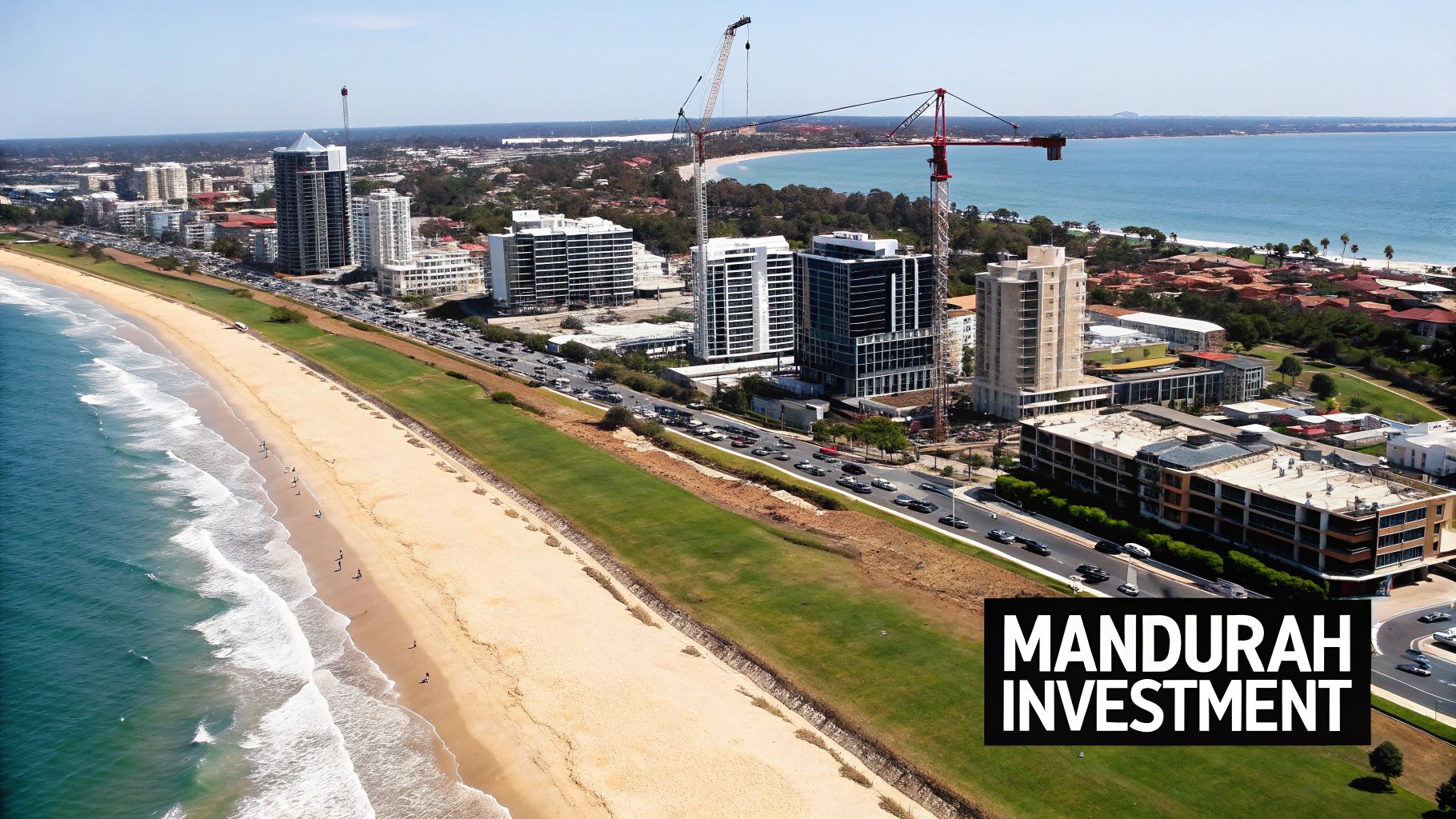
Mandurah is so much more than just a beautiful place to live; it’s an economic engine that’s really hitting its stride. For investors, this transformation is opening up a wealth of opportunities in the commercial property space. The city's appeal isn't just about its stunning waterways—it's built on powerful economic drivers that point towards sustainable growth and solid returns.
You can think of Mandurah’s commercial market like a well-tended garden. The seeds for growth—population increase, new infrastructure, and a mix of different businesses—have already been sown. Now is the time for investors to get in and benefit as these elements mature, creating a thriving ecosystem for commercial ventures to flourish.
The Pillars of Mandurah's Investment Appeal
The strength of the commercial real estate Mandurah market rests on a few key pillars. Once you understand these, it’s easy to see why the region is such a prime target for investment.
- Sustained Population Growth: More people are moving here every year, which directly fuels demand for shops, services, and offices. This creates a consistent need for commercial properties.
- Economic Diversification: Mandurah is no longer just about tourism. It's growing strong in sectors like healthcare, education, and professional services, which means a more resilient and varied pool of potential tenants.
- Infrastructure Investment: Ongoing and planned projects are improving connectivity and making the city an even more attractive place to do business.
This combination creates a market that’s both stable and dynamic. It spreads the risk that you might find in towns reliant on a single industry and opens the door to a wider range of investment options, from buzzing retail centres to essential service facilities. For a deeper look into the residential side of this growth, check out our guide to the broader real estate market in Mandurah.
A Look at the Economic Bedrock
The numbers behind Mandurah’s economy tell a compelling story. It’s not just growing; it's being built on solid foundations that directly support commercial property values.
A 2022 analysis revealed Mandurah’s local economy totalled $8.043 billion, with the construction industry contributing a massive 19.7%. This highlights a city in active development, creating new commercial spaces and opportunities.
On top of that, the rental, hiring, and real estate services sector made up another 16.8% of the economy. This shows just how intertwined construction and property services are here, creating a self-sustaining cycle of development and demand that continues to drive the local market.
Understanding the Types of Commercial Properties Available
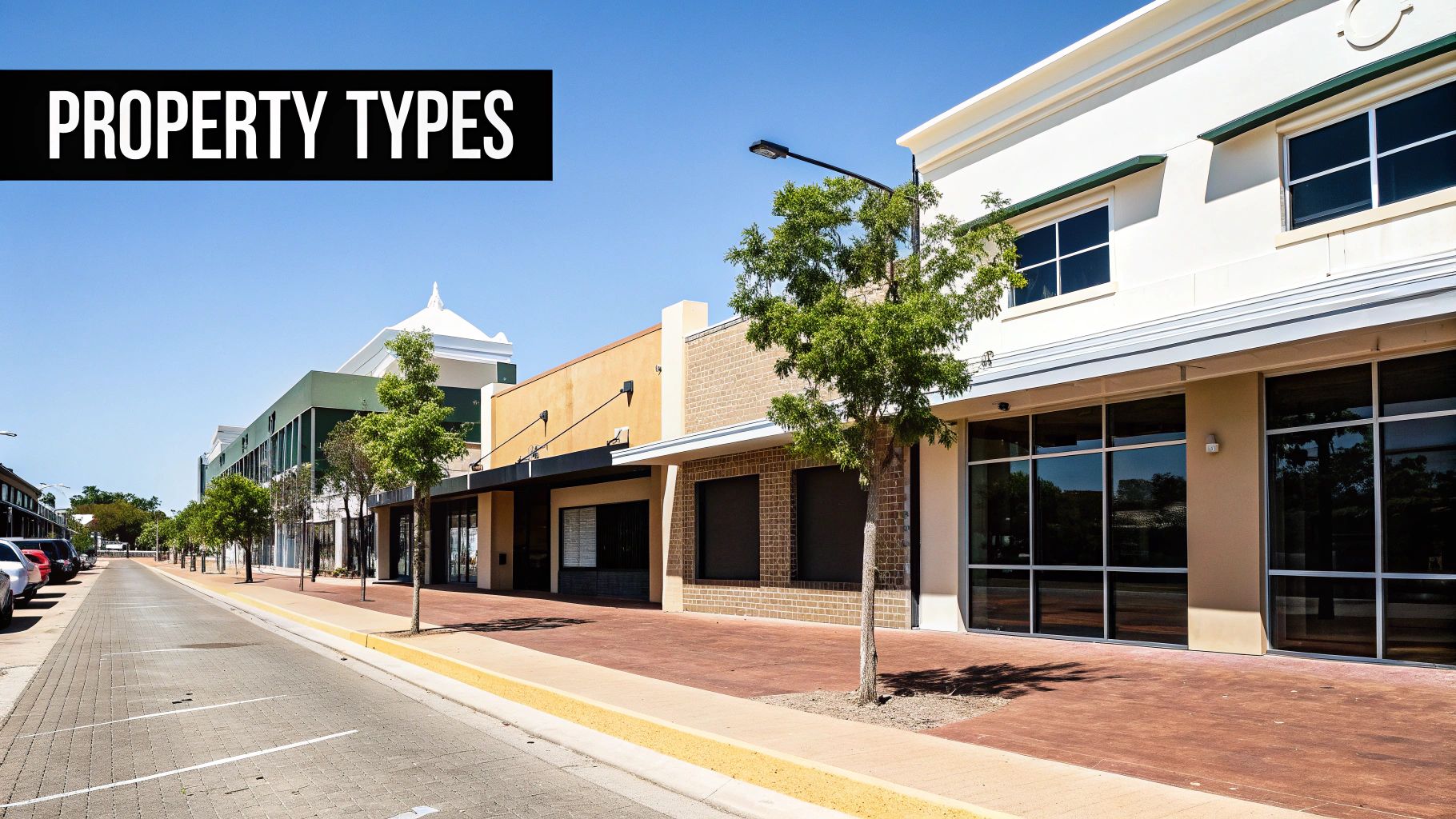
Choosing the right commercial property is a bit like picking the perfect tool for a job—you need the right one to get the results you want. The commercial landscape in Mandurah is as diverse as its thriving economy, with opportunities for every type of investor or business owner. Getting a handle on these different property types is the crucial first step to matching an asset with your financial goals.
The umbrella term "commercial real estate" covers a huge range of properties, each with its own rulebook, typical tenants, and investment potential. It’s less of a single market and more like several interconnected ecosystems. Your success really hinges on finding your niche within this environment.
Mandurah’s market is a clear reflection of its growth as a hotspot for tourism, retail, and essential services. The sales activity we're seeing shows a mature and active market, well-equipped to support a booming population. In fact, records show 550 commercial properties have been sold in the Mandurah WA 6210 postcode alone, proving its solid appeal to investors. You can dive into the data yourself and explore recent sales on RealCommercial to see this activity firsthand.
Retail Spaces: The Heartbeat of Commerce
Retail properties are the most familiar face of commercial real estate in Mandurah. These are the spaces where businesses meet their customers face-to-face, from quaint boutique shops in the city centre to sprawling showrooms on the main drags.
The value of a retail space is almost always tied to its location and the foot traffic it pulls in. A cafe spot right on the Mandurah Foreshore, for example, has a completely different value proposition compared to a large format retail store out near Mandurah Forum.
- Strip Shops: Think of these as your local neighbourhood go-tos—the bakery, the hairdresser, the local real estate agency. They are smaller, street-facing stores that serve the immediate community.
- Shopping Centre Tenancies: These spaces benefit from the high foot traffic and marketing muscle of a larger complex, but they usually come with stricter lease conditions and higher outgoings.
- Big Box Retail: These are the large, standalone buildings you see housing major national retailers like hardware chains or furniture showrooms.
Office Spaces: The Hubs of Professional Activity
Office properties are the engine room for Mandurah’s professional and service-based businesses. These spaces can be anything from a single room in a shared building to an entire floor in a gleaming, modern office block.
Unlike retail, an office space’s success leans more on factors like easy access, good parking, and proximity to other professional services. For investors, the building's quality and its amenities are key—these are what attract the high-calibre tenants you're looking for.
For investors, A-grade office spaces in central locations typically offer lower vacancy rates and more stable, long-term tenants. These are often sought after by established legal firms, financial planners, and medical specialists who value a premium address.
Industrial Properties: The Engine Room of the Economy
Usually found in designated industrial zones like those in Greenfields or Halls Head, these properties are the backbone for businesses in manufacturing, storage, and logistics. With the rise of e-commerce, industrial real estate is a booming sector, driven by the ever-growing need for efficient supply chains.
The main categories you'll come across are:
- Warehouses and Distribution Centres: These huge facilities are all about storing and moving goods. Their value is largely determined by ceiling height, truck access, and how close they are to major transport routes.
- Workshops and Factories: These are specialised spaces built for manufacturing or repair work, often requiring heavy-duty power supplies and specific infrastructure.
- Flex Spaces: A modern hybrid, these properties blend office or showroom space with a warehouse component. They offer incredible versatility and are a great fit for small to medium-sized businesses.
Spotting Mandurah's Commercial Property Hotspots
Everyone knows the old saying: "location, location, location." But what really turns a good spot into a genuine commercial hotspot in Mandurah? It’s about more than just a pin on a map. It’s about understanding the unique personality and potential of each key area – its accessibility, the businesses around it, and the plans for its future.
For an investor, spotting these areas is like playing chess; you have to see several moves ahead. You need to dig into the 'why' behind an area's value to find places with real, sustainable growth potential. This is where local knowledge of commercial real estate Mandurah isn't just helpful, it's essential.
The Premier Commercial Core: Mandurah CBD and Foreshore
The heart of Mandurah's commercial life beats strongest in its Central Business District (CBD) and along the vibrant Foreshore. This is the city's primary hub for office spaces, retail shops, and hospitality venues. Think of it as the city’s bustling town square, where business and leisure intersect.
Properties here enjoy the highest levels of foot traffic, a constant flow of local residents, office workers, and tourists. With key amenities, public transport, and the beautiful estuary right there, it’s a premium destination for any business that relies on visibility and easy access.
For an investor, buying a property in this precinct means you're buying into an established and resilient market. Sure, the entry prices are higher, but the potential for strong rental yields and long-term capital growth is significant, thanks to consistent demand and limited supply.
Retail Power Centres: Mandurah Forum and Beyond
For businesses that thrive on high-volume retail, the areas around major shopping centres like Mandurah Forum are gold. These precincts act like powerful magnets, pulling in shoppers from all over the Peel region. They aren't just shopping destinations; they're complete commercial ecosystems.
The biggest advantage here is synergy. A furniture store near a major hardware chain or a café next to a busy supermarket benefits from the combined pulling power of its neighbours. It creates a commercial gravity that smaller, standalone locations just can't match.
- High Consumer Traffic: These areas are literally designed to attract and hold large numbers of shoppers, giving you a built-in customer base.
- Excellent Infrastructure: They come with ample parking, direct access to major roads, and are often public transport hubs.
- Established Commercial Environment: The cluster of businesses creates a one-stop destination where people can run multiple errands.
Emerging Industrial Corridors: Greenfields and Halls Head
Step away from the retail and office buzz, and you'll find Mandurah's industrial zones in places like Greenfields and parts of Halls Head are becoming critical hotspots. These corridors are the engine room of the local economy, home to everything from logistics and distribution centres to specialised workshops and light manufacturing.
The boom in e-commerce and the growing need for efficient "last-mile" delivery services has sent demand for well-located industrial properties through the roof. These aren't just big sheds anymore; they are crucial links in the modern supply chain.
For investors in commercial real estate Mandurah, these industrial areas present a different, but equally compelling, opportunity. The focus here isn't on foot traffic, but on logistical efficiency and access to transport routes.
To help you visualise how these hotspots differ, here’s a quick breakdown of what each area offers.
Mandurah Commercial Property Hotspot Analysis
| Hotspot Area | Primary Property Types | Key Advantages | Ideal For Investors Seeking |
|---|---|---|---|
| CBD & Foreshore | Office, Retail, Hospitality | High foot traffic, premium address, strong tenant demand | Stable, long-term rental income and capital growth. |
| Retail Centres | Showrooms, Big Box Retail, Service-based businesses | Synergy with anchor tenants, high visibility, easy access | High-yield opportunities tied to consumer spending trends. |
| Industrial Zones | Warehouses, Workshops, Flex Spaces | Proximity to transport routes, logistical efficiency, lower land cost | Growth driven by e-commerce and supply chain demand. |
Ultimately, choosing the right hotspot comes down to your investment strategy. Whether you're after the prestige and stability of the CBD, the high-volume traffic of a retail precinct, or the functional growth of an industrial park, Mandurah’s commercial landscape is diverse and full of promise.
Your Step-By-Step Guide to Acquiring Commercial Property
Navigating the purchase of a commercial property in Mandurah can feel like a massive undertaking, but it’s a journey that becomes surprisingly straightforward once you have a clear roadmap. Breaking the process down into manageable steps takes the complexity out of it, turning a daunting task into a series of achievable milestones.
Think of it like building a house. You wouldn't just start ordering bricks and windows without a detailed blueprint. In the same way, your investment journey needs a solid plan, starting with your end goals and finishing with you holding the keys.
This visual guide breaks the process down into three core phases: locate, analyse, and invest.
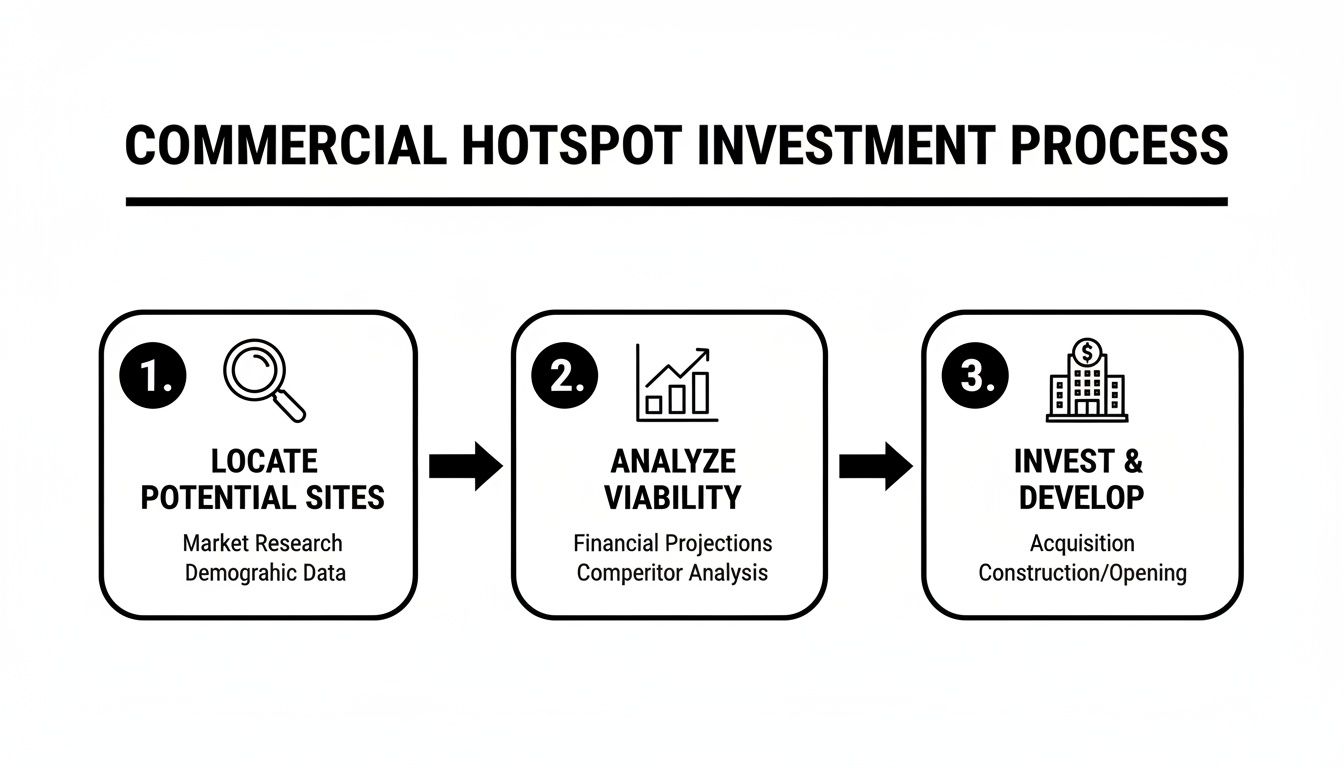
This flow really drives home the point that a successful purchase isn’t just about finding a property—it's about rigorous analysis before you commit a single dollar.
Step 1: Define Your Investment Criteria
Before you even start scrolling through listings for commercial real estate Mandurah, you need to know what success looks like for you. This crucial first step ensures you’re not just buying a building, but an asset that lines up perfectly with your financial goals.
Start by asking yourself some hard questions:
- What is my main objective? Are you after a steady monthly cash flow from rental income, or is your focus on long-term capital appreciation?
- Which property type fits my strategy? Do you prefer the hands-on nature of retail, the stability of an industrial warehouse, or the professional vibe of an office space?
- What’s my real budget? This isn’t just the purchase price. You need to account for renovations, holding costs, and professional fees.
Having clear answers here acts as your compass, guiding every decision that follows and keeping your search focused and efficient.
Step 2: Secure Your Financing
With your criteria locked in, the next move is to get your finances in order. Securing pre-approval for a commercial loan is non-negotiable. It confirms your budget, gives you credibility with sellers and agents, and lets you move fast when the right opportunity pops up.
Keep in mind, commercial lending is a different beast to residential. Lenders will scrutinise not only your financial position but also the viability of the property itself—its location, lease terms, and the quality of the tenant. Being prepared with a solid business case will make this process much smoother.
A strong financing pre-approval is your ticket to the negotiating table. It signals to sellers that you are a serious, qualified buyer, giving you a distinct advantage in a competitive market.
Step 3: Conduct Thorough Due Diligence
This is the ‘look before you leap’ phase, and it’s arguably the most critical part of the whole process. Due diligence is your chance to uncover any potential red flags before the deal is final. Think of it as an investigative stage where you verify every single detail about the property.
Key areas to investigate include:
- Physical Inspections: Get professionals in to conduct building, pest, and electrical inspections to identify any structural or compliance issues.
- Lease Agreement Review: Go through all existing tenant leases with a fine-tooth comb. Check the lease terms, rental rates, expiry dates, and any options for renewal.
- Zoning and Council Approvals: Confirm with the City of Mandurah that the property’s zoning allows for your intended use.
This deep dive is essential. The viability of a commercial asset is heavily influenced by the income it generates, and the local rental market is a great indicator. Mandurah's strong residential demand, with a $550 median rental price and 5.8% growth, points to a robust local economy that can support commercial tenants.
Step 4: Negotiation and Settlement
Once your due diligence checks out, it's time to make an offer and negotiate the terms. This is where having an experienced professional like David Beshay in your corner becomes invaluable. An expert can help you structure an offer that is both competitive and protects your interests. For a more detailed breakdown, our guide on how to purchase commercial property offers further insights.
After the price and conditions are agreed upon, the process moves to settlement. This final stage involves the legal transfer of ownership, coordinated by your conveyancer or solicitor, finalising your acquisition of a prime piece of commercial real estate in Mandurah.
Forecasting the True Costs of Your Investment

When you’re eyeing a commercial property, the price tag you see is just the beginning of the story. Think of it as the tip of the iceberg—what’s visible is only a fraction of what’s really there. A smart investor knows that the real viability of a deal is found by looking below the surface and adding up all the associated costs.
Getting a handle on these expenses from the outset is what separates a smooth transaction from a financial headache. It’s about building a complete picture so your investment in commercial real estate Mandurah starts on solid ground, with no nasty surprises waiting for you down the track.
Government Charges and Taxes
Before you can even think about getting the keys, there are a few non-negotiable government charges to account for. These are a significant part of your initial outlay, and in Western Australia, there are two big ones to prepare for: stamp duty and Goods and Services Tax (GST).
Stamp duty (or transfer duty) is a state tax based on the property's market value. It works on a tiered scale, so the more expensive the property, the higher the rate you’ll pay. This can easily add tens of thousands of dollars to your purchase price, so it needs to be in your budget from day one.
Then there’s GST. Most commercial property deals are subject to 10% GST. However, there’s a key exception: if the sale is a 'supply of a going concern'—meaning an active lease and tenant are already in place—you might be able to acquire it GST-free. Knowing which category your purchase falls into is vital for accurate forecasting.
Professional and Due Diligence Fees
Buying commercial property isn’t something you do on your own. You’ll need a team of professionals in your corner to protect your interests, and their fees are a critical investment in getting the deal done right.
Your expert team will usually include:
- A Conveyancer or Solicitor: They’ll manage the legal side of things, from transferring the title to making sure all the contractual details are sound.
- A Building Inspector: A thorough inspection is a must. It uncovers hidden structural, pest, or compliance issues that could turn into massive repair bills later on.
- A Financial Advisor or Broker: They are your go-to for securing the right finance and structuring the loan to fit your investment goals.
Budgeting for these professionals isn't just another expense—it's your safety net. The insights they provide during the due diligence period can stop you from making a multi-million-dollar mistake.
Estimated Cost Breakdown for a Commercial Property Purchase
To give you a clearer idea, here's a look at the typical costs you might encounter when purchasing a commercial property in Mandurah. Remember, these are estimates, and the final figures will depend on your specific deal.
| Cost Item | Typical Cost Range / Calculation | Description |
|---|---|---|
| Stamp Duty | Varies (tiered %) | State government tax on the dutiable value of the property. A significant upfront cost. |
| GST | 10% of purchase price | Applicable to most commercial sales unless it's a 'going concern.' |
| Legal/Conveyancing Fees | $1,500 – $4,000+ | Covers all legal work for the title transfer, searches, and contract review. |
| Building & Pest Inspection | $800 – $2,500+ | A crucial check for structural integrity, pests, and compliance issues. |
| Loan Establishment Fees | 0.5% – 1% of loan amount | Fees charged by the lender to set up your commercial mortgage. |
| Valuation Fees | $1,000 – $5,000+ | Cost for an independent valuer to assess the property's market worth for the lender. |
| Council & Water Rates | Pro-rata adjustment | You'll pay your portion of the rates from the settlement date. |
This table illustrates why it's so important to look beyond the advertised price. Factoring these items into your budget ensures you have the capital ready for a successful purchase.
Ongoing Ownership Costs
Once the property is yours, the expenses don’t stop. These ongoing costs, often called ‘outgoings,’ are the regular expenses tied to owning the asset. While a good commercial lease allows you to pass many of these onto the tenant, you still need to budget for them, especially during any vacant periods.
Common ongoing costs include:
- Council and water rates
- Land tax
- Insurance premiums
- Property management fees
- A buffer for repairs and maintenance
Knowing the typical property management fees is especially important for working out your net income. To help with your calculations, check out our detailed guide on the average cost of property management. Nailing these forecasts is the only way to figure out the true net yield on your commercial real estate Mandurah investment.
Partnering with David Beshay for Commercial Success
You've made it through the guide, and now you have a solid grasp of the commercial real estate landscape in Mandurah. That's a huge first step. But turning that knowledge into a profitable investment? That's where the real work—and the real opportunity—begins.
The final, most critical move is partnering with a local professional who can translate data into strategy. It’s the difference between buying a property and making a smart, calculated investment that actually aligns with your long-term goals.
Beyond the Listing: A Client-First Approach
In a market often driven by quick sales and commissions, a client-first philosophy really makes a difference. It simply means your goals dictate every move we make, from the initial property search right through to the final handshake at negotiations.
It's all about understanding what you want to achieve. Are you hunting for a steady rental income stream? Chasing long-term capital growth? Or maybe you're looking for the perfect spot to set up your own business.
This personalised strategy means:
- Going Deeper Than the Data: We move past the surface-level numbers to give you real insights. Think specific precinct trends, actual vacancy rates, and a heads-up on future development plans that could make or break your investment.
- Strategic Negotiation: This is where local knowledge becomes your biggest advantage. We use it to secure the best possible terms, ensuring you don’t overpay and that the contract conditions are firmly in your corner.
- A Smooth Ride to Settlement: We coordinate everything and everyone—inspectors, conveyancers, lenders, and tenants—to make the entire process, from offer to getting the keys, as straightforward and stress-free as possible.
Maximising Returns Through Local Expertise
In real estate, deep local knowledge is the most powerful tool you can have. Period. It's what allows us to spot the undervalued assets and hidden gems that others completely miss.
Knowing which industrial area is slated for major infrastructure upgrades, or which retail strip is quietly benefiting from a shift in local demographics—that's the kind of information that leads to serious capital growth.
An expert on the ground doesn't just see the market as it is today; they understand where it's heading. That foresight is invaluable for making decisions that will deliver strong returns for years to come.
For sellers, this expertise translates into a spot-on property appraisal and a marketing plan that targets qualified buyers ready to pay a premium. For buyers, it means getting access to off-market deals and receiving an honest assessment of a property's true potential, so your capital is put to work intelligently.
Ultimately, success in commercial real estate Mandurah comes down to building the right partnership. It’s about having a dedicated advocate in your corner, providing clear guidance and unwavering support every step of the way.
Ready to turn these market insights into your success story? Contact David Beshay today for a personal consultation. Let's talk about your goals and map out a plan to achieve them.
Got Questions About Mandurah Commercial Real Astate? Here Are Some Answers.
Diving into the world of commercial real estate can feel like learning a new language, and it’s natural to have questions. To help you feel more confident as you look at opportunities in Mandurah, I’ve put together some straightforward answers to the queries I hear most often from investors and business owners.
Think of this as your quick-reference guide, designed to tackle the practical concerns and give you the clear information you need to make a smart move.
What Is A Typical Return on Investment?
This is usually the first question on any investor's mind, and for good reason. For commercial real estate in Mandurah, your return on investment (ROI) really comes down to two things: the rent you collect and how much the property’s value grows over time.
You can generally expect net rental yields to land somewhere between 5% and 8%. This figure really depends on the type of property, where it’s located, and the strength of the tenant you have in place. The good news is that consistent cash flow is backed by strong local demand from Mandurah's growing business community.
The other side of the coin is capital growth, which is being driven by the city’s expanding economy and rising population. A proper analysis from a local expert is the only way to get a specific forecast for a property’s total ROI, as it needs to factor in both its income potential and its long-term appreciation prospects.
Should I Buy Or Lease Commercial Space?
The classic "buy versus lease" dilemma is one I see all the time, and there’s no single right answer. It all boils down to your business’s financial position, its current stage of growth, and what you’re aiming for long-term.
- Leasing: This is your best bet for flexibility and keeping upfront costs low. It’s an excellent path for startups, businesses that are expanding quickly, or anyone who wants to keep their capital free for running the business.
- Buying: This route gives you ultimate long-term stability and full control over your premises. When you own the property, you're building equity with every mortgage payment and you’re protected from unexpected rent hikes down the track.
The best approach is always to weigh the pros and cons against your specific business plan. A chat with your financial advisor and a real estate professional can bring a lot of clarity and help you decide which strategy truly serves you best.
What Are The Key Zoning Regulations?
Zoning is the official rulebook that dictates how a property can be used, and getting this wrong can be a seriously costly mistake. The City of Mandurah has several distinct zones, including 'Commercial,' 'Service Commercial,' and 'Industrial.'
Each zone has its own set of regulations covering everything from permitted business activities and required parking spaces to what kind of signage you can put up. For instance, a property zoned 'Commercial' is perfect for a shop or an office, but you absolutely couldn't run a heavy manufacturing operation from there.
Making sure a property's zoning aligns perfectly with what you plan to do is a non-negotiable part of your due diligence. An agent with deep local experience is your best asset here, helping you navigate the specific rules and ensuring your investment is compliant from day one.
Ready to explore your options in the commercial real estate Mandurah market? For expert guidance and a personalised strategy, contact David Beshay Real Estate today. Visit https://realestate-david-beshay.com.au to book a consultation.

