


Of course. Here is the rewritten section, crafted to sound like it was written by an experienced human expert, following all your specified requirements.
Yes, you absolutely can sell your own house in Australia. This route, often called 'For Sale By Owner' (FSBO), means you're in the driver's seat for the entire sale—from setting the price and marketing the property to negotiating with buyers and handling the final settlement.
The biggest drawcard? Dodging those hefty agent commissions, which can save you thousands of dollars. But it's not a walk in the park. It's a serious commitment of your time and energy, and you'll need a good handle on the property market to pull it off successfully.
The Reality of Selling Your Own Home in Australia
Let's be honest, the thought of pocketing the agent's commission is incredibly tempting. Commissions typically run anywhere from 1.5% to 3% of the sale price. On an $800,000 property, that's a cool $12,000 to $24,000 back in your bank account.
While that figure is a huge motivator, you need to look past the dollar signs and weigh up the real costs and benefits. This isn't a decision you should make on a whim.
You're effectively taking on the role of a project manager, a marketing guru, a sharp negotiator, and a legal coordinator—all at once. Your success really boils down to how well you can juggle these different hats.
Is the FSBO Path Right for You?
The potential savings are clear, but going it alone isn't for everyone. It's a direct trade-off: you're swapping money for your own time, expertise, and emotional stamina. You need to take a good, hard look in the mirror and ask if you're truly up for the challenge.
Think about these key areas:
- Time Commitment: Are you ready to answer calls from potential buyers at all hours? Can you manage viewing appointments and dedicate your weekends to running open homes?
- Market Knowledge: Do you have a realistic grasp of your local property market? Pricing your home correctly without an agent's input is one of the biggest hurdles.
- Negotiation Skills: How will you handle seasoned buyers or their agents who are trained to get the lowest possible price? Can you stay objective and firm under pressure?
- Emotional Detachment: It's your home, full of memories. Can you handle blunt criticism about your decorating choices or stomach a lowball offer without taking it personally?
Here’s the bottom line: you’re taking full responsibility for what is probably your biggest financial asset. The goal isn’t just to save on commission; it’s to achieve a final sale price that’s just as good as—or even better than—what an agent could have secured for you.
To help you weigh your options, let's break down the key differences between selling privately and using an agent.
Private Sale vs Agent: A Quick Comparison
This table outlines the fundamental differences in what's required, what it costs, and the risks involved when you sell your house yourself versus hiring a professional in Australia.
| Aspect | Selling Without an Agent (FSBO) | Using a Real Estate Agent |
|---|---|---|
| Responsibilities | You handle everything: pricing, marketing, photography, open homes, negotiations, and coordinating with conveyancers. | The agent manages the entire sales process, from marketing campaigns to final negotiations. |
| Upfront Costs | Marketing fees (photography, online listings), legal/conveyancing fees. Potentially lower overall. | Typically no upfront costs for marketing, as it's often included in the commission. Legal fees are separate. |
| Total Cost | Primarily legal fees and marketing expenses. No commission. | A commission of 1.5% – 3% of the sale price, plus legal/conveyancing fees. |
| Time Investment | Significant. You are on call for buyer enquiries and must be available for all viewings and open homes. | Minimal. The agent fields all calls and manages viewings, saving you considerable time. |
| Market Reach | Limited to the platforms you pay for, like realestate.com.au or Domain via a third-party service. | Extensive. Agents have access to large buyer databases, professional networks, and premium advertising placements. |
| Negotiation | You negotiate directly with buyers or their agents. Can be emotionally taxing and requires skill. | The agent acts as a professional negotiator and buffer, leveraging experience to secure the best price. |
| Risk | High. Mistakes in pricing, marketing, or legal paperwork can lead to a lower sale price or legal complications. | Low. The agent assumes professional liability and has the experience to avoid common pitfalls. |
Ultimately, the choice comes down to your personal confidence, available time, and willingness to take on the risk and workload.
Understanding the Australian Market Preference
Even with the rise of DIY platforms, the vast majority of Australians still turn to traditional real estate agents. A 2024 survey showed that only 21% of Australians had even considered selling their property without an agent. This really highlights how complex people perceive real estate sales to be.
Interestingly, there's a generational divide. A recent property investment report found that 45% of Gen Z are open to the idea of a private sale, compared to just 9% of Baby Boomers. You can dig deeper into these trends in the 2025 Australian property market analysis.
What this data tells us is that while selling your own home is definitely a viable option, you'll be swimming against the current in a market where most people expect the structure and support an agent provides. This guide is here to help you bridge that gap, giving you the insights you need to make a smart choice and move forward with confidence.
How to Price Your Property to Attract Buyers
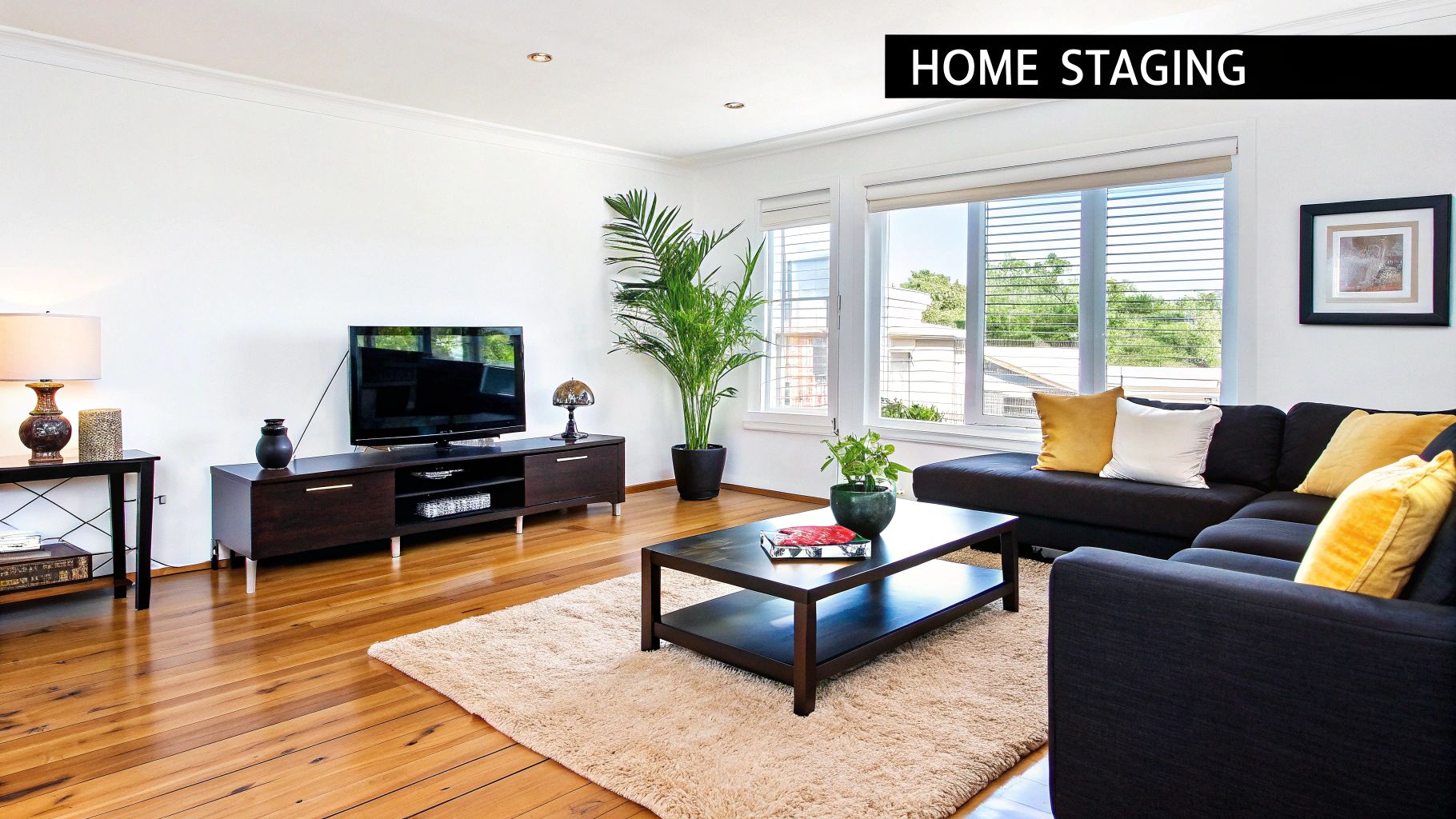
Setting your asking price is probably the single most important decision you'll make when selling your house privately. It's a real balancing act. Price it too high, and you risk your property going stale on the market for months. Go too low, and you're leaving serious money on the table.
The trick is to take your emotions completely out of it and start thinking like a professional appraiser. That means relying on cold, hard data—not what you feel your home is worth or the magic number you need to make your next move. A data-driven approach gives you the confidence to set a price that pulls in genuine buyers from day one.
Perform Your Own Market Analysis
Before you even start dreaming up a number, you need to do a comparative market analysis (CMA). This is exactly what we agents do, and you can get your hands on much of the same information. Your mission is to find recently sold properties in your suburb that are as similar to yours as possible.
Jump onto major property portals like Domain and Realestate.com.au. Dive into their 'sold' sections and look for properties that have sold in the last 3-6 months, ideally within a one-kilometre radius of your place.
You'll want to focus on homes with similar DNA to yours:
- Number of bedrooms and bathrooms: This is a huge driver of value.
- Land size and house size: Try to compare square metres where you can.
- Age and condition: Look for homes from a similar era and with a similar level of renovation.
- Unique features: Take note of extras like pools, big sheds, or fantastic views.
I always recommend popping this info into a simple spreadsheet. Track the comparable properties and their final sale prices. It won't take long before you see a realistic price bracket for your own home start to emerge.
Honestly Assess Your Home's Strengths and Weaknesses
Once you have your list of comparable sales, it’s time to be brutally honest with yourself. Walk through your home with a buyer's critical eye. How does it really stack up against the places you just researched?
Be objective about what adds value and what detracts from it. A brand-new kitchen is a definite win. But a dated bathroom or a driveway full of cracks? A buyer will spot those instantly and start deducting dollars in their head.
Make two columns: one for your home's best features and another for its drawbacks. This helps you logically position your price within the range you've identified. If it’s fully renovated and presents beautifully, you can aim for the higher end. If it needs a bit of love, pricing it slightly lower will attract the right kind of attention.
Pricing Psychology: One of the most common mistakes I see private sellers make is starting with an inflated price. Research consistently shows that properties that have to be price-dropped often sell for less than if they were priced correctly from the start. Overpricing can put a stigma on a property, making buyers wonder, "What's wrong with it?"
The Value of an Independent Valuation
If you're still struggling to settle on a final figure, or if your property is unique with few direct comparisons, investing in a professional valuation is a very smart move. For a few hundred dollars, a certified valuer will give you an unbiased, legally recognised assessment of your home's current market worth.
This report isn't just a number; it's a detailed analysis that becomes a powerful tool during negotiations. It shows potential buyers that your asking price isn't just a figure you plucked from thin air—it’s based on a professional, impartial assessment. This can be especially helpful if you're thinking about alternative sales methods. For more on this, you can learn about the pros and cons of an off-market sale in our guide.
In a market where housing values are constantly on the move, having this kind of data is invaluable. For example, in early 2025, the total value of Australian residential dwellings climbed to a staggering $11.37 trillion AUD, with the national mean dwelling price tipping over the $1 million mark for the first time. You can review the full government report on dwelling values to see the bigger picture.
An expert report gives you the confidence to stand firm on your price, ensuring you walk away with the best possible result from your private sale.
Right, you've landed on a price. Now for the fun part: creating a marketing campaign that actually sells. When you're going it alone without an agent, your marketing can't just be 'good enough'—it needs to be every bit as polished and professional as what the top agencies are putting out. This is your chance to stand out and show buyers your property is a serious contender.
Think of your marketing not as just a "for sale" sign, but as telling a story. You're trying to get potential buyers to see themselves in your home, brewing coffee in the kitchen or relaxing in the garden. Every photo, every word has to work together to build that excitement and draw people in.
The Non-Negotiable Starting Point: Professional Photos
Let’s be blunt: in real estate, your photos are everything. They’re the very first thing a buyer sees, and if they're dark, blurry, or just plain bad, you've lost them before they've even read the first word of your description. Skimping here is probably the single biggest mistake I see private sellers make.
I can't stress this enough: your phone's camera won't cut it. A professional property photographer knows how to use light and angles to make a room feel bigger, brighter, and more welcoming. It might cost a few hundred dollars, but a set of stunning photos can make a huge difference to your final sale price.
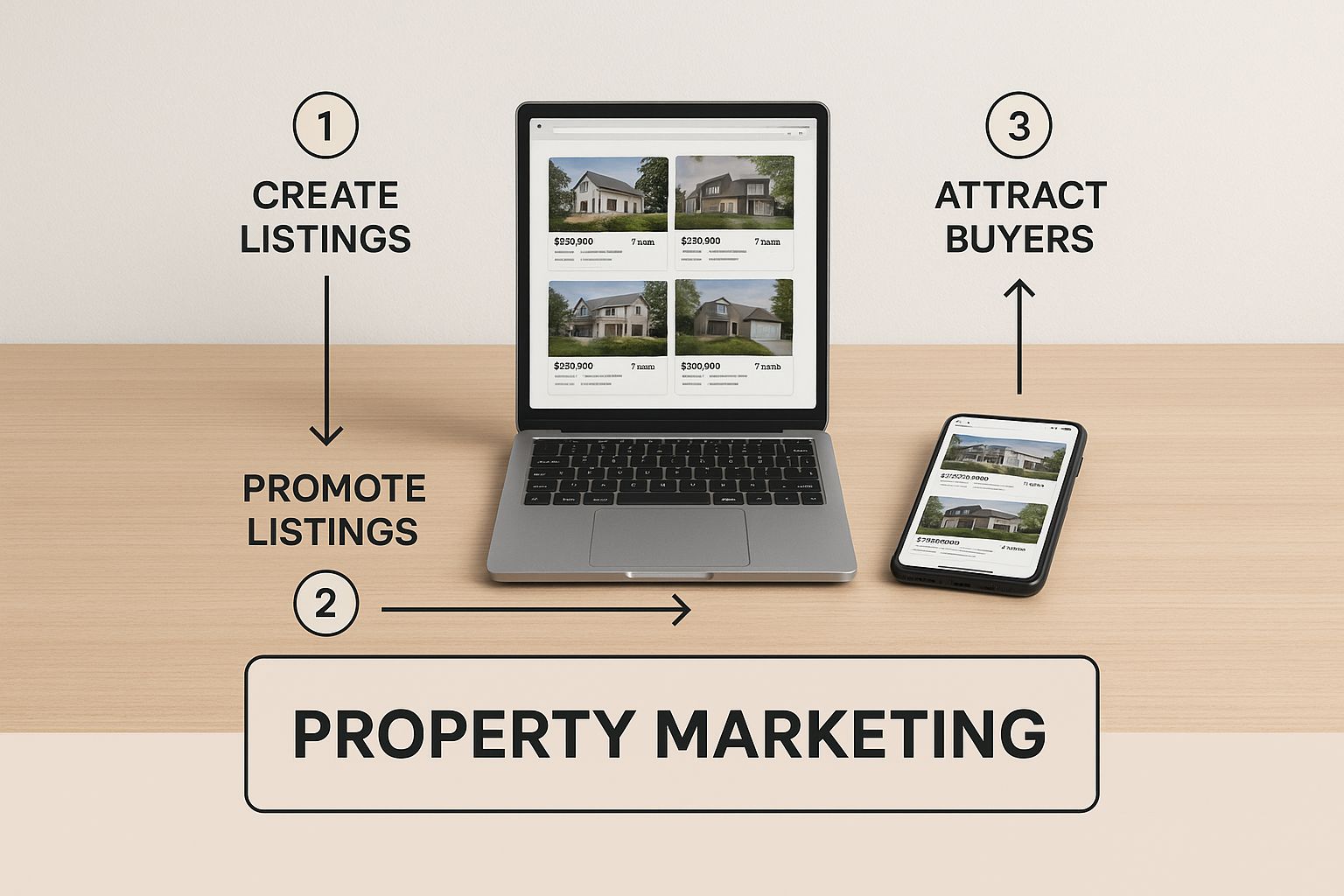
The image above really drives the point home. Your online presence is your new shopfront, and it all starts with incredible visuals.
Crafting a Story with Your Property Description
Once those amazing photos have hooked them, your property description needs to reel them in. Ditch the boring list of features. Instead, you need to paint a picture of the lifestyle that comes with the keys.
- Go beyond the basics: Don't just list "three bedrooms." Talk about the "sun-drenched master suite with a walk-in robe and private balcony—the perfect spot for a morning coffee."
- Sell the neighbourhood, not just the house: Mention the "short stroll to the local cafe," the "family-friendly park at the end of the street," or the "easy commute with public transport just minutes away."
- Make it easy to read: Use short, punchy sentences and bullet points. Buyers are scrolling quickly, so you need to make the key information jump off the page.
Your goal is to forge an emotional connection. You're helping buyers imagine their life in your space, not just buying bricks and mortar. For a more detailed look at getting your home ready, check out our ultimate guide to selling your home which includes a free PDF checklist.
Your Private Sale Marketing Checklist
To keep you on track, here’s a simple checklist covering the essential marketing tasks. This will help you plan your timeline and ensure your property gets the exposure it deserves, from pre-listing prep right through to following up after inspections.
| Task | Timeline | Key Considerations |
|---|---|---|
| Professional Photography | 1-2 weeks before listing | Book in advance. Ask for a mix of wide-angle and detail shots. |
| Write Property Description | 1 week before listing | Focus on benefits, not just features. Proofread for any typos! |
| Create Floor Plan | 1 week before listing | Many photographers offer this. It's a huge help for buyers. |
| List on Portals (FSBO) | Listing Day | Choose your package. Have all photos & text ready for upload. |
| Install 'For Sale' Sign | Listing Day | Place it in a highly visible location. Include your contact number. |
| Prepare Flyers/Brochures | Before first open home | A simple, one-page summary with photos and key details. |
| Schedule Open Homes | Weekly | Pick a consistent time (e.g., every Saturday at 11 am). |
| Post-Inspection Follow-up | Within 24 hours of open | Send a simple 'thank you' text or email to attendees. |
Following a structured plan like this takes the guesswork out of marketing and makes the whole process feel much more manageable.
Running an Effective Open Home
The open home is showtime. It's where online interest turns into a real, tangible feeling for your property. To make it a smashing success, your focus should be on creating a warm, welcoming, and neutral space.
First, declutter and depersonalise. Pack away the family photos, the kids' artwork on the fridge, and any bulky furniture. You want buyers to see their future in the house, not your present.
Next, set the mood. Open all the blinds to flood the place with natural light, turn on every light, and maybe play some soft, neutral background music. A subtle, clean scent from a diffuser can also work wonders.
When people arrive, be a gracious host, not a pushy salesperson. Greet them warmly at the door, hand them a flyer, and then step back. Let them explore at their own pace. Be ready to answer questions, but don't hover over their shoulder.
And finally, gather that precious feedback. Have a simple sign-in sheet to collect names and numbers for follow-ups. As visitors are leaving, a friendly "So, what did you think?" can give you invaluable insight into how your property is being received by the market.
Navigating Australian Property Law and Paperwork
Let's be honest, the legal side of selling your own home is probably what keeps you up at night. It’s the part that feels the most intimidating for anyone selling without an agent. While it definitely needs your full attention, getting your head around the essential documents and legal steps is far from impossible. In fact, getting this right isn't just a good idea—it's a legal must-have that protects both you and the buyer from headaches down the track.
The absolute heart of any property sale in Australia is the Contract of Sale. This isn't just a handshake on paper; it's a watertight legal document that maps out every single term and condition. It clearly states the price, the settlement date, and any special conditions, like the sale being subject to the buyer getting finance or a clean building and pest report.
Alongside the contract, you'll have another critical document: the Vendor's Statement. You’ll hear it called different names depending on where you are—it's the famous Section 32 in Victoria or requires a Section 149 Certificate in New South Wales. This statement is your legal obligation to disclose key information about the property to the buyer, covering things like council zoning, any mortgages on the title, and details of building permits from the last few years.
Understanding State-Specific Nuances
One thing you'll quickly learn is that Australian property law isn't a single national rulebook. It changes quite a bit from state to state. What's standard procedure in Queensland might be completely different in Western Australia. If you're going it alone, knowing these local differences is non-negotiable.
Here are a few key variations to get on top of:
- Disclosure Obligations: How much you have to tell a buyer varies. Some states demand extensive upfront disclosure, while others lean more towards a "buyer beware" approach, putting the onus on the purchaser to find things out for themselves.
- Cooling-Off Periods: Most states give buyers a "cooling-off" period—a few business days to change their mind after signing the contract. The length of this period and when it applies (it's often waived for auctions) can differ significantly.
- Offer and Acceptance Process: Even the way offers are made and accepted can change. In some places, a verbal offer might be considered binding, but in others, nothing counts until it's in a signed contract. For anyone selling in WA, the local process is unique. It’s well worth getting familiar with the specific Offer and Acceptance process in Western Australia to ensure you handle offers by the book.
Dropping the ball on your state’s laws can have serious fallout. A buyer could pull out of the sale, or worse, you could face legal action long after you've handed over the keys.
Your Most Important Safeguard: The Conveyancer
You're wearing the marketer and negotiator hats, but you should never try to be your own lawyer. Hiring a professional conveyancer or property solicitor is the single best investment you’ll make on your FSBO journey. Think of it as your non-negotiable safeguard.
Why You Must Hire a Legal Professional
Bringing a conveyancer or solicitor on board isn’t just about ticking a box; it’s about protecting your biggest financial asset. Their entire job is to make sure the sale is legally sound and that your interests are protected from start to finish.
A good conveyancer will do the heavy lifting for you:
- Prepare the Contract of Sale: They'll professionally draft the contract and the all-important vendor disclosure statement, making sure every detail complies with state law.
- Handle the Deposit: They manage the buyer's deposit money, holding it securely in a trust account as legally required.
- Liaise with the Buyer's Reps: They become the point of contact for the buyer's legal team, handling any negotiations on contract terms and coordinating the run-up to settlement.
- Ensure a Smooth Settlement: On the big day, they manage the official transfer of title and work with the banks to make sure the property is legally and financially handed over to the new owner without a hitch.
Trying to save a few hundred dollars by handling the legal work yourself is a classic false economy. The risk of one small mistake is enormous, and it could cost you the entire sale or expose you to major legal and financial trouble. Do yourself a favour: find a reputable local conveyancer early. It will be the smartest move you make.
Handling Negotiations and Closing the Deal

Getting that first offer is a fantastic feeling, a real milestone. But this is where the game truly begins. All your hard work culminates in this high-stakes phase, where a cool head and a clear strategy for navigating negotiations and the final closing process are essential.
Your main goal is to turn that initial interest into a solid, legally binding contract that not only gets you the price you want but also protects you every step of the way. Let's walk through how to manage this critical stage with confidence.
Qualifying Buyers and Understanding Offers
Not every offer you receive will be on equal footing. Before the excitement takes over, you need to qualify your potential buyer. A serious buyer will be transparent and, most importantly, have their finances ready to go. The first thing you should ask is whether they have pre-approval for their home loan.
Pre-approval is a big deal. It means a lender has already run the numbers on their financial situation and has, in principle, agreed to lend them the money. This one question quickly sorts the serious contenders from the window shoppers.
You'll also need to get your head around the two types of offers that will likely land on your table:
- Unconditional Offer: This is the gold standard. It means the buyer is ready to commit to buying your property right now, with no strings attached. They've done their homework and are ready to sign on the dotted line.
- Conditional Offer: This is far more common. The offer hinges on certain conditions being met. These often include securing final finance approval, getting a satisfactory building and pest inspection, or sometimes, even selling their own home first.
While an unconditional offer gives you peace of mind, most sales will have conditions. Your job is to weigh up how reasonable these conditions are and how likely it is the buyer can meet them in the given timeframe.
Developing Your Counter-Offer Strategy
It’s a rare day when a buyer’s first offer is their absolute best. Negotiation is just part of the dance, so you need a plan for how you’ll respond, especially to offers that might seem a bit cheeky. If a "lowball" offer comes in, try not to take it personally. Just see it as the opening move in a conversation.
Always, and I mean always, put your response in writing through your conveyancer. This keeps things professional and ensures you have a clear paper trail of the entire negotiation.
Here’s a simple way to frame your counter-offer:
- Acknowledge and Thank: Kick things off by thanking them for taking the time to submit their offer.
- State Your Position: Politely decline their initial offer.
- Present Your Counter: Clearly state the price you are willing to accept.
- Justify (Briefly): You can back up your price by referencing a recent comparable sale or pointing out a unique feature of your home. Keep it brief and to the point.
- Set a Deadline: Give them a reasonable timeframe to respond, like 24-48 hours. This creates a healthy sense of urgency.
The negotiation dance is all about finding the middle ground. Your aim isn't to "win" but to reach a mutually agreeable price and terms that allow both parties to feel good about the transaction.
From Acceptance to Settlement Day
Once you've shaken hands (verbally) on a price and the terms, it's time to make it official. Your conveyancer steps in to finalise the Contract of Sale with all the agreed-upon details. This is then sent to the buyer’s legal team for signing. After both you and the buyer have signed identical contracts and the deposit is safely in a trust account, the contracts are "exchanged." At this point, the sale is legally binding.
The time between the exchange and the final settlement is typically 30 to 90 days. During this period, the buyer is busy ticking off their conditions, like getting final loan approval and arranging inspections.
As the seller, you'll need to provide reasonable access for these inspections. This waiting game can feel a bit slow, but it's a crucial part of the process.
This journey is a familiar one for many in Australia. Recent data shows about 66% of households own their own home, although affordability is a growing challenge. These buyers are often looking to save on costs, making a private sale an attractive option, even if they're less familiar with the process. You can discover more home ownership statistics in Australia to get a better feel for the market.
Finally, settlement day arrives! This is the grand finale where the legal and financial handover happens behind the scenes. Your conveyancer will coordinate with the buyer’s representatives and the banks. Once the funds have cleared into your account, you'll get the call that settlement is complete. Now you can officially authorise the release of the keys to the proud new owners.
Common Questions About Private House Sales
Diving into a private house sale can feel like stepping into a new world, and it’s natural to have a few questions buzzing around. Let's walk through some of the most common queries we hear from homeowners thinking about selling without an agent. Getting clear, practical answers is the first step to moving forward with confidence.
How Much Can I Realistically Save?
The most immediate saving is, of course, the agent's commission. This fee usually sits somewhere between 1.5% to 3% of your home's final sale price. For a property selling at $800,000, that’s a hefty $12,000 to $24,000 straight back in your pocket.
But it’s not quite that simple. You need to account for your own marketing budget. Think professional photography, online listing fees, and a quality 'For Sale' sign—these costs can easily run into a few thousand dollars.
Plus, you have the non-negotiable legal costs for a conveyancer or solicitor. Your true net saving comes down to whether you can secure a sale price as good as (or better than) what a seasoned agent might have achieved, after you've paid for everything.
Do I Absolutely Need a Lawyer or Conveyancer?
Yes. This one isn’t up for debate. In Australia, hiring a licensed conveyancer or property solicitor for a private sale isn’t just a good idea; it’s your most critical protection. Trying to handle the legal maze of a property sale alone is a recipe for disaster.
Here’s what your legal expert will manage:
- Preparing Legal Documents: They’ll draft the binding Contract of Sale and the crucial Vendor's Statement (like the Section 32 in Victoria), making sure everything is compliant with state law.
- Managing the Deposit: They hold the buyer's deposit safely in a regulated trust account, which is a legal must-do.
- Ensuring Legal Compliance: They ensure all your legal duties, especially around disclosure, are ticked off to avoid any future claims or legal battles from the buyer.
- Overseeing Settlement: They coordinate everything with the buyer’s legal team and the banks to ensure a seamless transfer of title and funds on settlement day.
Think of this fee as the best investment you'll make in the whole process. It's a small price to pay to avoid potentially catastrophic financial and legal fallout.
What Are the Biggest Risks of a Private Sale?
Selling your own home is definitely achievable, but you need to go in with your eyes wide open to the risks. Knowing the challenges helps you prepare for them.
The three main hurdles you’ll face are:
- Incorrect Pricing: This is the classic pitfall. Price it too low, and you leave a pile of cash on the table. Price it too high, and you'll alienate genuine buyers, leaving your property to languish on the market.
- Weak Negotiation: A sharp buyer's agent negotiates property deals every single day. If you lack the skill and emotional detachment to negotiate hard, you could end up with a lower sale price or agreeing to terms that don't favour you.
- Legal and Compliance Errors: One wrong move with the paperwork or failing to disclose something required by your state can have massive consequences, from the sale collapsing to being sued down the track.
While a conveyancer handles the legal risk, the immense pressure of pricing your home correctly and negotiating the final deal falls squarely on your shoulders.
Can I List on Realestate.com.au and Domain Myself?
No, as a private individual, you can't just create a listing on the major portals like Realestate.com.au or Domain. These platforms are licensed exclusively for real estate agents.
But there's a simple and well-established workaround: 'For Sale By Owner' (FSBO) services. These are licensed agencies that, for a flat fee, will get your property listed on all the major Australian property websites.
This is the standard path for private sellers. It gives you the mainstream exposure you need to find a large pool of potential buyers. All enquiries from the listings are sent directly to you, so you remain in full control of inspections and communication. It’s the best way to make sure your property gets seen by the widest possible audience.
Considering selling your home in Mandurah or the surrounding suburbs? As a dedicated local expert, David Beshay Real Estate offers a free, no-obligation property appraisal to give you a clear understanding of your home's current market value. Let's work together to create a personalised sales strategy that maximises your return.


Pingback: 7 Pitfalls of Selling House Privately in Mandurah (2025) - David Beshay Real Estate - The Agency