


Styling a house for sale is really the art of making your property appeal to as many potential buyers as possible. It’s all about creating an emotional connection—that gut feeling that helps buyers truly see themselves living in the space. Done right, this often leads to a quicker sale and a much better final price.
The Real Impact of Styling Your House for Sale
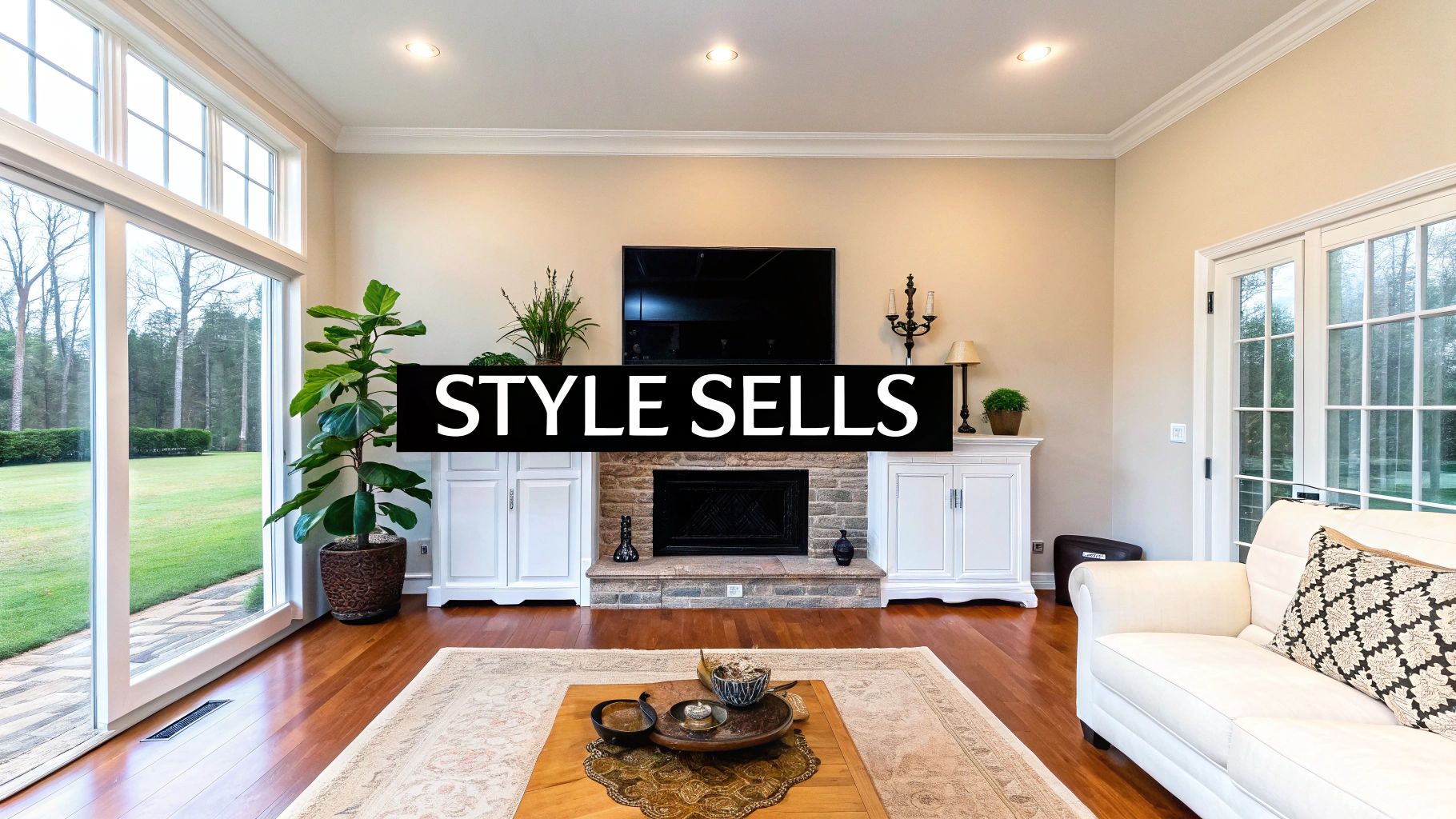
Have you ever walked into a display home and just felt it was the one? That feeling is exactly what professional styling aims to create for buyers. It’s less about your personal taste and more about smart, strategic marketing. The goal is simple: transform your lived-in house into an aspirational, market-ready home that buyers fall in love with.
This process goes well beyond a quick tidy-up. It's a deliberate effort to depersonalise, declutter, and arrange furniture and decor to show off your home’s best features. Think of it as setting the stage for the next owner's life story to unfold.
Why Styling Creates a Competitive Edge
In a busy property market, first impressions are everything. With over 90% of buyers starting their property hunt online, your photos need to be compelling enough to get them through the door for a viewing. A well-styled home photographs beautifully, always looking brighter, more spacious, and incredibly inviting.
But the real magic happens in person. During an open home, styling helps forge that all-important emotional connection. When a buyer can easily picture their own couch in the living room or imagine hosting a dinner party in the dining area, they stop seeing a house and start seeing a home. This emotional investment is what often motivates a strong offer.
A thoughtfully styled home tells a story that buyers can see themselves in. It’s about selling a lifestyle, not just bricks and mortar. This crucial step can be the difference between a listing that lingers and one that sells quickly for a premium.
The Financial Benefits of Smart Presentation
Putting a bit of money into styling isn't just another expense—it’s a strategic move with a proven return. It's the small details that add up to create a perception of value and care: a fresh coat of neutral paint, updated throw pillows, or a few strategically placed lamps.
The numbers really back this up. The return on investment (ROI) for home styling in Australia is impressive, often delivering 8% to 10% higher returns on the asking price. Buyers form an opinion within the first 7 to 10 seconds of seeing a property, making that initial visual impact absolutely critical. If you'd like to dive deeper, you can explore the full home staging statistics and ROI.
A beautifully presented home sends a clear signal to buyers that the property has been meticulously looked after. This reduces their perceived risk and makes them more confident in their decision to buy. That confidence can translate directly into a higher sale price and a smoother negotiation, making styling one of the most profitable things you can do before listing your home.
Your Pre-Styling Action Plan for Maximum Appeal
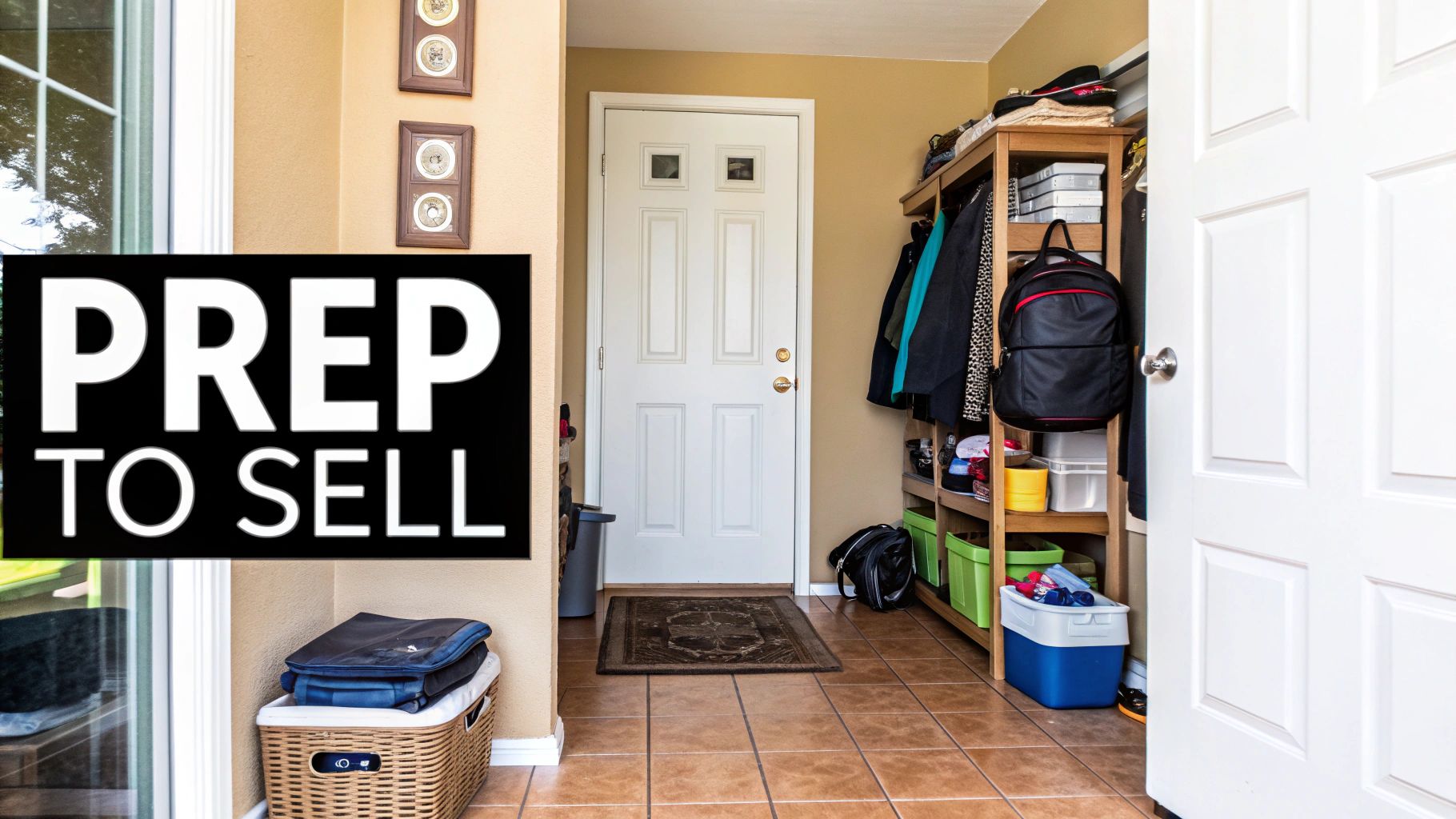
Before you even think about fluffing cushions or choosing a new throw rug, the real work begins. Styling a house for sale is all about creating the perfect canvas first. This pre-styling phase is where you tackle the little things that buyers notice—often subconsciously—which can completely shape their impression of your home.
This isn't just about looking good. It’s about sending a clear signal to buyers that your home has been genuinely loved and well-maintained. They're searching for a property that feels solid and cared for, and this initial groundwork sets that exact tone from the moment they walk through the door.
Declutter with a Buyer's Eye
The absolute first step is a serious decluttering session. And I don’t mean finding clever new storage spots for your things; I mean getting them out of the house. What feels like a normal, lived-in home to you can easily look cramped and chaotic to a stranger.
Walk through every single room and be ruthless. The goal here is to make each space feel bigger, brighter, and more functional. For a more detailed walkthrough, you can learn more about how to prepare your house for sale in Mandurah.
Here’s where you should focus your energy:
- Surfaces: Clear off kitchen benchtops, bathroom vanities, desks, and coffee tables. Keep only one or two intentional decorative pieces.
- Storage Areas: Buyers always open cupboards and wardrobes. Your goal should be to have them at least 50% empty to show off how much storage space is available.
- Floors: Get rid of magazine stacks, extra little bits of furniture, and anything else that breaks up the visual flow of the flooring.
Your home is no longer just your living space; it's a product on the market. Depersonalising allows buyers the mental space to imagine their own life, family, and belongings within the four walls.
The Power of a Deep Clean
A proper deep clean is so much more than a quick vacuum and wipe-down. It needs to be a top-to-bottom, corner-to-corner effort. Honestly, it's one of the most cost-effective things you can do to make your home feel fresh and new. A sparkling clean property immediately tells buyers it’s been well looked after.
Pay close attention to the spots that collect grime over time, like skirting boards, window tracks, and light fittings. And don’t forget to deal with any lingering smells from pets or cooking. A clean, neutral scent is key to creating a welcoming vibe.
Tackle Small Repairs and Neutralise the Space
Every home has that list of small, nagging jobs—the dripping tap, the scuffed wall, the sticky door handle. Now is the time to finally tick them off. On their own they seem minor, but together they can create an impression of neglect, giving buyers a reason to start chipping away at your asking price.
Here’s a quick checklist of fixes that pack a punch:
- Fresh Paint: A new coat of neutral paint is probably the best return on investment you'll find. Stick to light, airy colours like off-white, soft grey, or a warm beige.
- Update Hardware: Swapping out dated cabinet handles and knobs in the kitchen or bathroom is a cheap and cheerful update that can instantly modernise a space.
- Check Lighting: Make sure every single light bulb is working and that they're all the same colour temperature. A warm white usually creates the most consistent, inviting glow.
While you're at it, start neutralising your décor. This means packing away personal photos, heavily stylised artwork, and anything that reflects a very specific taste. Try to think of your home as a beautiful, high-end hotel suite—clean, stylish, and impersonal. This creates a blank canvas, making it much easier for a wider range of buyers to connect emotionally with the property.
Before you start styling, it’s wise to assess which pre-listing fixes will give you the most bang for your buck. Some small, inexpensive updates can dramatically lift a room's appeal, while others might not be worth the investment.
High-Impact vs. Low-Cost Pre-Styling Fixes
| Repair or Update | Estimated Cost (Low-High) | Impact on Buyer Appeal | DIY Difficulty |
|---|---|---|---|
| Fresh coat of neutral paint | $200 – $1,000+ | High | Easy to Moderate |
| Professional deep clean | $300 – $800 | High | N/A (Hire Out) |
| Update cabinet hardware | $50 – $300 | Medium | Easy |
| Replace dated light fittings | $100 – $500 | Medium | Moderate |
| Fix leaky taps/minor plumbing | $150 – $400 | High | Moderate to Hard |
| Garden tidy-up & mulching | $100 – $400 | High | Easy |
| Pressure wash driveway/paths | $150 – $350 | Medium | Easy to Moderate |
| Regrout tiles (kitchen/bath) | $200 – $600 | Medium | Moderate |
Focusing on high-impact, low-cost tasks like a garden tidy-up, fresh paint, and a deep clean will always be a winning strategy. These jobs address the first impressions that count the most without breaking the bank.
Room-By-Room Strategies to Wow Potential Buyers
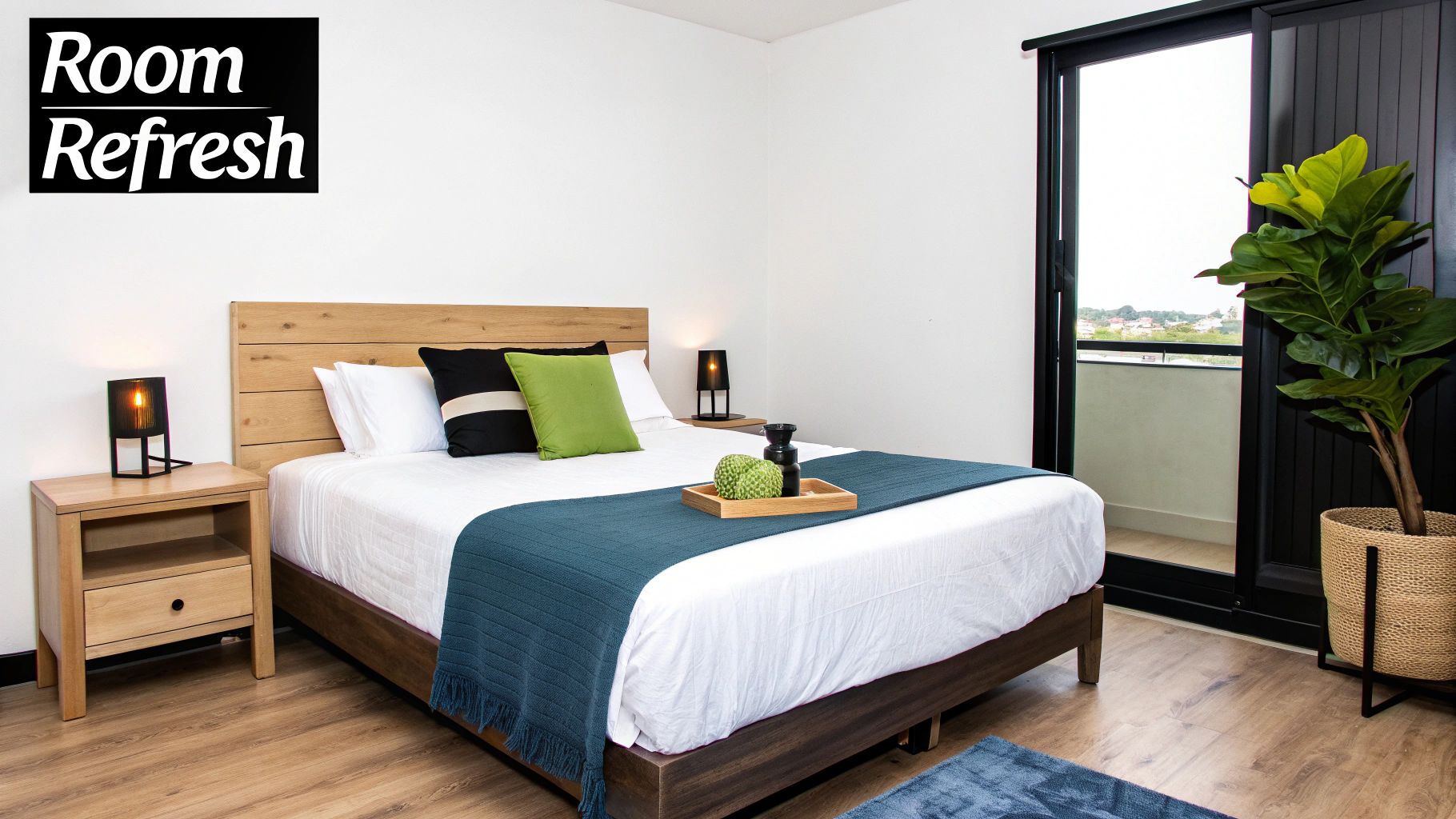
Alright, you’ve done the hard yards—the house is clean, decluttered, and you’ve got a neutral canvas to work with. Now comes the fun part: adding those strategic touches that transform a house into a place buyers can instantly picture themselves living in. This isn't just about plonking down furniture; it's about defining each space and showing off its true potential.
We’re moving beyond generic advice to focus on high-impact techniques for the rooms that truly sell a home. Getting this right can make a huge difference to your bottom line. In fact, well-staged homes can fetch a significant premium, averaging an increase of AUD 69,017, which works out to a 3% to 10% higher sale price compared to unstaged properties. The homes that sell the fastest for the best price almost always nail the styling in the living room, kitchen, and master bedroom.
Crafting an Irresistible Living Room
The living room is where buyers imagine their future—relaxing with family, entertaining friends. Your goal is to make it feel comfortable, spacious, and versatile. The classic mistake I see all the time is furniture pushed up against the walls. It creates a sterile, waiting-room vibe and actually makes the space feel smaller.
Instead, create an inviting conversation zone. Pull your sofa and armchairs off the walls and group them around a central feature like a coffee table or a nice rug. It’s a simple change that completely alters the flow and makes the room feel more functional and intimate.
To finish it off:
- Add softness: A few plush cushions and a soft throw blanket tossed over the sofa make it look instantly more inviting.
- Define the area: A large, neutral rug does a brilliant job of anchoring the furniture and tying the whole room together.
- Keep surfaces simple: The coffee table shouldn’t be cluttered. A couple of tasteful books, a small plant, or a single decorative bowl is more than enough.
Showcasing a Functional and Aspirational Kitchen
When it comes to the kitchen, buyers are looking for two things: bench space and storage. Your job is to make it crystal clear that your kitchen has an abundance of both. Start by clearing every single thing off your benchtops, leaving only a few carefully selected items.
Think of it like a high-end showroom display. A sleek coffee machine, a bowl of fresh lemons, or a stylish timber chopping board leaning against the splashback is all you need. This minimalist approach makes the benchtops seem huge and hints at a clean, organised lifestyle.
When styling your kitchen, less is always more. You're not just selling benchtops and cupboards; you're selling the idea of an effortless, organised life that buyers can achieve in this space.
Don’t forget, potential buyers will absolutely open cupboards and pantry doors. Make sure your shelves are neat and only about half to two-thirds full. This creates a powerful illusion of endless storage and sends a subtle message: "There's more than enough room for all your things here." For more tips on these crucial areas, have a look at our guide on the fundamentals of staging your home for sale.
Transforming the Master Bedroom into a Serene Retreat
The master bedroom needs to feel like a luxurious escape, like a boutique hotel room where you can relax and recharge. The key here is creating a calm, symmetrical, and uncluttered atmosphere. The bed must be the star of the show.
Here’s how to get that hotel-luxe feel:
- Make a plush bed: Start with crisp, white or light-neutral linen. Then, add layers—a textured quilt, a folded throw at the foot of the bed, and plenty of plump pillows.
- Embrace symmetry: If you have the space, matching bedside tables with a simple lamp on each is a must. Symmetry is incredibly calming and makes a room feel more ordered and spacious.
- Clear the clutter: Bedside tables should hold nothing more than the lamp and maybe a single book. Remove all personal photos, chargers, and trinkets from dressers and other surfaces.
Styling Bathrooms to Feel Like a Spa
Bathrooms have to feel squeaky clean and peaceful. Your aim is to remove every trace of daily life and present a pristine, spa-like environment. In this room, zero clutter is the only rule.
First, hide all your personal items. Shampoos, toothbrushes, soaps—get them all out of sight in a basket that you can easily tuck away before a viewing. It's also a good idea to remove bathmats, as they can make a small bathroom feel cramped and often look untidy.
Then, add a few simple, elegant touches:
- Pristine towels: Hang a set of fluffy, brand-new white towels. A classic stylist's trick is to layer a folded hand towel over a bath towel.
- A pop of green: A small plant that loves humidity, like an orchid or a fern, can bring a bit of life and colour to the space.
- Simple accessories: A single bar of beautifully wrapped soap in a dish or a stylish liquid soap dispenser is all you need on the vanity.
By focusing your energy on these key rooms, you create a lasting positive impression that sticks with buyers. This targeted approach ensures you’re strategically styling your house for sale, highlighting its best features and helping buyers fall in love with what could be their new home.
Using Light and Space to Create a Lasting Impression
Once you've styled each room, it's time for the final touch—the secret ingredients that make a home feel truly special: light and space. These two elements are your property’s most valuable assets. Get them right, and you'll make your home feel bigger, brighter, and infinitely more inviting.
When buyers walk into a light-filled, open-feeling room, there's an instant emotional connection. It’s not about knocking down walls; it’s about creating clever illusions. With a few strategic tweaks, you can completely change how a room feels, making it look incredible in photos and feel expansive and welcoming in person.
Let There Be Light: The Key to a Brighter Home
Natural light is a massive selling point, so your first job is to maximise every single ray. Start with the windows. Heavy, dark curtains are notorious for soaking up light and making a room feel closed-in and dated. If your window treatments have seen better days, now’s the time for an update.
For a house on the market, your best bets are:
- Sheer Curtains: They provide a touch of privacy while letting soft, beautiful light filter through. It’s an instant recipe for a bright and airy vibe.
- Light-Coloured Blinds: Simple roller blinds or venetians in white or a soft neutral are perfect. They give you control over the light without dominating the space.
And don't forget the glass itself. Make sure every window is sparkling clean, inside and out. It’s a tiny detail that makes a huge difference to how light enters a room. Before any inspection, throw open every curtain and blind to let the sunshine flood in.
But it’s not just about daylight. Your artificial lighting is just as critical for creating warmth and mood, especially for those twilight viewings.
"A well-lit room feels welcoming and clean. Think in layers: ambient (main ceiling lights), task (lamps for reading), and accent (to highlight art or features). This combination eliminates dark corners and makes the entire space feel more cohesive and inviting."
Layer your lighting in key spaces like the living room and master bedroom. A stylish floor lamp tucked into a dim corner or a pair of matching lamps on bedside tables adds a layer of sophistication. It makes the space feel like it’s been professionally designed. And a quick tip: check that all your light bulbs are working and stick to a consistent warm white colour for a cosy, welcoming glow.
Creating the Illusion of More Space
With the lighting sorted, it’s time to amplify the sense of space. One of the most common mistakes I see is sellers pushing all their furniture hard up against the walls. It seems logical, but it actually makes a room feel static and less inviting.
Try this instead: pull your furniture away from the walls. Just a few centimetres can be enough to let the room breathe. This simple trick creates defined zones and clearer pathways, making the space feel larger and more purposeful. In the living room, for instance, floating a sofa and armchairs around a central rug creates a cosy conversation nook that feels distinct from the main walkway.
Mirrors are another secret weapon. Placing a large mirror opposite a window is a classic trick for a reason—it bounces light all around the room, making it feel brighter and bigger in an instant. This works wonders in smaller rooms, entryways, or narrow hallways by creating an illusion of depth.
Finally, think about the scale of your furniture and decor.
- Less is more: One great armchair is often better than two smaller chairs that just add clutter. Remove any excess furniture.
- Go for leggy furniture: Sofas, coffee tables, and side tables with visible legs let you see more of the floor. This simple visual trick makes the whole area feel more open.
- Keep decor minimal: Clear off surfaces. A few well-chosen, larger pieces will have much more impact than a collection of small, busy trinkets.
Master these techniques, and you'll turn light and space into two of your home's biggest selling points, leaving a powerful and positive impression on every buyer who walks through the door.
Creating a Realistic Budget and Timeline for Styling
Great styling doesn't just happen; it's the result of a smart, well-thought-out plan. Before you even think about paint colours or cushions, you need to map out your budget and timeline. Getting this right from the start is the key to managing the whole process without any last-minute stress and making strategic choices that deliver the best return on your investment.
So, how much should you spend? That's the million-dollar question, isn't it? While there's no single magic number, it helps to see styling as an investment, not an expense. The data from across Australia backs this up. In Brisbane, for example, properly staged homes have sold for 5% to 10% more than similar unstaged properties. They also get snapped up about 73% faster. These aren't small numbers, and they show just how powerful a first impression can be.
Deciding Between DIY and Professional Styling
Your budget will be heavily influenced by one big decision: are you going to tackle this yourself or bring in a professional?
Going the DIY route can be incredibly cost-effective, especially if you have a knack for design and don't mind a bit of hard work. Your main costs will be high-impact, low-cost items like a fresh coat of paint, new throw cushions, some indoor plants, and a few modern decor pieces to freshen things up.
On the other hand, hiring a professional stylist comes with a larger upfront cost, but you're paying for their expertise, their inventory of on-trend furniture, and—crucially—their objective eye. They know exactly what appeals to the broadest range of buyers and can depersonalise a space in a way that's often tough for homeowners to do themselves. This is usually the best path if you're short on time or find it hard to see your home through a buyer's eyes. If you go this route, selecting the right furniture to stage a home is a critical piece of the puzzle.
To help you weigh it up, here’s a quick comparison:
DIY Styling vs. Professional Staging
| Factor | DIY Styling | Professional Staging |
|---|---|---|
| Cost | Lower initial cost. Expenses are for materials, decor, and any rentals. | Higher upfront investment. Costs include consultation, furniture hire, and styling fees. |
| Time & Effort | Requires significant personal time for planning, shopping, and physical work. | Minimal time commitment from the seller. The pros handle everything. |
| Expertise | Relies on your own design sense and ability to see the home objectively. | Access to expert knowledge of market trends and buyer psychology. |
| Resources | Limited to what you can buy, borrow, or already own. | Access to a large inventory of high-quality, modern furniture and decor. |
| Objectivity | Can be difficult to detach emotionally and depersonalise your own space. | Provides a crucial, unbiased perspective to maximise broad appeal. |
Ultimately, the choice between DIY and professional staging comes down to a balance of your time, budget, and confidence in your own skills. Both can lead to a fantastic result if you plan properly.
Mapping Out a Practical Timeline
A clear timeline is your best friend. It stops the process from feeling overwhelming and makes sure everything is perfect before the photographer walks through the door. For most homes, a four-week plan is a realistic and manageable timeframe.
Here’s how you can break it down:
- Week 4 (One Month Out): This is all about planning and purging. Lock in your budget, get quotes if you're hiring pros, and start the decluttering process. Be ruthless—every single room needs to be depersonalised.
- Week 3: Time for deep cleaning and repairs. Get on top of those minor fixes you've been putting off, finish up any painting, and book a professional cleaner for a top-to-bottom scrub.
- Week 2: The fun part begins—styling! If you've hired a pro, this is usually when they'll bring in and arrange the furniture. If you're doing it yourself, now's the time to position furniture, hang artwork, and place your key decor items.
- Week 1 (Final Touches): It's all in the details. Add fresh flowers, put out new towels in the bathrooms, and do one final sweep and clean just before the photos are scheduled.
This methodical approach gives you a clear runway to get everything just right, including the little tricks that make a huge difference.
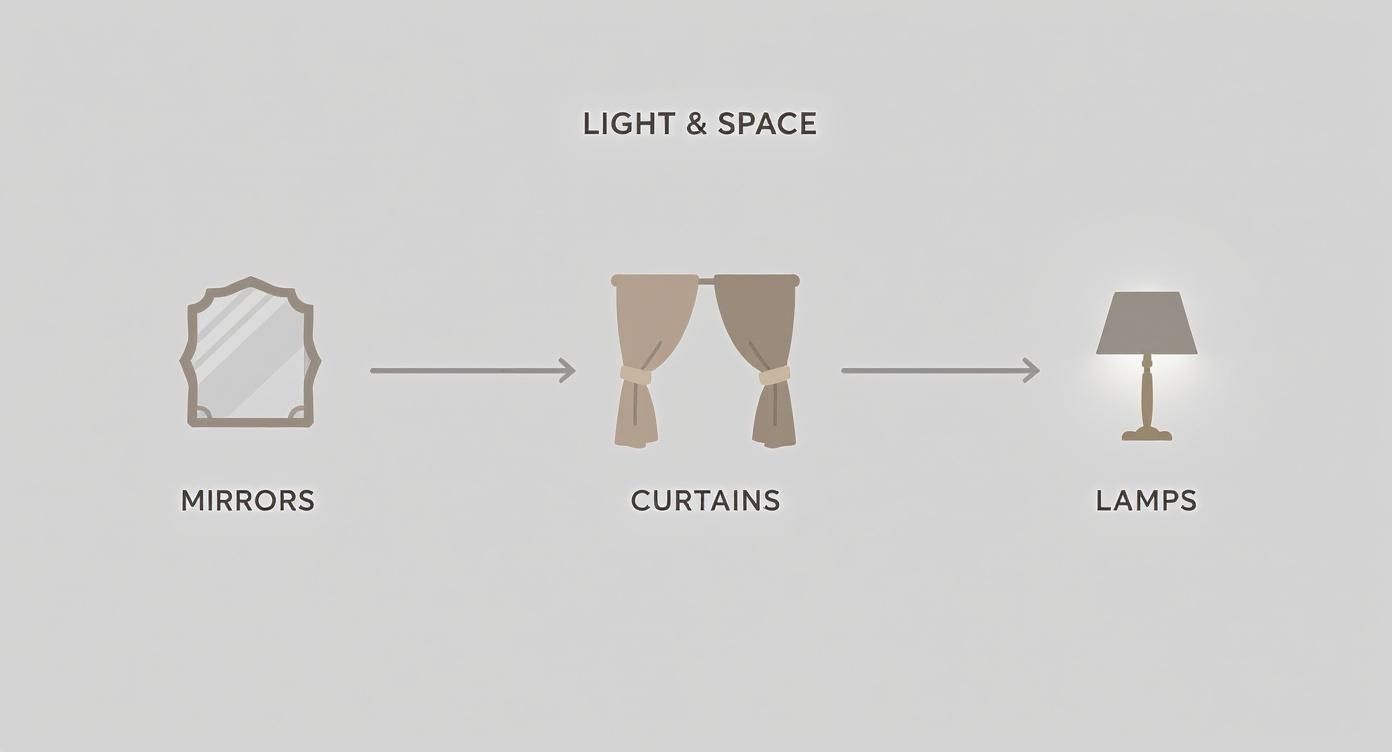
Think about how mirrors can bounce light around a room, how light-coloured curtains can make a space feel airy, and how layered lamps add warmth and ambiance. Each element plays its part in making your home feel bigger, brighter, and more inviting. By carefully planning your budget and schedule, you're not just styling your home; you're setting the stage for a successful and profitable sale.
Your Top Home Styling Questions Answered
When you're getting ready to sell, a hundred questions can pop into your head. How much is this all going to cost? Can I just do it myself? What if I mess it up? It's completely normal to feel a bit overwhelmed.
Let's cut through the noise. I've pulled together the most common questions we get from sellers in Mandurah and laid out some straightforward, practical answers. Think of this as your go-to cheat sheet for styling your home to sell.
How Much Should I Actually Spend on Styling My House?
This is the big one, isn't it? The question on every seller's mind. A solid rule of thumb is to budget between 0.5% and 2% of your home's estimated value. If you're tackling the styling yourself, this money is best spent on high-impact updates that give you the most bang for your buck.
Focus your funds where buyers will notice it first:
- A Fresh Coat of Neutral Paint: Nothing transforms a space faster or more effectively.
- New Cushions and Throws: A few modern throw pillows and a cosy blanket can instantly update a tired living room.
- Modern Light Fixtures: Swapping out a dated pendant light can change the entire feel of a room.
- A Touch of Greenery: A few healthy plants bring life, colour, and warmth into any space.
Now, if you bring in a professional stager, you're looking at a different kind of investment. Costs can start around $1,500 for a smaller apartment and go up to $5,000 or more for a larger family home. It’s so important to see this as an investment, not an expense. The data doesn't lie—a professionally styled home consistently fetches a higher sale price, making that initial outlay a very shrewd move.
Should I Style the House Myself or Hire a Pro?
The choice between DIY and calling in a professional really boils down to three things: your time, your budget, and how confident you feel in your own design skills.
Going the DIY route is a great option if you've got a good eye, can step back and be objective about your own home, and you're ready to roll up your sleeves. It gives you total control over the budget and can be a really satisfying process. The toughest part? Emotionally detaching yourself enough to see your home through a buyer's eyes.
A professional stylist brings one thing you simply can't have: an objective viewpoint. They are absolute experts at depersonalising a space to appeal to the widest possible audience—a task that's incredibly difficult when you're surrounded by years of memories.
Hiring a professional can be a complete game-changer. They come with expertise, an inventory of on-trend furniture that’s perfectly scaled for stunning photos, and a deep understanding of what makes buyers tick. If you're short on time, don't know where to begin, or just can't bring yourself to pack away the family photos, a pro will maximise your home's appeal and, in the end, your final sale price.
What Are the Biggest Styling Mistakes People Make?
Even with the best intentions, it's easy to make small mistakes that can really put buyers off. Knowing what to avoid is half the battle.
One of the most common slip-ups is not decluttering enough. What feels like a normal, lived-in kitchen benchtop to you can look chaotic and cramped to a potential buyer. The aim is to create a feeling of space, which means clearing almost everything off your surfaces.
Another huge one is ignoring smells. Lingering odours from pets, last night's dinner, or even a bit of dampness can be an instant deal-breaker. Before anyone walks through the door, air the house out completely. A subtle, neutral scent from a diffuser can work wonders, but please, stay away from those overpowering plug-in air fresheners.
Poor lighting is another classic culprit. Dark, gloomy rooms feel small and unwelcoming. Before every single viewing, you need to:
- Open every blind and curtain to let in as much natural light as possible.
- Switch on every single light in the house—yes, even the lamps.
- Replace any dim or burnt-out bulbs with bright, warm-white LEDs.
Finally, leaving too many personal photos and mementos out is a mistake we see all the time. It makes it almost impossible for buyers to picture themselves living there. Pack them away carefully. You're creating a welcoming, neutral space where they can start dreaming about their own future.
Feeling more confident about styling your Mandurah home but need some expert guidance? The team at David Beshay Real Estate can provide a complimentary property appraisal and share personalised advice on how to present your home for the best possible outcome. Get in touch with us today to start your selling journey.

