


When you buy a property, one of the biggest questions on your mind is probably, "When do I actually have to pay for all this?" For stamp duty, the simple answer is you'll generally need to have it paid at or before your property settlement.
While the exact timing can vary, the rule of thumb is that the payment is due within a month or so of signing your contract. It's one of the last major hurdles to clear before those keys are officially in your hand.
Understanding Your Stamp Duty Deadline

Think of paying stamp duty as settling the final admin fee before you can take full ownership of your new home. It’s the government's official green light, confirming the legal transfer of the property into your name.
Until this tax is paid, the property title can't actually be registered in your name, which leaves your ownership in a kind of legal limbo. It’s a crucial step that makes the whole transaction official.
Key Timelines and Scenarios
The timing for paying stamp duty isn't the same for everyone; it’s a regulatory requirement tied directly to your specific property transaction. Here in Western Australia, the payment is generally due one month after the duties assessment is issued, which often lines up perfectly with your settlement date.
This timeline is deliberately designed to coincide with the legal transfer of land ownership, making the process as smooth as possible.
To make sure you're prepared, it's vital to understand how different situations can affect your deadline. This will help you budget properly and avoid any last-minute financial surprises. The first step is knowing exactly how much you'll owe, which you can figure out using our stamp duty calculator for WA properties.
Your settlement agent typically manages the stamp duty payment on your behalf. They will collect the necessary funds from you prior to the settlement date to ensure the deadline is met without any issues.
Let's break down some common scenarios you might encounter in Western Australia.
Stamp Duty Payment Timelines at a Glance
This table gives you a quick summary of the typical deadlines for paying stamp duty, depending on your purchase scenario in WA.
| Transaction Type | When Stamp Duty is Due | Key Consideration |
|---|---|---|
| Standard Property Purchase | At or just before the settlement date. | Funds are usually collected by your settlement agent beforehand. |
| Off-the-Plan Purchase | Often deferred until after the building is complete. | Check WA specific deferral rules, as they can be complex. |
| Gifts or Property Transfers | Within one month of the duties assessment being issued. | An independent valuation may be needed to determine the duty owed. |
Each scenario has its own nuances, so it's always a good idea to confirm the specifics with your settlement agent to ensure everything is handled on time.
What Is Stamp Duty and Why Do You Pay It?
When you’re looking at your settlement statement, it's easy to see stamp duty as just another line item, another fee to pay. But what exactly is it? A simple way to think about it is like the transfer fee you pay the government when you buy a car, but for a much bigger asset—your new property.
It's essentially a state tax that makes the change of ownership official, legally transferring the title from the seller to you. The name "stamp duty" feels a bit old-fashioned because it is. It comes from a time when physical documents were literally stamped to show the tax was paid. These days it’s all digital, but the principle is exactly the same.
This tax isn’t just bureaucratic paperwork; it’s a major source of revenue for state governments across Australia. The money collected is ploughed back into public services and infrastructure that we all benefit from.
Where Your Stamp Duty Money Goes
Every dollar you pay in stamp duty goes straight into the state's budget. It helps fund the essential services that we often take for granted, meaning your contribution helps build and maintain the very community you’re about to move into.
This funding supports:
- Public Infrastructure: Building and maintaining roads, public transport networks, and utilities.
- Essential Services: Keeping our police, fire departments, and emergency services running.
- Health and Education: Supporting the operation of public schools and hospitals.
Without this revenue, governments would have a tough time providing the level of public services we all rely on day in and day out.
Stamp duty is more than just a tax on a transaction; it's an investment in the community's infrastructure and well-being. It also ensures the legal system can formally recognise and protect your ownership of the property.
What Makes a Property Purchase Dutiable?
A common mistake is thinking stamp duty only applies when you buy an established house. The reality is that any transaction where property or land changes hands is considered a ‘dutiable transaction’ and attracts this tax.
That means you’ll need to budget for stamp duty when you’re buying:
- An established home or apartment.
- A block of vacant land.
- Commercial or business properties.
The amount you pay is calculated based on the property's value, and it has become a serious cost for buyers. In fact, stamp duty has skyrocketed over the last few decades. In Sydney, for example, the duty on a median-priced home is now around $44,500. That’s a 5.4-fold increase compared to the mid-1980s, even after accounting for wage growth. You can read more about the rising impact of stamp duty costs for homebuyers.
Because it’s such a significant cost, stamp duty must be a key part of your property-buying budget. Factoring it in from the very start ensures you’re financially ready for one of the biggest single costs of buying a home, right after the deposit itself.
What Happens If You Miss the Payment Deadline?
Knowing when to pay your stamp duty is one thing, but understanding what happens if you’re late is what really protects your finances. In Western Australia, the deadline is firm: you have one month from the date your duties assessment is issued to settle the bill. That notice is the official confirmation of what you owe, and the clock starts ticking the moment you get it.
Missing this deadline isn't like being a few days late on a phone bill. The consequences are serious and kick in automatically. The WA government has a penalty system in place for late payments, and it’s not just a gentle nudge—it’s a calculated financial penalty designed to sting, potentially adding thousands to your property purchase.
How Penalties Are Calculated
The penalty structure is simple but unforgiving. It’s made up of two parts that compound, meaning the longer you wait, the more you’ll owe.
- Penalty Tax: This is a straight percentage added to your original stamp duty bill. It starts at 5% for the first month you're late and jumps to a hefty 20% if the payment is more than two months overdue.
- Interest Charges: On top of the penalty tax, interest is charged on the outstanding amount. This interest accrues daily, so every single day you delay adds more to your final bill.
Combined, these two charges can quickly snowball, turning a manageable tax into a real financial headache.
Don't make the mistake of thinking the penalties are optional or something you can negotiate away later. They are applied automatically by the RevenueWA system. Assuming you can just pay late without consequence is a costly error.
A Real-World Example of Late Fees
Let's break down how this works with a real-life scenario. Imagine you've bought a home in Perth for $600,000. Your stamp duty works out to be around $22,500. You get your assessment notice, but a mix-up with your bank means the payment is delayed by just one month.
Here’s what that mistake would cost you:
- Original Stamp Duty: $22,500
- Penalty Tax (5%): An extra $1,125
- Interest Charges: Calculated daily on the outstanding total.
For being just one month late, your bill would climb to over $23,625, plus whatever daily interest has built up. That's more than a thousand dollars straight out of your pocket for nothing more than a missed deadline.
What to Do If You Think You'll Be Late
If you see a delay on the horizon—maybe a problem with your loan or a personal issue—the best thing you can do is be proactive. Don't just wait for the due date to pass.
Get on the phone with your settlement agent immediately. They are the experts here. They can contact RevenueWA on your behalf, explain what’s going on, and explore options like a payment plan. In some cases, if there are genuine and compelling reasons for the delay, they might even be able to get the penalties reduced. Acting early shows you’re responsible and can save you a lot of financial pain.
How to Pay Your Stamp Duty Step by Step
So, you know when you need to pay stamp duty, but the next big question is how. It can feel like another complicated step in the property puzzle, but it really comes down to two main paths. You can either let your settlement agent handle it all for you, or you can manage the payment directly with the state revenue office.
Honestly, the vast majority of homebuyers—we're talking well over 90%—choose to have their settlement agent or conveyancer take care of it. It’s almost always the simplest and safest way to go. This rolls the payment into the final settlement process, making sure all the i's are dotted and t's are crossed before the property title officially becomes yours.
Paying Through Your Settlement Agent
Opting to pay through your settlement agent is pretty much the standard for property sales, and for good reason. Your agent is already deep in the weeds of the complex financial and legal side of your purchase, so adding stamp duty to their to-do list makes your life a whole lot easier.
Here’s a quick rundown of how that usually plays out:
- Assessment: First, your agent will send the signed contract of sale over to RevenueWA to get an official duties assessment notice.
- Fund Collection: Just before settlement day, they'll give you a final settlement statement. This document breaks down all the costs, including the stamp duty amount. You’ll transfer this total amount into their trust account.
- Payment and Registration: On the big day, your agent uses those funds to pay RevenueWA on your behalf. This clears the way for the title to be registered in your name without any hiccups.
This method neatly bundles a major cost into the final transaction, saving you the hassle of making a separate, large payment to a government agency. It's a hands-off approach that gives you one less thing to worry about.
Paying Directly to RevenueWA
While it's less common, you absolutely can choose to pay your stamp duty directly. This path gives you more hands-on control but also means you're taking on more responsibility. You might go this route if you're handling your own conveyancing or have a specific reason to manage the payment yourself.
To do this, you’ll first need to make sure the contract is lodged and assessed. Once you get the assessment notice back, you can pay using an approved method like BPAY or an electronic funds transfer through the RevenueWA online portal.
When you pay directly, the buck stops with you. You're solely responsible for hitting that deadline. Any delays or mistakes could lead to some pretty hefty penalties that start racking up daily.
Missing that deadline isn't just a slap on the wrist; it kicks off a process of escalating penalties. It starts with an initial penalty tax and then daily interest starts to accrue.
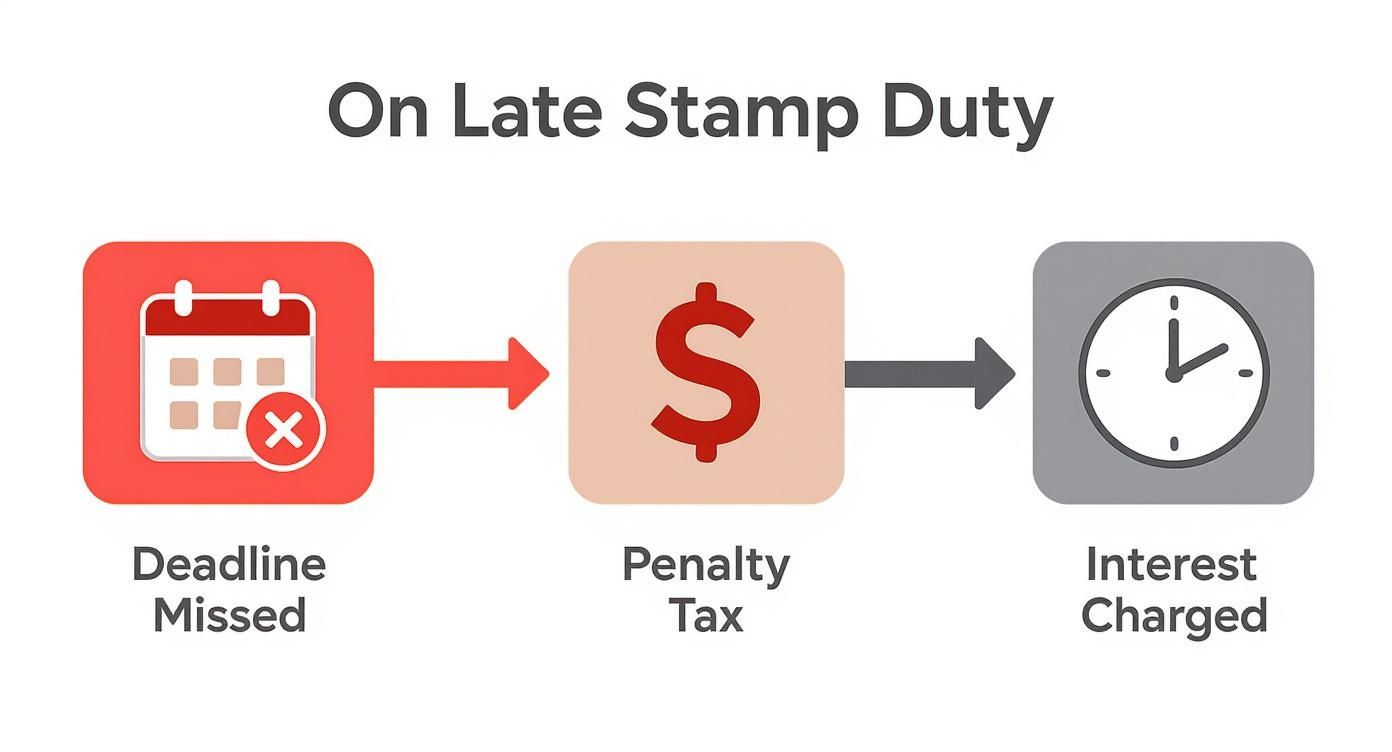
As you can see, a missed deadline immediately hits your wallet with financial penalties that can quickly inflate the total cost of buying your home.
Paying at Settlement vs Paying Directly
To help you weigh it up, here’s a simple comparison of the two payment methods.
| Feature | Paying Through Your Settlement Agent | Paying Directly to the Revenue Office |
|---|---|---|
| Convenience | High. Integrated into the settlement process. | Low. Requires separate action and management from you. |
| Responsibility | The agent manages deadlines and payments. | All on you. You are responsible for timely payment. |
| Risk of Penalties | Low. Professionals handle it to avoid delays. | Higher. Prone to human error or forgotten deadlines. |
| Process | Funds are collected with other settlement costs. | You receive an assessment notice and pay via BPAY/EFT. |
| Best For | Nearly all buyers, especially first-timers. | Experienced buyers or those handling their own conveyancing. |
For most people, letting the settlement agent manage the stamp duty payment is the clear winner for peace of mind and simplicity.
No matter which path you take, getting your documents in order is crucial. The most important piece of paper is the fully signed Contract for Sale of Land or Strata Title by Offer and Acceptance. Your agent needs this to get your duty assessed correctly.
To make sure you're budgeting properly right from the get-go, check out our guide on how to calculate stamp duty. At David Beshay Real Estate, we're all about making this journey smoother, which is why we connect our clients with trusted local settlement agents who make this entire process feel effortless.
Saving Money with Stamp Duty Exemptions and Concessions
While stamp duty is a necessary part of buying property, it doesn't always have to be a full-price affair. The WA government has put several valuable exemptions and concessions in place to make property ownership more accessible, potentially saving you thousands of dollars.
Think of these not as loopholes, but as official government schemes designed to support certain buyers and property transfers. Figuring out which ones you might qualify for is a critical step in managing your budget and shrinking the total cost of your purchase.
The most significant of these is aimed squarely at helping people get their foot on the property ladder for the very first time.
The First Home Owner Rate of Duty
For first home buyers in WA, this concession is an absolute game-changer. It can slash your stamp duty bill or even wipe it out completely, freeing up vital cash for your deposit, moving costs, or that new sofa you've had your eye on.
This special rate applies to both established homes and vacant land you plan to build on. Eligibility, however, is directly tied to the value of the property you're buying.
- Homes up to $430,000: If you buy a home at this price or less, you pay zero stamp duty.
- Homes between $430,001 and $530,000: You’ll get a concessional rate, which means you pay a heavily reduced amount.
- Vacant land up to $300,000: Buying a block of land? You’re completely exempt from stamp duty.
Let's put that into perspective. Say you’re buying your first home in Mandurah for $420,000. A standard buyer would be looking at a stamp duty bill of over $14,000. But as an eligible first home buyer, you pay nothing. That’s a direct saving that makes a massive difference.
Getting the details right on the First Home Owner Rate is essential. Small things, like having previously owned property anywhere in Australia, can impact your eligibility. It really pays to double-check everything before you start your property search.
To see exactly how these savings could apply to you, you can learn more about the specific rules for first home buyer stamp duty in WA and plan your budget with real confidence.
Other Important Exemptions and Concessions
While the first home buyer rate gets most of the attention, it’s far from the only way to save. A number of other specific situations also qualify for stamp duty relief, reflecting the unique nature of certain property transfers.
These concessions are often in place to support family continuity or to assist during major life events.
Some key examples include:
- Family Farm Transfers: To help keep agricultural businesses in the family, stamp duty is often waived when a farm is transferred to a relative.
- Spousal Transfers: If a property is transferred between spouses or de facto partners as part of a separation or divorce, it is usually exempt from duty.
- Charitable Organisations: Registered charities and non-profits may be exempt from stamp duty on property purchases intended for their charitable work.
Working out if you qualify for one of these requires careful attention to the fine print. Your best bet is always to chat with your settlement agent—they can provide expert advice tailored to your personal situation and make sure you claim every dollar you’re entitled to.
Navigating Your Property Purchase with Confidence
Getting your head around when to pay stamp duty is a cornerstone of a smooth, stress-free property purchase. When you know your deadlines, you can sidestep costly penalties and walk towards settlement day feeling completely in control.
Remember, this isn't something you need to figure out on your own. Most of the time, your settlement agent will handle the payment for you, but being prepared is everything. Taking the time to explore potential savings, like the First Home Owner Rate, can also slash your upfront costs and bring your property goals that much closer.
Your Path to a Successful Purchase
Great planning turns what feels like a complicated process into a series of manageable steps. Your very first move should be to map out a clear budget, and our online stamp duty calculator is the perfect place to start. It gives you a solid estimate, taking the guesswork out of your financial planning.
The most successful property journeys are built on a foundation of expert support. Having a team that manages the technical details allows you to focus on the excitement of your new home.
At David Beshay Real Estate, our commitment doesn't end when the 'Sold' sign goes up. We're with you through every stage, connecting you with trusted settlement agents and mortgage brokers who will handle these crucial financial and legal steps for you. With the right team in your corner, you can approach your purchase with total confidence, knowing every detail is being expertly managed from start to finish.
Common Questions We Get Asked About Stamp Duty
When you're deep in the property buying process, the finer details of stamp duty can throw up a few curveballs. It’s completely normal to have questions, especially when you’re dealing with different property types or trying to figure out your finances. Let's tackle some of the most common queries we hear from buyers in Western Australia.
Do I Pay Stamp Duty on Vacant Land in WA?
Yes, you absolutely do. When you purchase a block of land in Western Australia, stamp duty is calculated on its dutiable value, which is almost always the price you paid for it.
But here’s where it gets interesting for first home buyers. If you’re eligible and plan to build your first home on that land, you could qualify for the First Home Owner Rate of Duty. This is a game-changer – for land valued up to $300,000, this concession wipes out the stamp duty bill completely. That's right, zero stamp duty.
What if the Property Value Changes After I've Signed the Contract?
This is a great question and one that can cause a bit of anxiety. The good news is, stamp duty is calculated on the dutiable value at the very moment you sign the contract of sale. For all intents and purposes, this is the purchase price you and the seller agreed on.
Think of it this way: the amount of stamp duty you owe is effectively locked in on the contract date. Any market swings that happen between signing and settlement won't change what you need to pay.
This gives you real certainty for your budget. You won't get a nasty surprise with a higher bill if property values in the area shoot up before you get the keys.
Can I Just Add the Stamp Duty Cost to My Home Loan?
Yes, this is a very common strategy. Many buyers choose to roll the stamp duty cost into their total mortgage amount, a practice known as ‘capitalising’ the cost. It’s a practical way to manage your upfront expenses without having to find a huge chunk of extra cash.
Of course, you’ll need to have this conversation with your lender or mortgage broker well in advance. Adding the stamp duty will increase your total loan amount, which naturally nudges up your monthly repayments. Your lender will have to approve this higher loan against their lending criteria, so it’s vital to get this sorted out early in your home loan application.
Planning a property purchase has a lot of moving parts, but you don't have to figure it all out on your own. The team at David Beshay Real Estate is here to connect you with trusted professionals who can walk you through every financial and legal step. Start planning your move today by visiting us at https://realestate-david-beshay.com.au.

