


When you're selling your home, the real estate agent's commission is one of the most important figures to get your head around. Here in Western Australia, that percentage isn't set in stone, but it generally falls within a predictable range that will directly affect how much money you walk away with.
Decoding Agent Commissions in Mandurah
It helps to think of an agent's commission less like a fee and more like a 'success partnership' payment. It’s a powerful incentive. Your agent only gets paid when your property sells, which aligns their motivation squarely with your own goal: getting the absolute best price for your home. This performance-based model means they are fully invested in getting you a great result.
This payment covers a huge range of professional services, from nailing the pricing strategy and creating high-impact marketing campaigns to handling tricky negotiations and managing all the legal paperwork. Understanding what this percentage actually pays for is the first step toward a smarter, more confident sale in the Mandurah market.
What Is a Typical Commission Rate?
For anyone selling in Mandurah, local market dynamics play a big role. Real estate agent commissions across WA typically land somewhere between 2.0% to 2.8% of the final sale price. The state average hovers at around 2.45%.
Let's put that into real numbers. On a property that sells for $650,000—a common price point in our area—a 2.8% commission works out to be $18,200 before GST. Once you add the goods and services tax, the total fee you’d pay comes to about $20,020.
Why Rates Vary
It's really important to know that these rates aren't fixed. The final percentage is almost always negotiable and can shift based on a few key factors:
- Property Value: Homes with a higher sale price might attract a lower commission percentage, simply because the total dollar amount of the commission will still be substantial.
- Agent Experience: A top-performing agent with a long history of fantastic results might propose a higher rate. This often reflects their proven expertise and stronger negotiation skills that can get you a better sale price.
- Scope of Service: The amount of marketing, professional photography, home staging advice, and administrative support included in the service will also influence the final fee.
Getting a handle on these variables gives you a solid foundation for comparing different agent proposals. For a deeper look into all the costs you can expect, you might find our full guide to agent fees when selling a house really helpful.
When you're selling your home, the agent's commission is one of the biggest costs you'll encounter. But understanding how it's calculated goes beyond just the percentage figure. It’s about knowing exactly how that number applies to your sale, because the details can make a huge difference to what you walk away with.
The entire calculation boils down to one simple thing: the final sale price of your property.
In virtually every agency agreement here in Australia, the commission is based on the final sale price—not the price you first list it for. This is a really important distinction. It’s structured this way to make sure your agent is pushing to get you the highest possible offer. After all, their paycheque is directly tied to the result they deliver for you.
Imagine if an agent got paid based on the asking price. There’d be very little incentive for them to dig in and negotiate hard for a better outcome. By linking their fee to the final sale price, your goals and their goals are perfectly aligned.
This chart gives you a quick snapshot of the typical commission range you’ll see in our local market.
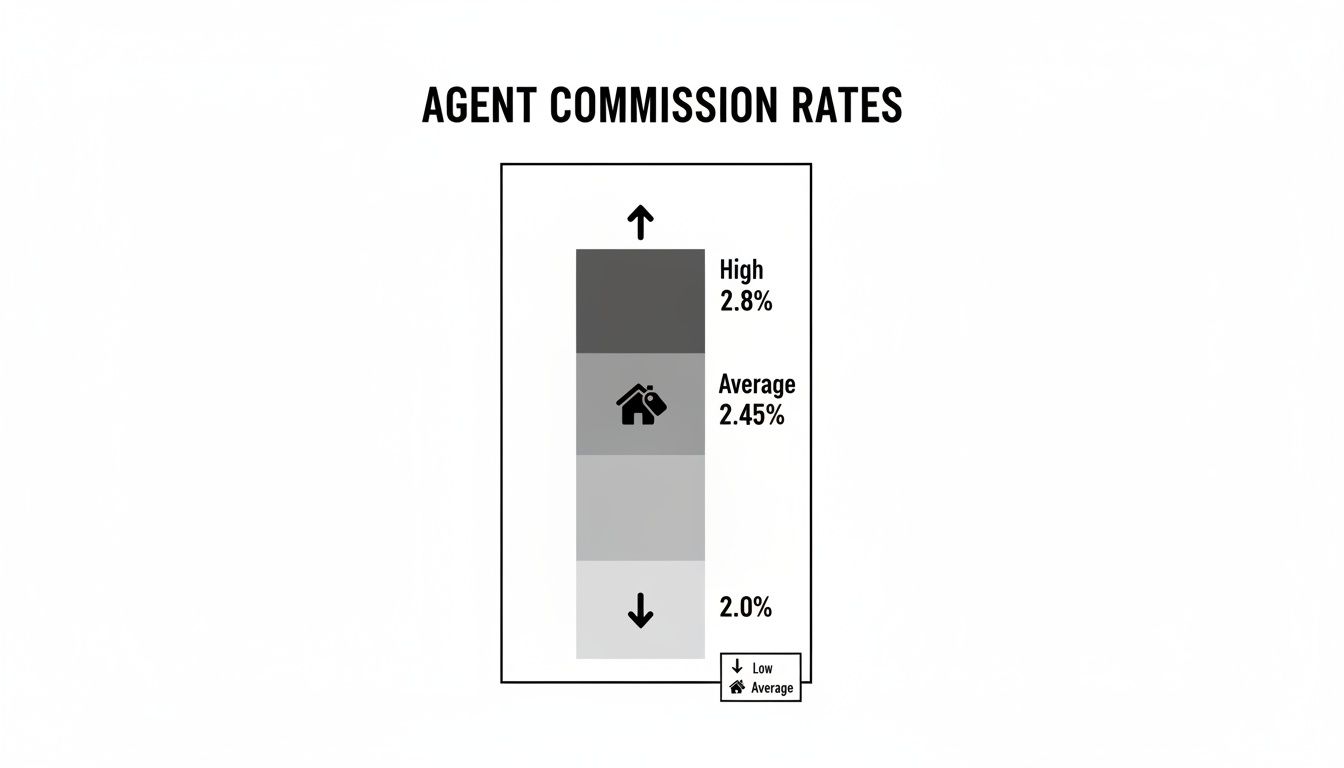
As you can see, while rates can drop as low as 2.0% or climb to 2.8%, the average tends to hover around the 2.45% mark. This gives you a solid benchmark for what to expect when you start talking to agents.
Exploring Different Commission Structures
While a simple flat percentage is the most common approach, some agents use different models designed to reward an outstanding sales result. These can be powerful tools when you're negotiating the terms of your agreement.
One of the most popular alternatives is a tiered or incentive-based commission. It's a clever way to motivate an agent to shoot for the stars. Here’s the breakdown:
- Base Rate: A standard commission percentage is applied to the sale price up to an agreed-upon target.
- Bonus Tier: A much higher percentage kicks in for every dollar achieved above that target price.
Let's say an agent proposes 2.5% on the first $700,000 of the sale price, and then a 10% "kicker" on anything above that. This structure gives them a massive incentive to not just meet your price expectation, but to blow past it. To set a realistic target price, you first need to know what your home is truly worth, which is exactly where a detailed comparative market analysis comes in.
Key Takeaway: An incentive-based commission really can be a win-win. It rewards your agent for securing a top-dollar price, which ultimately puts more money back in your pocket than a standard flat-rate agreement might have.
To give you a clearer picture, the table below shows how different commission structures could play out on a $700,000 property sale here in Mandurah.
Example Commission Calculations for a Mandurah Property
| Commission Structure | Calculation Breakdown | Commission (excl. GST) | Total Cost (incl. GST) |
|---|---|---|---|
| Flat Rate (2.45%) | $700,000 x 2.45% | $17,150.00 | $18,865.00 |
| Low Rate (2.0%) | $700,000 x 2.0% | $14,000.00 | $15,400.00 |
| High Rate (2.8%) | $700,000 x 2.8% | $19,600.00 | $21,560.00 |
| Tiered Rate (example) | Sale Price: $720,000 (2.5% on first $700k) + (10% on next $20k) |
($17,500 + $2,000) = $19,500.00 | $21,450.00 |
As you can see, even small differences in the percentage rate can add up to thousands of dollars. The tiered structure shows how an agent is rewarded for achieving a price above the initial target.
Don't Forget About GST
This is a big one, and it catches a lot of sellers by surprise. The Goods and Services Tax (GST). It’s crucial to remember that almost all agent commission quotes are given exclusive of GST.
What does that mean for you? You need to add 10% on top of the final commission figure to get your true, total cost.
For instance, if the commission works out to be $18,000, you’ll also need to budget for another $1,800 in GST. That brings the total fee you’ll pay to $19,800. To avoid any nasty shocks at settlement, always double-check with an agent whether their quoted percentage includes or excludes GST.
The Key Factors That Influence Commission Rates
If you’ve started chatting with a few agents, you've probably noticed that the typical real estate agent commission isn’t set in stone. The quotes you get can vary quite a bit, leaving many sellers scratching their heads and wondering why. The truth is, there isn't a single flat fee. Several key factors come together to shape the final percentage.
Think of it less like a price tag and more like a tailored proposal for your specific home. A good agent weighs up a few variables before putting a number forward, making sure the rate reflects the effort, expertise, and resources needed to get you an outstanding result.
Property Value and Sale Complexity
One of the biggest drivers of the commission rate is your property's estimated value. A higher-value home, say a luxury waterfront property in Halls Head, might actually attract a lower commission percentage. That's because the final dollar amount of the fee will still be quite substantial for the agent.
On the other hand, a lower-priced property or a block of land might need a higher percentage to make the agent's time and marketing spend financially worthwhile.
The complexity of the sale also plays a massive part. Is it a unique home that will appeal to a very specific type of buyer? Is it a tenanted investment property that requires a lot of careful coordination? Does it need a ton of staging advice to get it market-ready? All these things demand more of an agent's time and strategic thinking, which can be reflected in the commission rate.
Why Experience Matters: A top-performing agent with a solid track record of smashing sale price expectations might propose a higher percentage. But this isn't just a fee—it's an investment. You're paying for their superior negotiation skills and deep market knowledge, which can often put thousands more in your pocket at the end of the day.
Local Market Conditions
What’s happening on the ground in your local area, especially in a competitive market like Mandurah, has a direct impact on commission rates. In suburbs with a high density of active agents, that competition can sometimes drive fees down, creating more competitive options for sellers.
It's also worth keeping an eye on how the bigger economic picture is affecting Mandurah's real estate growth, as this can influence agent workloads and their pricing strategies.
Looking across Australia, you’ll see some pretty big regional differences in what agents charge. The national average sits around 2.23% to 2.3%, but that figure doesn't paint the full picture. Here in Western Australia, the average is 2.31% to 2.45%, placing us in the mid-range nationally. This gives you a useful benchmark when you start your negotiations.
Navigating the Hidden Costs Beyond Commission
While your agent's commission is usually the biggest line item when you sell, it’s definitely not the only cost you’ll encounter. To get a real sense of what you'll walk away with, you need to account for a few other key expenses that are crucial for a successful sale. Missing these can lead to some nasty surprises right before settlement.
The most significant of these is your marketing and advertising budget. This isn't just an optional extra; think of it as the fuel that powers your entire sales campaign. A solid marketing plan is what gets your property in front of the widest possible pool of qualified buyers, creating the competition needed to drive up the final sale price.
What Your Marketing Budget Covers
Think of your marketing spend as your property's launchpad. A comprehensive campaign here in the Mandurah area typically blends digital and traditional advertising to make sure no stone is left unturned.
- Professional Photography and Videography: Let's be honest, high-quality visuals are non-negotiable. This means stunning daytime shots, captivating twilight photos, and often a walkthrough video or a virtual tour to really grab attention.
- Online Portal Listings: Your budget ensures your home gets premium or featured placement on the major real estate websites, putting it right under the noses of thousands of active buyers.
- Floor Plans and Signage: A professional floor plan helps buyers mentally place their furniture, while a prominent "For Sale" sign is still one of the best ways to capture local interest.
- Print and Social Media Advertising: Targeted ads in local publications and across social media platforms can hook buyers who aren't even actively scrolling the property portals.
The true cost of selling a home goes well beyond the commission percentage. Marketing is a substantial and separate investment that every Western Australian seller needs to budget for. Here in WA, typical marketing packages range from $500 to $6,000, with most properties landing somewhere in the middle. You can find more insights into real estate fees on canstar.com.au.
Other Essential Expenses
Beyond marketing, there are a couple of other standard costs you'll need to factor into your sums to figure out your true net proceeds.
Key Insight: Budgeting for these extra costs from the very start saves a lot of financial stress down the track. When you have a clear picture of all the numbers, you can move through the selling process with confidence, knowing all your bases are covered.
These final pieces of the puzzle include:
- Conveyancing or Settlement Fees: You’ll need a licensed conveyancer or settlement agent to handle the legal transfer of ownership. This isn't optional—it's a mandatory service with a professional fee.
- Minor Repairs or Staging: Sometimes, small investments in pre-sale presentation can make a huge difference. Think a fresh coat of paint, fixing that leaky tap, or bringing in a professional stager. These touches can deliver a significant return by boosting your property's appeal and final price.
How to Negotiate Your Agent's Commission with Confidence
Thinking about negotiating your agent's commission? Good. But let's reframe this. It isn't about trying to score the absolute cheapest rate; it's a conversation about getting the best possible value for your sale. This needs to be a professional, collaborative chat aimed at finding a fair agreement that lights a fire under your agent and gets you a fantastic result.
The key to a confident negotiation is preparation. Before you even sit down with an agent, do your homework. Reach out to at least two or three different agents who are active in the Mandurah market and get a proposal from each. This simple step gives you a clear benchmark of the typical real estate agent commission and what's included, providing a solid, data-backed foundation for your discussion.

Framing the Conversation Around Value
Instead of just asking for a discount, steer the conversation toward the value you're getting. We’ve all heard the old saying, "you get what you pay for," and it's especially true in real estate. The agent with the rock-bottom fee might be cutting corners on critical marketing or lack the negotiation muscle to fight for every last dollar for your home.
This is where you can get creative and propose a win-win. For instance, you could suggest an incentive-based or tiered commission structure. With this model, the agent earns a higher percentage but only if they achieve a sale price above an agreed-upon target. It’s a brilliant way to motivate them to smash your expectations and shifts the entire focus from cost-cutting to profit-maximising.
Expert Tip: Frame your negotiation as a partnership. Try using phrases like, "How can we structure a fee that ensures you're motivated to get us the absolute best price?" This shows you respect their expertise while still looking out for your own financial goals.
Another really effective strategy is to dive deep into the marketing package. Ask the agent to walk you through every single component and explain its purpose.
- Are those premium online listings really necessary for your type of property?
- Would a twilight photography session genuinely make a difference?
- Is local print advertising actually going to reach your target buyer in this day and age?
By properly understanding the marketing plan, you can work together to decide which elements are crucial and which could be trimmed. This might create a more customised—and potentially more cost-effective—package without sacrificing impact. More importantly, it shows you're an engaged and informed seller who means business.
Ultimately, a good negotiation isn't a battle where one person wins and the other loses. It’s about finding that sweet spot: a fair commission in exchange for exceptional service, deep expertise, and a brilliant final sale price. If you come prepared, focus on value, and communicate openly, you can lock in an agreement with confidence, knowing you have a true partner dedicated to your success.
So, Are There Alternatives to a Traditional Commission?
While the percentage-based commission is hands down the most common way to sell a home, it’s not the only game in town. It’s worth knowing what else is out there so you can make a fully informed choice, especially since some newer models have popped up over the years.
These alternatives often catch the eye of sellers who are keen to be more hands-on, or who are laser-focused on keeping upfront costs to an absolute minimum. The big question, though, is always about weighing those potential savings against the level of service and expertise you might be giving up.
Fixed-Fee or Flat-Fee Agencies
One of the main alternatives you’ll see is the fixed-fee or flat-fee agency. The concept is simple: you pay a single, agreed-upon amount to sell your property, no matter what it finally sells for. For sellers who like certainty and want to budget down to the last dollar, this can feel like a really safe bet.
But here’s the trade-off you need to think about. A traditional agent on a percentage commission is financially driven to squeeze every last dollar out of the sale for you – their paycheque literally depends on it. When that powerful incentive is gone, you have to wonder if they’ll fight as hard during negotiations.
The real question to ask yourself is this: Does the money I save upfront with a fixed fee outweigh the potential for a much higher sale price that a hungry, commission-based agent might fight for?
Limited-Service or 'DIY' Platforms
Then you have the limited-service or "for sale by owner" style platforms. Think of these as an 'à la carte' menu for selling your home. You only pay for the specific services you need, like getting your property listed on the major real estate websites or booking a professional photographer, and you handle the rest yourself.
This path gives you total control and has the lowest potential cost, but it also means the entire weight of the sale lands squarely on your shoulders. You become the agent, responsible for everything:
- Pricing Strategy: Can you accurately price your own home without letting emotion or attachment get in the way?
- Marketing: You’ll be writing the ads, fielding all the calls, and managing every single buyer enquiry.
- Inspections: It's on you to coordinate and run all the open homes and private viewings.
- Negotiation: This is the tough one. You’ll be going head-to-head with experienced buyers' agents whose sole job is to get the best deal for their client.
- Legal Compliance: You’re in charge of managing all the complex contracts and paperwork all the way through to settlement.
At the end of the day, while these alternatives do exist, the full-service, commission-based model remains the industry standard for a very good reason. It’s a complete, expert-led service designed to get you the highest possible sale price with the least amount of stress. It’s not just a cost; it’s a strategic investment in getting the best possible outcome for your biggest asset.
Frequently Asked Questions About Real Estate Commissions
Navigating the money side of selling your home can throw up a lot of questions. To help you feel completely prepared, we’ve put together some quick, clear answers to the queries we hear most often from Mandurah sellers about real estate agent commissions.
Is The Real Estate Agent Commission In WA Negotiable?
Yes, it absolutely is. Here in Western Australia, commission rates aren't fixed or regulated by the government. That means the final rate is always a point of negotiation between you and the agent you choose to hire.
Of course, experienced agents have a standard fee that reflects the level of service, marketing firepower, and track record they bring to the table. But you should always feel comfortable discussing the rate. The best negotiations aren't about just getting a lower number; they're about understanding the value you're getting for the fee you pay. It’s a chance to dig into the marketing plan and be confident in the expertise you'll have on your side.
When Do I Pay The Agent's Commission?
The commission is only paid at the very end of the process—at settlement. You never pay it upfront. This is all handled seamlessly by your settlement agent or conveyancer.
When the buyer's funds come through, your settlement agent will deduct the agreed-upon commission (plus GST and any final marketing costs) directly from the sale proceeds. The rest of the money is then transferred straight into your bank account. It’s what we call a 'contingent' fee, because it’s entirely dependent on your property successfully selling and settling.
Key Takeaway: The "no sale, no fee" model is standard practice. This keeps your agent 100% motivated to get a great result, as their payment is directly tied to the outcome they achieve for you.
What Happens If My Property Does Not Sell?
If your property doesn't sell, you don't pay a cent in commission. It’s the core principle of the performance-based structure of the real estate industry.
The one thing to be crystal clear about, however, is the marketing costs. While the commission is off the table if there’s no sale, you might still be responsible for the advertising expenses you agreed to at the start. Always check your listing agreement to see which costs are payable regardless of the outcome and which are only due upon settlement. This simple check ensures there are no financial surprises down the line.
Ready to discover your home's true market value and get a transparent breakdown of all selling costs? David Beshay Real Estate offers a complimentary, no-obligation property appraisal to give you the clarity and confidence you need. Find out what your Mandurah property is worth today.

