


Would you buy a car without popping the bonnet for a proper look? Of course not. Think of a Property Condition Assessment Report (PCAR) as that essential under-the-hood check for a property. It gives you a clear, unbiased snapshot of its physical health before you even think about signing on the dotted line.
Your Key to a Confident Property Transaction

Buying or selling a home is one of the biggest financial moves you'll ever make. Whether it’s your beloved Mandurah home going on the market or you're looking to buy a new one, you need total clarity and confidence. This is exactly where a PCAR becomes your best mate, turning uncertainty into a real strategic advantage.
This isn’t just another piece of paperwork; it's a detailed diagnosis of a building's current state. For sellers, it’s about building trust. For buyers, it’s your ultimate defence against nasty, expensive surprises that can turn a dream home into a financial nightmare.
Benefits for Mandurah Home Sellers
As a seller, having a comprehensive PCAR ready from the get-go shows you're transparent and professional. It's a powerful tool that helps justify your asking price with cold, hard facts about your home's condition.
Better yet, it lets you spot and fix potential issues before they become awkward sticking points during negotiations. A proactive approach means you can manage repairs on your own terms and timeline, instead of being backed into a corner for expensive, last-minute fixes. This level of preparation almost always leads to a smoother, faster sale at a better price.
- Builds Buyer Trust: A detailed report shows you've got nothing to hide.
- Justifies Your Price: It provides factual evidence to back up your property's valuation.
- Avoids Negotiation Headaches: Fixing things early minimises a buyer's ability to chip away at your price.
Advantages for Buyers and Investors
For buyers and investors in a hot market like Mandurah and the Peel region, a PCAR is your shield. It gives you a clear-eyed view of what you’re really buying, shining a light on the condition of critical systems like the roof, plumbing, electrics, and structural components.
This knowledge is power. It allows you to budget properly for any immediate repairs and plan for future expenses, making sure your investment is a smart one. If the report uncovers major dramas, it becomes your number one negotiating tool, allowing you to ask for repairs or a price drop based on documented facts.
A property condition assessment report lets you make decisions based on a clear understanding of the property's health and a strategic plan for its future—not just on its good looks.
This guide will demystify the whole PCAR process. We’ll dive into what these reports cover, how to make sense of them, and most importantly, how to use them to make sure your next real estate move in Mandurah is a huge success.
What a Property Condition Assessment Report Actually Reveals

Let’s get straight to it. Forget the jargon for a moment. Think of a property condition assessment report (PCAR) as a complete medical check-up for a house. It's a top-to-bottom analysis by a qualified professional that documents the physical health of a home’s most important systems, from the foundation right up to the roof.
It’s not a simple valuation, which just tells you what a property might sell for today. A PCAR is a diagnosis of the building's physical state. It flags current issues, warns of potential future problems, and essentially gives you a forecast of upcoming maintenance bills. It's less about what the property is worth and more about what it will cost you to keep it standing.
This difference is absolutely critical. For sellers, it means you can present your home with total confidence and transparency. For buyers, it’s about making a smart, informed investment and avoiding nasty surprises, especially in a competitive market like Mandurah where every detail matters.
A Health Screening for Your Home
Imagine going for a health screening that doesn’t just take your blood pressure but gives you a full picture of your long-term wellness. That's exactly what a PCAR does for a house. It takes an objective look under the floorboards and behind the walls to check the core components that keep a home safe, functional, and liveable.
The report provides a snapshot of the property's condition at a specific point in time. This baseline is invaluable for understanding the true state of what is likely your biggest asset.
It’s a systematic review that covers all the key areas, including:
- Structural Integrity: Checking the foundation, walls, and roof frame for any signs of stress, cracking, or potential failure.
- Building Envelope: Assessing the roof, windows, doors, and cladding to make sure the home is weather-tight and secure.
- Major Systems: Looking at the health of the electrical, plumbing, heating, and cooling (HVAC) systems.
- Interior Finishes: Noting the condition of floors, walls, and ceilings.
- Site Components: Examining things like drainage, paving, fences, and retaining walls.
This level of detail is a game-changer in today's market. In the bustling Mandurah property scene, a solid property condition assessment report can make all the difference. With Australia's housing stock now over 10.8 million properties, the need for reliable condition checks has never been more important. You can dig deeper into these housing trends in reports from the Australian Bureau of Statistics.
Uncovering Deferred Maintenance and Future Costs
One of the most powerful things a PCAR does is shine a light on deferred maintenance. This is just a term for necessary repairs that have been put off, which can quickly add up to a massive bill for the new owner.
But the report doesn't just list problems; it gives you a roadmap for the future. By estimating the remaining useful life of major items like a hot water system or roof, it helps you plan and budget for replacements down the track.
A property condition assessment report transforms abstract worries about a home’s condition into a clear, actionable list. It replaces "what if" with "what is," giving both buyers and sellers a solid foundation for negotiation and planning.
Ultimately, this report is all about knowledge. It shifts the conversation from guesswork to hard facts, ensuring everyone involved has a clear understanding of the property's true physical state. That kind of clarity is the key to a successful and stress-free property sale, right here in Mandurah and beyond.
How to Read and Understand Your Report
Getting handed a property condition assessment report can feel like you’ve just been given a dense technical manual. It's often thick with jargon, detailed observations, and a whole lot of information that might seem overwhelming at first. But you don't need an engineering degree to get to the heart of what matters.
Think of the report as a professional's guided tour through the property's health, conveniently broken down into manageable sections. The trick is knowing where to focus your attention and what all the technical terms actually mean for your bottom line. Once you can spot the major red flags, the document transforms from an intimidating file into a powerful tool for your sale or purchase.
Let’s walk through the core parts of a typical report so you can tell a minor quirk from a major problem.
Navigating the Core Sections
A well-structured report breaks down a property into its essential components. While the exact layout might differ between inspectors, you’ll nearly always see sections covering the building’s exterior, its interior, and all the crucial services like plumbing and electrical.
Your main goal here is to hunt for items flagged as needing immediate repair or those with a short remaining useful life. These are the big-ticket issues that will hit your wallet the hardest.
Most reports use a simple rating system to make this easier, often categorising problems by urgency:
- Immediate Needs: These are the critical issues that can’t wait. Think safety hazards, structural problems, or anything that could lead to serious water damage.
- Short-Term Repairs: These are problems you'll need to sort out in the next one to two years to stop them from escalating into bigger, more expensive headaches.
- Long-Term Considerations: This category covers components that are getting on in age but still doing their job. It’s basically a heads-up for future budgeting.
The Building Envelope: Roof, Walls and Foundation
This is the home's first line of defence against the weather, and problems here can spiral into some of the most expensive repairs imaginable. Pay very close attention to this section.
When it comes to the roof, look for comments on the condition of the covering (be it tiles or metal sheets), gutters, and flashings. An inspector noting "localised debris and minor moss growth" is a world away from a report that says "multiple cracked tiles and evidence of ponding water"—the latter is a huge red flag for potential leaks. The report should also give you an estimate of the roof's remaining life. A roof that’s nearing the end of its typical 15-20 year lifespan is a major future expense you need to plan for.
With the foundation and walls, it’s important to know that not all cracks are a sign of disaster. Tiny hairline cracks in brickwork are often just from normal settlement. However, a good inspector will specifically flag wide, stepped cracks or any walls that appear to be bowing, as these can point to serious structural movement that will need an engineer and a hefty budget to fix.
Inside the Home: Systems and Finishes
Now we move inside to the parts of the home you’ll interact with every day. The condition of these systems directly affects the home's liveability and your ongoing costs.
Key Sections of a Property Condition Assessment Report
The table below breaks down the critical components you'll find in most PCARs. It highlights what each section covers and, more importantly, the potential red flags that should grab your attention immediately.
| Report Section | What It Covers | Potential Red Flags to Note |
|---|---|---|
| Electrical Systems | The main switchboard, safety switches (RCDs), circuit breakers, wiring visibility, and power points. | Old ceramic fuses, overloaded circuits, DIY-style wiring, lack of modern safety switches. |
| Plumbing & Wet Areas | Fixtures, visible pipes, hot water system, drainage, and waterproofing in bathrooms/laundries. | Low water pressure, slow drains, visible leaks, failed waterproofing (stains, rot), old HWS. |
| HVAC Systems | Age, operational status, and condition of heating, ventilation, and air conditioning units. | Systems nearing the end of their lifespan, signs of poor maintenance, or inefficient operation. |
| Interior Finishes | Condition of walls, ceilings, floors, windows, and doors. | Significant wall cracks, ceiling stains from leaks, damaged flooring, windows that don't operate. |
Understanding these areas is key to unlocking the true story of the property.
The most valuable insights in a property condition assessment report often lie in the estimated timelines for repairs and replacements. This information transforms the report from a simple list of problems into a practical financial planning tool for the next 5-10 years.
Reading a report with confidence comes down to knowing what to look for. For a more detailed, room-by-room guide, our comprehensive home inspection checklist for Australia is an excellent resource to use alongside your professional report. Armed with this knowledge, you can clearly see the property’s true state and make sharp, informed decisions, whether you're getting ready to sell or planning to buy.
Comparing Different Types of Property Inspections
When you're navigating a property deal in Mandurah, you’ll hear a lot of terms thrown around—building inspection, valuation, appraisal. It's easy to think they’re all the same thing, but mixing them up can be a costly mistake. Knowing the specific job of each report is vital to make sure you have the right info for your situation.
A property condition assessment report (PCAR) is not the same beast as a standard pre-purchase building inspection. While both are critical checks, they serve different masters and answer entirely different questions. A building inspection is like a doctor checking for broken bones—it’s laser-focused on spotting major structural defects right now. A PCAR is more like a full medical, giving you a complete picture of the property's health and a forecast for its future.
This difference is crucial for anyone thinking long-term. A standard building inspection is designed to protect a home buyer from immediate, nasty surprises. A PCAR, on the other hand, offers a much wider lens, often including cost estimates for repairs and replacements you'll face down the track.
The Big Three Property Reports Explained
To make a smart decision, you need to know which tool to pull out of the toolbox. Are you trying to lock in a home loan, negotiate a repair, or plan a decade of maintenance? The answer tells you exactly which report you need. Let’s break down the three most common types.
Each report has a unique scope and is built for a specific audience. A bank won't accept a PCAR to approve your mortgage, and a valuation won't tell you if the roof is about to spring a leak.
This decision tree helps you sort through the findings from a property condition report, making it easier to prioritise what needs your attention first.
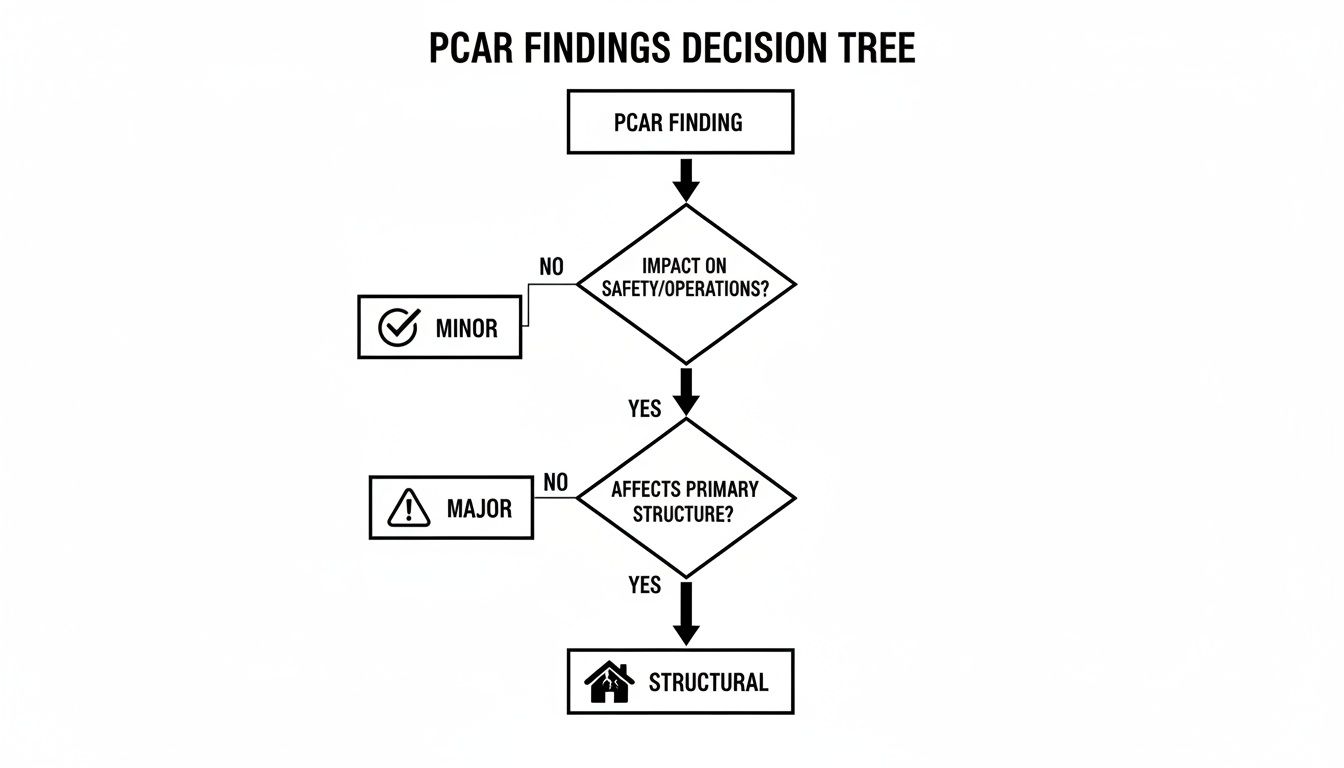
The main takeaway here is that issues are ranked by their impact. It could be a minor cosmetic fix or a major structural problem that needs an expert, and fast.
A Head-to-Head Comparison
Let's put these reports side-by-side to make the differences crystal clear. Understanding their purpose, scope, and who they're for will help you invest your money wisely and get the exact information you need for your property journey in the Peel region.
Property Condition Assessment vs Building Inspection vs Valuation
| Report Type | Primary Purpose | Typical Scope | Ideal For |
|---|---|---|---|
| Property Condition Assessment | To give a complete overview of a property's physical health and forecast future capital spending. | Detailed inspection of all major systems, structure, and site components with a focus on deferred maintenance and lifecycle costs. | Commercial investors, strata managers, and meticulous long-term residential buyers. |
| Building Inspection | To find major structural defects, safety hazards, and significant maintenance issues at the time of purchase. | Visual inspection of accessible areas, focusing on structural soundness, termites, and major faults as per Australian Standards. | Residential home buyers needing to satisfy a condition of sale and avoid immediate major repair costs. |
| Valuation | To determine the current market value of a property for financial purposes like securing a mortgage or for tax assessment. | Analysis of the property's features, location, and recent comparable sales. It does not assess the physical condition in detail. | Buyers needing a home loan, sellers setting an asking price, and for legal or tax purposes. |
While a building inspection answers, "Is this house safe to buy today?", a property condition assessment report answers, "What will this house cost me over the next ten years?" It’s a shift from immediate risk assessment to long-term financial planning.
At the end of the day, a standard building inspection is a non-negotiable step for almost every home buyer. However, for those wanting a deeper understanding of their investment or managing a larger asset, the property condition assessment report provides a level of detail that is simply in another league. To get a better feel for what's involved in a standard check, you can explore our guide on the typical pre-purchase building inspection cost and what it covers. Choosing the right report empowers you to negotiate effectively and plan for the future with confidence.
Using Your Report to Your Advantage in Mandurah
A property condition assessment report is much more than a stack of paper; it’s your secret weapon for negotiation and strategy in the Mandurah and Peel real estate market. Knowing how to get one and, more importantly, how to use it can turn a stressful gamble into a confident, well-planned move.
Whether you're selling your family home in Halls Head or eyeing an investment property in Falcon, the facts inside a PCAR give you serious leverage. It takes the conversation from "I think…" to "the report shows…", grounding everything in objective, documented evidence about the property's health.
Securing a Quality Report in Western Australia
First things first, you need to commission a report that’s both thorough and credible. Here in Western Australia, these assessments are usually handled by licensed professional engineers or certified building inspectors. These aren't just any builders; they are specialists trained to spot structural, mechanical, and safety issues according to strict Australian Standards.
When you're picking an inspector, you’ve got to do your homework. Look for proper qualifications, years of experience, and a solid reputation right here in the Mandurah area. A great inspector won’t just list problems—they’ll give you context, helping you understand how serious an issue is and what it might cost to fix.
- Look for Credentials: Make sure they’re a registered builder, licensed engineer, or an accredited building surveyor.
- Check Local Experience: Someone familiar with Mandurah's coastal climate and common building quirks will provide far more useful insights.
- Request a Sample Report: This gives you a sneak peek at the level of detail and clarity you can expect.
The cost can shift depending on the property's size and complexity, but you’re typically looking at anywhere from $1,500 to over $4,000 for a comprehensive assessment. It feels like a big outlay, but the money you could save by catching a major issue early easily makes it a worthwhile investment.
Strategies for Mandurah Home Sellers
As a seller, getting a pre-listing property condition report puts you firmly in control. Instead of biting your nails waiting for a buyer's inspector to find faults, you get ahead of the game. You discover them first, which means you control the story and the solution.
If the report comes back with a clean bill of health, it's a golden marketing tool. It builds incredible trust with buyers and gives you solid proof to back up your asking price.
For sellers, a proactive PCAR is your shield against last-minute negotiation tactics. It allows you to address issues on your own terms, protecting your final sale price and ensuring a smoother settlement process.
If the report does uncover some issues, you have choices. You can get the repairs done yourself beforehand, or you can adjust your price and disclose the findings upfront. This kind of transparency stops buyers from using a minor drip to negotiate a major price drop. It's also smart to have a few quotes from local tradies ready to go. To get a head start, check out our guide on navigating local trades in Mandurah.
Negotiation Tactics for Buyers
For buyers, the PCAR is your negotiation bible. Once that report is in your hands, your job is to sort the findings into three piles: deal-breakers, major expenses, and minor fixes. This isn't about getting picky over scuff marks on the wall; it’s about zeroing in on the big-ticket items that impact the property's safety, function, or long-term value.
If significant problems like a failing roof or ancient wiring pop up, you can go back to the seller with a clear, fact-based request.
- Request Repairs: Ask the seller to fix specific major issues before the settlement date.
- Negotiate a Price Reduction: Get quotes for the work needed and ask for a price drop that covers those costs.
- Walk Away: If the problems are just too big and your contract has a building inspection clause, you have the power to withdraw your offer.
By using the report strategically, you make sure you’re paying a fair price for the property's actual condition, not just the way it looks on inspection day. It’s this informed approach that makes all the difference when you’re making a sound investment in our beautiful Mandurah region.
Right, let's get down to brass tacks. A property condition assessment report isn't just some bit of paperwork you tick off a list; it’s the very bedrock of a smart, confident property deal.
When you invest in a proper assessment, you're not just buying a document. You're swapping out guesswork for hard facts and swapping uncertainty for clarity. In the Mandurah market, that's your edge.
For sellers, this report is your ticket to putting your home on the market with total transparency. It builds a huge amount of trust with potential buyers, backs up your asking price, and lets you tackle any little issues on your own terms. The end result? A smoother sale and a better price.
For buyers, it's about protecting your financial future, plain and simple. The report is your shield against nasty, expensive surprises lurking out of sight. It also gives you solid ground to stand on when it's time to negotiate.
Knowing Where You Stand in the Peel Region
This detailed knowledge gives you two incredibly important things:
- A Clear Picture: You get an expert, unbiased look at the property's real health—everything from its structural bones to the remaining life in its major systems.
- A Strategic Plan: It hands you a practical roadmap for future maintenance, repairs, and capital expenses, letting you budget properly for the years to come.
Think of it like a long-term health plan for your property. It gives you the diagnosis and the treatment plan, making sure you can keep its value up and enjoy it without unexpected financial headaches down the track.
Whether you're selling the family home in Lakelands or buying that dream spot in Halls Head, this report is a game-changer. It turns a mountain of complex information into real, actionable advice.
Let this knowledge be your guide. It will help you make the right calls and pave the way for a secure, successful outcome in the Peel region's brilliant real estate market. A successful property journey always starts with an informed one.
Got Questions? We've Got Answers
Stepping into the property world, especially when you're making big financial moves, can bring up a lot of questions. Let's tackle some of the most common queries we hear about Property Condition Assessment Reports here in Western Australia. We'll give you clear, straightforward answers to help you move forward with confidence, whether you're buying, selling, or investing.
How Long Is a Property Condition Assessment Report Good For?
Think of a PCAR as a snapshot—it captures the property's condition at one specific moment. So while there’s no official “best before” date stamped on it, its relevance does fade over time.
For a property sale here in Mandurah, a report is generally considered fresh and reliable if it’s less than three to six months old. This is assuming nothing major has happened since the inspection, like a wild storm, a big renovation, or a system breakdown. If you're a seller with a report that's a year old, it’s a smart move to get an updated one before listing. It shows you're transparent and gives buyers confidence that the report truly reflects your home's current state.
Can I Just Use the Seller's Report Instead of Getting My Own?
It’s always a great sign when a seller provides a pre-listing PCAR—it shows they’ve got nothing to hide. But, and this is important, we always recommend you get your own independent report done.
Why? The inspector you hire works for you. Their duty of care is to your interests, not the seller's. Using your own inspector gives you a completely unbiased assessment focused on what matters to you as a buyer. It also gives you direct legal recourse if a significant issue is missed.
See the seller's report as a helpful head start, but your own independent report should be the final word that guides your decision.
What Happens If the Report Finds Major Issues?
Finding a major problem doesn't automatically kill the deal. It just means it's time to talk. As a buyer in WA, a property condition assessment report that uncovers significant issues gives you some real negotiating power.
Depending on the clauses in your offer, you have a few options:
- Ask for Repairs: You can request the seller to fix the specific problems found in the report before the settlement date.
- Negotiate on Price: A very common approach. You can get quotes for the repair work and negotiate a price reduction to cover those future costs.
- Walk Away: If the issues are just too big—think major structural problems—a good building inspection clause in your contract usually allows you to withdraw your offer without penalty.
For sellers, discovering these things before you list is actually a strategic advantage. You can either fix the problems to command your asking price or price the property accordingly and be upfront about it. This transparency often attracts buyers looking for a home they can add value to, making for a much smoother sale for everyone.
Ready to navigate the Mandurah property market with an expert who has your back? At David Beshay Real Estate, we bring the clarity and strategic advice you need for a successful sale or purchase. For a free, no-obligation property appraisal and a chat about how to best position your home, get in touch today.

