


So, what does a property manager actually do?
In short, a great property manager acts as the CEO for your real estate investment. Their job is to handle all the day-to-day operations to maximise your returns and, just as importantly, minimise your stress. Their core mission is to manage your property efficiently, making sure it stays a profitable and well-maintained asset for years to come.
Your Investment Property's CEO

Think of your investment property like a business. Like any business, it needs someone at the helm to steer it in the right direction. A property manager is that person—your skilled captain navigating the often-turbulent waters of the rental market.
They do far more than just collect rent. They are your strategic partner, dedicated to protecting and growing your asset's value. Without a professional managing things, landlords can quickly get swamped by tenant requests, surprise maintenance bills, and the ever-changing maze of tenancy laws. A good property manager brings structure, expertise, and a professional touch to the entire process.
To give you a clearer picture, here’s a quick breakdown of what a property manager handles day-to-day.
Property Manager Responsibilities at a Glance
| The Core Task | Why It Matters to You |
|---|---|
| Tenant Sourcing & Screening | Finding reliable tenants who pay on time and look after your property. This is the foundation of a successful investment. |
| Rent Collection & Financials | Ensuring consistent cash flow by collecting rent, chasing arrears, and providing you with clear financial statements. No more awkward conversations. |
| Inspections & Maintenance | Protecting your property's value through routine inspections and coordinating qualified tradies for any repairs. This prevents small issues from becoming costly problems. |
| Legal Compliance | Keeping you on the right side of the Residential Tenancies Act and other local regulations, avoiding potential fines and legal headaches. |
| Handling Evictions | Managing the difficult (and legally complex) eviction process professionally and correctly if a tenancy goes south. |
At the end of the day, understanding what a property manager does is the first step toward realising the true potential of your real estate investment. They bring the systems, experience, and peace of mind you need to succeed as a landlord without sacrificing your own time.
A great property manager doesn't just manage tasks; they manage your investment's future. Their work transforms a property from a source of potential headaches into a reliable, hands-off income stream.
Finding and Keeping the Right Tenants

A vacant property isn’t just an empty building; it's a hole in your pocket, costing you money every single day it sits unoccupied. A great property manager’s most critical role is to turn that empty space into a reliable, income-producing asset by finding and keeping fantastic tenants.
This isn't as simple as throwing an ad online and handing over the keys. It’s a carefully planned operation designed to pull in the best possible applicants while expertly filtering out those who could pose a risk to your investment.
Crafting the Perfect Listing
It all starts with marketing. A skilled manager doesn't just list your property; they create a compelling story with professional photos and engaging descriptions that showcase its best features. They know exactly where prospective tenants in Mandurah are looking and how to make your property shine brighter than the rest.
This first step has a massive impact on the quality of people who apply. Think of a well-crafted listing as a magnet for responsible tenants who are actively searching for a well-cared-for home.
In Australia’s incredibly tight rental market, this expertise is make-or-break. With national vacancy rates hovering at a razor-thin 1.2% and rents climbing, getting the right attention is everything. This is why around 70% of landlords lean on property managers to handle the entire process, from advertising to lease negotiations. For a deeper dive, you can explore more data on Australia's rental property markets.
The Art of Tenant Screening
Once the applications start rolling in, the real detective work begins. A property manager’s strict screening process is your first line of defence against late rent, property damage, and the nightmare of eviction. This is far more than a quick glance over a form—it's a deep-dive investigation.
A proper screening process will always include:
- Rental History Checks: Calling past landlords to get the real story on payment history, how they treated the property, and if they followed the lease.
- Employment and Income Verification: Making sure applicants have a stable job and enough income to comfortably cover the rent.
- Reference Checks: Speaking with personal and professional references to get a feel for their character.
- Tenancy Database Searches: Cross-referencing national databases to check for any red flags from previous tenancies.
Think of a property manager's screening process like a comprehensive background check for a high-level job. You wouldn't hire a CEO without vetting them, and you shouldn't entrust your most valuable asset to a tenant without the same level of diligence.
This meticulous approach isn't about filling a vacancy as fast as possible. It’s about finding the right fit—a tenant who will respect your property and provide a stable, long-term tenancy, making sure your investment stays profitable and protected.
Ensuring Consistent Cash Flow and Financial Health

Your property is an investment, pure and simple. And like any investment, its success is measured by its financial performance. The absolute bedrock of this is consistent, reliable cash flow. A professional property manager acts as the financial steward for your asset, putting robust systems in place to keep your investment healthy and profitable.
Their most visible role here is managing the rent. But this is so much more than just waiting for a bank transfer each month. A good manager establishes and enforces a strict rent collection policy, using automated reminders and clear communication to make sure tenants pay on time, every time.
And what if a payment is late? They handle the entire arrears process with professional precision. This means having the tough conversations, issuing the correct legal notices, and following a clear procedure to resolve the issue swiftly, all while protecting your income stream.
Managing the Books
Beyond collecting the income, a property manager meticulously handles all the outgoings. They take on the responsibility of paying regular bills directly from the rental funds, ensuring nothing ever gets missed.
This often includes:
- Council Rates: Paying local government rates on your behalf.
- Water Bills: Managing water usage charges and payments.
- Strata Levies: Handling payments for properties within a strata scheme.
- Repair Invoices: Settling bills with tradespeople once work is completed.
This centralised management doesn't just save you time; it creates a clean, accurate record of every expense tied to your property. That kind of detailed tracking is vital when you're trying to understand your real returns. Our guide on how to calculate rental yield can help you make sense of these numbers.
A property manager transforms the complex finances of a rental property into a simple, predictable system. They are the buffer between you and the stress of chasing payments, juggling bills, and tracking every dollar.
In Australia's $8.1 billion property management market, this financial oversight is a core function. With a national vacancy rate sitting at just 1.2%, effective financial management ensures that high occupancy and timely collections are properly capitalised on. You can learn more about the Australian property management market dynamics on imarcgroup.com.
Ultimately, they provide transparent financial reporting, usually through a detailed monthly statement. This document gives you a clear, at-a-glance overview of your investment’s performance, simplifying your accounting and making tax time a whole lot less stressful.
Protecting Your Asset with Proactive Maintenance
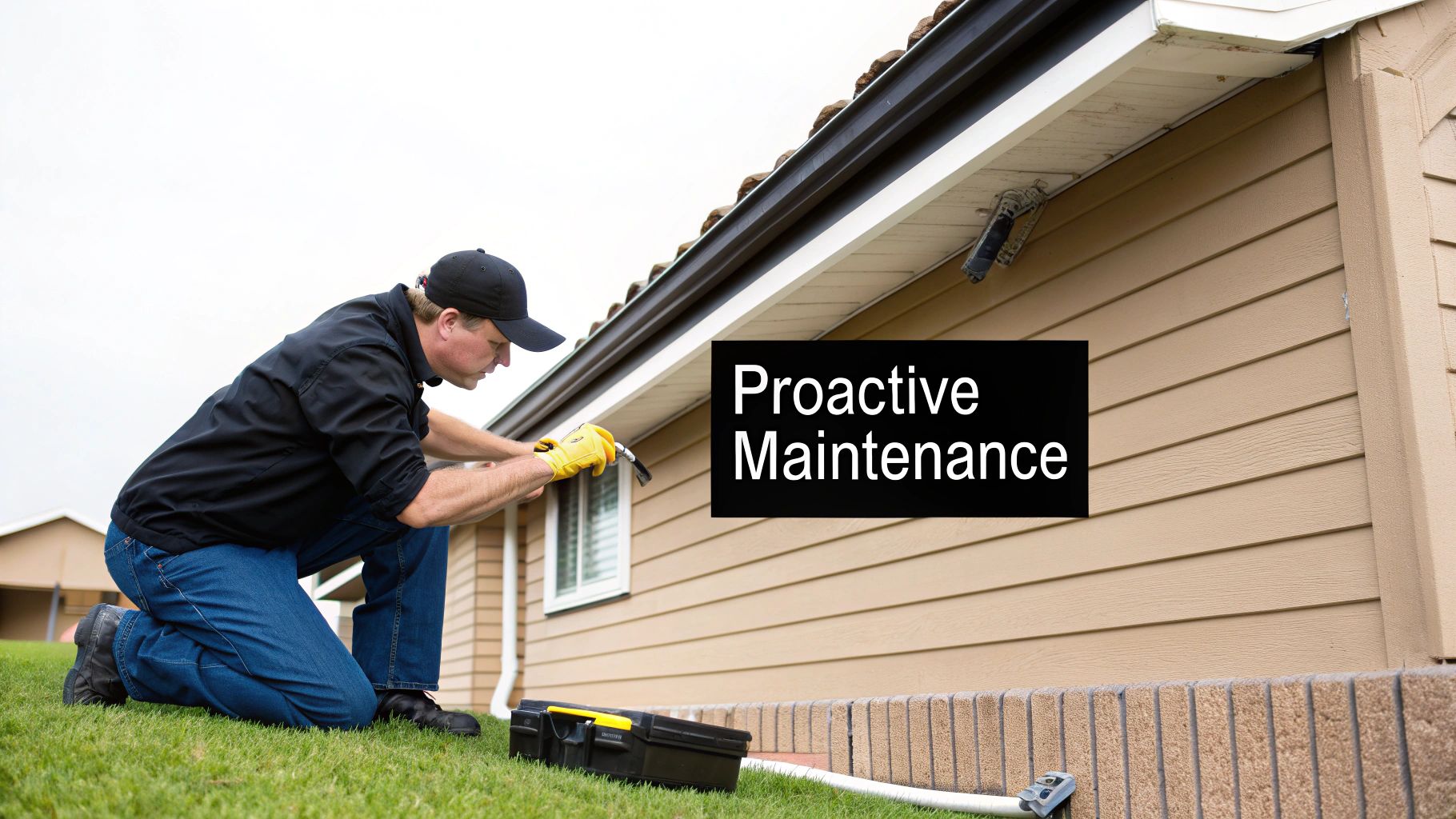
Exceptional property management is about more than just reacting to problems—it's about getting ahead of them. A huge part of what a property manager does is preserve and even boost your asset's value through a smart, proactive approach to maintenance. This is what separates a landlord from a savvy investor.
Think of it this way: anyone can call a plumber when a pipe bursts. That's reactive maintenance. But a professional property manager schedules regular gutter cleaning to stop the water damage that causes the pipe to burst in the first place. That’s proactive care, and it's where the real value is.
This forward-thinking strategy saves you a fortune in the long run by fixing small issues before they snowball into expensive, property-damaging disasters.
A Network of Trusted Tradespeople
One of the biggest perks of hiring an experienced manager is getting instant access to their little black book of vetted, insured, and reliable tradies. They've already put in the hard yards to find quality electricians, plumbers, and handymen who do top-notch work at fair prices.
This means you’re not left scrambling on a public holiday, desperately trying to find a trustworthy tradie when the hot water system gives up. Your manager simply makes one call and gets a professional on-site, ensuring the job is done right without those eye-watering emergency call-out fees. If you're keen to know more about local experts, check out our guide on navigating local trades in Mandurah.
The Power of Routine Inspections
Routine property inspections are one of the most powerful tools in a property manager’s kit. These aren't just a quick walk-through; they are comprehensive health checks for your investment.
A routine inspection is your property's early warning system. It's how a manager spots a small patch of mould behind a curtain or a fraying deck board before it becomes a major headache and liability.
These regular visits serve two crucial purposes:
- Asset Protection: To catch minor maintenance needs like a dripping tap, a loose door handle, or the early signs of pests.
- Tenancy Compliance: To make sure tenants are holding up their end of the bargain by keeping the property clean and undamaged.
This whole process is vital for managing risk. A recent survey found that 30% of landlords experienced tenant damage, and 35% had to deal with rent arrears. A manager’s role in organising maintenance and ensuring compliance is absolutely critical for preventing these kinds of significant losses.
By systematically inspecting and maintaining the property, a manager isn't just fixing things—they're safeguarding the long-term capital growth of your most valuable asset.
Here is the rewritten section, crafted to sound completely human-written and natural, following the provided style guide and requirements.
Navigating the Complex World of Tenancy Law
Let's be honest, landlord-tenant law is a minefield. It's a dense maze of regulations, and one small misstep can land you in serious financial or legal hot water. This is precisely where a good property manager proves their worth, acting as your professional shield and making sure every single decision is by the book.
Think of the Residential Tenancies Act as the official rulebook for your investment property. A property manager’s job is to know that rulebook inside and out. They are constantly across legislative changes, ensuring every action taken on your behalf is fully compliant. This isn't just a background task; it’s a core part of protecting your asset from day one.
Your Professional Mediator
When disagreements inevitably pop up, a property manager acts as a crucial, impartial buffer between you and your tenant. With years of experience, they know how to handle disputes professionally and de-escalate conflict before it spirals into a major drama. They're skilled in clear communication, finding resolutions that are both fair and legally sound.
This mediation is key to keeping the tenancy on good terms and helps you avoid those drawn-out, stressful conflicts. In short, they manage the difficult conversations so you don’t have to.
A property manager’s knowledge of tenancy law transforms them from a simple administrator into a vital risk manager. They don’t just follow the rules; they use them to proactively protect your investment from costly legal errors.
Handling the Toughest Scenarios
In a worst-case scenario where a tenancy completely breaks down, the eviction process is incredibly rigid and unforgiving. A single incorrect form or a missed deadline can send you right back to square one, costing you weeks—or even months—of lost rent. Your property manager understands exactly what constitutes legal grounds for termination and executes the process with absolute precision.
They handle every step correctly, from serving the initial breach notices all the way to representing you at the Magistrate’s Court if it comes to that. This meticulous, step-by-step approach ensures the process is handled as efficiently and legally as possible, protecting you from potential challenges and giving you genuine peace of mind. Without this expertise, it's far too easy for a self-managing landlord to find themselves on the wrong side of a costly legal battle.
Choosing the Right Property Management Partner
Knowing what a property manager does is one thing. Finding the right one to trust with your investment property? That's a different beast altogether. This choice is one of the most critical decisions you'll make as a landlord, because the right partner doesn't just collect rent—they maximise your returns and give you genuine peace of mind.
The first step is getting your head around the fees. Not all fee structures are the same, and you need to be crystal clear on what you're paying for. Most agencies work with two main fees: a management fee and a letting fee.
- Management Fee: This is the ongoing cost for looking after your property day-to-day. It’s typically a percentage of the weekly rent (usually between 5% to 12%) and covers everything from collecting rent and chasing arrears to routine inspections and tenant communication.
- Letting Fee: Think of this as a finder's fee. It's a one-off charge for securing a new tenant and covers the advertising, open homes, and the exhaustive screening process. This is often equal to one or two weeks' rent.
Questions to Ask a Potential Manager
Once you’ve got a handle on the costs, it's time to zero in on the quality of service. A truly great property manager is more than a service provider; they are a strategic partner in your investment journey. To find the right fit, you need to ask sharp questions that reveal their processes, how they communicate, and their real-world knowledge of the local area.
You can dive deeper with our complete guide to Mandurah property management.
Choosing a property manager based on the lowest fee is often a false economy. Superior service, which leads to better tenants and fewer vacancies, will almost always deliver a higher net return in the long run.
When you're interviewing potential managers, don't be afraid to dig into the nuts and bolts of their operation. The confidence and detail in their answers will tell you everything about their professionalism and whether they're truly aligned with your investment goals.
Vetting Your Potential Partner
To help you get started, here are a few critical questions you should be asking. These will help you pull back the curtain and see how they really operate.
Key Questions to Ask a Potential Property Manager
Use these questions to vet potential managers and find the best fit for your investment property.
| Question Category | What to Ask | Why It's Important |
|---|---|---|
| Tenant Screening | "Can you walk me through your tenant screening process step-by-step?" | A vague answer is a major red flag. You're looking for specifics: national tenancy database checks, employment verification, and actual calls to previous landlords and references. |
| Communication | "What is your policy for communicating with owners about maintenance and inspections?" | This reveals their communication style and sets expectations. Do they send detailed reports with photos? How quickly will they get back to you? How often will you hear from them? |
| Local Expertise | "What are the current rental trends you’re seeing in the Mandurah area?" | Their answer is a litmus test for genuine local knowledge. This is crucial for setting the right rent price, knowing what tenants are looking for, and minimising vacancy periods. |
Asking tough questions upfront saves a world of headaches down the track. It helps ensure you're handing the keys to someone who will treat your property with the same care and attention you would.
Got Questions About Property Management? We've Got Answers.
Jumping into the world of professional property management can feel like learning a new language. To help clear things up and give you the confidence to make the right call for your investment, we’ve put together some straight-talking answers to the questions we hear most often from Mandurah landlords.
How Much Do Property Managers Charge?
Here in Australia, the fees are usually split into two key parts. The main one is the management fee, which is the ongoing charge for looking after your property, calculated as a percentage of the weekly rent. This typically sits somewhere between 5% and 12%, depending on where your property is and exactly what’s included in the service.
On top of that, you’ll usually have a letting fee. This is a one-off cost to cover the work of finding and screening a fantastic new tenant for your property, and it’s often the equivalent of one or two weeks' rent. It's always a good idea to ask for a complete fee schedule upfront so there are no surprises down the line, including any extra costs for things like advertising or admin.
Think of management fees as an investment in your own peace of mind. A slightly higher fee for a top-tier manager often pays for itself through better tenant retention, fewer vacancies, and proactive maintenance that prevents costly future repairs.
Can I Just Manage My Own Rental Property?
You absolutely can. Legally, there’s nothing stopping you from managing your own rental in Australia. But it's a massive commitment that goes way beyond just collecting the rent. When you self-manage, you’re the one on the hook for everything. That means knowing the ins and outs of complex tenancy laws, being on call 24/7 for emergency repairs, and having the skills to navigate tricky tenant disputes.
While it might look like a way to save a few dollars, one simple mistake—like lodging a bond incorrectly or using the wrong notice form—can land you in hot water with costly legal penalties that easily wipe out any savings you made.
What’s the Difference Between a Property Manager and a Real Estate Agent?
This is a common point of confusion, but their jobs are worlds apart. The easiest way to think about it is this: a real estate agent’s role is transactional. Their focus is on a single event—helping you buy or sell a property.
A property manager's role is all about the long game; it's relational. They manage the entire lifecycle of your tenancy, focusing on the long-term financial performance and physical condition of your investment. Their goal is to make sure your asset is working for you, month after month, year after year.
Are you ready to protect your investment and maximise your returns without the stress? David Beshay Real Estate offers expert property management services in Mandurah, delivering the peace of mind you deserve. Contact us today for a free appraisal.

