


Buying or selling a home is one of the biggest financial decisions you'll ever make. The final hurdle, known as settlement, is where the keys officially change hands. This is where a settlement agent, a licensed professional, steps in to manage the legal and financial transfer of the property from the seller to the buyer. They act as a neutral go-between, making sure the whole process unfolds correctly and on time.
Think of Them as the Project Manager for Your Property Deal
Imagine a settlement agent as the director of a complex play. The buyer, seller, real estate agents, and banks are the main actors on stage, but the settlement agent is the one working tirelessly behind the scenes. They ensure every line is delivered, every cue is hit, and the final curtain falls without a hitch. Their entire job is to sweat the small stuff so the official transfer of ownership goes smoothly.

This professional doesn’t take sides—they don't work for the buyer or the seller. Instead, their loyalty is to the contract itself, ensuring its terms are followed to the letter. This impartiality is crucial for building trust and making sure everyone meets their legal and financial obligations. Without their expertise, you'd be left to navigate a labyrinth of legal documents, government red tape, and strict deadlines all on your own.
Why Their Role Is So Important
A settlement agent is essential for a few key reasons. First and foremost, they protect your investment by double-checking that the property's title is clean and free of any hidden claims or debts that could come back to haunt you later. They also handle the precise number-crunching involved in distributing funds, from council and water rates to stamp duty.
In a nutshell, their job involves:
- Verifying Legal Ownership: They run all the necessary searches to confirm the seller actually has the legal right to sell the property.
- Managing the Money: They coordinate with the banks and lenders to ensure every dollar is accounted for and transferred correctly on settlement day.
- Handling the Paperwork: They prepare and manage all the legal documents required for the official transfer of land.
- Ensuring Compliance: They check that every condition listed in the Offer and Acceptance contract has been met before the sale becomes final.
By taking care of these critical tasks, a settlement agent provides genuine peace of mind during a potentially stressful time. To get a better handle on this final stage of the property journey, you can learn more about what is settlement in real estate in our detailed guide.
What Is a Settlement Agent and Why Do You Need One?
Think of your property sale like a massive stage production. While the buyer and seller are the stars of the show, the settlement agent is the director working tirelessly behind the scenes. Their job is to make sure every cue is hit perfectly, every prop is in place, and the final curtain call goes off without a hitch. That’s a pretty good picture of what a settlement agent does.
A settlement agent is a licensed professional who handles the legal and financial transfer of property. They are a critical, impartial third party who represents your interests to ensure the sale goes through legally, correctly, and on time. They don't technically work for the buyer or the seller; their loyalty is to the contract and making sure the process is followed to the letter.
The Guardian of Your Transaction
It helps to see them as the guardian of your property transaction. Their role isn't just a "nice-to-have"—it's absolutely essential for navigating the maze of legal requirements, managing huge sums of money, and protecting your investment from expensive mistakes that could bring the whole deal crashing down.
If you tried to go it alone, you'd be swamped with an overwhelming list of critical tasks, like:
- Conducting complicated searches on the property's Certificate of Title.
- Liaising with multiple banks to make sure funds are ready for transfer on the right day.
- Calculating and adjusting council and water rates with absolute precision.
- Preparing and lodging legally binding documents with government agencies.
Every single one of these steps is a potential minefield. A tiny error in a document or a missed deadline can lead to financial penalties or, in the worst-case scenario, the collapse of the sale. This is exactly why their professional oversight is so vital. It’s no surprise that a recent report found an overwhelming 86% of clients rated their experience with legal property professionals as excellent or above average. You can dive deeper into these insights into client satisfaction and the real estate sector.
A settlement agent is your professional coordinator, making sure all legal and financial duties are met by everyone involved. They are the central hub connecting buyers, sellers, banks, and government bodies, which stops miscommunication and keeps the transaction on track.
Their expertise provides a crucial safety net. It frees you up to focus on the excitement of moving while they handle the complex technical details. They translate dense legal jargon into plain English, answer your questions, and give you the confidence that your biggest asset is in safe hands. When you hire a settlement agent, you’re not just paying someone to do paperwork; you’re investing in genuine peace of mind.
The Core Responsibilities of a Settlement Agent
So, what does a settlement agent actually do from the moment a contract is signed to the day you get the keys? Their job is so much more than just pushing paper; they are the central coordinator making sure every single legal and financial detail is handled perfectly. They manage the entire backend of the property transfer, a process you might know as conveyancing.
Think of them as the meticulous conductor of an orchestra. Each musician—the buyer, seller, banks, and government agencies—has a part to play, but the settlement agent ensures everyone performs in perfect harmony and right on cue.
This flowchart gives you a bird's-eye view of the typical journey your settlement agent manages, acting as the bridge between all the moving parts to get you to the final property transfer.
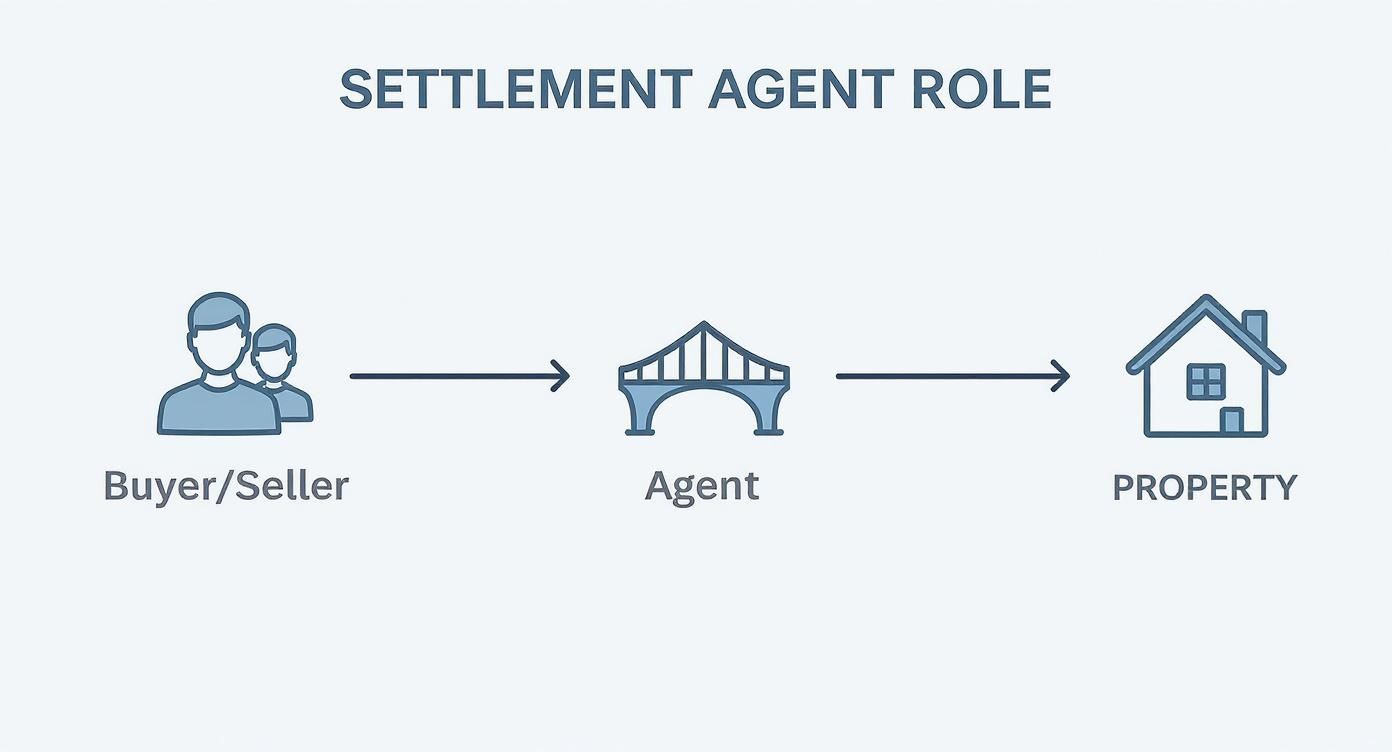
As you can see, they're involved every step of the way, guiding the process from the initial contract review right through to the final exchange.
Key Tasks From Start to Finish
Once you bring a settlement agent on board, they immediately get to work on a list of critical tasks. Their responsibilities are extensive, demanding a deep understanding of WA property law and financial processes.
Here's a breakdown of the core duties they'll handle for you:
-
Conducting Title Searches: This is one of their first and most vital jobs. They dig into the property's Certificate of Title to confirm the seller is the legal owner and to uncover any restrictions, debts, or caveats that could throw a spanner in the works.
-
Preparing Legal Documents: They are responsible for drafting and lodging all the essential legal paperwork, most importantly the Transfer of Land document with Landgate, which is what officially makes the property yours.
-
Liaising with Financial Institutions: A massive part of their role involves talking to the banks for both you and the seller. They coordinate to make sure your mortgage funds are ready for settlement and that any existing mortgage on the property is paid off.
-
Adjusting Rates and Taxes: They meticulously calculate and adjust council rates, water rates, and land tax. This ensures each party pays their fair share right up to the settlement date, preventing you from inheriting the seller's unpaid bills.
-
Verifying Contract Conditions: They double-check that all special conditions in the Offer and Acceptance contract—like a satisfactory building inspection or getting your finance approved—have been met before the sale goes ahead.
Differentiating Their Role
It’s easy to get the different professionals involved in a property purchase mixed up. While a real estate agent markets the property and a mortgage broker arranges your loan, the settlement agent is the one who handles the legal transfer of ownership.
Before we dive deeper, let's quickly clarify who does what. The table below outlines the distinct roles these three key players have in your property journey.
Key Professionals in a Property Transaction
| Professional | Primary Role | Key Responsibilities |
|---|---|---|
| Settlement Agent | Legal & Financial Transfer | Manages all legal paperwork, title searches, and the financial settlement between parties. |
| Real Estate Agent | Sales & Negotiation | Markets the property, finds a buyer, and negotiates the sale price and contract terms. |
| Mortgage Broker | Finance Arrangement | Assesses borrowing capacity, finds a suitable home loan, and manages the loan application. |
As you can see, each professional has a specialised lane they operate in, all working towards the common goal of a successful property transaction.
A settlement agent’s sole focus is the legal and financial integrity of the transaction. They don't negotiate price or secure finance; they ensure the contract is executed flawlessly and that the property title you receive is legitimate and clear.
This specialisation is vital for protecting your interests. Their expertise in the technical nuts and bolts of property law is something other professionals simply don't have. They are, in essence, the indispensable final piece of the property puzzle.
How Settlement Agents Navigate Common Problems
The path to settlement day isn't always a smooth, straight line. Unexpected hurdles can pop up, turning what seemed like a simple transaction into a complex puzzle. This is exactly where a skilled settlement agent proves their true value, shifting from a coordinator to an expert problem-solver.
Their worth really shines when things don't go to plan. They become your advocate and guide, tasked with keeping everything on track, no matter what obstacles appear.
Managing Unexpected Delays
One of the most common headaches is a delay from a financial institution. When the property market is hot, lenders can get swamped with new loan applications and mortgage discharge requests. This bottleneck can create a serious domino effect, threatening your settlement date.
For instance, a recent property market surge saw some major banks stretch their mortgage discharge times from the usual 10–15 business days to a staggering 36 business days. When this happens, a proactive settlement agent is immediately on the front foot. They'll liaise with everyone involved to negotiate a formal extension to the settlement date, protecting both buyers and sellers from penalty interest or other contractual breaches. You can find more insights on how market surges impact settlement timelines on kddsettlementagentperth.com.au.
Resolving Inspection and Title Issues
Other frequent problems can spring from the property itself or its legal history. A good settlement agent is trained to handle these issues with a calm, methodical approach.
Here are a few real-world scenarios they tackle all the time:
- Final Inspection Surprises: The buyer does their final walk-through only to discover a broken appliance or damage that wasn't there before. The settlement agent steps in to negotiate a fair solution, which might mean a price reduction or a written agreement for the seller to fix it.
- Unforeseen Title Complications: A title search might unearth an old, forgotten caveat or reveal that a shed encroaches on the neighbour's land. The agent will work with lawyers and surveyors to sort these issues out, making sure you receive a clean and legally sound title.
- Strata Record Discrepancies: When buying a strata property, the agent might find unpaid levies or unresolved disputes in the strata company’s records. They’ll ensure the seller settles these before the property officially changes hands.
A settlement agent's role is to anticipate these potential roadblocks. They conduct thorough due diligence early in the process to identify risks and create a strategy to resolve them long before they can derail your settlement day.
Ultimately, their expertise is your greatest asset when complications arise. By managing communications, negotiating solutions, and keeping a close watch on legal obligations, they turn stressful problems into manageable steps, ensuring your property transaction successfully crosses the finish line.
Understanding Settlement Agent Fees and Costs
When you’re budgeting for a property purchase, the sale price is really just the starting line. Engaging a settlement agent comes with its own set of costs, and getting your head around them early on will save you from any nasty financial surprises on the big day.
It’s best to think of their quote not as one single lump sum, but as a combination of two distinct parts.
First up, you have the professional service fee. This is what you’re paying the agent for their expertise, their time, and all the skilled work they do behind the scenes to legally transfer the property into your name. This fee covers everything from performing crucial searches to liaising with banks and lodging all the necessary documents.
The second part is what’s known as disbursements. These aren’t fees that go to the agent. Instead, they are out-of-pocket expenses the agent pays to other organisations on your behalf to get the settlement over the line. A good way to think of it is like paying a builder for the bricks and timber – it’s a necessary cost that’s passed on to you.
Breaking Down the Disbursements
Disbursements are essentially third-party charges required to gather all the official information and finalise the legal transfer. These almost always include:
- Title Search Fees: Paid directly to Landgate to confirm the property's legal owner and check for any restrictions or issues.
- Government Enquiry Costs: These are fees for getting clearance certificates from places like the local council, the Water Corporation, and the State Revenue Office.
- Bank and Document Fees: This covers the smaller but essential costs, like bank cheques, postage, and other administrative bits and pieces.
All these costs will be clearly itemised on your final statement. Getting familiar with this breakdown is key, and you can see a complete example of how these fees are laid out by reading our guide on what is a settlement statement.
What Is a Realistic Price Range?
Here in Western Australia, settlement agent fees can vary, but as a ballpark figure, you can expect the professional service fee to fall somewhere between $800 and $1,500. The final total, however, really depends on how complex your specific property transaction is.
A straightforward purchase of a standard green title house will almost always be cheaper to settle than a more involved strata title property, which needs extra searches and a thorough review of the strata company's records and by-laws.
When you're comparing quotes from different agents, always insist on a full breakdown that separates their professional fee from the estimated disbursements. This transparency is the mark of a good agent and lets you budget accurately for a smooth, stress-free settlement. Any reputable professional will be more than happy to walk you through every single line item.
How to Choose the Right Settlement Agent in WA
Picking the right settlement agent is one of the most important decisions you'll make when buying or selling a property. This isn't just another box to tick. The professional you choose is responsible for the legal and financial integrity of your biggest asset, so it pays to find someone you can genuinely trust. Don't rush this step; taking the time to properly vet your options will save you a world of stress down the track.

Your first check is simple but absolutely non-negotiable: make sure they're licensed. In Western Australia, every settlement agent must hold a current licence issued by Consumer Protection WA. This is your guarantee that they meet strict professional standards and are qualified to handle your transaction legally and ethically.
Next, do a little digging for social proof. Jump online and check out their reviews on platforms like Google. What are past clients saying about them? Consistent, positive feedback is a massive green flag, signalling that they’re reliable, professional, and good communicators.
Questions to Ask a Potential Settlement Agent
Once you've got a shortlist, it's time to have a chat. How a potential agent answers your questions can tell you everything you need to know about their experience and how they operate. A great settlement agent will be upfront, transparent, and more than happy to get into the details with you.
Try asking some of these questions:
- Experience: "How long have you been in the industry, and have you dealt with properties like mine before (e.g., strata titles, off-the-plan builds, rural land)?"
- Communication: "Who will be my go-to person for updates, and what's the best way to stay in the loop throughout the settlement?"
- Fee Structure: "Could you give me a full breakdown of your quote? I'd like to see your professional fee separated from the other expected costs."
- Problem-Solving: "Can you share an example of a tricky situation you've had to navigate for a client recently and how you sorted it out?"
Choosing a settlement agent isn't just about finding the cheapest fee. It's about investing in an experienced professional who communicates clearly and has a proven track record of protecting their clients' interests.
Taking this proactive approach puts you in the driver's seat, empowering you to find a qualified professional who will be a true partner in your property journey. By asking the right questions, you can secure an expert who will confidently handle any bumps in the road and guide your transaction to a smooth and successful finish.
Your Top Settlement Agent Questions, Answered
Jumping into the property market for the first time? It's natural to have a few questions. To give you some clarity, we’ve put together straightforward answers to the queries we hear most often about settlement agents in Western Australia.
Can I Handle My Own Settlement in WA?
Technically, yes, you can legally manage your own settlement. But should you? That's a different story.
Think of it like doing your own complex dental work—possible, but probably not a good idea. The settlement process is a maze of legal paperwork, strict deadlines, and careful coordination with banks and government bodies. One tiny mistake could cost you thousands in penalties or, even worse, cause the whole deal to fall through.
Hiring a licensed settlement agent is your best bet for a smooth, compliant transaction that protects your financial interests.
When Is the Right Time to Hire a Settlement Agent?
The simple answer? As soon as you have a signed Offer and Acceptance contract.
The moment that contract is signed, the clock starts ticking on the settlement period. Your agent needs to hit the ground running, launching into critical tasks like title searches and preparing all the necessary documents.
Getting them involved early gives them the time they need to spot and fix any potential hiccups before they become major roadblocks, making the entire journey to settlement day far less stressful.
You might hear the terms 'settlement agent' and 'conveyancer' used for the same role in Western Australia. Don't worry, they are the same thing. While 'conveyancer' is more common in other states, here in WA, they perform the exact same job of legally transferring property ownership.
The most important thing is to make sure the person you hire holds a valid WA-issued licence. This is your guarantee that they are qualified and know the ins and outs of our state's specific property laws.
Ready to make your next move in the Mandurah property market? Whether you're buying or selling, having an expert on your side makes all the difference. Contact David Beshay Real Estate today for a free property appraisal and personalised advice. Let's talk about your property goals.


Pingback: Selling Property Under Power of Attorney in WA - David Beshay Real Estate - Beshay Realty