


So, your offer on a property has been accepted. It's an exciting moment, but it's not time to pop the champagne just yet. Now comes one of the most important stages in the entire process: due diligence.
Think of due diligence as the critical investigation period before the sale becomes final. It’s your official opportunity to "do your homework" on the property and make sure there are no nasty surprises lurking beneath the surface that could cost you big time down the track.
What Due Diligence Really Means for Buyers
Imagine a pilot running through a pre-flight checklist. They're not just glancing over the plane; they're meticulously inspecting every system, control, and engine to ensure a safe flight. That's exactly what due diligence is for a home buyer. It’s your non-negotiable pre-flight check before you commit to one of the biggest financial journeys of your life.
This is your chance to look past the fresh paint and styled furniture to uncover the property's true condition. It’s where you get to verify that everything is as it seems, from the structural integrity of the house to its legal standing.
Why This Step Is Your Greatest Protection
Cutting corners here can quickly turn a dream home into a financial nightmare. Without proper checks, you could unknowingly buy a property riddled with serious, expensive problems.
- Hidden Structural Defects: Things you’d never spot on a walk-through, like a dodgy foundation, hidden termite damage, or a leaking roof waiting for the next big storm.
- Legal Complications: Unforeseen easements giving someone else rights to your land, boundary disputes with neighbours, or zoning restrictions that stop you from building that shed you planned.
- Financial Liabilities: Outstanding council rates or undisclosed strata issues that suddenly become your problem—and your bill—after settlement.
It sounds scary, but a surprising number of buyers take this risk. A 2023 survey showed that nearly 30% of Australian homeowners rushed into buying without doing these essential checks, with a staggering 57% skipping a pest inspection altogether. Investing a small amount of money now on professional inspections gives you peace of mind and powerful leverage. It allows you to negotiate repairs, ask for a lower price, or even walk away from a deal that’s just not right.
A thorough due diligence process isn't just another expense; it's an investment in your financial security and future happiness. It empowers you to move forward with total confidence.
One of the first and most critical legal steps is confirming who legally owns the property and checking for any claims against it. To get a handle on this crucial check, you can explore our guide on what is a property title search.
Before we dive deeper, here's a quick look at the main areas you'll be investigating.
Quick Overview of Key Due Diligence Areas
| Area of Investigation | Why It Matters |
|---|---|
| Building & Pest Inspections | Uncovers structural defects, termite damage, and other physical issues. |
| Title & Legal Searches | Verifies ownership and reveals easements, covenants, or restrictions. |
| Strata Records (if applicable) | Exposes the financial health and history of the body corporate. |
| Council & Zoning Checks | Confirms compliance with local regulations and future development plans. |
| Finance & Valuation | Ensures you can secure your loan and aren't overpaying for the property. |
This table provides a snapshot, but each of these areas involves a detailed process to ensure you're fully informed and protected.
Your Essential Due diligence Checklist
Think of your due diligence as a practical, two-part mission: first, inspecting the physical property, and second, verifying its legal and financial standing. It’s about being systematic. A methodical approach turns what feels like an overwhelming process into a manageable series of checks that protect your investment and give you peace of mind.
This is your roadmap to uncovering the full story behind your potential new home. The whole point is to investigate the property, uncover any hidden issues, and protect yourself financially before you commit.
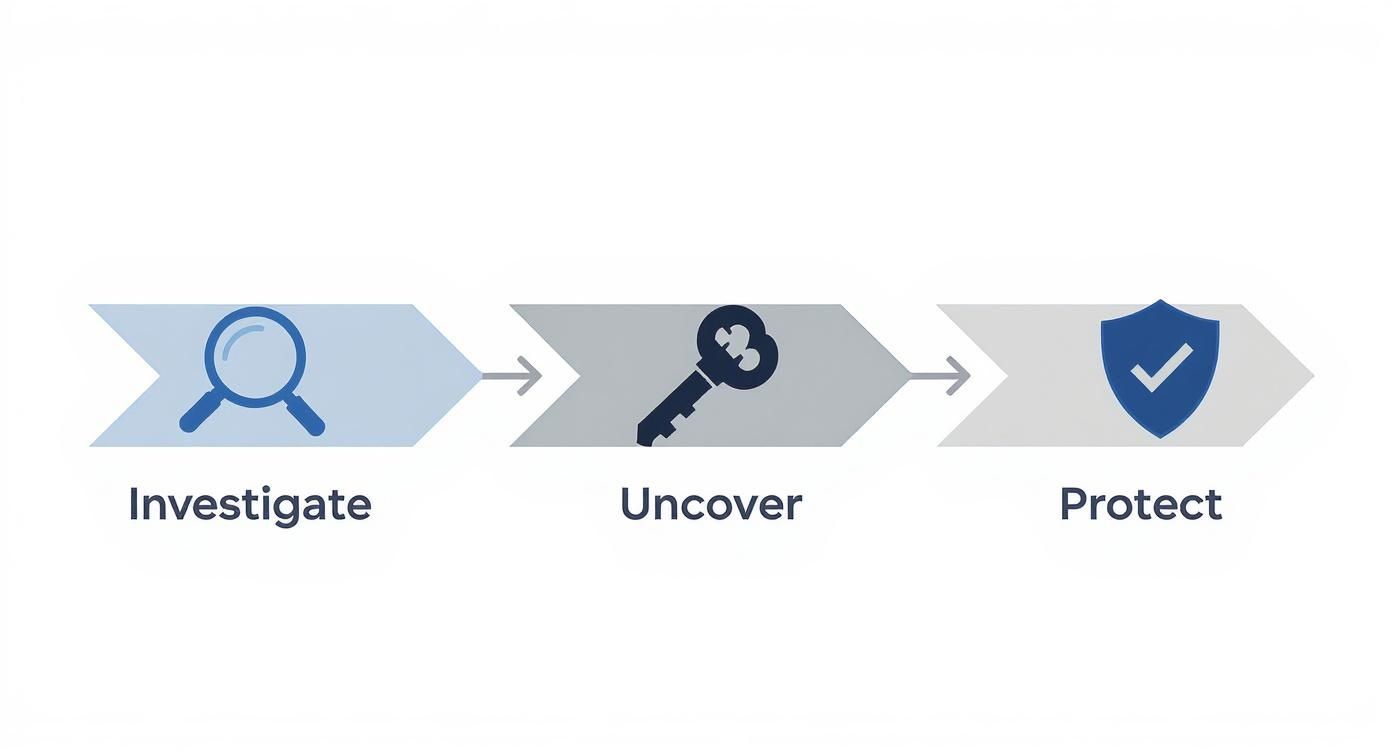
Each step builds on the last, ensuring that by the end of your due diligence period, you have a complete and accurate picture of the property you’re about to buy.
Inspecting the Physical Property
First on the list is the physical health of the home. Sure, you can spot cosmetic issues yourself, but a professional building and pest inspector is absolutely essential for identifying the kind of problems that are invisible to the untrained eye. For a detailed guide on what to look for, check out our comprehensive home inspection checklist for Australia.
These inspections are non-negotiable. Research shows that termites affect roughly one-third of Australian homes at some point, causing over 80% of structural damage to timber components. In fact, a recent survey found that a staggering 26% of homebuyers ran into issues after purchase that proper checks would have caught.
In a coastal area like Mandurah, inspectors pay special attention to:
- Structural Soundness: They’re looking for cracks, foundation movement, and any signs of subsidence.
- Pest and Termite Activity: This involves searching for evidence of current or past infestations that could compromise the home’s structure.
- Moisture and Water Damage: Identifying leaks, poor drainage, and dampness is critical, as these can lead to mould and rot.
- Roofing and Gutters: A thorough check of the roof, flashing, and drainage systems for any potential leaks is a must.
A professional building and pest report is your best defence against nasty surprises. It gives you the evidence you need to either negotiate repairs with the seller or, if necessary, walk away from a problematic property.
Verifying Legal and Financial Details
Once you're satisfied with the physical condition of the property, it’s time to shift your focus to the paperwork. This is where your conveyancer becomes invaluable, digging into the legal and financial history of the property to ensure a clean transaction.
Key legal checks include:
- Title Search: This confirms the seller is the legal owner and reveals any mortgages, caveats, or other claims against the property that must be cleared before settlement.
- Zoning and Council Compliance: A check with the City of Mandurah will confirm the property's zoning and ensure any extensions or structures have the required approvals. It also highlights any planned developments nearby that could affect your property's value down the track.
- Easements and Covenants: This search uncovers any rights others might have over your land—like a utility company's right to access pipes—or any restrictions on what you can build.
- Strata Report Review (for apartments or townhouses): If you're buying into a strata scheme, this report is vital. It details the financial health of the body corporate, any upcoming special levies, past disputes, and the state of the sinking fund.
Assembling Your Professional Due diligence Team
Navigating the complexities of real estate due diligence isn't something you should tackle alone. Think of it like a professional pit crew for a race car driver—each member has a specialised job, and their combined expertise is what guarantees a safe and successful finish. Trying to handle every detail yourself is a massive risk when expert help is right there for the taking.
You need a team of specialists in your corner, each focusing on a different piece of the puzzle. This approach lets you tap into expert knowledge, turning what could be a stressful investigation into a well-managed project. By bringing in the right professionals, you ensure every angle is covered, from the legal fine print right down to the physical state of the building.

Your Core Expert Roles
Your due diligence "pit crew" should have at least three key players. Each one provides a critical layer of protection and insight that’s essential for making a properly informed decision.
-
The Conveyancer or Solicitor: This is your legal eagle. They're responsible for dissecting the contract of sale, running the official title search, and uncovering any legal restrictions or issues tied to the property. Their main job is to make sure the transaction is legally sound and that your rights are protected every step of the way.
-
The Building and Pest Inspector: This professional is your eyes and ears on the ground, assessing the physical health of the property. They’ll spot both major and minor defects—from structural problems and dodgy wiring to termite damage. Their detailed report is absolutely crucial for understanding the true condition of the home and figuring out potential future costs.
-
The Mortgage Broker or Lender: This is your financial specialist. They confirm that your funding is secure and that the property meets the lender's valuation criteria. They’re there to make sure there are no financial roadblocks that could blow up the purchase at the last minute.
Assembling this team is one of the smartest investments you can make. Their reports and advice provide the clarity and confidence needed to proceed with your purchase, negotiate better terms, or wisely walk away from a bad deal.
Due Diligence Strategies for Mandurah Property Investors
When you're investing in property, your mindset needs a complete shift. You're no longer just looking for a great place to live; you're hunting for a profitable, high-performing asset. For investors with their sights set on the Mandurah market, this means going well beyond the standard building inspection and digging deep into the numbers that actually drive real returns.
An investor's lens forces you to analyse things a typical homebuyer might not even consider. It's less about whether you personally love the kitchen and much more about whether that kitchen will attract a quality tenant and help generate strong, consistent cash flow. That's the real heart of what is due diligence in real estate for an investor.
Analysing Investment Potential
To really get a feel for a property's potential, you need to zoom in on the details. Instead of just glancing at suburb-wide prices, the focus should be on specific metrics that paint a clear picture of a healthy rental market and the potential for capital growth.
Key areas to zero in on for an investor-focused analysis include:
- Rental Yields: Do the maths. Calculate the potential annual rental income as a percentage of the property's price for specific Mandurah suburbs you're interested in.
- Vacancy Rates: Dig into the current and historical vacancy rates. This tells you a lot about tenant demand and the risk of your property sitting empty and costing you money.
- Tenant Demographics: Get to know the locals. Researching the area's demographics ensures the property's features will appeal to the typical renter you're trying to attract.
For an investor, successful due diligence is a numbers game. It's about swapping emotion for evidence and using hard data to validate that a property aligns perfectly with your long-term financial goals.
The Australian real estate market is huge—there can be over 700,000 properties listed for sale at any given time. But here's a sobering thought: industry analysis suggests that after a proper, rigorous due diligence process, fewer than 5% of those listings actually tick all the boxes to be considered 'investment-grade'. This is why the process is so critical; it helps you filter out the duds and focus only on assets with genuine potential.
Ultimately, your goal is to find a property that not only performs well today but is also perfectly positioned for future growth. Taking the time to research the City of Mandurah's development plans and upcoming local infrastructure projects can give you valuable clues about a suburb's upward trajectory. This forward-thinking approach is what separates a simple purchase from a strategic, wealth-building investment. For a closer look at the opportunities on offer, explore our analysis of Mandurah real estate WA.
Common Due Diligence Mistakes to Avoid
Learning from the missteps of others is one of the biggest advantages you have when buying a property. A solid investigation is your best defence, but even the most careful buyers can fall into common traps, especially when the market feels competitive and rushed. Knowing what these pitfalls are is the key to navigating the process like a seasoned pro.
One of the most frequent errors we see is people skipping professional inspections to save a bit of money. A buyer might walk through a home that looks absolutely flawless and decide to waive the building and pest check, saving themselves a few hundred dollars. Fast forward a few months, and they uncover hidden termite damage that needs $20,000 in structural repairs—a disastrous outcome that an expert would have likely spotted from a mile away.
Overlooking Crucial Details
Another classic mistake is relying solely on the reports the seller provides. Sure, they can be a helpful starting point, but they're no substitute for your own independent checks. You need an impartial expert working for you to get unbiased advice on the property’s real condition.
Other critical oversights often include:
- Ignoring Strata Records: If you're looking at an apartment or townhouse, failing to read through strata meeting minutes can mean missing massive red flags. Think ongoing disputes between neighbours, upcoming special levies for major works, or a sinking fund that's on its last legs.
- Dismissing Minor Issues: That tiny damp patch on the ceiling or a single cracked tile might seem like nothing. But sometimes, these small clues can point to much deeper, more expensive problems with plumbing, waterproofing, or even the foundation itself.
The whole point of due diligence is to eliminate nasty surprises down the track. Every check you do, no matter how small it seems, helps build a clearer picture of your potential investment and protects you from costly future headaches. Always trust your gut—if something feels off, investigate it.
Your Due Diligence Questions Answered
When you get down to the brass tacks of buying a home, the due diligence process can feel a bit murky. It’s natural to have questions about how it all works, what it costs, and what your rights are.
Let's clear up some of the most common queries buyers have, so you can move forward with confidence instead of confusion.
How Long Is the Due Diligence Period in Australia?
The timeframe isn't set in stone; it varies by state and what you negotiate. Here in Western Australia, you won't find a standard "cooling-off period" like in some other states. Instead, your offer to purchase is almost always made 'subject to' specific conditions.
These conditions—like getting your finance approved or a thumbs-up from a building and pest inspection—create your due diligence window. This period is hammered out between you and the seller, but it typically lands somewhere between 7 and 14 days. Think of it as your dedicated time to get all your ducks in a row before the contract becomes locked in.
What Happens If I Find a Major Problem During Due Diligence?
First off, don't panic. Discovering a significant issue doesn't automatically kill the deal. In fact, it means the system is working exactly as it should to protect you. Those clauses in your contract are your safety net for this exact scenario.
If your building inspection uncovers a major structural defect or a serious pest problem, you have a few ways you can go:
- Request Repairs: You can ask the seller to fix the specific problem before settlement day.
- Negotiate the Price: A fair approach is to propose a price drop to cover the cost of the repairs you'll have to handle later.
- Terminate the Contract: If the issue is a genuine deal-breaker and it's covered by your conditions, you may have the right to walk away from the sale and get your deposit back.
Your conveyancer is your best friend here. They'll give you the right advice based on what your contract says and how serious the problem really is.
Finding a problem during due diligence isn’t a failure. It’s the process giving you the power to make an informed decision, rather than being hit with a massive, expensive surprise after you’ve already moved in.
How Much Does Due Diligence Cost?
Yes, it’s an upfront expense, but the cost of proper due diligence is tiny compared to the financial headaches it can save you from. The total amount really depends on the type of property and how many checks you want for complete peace of mind.
Here’s a rough idea of what you might expect to pay:
- Combined Building and Pest Inspection: Usually lands somewhere between $400 to $800.
- Strata Report (if you're buying a unit or townhouse): This can cost between $200 and $400.
- Conveyancing Fees: These legal fees cover the title searches and other official checks needed to get the deal across the line.
Try to see these costs not as an expense, but as an investment in your future. Spending a few hundred dollars now could genuinely save you tens of thousands in unexpected repairs down the track. It’s a vital part of what is due diligence in real estate and ensures you’re buying with your eyes wide open.
Navigating the Mandurah property market requires local expertise and a steady hand. For personalised guidance through every step of your buying or selling journey, contact David Beshay Real Estate. Let's make your next property move a success. Get in touch today at https://realestate-david-beshay.com.au.

