


Think of home staging companies as the marketing experts for your property. Their job is to furnish and decorate your home with one goal in mind: making it irresistible to buyers. The result? A property that sells faster and for a higher price by painting a picture of a lifestyle that buyers can't help but fall in love with.
Why Mandurah Sellers Now Rely On Home Staging Companies
In a hot market like Mandurah's, you only get one chance to make a first impression, and buyers make up their minds in seconds. The days of a quick tidy-up being 'good enough' are long gone. Today’s buyers expect to be wowed from the moment they scroll through the online photos.
This is exactly where a professional home stager becomes your secret weapon. They’re not just decorators; they are visual storytellers for your most significant investment.
Staging is all about creating a feeling. It takes a house that's either empty and cold or a bit too full of your personal life and transforms it into a warm, inviting home that anyone can imagine themselves living in. By strategically placing the right furniture, art, and decor, stagers know how to play up your home’s best assets and minimise any tricky layouts or awkward corners. They build a cohesive vision that connects with buyers on an emotional level.
The Psychology of a Staged Home
A professionally staged home isn't just about looking pretty—it's about selling a dream. It helps buyers get past that common roadblock where they struggle to visualise their own lives in a vacant space.
- Defines the Space: Staging shows the true scale and purpose of every room. Suddenly, buyers can see exactly how their own couch or dining table would fit perfectly.
- Creates an Emotional Connection: It sparks feelings of comfort, aspiration, and possibility. The viewing becomes less of a logical checklist and more of an emotional experience.
- Boosts Perceived Value: A beautifully presented home simply feels more valuable and well-maintained, which naturally justifies a higher asking price.
The real magic of home staging is that it sells a vision. Buyers don't just purchase bricks and mortar; they buy the future they can see for themselves within those walls.
The numbers back it up, too. The ROI from home staging in Australia can be seriously impressive. An investment of just 1-3% of the asking price can often deliver a return of 8-10% in the final sale price.
If you're still weighing up your options, you can also get a head start with our 8 essential tips for styling a home for sale in Mandurah.
Defining Your Staging Needs And Budget
Before you even think about picking up the phone to call a staging company, it’s worth taking a step back. The most successful staging projects I've seen always start with a clear, honest assessment of what the property actually needs and what a realistic investment looks like. Without this groundwork, you’ll find yourself drowning in quotes without a clue which one is right for you.
First, do a walkthrough of your home, but try to see it through a buyer's eyes, not your own. Be critical. Pinpoint the areas that will create that all-important first impression – this is almost always the living room, master bedroom, kitchen, and any outdoor entertaining space.
Is the furniture looking a bit tired or is it just the wrong size for the room? Are there awkward, empty spaces that feel cold or lack a clear purpose? Your goal here is to identify specific problems that staging can solve. It’s not just about filling a house with nice furniture; it’s about creating a vision that resonates with your target buyer here in the Mandurah market.
Aligning Your Budget With Potential Return
Figuring out a budget can feel a bit like plucking a number out of thin air, but it should be a strategic decision. Think of it not as an expense, but as an investment designed to increase your final sale price and get your home sold faster.
Here in the greater Perth area, a professional staging investment for a standard 6-week hire period typically falls between $2,000 and $5,000.
This infographic breaks down the relationship between that initial cost and the financial return you can expect.
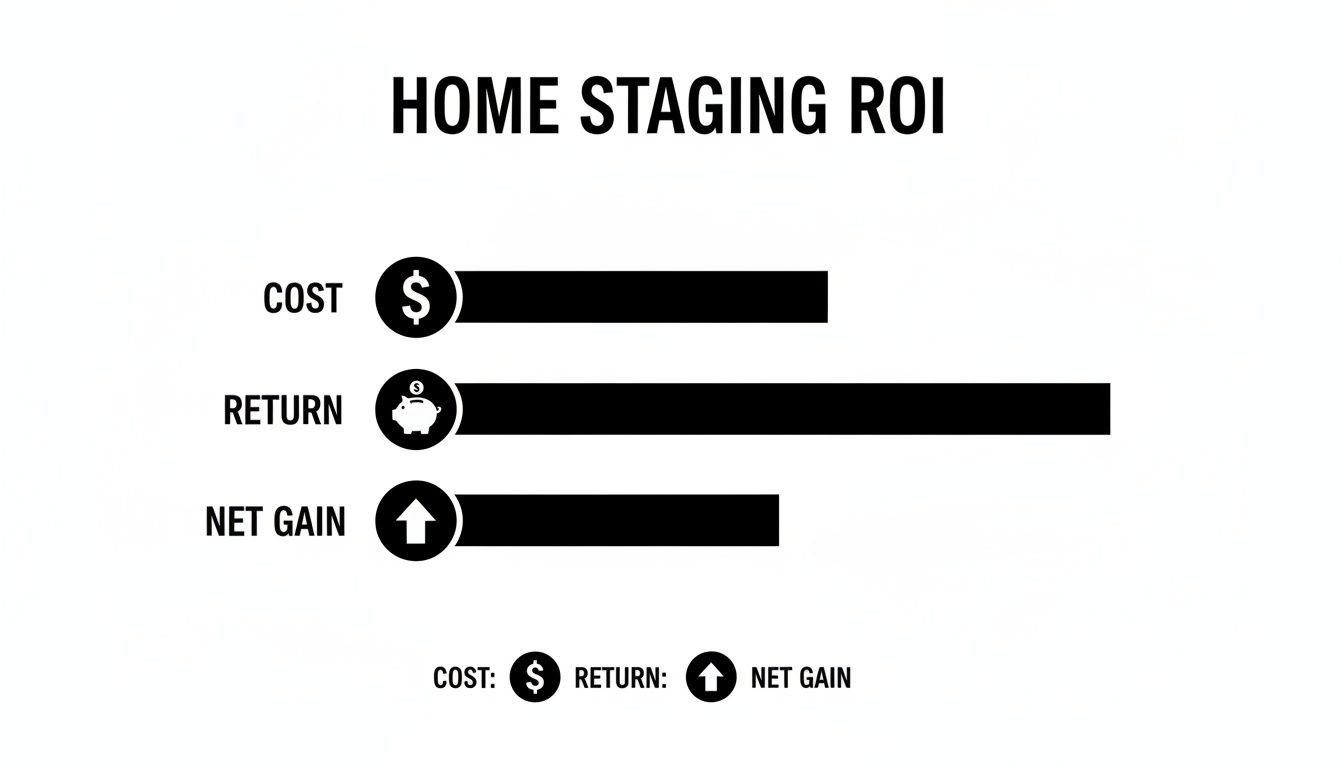
As you can see, the potential financial gain from staging often far outweighs the initial cost. It's a powerful sales tool. Remember, you're competing with every other listing out there for buyer attention, and outstanding presentation is what makes a property stand out.
Typical Home Staging Costs And Inclusions In The Perth Region
To help you get a clearer picture of what your budget can get you, it helps to understand the common packages offered by staging companies in and around Mandurah. The table below breaks down the typical service tiers, costs, and what's usually included. This way, you can match your property's needs with a realistic budget.
| Package Type | Typical Cost Range (6-week hire) | Common Inclusions | Best For |
|---|---|---|---|
| Consultation Only | $300 – $600 | A detailed, room-by-room report with DIY recommendations on decluttering, furniture placement, and styling tips. | Sellers on a tight budget who are happy to do the work themselves using their own furniture. |
| Partial Stage (Occupied) | $1,500 – $3,500 | Stager brings in key accessories like art, rugs, cushions, and lighting to supplement the owner's existing furniture. May include a few small furniture pieces. | Homes that are lived in but need a professional touch to elevate the existing decor and create a cohesive look for photos and viewings. |
| Full Stage (Vacant) | $2,500 – $6,000+ | Complete furnishing and styling of key rooms (living, dining, master bedroom, outdoor). Includes all furniture, art, linen, and accessories. | Empty properties that need to be transformed from a cold, vacant space into a warm, inviting home that buyers can connect with emotionally. |
| Premium / Luxury Stage | $6,000 – $12,000+ | Full staging of the entire property with high-end, designer furniture and bespoke styling to match a luxury home's architecture and price point. | High-value or unique properties where showcasing a premium lifestyle is critical to achieving the maximum sale price. |
Understanding these options ensures you're only paying for what will deliver the most impact for your specific home.
Choosing The Right Level Of Service
As you can see, not all staging services are created equal. Knowing the difference between the main service tiers allows you to match your needs and budget perfectly.
The main options you'll come across are:
- Staging Consultation: A staging expert walks through your home and gives you a detailed action plan. This is a fantastic, low-cost option if you’re prepared to roll up your sleeves and do the work yourself.
- Partial Staging: The stager brings in select furniture, art, and accessories to work with your best existing pieces. This is ideal for occupied homes that just need that professional polish to really shine.
- Full Vacant Staging: The company furnishes and styles the entire empty property from top to bottom. This service creates the biggest transformation, turning a vacant house into a home that feels warm, aspirational, and desirable.
While staging costs vary, the results often speak for themselves. In fact, 87% of staged homes in Australia sell within four weeks, with sellers seeing an average price premium of $69,017. To see how these figures translate in our local market, you can explore more home staging cost insights on OpenAgent. When you approach home staging companies with a clear plan and budget, you’re in the best position to find a partner who can help you smash your property goals.
Finding And Interviewing The Best Local Stagers
Choosing the right creative partner for your home staging is probably the most important decision you'll make in this process. With a clear budget and an idea of what your property needs, it’s time to find the best local home staging companies in Mandurah. The goal isn't just to find someone with nice furniture; it's to find a team whose style clicks with your home and, more importantly, with the kind of buyer you want to attract.
A great place to start is by looking at recent, successful property listings in your area. Who staged them? An agent like myself always has a shortlist of trusted, proven stagers whose work consistently gets results. Beyond that, platforms like Instagram and Houzz are fantastic for getting a feel for different design styles and seeing real-world portfolios.

Key Questions For Your Initial Consultation
Once you have a shortlist of two or three companies, it’s time to have a chat. Think of this as more than just a price check; you're looking for a genuine partner. The consultation is a two-way street—they’re assessing your property, and you're assessing their professionalism, creativity, and how they operate.
Go into the meeting prepared with a few key questions to make sure you cover all the important stuff:
- Portfolio and Style: "Can you show me some examples of homes like mine that you've staged? How would you describe your signature look?"
- Process and Logistics: "What's your process from this first meeting right through to removing the furniture? Do you own all your own inventory, or do you hire it?"
- Contract and Insurance: "What's the standard hire period included in your quote? And can you please send through a copy of your public liability and property insurance?"
- Team and Installation: "Who will actually be on-site managing the installation? For a home this size, how long does that usually take?"
Their answers will tell you a lot about their experience and how organised they are. You're listening for clear, confident responses that show they run a tight ship. For a deeper dive into what pieces make the biggest impact, check out our guide on the essential furniture to stage a home.
Spotting The Red Flags
Just as important as asking the right questions is knowing what warning signs to look out for. A professional stager should make you feel confident, not create more stress.
A great stager has the eye of a designer and the mind of a marketer. Their portfolio should show they can create an inviting, neutral vibe that appeals to the broadest possible audience, not just showcase their personal taste.
Be a little wary if you come across any of these things during your interviews:
- A Dated or Inconsistent Portfolio: If their past work looks tired or just doesn't line up with what buyers today expect, that's a major red flag. The photos should be professional and high-quality.
- Vague or Evasive Answers: If they get cagey when you ask about insurance, their inventory, or contract terms, it might suggest they're inexperienced or unprofessional.
- A One-Size-Fits-All Approach: If the stager suggests a generic plan without asking you detailed questions about your target buyer or the unique features of your home, they might be missing the strategic side of staging.
- Pressure to Pay in Full Upfront: Reputable companies will usually ask for a deposit to book you in, with the final payment due once the installation is complete and you're happy.
At the end of the day, trust your gut. The relationship should feel collaborative and professional right from the very first conversation.
Navigating The Staging Contract And Timeline
Alright, so you’ve found a home staging company you feel good about. The next step is locking in the details, and this is where the contract comes in. Think of it as the blueprint for the entire project—it spells out everyone’s responsibilities and protects your investment. A clear, detailed agreement is the sign of a true professional.
Never let anyone rush you into signing. A reputable stager will actually want you to read every line and ask plenty of questions. It's so important that you understand exactly what you’re paying for, from the scope of work and total cost to the hire duration and insurance cover. Vague contracts are a massive red flag.
Key Clauses To Review
Before you put pen to paper, there are a few key areas of the agreement you need to zero in on. Getting these right from the start can prevent some serious headaches and costly misunderstandings down the track.
- Scope of Work: This needs to be a detailed, room-by-room list of exactly what the stager is providing. Look for specifics: furniture, artwork, rugs, linen, and accessories. Don't accept vague terms like "style living room."
- Cost Breakdown and Payment Schedule: The contract must clearly state the total price and what that includes (delivery, installation, collection). It should also detail the payment terms. Usually, you'll pay a deposit upfront, with the balance due once the installation is complete.
- Hire Duration and Extension Fees: The standard hire period is typically four to six weeks. Make sure you know the exact end date. Just as importantly, find out the cost to extend on a weekly or monthly basis if your home doesn’t sell within that initial timeframe. You don't want any surprises here.
- Insurance and Liability: The stager must have their own public liability and property insurance. The contract should make it crystal clear who is responsible for any damage to the hired items or to your property during the staging period.
A strong contract is your safety net. I always advise my clients: do not pay for the entire service in full until the job is finished and you have approved the final look. This ensures you have leverage if the result doesn't match what was promised.
Understanding The Staging Timeline
Knowing the sequence of events helps you coordinate everything smoothly with your real estate agent, photographer, and open home schedule. While every project is a bit different, here’s what a typical timeline looks like for staging a three-bedroom canal home here in Halls Head.
- Proposal (1-2 Days Post-Consultation): After your initial chat, the company will send through a detailed proposal and quote for you to review.
- Contract and Deposit (1-3 Days): Once you give them the green light, you’ll sign the contract and pay the deposit. This secures your booking in their schedule.
- Installation Day (1 Day): This is the exciting part! The staging team arrives to furnish and style your home. The whole process usually takes between four to eight hours, depending on the size of your property.
- Photography (Next Day): We almost always schedule the professional real estate photos for the day immediately after installation. This is crucial for capturing the home looking its absolute best for the online listing.
- Hire Period (4-6 Weeks): This is the active campaign period when your home is officially on the market and open for viewings.
- De-Stage (1 Day): Once your home is sold and all conditions are met, the stager will schedule a day to collect all their inventory, leaving your property empty and ready for the new owners.
Measuring the Real Return on Your Staging Investment
Once the furniture is in and the photos look incredible, the real work of a home staging company begins—proving it was money well spent. A beautifully presented home feels great, of course, but the ultimate goal is a better financial outcome for you.
So, how do you measure success? It’s not just about aesthetics; it’s about the cold, hard numbers that show a faster sale and a higher final price.
You can confidently see the financial impact by focusing on two key things. First, take the final sale price and compare it to the appraisal you got before staging. That difference is your price uplift—a clear, simple number showing the value staging added. It cuts through the fluff and tells you exactly how much more money you walked away with.
Breaking Down the Key Numbers
Beyond the sale price, the second crucial metric is how quickly the property sold—the days on market. A home that sells fast saves you a small fortune in holding costs like mortgage repayments, council rates, and insurance. To figure this out, compare your sale timeline to similar, unstaged homes that sold in your neighbourhood around the same time.
For instance, if your staged home sold in just 21 days while comparable unstaged properties were still lingering after 60 days, you’ve not only dodged a month of expenses but also the stress that comes with a drawn-out sales campaign. That speed is a massive advantage in any market.
Data from across the Australian real estate market really backs this up. Professionally staged homes can sell up to 73% faster than their unstaged competition. In sought-after areas, these properties often sell for 5-10% more, which can easily mean tens of thousands of extra dollars in your pocket. You can dive deeper into how staging is changing sales outcomes in this detailed 2025 market analysis.
Calculating Your Actual ROI
Let’s put it all together with a simple formula. Start with your final sale price, subtract the pre-staging appraisal value to get your gross profit from staging, and then subtract what you paid for the staging service. The result is your net financial gain.
Here’s a real-world example:
- Pre-Staging Appraisal: $650,000
- Final Sale Price: $685,000
- Gross Profit: $35,000
- Staging Cost: -$4,500
- Net Financial Gain: $30,500
By focusing on these concrete outcomes, you move beyond just feeling like the home looked better. You have clear, undeniable proof that your decision paid off, confirming the powerful impact professional staging had on your sale.
This results-driven approach helps you see your partnership with a home staging company not as an expense, but as one of the smartest strategic moves you can make when selling your property.
Preparing Your Home For The Staging Team
You've found the right staging company and signed on the dotted line. What's next? Before the professionals arrive with furniture and decor, it's time to roll up your sleeves and get your property ready for its makeover.
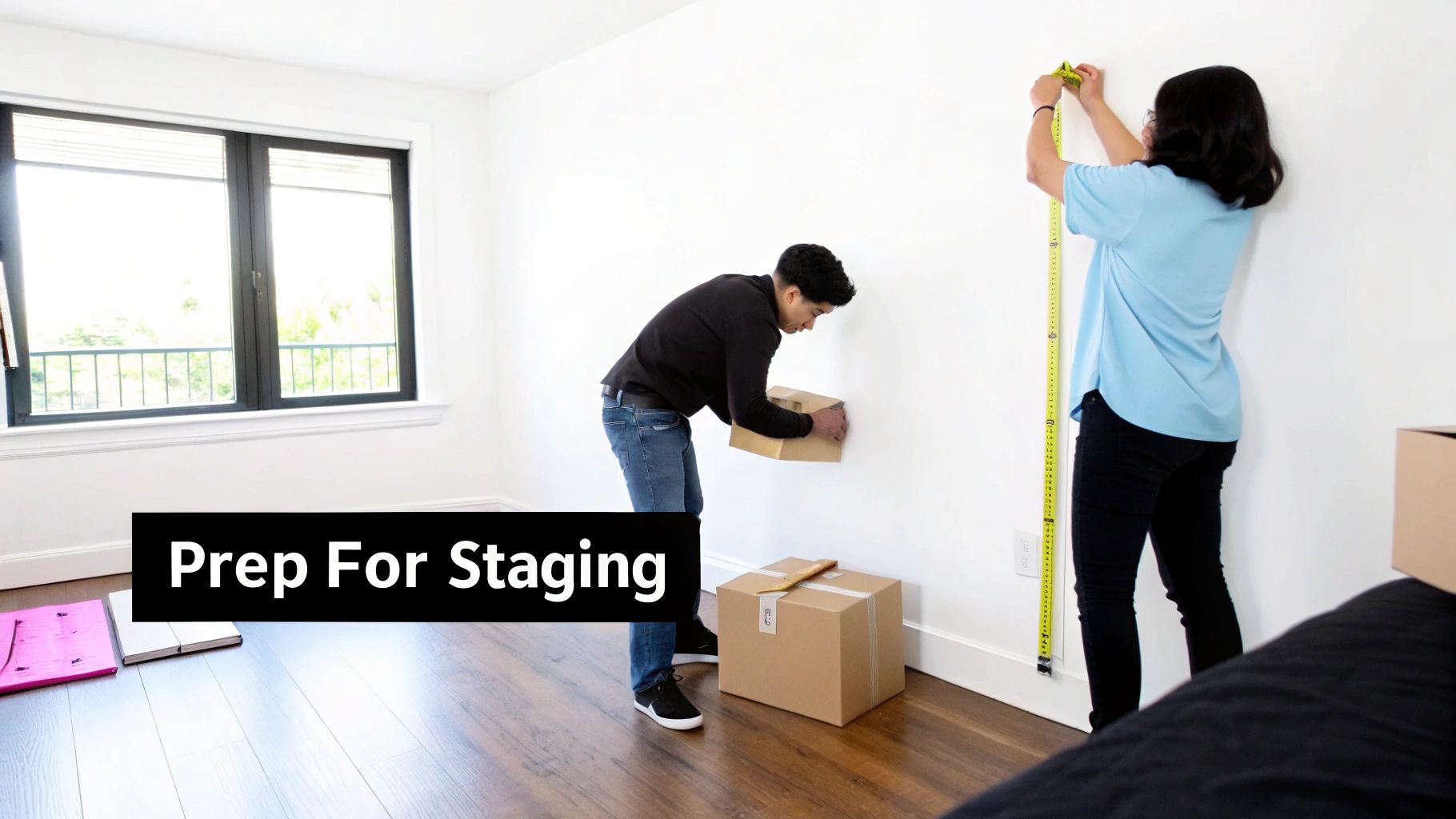
Think of it this way: the staging team are the artists, and your home is their canvas. To get the absolute best result from your investment, you need to give them a clean, blank canvas to work with. This means getting the deep cleaning, decluttering, and minor repairs out of the way so their design can truly take centre stage.
A pristine, neutral space signals to buyers that your home has been meticulously cared for. It also lets them imagine themselves living there, focusing on the beautiful lifestyle the staging creates, not your personal belongings.
Your Pre-Staging Action Plan
To make sure installation day goes off without a hitch, it's worth putting in the effort beforehand. Honestly, completing these tasks is non-negotiable if you want a fantastic outcome.
- Deep Clean Everything: This isn't just a quick Saturday morning tidy. We're talking professional carpet cleaning, washing windows inside and out, scrubbing grout until it gleams, and dusting every nook from the skirting boards to the ceiling fans.
- Declutter Ruthlessly: It's time to pack away all the personal items. Family photos, memorabilia, collections, and any excess ornaments need to go. If you're tight on storage, renting a small, short-term unit in Mandurah is a smart move. It's a tiny expense for a huge visual payoff.
- Handle Minor Repairs: Little things make a big difference. That dripping tap you've been meaning to get to? Fix it. Patch the nail holes in the walls and replace any burnt-out light bulbs. Together, these small fixes create an overwhelming impression of a well-maintained home.
- Neutralise Your Palette: If you’ve got a bold feature wall, now’s the perfect time to give it a coat of soft, neutral paint. This creates a calm backdrop that lets the stager’s artwork and accessories pop, appealing to the widest possible range of buyers.
Getting your property ready is a crucial step in the process. It's about more than just cleaning; it's about preparing a blank slate that empowers the home staging company to create a look that sells.
Following these steps means that when the staging team walks in, they can get straight to work on high-impact design rather than having to work around clutter or mess.
For a deeper dive into this critical prep work, check out our detailed guide on staging your home for sale.
Got a Few More Questions About Home Staging?
Even after deciding to stage, most sellers still have a few questions swirling around. That's completely normal. Let's tackle some of the most common ones I hear from clients here in Mandurah, so you can move forward with total confidence.
Can We Still Live in the House While It's Staged?
Absolutely, you often can. Professional stagers are experts at working around your life, cleverly blending their inventory with your own essential furniture.
The catch? You’ll need to commit to living in a 'show home' until the property is sold. That means keeping everything looking picture-perfect for every single viewing. It takes a bit of discipline, but it's definitely doable.
Is Virtual Staging Just as Good as the Real Thing?
Virtual staging is a brilliant tool, especially for online listings. It helps potential buyers see past an empty room and imagine the possibilities.
But when it comes to making a real emotional connection, nothing beats walking into a beautifully staged home. For the Mandurah market, I've found a hybrid approach works wonders: use physical staging for the main living areas and virtual for secondary rooms online.
This gives you the best of both worlds—maximum online appeal to get them through the door, and that unforgettable in-person impact that seals the deal.
What Happens if the Staging Contract Runs Out Before We Sell?
Standard staging contracts usually cover a 4- to 6-week hire period, which is often plenty of time in the current market. But if your home hasn't sold by then, you can almost always extend the agreement.
Most companies offer weekly or monthly extensions, often at a reduced rate. The key is to ask about these extension costs and terms before you sign the contract. It’s a simple question that avoids any surprises down the track.
Ready to see what professional staging and a strategic sales plan can do for your home's value? Get in touch with David Beshay Real Estate. I’ll provide a complimentary, no-obligation appraisal and connect you with Mandurah's most trusted home staging professionals. Get your free appraisal today.

