


On average, if you're selling a house in Mandurah or anywhere in the wider Perth area, you can expect it to go under offer in around 13 days. That's an incredibly quick turnaround, and it speaks volumes about the current market – we're firmly in a seller's favour, where buyer demand is far outstripping the number of homes available.
How Fast Are Homes Selling in the Current WA Market?
I like to think of the property market like a river. Sometimes it’s a slow, lazy stream where homes can sit for months before finding a buyer. Right now, the Western Australian market is more like a fast-flowing rapid, especially in popular spots like Mandurah. For sellers who are properly prepared with the right pricing and presentation, you can ride these currents to a remarkably swift sale.
This rapid pace is the very definition of a seller's market. It simply means there are more buyers actively looking than there are homes for sale, which naturally creates intense competition. For you, as a seller, this brings some significant advantages:
- Faster Offers: Buyers know they have to move quickly, or they'll miss out.
- Stronger Sale Prices: That competition often pushes prices up, sometimes even beyond the initial asking price.
- Better Negotiating Power: You're in the driver's seat when it comes to negotiating terms and conditions.
Perth is Leading the Nation in Sales Speed
This isn't just a local trend; Perth's market speed is a national standout. The latest data shows Perth is one of the fastest-selling capital cities in Australia, with the median time for a house to go under offer sitting at just 13 days.
While that's a slight increase from last year's record-breaking nine days, it's still a decade-low and really highlights the exceptional strength of our market. You can dive deeper into how Perth houses are selling twice as fast as a year ago in our detailed market update.
These numbers paint a very clear picture of the opportunity at hand. An incredible 76% of Perth suburbs see homes sell within just 14 days, and another 21% are snapped up within 15-30 days. That means the vast majority of properties find their new owner in under a month.
The current market dynamics mean a well-presented and strategically priced home in areas like Mandurah has the potential to sell far quicker than the national average, often within the first couple of weeks of hitting the market.
To really put this into perspective, let's see how Perth's performance stacks up against other major Australian cities.
Median Days on Market: A Quick Comparison
Here's a quick look at how Perth's selling speed compares to other major Australian capital cities. The difference is quite stark.
| Capital City | Median Days on Market |
|---|---|
| Perth | 13 Days |
| Adelaide | 30 Days |
| Brisbane | 32 Days |
| Melbourne | 36 Days |
| Sydney | 39 Days |
This comparison really highlights just how favourable the selling conditions are in Western Australia right now. A property in Perth is selling almost three times faster than one in Sydney, giving local sellers a distinct and powerful advantage.
Your Selling Journey From Appraisal to Settlement
It's one thing to know the average time it takes to sell a house, but it’s far more powerful to understand exactly what happens during that period. Selling your home isn’t a single event; it’s a journey with several key stages. Think of it like a road trip – each stop and milestone is crucial for a smooth and timely arrival.
Let’s map out the entire process, from the first chat with an agent to the day you hand over the keys. This will give you a clear picture of what to expect every step of the way.
The latest Perth market stats show just how fast things are moving. With an average of only 13 days on market and a whopping 76% of homes selling within the first two weeks, it's clear the pace is blistering.
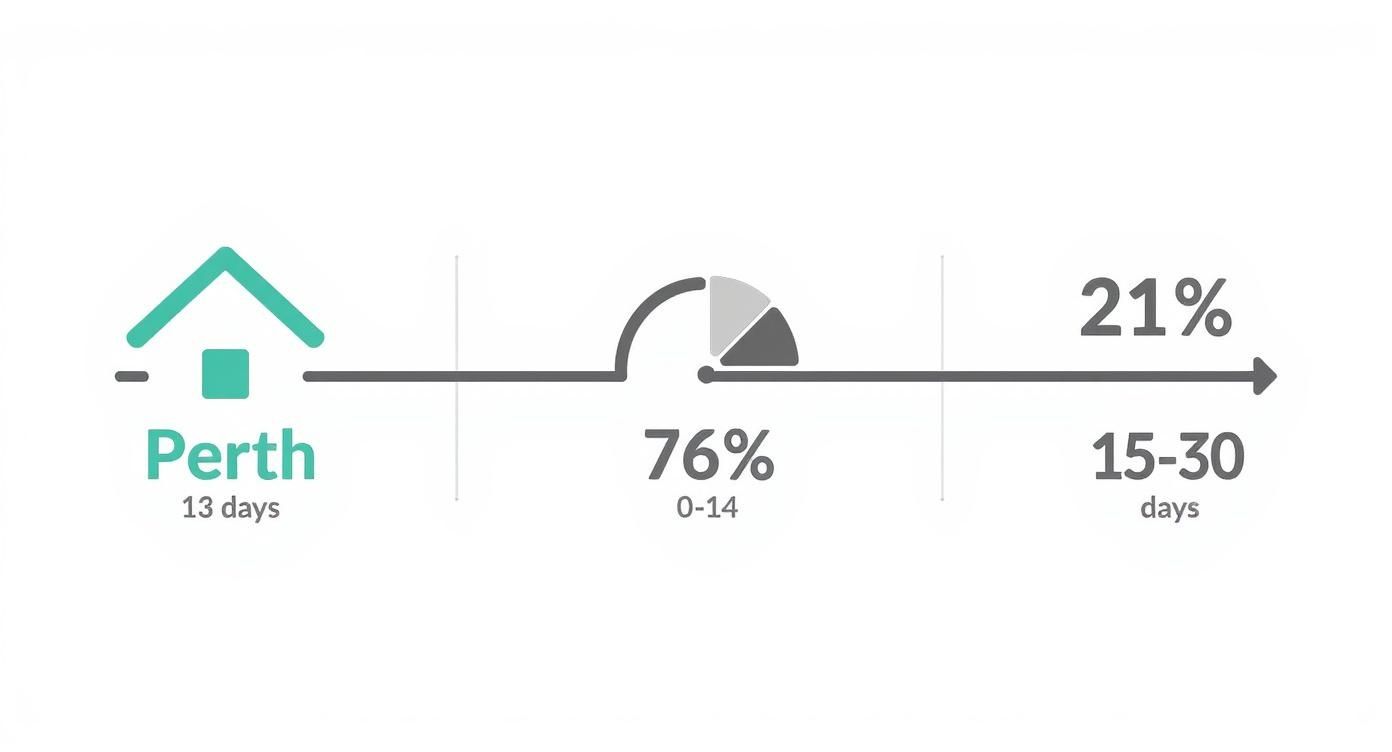
This data proves that a well-prepared home can go under offer almost immediately, which makes what you do before listing more important than ever.
Phase 1: The Preparation and Appraisal Stage
(Typical Timeframe: 1 to 4 weeks)
This is your ‘pre-season training’, and the effort you put in here directly impacts how quickly you sell. It all kicks off with understanding what your property is truly worth in the current Mandurah market. Getting an accurate property appraisal is the absolute foundation of a successful sale.
An appraisal isn't just about getting a number. It's a strategic analysis of your home's condition and features, stacked up against similar, recently sold properties in your neighbourhood. This insight ensures you hit the market with a price that grabs the attention of serious buyers from day one.
Once your price is dialled in, the focus shifts to presentation. Key tasks include:
- Decluttering: Create a sense of open space so buyers can easily imagine their own lives there.
- Minor Repairs: Fix that dripping tap or squeaky door. Small issues can become big distractions for potential buyers.
- Staging: Arrange furniture to highlight your home’s best features and create a warm, inviting atmosphere.
- Boosting Kerb Appeal: First impressions are everything. A tidy garden and a welcoming entrance can make a world of difference.
To get a better handle on this first crucial step, you can learn more about what is a property appraisal and why it’s so vital to your timeline.
Phase 2: The Marketing and Viewing Campaign
(Typical Timeframe: 1 to 3 weeks)
With your home looking its absolute best, it’s time to go live. This phase is all about getting your property in front of the largest possible pool of qualified buyers. Any professional campaign worth its salt will include top-notch photography and captivating ad copy.
Your property gets listed on major real estate websites, and the "for sale" sign goes up out front. Home opens and private viewings usually start within the first week. In a hot market like Mandurah's, this period is often short and intense, with the bulk of buyer interest flooding in during the first 7-14 days.
Phase 3: Handling Offers and Finalising the Contract
(Typical Timeframe: 1 to 5 days)
If your home is priced right and presented beautifully, offers should start rolling in right after the first viewings. This is where your agent's negotiation skills truly shine. They'll help you weigh up each offer, looking beyond just the price to consider the buyer's conditions, like finance approval and building inspections.
Once you accept an offer, both you and the buyer sign the Offer and Acceptance contract. The moment all conditions are met, the contract becomes legally binding. This is a massive milestone – your property is now officially "under offer."
Phase 4: The Settlement Period
(Typical Timeframe: 30 to 90 days)
This is the final leg of the journey. The settlement period is the time between the contract becoming unconditional and the official transfer of ownership. In Western Australia, a standard settlement is usually 30 to 60 days, although this can be negotiated between you and the buyer.
During this time, a lot happens in the background to make the sale official:
- Finance Approval: The buyer finalises everything with their lender to secure unconditional finance.
- Inspections: Any building, pest, or other inspections agreed upon in the contract are carried out.
- Legal Work: Your settlement agent (or conveyancer) works with the buyer’s agent to prepare all the legal documents needed to transfer the property title.
- Final Inspection: Just before settlement, the buyer will typically do a final walk-through to ensure the property is in the same state as when they made the offer.
On settlement day, the funds are transferred, the title officially moves into the buyer's name, and the keys are handed over. Your selling journey is now complete
What Factors Control Your Home Selling Timeline

Ever wondered why some homes in Mandurah get snapped up in a week, while others seem to linger on the market for months? It almost always comes down to a delicate balance of four key factors.
Think of them as the four legs of a table. If one is too short or wobbly, the whole thing becomes unstable and unreliable.
By understanding these elements, you gain a surprising amount of control over your selling timeline. Nailing each one can significantly shorten the time it takes to find the perfect buyer and move on to your next chapter. Let's break down these critical ingredients.
The Power of Strategic Pricing
Price is the single most powerful lever you have. It’s the first thing buyers filter for online and the ultimate decider for most. Getting the price right from the start isn’t guesswork; it’s a science that balances your home’s value with the current market demand.
An overpriced home scares away qualified buyers before they even book a viewing. Many won’t even see your listing if it’s outside their search filters. On the flip side, pricing your home competitively from day one creates urgency and can even spark a bidding war, often leading to a faster sale at a higher price.
A common mistake is to "test the market" with a high price, planning to drop it later. This strategy usually backfires. The most crucial period of buyer interest is within the first 14-21 days of a new listing. An initial high price can make your property go stale, leading to more days on market and, ironically, a lower final sale price.
To get it right, a comprehensive market analysis is non-negotiable. This involves looking at:
- Recent Sales: What have similar homes in your specific Mandurah neighbourhood sold for in the last few months?
- Current Competition: What are other homes like yours currently listed for?
- Market Conditions: Is it a hot seller's market or a cooler buyer's market?
The Impact of Flawless Presentation
Once the price has grabbed a buyer's attention, the presentation is what creates an emotional connection. This is the moment a potential buyer walks in and starts imagining their life unfolding within those walls. Poor presentation can shatter that dream instantly.
You wouldn't go to a job interview in messy clothes, would you? Your home needs to be dressed for success to attract the best offers quickly. This goes beyond just being tidy; it’s about creating an atmosphere that feels both aspirational and welcoming.
Key elements include:
- Kerb Appeal: First impressions start at the kerb. A neat lawn, clean windows, and a welcoming entryway are a must.
- Decluttering: Removing personal items and excess furniture makes rooms feel larger and helps buyers mentally place their own belongings.
- Professional Staging: A well-staged home highlights its best features, defines spaces, and tells a compelling story that buyers connect with.
- Minor Repairs: Fixing small issues like a dripping tap or a sticky door shows the home has been well-maintained.
The Reach of Smart Promotion
You could have the best-presented, perfectly priced home in Mandurah, but if nobody knows it's for sale, it simply won't sell. Promotion—or marketing—is how you get your property in front of the widest possible audience of qualified buyers.
These days, it’s about much more than a sign in the front yard. A modern, multi-channel approach is needed to capture attention in a busy marketplace. Your marketing should build momentum from day one, ensuring maximum visibility when buyer interest is at its peak. This means professional photography, compelling ad copy, and targeted online advertising are essential.
The Influence of Location and Market Position
The final factor is your property’s "Position," which covers both its physical location and its place within the current market. While you can't change your address, you can absolutely highlight its strengths.
Is it close to great schools, beautiful parks, the estuary, or convenient shopping centres? Emphasising these lifestyle benefits is key.
Equally important is understanding where your property sits in the wider market trends. In Australia, the average time to sell a house has varied significantly. Data shows the national median days on market was just 30 days in 2022 during a hot seller's market, but this stretched to 45 days by 2023 as conditions cooled. You can explore more about these national property market trends and see how different states compare. This context helps you position your home effectively to attract the right buyers for our local area.
Choosing Your Sale Method: Private Treaty or Auction

The method you choose to sell your home is one of the biggest decisions you'll make, and it has a massive impact on your selling timeline. In Western Australia, you really have two main paths: private treaty or auction.
Each one has its own unique rhythm and pace. Getting to grips with the difference is the first step in controlling how long it takes to sell your house.
Think of it this way. A private treaty sale is like a scenic road trip. You've got a destination in mind (your price), but you're free to take detours, make stops, and negotiate along the way. An auction, on the other hand, is like a high-speed train on an express track—it has a fixed departure and arrival time, built for speed and absolute certainty.
The Private Treaty Approach: Flexibility and Negotiation
Private treaty is the most common way to sell a home here in WA. It’s the method most people are familiar with. You and your agent agree on an asking price (or a price range), and the property is marketed to attract offers from interested buyers.
The timeline here is much more fluid because it all hinges on negotiation.
Here’s the typical flow:
- Listing with a Price: Your home hits the market with a clear asking price.
- Receiving Offers: Buyers will submit written offers, which might be at, above, or below what you're asking. These offers often come with conditions, like being 'subject to finance'.
- Negotiation Phase: This is where your agent shines, working with potential buyers to get you the best possible price and the most favourable terms.
That flexibility means you can take your time considering different offers until you find the one that perfectly matches your goals. The flip side? Without a hard deadline, the process can drag on, especially if the initial price isn't quite right for the current market.
The Auction Method: Speed and Urgency
An auction creates a firm, non-negotiable deadline for the sale. This simple fact injects a powerful sense of urgency into the market, pushing serious buyers to get their act together and make a decision. The whole process is structured, fast-paced, and can seriously shorten your time on the market.
An auction campaign is a concentrated burst of activity, usually unfolding over 3-4 weeks.
It includes:
- Intensive Marketing: A focused marketing blitz designed to capture maximum attention in a short period.
- Public Bidding: On auction day, the property is sold to the highest bidder, as long as the bidding hits your confidential reserve price.
- Unconditional Sale: This is the game-changer. A sale under the hammer is final. It's unconditional. No more waiting around for finance clauses or building inspections to be sorted out.
This method works wonders for unique properties or in a hot market where you know there’s going to be fierce competition. The transparent bidding can often drive the final price well beyond expectations, all within a predictable timeframe.
The biggest advantage of an auction is certainty. You know the exact date your property is set to sell, and the sale is unconditional. This gives you a clean, fast transaction and cuts out the common delays that can pop up with private treaty sales. For a deeper dive, you can explore our in-depth comparison of auction vs private sale strategies.
Private Treaty vs Auction: Which Is Faster?
So, how do you decide which path to take? There’s no single right answer. The best method really comes down to your specific property, your personal circumstances, and what the Mandurah market is doing right now. A good agent will walk you through the pros and cons of each to figure out which strategy will get you sold, fast.
Here’s a quick breakdown to help you compare.
| Feature | Private Treaty | Auction |
|---|---|---|
| Sale Timeline | Flexible; can be very quick in a seller's market but might take longer. | Fixed; usually a 3-4 week campaign leading to auction day. |
| Pricing Strategy | An asking price is advertised, inviting negotiation. | No price is set; competition on the day determines the final value. |
| Sale Conditions | Offers are often conditional (e.g., finance, inspections). | The sale is unconditional and legally binding on auction day. |
| Negotiation | Happens privately between buyer and seller, managed by the agent. | Open and transparent bidding process in a public setting. |
| Best For | Standard properties in a stable market; sellers who want flexibility. | Unique homes, a strong seller's market, or for sellers who need certainty and speed. |
Ultimately, making the right choice is a strategic decision. Both a private treaty and an auction can deliver a fantastic result. But understanding how each one answers the big question—"how long does it take to sell a house?"—is what empowers you to pick the path that best suits your goals.
How the Time of Year Impacts Your Sale
Does listing your home in spring versus winter really make a difference? Absolutely. Just like Mandurah’s beautiful waterways come alive in the warmer months, the local property market has its own distinct seasons. Getting a feel for these rhythms is key to knowing what to expect.
Timing your listing to match peak buyer activity can definitely shorten your days on market. While a fantastic, well-priced property will sell any day of the year, aligning with these seasonal trends can give you an undeniable edge.
Spring: The Peak Selling Season
Spring (September to November) is traditionally seen as the prime time to sell, and for good reason. As the weather warms up, gardens are at their best, natural light floods into homes, and buyers seem to emerge from winter hibernation with a new sense of purpose.
This season brings the largest number of buyers out of the woodwork, creating a competitive atmosphere that often leads to faster sales and stronger prices. The sense of optimism in the air is contagious, making it the perfect time to showcase your home’s lifestyle appeal—especially if you have great outdoor living areas.
The main challenge? More competition. With more homes hitting the market, your pricing, presentation, and marketing need to be flawless to stand out from the crowd.
Summer: Focused Buyers and Holiday Vibes
Summer in Mandurah (December to February) is a unique time to sell. The lead-up to Christmas can be a little quieter, but the holiday period often brings a wave of motivated buyers who finally have more time on their hands for inspections. People are generally in a relaxed mood, which can translate to a positive mindset when viewing properties.
This season is perfect for highlighting features like air conditioning, a sparkling swimming pool, or how close you are to the beach or estuary. The long, sunny days also provide the perfect opportunity for stunning twilight photography that makes your online listing pop.
Selling in summer often means you're dealing with more serious, committed buyers. The overall number of viewers might be slightly lower than in spring, but those actively looking during the holidays are often highly motivated to make a purchase.
Autumn: A Stable and Strategic Time
Autumn (March to May) offers a balanced and stable market. The intense rush of spring has passed, yet gardens often still hold their summer charm. Buyer activity remains consistent, creating a less frantic but still very effective selling environment.
One of the key advantages of autumn is having fewer competing listings compared to the spring peak. This can make your property a more prominent feature on the market, capturing greater attention from the active buyers who are out there looking.
Seasonal trends play a huge role right across the country. Historically, spring and summer are the most popular months, with industry insights showing that sales volumes can rise by around 8% compared to other seasons. You can discover more insights on Australian real estate seasonality to see how these trends unfold nationwide.
Winter: A Market for Serious Contenders
Many sellers shy away from winter (June to August), fearing a dormant market. But honestly, this season can present a golden opportunity. While there are fewer buyers browsing, those who are braving the cooler weather to attend home opens are typically very serious and need to buy.
With significantly less competition on the market, your home has a much better chance of being shortlisted. Winter is the perfect time to create a warm and cosy atmosphere—use lighting and heating to make your home feel like a welcoming retreat. A well-presented, inviting home can feel especially appealing during the colder months, often leading to a surprisingly quick sale.
Take Control of Your Property Sale
Throughout this guide, we've unpacked the timelines and various factors that go into selling a house here in Mandurah. The biggest takeaway is simple: while you can't control the market, you have a surprising amount of influence over your own selling journey.
A fast, successful sale doesn't just happen by chance. It's the direct result of a smart, well-executed plan.
From nailing the price right at the start, to getting your home's presentation spot-on and launching a powerful marketing campaign, every single step you take before your home hits the market has a massive impact on how quickly you attract the right buyer. The decisions you make now are what build momentum for a swift and profitable outcome.
Your Path to a Faster Sale
Understanding the process is the first step, but taking action is what really makes the difference. By focusing on the parts of the sale you can control, you can make your property stand out and grab immediate attention in a competitive market.
Here are the most critical actions you can take:
- Price It Right From Day One: An accurate, market-driven price is your single best tool for attracting serious buyers right out of the gate.
- Create an Irresistible First Impression: Don't underestimate the power of decluttering, staging, and boosting your kerb appeal. You want to create an emotional connection the moment buyers arrive.
- Partner with a Local Expert: An agent who knows the Mandurah market inside and out provides the strategic guidance needed to navigate the process efficiently and avoid common pitfalls.
Ultimately, the speed of your sale boils down to preparation and strategy. When you combine your efforts with expert advice, you can turn market knowledge into a successful sale, ensuring your property journey is as smooth and swift as possible.
Ready to take the next step with confidence? Let’s find out exactly what your property is worth in today's dynamic market.
Got Questions About Selling in WA? We've Got Answers.
When you're thinking about selling your home, a million questions can pop into your head. It’s completely normal. To help you feel more confident, we’ve put together some clear, no-nonsense answers to the questions we hear most often from sellers right here in Mandurah and across WA.
Getting your head around these key topics will help you set a realistic budget and know exactly what to expect once you’ve accepted an offer.
How Much Does It Cost to Sell a House in Mandurah?
Knowing the costs involved is one of the first steps to planning a successful sale. It’s not just about the agent's commission; there are a few other key expenses to factor in so you aren’t caught off guard.
Think of it as a small team you’re assembling to get the best possible result. Your main costs will typically be:
- Agent Commission: This is the biggest piece of the puzzle and is usually a percentage of the final sale price.
- Marketing Investment: This covers the essentials to get buyers through the door—professional photography, online listings, the 'For Sale' sign, and any other promotional activities.
- Settlement Agent/Conveyancer Fees: This is a fixed fee for the legal expert who handles the transfer of ownership.
Budgeting for these ensures your property gets the attention it deserves and that the sale is handled legally and professionally from start to finish.
What Is the Settlement Period and How Long Does It Take?
The settlement period is the home stretch. It’s the time between the contract becoming ‘unconditional’ (meaning all conditions, like the buyer’s finance, have been met) and the day the keys are officially handed over.
Think of the settlement period as the administrative final lap. It’s when all the behind-the-scenes legal and financial work gets done to make the sale official. The buyer doesn't get the keys, and you don't get the funds, until settlement is complete.
In Western Australia, the standard timeframe for settlement is usually 30 to 60 days. This isn't set in stone, though. It can be negotiated between you and the buyer in the Offer and Acceptance contract, and sometimes might be extended to 90 days if both parties agree.
Do I Need a Settlement Agent to Sell My House?
Absolutely, yes. In every single property sale in Western Australia, a qualified settlement agent (often called a conveyancer) is a must-have. They are the independent professional who makes sure the whole process is above board and the ownership transfer is done right.
Their job is to look after your legal interests. They'll handle everything from checking the property title to liaising with banks and making sure all the money ends up in the right place on settlement day. Trying to go it alone is a recipe for costly mistakes and serious delays, which makes hiring a professional one of the smartest investments you can make in your sale.
Ready to get started with a clear, confident plan? Find out exactly what your property is worth in today's market with a data-backed appraisal from David Beshay Real Estate.

