


Think of a Property Condition Report (PCR) as a comprehensive health check-up for a house. It’s a detailed, room-by-room document that captures the state of a property at a very specific point in time, creating a factual baseline that protects everyone involved—sellers, buyers, and investors.
Your Guide to Property Condition Reports

Imagine trying to buy or sell a house without a clear starting point. It’s a bit like setting off on a road trip with no map—you’re bound to get lost in confusion, risk, and potential disputes. A PCR is that essential map. It gives you an objective, detailed snapshot of a home’s condition right before a sale or lease kicks off.
This isn’t just about noting a leaky tap or a scuff mark on the wall. It's about laying a transparent foundation for one of the most significant financial decisions you'll ever make. For anyone active in the Mandurah property market, understanding the power of a PCR is absolutely crucial.
Why This Document Is So Important
A thorough PCR is all about setting a clear, agreed-upon baseline. This is vital for making sure the entire process is smooth and fair for everyone, no matter which side of the transaction you're on.
- For Sellers: It’s your shield. A good PCR protects you from unfair damage claims after you've handed over the keys, proving the property's condition at the time of sale.
- For Buyers: It provides genuine peace of mind. You know exactly what you’re buying, which helps you budget for any maintenance or repairs that might be needed down the track.
- For Investors: This is an indispensable tool for managing your assets, particularly when it comes to bond claims and routine inspections between tenancies.
The value of this diligence is clear when you look at how landlords operate across Australia. In today's competitive rental market, a massive 38% of landlords inspect their properties quarterly, and another 46% check in every six months. These regular checks, all documented with property condition reports, are key to catching issues early—especially in the weather-prone areas of Western Australia. You can see the full breakdown in the QBE Landlord Survey 2025.
A Property Condition Report is your best defence against "he said, she said" arguments. It replaces subjective memory with objective, time-stamped evidence, ensuring fairness for everyone involved.
Ultimately, this document aligns everyone's expectations. By meticulously detailing everything from the state of the carpets and curtains to the oven and outdoor taps, it minimises the chance of misunderstandings later on. This level of detail is similar to what's gathered during a property appraisal, although that process focuses on establishing market value. If you're curious, you might find our guide on what a property appraisal involves helpful to see how these two critical processes fit together.
How to Decode Your Report Room by Room

Opening your first property condition report can feel a bit like trying to read a new language. You’re faced with a long list of rooms, ticked boxes, and technical jargon that can be pretty intimidating.
But it doesn't have to be. The best way to get your head around it is to think of the report as a guided tour of the property, just on paper.
We’ll walk you through a typical report, just as you’d walk through a home. We'll start outside before heading into the main living spaces, breaking down the common terms and helping you spot what really matters. By the time we're done, you'll be able to read any PCR with confidence.
Starting with the Exterior
Every good inspection starts outside. The exterior is the home's first line of defence against the Mandurah weather, and it often gives you clues about the property’s overall upkeep. Your report will detail the condition of several key areas.
- Walls and Siding: The inspector will note the material (brick, render, weatherboard, etc.) and look for obvious issues like cracks, flaking paint, or signs of moisture seeping in.
- Gutters and Downpipes: The report should confirm they are clear of leaves and properly attached. Blocked or rusty gutters are a classic sign of potential water damage down the track.
- Paths and Driveways: Keep an eye out for comments on large cracks, uneven surfaces, or stains. These can be simple trip hazards or, in some cases, hint at underlying ground movement.
- Fencing and Gates: The report will document their stability and condition, and whether the gates actually latch correctly—something that’s crucial for security and keeping pets safe.
This first look sets the stage for what you might find inside. A well-maintained exterior often suggests a well-cared-for home, but that’s not always the full story.
Inside the Main Living Areas
Once inside, the report moves methodically from room to room. Living rooms, dining areas, and bedrooms are usually assessed against a standard set of criteria, so pay close attention to the specific words used.
Inspectors use particular terms to describe conditions, and it’s important to know what they mean. "Good condition" usually means no visible defects, while "fair" might point to minor cosmetic issues. "Poor" indicates significant wear or damage that needs attention.
When reading your report, focus on the difference between 'fair wear and tear' and 'damage'. A scuff mark on a wall from a sofa is wear and tear; a large hole in the plaster is damage. This distinction is vital in bond disputes and negotiations.
Common items checked in these rooms include:
- Flooring: The type (carpet, tiles, timber) and its condition will be noted, highlighting any stains, chips, or major wear.
- Walls and Ceilings: These are checked for marks, cracks, or tell-tale water stains. An inspector might also note fresh paint patches, as they can sometimes be used to cover up previous issues.
- Windows and Doors: They’ll be assessed to see if they open, close, and lock properly. Cracked glass or damaged frames will definitely be listed.
- Fixtures: Light fittings, ceiling fans, and window treatments like blinds or curtains are all checked to make sure they’re present and working.
The Kitchen and Wet Areas
Kitchens, bathrooms, and laundries—often called "wet areas"—are critical zones in any property report. With all the water and appliances in constant use, these are the rooms where costly problems love to hide.
The report will be especially detailed here. In the kitchen, for example, every appliance is usually tested. The inspector will note if the oven heats up, if all the hotplates work, and if the rangehood fan and light are doing their job.
Key things to look for in wet areas:
- Plumbing: Taps are turned on to check for leaks and decent water pressure. The report will mention any dripping taps, slow-draining sinks, or gurgling sounds from the pipes.
- Tiling and Grout: Inspectors look very closely for cracked tiles or crumbling grout, which can let water seep into walls and cause serious long-term damage.
- Ventilation: They’ll document if exhaust fans are present and working. Poor ventilation in these rooms is a leading cause of mould and mildew.
- Cabinetry: Cupboard doors and drawers are checked to see if hinges and runners are solid. Water damage under the sink is a very common red flag.
Understanding these details gives you the power to make informed decisions. A thorough report provides a clear, honest picture, helping you plan for what’s next.
For an even more detailed breakdown, you might find our home inspection checklist for Australia a valuable resource to use alongside your PCR. It helps turn a complex document into a powerful tool for your property journey.
The Legal and Financial Stakes in Western Australia
Let's be clear: a property condition report is much more than just a simple checklist of fixtures and fittings. Here in Western Australia, it's a legally significant document with serious financial weight. Think of it as a pre-nup for your property deal—it sets crystal-clear, documented expectations right from the start, protecting everyone involved from future arguments and expensive misunderstandings.
In WA, the Residential Tenancies Act gives this report enormous importance, especially for rental properties. It becomes the primary piece of evidence used to decide what happens with a security bond when a lease ends. Without a detailed report, a landlord could struggle to claim for damages, and a tenant might be unfairly charged for problems that were already there.
Protecting Your Financial Interests
For buyers and sellers, the stakes are just as high. A comprehensive PCR is a powerful negotiation tool and a financial safety net, stopping those nasty surprises that can completely derail a sale or lead to a bad case of buyer's remorse.
And believe me, unexpected issues are more common than you'd think. The Real Property Report 2025 found that a staggering 60% of Australian buyers discovered problems with their property after they bought it, even if they'd had inspections. A thorough PCR is your best defence against this. You can dive deeper into these findings in the full 2025 property report.
- For Sellers: A positive, detailed report is undeniable proof of your home’s condition. It justifies your asking price and helps you stand firm against buyers trying to chip away at the price last-minute with flimsy claims.
- For Buyers: This document is your shield against inheriting someone else's expensive problems. It gives you a clear snapshot of the property's health, letting you budget for future work or even walk away if the issues are too big. It's a crucial part of your due diligence before the contract goes unconditional, a period often known as the cooling-off period. To get a better handle on your rights during this critical time, check out our guide on what a cooling-off period entails in WA.
The Cornerstone of Asset Protection
If you're a property investor in Mandurah, the PCR is the absolute cornerstone of managing your asset. It goes way beyond bond disputes—it's about protecting the long-term value of your investment. Having a well-documented history of the property’s condition is simply invaluable.
A detailed property condition report can be your most powerful piece of evidence in an insurance claim. It provides a time-stamped, third-party record of your property's state before something like a storm or flood, which can dramatically speed up and simplify the whole claims process.
This formal paperwork also stops gradual wear and tear from flying under the radar. By comparing reports from the beginning and end of each tenancy, you can clearly tell the difference between acceptable "fair wear and tear" and actual tenant-caused damage. This clarity ensures your property is kept in top shape, preserving its market value and appeal for the next tenant or an eventual sale. Without it, you're essentially flying blind and exposing your investment to completely unnecessary financial risk.
Preparing for Your Property Condition Report
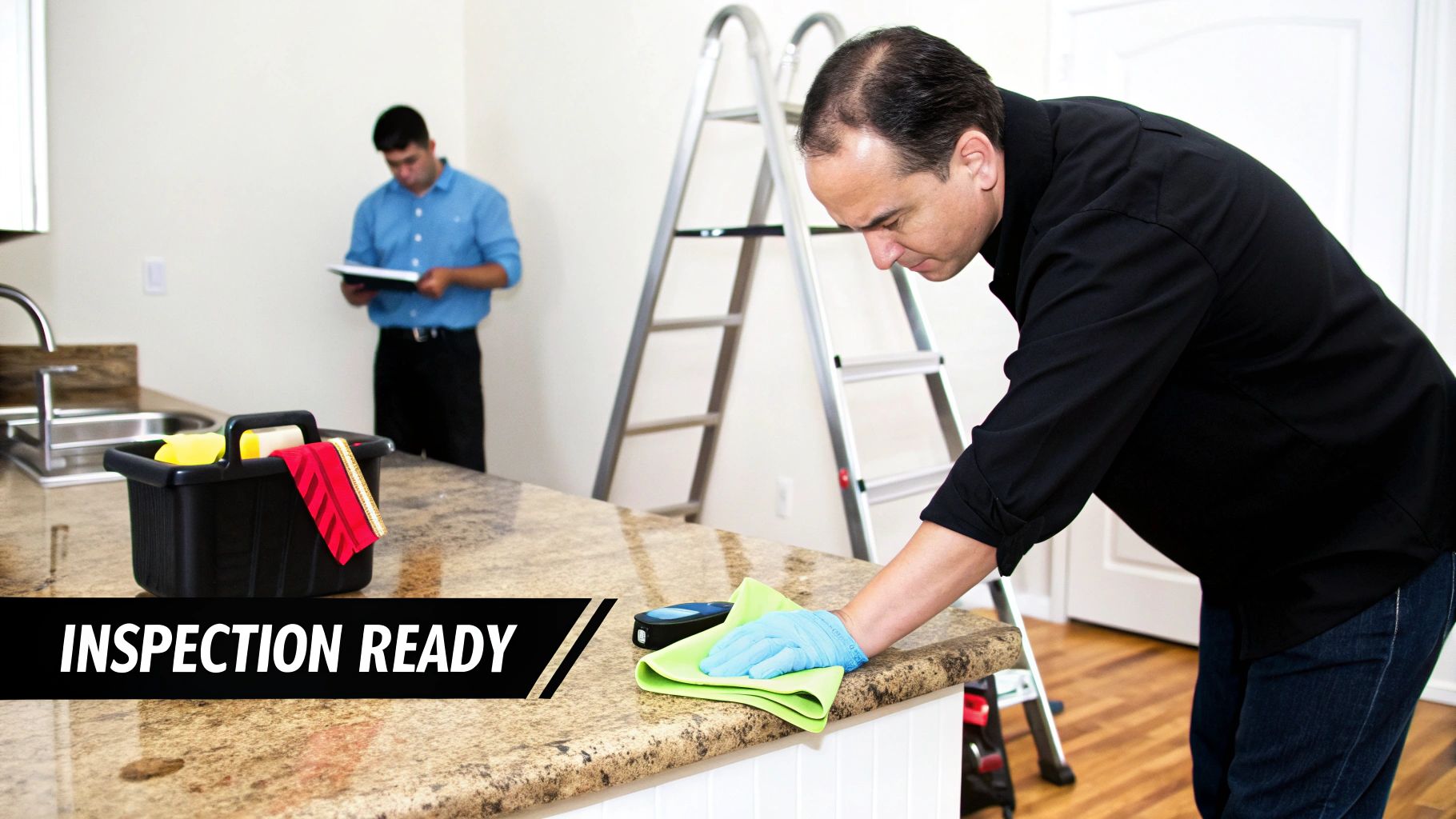
A property condition report is a straight-up, factual snapshot of your home on a given day. So, how do you make sure that snapshot is a flattering one? You prepare. A bit of focused effort beforehand can make all the difference, leading to a smoother inspection and a far more favourable report that truly reflects your property's value.
For sellers, this is your moment to let your home shine. It’s not about covering up major problems, but about giving the inspector a clean, clear run of the place. When they can see everything easily, they can create a fair and precise report. This proactive approach helps tick all the right boxes and builds a foundation of trust with potential buyers from the get-go.
The Seller's Preparation Checklist
Getting your property ready for inspection day is simpler than you might think. Treat it like a detailed spring clean, paying attention to the little things that often get overlooked. By sorting out minor issues and making sure everything is accessible, you’re helping the inspector focus on the real quality of your home, not the distractions.
To get your home looking its best for the report, we’ve put together a practical checklist for our Mandurah sellers. Following these steps helps the inspector do their job efficiently and ensures your property is presented in the best possible light.
| Area of Focus | Action Item | Why It's Important |
|---|---|---|
| General Tidiness | Declutter all rooms and surfaces. | A clean, tidy space looks well-maintained and gives the inspector unobstructed views of walls, floors, and fixtures. |
| Minor Repairs | Fix dripping taps, loose handles, and replace any blown light bulbs. | Small, quick fixes show pride of ownership and prevent minor issues from being officially noted on the report. |
| Accessibility | Ensure keys are available for all locked doors, sheds, and gates. | The inspector needs access to everything. Blocked areas can lead to an incomplete report or assumptions about condition. |
| Doors & Windows | Test that all doors and windows open, close, and lock smoothly. | Sticking windows or faulty locks are common red flags that are easy to address beforehand. |
| Outdoor Areas | Tidy the garden, clear pathways, and clean the patio or deck. | First impressions count. A neat exterior sets a positive tone for the entire inspection. |
| Appliance Check | Briefly test fixed appliances like the oven and air conditioner. | Confirming that major appliances are in working order avoids unnecessary notes on the report. |
Walking through this checklist isn't just about cleaning; it's about managing that critical first impression. A home that is tidy, accessible, and clearly cared for results in a report that accurately reflects its quality.
Commissioning a Report in Mandurah
Once your home is ready, it’s time to get the report done. In Mandurah, this means hiring a qualified and impartial professional. This could be a licensed real estate agent, a property manager, or a company that specialises in inspections. The most important thing is choosing someone with a solid reputation for detailed, unbiased assessments.
When you partner with an agency like David Beshay Real Estate, we handle this whole process for you. We bring in trusted local experts who know the Mandurah market inside and out and who stick to the highest industry standards.
On the day, the inspector will move methodically through your home, taking detailed notes and plenty of photos to document the condition of every room, fixture, and feature. It's a thorough job that usually takes a few hours, depending on the size of your property.
Costs and Turnaround Times
So, what does it cost to commission a professional property condition report? The price varies, mainly depending on the size of your property. Naturally, a one-bedroom apartment will cost less to inspect than a five-bedroom house with a big garden. Here in the Mandurah region, you can generally expect the fee to be a few hundred dollars.
It’s a small investment for the huge legal and financial peace of mind it provides. After the inspection is finished, you’ll typically receive the full digital report, complete with photos, within 24 to 48 hours. This quick turnaround means no frustrating delays, whether you’re getting your property on the market or finalising a rental agreement.
Identifying Red Flags in a Condition Report
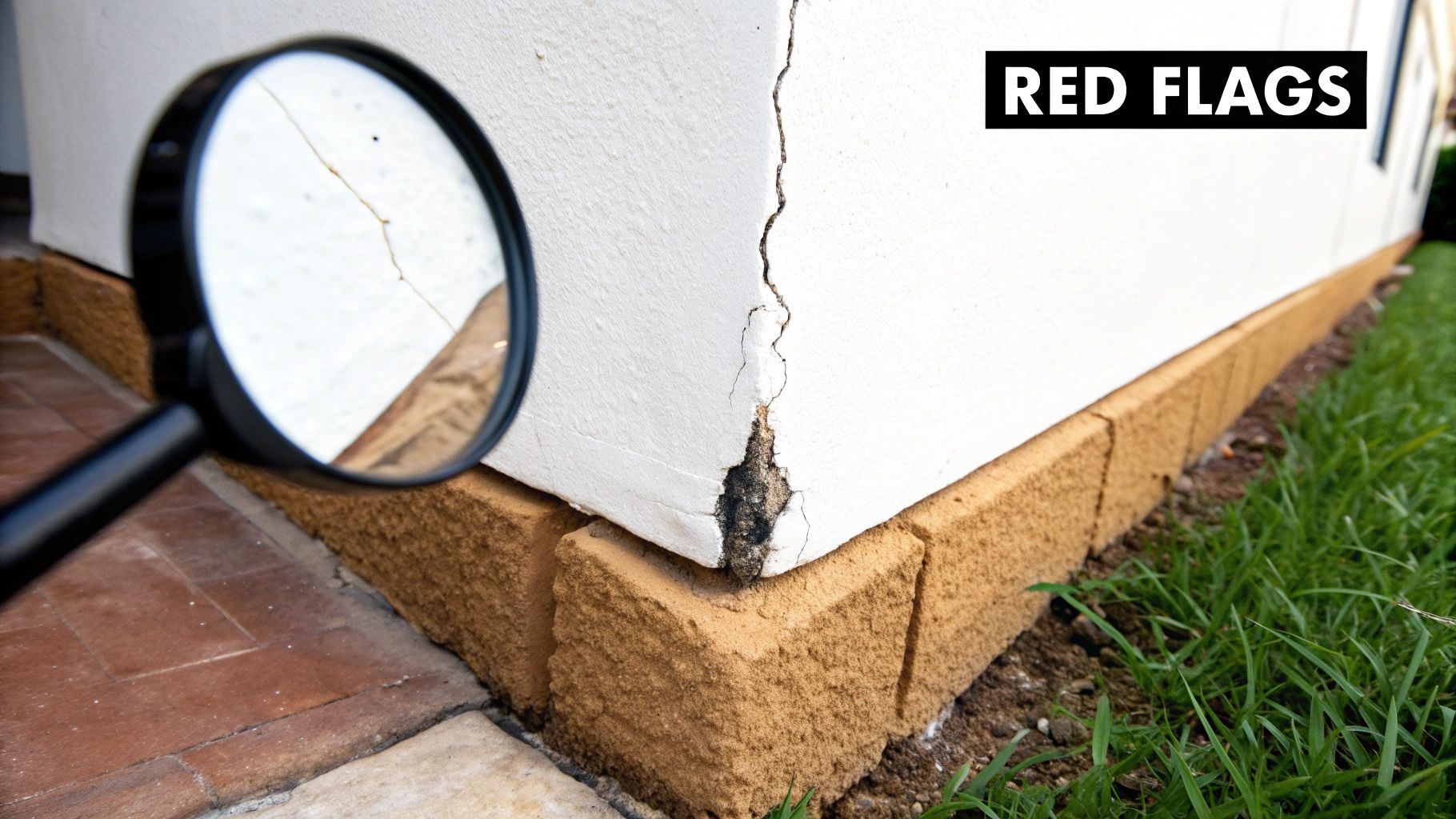
A property condition report is your expert guide to a home's state, but knowing how to read between the lines is where you gain a true advantage. Beyond the obvious cracks and broken tiles, the real value comes from spotting the subtle clues—the small details that hint at much larger, hidden issues.
Learning to identify these red flags transforms the report from a simple checklist into a powerful diagnostic tool. It gives you the power to ask the right questions, investigate further, and protect yourself from incredibly costly surprises down the road. It's all about making sure you have the complete picture before you make a commitment.
Looking Past the Obvious
The best way to analyse a report is to think like a detective. Some issues are easily missed by an untrained eye, but they almost always leave behind tell-tale signs. A fresh patch of paint in one small area, for example, might not just be a touch-up; it could be concealing a persistent water stain or a nasty crack.
A good report will note these details, but it's up to you to consider the "why." Does a musty odour mentioned in the bathroom section point to a simple lack of ventilation, or a more serious leak hiding behind the walls? Understanding these potential links is absolutely key.
Some of the most common subtle red flags include:
- Fresh Paint Patches: Be wary of these, especially on ceilings, in corners, or under windows. It can be a cosmetic fix for water damage, mould, or cracks.
- Musty or Damp Odours: This is a clear indicator of excess moisture, which could stem from plumbing leaks, poor drainage, or rising damp.
- Minor Cracks: While hairline cracks can be normal settlement, a pattern of larger, diagonal cracks (especially around doors and windows) may signal structural movement.
- Uneven or Spongy Floors: This could be a sign of anything from simple wear and tear to significant sub-floor damage from termites or moisture.
A single red flag might be nothing to worry about, but a combination of them often tells a story. For instance, a musty smell combined with a fresh paint patch and warped skirting boards in the same room strongly suggests a history of water issues that demand further investigation.
Next Steps When You Spot a Concern
Spotting a red flag doesn't automatically mean you should walk away from the property. Think of it as your cue to dig deeper and get some expert advice. A property condition report is a general health check; a specialist is who you call for the diagnosis.
Here’s your action plan:
- Highlight the Concern: Mark every potential red flag you see in the report.
- Ask for Clarification: Talk to the agent or the inspector to understand the context of their notes.
- Bring in a Specialist: If concerns remain, it’s time to call in the experts. For cracking, you might need a structural engineer. For signs of moisture, a plumber or even a building biologist is your best bet.
This proactive approach is becoming more and more vital in today's market. The 2025 State of Real Estate Report from InfoTrack, which analysed over 130,000 property transactions, highlighted a growing demand from buyers for transparency to avoid settlement delays. In a market where nearly 722,000 properties were settled in FY25, thorough due diligence using detailed reports is non-negotiable for anyone wanting to avoid post-purchase headaches. You can explore more market expectations in InfoTrack's comprehensive real estate analysis.
Acting on these insights ensures you are making a fully informed decision. It safeguards your financial future and gives you genuine confidence in your purchase.
Right then, you've got the property condition report in your hands. This is where the game really begins. You're moving past the 'what-if' stage and into the strategy of your transaction. This document isn't just a checklist of what's what; it's a powerful tool for negotiation. When you use it right, it can turn potential arguments into clear, fact-based conversations.
For anyone buying or selling in the Mandurah market, this report is your foundation. It means you’re making decisions based on documented evidence, not just gut feelings or emotions. This is the secret sauce that turns a stressful transaction into a smooth and successful one for everyone involved.
For Sellers: Building Trust and Justifying Your Price
As a seller, a clean, detailed property condition report is one of the best marketing tools you have. It’s hard proof that you’ve looked after your home. This immediately builds trust with potential buyers and gives them a solid reason to meet your asking price.
Think about it from their perspective. When a buyer sees a positive report, they don't see a future money pit; they see a well-maintained home they can move right into. This can seriously speed up the negotiation process and bring in more serious, confident offers.
But what if the report finds a few little things, like a dripping tap or a window that sticks? Don't stress. This is your chance to get ahead of the game.
- Fix the small stuff: Taking care of these minor repairs before you even list the property shows you’re a proactive owner. It removes those easy objections buyers love to bring up.
- Get quotes for bigger jobs: If there’s a larger, non-urgent issue noted, grab a quote from a local Mandurah tradie. This shows buyers exactly what the cost might be, taking the scary unknown out of the equation.
- Be completely transparent: Acknowledge what the report found right from the start. Honesty is everything in real estate; it shows you’ve got nothing to hide and builds incredible goodwill.
This approach flips potential negatives into positives. It proves you're committed to a fair dinkum, transparent sale.
Your property condition report isn’t just a defence against lowball offers; it's your best offence. Use it to highlight your home's quality, get in front of buyer concerns, and confidently hold firm on your price.
For Buyers: Negotiating from a Position of Strength
As a buyer, this report is your roadmap to a smart investment. It arms you with the detailed knowledge you need to put in a confident offer, negotiate effectively, and plan for the future of your new home.
If the report comes back sparkling clean, fantastic! You can move forward with total peace of mind. But if it uncovers some issues, you've got clear options. You can use the documented findings to negotiate for the seller to complete repairs, ask for a price reduction to cover the costs yourself, or simply factor the information into your budget for future maintenance.
And for any major red flags? The report gives you the power to make a fully informed call on whether to proceed or to walk away during your cooling-off period. It's your ultimate safety net against inheriting expensive, unexpected problems. By using it wisely, you make sure your property journey here in Mandurah starts on solid ground.
Frequently Asked Questions
When you're dealing with property, especially in the Mandurah area, a few questions about condition reports always pop up. To help you feel completely confident, whether you're buying, selling, or leasing, we've put together answers to the queries we hear most often.
How Often Should a PCR Be Done for a WA Rental Property?
Here in Western Australia, the law is very clear: a detailed property condition report (PCR) is mandatory at the beginning and end of every single tenancy agreement. This isn't optional; it creates the official "before and after" snapshot for the lease.
On top of that, for ongoing tenancies, most property managers will carry out routine inspections every three to six months. These aren't as exhaustive as the initial PCR, but they're crucial for spotting maintenance issues early and making sure the property is being looked after. It’s all about protecting the long-term value of the investment.
Is a Property Condition Report the Same as a Building Inspection?
Not at all—they're two very different beasts serving distinct purposes.
Think of a PCR as a detailed inventory of the property's general state. It documents the cleanliness, condition, and working order of everything from the carpets and walls to the taps and light fittings. This is absolutely vital for rental agreements and useful during a sale.
A pre-purchase building inspection, on the other hand, is a much more serious, structural deep-dive done by a licensed builder. They’re looking for the big stuff: major defects, safety hazards, roof issues, and the overall structural integrity of the building. We always, always tell our buyers to get a separate building and pest inspection. It’s non-negotiable for true peace of mind.
A PCR records the property's cosmetic and functional condition, while a building inspection assesses its structural integrity. One looks at the surface, the other checks the bones of the house. You really do need both.
What if I Disagree with the Condition Report?
This is a great question, and the key is to act quickly and always put your concerns in writing.
If you're a tenant in WA, you have a specific window of time (usually 7 days) after moving in to review the PCR provided by the landlord or agent. This is your chance to add your own comments, take photos of anything you've spotted, sign it, and return it. Don't skip this step!
For a property sale, if your own inspections bring up issues that weren't disclosed or don't match what was presented, you need to raise this with your agent immediately. This opens the door for negotiation with the seller before the contract goes unconditional. Clear, prompt communication is the only way to resolve these things fairly.
Can I Do a Property Condition Report Myself?
Technically, a private landlord could try, but we strongly advise against it. It's always best to use a qualified, impartial third party, like a professional property manager or an independent inspector.
Why? Because a report from a professional carries so much more weight if a dispute ever arises. It guarantees a higher level of detail and, most importantly, objectivity. That impartiality is what protects everyone involved—tenant, landlord, buyer, and seller—and ensures the whole process is fair and transparent. It's exactly why we handle this for our clients; it upholds the professional standard everyone deserves.
Ready to navigate the Mandurah property market with an expert in your corner? Whether you're buying, selling, or just want to know where your property sits in today's market, David Beshay Real Estate is here to give you clear, honest advice and a seamless experience.

