


Before you even dream of those canal-front views in Halls Head or a quiet, family-friendly street in Falcon, we need to talk finances. Getting your money sorted is, without a doubt, the most crucial first step. It's the groundwork that makes the rest of the home-buying journey possible.
Building Your Financial Foundation for a Mandurah Home

Think of this as your financial pre-flight check. It’s not just about glancing at your savings account; it's about building a rock-solid foundation for what will likely be the biggest purchase you ever make.
Getting this right from the start gives you the confidence to know what you can genuinely afford. It also puts you in a powerful position when you finally sit down with a lender, preventing a lot of stress and potential disappointment down the track.
Calculating Your True Deposit
Your deposit is so much more than that initial percentage you’ve been saving for. Too many first-time buyers fixate on hitting a 5%, 10%, or 20% target without realising all the other significant costs that pop up at settlement.
A common mistake I see is buyers underestimating the total cash they’ll need on the day. Your accessible funds have to cover the deposit plus stamp duty, legal fees, and inspection costs, which can easily add thousands to your initial outlay.
To figure out what you really need, you must budget for these extras:
- Stamp Duty: This is a government tax on your property purchase. The amount varies based on the property’s value and whether you qualify for any first home buyer concessions.
- Legal and Conveyancing Fees: You’ll need a professional to handle the legal transfer of ownership. This typically costs between $1,500 and $3,000.
- Building and Pest Inspections: An absolutely essential step. For $400 to $800, you can uncover hidden issues that could save you a fortune in future repairs.
- Lenders Mortgage Insurance (LMI): If your deposit is under the 20% mark, you'll almost certainly need to pay LMI. It’s an insurance policy that protects the lender, not you.
Creating a Mandurah-Specific Budget
Once you have a handle on your upfront costs, it’s time to shape a household budget that reflects life in Mandurah. Your borrowing power isn’t just based on your income; lenders are intensely interested in your spending habits. They will scrutinise your bank statements from the last three to six months to see how disciplined you are with your money.
For a deeper dive into preparing your finances for the WA property market, our comprehensive first home buyer guide has plenty more tailored advice. This detailed planning ensures you're not just ready to buy, but can comfortably afford your mortgage repayments while still enjoying everything your new home has to offer.
Securing Finance and Getting Mortgage Pre-Approval
Walking into an open home with a mortgage pre-approval letter is a genuine game-changer. It tells the agent you're not just browsing—you're a serious, qualified buyer ready to make a move. Getting your finances sorted is easily one of the most critical first steps in buying a house.
Bank Direct or Mortgage Broker
Your first big decision is how to approach the money side of things: go straight to your bank or team up with a mortgage broker?
Going direct can feel comfortable, especially if it’s the bank you’ve been with for years. The process seems straightforward, but you're only seeing their products, which might not be the best fit or the sharpest rate out there.
A good mortgage broker, on the other hand, is like having a financial insider on your side. They have access to dozens of lenders and hundreds of different loan products. For buyers in Mandurah, a local broker’s knowledge can be worth its weight in gold, as they often know which lenders are favourable to the local market.
Preparing Your Financial Paperwork
Lenders want a crystal-clear picture of your financial health before they’ll even think about lending you hundreds of thousands of dollars. Getting your paperwork in order now will save you a world of stress and speed things up immensely.
Start pulling these documents together:
- Proof of Income: Your last two or three payslips and your most recent group certificate should do the trick.
- Employment History: A quick rundown of your current and previous employers.
- Savings and Assets: Bank statements are key here. They need to see your deposit and any other significant savings or investments you have.
- Existing Debts: Be upfront about any car loans, personal loans, or credit card limits.
- Identification: Your driver's licence and passport are the standard go-to's.
A lender's decision hinges heavily on your credit history and recent spending habits. They'll scrutinise the last three to six months of your bank statements, so it’s a good idea to curb any big-ticket discretionary spending in the lead-up to your application.
Understanding Market Influences
It's not just your personal finances that matter; the wider economy plays a huge role in your borrowing power. For example, by mid-2025, Australia's cash rates have seen cuts, with predictions of more to follow. This kind of rate reduction cycle typically boosts borrowing capacity, which in turn fuels buyer activity—especially when the rental market is tight and there's a housing shortage. For a closer look at these economic drivers, you can explore insights into Australia's housing system.
Being aware of these trends can help you time your application to get a better outcome.
Decoding Your Pre-Approval Letter
When that pre-approval letter finally lands in your inbox, it’s exciting—but it’s not a blank cheque. Think of it as a conditional thumbs-up from a lender, confirming the maximum amount they're prepared to loan you. This offer is usually valid for 90 days.
This letter is your green light to start house hunting with real confidence, because you know exactly what you can spend. It’s also the tool that lets you make serious offers and negotiate from a position of strength. To get fully up to speed, have a look at our detailed guide on what home loan pre-approval really means. Armed with this knowledge, you can act decisively when you find that perfect Mandurah property.
Finding Your Perfect Home in the Mandurah Region
Right, you’ve got your pre-approval sorted. Now for the fun part: the actual house hunt. This is where you move from crunching numbers to picturing your life in a new Mandurah home. But it’s not just about endless scrolling online; it’s about building a smart strategy that lines up what you want with what’s actually out there.
First things first, let's get that wishlist down on paper. It's so important to be clear on your absolute 'must-haves' versus your 'nice-to-haves'. A must-have could be a spot within a specific school catchment or at least three bedrooms for a growing family. A 'nice-to-have' might be a brand-new kitchen or that dream swimming pool. Keeping this list focused stops you from getting sidetracked by beautiful homes that just don’t fit your core needs.
Leveraging Local Knowledge and Online Tools
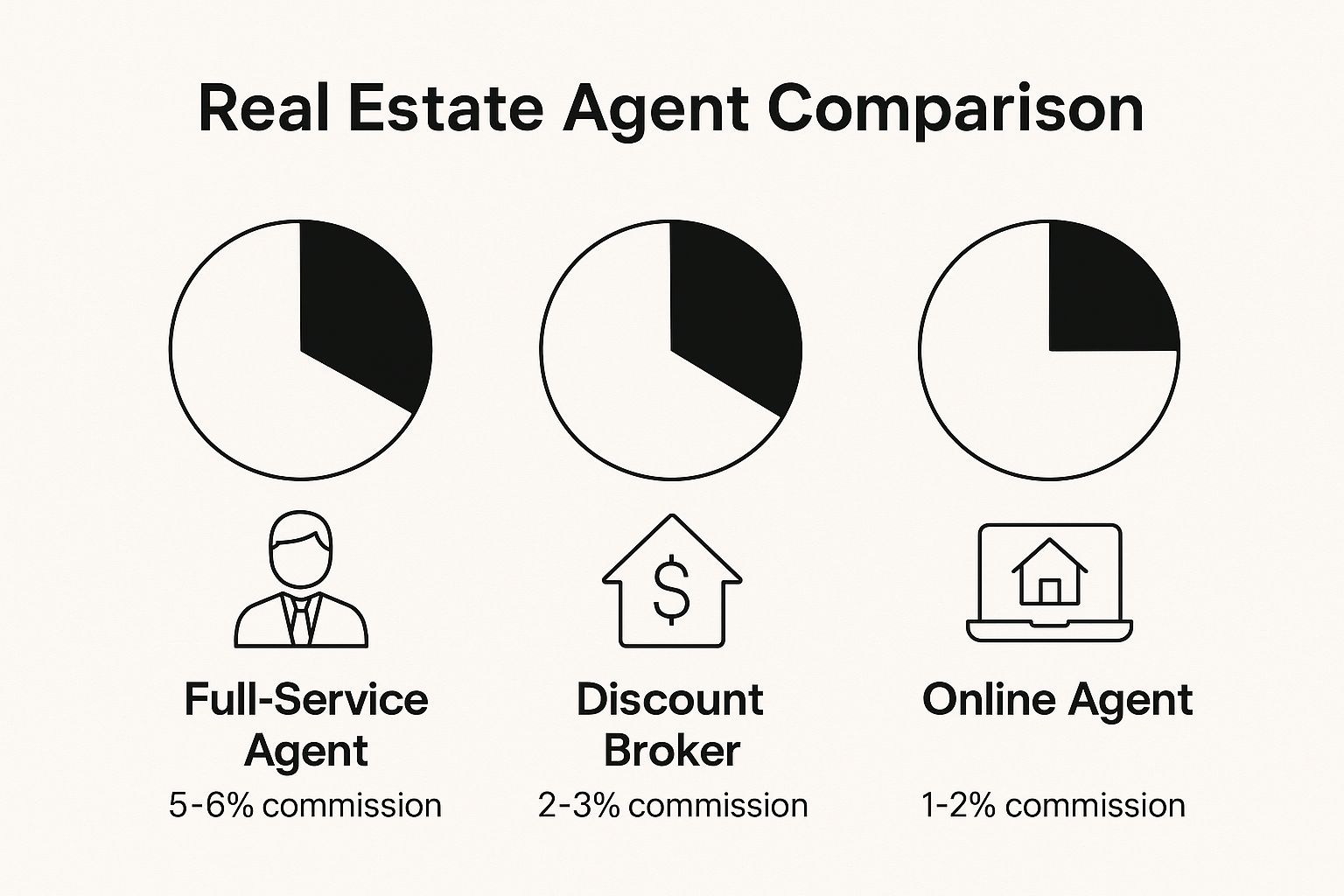
While the big property websites are a great place to start, don't ever underestimate the power of a local connection. When you build a relationship with a good Mandurah real estate agent, you get a sneak peek at off-market properties and gain insights you just can't find online. A seasoned agent knows the real difference between a canal-front property in Halls Head and a quiet, family-friendly cul-de-sac in Lakelands.
Understanding market value is also absolutely fundamental. In Australia, knowing the current median prices is one of the foundational steps to buying a house. As of July 2025, the national median house price is hovering around $912,563, while regional areas like ours offer a much more accessible median of about $703,894. Getting a handle on these numbers gives you the context you need for your search. You can explore more Australian property price trends to see exactly how Mandurah stacks up.
To give you a better idea of the suburbs you'll be looking at, here's a quick snapshot of some popular spots in the region.
Mandurah Suburb Snapshot Comparison
| Suburb | Median House Price (Approx.) | Key Features & Lifestyle | Best For |
|---|---|---|---|
| Halls Head | ~$750,000 | Stunning beaches, canals, golf course, close to amenities, established community. | Water lovers, families, and retirees seeking a premium coastal lifestyle. |
| Lakelands | ~$620,000 | New and modern homes, family-friendly parks, shopping centre, easy freeway access. | First home buyers, young families, and those commuting to Perth. |
| Dudley Park | ~$580,000 | Estuary-front living, quiet streets, close to the Mandurah Foreshore and medical facilities. | Downsizers, investors, and anyone wanting central convenience without the hustle. |
| Falcon | ~$690,000 | Famous for its surf beach, laid-back vibe, local shops, and access to both the ocean and estuary. | Surfers, boaties, and those looking for a classic, relaxed beach suburb feel. |
This table should help you narrow down the areas that best match your budget and what you're looking for in a community.
Looking Beyond the Staging
Once you start walking through open homes, it’s incredibly easy to get swept away by a fresh coat of paint and some clever furniture placement. But your real job is to look past the pretty stuff and see the home for what it truly is.
A critical mistake is falling for the cosmetic appeal of a home while overlooking its 'bones'. Pay attention to the things you can't easily change: the layout, the natural light, the property's orientation, and its structural integrity.
Keep your eyes peeled for potential red flags that might not be obvious at first glance.
- Check for water damage: Look for any suspicious stains on ceilings or walls, and trust your nose—a musty smell is a big warning sign.
- Assess the structural basics: Take note of any significant cracks in the walls or floors that feel uneven underfoot.
- Test everything: Don't be shy. Turn on the taps, flick the light switches, and open and close all the windows and doors.
- Consider the neighbourhood: Drive by at different times. What's the traffic like during peak hour? Is it noisy on a weekend afternoon? Get a real feel for the area.
Taking this methodical approach helps ensure your final decision is based on a logical assessment, not just an emotional one. It's a key part of making sure you buy the right house, not just a house that looks good on the day.
Making a Smart Offer and Conducting Due diligence

You’ve found it. After countless open homes and weighing up all the pros and cons, one property just feels right. This is where the process pivots from searching to securing, and a smart, strategic approach is absolutely vital to protect your investment.
Before you even start crunching the numbers, it’s time for due diligence. Think of this as the crucial investigation phase where you uncover any potential issues hiding beneath the surface. Honestly, it’s one of the most important steps to successfully buying a house.
Protecting Your Purchase With Inspections
Whatever you do, don't skip a professional building and pest inspection. For a few hundred dollars, an expert inspector will go over the property with a fine-tooth comb, checking everything from the roof and foundation to the plumbing and electrical systems. It's an investment that can literally save you from tens of thousands of dollars in surprise repairs down the track.
In a coastal spot like Mandurah, inspectors know exactly what to look for. They’ll be paying special attention to:
- Signs of moisture and damp: High humidity can lead to mould and even structural problems.
- Termite activity: This is a big risk for any property, and inspectors are trained to spot the common entry points.
- Corrosion from salt air: Salt can wreak havoc on window frames, roofing, and other external fixtures.
- Structural soundness: They’ll check for any issues caused by shifting sandy soils, which is common in the area.
An inspection report isn’t just a pass-or-fail document. It’s a powerful negotiation tool. If minor issues are found, you can use the report to request repairs or ask for a credit from the seller to cover the costs.
Crafting a Compelling Offer
Once you’re happy with the inspection results, it’s time to put your offer on paper. A strong offer is about much more than just the price—it’s about the conditions you include. These conditions, or clauses, are there to protect you.
The most common and non-negotiable condition is making your offer ‘subject to finance’. This clause gives you a set amount of time, usually 14 to 21 days, to get formal approval for your home loan. If for some reason the lender doesn't approve the finance, this condition allows you to walk away from the sale without penalty and get your deposit back. Simple as that.
Another critical condition is making the offer 'subject to a satisfactory building and pest inspection'. This gives you the same power to withdraw if the inspection uncovers major defects that you and the seller can’t agree on how to resolve. The entire Offer and Acceptance process in Western Australia has its own specific rules, so getting your head around them gives you a huge advantage.
Now, for the price. Your real estate agent will give you a comparative market analysis (CMA), which shows what similar homes in the area have recently sold for. This data is your guide to making an offer that’s competitive but not over the top. In a balanced market, you might start slightly below the asking price. But in a fast-moving market, a strong initial offer close to the asking price is often what it takes to be taken seriously.
From Accepted Offer to Getting Your Keys

Once your offer is accepted, a wave of excitement hits. It’s a huge moment! That excitement is quickly followed by the final stretch of the home-buying race, known as the settlement period.
This is the last leg of your journey, but it’s packed with crucial legal and financial steps. It can feel a bit daunting, but understanding the timeline makes everything much smoother. Think of this as the phase where your behind-the-scenes team truly shines, handling the intricate details to ensure the property legally becomes yours.
The Crucial Role of Your Settlement Agent
Your settlement agent, or conveyancer, is the captain of your ship during this period. Their whole job is to manage the legal heavy lifting required to transfer ownership of the property from the seller to you. It's their responsibility to make sure everything is above board so you receive a clear title to your new home.
From the moment the contract is signed, they get straight to work on a range of critical tasks:
- Conducting Title Searches: They’ll verify that the seller actually has the legal right to sell the property and check for any nasty surprises like restrictions or debts attached to the title.
- Coordinating with Banks: They liaise directly with your lender and the seller’s bank to ensure the money is ready to go on settlement day.
- Adjusting Rates and Taxes: They meticulously calculate and adjust council and water rates, making sure you only pay from the day you officially own the property.
Essentially, they dot all the i's and cross all the t's so that settlement day goes off without a hitch.
Your Final Walk-Through Inspection
Just before settlement day, you get one last chance to inspect the property. This is called the pre-settlement inspection, and it is absolutely essential. Don't skip it.
The whole point is to confirm that the home is in the same condition as when you first agreed to buy it and that any special conditions in your contract have been met.
This isn't the time to look for new flaws; it's a final verification. You're there to check that all agreed-upon repairs have been completed and that every appliance and system included in the sale is in good working order.
I always recommend bringing a copy of your contract with you. Go through it and test everything—the lights, the taps, the oven, the air conditioning. Make sure it all functions as expected.
Understanding Settlement Day
Settlement day is D-day. It’s when the financial transaction is finalised and ownership officially changes hands. Interestingly, you probably won't even be there. Your settlement agent and your lender will represent you, meeting with the seller’s team to exchange documents and transfer the funds.
This process is a key part of one of Australia's largest asset classes. The total value of residential dwellings recently hit an all-time high of AU$11.366 trillion, with a national mean price over $1,000,000, which really highlights the scale of these transactions. Settlements in Australia typically happen four to six weeks after contracts are exchanged, which is when mortgage funds are finalised and the title is legally transferred. To get a better sense of the national property landscape, you can read the latest government report on dwelling values.
Once the funds have cleared and all the paperwork is processed, your settlement agent will call with the good news: the property is officially yours. They’ll then contact the real estate agent to authorise the release of the keys.
Congratulations—you can finally pick them up and step into your new Mandurah home
Got Questions About Buying in Mandurah? We've Got Answers
Stepping into the property market always stirs up a few questions, especially as you get closer to the finish line. Let's run through some of the most common queries we get from buyers right here in Mandurah, so you can move ahead with real confidence.
How Much Deposit Do I Really Need to Buy in Mandurah?
The classic 20% deposit is still the gold standard if you want to dodge Lenders Mortgage Insurance (LMI). LMI is a one-off fee that protects your bank—not you—if you can’t keep up with repayments. It's a significant cost, so avoiding it is ideal.
But let's be realistic. Saving a full 20% can be tough. Many lenders now offer home loans with deposits as low as 5%. This opens the door for a lot more buyers, but you’ll absolutely need to budget for the LMI premium on top of your other costs.
If you’re a first home buyer, make sure you look into the government schemes available in WA. Programs like the First Home Owner Grant (FHOG) and Keystart loans are designed for people with smaller deposits and can give you a massive leg up. A good mortgage broker is your best friend here—they'll lay out all the options.
What's the Difference Between an Offer and a Contract?
Think of your 'offer' as the opening move in a conversation with the seller. It’s a formal proposal that spells out the price you're willing to pay and, crucially, any conditions you need met. Common conditions include making the offer 'subject to finance' or a 'satisfactory building and pest inspection'.
The seller can accept it, reject it outright, or come back with a counter-offer, and the negotiation begins.
A 'Contract of Sale' is what happens after your offer is accepted. Once it’s signed by both you and the seller, it becomes a legally binding document. You are now locked in to buy that property, provided all your conditions are met.
It's a vital distinction: an offer is for negotiating, but a signed contract is a solid commitment.
How Long Does Settlement Usually Take in WA?
Here in Western Australia, the standard settlement period is usually between 28 and 42 days—that’s about four to six weeks from the day the contract is signed by everyone.
This timeframe isn't rigid, though. You can negotiate a different settlement period right from the start. For example, you might ask for a 60-day settlement to perfectly line up with the end of your current rental lease. While you're waiting, your settlement agent is busy in the background, sorting out all the legal and financial paperwork with your lender to make it happen.
Do I Need an Inspection for a Brand-New Home?
Yes, one hundred percent. It’s a common myth that 'new' means 'flawless', but getting a professional building inspection is just as critical for a new build as it is for an older home.
An independent inspector is trained to spot things you'd never notice, such as:
- Shoddy workmanship that doesn't meet Australian standards.
- Little mistakes that don't comply with building codes.
- Early warning signs of structural issues.
- Termite risks—pests don't care how old a house is.
Putting an inspection clause in your offer gives you leverage. You can insist the builder fixes any defects before settlement, or in a worst-case scenario, you can walk away from the deal if major problems are found. It's a small price to pay for peace of mind and protection against massive future headaches.
Ready to make your move in the Mandurah property market? Whether it's your first place or your next chapter, having a local expert in your corner is a game-changer. Get in touch with David Beshay Real Estate today for a no-obligation chat about your goals. You can find us at https://realestate-david-beshay.com.au.

