


Ever been to a property auction where things get off to a painfully slow start? The auctioneer calls for an opening bid, and all you hear are crickets. That's where a vendor bid comes into play.
Simply put, a vendor bid is a bid made by the auctioneer on behalf of the seller (or the vendor). It's a strategic, completely legal, and openly declared move designed to get the ball rolling, especially when buyers are a bit hesitant to kick things off.
What a Vendor Bid Actually Means in Real Estate

Think of it like giving a friend a gentle nudge to get them onto the dance floor. It's not a real bid from a genuine buyer, but rather a transparent push from the seller's side to break the ice and stimulate some action.
This strategic move is all about overcoming that initial quiet spell common at auctions. When the crowd is silent, a well-placed vendor bid suggests a credible starting point and encourages genuine buyers to jump in without feeling like they're the first to show their hand.
To put it in simple terms, here's a quick rundown of what a vendor bid is all about in a Western Australian auction.
Vendor Bid at a Glance
| Characteristic | Description |
|---|---|
| Who makes it? | The auctioneer, acting on behalf of the property seller (the vendor). |
| Is it a real bid? | No, it's a declared bid used to guide the auction. No money changes hands. |
| Why is it used? | To start the auction, encourage bidding, or move the price closer to the reserve. |
| Is it legal in WA? | Yes, provided it is clearly announced as a "vendor bid" and is below the reserve price. |
Ultimately, a vendor bid helps maintain transparency while protecting the seller's interests in a competitive market.
Setting a Fair Starting Line
A vendor bid isn't some sneaky trick to artificially inflate the price. In Western Australia, it's a regulated practice with very clear rules. It's used to get an auction started when the crowd is quiet, simulating interest without ever misleading potential buyers. The auctioneer must always declare it loudly and clearly.
For a closer look at how auctions unfold in WA, you can explore the data on cotality.com.
A vendor bid essentially communicates the seller's minimum expectations. It tells potential buyers, "We're serious about selling, but we won't entertain offers below this level."
The main goal is to build momentum and guide the auction toward the seller's confidential reserve price—the absolute minimum they're willing to accept. By encouraging genuine buyers to step forward, a vendor bid helps protect the property's value and sets the stage for a successful sale, which is crucial in dynamic markets like Mandurah and the broader Perth region.
How Vendor Bids Play Out in a Live Auction

Picture this: it’s a sunny Saturday morning in a sought-after Mandurah suburb. A crowd of hopeful buyers has gathered, but when the auctioneer calls for an opening offer… crickets. This is the exact moment a vendor bid steps into the spotlight.
Sensing the hesitation in the air, the auctioneer will make a clear, confident announcement: "Seeing no bids from the floor, on behalf of the seller, I'll place a bid right here at $650,000."
This isn’t some secret move; it's a completely transparent and legally permitted strategy designed to break the ice. It acts as a strong signal to the market, setting a credible starting point and showing everyone that the seller is serious about the process.
The Icebreaker Effect
The real vendor bid meaning in this scenario is to act as a catalyst. It's the first domino to fall, giving genuine buyers who might have been waiting for someone else to go first the confidence to jump in.
Once that baseline of $650,000 is established, a serious buyer might feel more comfortable offering their first bid at, say, $660,000. This often prompts another interested party to respond, and just like that, the silent front yard transforms into a competitive arena. The vendor bid has successfully sparked the momentum needed.
A vendor bid effectively says, "The auction starts now." It transforms a hesitant crowd into active participants by providing a clear and realistic entry point for bidding.
The auctioneer seizes this initial energy to build pace, calling for incremental increases and encouraging a competitive environment. From there, the bidding climbs, driven by genuine interest from multiple parties. By learning how to bid at auction, you can participate confidently once this starting gun has fired.
From that single, strategic vendor bid, the auction finds its rhythm. The price moves steadily upwards towards the reserve, powered by real competition—all because the seller used a legitimate tool to get things moving and secure a strong result.
Navigating the Rules of Vendor Bidding in WA
For any property auction in Western Australia to be fair and transparent, everyone involved needs to play by a clear set of rules. The whole concept of a vendor bid is built on this legal framework, which is what makes it a legitimate strategy rather than a dodgy tactic.
In WA, the regulations are refreshingly straightforward and designed to protect everyone. The most important rule? Only the registered auctioneer is legally allowed to make a vendor bid on the seller's behalf. This keeps the process controlled, professional, and accountable.
On top of that, every single vendor bid must be announced loudly and clearly for the entire crowd to hear. The auctioneer will use specific phrasing like, "I'll place a vendor bid," leaving no doubt in anyone's mind where that bid came from. This transparency isn't just good practice; it's the absolute bedrock of an ethical auction.
The Clear Line Between Legal and Illegal
It’s crucial to get your head around the difference between a legal vendor bid and illegal practices that can completely derail an auction's integrity.
- Vendor Bid: This is a legal, openly declared bid made by the auctioneer before the property hits its reserve price. Its whole purpose is to get the bidding started or to keep it moving.
- Dummy Bid: This is an illegal, fake bid made by someone in the crowd who has no intention of buying—think a friend or family member of the seller. This is done purely to create a false sense of competition, and it's strictly prohibited.
The core difference really boils down to transparency and intent. A vendor bid is an open and honest tool used to guide the auction. A dummy bid is a fraudulent attempt to trick genuine buyers into paying more.
Understanding this distinction is vital. While a vendor bid helps set a fair floor price for bidding, getting caught up in dummy bidding can lead to serious legal trouble. For sellers, it's also essential to understand what a reserve price is at auction to make sure any vendor bids are used effectively and, most importantly, legally.
The Strategic Reasons Sellers Use Vendor Bids
So, why would a seller bid on their own property? It sounds a bit strange at first, but a vendor bid is actually one of the sharpest tools in an auctioneer's kit, particularly in a buzzing market like Mandurah's. It's not about being tricky—it's about building momentum and maintaining control.
The most common reason is to get a slow auction moving. Sometimes buyers are hesitant to be the first to raise their hand. A vendor bid sets a realistic starting point, breaks that awkward silence, and gives genuine bidders the confidence to jump in. That one move can completely change the energy in the room.
It’s also about protecting the asset. A vendor bid ensures the property isn't passed in for a lowball offer that's miles away from its true market value. By placing a bid, the auctioneer signals the seller's expectations and helps guide the bidding up towards the reserve price.
Creating Perceived Value and Demand
A well-timed vendor bid does more than just kick things off; it helps establish a baseline value and creates a sense of demand. This is a game-changer in Perth's auction scene, where a bit of strategy can make a huge difference to the final result.
The numbers back this up. Western Australian auction clearance rates soared to 72.4% in July 2025—the highest they'd been in 18 months. What was behind it? Vendor bids were used in a massive 62% of those auctions.
In the Perth metro area, including right here in Mandurah, auctions that used vendor bids drew in an average of 3.2 active bidders. Compare that to just 1.9 bidders when they weren't used. The final sales prices were, on average, 6.3% higher than the reserve.
This infographic breaks down the core principles that keep vendor bidding fair and effective.
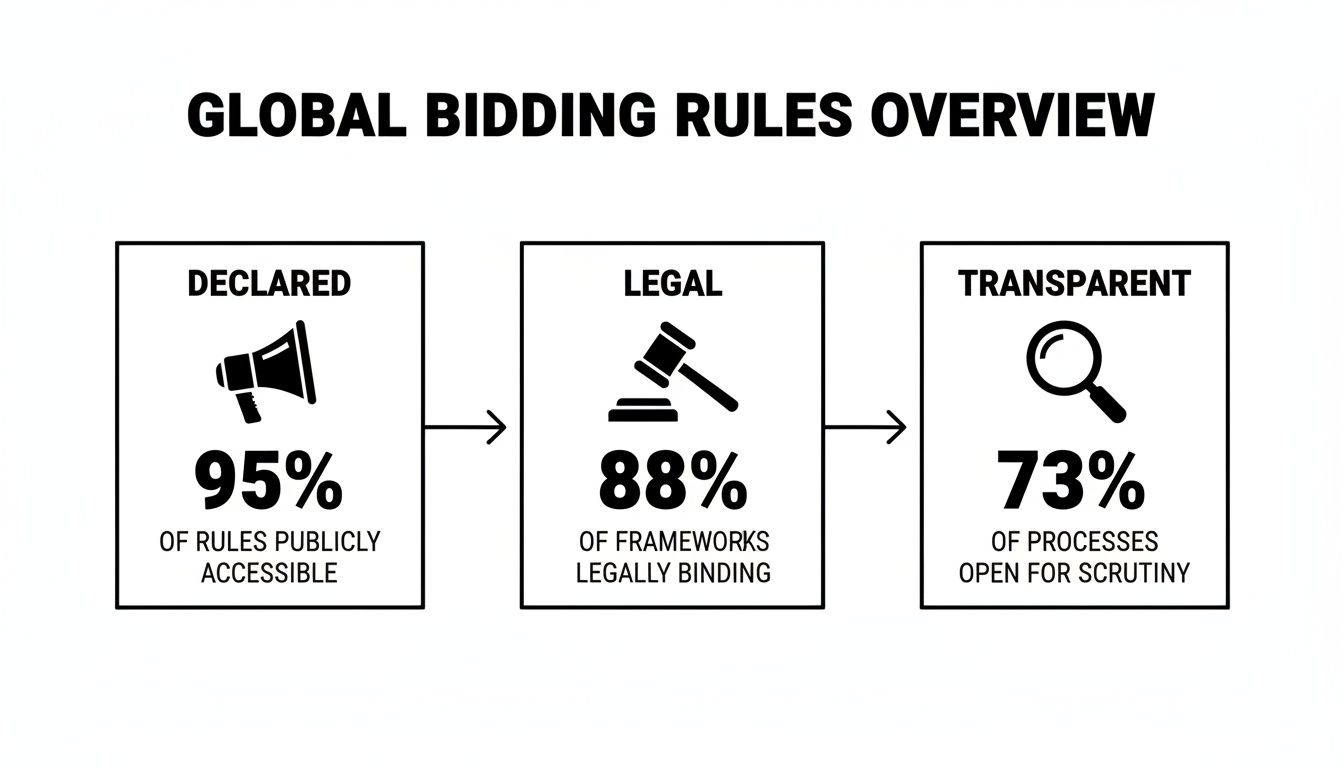
As you can see, the whole process is designed to be declared, legal, and transparent, making it a regulated and accepted part of any auction. If you're weighing up your selling options, understanding the differences between an auction vs private sale is a must. At the end of the day, a vendor bid is a crucial part of a smart auction strategy that leads to higher clearance rates and better outcomes for sellers.
Actionable Advice for Buyers and Sellers

Navigating an auction where a vendor bid might pop up requires a clear head and a solid game plan. Whether you're selling your beloved Mandurah home or hunting for your next one, understanding what to do when a vendor bid is placed is key.
For sellers, it all comes down to preparation. It's essential to sit down with your real estate agent well before auction day for a frank discussion. You need to agree on two critical things: a realistic reserve price and a clear strategy for how—and when—to use vendor bids. This ensures you and your auctioneer are perfectly on the same page.
Tips for Sellers
- Set a Realistic Reserve: Work with your agent to land on a reserve price that reflects the real market value, not just an optimistic hope. This decision is the bedrock of your entire auction strategy.
- Define Your Vendor Bid Plan: Decide with your agent at what price point a vendor bid could be useful to kick things along. You should also agree on the maximum number of times you're comfortable with them being used.
- Trust Your Auctioneer: A great auctioneer has a feel for the room. Give them the flexibility to use the vendor bid strategy to build momentum and drive the auction towards a successful sale.
Guidance for Buyers
For buyers, the most important thing is not to be put off. The vendor bid meaning is actually quite straightforward: it’s a clear signal of the seller's expectations and the official starting line for genuine competition. Don't let it scare you; think of it as your cue to get involved.
A vendor bid isn't a competitor; it's an invitation. It tells you exactly where the bidding needs to start for the seller to even consider a sale. It takes out the guesswork, letting you focus on your own strategy.
The moment a vendor bid is announced, the real auction begins. If the property is within your budget, this is your time to act. Make sure you have your finances pre-approved and be ready to bid with confidence.
By putting your hand up right after a vendor bid, you immediately position yourself as a serious contender. It shows everyone else in the room you’re there to compete. Treat it like the starting pistol firing for the race to secure your new home.
Your Vendor Bid Questions Answered
Even after seeing a vendor bid in action, it's natural for a few questions to pop up. Getting these sorted is key for both buyers and sellers to feel confident on auction day. Let's tackle the most common queries head-on.
Is a Vendor Bid the Same as a Dummy Bid?
Absolutely not, and this is probably the most important thing to get straight. A vendor bid is a completely legal and transparent move made by the auctioneer on the seller's behalf. Crucially, it must be announced loud and clear for everyone to hear.
A dummy bid, however, is a whole different beast. It's an illegal, sneaky bid placed by someone who isn't a real buyer—maybe a friend in the crowd—just to create a fake buzz and drive the price up. Dummy bidding is strictly forbidden in Western Australia, while vendor bidding is a regulated and accepted part of auction strategy.
How Many Vendor Bids Are Allowed?
In Western Australia, there's no hard-and-fast number, but their use is tied directly to one thing: the reserve price. An auctioneer can place one or more vendor bids only up to the point the property's reserve is met.
Once the bidding hits or goes past the seller's confidential reserve price, that's it—no more vendor bids. Their only job is to get the auction moving towards the reserve, not to actually compete with real buyers.
Should a Buyer Bid After a Vendor Bid?
Yes, if you're serious about buying the property, this is your cue. A vendor bid is basically the auctioneer signalling that the real race has now begun. It tells you the minimum level the seller is prepared to consider and clears up any guesswork about where the bidding needs to be.
Think of it as the starting pistol firing. If the vendor bid is in your budget, jumping in with your own bid right after shows you're a serious contender and puts you right in the game. It’s the perfect chance to show you mean business.
Navigating the Mandurah property market requires local expertise and a clear strategy. Whether you're buying or selling, David Beshay Real Estate provides the transparent guidance and professional support you need for a successful auction experience. Get your free property appraisal today.

