


Settlement day is the moment it all becomes real. It's the grand finale where the legal ownership of the property officially changes hands from the seller to you. Think of it as the day your payment is exchanged for the property title, making you the new legal owner. The deal is done, and the keys are just a phone call away.
Settlement Day: The Final Step in Your Property Journey

If you're picturing a stuffy boardroom with buyers and sellers signing mountains of paperwork, you can relax. In modern Western Australian property transactions, that's rarely how it happens anymore. The whole process is now almost entirely digital, managed by your professional representatives behind the scenes.
Your settlement agent or conveyancer is your champion on the day. They’re like the director of a complex play, ensuring every financial and legal detail is perfectly timed and executed.
The Key Players and Their Roles
On this crucial day, a few key parties are working in sync to finalise your purchase. You won’t be in the room, but knowing who’s doing what can really help demystify the process and give you peace of mind.
- Your Settlement Agent: This is your primary representative. They coordinate with everyone, double-check all the documents, and make sure the money goes exactly where it needs to.
- The Seller's Settlement Agent: They act for the seller, ensuring their mortgage is paid off and the property title is clear and ready to be transferred to you.
- Your Bank/Lender: They're the ones providing the loan funds to complete the purchase, releasing them at the precise moment of settlement.
- The Seller's Bank/Lender: Their job is to receive the payout for the seller's outstanding mortgage and officially remove their financial claim on the property.
To make it even clearer, here's a quick breakdown of who does what and what it means for you.
Settlement Day Roles and Final Outcomes
| Party Involved | Key Responsibility | Primary Outcome for You |
|---|---|---|
| Your Settlement Agent | Manages the entire process, verifies documents, and ensures funds are transferred correctly. | You become the legal owner of the property without having to manage the complex legal steps. |
| Seller's Settlement Agent | Prepares transfer documents for the seller and ensures their financial obligations are met. | You receive a clear title, free from the seller's mortgage or other financial claims. |
| Your Bank/Lender | Provides and transfers the loan funds to the seller's account at the time of settlement. | The property is successfully paid for, fulfilling your side of the contract. |
| Seller's Bank/Lender | Receives the final mortgage payout and discharges their mortgage from the property title. | The property's title is now clean and ready to be registered solely in your name. |
This coordinated effort ensures that the exchange is seamless, secure, and legally sound for everyone involved.
The Digital Handshake
In Western Australia, most settlements now happen through a secure online platform. This is the "digital handshake" where the transfer of funds from your bank to the seller, and the transfer of the legal title to your name, all happen at the exact same time.
This electronic process is instantaneous and incredibly secure. It gets rid of the old risks of physically exchanging documents and bank cheques. It guarantees that the money and title change hands at precisely the same moment, offering total security for both you and the seller.
Once this digital transaction goes through, your settlement agent gets an official notification. This is the trigger for the best part of the day: they’ll call your real estate agent to give the green light to release the keys to you, the proud new homeowner.
The Buyer's Settlement Day Checklist

As the buyer, your direct involvement on settlement day is actually quite minimal, but the few things you need to do are absolutely crucial. While your settlement agent is busy managing the complex legal and financial wrap-up, your main job is to make sure the property is exactly as you remember it. It's a team effort, really—your final checks combined with your representative's behind-the-scenes coordination, all building up to that exciting moment you get the keys.
Your most important task by far is the pre-settlement inspection. This is your last chance to walk through the home before it legally becomes yours. The whole point is to confirm that the property is in the same condition it was in when you signed the contract and that the seller has held up their end of the bargain on any special conditions.
The All-Important Final Inspection
Don't mistake the final inspection for a casual look-around. It’s a vital checkpoint to make sure there are no last-minute surprises waiting for you after you've paid up.
During this walkthrough, you’ll be checking off a few key items:
- Property Condition: Has any new damage appeared since you last saw the place? Look for new scuffs, holes in walls, or broken fixtures.
- Fixtures and Fittings: Make sure everything that was meant to be included is still there and working correctly. This means testing the oven, air conditioner, and light fittings.
- Special Conditions: If you negotiated for a specific repair or a professional clean in your contract, now is the time to confirm it has been done.
- Cleanliness: The seller is expected to leave the property reasonably clean and tidy, with all of their personal belongings cleared out.
A smart move is to schedule this inspection a day or two before settlement. Why? It gives you a buffer. If you do find an issue, you have time to raise it with the seller through the real estate agent without derailing the whole settlement timeline. For a full rundown of what to look for, grab our comprehensive pre-settlement inspection checklist.
Think of the final inspection as your last line of defence. Finding a problem after settlement can turn into a complicated and frustrating mess. Being thorough beforehand ensures the home you pay for is the home you fell in love with.
Your Agent’s Financial Coordination
While you’re busy inspecting the property, your settlement agent is deep in the numbers. They’re liaising directly with your bank to ensure your loan funds are available and ready to go. They will also be meticulously going over the settlement statement—the final breakdown of every single cost involved.
This statement includes adjustments for council and water rates, so you only start paying your share from the day you officially take ownership. Your agent double-checks all these figures with the seller's representative, guaranteeing everything is accurate down to the last cent.
Once all the numbers line up, they orchestrate the digital handshake on a secure platform like PEXA. It’s here that your funds are transferred to the seller at the exact same moment the property title is officially transferred into your name. With the money settled and the title secured, the last step is that long-awaited phone call from the real estate agent, letting you know it’s time to come and collect your new keys.
For sellers, settlement day is the finish line. It’s the moment all your hard work pays off and the sale officially becomes final. While you won’t be in a room signing stacks of paper, your settlement agent is working hard behind the scenes to make it all happen. Their main job is to ensure a smooth handover of the property and, most importantly, get your money to you securely.
The entire day really hinges on one critical legal task: delivering a clear title to the buyer. In simple terms, this means the property’s ownership must be transferred without any financial claims attached to it. Your settlement agent takes the lead here, coordinating directly with your bank to pay out any remaining mortgage balance using the funds from the sale.
This is a non-negotiable step that ensures the buyer gets exactly what they paid for—total, unencumbered ownership of their new home.
Finalising the Financials
Besides clearing the mortgage, your settlement agent does a final financial reconciliation. They’ll work with the buyer’s agent to calculate the exact adjustments for council and water rates, plus any strata levies if it's a strata property. This makes sure you only pay for utilities and rates up to the very day you officially owned the property.
Think of this as the final bill-splitting for the property. Your agent ensures you're not paying a dollar more than your share, guaranteeing a fair and accurate financial conclusion to your sale.
Once all these calculations are locked in and the mortgage is discharged, the net proceeds—the final amount after all costs are paid—are ready to be transferred straight to your nominated bank account.
The Seller's Last-Minute Checklist
While your agent is handling the complex legal and financial side of things, you have a few simple but essential jobs to tick off to make sure everything goes off without a hitch. Getting these done prevents any last-minute delays that could throw a spanner in the works on settlement day.
Here's your final to-do list:
- Leave the Property Clean: It’s a standard contractual obligation to leave the property in a reasonably clean and tidy state. Make sure all your personal belongings and any rubbish are gone.
- Hand Over the Keys: Get all sets of keys—for windows, garages, mailboxes, the lot—to your real estate agent well before the scheduled settlement time. The agent can only release them to the buyer once they get the final confirmation.
- Confirm Your Bank Details: This one’s crucial. Double-check that you’ve given your settlement agent the correct bank account details for the transfer. A simple typo here can cause annoying and unnecessary delays.
As soon as your agent gets confirmation that the electronic settlement is complete, they’ll give the real estate agent the green light to release the keys. Soon after, the net proceeds from your sale will be transferred, usually landing in your account within 24 to 48 hours. And just like that, your property journey has come to a successful end.
What Really Happens on Settlement Day? Documents, Agents, and Getting the Keys
Settlement day isn’t about big, dramatic meetings with lawyers and briefcases. It's actually a much quieter affair, focused on the precise, behind-the-scenes execution of critical paperwork. The whole show is run by your settlement agent or conveyancer, and their entire job is to make sure every form is perfect, every dollar is where it should be, and the transfer of ownership is legally rock-solid.
Think of your settlement agent as the director of a complex stage production. They’re the one coordinating all the different actors—the banks, the other party’s agent, and government bodies like Landgate—making sure everyone hits their cues at the exact right moment. Their expertise turns what could be a chaotic mess into a smooth, seamless transfer, giving you total peace of mind.
The Paperwork That Matters Most
While your agent juggles dozens of details, there are two documents that really form the pillars of the entire transaction. Knowing what they are helps pull back the curtain on what's happening on the big day.
- Transfer of Land Form: This is the big one. It's the official legal document that, once it’s signed and registered with Landgate, formally moves the property title from the seller's name into yours. This is the piece of paper that legally makes you the new owner.
- Settlement Statement: This is the master financial breakdown of the sale. It gives you a full, itemised list of every single cent involved—the final purchase price, stamp duty, any adjustments for council and water rates, plus all the professional fees.
Your settlement agent meticulously puts together and triple-checks these documents to ensure they are 100% accurate. A tiny error on the Transfer of Land form or a small miscalculation on the Settlement Statement could cause massive delays, which is exactly why their attention to detail is so critical.
Your Settlement Agent's Role on the Day
Beyond just managing the paperwork, your agent is your chief coordinator and problem-solver. On settlement day itself, they are actively:
- Talking to the Banks: They're on the phone confirming with your lender that the funds are ready to go, while also speaking with the seller's bank to ensure the mortgage is paid out and discharged properly.
- Running Final Checks: They perform last-minute searches on the property title to make sure nothing has changed unexpectedly, like a new caveat being lodged at the eleventh hour.
- Managing the Digital Exchange: These days, it’s all done electronically. They manage the transaction on a secure digital platform, ensuring the money and legal documents are exchanged at the exact same time, securely.
Their job is to see problems coming and make sure the whole process is smooth, legal, and stress-free for you. If you want to get a better handle on the numbers, you can learn more about what a settlement statement is and see how all the final costs are tallied up. Ultimately, their hard work is what allows you to simply sit back and wait for that fantastic call telling you it's time to pick up your new keys.
A Step-by-Step Timeline of Settlement Day
Knowing the sequence of events on settlement day can turn a nerve-wracking experience into a straightforward process. While no two settlements are exactly the same, they almost always follow a predictable schedule. Understanding this timeline helps you plan your day—and your big move—much more effectively.
The morning usually starts quietly, with a flurry of behind-the-scenes activity. Your settlement agent will be on the phone with the seller’s agent and both banks, running final checks to make sure every dollar and document is accounted for and ready to go.
The Midday Transaction
The main event—the actual settlement—typically happens around midday. This is where the magic happens on a secure digital platform like PEXA. In a single, simultaneous electronic exchange, everything falls into place:
- Your bank transfers the loan funds to the seller.
- The seller’s bank gets the final payout for their mortgage.
- The property's legal title is officially transferred into your name.
This digital handshake is the exact moment you legally become the new homeowner. It’s quick, efficient, and secure. For a closer look at what influences the timing, check out our guide on how long settlement takes in WA.
As soon as the transaction is finalised, an official notification is sent to both settlement agents. Yours will then give the real estate agent the green light.
Key Collection in the Afternoon
Now for the moment you’ve been waiting for. In the mid-to-late afternoon, you’ll get a call from the real estate agent confirming that settlement is complete. This is your cue to head to their office and collect the keys to your new home!
A word of advice from experience: don't book your removalists for 9 AM on settlement day. To avoid the stress of paying removalists to sit around and wait, schedule your move for late afternoon or, even better, the next day. It makes for a much smoother transition.
This is where your agent’s hard work really pays off. They coordinate all the critical documents and financial details to ensure the day runs like clockwork.
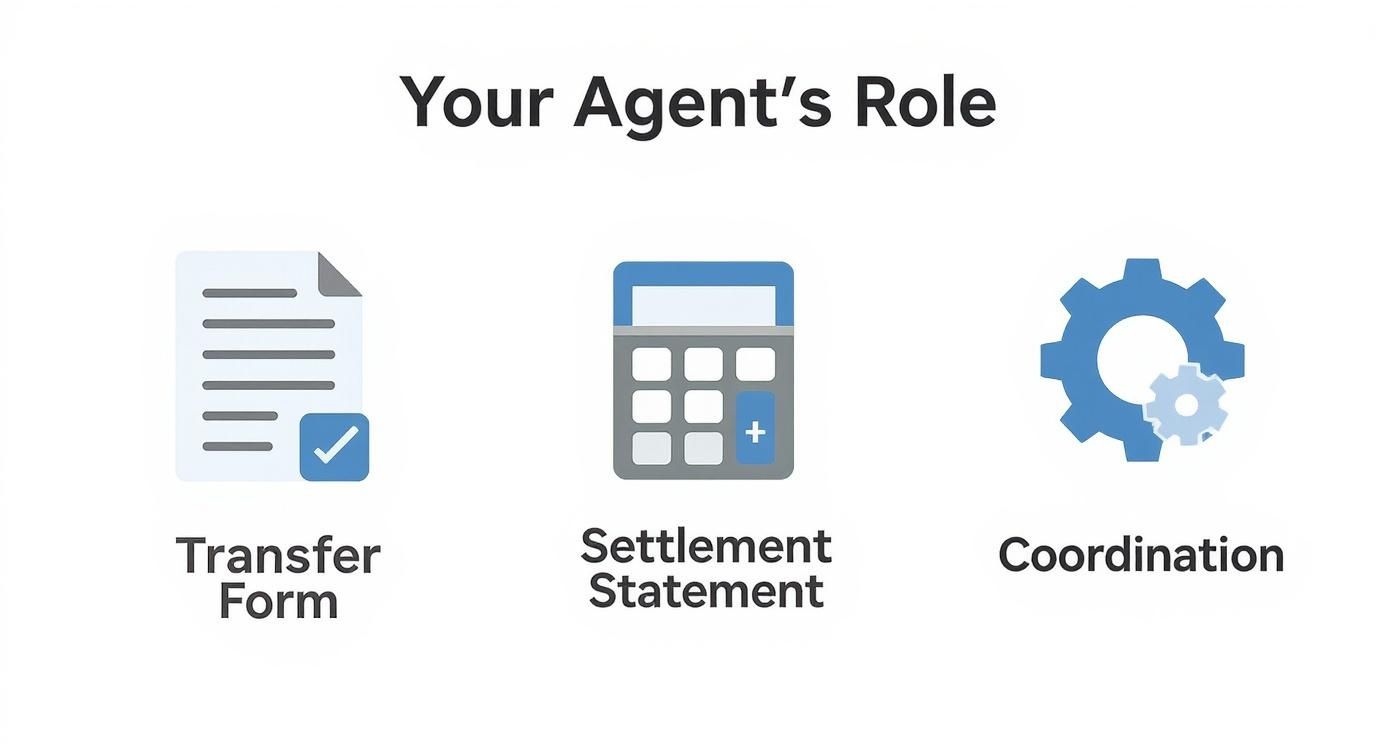
As you can see, the transfer form, settlement statement, and financial coordination are the three pillars your agent expertly juggles to get you over the finish line.
How to Avoid Common Settlement Day Delays
While most property settlements in Western Australia go off without a hitch, a few common issues can cause frustrating and costly delays. Knowing what these potential hurdles are is the first step to making sure they don't happen to you.
A smooth settlement day really just boils down to proactive preparation and clear communication. It's about ensuring every piece of the puzzle is in place well before the final deadline arrives.
The good news? Most delays are entirely preventable. With a bit of foresight, you can sidestep the common pitfalls that catch others out, ensuring your path to collecting the keys is as seamless as possible. This is where staying organised and working closely with your settlement agent truly pays off.
Proactive Steps for a Smooth Settlement
The single biggest cause of delay often comes down to timing and paperwork. Banks can sometimes be slow to get funds ready, or a crucial document might be missing a signature, grinding the entire process to a halt.
The solution is simple: do not leave things to the last minute.
- Sign and Return Documents Promptly: When your bank or settlement agent sends you a document, treat it with urgency. Sign it, get it witnessed correctly if required, and send it back immediately. A delay of just one day on your end can easily cause the entire settlement to be pushed back.
- Communicate with Your Lender: Stay in touch with your bank or mortgage broker in the week leading up to settlement. A quick call to confirm they are on track and have everything they need can prevent an eleventh-hour surprise.
Think of settlement as a group project with a strict deadline. If one person doesn't complete their part on time, everyone is affected. By getting your tasks done early, you give the entire team—your agent, the bank, and the seller's representatives—the best chance of success.
Another common stumbling block is an issue discovered during the final inspection. Finding a broken air conditioner or a pile of rubbish left behind on the morning of settlement creates a stressful scramble to find a solution.
Smart Scheduling for Your Final Inspection
This is where strategic timing becomes your superpower. Don't schedule your final inspection for the morning of settlement day. It leaves zero room to negotiate a fix if you find something wrong.
Instead, book your final inspection two or three days before settlement. This creates a crucial buffer. If you discover a problem, it gives your real estate agent enough time to communicate with the seller and agree on a solution, like a repair or holding back some funds, without derailing the entire transaction. Being prepared is the key to what happens on settlement day.
Your Settlement Day Questions Answered
Even with a clear timeline mapped out, it’s completely normal for a few specific questions to pop up as settlement day gets closer. I find that feeling truly prepared comes from getting straight answers to these common queries. Let's tackle some of the most frequent questions I hear about what actually happens on the day in Western Australia.
Getting your head around these details helps manage expectations and lets you plan your day properly, saving you a whole lot of unnecessary stress. From whether you need to show up in person to when you finally get the keys, clarity is everything.
Do I Have to Attend the Settlement Meeting?
No, you don't. This is usually a welcome relief for most people! You are not required to be physically present at the settlement meeting, as the entire process is now handled digitally by your professional reps.
Your settlement agent is there to act on your behalf, managing the secure online exchange of documents and funds through a platform like PEXA. Your main jobs are to do the final property inspection (if you're the buyer) and make sure all your paperwork is signed and sent back well ahead of schedule.
Think of your settlement agent as your personal delegate for the final transaction. They are legally empowered to finalise the deal, meaning you can focus on packing boxes or your work day, confident that the technical details are being expertly managed.
When Exactly Do I Get the Keys?
This is the big one! You can officially collect the keys to your new home after settlement has successfully gone through. This usually happens in the mid-to-late afternoon on the day of settlement.
Once the electronic transaction is complete, the settlement agents for both the buyer and seller will notify the real estate agent. The agent will then give you the call you’ve been waiting for, letting you know it's time to come to the office and pick them up. A bit of local advice: it's always wise to schedule your removalists for late in the day, or even better, the following morning. This can save you paying for them to sit around waiting.
What Happens if Settlement is Delayed?
If there's a hiccup and settlement gets delayed, your settlement agent will be on the phone to you straight away. They’ll explain what’s happened – it could be anything from a bank not being ready to a last-minute document error – and will start working with the other party's agent to sort out a new time.
Most of the time, delays are sorted out quickly and settlement is just rescheduled for the next business day. Depending on what caused the delay and what's in your contract, penalty interest might be charged to the party at fault. The most important thing is to stay in close contact with your settlement agent; they are your guide to getting the issue resolved.
Navigating the settlement process is the final step in your property journey. For expert guidance in the Mandurah property market, trust David Beshay Real Estate. Whether you're buying or selling, we provide the local knowledge and professional support you need for a seamless transaction. Contact us today for a free property appraisal at https://realestate-david-beshay.com.au.

