


When you're buying a property in Mandurah or anywhere else in Western Australia, one of the biggest questions that comes up is, "When exactly do I have to pay the stamp duty?"
The short answer is at settlement. Think of this as the final, official handover day. While the technical deadline from the government is within one month of your duties assessment, in practice, everyone rolls this payment into the settlement process. It's simply the most straightforward way to handle it.
Your Quick Guide to Paying Stamp Duty in WA
Buying a home is a bit like a multi-act play. You have the opening scene (making an offer), the rising action (getting your finance approved and doing inspections), and then the grand finale: settlement. This is the day all the key players—lawyers, conveyancers, and bank representatives—come together to finalise everything. It just makes sense for the stamp duty to be paid right in the middle of all this action.
Your conveyancer or settlement agent is the director of this final act. They coordinate the payment on your behalf, usually drawing the money directly from your home loan or the cash you're contributing. This ensures a smooth process, preventing any last-minute hiccups that could delay the legal transfer of the property title into your name. Simply put, without the stamp duty being paid, you can't officially become the new owner.
Key Stamp Duty Timelines at a Glance
To give you a clearer picture, it helps to break down the timeline and see who's responsible for what. This way, you can anticipate the costs and understand what your conveyancer is handling behind the scenes.
| Milestone | Typical Timing | Who Is Responsible |
|---|---|---|
| Duties Assessment | After your contract becomes unconditional. | Your conveyancer lodges all the paperwork with the Office of State Revenue. |
| Legal Due Date | Within one month of the assessment date. | You're legally liable, but your conveyancer manages the payment process for you. |
| Practical Payment | On the day of settlement. | Your conveyancer facilitates the payment using your approved funds. |
| Title Transfer | Immediately after settlement is complete. | The title is officially registered in your name once the payment is confirmed. |
Seeing it laid out like this shows that while you are ultimately responsible for the bill, your conveyancer does all the heavy lifting to ensure it's paid on time.
If you want a simple way to remember it, just link the stamp duty payment to the day you get the keys. Your conveyancer makes sure the tax is paid at settlement, which clears the path for the property to legally become yours.
Ultimately, being prepared for this cost is a massive part of a stress-free home-buying journey. One of the smartest things you can do early on is use a stamp duty calculator. It gives you a really accurate estimate, so you can budget properly and avoid any financial shocks as your settlement date gets closer.
The Stamp duty Timeline From Offer to Settlement
To really get your head around when stamp duty is paid, it helps to think of it as a crucial scene in the bigger story of buying your home. The whole thing kicks off the moment you sign the Offer and Acceptance contract. That signature sets a whole series of coordinated steps in motion, all leading up to the final payment. The process is designed to be pretty seamless, with your conveyancer acting as the director, making sure every detail is handled just right.
Once your offer goes unconditional—meaning you’ve cleared hurdles like getting your finance approved and sorting out building inspections—your conveyancer or settlement agent steps into the spotlight. They’ll pull together all the necessary documents and officially lodge them with the Office of State Revenue here in Western Australia. This is the moment that triggers what’s known as the duties assessment.
From Assessment to Payment
The duties assessment is simply the government's official calculation of how much stamp duty you owe. It’s worked out based on the ‘dutiable value’ of your property, which is either the purchase price or the current market value—whichever is higher. As soon as this notice is issued, a legal clock starts ticking. But don't stress, the actual payment is cleverly timed to happen on your settlement day.
This flowchart gives you a quick, simple snapshot of the three main stages in the stamp duty payment process.
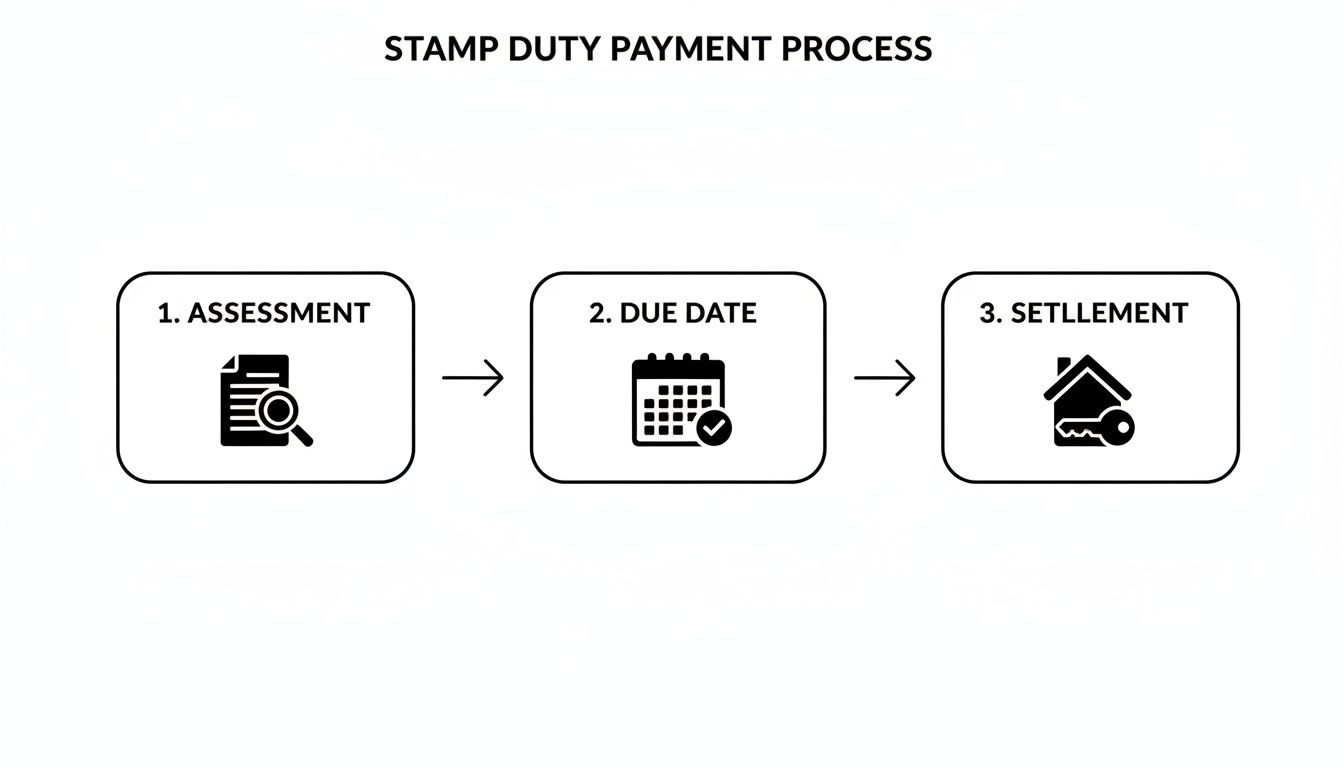
As you can see, it’s a logical flow from the official assessment right through to the final payment at settlement, which is the most important milestone of all.
The Role of Your Conveyancer
Your conveyancer is the one pulling all the strings here. They make sure the funds are ready to go on settlement day, drawing the stamp duty amount directly from your home loan or from the cash you’re putting towards the purchase. Tying it all together like this is what makes the transaction go off without a hitch.
So, why is this timing so critical? Well, the property title can't legally be transferred into your name until the stamp duty is paid in full. By taking care of it at settlement, your conveyancer guarantees there are no hold-ups. Just imagine trying to coordinate a payment of this size separately—it would add a whole layer of unnecessary stress and potential for things to go wrong.
Paying stamp duty at settlement isn't just for convenience; it’s a non-negotiable step for the legal change of ownership to happen. Your conveyancer makes sure this is sorted seamlessly, protecting you and keeping the purchase on track.
This structured way of doing things takes all the guesswork out of it, leaving you free to focus on the excitement of the move. The entire settlement period, from the contract going unconditional to getting the keys in your hand, is a carefully managed process. If you want a better handle on everything that happens during this time, it's worth learning more about how long settlement takes in WA and what to expect.
Ultimately, the journey from signing on the dotted line to paying your stamp duty is a well-worn path. Here’s a simple breakdown of how it all unfolds:
- Contract Becomes Unconditional: You’ve met all your conditions (like finance).
- Lodgement: Your conveyancer sends the contract off to the Office of State Revenue.
- Duties Assessment: The government sends back an official notice with the amount you owe.
- Settlement Day: Your conveyancer uses your funds to pay the stamp duty on your behalf.
- Title Transfer: With the duty paid, the property title is officially registered in your name.
This step-by-step flow ensures you meet your legal obligations without any last-minute panics, helping make your move into a new Mandurah home a complete success.
Understanding the Official WA Stamp duty Deadline
When you get into the nitty-gritty of paying stamp duty in Western Australia, there’s a crucial difference between what the law says and what actually happens on the ground. The government gives you a clear timeframe, but the real estate industry has its own way of doing things that makes the whole process smoother and safer for everyone.
Here in WA, where David Beshay Real Estate helps buyers in Mandurah and the surrounding suburbs, stamp duty (officially called ‘transfer duty’) is technically due one month after the Office of State Revenue issues its assessment. This assessment usually lines up with your settlement date, making it a pivotal moment for both first-home buyers and seasoned investors. You can see how state revenues like this fit into the bigger picture of government finances on the ABS website.
So, you’ve got an official one-month window from the government. But if you talk to any settlement agent in WA, they’ll tell you the same thing: in reality, it’s almost always paid on the day of settlement.
Why Settlement Day is the Real Deadline
So why does everyone work to a different deadline? It all comes down to the mechanics of transferring property ownership. Paying at settlement isn't just a convenient habit; it’s an essential cog in the machine that ensures the sale goes through without a hitch.
Think of the property title as a locked box containing the legal ownership of your new home. The payment of your stamp duty is one of the keys needed to open that box. Without it, Landgate (WA’s land information authority) simply won't register the transfer of the title into your name.
On settlement day, your settlement agent is like the conductor of a financial orchestra. They bring together the funds from you and your lender to pay the seller, cover their own fees, and settle the stamp duty bill with the government. Doing it all at once ensures every legal and financial box is ticked simultaneously.
Trying to pay the duty after settlement would be a logistical nightmare. The seller would have their money, but you wouldn't legally own the property yet. This creates a risky and confusing limbo that no one wants to be in.
A Practical Example in Lakelands
Let’s say you’re buying a lovely family home in Lakelands for $550,000. Your settlement is scheduled for six weeks after your offer is accepted. Your settlement agent will make sure the stamp duty—which would be around $20,000 in this scenario—is calculated correctly and ready to be paid from your loan funds on that exact day.
This precise timing achieves a few key things:
- No Delays: The seller is paid on time, and you get the keys without any frustrating hold-ups.
- Legal Security: The title transfer happens right after payment, making you the undisputed legal owner straight away.
- Simplicity: You don’t have to stress about remembering another deadline or coming up with a large sum of money later on.
This synchronised approach is standard practice for a very good reason—it’s the safest and most efficient way to finalise a property purchase. It strips out the risk and provides total clarity for both buyer and seller, which is exactly what you need when you're making such a huge investment. Understanding why the industry standard exists helps you see just how vital your settlement agent’s role is.
How Concessions and Exemptions Impact Your Payment

That figure you see on a stamp duty calculator? Think of it as a starting point, not the final bill. For many buyers here in Mandurah, the actual amount they hand over is significantly less, all thanks to a range of government concessions and exemptions.
These aren't just minor discounts; they can genuinely slash your upfront costs. But you have to know what you’re eligible for and, crucially, when to apply for it.
The most common saving is the First Home Owner Rate of Duty. This is a massive leg-up for West Australians getting onto the property ladder. It can completely wipe out the stamp duty on homes under a certain value and offers a healthy discount on properties above that threshold.
Budgeting for your first home is stressful enough. A concession can be the difference between comfortably affording a great place in Halls Head or having to stretch every last dollar.
It’s important to remember these savings don't just magically appear. You have to actively apply for them. Your conveyancer will handle lodging the right forms with your contract, making sure the discount is locked in before your final payment is due at settlement.
First Home Buyers and Other Major Savings
The First Home Owner Rate is a genuine game-changer. Government stats show that first-time buyers collectively saved over $200 million in 2023. This kind of help is vital for getting into competitive suburbs like Lakelands, where homes have been selling fast.
But the good news doesn't stop there. WA has several other valuable concessions designed for specific situations.
Here are a few key exemptions and concessions you might come across:
- Off-the-Plan Duty Rebate: This is designed to encourage buying new apartments in multi-storey developments by offering a rebate on the stamp duty.
- Transfers Between Spouses or De Facto Partners: In most situations, transferring the family home between partners is exempt from duty.
- Family Farm Transactions: Special rules are in place to help keep family farms in the family, easing the financial strain of passing them down to the next generation.
If you think any of these might apply to you, bring it up with your settlement agent right away. They can confirm if you’re eligible and get the application process rolling to ensure your final bill is correct on settlement day. You can learn more by checking out our detailed guide on first home buyer stamp duty in WA.
What Happens If I Pay Stamp Duty Late?
Missing the stamp duty deadline is more than just a simple oversight—it can bring on some serious and expensive headaches. The government doesn't take late payments lightly, and the financial penalties can stack up quickly, adding a layer of stress you really don't need when buying a home.
This isn't meant to scare you, but it does highlight why paying at settlement is the gold standard. It’s a safety net woven right into the conveyancing process, designed to protect you from these kinds of avoidable costs. Your settlement agent is there to manage this timeline, keeping your purchase on track and financially sound.
How Penalties Are Calculated in WA
If you happen to miss the due date for your stamp duty, the Office of State Revenue will apply a penalty tax. This isn't just a single flat fee; it's a charge that's designed to grow the longer you wait, making it crucial to sort out as soon as possible.
The penalty usually breaks down into two parts:
- A Penalty Tax: This is a base amount that gets slapped on as soon as the deadline is officially missed.
- Interest Charges: On top of that penalty, interest starts ticking over on the unpaid amount for every single day it’s overdue.
This one-two punch means the total you owe can climb much faster than you’d think, turning a manageable tax into a pretty hefty financial burden.
You can think of it like a credit card bill. That initial late fee is the first sting, but it’s the daily compounding interest that really makes the debt swell over time. Getting your conveyancer on the case early prevents you from ever getting caught in that stressful loop.
In WA, a late payment triggers interest charges plus a base penalty, and these can really escalate if there’s a major delay. In fact, revenue office audits showed that these penalties caught out over 2,500 buyers last year, which just goes to show how easily it can happen without a professional guiding the way. You can learn more about how WA's late payment penalties work and their real-world impact by exploring the official guidelines on our website.
Avoiding the Financial Sting
At the end of the day, the best way to deal with late payment penalties is to make sure you never have to. This is exactly where a sharp, diligent conveyancer or settlement agent proves their worth. They act as your safeguard, ensuring every piece of paperwork is lodged correctly and all funds are ready to go well before the settlement date.
By handing this critical job over to a professional, you can get back to focusing on the exciting parts of your move, knowing that all the legal and financial boxes are being ticked right on schedule.
Your Simple Stamp Duty Payment Checklist
Knowing the theory is one thing, but putting it into action is what makes for a smooth, stress-free property purchase. When it comes to stamp duty, having a clear plan makes all the difference. Think of this as your roadmap, guiding you from your initial budget right through to the final payment.
Following these steps will help you sidestep any last-minute surprises and keep your Mandurah property purchase on track.
Your Step-by-Step Guide
-
Estimate Early and Often: Don't wait until you're emotionally invested in a property. Before you even start hitting the open homes, get a realistic idea of your potential stamp duty costs. The easiest way to do this is with an online tool, which will give you a solid estimate for different price points in suburbs like Halls Head or Lakelands.
-
Engage a Professional: A great conveyancer or settlement agent is worth their weight in gold. They are the ones who will handle the entire process for you, from lodging all the necessary paperwork with the Office of State Revenue to ensuring the final payment is made correctly and on time. Look for someone with deep, local Mandurah knowledge.
-
Talk to Your Lender: As you're applying for your home loan, make sure you discuss how the stamp duty will be funded. For most people, these funds are drawn directly from the loan at settlement. It's absolutely crucial that your lender is across the total amount needed so there are no shortfalls on the big day.
-
Confirm Concessions: If you think you’re eligible for the First Home Owner Rate or another exemption, bring it up with your conveyancer from day one. They need to apply for this on your behalf so that any discount is factored into your final duties assessment. Don't leave it to chance.

By simply plugging in the property's value and type, you can get an instant estimate to help you budget accurately right from the beginning. Give it a go yourself with this easy-to-use stamp duty calculator for WA.
Final Confirmation: On settlement day, your conveyancer will give you a settlement statement. This document is your final record. Take a moment to check it over and you'll see the stamp duty payment listed as a disbursement—giving you complete peace of mind that it's all been handled.
Navigating the property market is always easier with an expert in your corner. For personalised advice on your real estate journey here in the Mandurah area, contact David Beshay for a professional and seamless experience.
Common Questions About Stamp Duty
Getting your head around stamp duty for the first time can be a bit confusing. It's a big cost, and naturally, you want to know all the ins and outs. Here are a few of the most common questions we get from buyers in Western Australia.
Can I Pay Stamp Duty in Instalments in WA?
This is a really common question, but unfortunately, the answer is generally no. In WA, stamp duty needs to be paid in one lump sum before the due date. The Office of State Revenue doesn't offer payment plans for typical property sales.
Think of it as one of the final hurdles to clear before you get the keys. The full amount has to be paid to finalise the settlement and officially get your name on the property title, so it’s crucial to have that money ready to go.
Does the Seller Ever Pay Stamp Duty?
Not a chance. In every Western Australian property deal, the legal responsibility for paying transfer duty falls squarely on the buyer.
Sellers have their own set of costs to worry about, like the agent's commission and potentially Capital Gains Tax, but stamp duty is one expense they can happily cross off their list.
Is Stamp Duty Based on Purchase Price or Market Value?
This is a great question because it catches a lot of people by surprise. Stamp duty is calculated on what's called the 'dutiable value' of the property. This is simply the higher of two figures: either the purchase price you've agreed on or the property's current, unencumbered market value.
This rule is in place to keep everything fair and above board. It stops people from trying to reduce their tax bill by agreeing to a low official price and paying the rest on the side. It protects the integrity of the whole transaction.
So, even if you managed to snag a bargain from a family member, the government will still assess the duty based on what the property is genuinely worth on the open market.
Understanding the Mandurah property market is key to a successful purchase. For personalised advice and expert guidance, trust David Beshay Real Estate to lead the way. Learn more at https://realestate-david-beshay.com.au.

