


Think of a property manager as the captain of your ship. You own the vessel—your investment property—but you hire them to navigate the day-to-day challenges, from charting the right course with tenants to making sure everything stays shipshape. They are the essential go-between, handling the operations so you can enjoy the journey without getting swamped by the details.
Defining the Role of a Property Manager
Let’s put it another way. Your rental property is a valuable asset, much like a high-performance car. Sure, you could learn to do all the maintenance yourself, but bringing in a specialist mechanic ensures it runs smoothly and holds its value for years to come. A property manager is that specialist for your home, turning what could be a hands-on headache into a genuinely passive, income-generating investment.
Their main job is to protect your asset while boosting your returns. It's a balancing act: keeping tenants happy and the property in top-notch condition. The demand for this expertise is growing fast. The Australian property management market hit a value of USD 8.1 billion in 2024 and is tipped to reach USD 11.0 billion by 2033. You can dive deeper into the data on the Australian property management market and see its projected growth for yourself.
To get a clearer picture, let's break down the key differences between going it alone and hiring a professional.
Property Manager vs DIY Landlord: A Quick Comparison
This table highlights the core tasks and how the approach differs when you have an expert on your side.
| Task | DIY Landlord Approach | Professional Property Manager Approach |
|---|---|---|
| Tenant Screening | Often relies on gut feeling, basic checks, and personal references. Can be hit-or-miss. | Utilises comprehensive database checks, rental history verification, and structured interviews to find reliable tenants. |
| Rent Collection | Chasing up late payments personally, leading to awkward and stressful conversations. | Implements automated payment systems and follows a strict, legally compliant process for arrears. |
| Maintenance & Repairs | You're on call 24/7. Have to find, vet, and coordinate tradespeople for every issue, big or small. | Leverages a trusted network of qualified and insured tradespeople, often at preferred rates, ensuring quality and timely work. |
| Legal Compliance | Tries to keep up with tenancy laws but can easily miss updates, risking fines and legal disputes. | Stays current with all tenancy legislation, ensuring lease agreements and property management practices are fully compliant. |
| Inspections | Conducted when you have time, potentially missing signs of wear and tear or lease breaches. | Schedules and documents regular, thorough inspections to proactively address maintenance and protect your investment. |
| Market Knowledge | Sets rent based on what nearby listings are asking, potentially undervaluing or overpricing the property. | Conducts detailed market analysis to set the optimal rental price, maximising your income and minimising vacancy periods. |
As you can see, a property manager doesn't just take tasks off your plate—they bring a professional system and expertise that's tough to replicate on your own.
The Three Pillars of Property Management
So, what does all this look like in practice? A property manager’s wide-ranging duties can be neatly sorted into three key areas of oversight.
A great property manager doesn't just collect rent; they actively work to increase the value of your asset through strategic tenant placement, preventative maintenance, and sound financial management.
This infographic gives a great visual summary of their main functions.
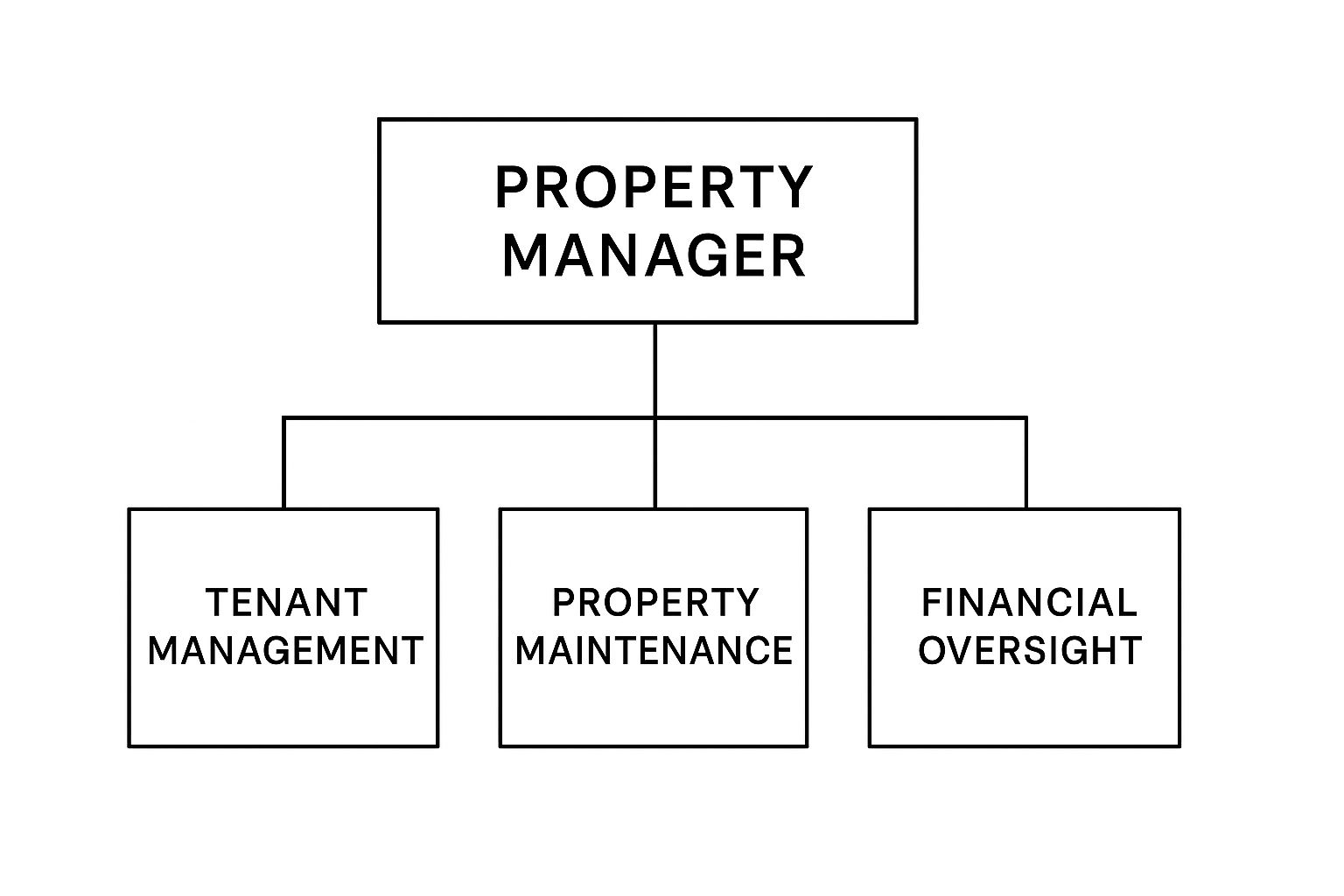
Ultimately, their role is a blend of people skills, property maintenance know-how, and sharp financial administration. For homeowners in Mandurah, this translates to having a local pro who gets the nuances of our rental market and the unique upkeep needs of coastal homes. It’s this professional oversight that saves you from late-night calls about a burst pipe or the headache of finding and vetting new tenants. It’s what gives you true peace of mind.
Core Responsibilities of a Property Manager

So, what does a property manager actually do all day? Their role is a world away from just collecting rent. It's a dynamic mix of marketing, financial management, maintenance coordination, and knowing the law inside and out.
Think of them as the CEO of your investment property. They manage several key departments that must work in harmony to keep your asset profitable and protected.
This is a demanding job handled by dedicated professionals right across the country. As of 2025, Australia has around 39,200 property managers, with a solid 72% working full-time. These are the people who make the rental market tick. You can get more insights into the property management profession in Australia on the Jobs and Skills Australia website.
Let's break down their duties into four core pillars.
Pillar 1: Tenant Management
This is the people-focused part of the job. A property without a great tenant is just an ongoing expense, so finding and keeping the right people is priority number one.
- Strategic Marketing: It starts with creating compelling listings with professional photos and getting them in front of the widest possible pool of applicants on all the key platforms.
- Rigorous Screening: They then conduct thorough background checks, verify employment and income, and check rental histories to minimise any future risks.
- Ongoing Communication: Once a tenant is in place, the manager acts as their main point of contact, handling enquiries and sorting out issues quickly to maintain a positive relationship.
For a homeowner in Mandurah, this means they won't just find any tenant; they’ll find a reliable one who will treat your property like their own.
Pillar 2: Financial Oversight
A property manager is also the financial guardian of your investment, making sure it performs exactly as it should. They handle all the money matters with precision and complete transparency.
This begins with setting a competitive rental price based on a detailed analysis of the local market, whether it's in suburbs like Halls Head or Falcon. From there, they manage rent collection, follow up on any arrears according to strict legal protocols, and pay all property-related bills on your behalf, like council rates or strata levies.
A crucial part of their financial role is providing you with clear, detailed monthly and end-of-financial-year statements. This makes tracking your investment's performance simple and tax time a whole lot easier.
Pillar 3: Property Maintenance
Keeping your property in top shape is essential. It protects the long-term value of your asset and, just as importantly, keeps your tenants happy. A proactive approach here is the mark of a truly great manager.
They are the first person a tenant calls for any repair requests, from a dripping tap to an urgent electrical fault. For a canal-front home in Mandurah, this might mean calling on specialist tradespeople who know how to handle issues related to coastal wear and tear.
Their maintenance duties cover all bases:
- Coordinating Repairs: Using their network of trusted and insured tradespeople to fix issues quickly and cost-effectively.
- Conducting Inspections: Carrying out routine property inspections to spot potential problems before they escalate into expensive emergencies.
- Preventative Care: Recommending and organising preventative work, like cleaning gutters or servicing air conditioners, to extend the life of your property's assets.
Pillar 4: Legal and Legislative Compliance
The laws around residential tenancies are complex and they're always changing. A property manager's job is to navigate this legal maze for you, ensuring every single action is fully compliant.
This is particularly vital in Western Australia, where the Residential Tenancies Act governs everything from lodging a bond to eviction procedures. They make sure your lease agreements are watertight, safety standards like smoke alarm compliance are met, and all official notices stick to legislative requirements.
Ultimately, this shields you from potential disputes and costly penalties, giving you invaluable peace of mind.
How Professional Management Benefits Mandurah Homeowners

Understanding what a property manager does is one thing. But seeing how their work directly benefits your investment? That’s where the real value becomes clear. For homeowners in Mandurah, professional management isn't just a convenience; it's a strategic move that boosts returns, cuts down on risk, and, most importantly, frees up your time.
Think of it like this: your rental property is a small business. A property manager is your dedicated operations manager, focused entirely on making that business as successful and stress-free as it can be.
Maximise Your Rental Returns
One of the biggest wins is achieving the best possible rental income. A skilled property manager has their finger on the pulse of the Mandurah market, from the canal-front homes in Halls Head to the family-friendly streets of Falcon.
They don't just pluck a rental price out of thin air; they conduct a thorough market analysis. This data-driven approach means your property is priced just right—competitively enough to attract quality tenants quickly, without leaving money on the table. For investors, this careful pricing is key. You can explore our guide on how to calculate rental yield to see how even small weekly rent adjustments can make a huge difference to your annual returns.
This local expertise also helps minimise costly vacancies. A property sitting empty for even a few weeks can wipe out a good chunk of your annual profit. Professional managers use targeted marketing and a streamlined application process to fill vacancies faster, keeping that income stream consistent.
Save Your Most Valuable Asset: Time
Beyond the financial gains, the most immediate benefit you'll feel is the gift of time. The day-to-day grind of managing a property—answering tenant calls, organising urgent repairs, and conducting inspections—can quickly eat up your free hours.
A professional manager handles every late-night call about a broken hot water system and every weekend spent showing the property to prospective tenants. This service transforms your investment from a demanding part-time job back into a passive source of income.
This frees you up to focus on what really matters, whether that's your career, your family, or just enjoying the Mandurah lifestyle, all while your investment works for you in the background.
Navigate Complex Legal Requirements
The legal side of property management is a minefield for the unprepared. Western Australia's Residential Tenancies Act is a complex piece of legislation that governs every single part of the landlord-tenant relationship. It's not something you want to get wrong.
A professional property manager is an expert in this area. They make sure every step, from the lease agreement to the bond lodgement and property condition reports, is 100% compliant.
This legal protection is invaluable. It shields you from:
- Potential disputes with tenants that could lead to stressful and costly tribunal hearings.
- Significant financial penalties for not complying with safety regulations.
- The risk of making a critical mistake during a difficult process like an eviction.
By entrusting your property to an expert, you gain peace of mind knowing your investment is being managed ethically and legally, protecting both you and your asset.
Understanding Property Management Fees
When you bring a professional property manager on board, you're not just paying for a service; you're investing in your asset's protection and growth. So, let’s pull back the curtain on the costs involved to see the real value they offer. The fee structure is usually quite straightforward, so you know exactly where your money is going.
Think of it as a subscription service for your peace of mind. The main cost you'll see is the management fee. This is the ongoing charge for the day-to-day running of your property, typically calculated as a simple percentage of the weekly rent your manager collects.
Common Fee Structures
This ongoing management fee is the engine room of the service, covering all the core responsibilities. We’re talking about rent collection, handling all tenant communications, providing you with clear financial reports, and coordinating any routine maintenance. Simple.
However, there are a few other standard charges that pop up for specific, one-off events that require a significant chunk of work.
You can expect to see things like:
- Letting Fee: This is a one-time charge for all the heavy lifting involved in finding you a brand-new tenant. It covers advertising the property, conducting viewings, sifting through applications to find the best fit, and drawing up the lease agreement.
- Lease Renewal Fee: A smaller, administrative fee for handling the paperwork and negotiations when a fantastic existing tenant decides to stay on.
- Advertising Costs: This is your contribution to getting your property seen on the major real estate websites to attract the highest quality applicants.
These fees are pretty standard across the industry. If you want to get a broader sense of how fees and charges work in real estate, take a look at our guide on understanding real estate commission rates.
Example Fee Breakdown for a Mandurah Rental Property
To make this crystal clear, let's crunch some numbers with a practical example for a typical rental property right here in Mandurah. This table gives you a transparent look at how the fees might be calculated.
| Fee Type | Typical Rate (WA) | Example Calculation (on $550/week rent) | Description of Service |
|---|---|---|---|
| Management Fee | 8% – 12% + GST | $52.80 per week (at 8.8% inc. GST) | Covers ongoing rent collection, tenant liaison, and financial management. |
| Letting Fee | 2 weeks' rent + GST | $1210 (inc. GST) | For finding, screening, and securing a new tenant. |
| Lease Renewal Fee | Varies (e.g., $100-$250) | $165 (inc. GST) | Administrative cost for renewing an existing tenancy agreement. |
| Advertising Fee | At cost (e.g., $150-$300) | $220 (inc. GST) | Covers the cost of online property listings and marketing materials. |
As you can see, the costs are directly tied to specific activities that add real value. The ultimate goal is always the same: to make sure your investment is profitable, well-cared-for, and generating a consistent return with minimal stress for you.
Choosing the Right Property Manager in Mandurah

Picking someone to look after your investment property is a massive decision. Get it right, and your asset will be a profitable, stress-free part of your portfolio. Get it wrong, and it can quickly become a constant headache. For homeowners in Mandurah, the key is finding a professional who not only gets property management but truly understands our unique local market.
Finding that perfect partner takes a bit of legwork. Think of it like hiring a general manager for your business—you need to run a proper interview process to make sure they’ve got the right skills, experience, and attitude to match your goals. It all comes down to asking the right questions and knowing what a good answer sounds like.
Key Questions to Ask Potential Managers
When you sit down with a potential property manager, your job is to get a feel for how they operate, day in and day out. Don’t be shy about digging into the specifics. A great manager will welcome your questions and have clear, confident answers at the ready.
Here are the non-negotiables you need to cover:
- Local Market Expertise: How long have you been managing properties right here in the Mandurah region? Can you give me a few examples of how you’ve helped owners get the best possible rent for properties similar to mine?
- Tenant Screening Process: Walk me through your exact process for vetting potential tenants. Do you use national tenancy databases, verify their employment, and check their rental history?
- Rent Arrears Protocol: What’s your game plan the moment a tenant falls behind on rent? At what point do you issue breach notices, and how do you keep me in the loop during that time?
- Maintenance and Repairs: Who are your go-to tradies? Are they fully licensed and insured? How do you handle an emergency repair call in the middle of the night?
This screening process is more important now than ever. The Australian property sector is dealing with a talent crunch, with 20% of agencies finding it tough to fill property manager roles. By being thorough, you’re making sure you hire a proven pro from a stable, well-supported agency.
What to Look for in a Management Agreement
Once you’ve found a manager you feel good about, the last step is to go over the management agreement. This is the legal document that sets out the entire working relationship, so it pays to read it carefully.
A transparent and fair management agreement is the foundation of a strong partnership. Look for clarity on fees, communication standards, and the process for terminating the agreement if necessary. Avoid any contracts with vague terms or hidden clauses.
A solid agreement should clearly lay out:
- All Fees and Charges: It should list the management percentage, letting fees, advertising costs, and any other charges you might see. No surprises.
- Authority Levels: This will spell out how much the manager can spend on repairs without needing your direct approval for every little thing.
- Reporting and Communication: The agreement should state exactly how often you'll get financial statements and property inspection reports.
Taking the time to choose the right professional is one of the smartest moves you can make as an investor. For a deeper dive into our local market, it’s always a good idea to connect with an experienced Mandurah real estate agent who can offer priceless insights. A little due diligence upfront will pay off for years, giving you peace of mind that your valuable asset is in the best possible hands.
Got Questions About Property Management?
Even when you understand the role of a property manager, it’s completely normal to have a few more questions about how it all works in practice. After all, handing over the keys to one of your biggest assets requires a huge amount of trust.
We’ve put together answers to some of the most common questions we hear from Mandurah property owners to help you feel totally confident in your decision. Think of this as a look into the day-to-day reality of the owner-manager partnership.
Can I Still Choose My Own Tenants?
This is one of the first things owners ask, and it’s a great question. While you always have the final say, one of the biggest benefits of hiring a professional is tapping into their expertise in finding great tenants. You’re paying for a robust, legally sound screening process that goes well beyond a simple gut feeling.
Here’s how it usually plays out:
- Your manager handles all the marketing, shows the property to prospective tenants, and collects every application.
- They then do the heavy lifting, running thorough checks on the most promising candidates. This includes looking into their rental history, verifying employment, and checking tenancy databases.
- Once they have a shortlist, they'll present you with the top one or two applicants, complete with a detailed summary and their professional recommendation.
The final approval is always yours. You get the last word, but you get to make that call based on high-quality, pre-vetted information. It's the best way to secure a reliable, long-term tenant.
What Happens If a Tenant Stops Paying Rent?
Rent arrears are a major headache for any landlord. A professional property manager doesn’t just sit back and hope the problem goes away; they have a strict, systematic process that kicks in the moment a payment is missed. This takes all the emotion and stress out of the situation for you.
The process is clear and follows the law to the letter:
- Immediate Follow-Up: As soon as a payment is overdue, the manager is on it, contacting the tenant with reminders through phone, email, and SMS.
- Formal Breach Notice: If the rent isn't paid promptly, they issue a formal breach notice. This is a critical legal step that must be done in strict accordance with Western Australia's tenancy laws.
- Negotiation or Termination: They’ll try to negotiate a payment plan if it’s a viable option. If not, they will move forward with the legal process to terminate the tenancy and get your property back on the market.
Throughout this entire time, they keep you in the loop, handle all the difficult conversations, and manage the legal paperwork, protecting both your income and your asset.
How Often Will My Property Be Inspected?
Regular inspections are the secret to protecting your investment’s long-term value. They’re not about being nosy; they’re about making sure your property is being looked after and catching small maintenance issues before they turn into big, expensive emergencies. Any good agency will have a clear and consistent inspection schedule.
You can generally expect a detailed property condition report at the very start of a tenancy, routine inspections every three to four months, and a final bond inspection once the tenant moves out.
After every routine inspection, you’ll receive a comprehensive report packed with photos and notes on how everything looks. This gives you a transparent, real-time snapshot of your property’s condition and flags any areas that might need attention, giving you complete peace of mind.
Ready to experience the peace of mind that comes with professional management for your Mandurah property? The team at David Beshay Real Estate offers expert guidance and dedicated service to protect and maximise your investment. Contact us today for a free, no-obligation rental appraisal.

