


Ever heard the term "buying off the plan" and wondered what it's all about? It's a bit like pre-ordering your future home. You're committing to purchase a property—often an apartment or a townhouse in a new development—based purely on the architectural blueprints, well before a single brick has been laid.
Essentially, you're securing a home that only exists on paper, locking it in at today's price.
What Does Buying Off the Plan Actually Mean?

At its heart, buying off the plan is an act of faith in a developer's vision. You won’t be walking through a finished house. Instead, you'll be poring over floor plans, looking at 3D renders, and touching material samples to imagine what your future property will feel like. It's a contract for a home that is yet to be built.
This approach really flips the traditional home-buying process on its head. Rather than needing a mortgage for the full amount right away, you typically put down an initial deposit—usually around 10% of the purchase price—to secure the property. The remaining balance isn't due until the project is completely finished and ready for settlement, which could be anywhere from one to three years down the track.
The Promise of a Future Asset
This built-in time delay is a massive part of the appeal. It gives you a significant window to save up for the final payment, which is why it has become such a popular pathway into the property market for many Australians, especially as housing demand in major cities started to outpace supply over the last couple of decades.
Recent data shows this trend is still alive and well. Building approvals for residential units have shown a 3.89% year-on-year increase, pointing to a potential recovery and continued interest in new developments. Off-the-plan contracts are often seen as a smart way to lock in a price while benefiting from staggered payments, even though the long wait does expose buyers to potential market shifts. For a deeper dive into Australian housing supply trends, this insightful property guide is a great resource.
The essence of an off-the-plan purchase is securing tomorrow's property at today's price. You are buying the promise of a new home, which requires a different mindset than purchasing an established one.
To really get to grips with the concept, let’s break down the key elements that define this type of transaction. The table below gives a quick summary.
Off-the-Plan Purchase at a Glance
| Characteristic | Description |
|---|---|
| Purchase Timing | You sign a contract to buy a property before it is built or construction is complete. |
| Basis of Purchase | Your decision is based on plans, designs, and marketing materials, not a physical inspection. |
| Payment Structure | An initial deposit is paid upfront, with the final settlement occurring upon completion. |
| Timeline | There is a significant waiting period between signing the contract and taking ownership. |
As you can see, the process is quite different from a standard property sale. It's a long-term commitment based on future potential, which comes with its own unique set of opportunities and challenges.
Your Step-by-Step Journey to an Off-the-Plan Property
Buying an off-the-plan property isn't a single event; it's a journey with a clear timeline. Knowing what happens when can make the whole process feel much less intimidating. From doing your homework at the start to finally getting the keys, each stage has its own focus and requires your attention.
The real work begins long before you even think about signing a contract. Your first and most important move is thorough research. This means looking past the glossy brochures and artist's impressions to really dig into the two things that matter most: the developer and the location.
Stage 1: The Foundation of Research
Your top priority is to vet the developer. What's their track record like? Have they successfully finished similar projects in Mandurah or the surrounding areas? A quick search for reviews or news articles about their past work can tell you a lot. A developer with a solid history of delivering quality buildings on schedule is always a safer bet.
Just as crucial is a deep dive into the location itself. Check out the local council's plans for the area. Is there a new train station, shopping centre, or park on the horizon? These things could give your property’s future value a serious boost. On the flip side, finding out a new industrial zone is planned nearby could have the opposite effect.
Once you feel good about the project, it's time to get your financial and legal ducks in a row. This is where your team of professionals becomes absolutely essential.
- Secure Finance Pre-Approval: Before you commit to anything, have a chat with a mortgage broker or your bank to get pre-approved for a loan. This gives you a firm budget and proves to the developer you’re a serious buyer.
- Pay the Initial Deposit: To reserve your chosen apartment or townhouse, you'll usually put down a small holding deposit first. This is followed by the full deposit (typically 10% of the purchase price) when you sign the contract.
- Engage a Solicitor: Never, ever sign an off-the-plan contract without having it reviewed by a solicitor or conveyancer who specialises in this type of purchase. They'll hunt for any unfair clauses and explain what all the fine print really means.
A solicitor's review is your single most important safety net. They're trained to spot potential red flags in the contract, like a vague 'material change' clause or an unfair sunset clause, which could leave you high and dry if the project faces major delays.
Stage 2: The Contract and Construction Period
After your solicitor gives the green light, you'll sign the unconditional contract of sale. Then, the waiting game begins. The construction phase can last anywhere from one to several years, and during this time, the developer should be sending you regular updates on how things are progressing.
This infographic breaks down the key benefits you're working towards during this wait, like locking in today's price, having a say in the finishes, and the potential for capital growth.
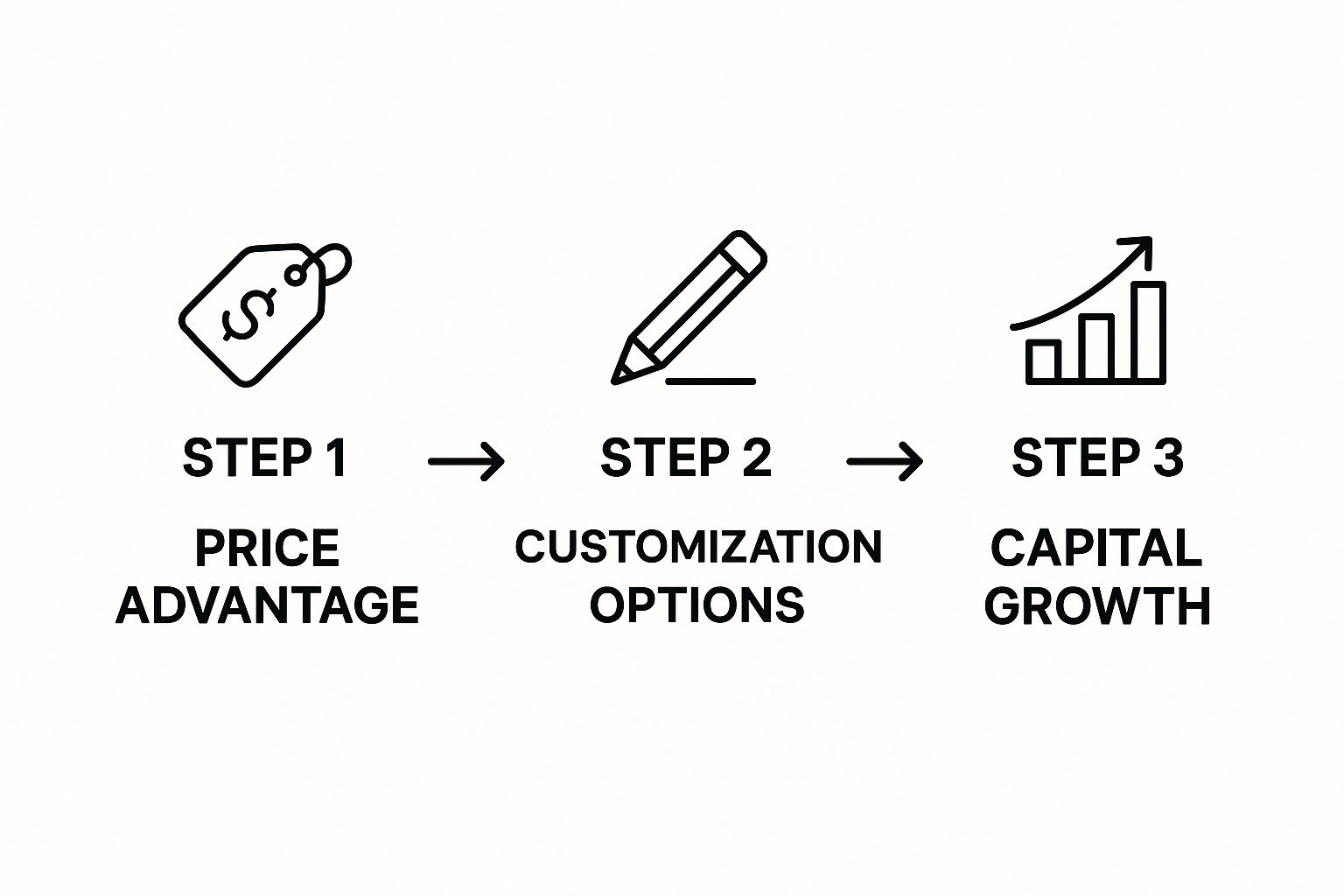
As the graphic shows, securing a price early on can lead to your property being worth more by the time you settle, all while getting a brand-new, customised home.
Stage 3: Final Inspections and Settlement
As construction wraps up, you'll get an invitation for a pre-settlement inspection. This is your chance to go over the property with a fine-tooth comb. Look for any defects or things that don't match what was promised in the contract. Make a detailed list of every issue you find and give it to the developer so they can fix everything before the final handover.
The very last step is settlement. This is the day you pay the remaining balance of the purchase price, and the property title is officially transferred into your name. After a long wait, you finally get the keys to your brand-new Mandurah home.
Unlocking the Benefits of Buying Off the Plan

Choosing to buy a property before it's even built might feel like a leap of faith, but it's a strategy that comes with some serious perks for savvy buyers and investors. The benefits go far beyond just owning something new; they offer real financial and lifestyle advantages that are hard to pass up.
One of the biggest draws is the potential for capital growth while construction is underway. Think of it this way: you lock in your property at today's price. By the time it’s finished in a year or two, the market value may have already climbed. This means you could be sitting on some decent equity before you even make your first mortgage repayment. For buyers keen to make a smart investment, understanding the drivers of Mandurah real estate growth is key to spotting projects with high potential.
Maximising Your Financial Position
Beyond just market growth, buying off the plan offers some immediate financial wins. The way the purchase is structured is a major drawcard. You secure your future home with only a deposit—usually 10% of the contract price—and the rest isn’t due until settlement.
This extended timeline is a game-changer. It gives you a valuable window, often spanning years, to keep on saving. That extra saving period can make a huge difference, potentially reducing the size of your final home loan, lowering your future repayments, and putting you in a much stronger financial position when it's time to settle.
Committing to an off-the-plan purchase is like putting yourself on a forced savings plan. The time between signing the contract and settlement is a golden opportunity to build a much bigger financial buffer.
On top of that, governments often roll out incentives to encourage new construction, which can mean big savings for buyers. These might include:
- Stamp Duty Concessions: In many states, you could be eligible for a reduced or even zero stamp duty on a new build. That’s a saving that can run into tens of thousands of dollars.
- First Home Owner Grants: New properties often tick the boxes for grants designed to help first-time buyers get into the market, giving you a very welcome cash boost.
The Appeal of a Brand-New, Customised Home
Of course, the benefits aren't just financial. There’s an undeniable appeal to being the very first person to live in a property. Everything is pristine, from the kitchen appliances to the fresh paint, and it all comes with builder's warranties. This gives you peace of mind that you won't be facing unexpected repair bills for major systems anytime soon.
What's more, many developers give buyers the chance to personalise their future home. You might get to choose between different colour schemes, pick your preferred flooring, or upgrade the fixtures in your kitchen. Being able to inject your own style before you even move in makes the property truly feel like yours from day one.
For investors, the good news continues with tax depreciation. A new building has a higher depreciable value, which means you can claim wear and tear on fixtures and fittings against your taxable income. This can seriously improve your cash flow. It's this combination of potential growth, savings, and customisation that makes buying off the plan such a powerful strategy for so many people.
Navigating the Risks and Protecting Your Investment
While the perks of buying off-the-plan are definitely appealing, a smart buyer is always one who’s done their homework. It’s just as important to understand the potential downsides as it is to get excited about the advantages. Every off-the-plan purchase comes with its own set of risks, and you need to be ready to manage them to protect your investment.
These risks tend to fall into a few key categories. If you're not careful, they can turn your dream property into a real financial headache. The trick is to go into the contract with your eyes wide open, knowing exactly what could go wrong and, more importantly, how to stop it from happening.
Market and Financing Risks
One of the biggest unknowns is market risk. You’re locking in a price today for a home that won’t be ready for months, or even years. If the property market takes a dip during the construction phase, you could find yourself paying more than what the property is actually worth when it comes time to settle.
This flows directly into financing risk. Banks will only lend you money based on the property’s valuation at the time of completion, not the price you agreed to in the contract. If the final valuation comes in lower than your purchase price, you'll be on the hook for the difference. This can be a huge and unexpected out-of-pocket cost.
A lower-than-expected valuation at settlement is a common hurdle for off-the-plan buyers. This is why having a substantial savings buffer beyond your initial deposit is not just a good idea—it's an essential part of your risk mitigation strategy.
These financial risks are a big reason why buying off-the-plan is often better suited for people who are already on solid financial ground. If you’re an investor, it's vital to understand how these potential shortfalls could affect your overall portfolio. You can get a better handle on how investment properties are structured by reading our guide on what is negative gearing.
Developer and Construction Quality Risks
Just as important is developer risk. You're placing a massive amount of trust in the developer to not only finish the project but to do it on schedule and to a high standard. Unfortunately, delays are pretty common in the industry. In a worst-case scenario, a developer might run into financial trouble and not be able to complete the build at all.
This leads us to the most tangible risk of all: construction defects. Committing to a property before you can physically inspect it means you might discover issues like water leaks, mould, or even structural problems only after you've moved in. These sorts of problems can absolutely demolish your property's resale value and saddle you with expensive repairs. Some new apartment owners have even been hit with special levies costing tens of thousands of dollars to fix building-wide issues.
How to Mitigate Common Risks
Thinking about the risks of buying off the plan can feel a bit daunting. The good news is that while these risks are very real, they are also very manageable if you take a proactive approach. Being prepared is your best line of defence.
The table below breaks down some of the most common pitfalls and what you can do to sidestep them.
Off-the-Plan Risks vs. Mitigation Strategies
| Potential Risk | How to Mitigate It |
|---|---|
| Market Downturn | Lock in fixed-price contracts and have a significant financial buffer to absorb potential valuation shortfalls. Focus on high-demand locations like Mandurah that show long-term growth potential. |
| Financing Shortfall | Get pre-approval for your loan but also maintain a strong savings record. Re-engage with your lender or broker 6 months before the expected settlement to stay ahead of any issues. |
| Developer Insolvency | Research the developer's track record thoroughly. Look at their past projects, financial stability, and reputation. Ensure your deposit is held in a trust account as legally required. |
| Construction Delays | The contract should have a clear "sunset clause" that allows you to exit the agreement if the project isn't finished by a specific date. Have your solicitor review this clause carefully. |
| Poor Build Quality | Hire an independent building inspector for the pre-settlement inspection. Their report gives you leverage to demand the developer fix any defects before you take ownership. |
| Unexpected Costs | Scrutinise the contract for any clauses that allow the developer to pass on extra costs. Your solicitor should be on the lookout for these red flags. |
By taking these practical steps, you're not just hoping for the best; you're actively managing your investment and setting yourself up for a much smoother and more secure purchase.
Here are the absolute non-negotiable steps every buyer should take:
- Meticulously Research the Developer: Don't just look at their shiny brochures. Dig into their entire history, check out their previously completed projects, and search for any past complaints or legal dramas.
- Insist on a Solicitor’s Review: A solicitor who specialises in off-the-plan contracts is your most valuable asset. They'll comb through the fine print, looking for unfair sunset clauses, vague definitions of "quality," and other potential traps.
- Conduct a Thorough Pre-Settlement Inspection: Before you hand over the final payment, hire a professional building inspector. They are trained to spot defects you would almost certainly miss, giving you the power to get them fixed before the keys are in your hand.
A Smart Buyer's Checklist for Mandurah

Buying an off-the-plan property is a big decision, no matter where you are. But when you’re looking in Mandurah, you need a sharp focus on our unique local market. With its stunning estuary, bustling marina, and that relaxed coastal lifestyle we all love, Mandurah has very specific things that drive property value.
A generic, one-size-fits-all approach simply won’t cut it here. You need a strategy tailored specifically to the Peel region to make sure your investment is a winner. This checklist will help you focus your research and make a choice that’s not just financially smart, but a perfect fit for the life you want in Mandurah.
Evaluate Local Developers and Projects
This is your most critical checkpoint: the developer's reputation. In a close-knit community like Mandurah, a developer's history is often common knowledge. Don’t just take their marketing brochures at face value; you need to dig deeper and find out who has a proven track record of delivering quality projects right here in the area.
Your homework should include:
- Visiting past projects: Take a drive and have a look at their completed buildings. Do they look well-maintained? Do they feel like they belong in the local streetscape?
- Checking for local presence: A developer with a long-standing commitment to the Peel region is almost always a safer bet than an out-of-town firm with no local ties.
- Speaking to local agents: A quick chat with real estate professionals can give you priceless, on-the-ground insight into a developer's reputation for quality and reliability.
A developer with a portfolio of successful, well-regarded projects in suburbs like Halls Head, Wannanup, or Falcon shows they truly get what makes Mandurah special. This local experience is a powerful sign of a project's potential success.
Research Future Infrastructure and Lifestyle Fit
Your property's future value is massively tied to what's happening around it. Before you even think about signing a contract, you have to understand the long-term vision for the area. This means looking beyond the pretty pictures of the project itself and seeing the bigger picture.
First, dive into the local council plans. The City of Mandurah's website is a goldmine of information on future infrastructure. Look for planned road upgrades, new public transport links, park redevelopments, or new commercial hubs. These are the kinds of developments that can seriously boost demand and property values down the track.
Next, think about how the project fits the Mandurah lifestyle. Is it just a short walk to the estuary foreshore for those morning strolls? Does it offer easy access to the marina for boating enthusiasts? Proximity to key community hubs, cafes, and shopping centres is a major selling point here.
Ultimately, a successful off-the-plan purchase in Mandurah connects you to the heart of what makes this community so great. For anyone just starting their property journey, our comprehensive first home buyer guide provides extra tips that are crucial for making a smart decision in our local market.
Of course, even when you've got the basics down, buying a property that doesn't exist yet can feel like a massive leap of faith. It’s completely normal to have those nagging "what if" questions running through your mind. This section is all about tackling those common, and critical, questions head-on to give you real clarity.
We're here to clear up those last bits of uncertainty. We'll get into what happens if the finished apartment doesn't quite live up to the glossy brochure, the sticky situation of trying to exit a contract, and why your financing needs a totally different game plan.
What if the Finished Property Is Different?
This is probably the biggest worry for most off-the-plan buyers. What rights do you actually have if the apartment you finally walk into doesn't match the marketing renders or the floor plan you signed off on? The answer, as always, is in your contract of sale. Most contracts will have a specific clause for "material changes" or variations.
Now, small things like a power point being in a slightly different spot are usually fine. But we're talking about the big stuff—a smaller total floor area than promised, a completely different layout, or finishes that are obviously of lower quality. These are the "material changes" that could give you grounds to take action. This is why your solicitor's review is so critical; they'll ensure your contract clearly defines what counts as a material change, giving you the power to negotiate a lower price or even walk away from the deal if the changes are too drastic.
A well-drafted contract is your ultimate safety net against the old 'bait and switch'. It legally forces the developer to deliver a property that is, for all intents and purposes, the same as what you were sold, protecting your investment.
Can I Get Out of an Off-the-Plan Contract?
Life has a funny way of throwing curveballs, and a lot can change over the one to three years it might take to build a property. What if you lose your job or an amazing opportunity pops up interstate? Unfortunately, getting out of an off-the-plan contract is famously difficult. It's a legally binding agreement, and simply having a change of heart isn't a valid reason to cancel.
Trying to walk away usually means you'll forfeit your entire 10% deposit. In a worst-case scenario, the developer could even sue you for any financial loss they suffer if they have to sell the property to someone else for a lower price. The main way you can legally get out of the contract is if the developer is the one who fails to meet their end of the bargain, like not finishing the project by the agreed-upon "sunset date."
Why Is Financing Sometimes Harder to Secure?
Getting a loan for an off-the-plan property is a different beast altogether. You might get a pre-approval from your bank at the very start, but that's not a final guarantee. Lenders won't give you formal, unconditional approval until the property is finished and they can send a valuer out to see it in person.
This creates a couple of potential hurdles you need to be ready for:
- Valuation Shortfall: If the bank's valuer decides the completed property is worth less than what you agreed to pay, you'll have to come up with the difference out of your own pocket.
- Changes in Lending Policy: Banks can and do tighten their lending rules. The criteria you met for pre-approval two years ago might be tougher by the time you need the actual loan.
This is precisely why you have to be rock-solid with your finances during the entire construction period. Keeping up a strong savings habit and maintaining a stable financial profile is absolutely crucial for a smooth settlement day.
Navigating the finer points of an off-the-plan purchase demands real local expertise. For tailored advice on Mandurah properties and a clear path forward, connect with David Beshay Real Estate. Explore your options and get your questions answered at https://realestate-david-beshay.com.au.


Pingback: 9 Proven Property Investment Strategies Australia for 2025 - David Beshay Real Estate - The Agency