


In today's fast-moving property market, a home inspection isn't just another box to tick. It's the most powerful tool you have for doing your homework before you make what is likely the biggest financial decision of your life. Think of a modern inspection as a full health check-up for a property, revealing underlying issues that you'd never spot during a quick walkthrough. It gives you the clarity and confidence to invest wisely.
Why Home Inspections Are More Critical Than Ever
So, you’ve found what looks like the perfect home. It’s got the ideal number of bedrooms, a gorgeous garden, and a kitchen that seems to be pulled straight from a design magazine. It’s incredibly easy to get swept up in the emotion and excitement of it all.
But what lies beneath? Hidden behind the fresh coat of paint and perfectly staged furniture could be a whole host of problems—subtle foundation cracks, dodgy old wiring, or a slow leak that’s completely invisible to the untrained eye. This is exactly where home inspections today show their true worth. They force a shift in perspective, moving your focus from what a house looks like to how it actually works.
Uncovering The Unseen Story
A good home inspector is basically a property detective. They’re trained to look past the cosmetic fluff and spot the tiny clues that point to bigger problems. Their job is to give you a completely unbiased, factual report on the building’s condition, covering absolutely everything from the roof right down to the sub-floor.
This detailed report arms you with critical knowledge. If it comes back clean, you get priceless peace of mind. But if it flags a few issues, you suddenly have three very powerful options:
- Negotiate: You can use the findings to ask for a better price or request the seller to fix the problems before settlement.
- Prepare: For minor issues you're happy to live with, you can create a maintenance plan for the future.
- Withdraw: You can walk away from a property with major structural or safety defects that could turn into a financial nightmare.
A professional inspection report transforms your purchase from a hopeful gamble into a calculated investment. It provides the objective data needed to protect your financial future from costly, unforeseen surprises.
It's clear that more and more Australian homebuyers are realising these benefits. A recent InfoTrack report showed that 50% of buyers rated their inspection experience as 'excellent'. That’s a huge jump from just 37% the previous year, showing just how much the industry's professionalism has grown. To dig deeper, you can learn more about the value of a pre-purchase inspection in our complete guide.
What a Modern Inspection Actually Uncovers
When you book a home inspection, you're essentially hiring a detective to perform a full physical on the property. An inspector methodically works through every accessible part of the building, checking its vital systems much like a doctor checks a patient's health. Their job is to look past the fresh coat of paint and uncover the real functional condition of the home's most critical components.
This is a whole lot more detailed than the walkthrough you did with the agent. Inspectors are trained to spot those subtle red flags that an untrained eye would easily miss.
Structural Integrity and The Building Envelope
First things first: the bones of the house. The inspector will get up close with the foundation, looking for significant cracking or movement—the kind of stuff that can signal serious and seriously expensive structural problems down the track. They’ll also assess the integrity of load-bearing walls, floors, and the overall frame of the house.
The roof structure gets the same careful treatment, with the inspector checking for any signs of sagging, damage, or deterioration. On the outside, they examine the "building envelope", which is just a technical term for everything that keeps the weather out: the cladding, windows, doors, and drainage systems. The main goal here is simple—is the home weatherproof? Even a small gap in a window seal or a poorly installed gutter can lead to major water damage over time.
This infographic breaks down why this process is so important, showing how it gives you the evidence you need for negotiations and total peace of mind.
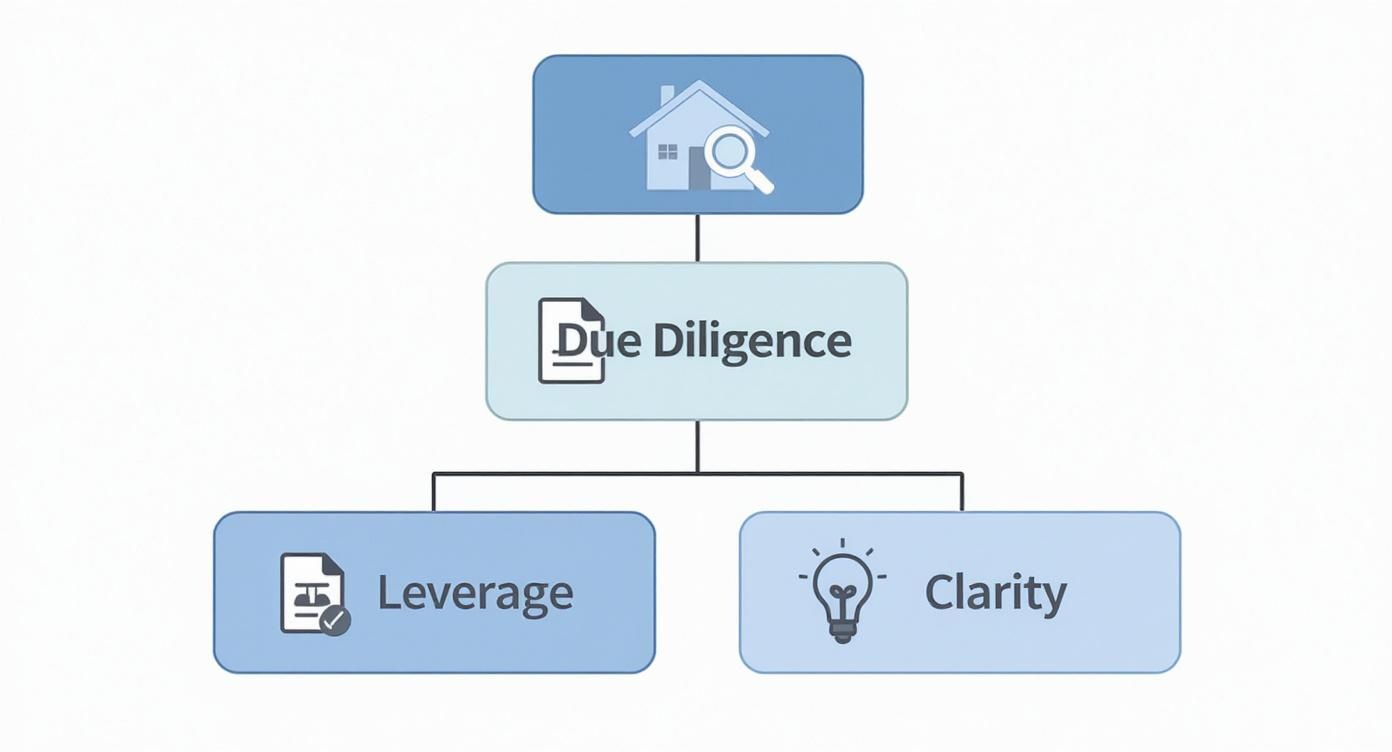
Ultimately, an inspection arms you with objective facts, turning what can be an emotional decision into a smart, well-informed investment.
Essential Services and Systems
A house isn't much of a home if the basics don't work. A huge chunk of the inspection is dedicated to making sure these essential services are up to scratch.
- Plumbing: The inspector is on the hunt for active leaks, checking water pressure, and sizing up the condition of pipes and hot water systems. Things like slow drains or visible corrosion will definitely make it into the report.
- Electrical: This is a visual check of the switchboard, wiring, and power points. The inspector is looking for obvious safety hazards, like ancient wiring or a lack of modern safety switches (RCDs).
- Heating and Cooling: Fixed appliances, like air conditioning units, are switched on and tested to make sure they're actually in working order.
It's just as important to understand what an inspection doesn't cover. Inspectors are looking for significant defects, not cosmetic stuff like scuffed paint or a tired-looking carpet. They also don't typically do a pest inspection—that’s a separate job for a specialised professional.
A typical building inspection report provides a detailed breakdown of the property's condition. Here’s a quick summary of what you can expect the inspector to focus on.
Key Areas Covered in a Standard Building Inspection
| Inspection Area | What the Inspector Checks For | Common Issues Found |
|---|---|---|
| The Site | Fencing, retaining walls, paths, driveways, surface water drainage. | Leaning fences, cracked retaining walls, poor drainage causing water pooling. |
| Exterior | Cladding, walls, windows, doors, stairs, decks, balconies. | Wood rot, damaged cladding, non-compliant balustrades, leaking windows. |
| Roof Exterior | Roof covering, gutters, downpipes, flashings, skylights. | Cracked tiles, rusted gutters, blocked downpipes, deteriorated flashing. |
| Roof Space | Roof framing, insulation, sarking. | Sagging roof structure, evidence of leaks, inadequate insulation. |
| Interior | Walls, ceilings, floors, doors, windows, stairs, cabinetry. | Water stains on ceilings, significant wall cracks, uneven floors, dampness. |
| Sub-Floor | Foundation, framing, ventilation, drainage, piers. | Rising damp, poor ventilation causing mould, damaged foundation piers. |
Understanding these key areas helps you read the final report with confidence, knowing exactly what has been assessed.
Setting Clear Expectations
By knowing what is and isn't included, you can go into the inspection with the right mindset. The report won't be a laundry list of every minor imperfection. Instead, it's a professional health check on the property, zeroing in on major defects, safety hazards, and significant maintenance items that could genuinely impact your decision to buy.
This clarity means no nasty surprises later on. It allows you to use the report to make a confident and clear-headed choice about your potential new home.
Current Trends Shaping the Inspection Industry
The world of property inspections is anything but static. Just like any professional service worth its salt, it moves and adapts to market forces, new tech, and what today’s buyers and sellers expect. The result? An industry that looks a whole lot different than it did a decade ago, offering a much higher level of assurance for modern homebuyers.
A massive driver behind this shift has been the energetic Australian property market. When property transactions heat up, so does the demand for reliable due diligence. This surge has really shone a spotlight on just how important a thorough, professional assessment is, pushing the entire industry towards greater accountability and higher standards.
This isn’t just a feeling; the numbers back it up. The demand for professional building and pest inspections in Australia has climbed significantly, mirroring the strong activity in the property market. Across the major Australian states, inspection bookings have jumped by 22% year-on-year, thanks to a forecasted rise in property market activity of 12-15% for the year. This growth isn’t just about more sales—it's also fuelled by buyers being more clued-in than ever about the need to protect their investment. You can read more about the growing demand for qualified inspectors in recent reports.
A Greater Focus on Professionalism
Gone are the days when just about anyone could decide to call themselves a home inspector. Responding to this increased demand, the industry has become far more organised and regulated. This is a huge win for you as a consumer, as it helps ensure the person you hire is a genuine expert.
Here are a few key developments that really define home inspections today:
- Standardised Qualifications: Inspectors are now expected to hold specific qualifications and certifications, proving they have the technical know-how to assess a property properly.
- Mandatory Insurance: Professional indemnity and public liability insurance are now standard practice, giving you a crucial layer of financial protection.
- Ongoing Professional Development: The best inspectors are always learning, keeping up-to-date with the latest building codes, materials, and common defects.
This wave of professionalisation has really elevated the home inspection from a simple service to a trusted professional consultation.
The Rise of Comprehensive Reporting
Another major trend is the huge improvement in reporting standards. A modern inspection report is no longer a short, jargon-filled checklist. What you should expect now is a detailed, easy-to-read document, packed with high-resolution photos and clear, simple explanations of any issues found.
Think of it this way: an old-school report might have just noted "water damage evident." A modern report will show you a photo of the stain, pinpoint the likely source of the leak, and recommend what to do next, like calling in a licensed plumber for a formal quote.
This level of detail is incredibly empowering. It gives you a crystal-clear picture of the property's true condition, which is the evidence and confidence you need for effective negotiations or just for planning future maintenance. It's all about providing clarity and taking the guesswork out of one of the biggest purchases you'll ever make.
Decoding the Cost of a Home Inspection
Looking at the price of a home inspection can feel like just another line item on a long list of expenses. But it’s much smarter to think of it as a one-time insurance premium you pay to protect what will likely be the biggest purchase you ever make. A relatively small upfront cost here could be the very thing that saves you from a $30,000 headache down the track.
This is an investment in knowledge, plain and simple. It gives you a clear-eyed view of any potential financial traps before you’re legally committed to the purchase. The final price tag isn't a single, fixed number; it’s shaped by a few key things that dictate how much time and expertise the job requires.
Key Factors Influencing the Price
The fee for a home inspection today will flex depending on the property you’ve got your eye on. Generally, you can expect the cost to be influenced by:
- Property Size: It’s straightforward – a sprawling house with more rooms, bathrooms, and complex systems will take longer to inspect than a compact apartment.
- Property Age: An older home is full of character, but it might also have a more complicated history. Things like original plumbing or dated wiring need a more detailed investigation.
- Location: Costs can vary between major cities and regional towns, driven by local demand and business overheads. As an example, you can check out our detailed guide on the building inspection cost in Perth for a local breakdown.
- Type of Inspection: A standard structural building inspection will cost less than a combined building and pest inspection, which calls for specialised skills and equipment.
It's a common mistake to view the inspection fee in isolation. When you weigh up a few hundred dollars against the possibility of finding a major structural defect that could cost $30,000 or more to fix, its real value becomes obvious.
Across Australia, the cost of building and pest inspections has shifted based on location, property size, and how deep the report goes. In major hubs like Sydney and Melbourne, a combined building and pest report typically lands somewhere between $400 and $600, depending on the home’s complexity. These prices have crept up over time, which really just reflects the growing demand for thorough assessments in a competitive property market. You can find more insights on national inspection pricing on OpenAgent.
At the end of the day, that fee buys you two crucial things: peace of mind and powerful negotiating leverage. That makes it one of the smartest financial decisions you can make on your property journey.
How to Use Your Inspection Report Strategically
Getting your hands on the inspection report isn't the finish line—it's actually the starting pistol for your final decision. Think of it as your strategic playbook. It gives you a clear, objective breakdown of the property's health and lays out several distinct paths you can now take.
What you do next hinges entirely on what that report uncovers. Essentially, the outcome of home inspections today will funnel you down one of three main roads, and each one calls for a different game plan.
Responding to the Findings
Once you and your conveyancer have gone through the report page by page, it's time to decide on your best course of action. This is a moment for facts, not feelings. Let the report be your guide.
Your options will usually boil down to one of these:
-
Proceed with Confidence: A clean report with no major red flags is the green light you were hoping for. You can push on towards settlement feeling good about your investment. Any minor issues noted just become a handy to-do list for future maintenance.
-
Negotiate from a Position of Strength: This is where the report becomes your most powerful negotiating tool. If your inspector has flagged significant issues, you don’t have to simply accept the property as-is. You can go back to the seller with a formal request to fix specific defects before the settlement date.
-
Renegotiate or Withdraw: The other option is to use the estimated cost of repairs to renegotiate a lower sale price. And if the problems are just too big, or the seller won’t budge? The inspection report gives you the solid legal ground you need to withdraw your offer and walk away, saving you from what could have been a very costly mistake.
The inspection report fundamentally changes the power dynamic. It shifts you from a hopeful buyer to an informed investor, equipped with the evidence needed to secure a fair deal or avoid a financial disaster.
At the end of the day, the goal is to make a final, confident decision. Whether that means moving forward, negotiating a better outcome, or walking away entirely, the report ensures your choice is built on a solid foundation of fact.
Your Pre-Inspection Checklist for a Smooth Process
A smooth and effective inspection doesn't just happen by chance—it’s the result of good preparation from both the buyer and the seller. A few simple steps beforehand can make all the difference, ensuring the inspector can do their job thoroughly.
This groundwork leads to a more accurate, useful report for everyone involved and helps prevent delays, miscommunications, or the dreaded need for a return visit.
For buyers, the process starts well before the inspector even sets foot on the property. Your first job is finding the right professional.
Steps for The Home Buyer
Your main task is to choose a qualified, insured, and experienced inspector. Don't just go with the cheapest option; this is one area where expertise really pays off.
- Do Your Research: Look for inspectors with solid local reviews and the right certifications.
- Ask Key Questions: Before you book, ask about their experience, what their report covers, and how long the inspection will take.
- Attend the Inspection: Being there for the final walkthrough is invaluable. It’s your chance to see any issues firsthand and ask questions, giving you a much deeper understanding than you’d get from just reading the report later.
This proactive approach ensures you get the most value from your investment in the inspection.
Steps for The Home Seller
If you're the one selling, your goal is to make the inspector's job as easy as possible. Think of it as rolling out the welcome mat for a thorough examination.
If an inspector can’t access a key area, they’ll simply mark it as "not inspected," which can create uncertainty and doubt for the buyer.
Providing clear and unobstructed access is the single most important thing a seller can do. It shows transparency and allows for a comprehensive assessment, helping the sale proceed without unnecessary hurdles.
Make sure the inspector has easy access to critical areas of the property. For a more detailed breakdown, our complete home inspection checklist for Australia offers extensive guidance.
A well-prepared home allows for a detailed and efficient inspection, which ultimately benefits both parties. By making the process smooth, you help ensure the final report is a true reflection of the property's condition, laying the groundwork for a confident and successful sale.
Your Home Inspection Questions, Answered
As you get closer to sealing the deal on a property, a few questions about the home inspection are bound to pop up. Getting clear, straightforward answers is crucial for moving forward with confidence. Let's tackle some of the most common queries we hear from buyers.
Getting your head around these details helps take the mystery out of the process, so you know exactly what to expect on the day.
How Long Does a Home Inspection Take?
A standard home inspection in Australia will usually take somewhere between 2 to 4 hours. The final timing really comes down to the property itself.
It makes sense when you think about it: an older, larger house with more complex systems will naturally need more of the inspector's time than a modern, compact apartment. When you book the inspection, the inspector can give you a much better time estimate based on the specific details of the property you're buying.
Can a Property Fail an Inspection?
This is a really common misconception, but a home inspection isn't a pass-or-fail exam. Its purpose is purely to give you information—a detailed, objective report on the property's current condition, warts and all.
The inspector's job is to find and document any issues they see, from minor maintenance jobs that you could do on a weekend to major structural problems.
It’s then completely up to you, the buyer, to go through those findings. You decide if you’re comfortable moving ahead with the purchase, want to try negotiating for repairs, or if it's best to walk away. The report simply gives you the facts you need to make that call.
Do I Need a Separate Pest Inspection?
Yes, absolutely. Organising a separate pest inspection is highly recommended right across Australia and is considered essential by most in the property game. A standard building inspection is all about the structural integrity and the working systems of the home.
A pest inspection, however, is done by a specialist who is trained to spot the signs of termites, borers, and other timber-destroying pests. These critters can cause devastating—and often hidden—damage that a building inspector isn’t specifically trained to look for. That's why booking a combined building and pest inspection is almost always the most efficient and wallet-friendly way to go.
Navigating the Mandurah property market requires local expertise and a strategic approach. Whether you're buying your first home or selling a cherished property, David Beshay Real Estate provides the dedicated guidance you need. Get your free property appraisal today and make your next move with confidence.

