


Before a "For Sale" sign ever graces your lawn, the most important work has already begun. The journey to a successful sale starts with one decision: the listing price. Getting this right isn't just a good idea; it's the single most critical factor that will influence everything from initial buyer interest to the final number on the contract.
Setting a Strategic Sale Price
Forget guesswork. Setting the right asking price is a calculated strategy, grounded in hard data, local market knowledge, and an honest look at your home's condition. Nailing this from day one lays the foundation for a smooth and profitable sale.
Getting it wrong—either too high or too low—can quickly derail your plans. The most common mistake we see is overpricing. A home that's priced too high often just sits there, collecting dust on the market. This makes buyers suspicious; they start to wonder what's wrong with it. Eventually, this forces a price drop that could have been avoided entirely.
On the other hand, underpricing can seem tempting to generate a buzz, but it's a risky game that could leave a serious amount of money on the table. The real goal is to find that sweet spot: a price that attracts serious, qualified buyers and maybe even sparks a bit of healthy competition.
The Power of a Professional Appraisal
Those instant online valuation tools can be a fun starting point, but they can't hold a candle to a professional appraisal. An experienced agent doesn't just pull a number out of thin air; they deliver a comprehensive market valuation based on solid evidence. It involves a deep dive into hyper-local data to make sure your price reflects what’s happening on the ground, right now.
An expert appraisal is a thorough process, looking at several key factors:
- Recent Comparable Sales: We analyse what similar homes in your immediate Mandurah suburb have actually sold for in the last 90 days.
- Current Market Trends: Is it a buyer's or seller's market? Knowing this shapes the entire pricing strategy.
- Your Home's Unique Features: Upgrades, condition, block size, and special amenities all play a huge role in setting your property apart.
- Local Demand: We get a feel for how many buyers are actively looking in your specific neighbourhood and price range.
This detailed evaluation is usually presented in what's called a comparative market analysis. It’s a transparent way to see exactly how we arrived at the recommended price.
This process takes you from broad market data to a specific, strategic price tag for your home.
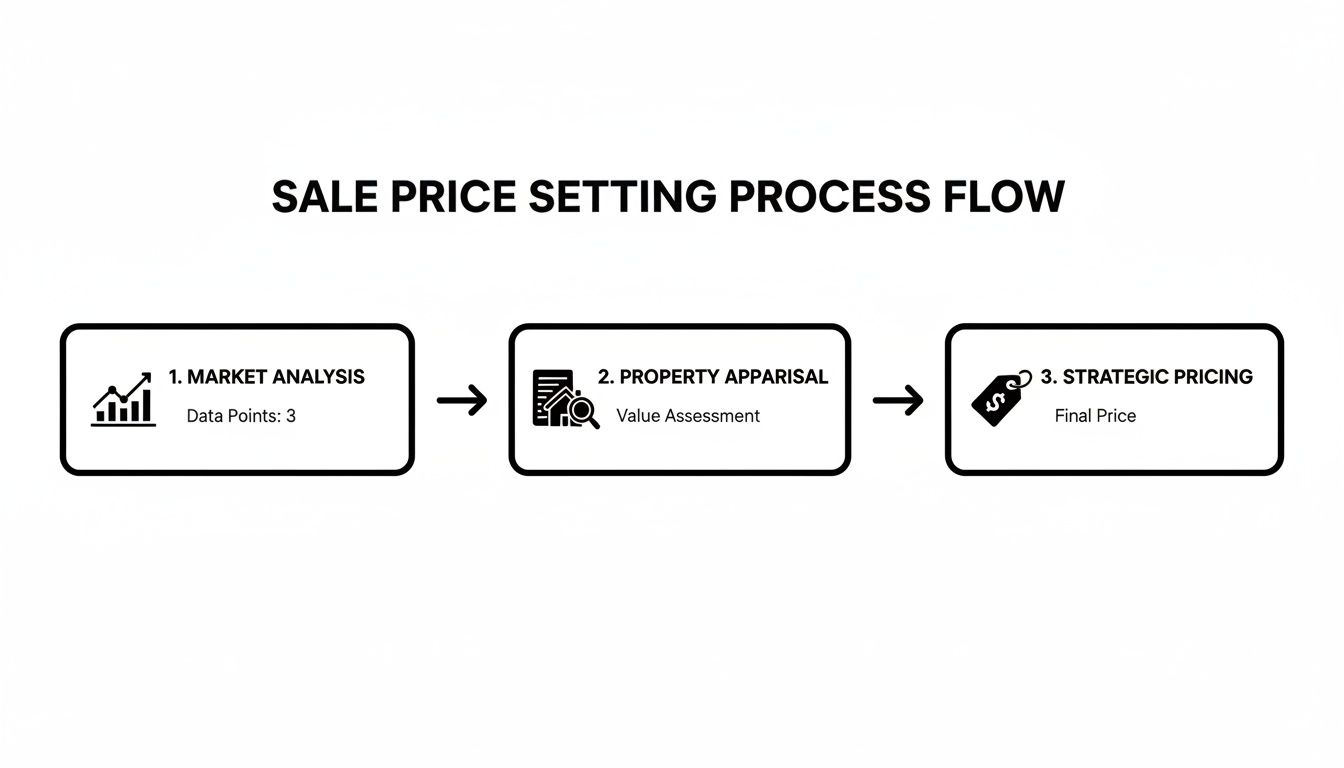
As you can see, each step refines the valuation, moving from a wide market overview to a precise figure designed to get you the best result.
Understanding the Mandurah Market Dynamics
Local context is everything. The property market across Western Australia has some serious momentum right now. In the September quarter alone, residential dwelling values jumped by 4.9%, pushing the nationwide total to a staggering $11,928.2 billion.
This growth is being felt right here in the Perth and Mandurah markets, where we're forecasting price growth between 5.0% and 8.0%. An expert appraisal taps into this live data. We’ve recently seen this in action with sales in Lakelands fetching up to $41,000 above the asking price—a perfect example of how accurate pricing can unlock fantastic offers.
A property priced correctly from the start generates immediate interest and creates a sense of urgency. It tells buyers that the home is valued fairly, encouraging them to act quickly and submit their strongest offers before they miss out.
Ultimately, that initial list price sends a powerful message. When it's backed by a professional appraisal and solid data, it positions your home as a desirable, well-valued asset. It’s not just the first step in selling your house; it’s the most important one for securing the timely, profitable sale you deserve.
Preparing Your Home to Impress Every Buyer
Once you've landed on a strategic price, the spotlight turns to presentation. This is where you stop thinking about it as your house and start turning it into a home a buyer can't wait to own. The goal is to create an emotional connection, helping people instantly picture their future within your walls.
This prep phase is honestly one of the most important steps in the whole process. It's so much more than a quick tidy-up; it's about showcasing your home's absolute best and making that first impression count. I've seen time and again how small, targeted efforts here lead to faster sales and much stronger offers.

Prioritise High-Impact Repairs
Before you even think about aesthetics, do a full walk-through of your property. Look for all those little, nagging issues that might give a buyer pause. You're not aiming for a full-scale renovation, just eliminating any red flags that hint at poor maintenance.
Focus on the things people notice straight away. A leaky tap, a cracked bathroom tile, a sticky door—these small fixes stop buyers from getting distracted and wondering what bigger, hidden problems might be lurking.
A well-maintained home speaks volumes about its value and the care you've put into it. This attention to detail builds a buyer's confidence and makes it easier for them to accept your asking price.
The Power of Depersonalising and Decluttering
Next up, you need to help buyers mentally move in. That’s pretty hard for them to do if the space is overflowing with your personal life. It's time to pack away the family photos, kids' artwork, and any unique collections. This isn't about erasing your history; it's about creating a neutral canvas for someone else's future.
Decluttering is just as crucial. Go room by room and remove any excess furniture, clearing off countertops in the kitchen and bathroom. The idea is to make every space feel larger, brighter, and more open.
- Kitchens: Clear everything off the benchtops. Leave only a couple of stylish items, like a high-end coffee machine or a bowl of fresh lemons.
- Living Areas: Get rid of any bulky furniture that blocks natural walkways. You want to highlight the room's flow, not obstruct it.
- Bedrooms: Tidy wardrobes to show off the storage. A wardrobe bursting at the seams sends a clear message: "there isn't enough space here."
A clean, decluttered home lets buyers focus on the property's bones—the layout, the light, the space—not the current owner's lifestyle. You're selling potential, not just bricks and mortar.
Create Irresistible Curb Appeal
That critical first impression happens the moment a buyer pulls up to the curb. A tidy, appealing exterior sets a positive tone for the entire viewing before they even step out of the car. You don't need to spend a fortune on a garden makeover to make a real impact.
Start with the essentials: a freshly mown lawn, trimmed hedges, and weeded garden beds make a world of difference. A fresh layer of mulch in the garden beds is a cheap trick that instantly makes everything look neat and cared for.
Consider these simple but effective actions:
- Pressure wash your driveway, paths, and exterior walls to blast away dirt and grime.
- Add a pop of colour with some new potted plants near the front door.
- Make sure your front door is clean and welcoming. A fresh coat of paint here offers a massive return on investment.
These little things create an inviting entrance that makes buyers genuinely excited to see what's inside.
The Art of Home Staging
Staging is the final, powerful touch. It’s the art of arranging furniture and décor to highlight your home’s best features and create a warm, aspirational vibe. While professional staging can definitely boost a property's value, you can achieve a fantastic result with some strategic DIY efforts.
Think about the lifestyle you're selling. In the living room, arrange furniture to encourage conversation. In the master bedroom, use luxe bedding and soft lighting to create a calm, hotel-like retreat. Every room should feel like it has a clear, inviting purpose.
For a deeper dive into making your property shine, our guide on staging your home for sale has plenty of detailed tips. It's often the small touches—fresh flowers, plush towels in the bathroom, a subtle, pleasant scent—that elevate the viewing experience and seal that all-important emotional deal.
Crafting a Powerful Marketing and Sales Strategy
You’ve priced your home accurately and prepared it to perfection. Now, it's time to shift focus to the crucial next step: creating a marketing strategy that doesn't just list your property, but launches it into the market to capture serious buyer interest.
A well-presented home is only half the battle. How you showcase it is what truly sets the stage for a premium result. This is where professional presentation meets strategic, wide-reaching exposure.
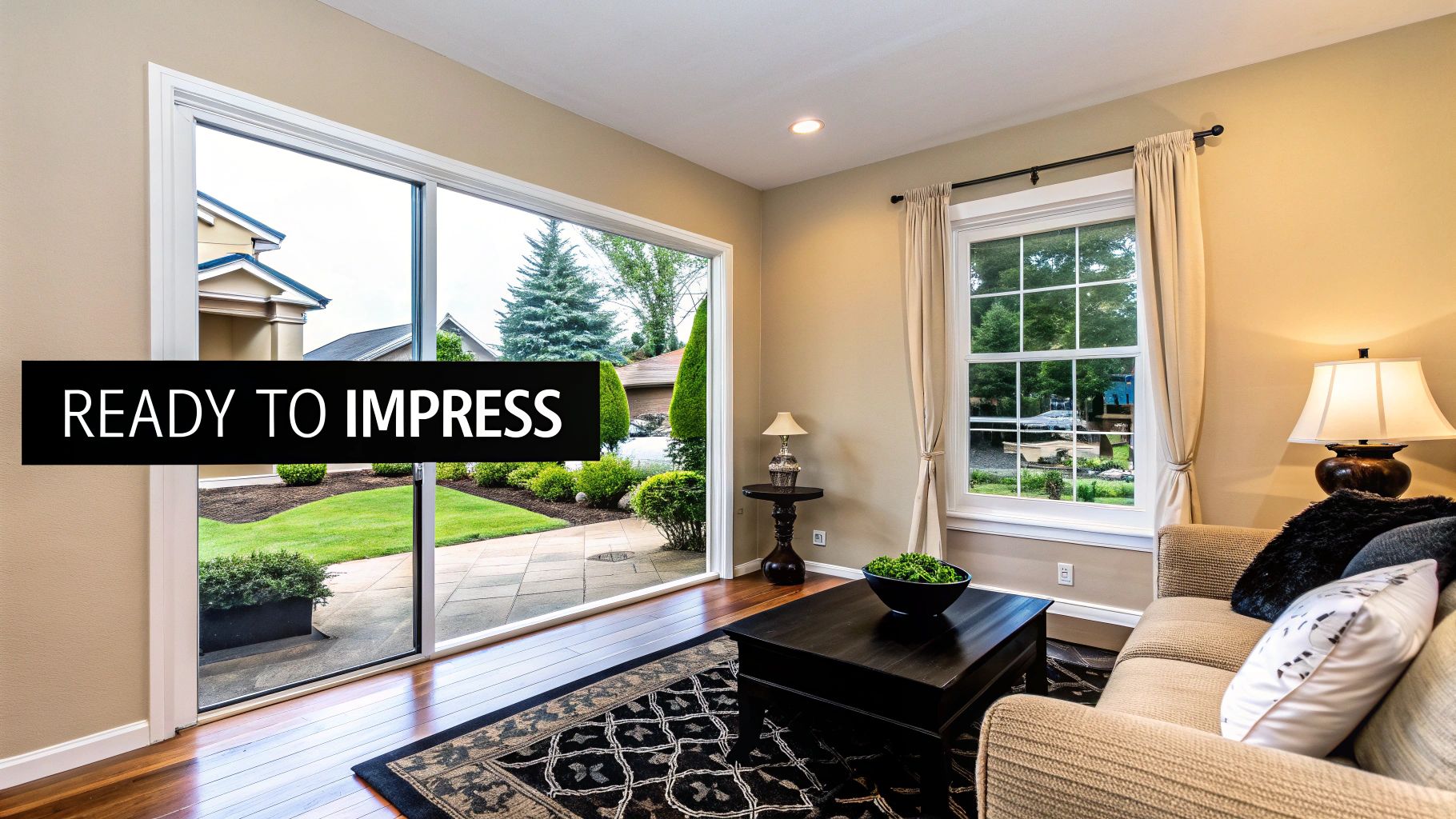
In today's market, where an estimated 90% of buyers start their property search online, your digital first impression isn't just important—it's everything. Gone are the days of quick phone snapshots. To compete, high-quality visual assets are completely non-negotiable.
Investing in Professional Visuals
Think of your property's online listing as its digital storefront. Professional photography is the absolute baseline for showing your home in its best light, making sure every room looks bright, spacious, and inviting. Blurry, poorly lit photos can make even the most stunning home look unappealing, causing buyers to scroll right past without a second thought.
But to really stand out, you need more than just static images. A complete visual package creates a much more engaging experience, helping buyers connect with the property on a deeper level before they even book an inspection.
A top-tier visual strategy should always include:
- Professional Photography: This captures the essence and key features of every room with perfect lighting and composition.
- Compelling Videography: A walk-through video tour gives buyers a genuine feel for the home's layout and flow, something photos alone can't achieve.
- Drone Footage: For properties in Mandurah, this is essential. Drone shots brilliantly showcase the block size, proximity to the coast or estuary, and the surrounding neighbourhood.
This investment pays serious dividends. Listings with professional photos and video content consistently attract more views, generate higher enquiry levels, and often sell faster and for a higher price.
Writing a Story That Sells
While amazing visuals draw buyers in, it's the property description that holds their attention. A great description does so much more than just list features like "three bedrooms, two bathrooms." It tells a story. It sells a lifestyle.
First, think about your target buyer. Is it a young family looking for good schools and a big backyard? Or perhaps a downsizer seeking a low-maintenance home near local cafes? The language and details you use should resonate directly with their specific desires.
Instead of just stating facts, paint a picture for them. For example, rather than just saying "large back patio," you could write something like, "Entertain friends and family year-round on the expansive alfresco deck, overlooking a secure backyard where the kids can play for hours." This narrative approach helps buyers connect emotionally and truly envision themselves living in the space.
Your marketing materials should do more than just describe the property; they need to create desire. Every photo, video, and sentence should work together to highlight what makes your home special and make buyers feel they must see it in person.
Maximising Exposure Across Multiple Channels
To generate maximum interest and create a competitive environment, your property needs to be seen everywhere your target buyers are looking. Simply relying on one platform just doesn't cut it anymore. A comprehensive marketing plan uses a multi-channel approach to ensure your home gets both broad and targeted reach.
This typically involves a strategic mix of platforms, each serving a unique purpose:
- Major Real Estate Portals: Listings on sites like realestate.com.au and Domain are non-negotiable. This is where the vast majority of active buyers begin their search.
- Targeted Social Media Campaigns: We use platforms like Facebook and Instagram to run paid ad campaigns, targeting potential buyers based on their demographics, location, and interests. This allows us to reach passive buyers—those who may not be actively searching but are open to the right opportunity if it pops up on their feed.
- Local Advertising: Don't underestimate the classics. A prominent "For Sale" sign and features in local print can still be highly effective, capturing the attention of neighbours and local passers-by who might know someone looking to move into the area.
This powerful combination ensures that whether a buyer is actively searching online or casually scrolling through social media, your property will be front and centre. This level of exposure is one of the most critical steps to selling a house, as it builds momentum, drives attendance at open homes, and ultimately encourages the strong, competitive offers you're looking for.
Navigating Offers and Mastering Negotiations
That first phone call from your agent saying, "We've got an offer!" is a fantastic feeling. It's proof that all your hard work preparing, pricing, and marketing your home has hit the mark. But this is where the real game begins. Now, we move into the negotiation phase, where we turn a buyer's interest into a brilliant final contract.
A strong offer is about so much more than the number at the top of the page. You're actually looking at a whole package of terms and conditions, and it's vital to assess everything carefully. Believe it or not, the highest price isn't always the best offer; the winning proposal is often the one that carries the least risk and fits perfectly with your own plans.

Deconstructing the Offer
When an offer lands, your agent's job is to break it down for you piece by piece. Beyond the purchase price, we need to dig into several key components to understand its true strength. This is where a skilled agent helps you weigh the pros and cons of every single element.
Here's a breakdown of what we're looking at:
- The Deposit: A larger deposit is a great sign. It usually points to a more serious and financially secure buyer, which dramatically lowers the risk of the deal falling through.
- Conditions (Contingencies): These are the 'subject to' clauses that must be met for the sale to go ahead. The most common ones you'll see are the 'subject to finance' clause and another for a satisfactory building and pest inspection.
- Settlement Date: This is the big day when the property officially changes hands. The key question is: does the buyer's proposed timeline work with your own moving plans?
The fewer conditions attached, the stronger and more straightforward the offer. A "cash" or unconditional offer is the holy grail—it's rare, but it's often the most appealing because it removes major hurdles and gives you the greatest certainty of a successful sale.
To make this clearer, let's look at how these components play out strategically.
Key Offer Components and Their Strategic Implications
| Offer Component | What It Means | What to Look For (Seller's Perspective) |
|---|---|---|
| Purchase Price | The dollar amount the buyer is offering to pay for your property. | A high price is obviously great, but it must be realistic and supported by the buyer's financial capacity. An over-the-top offer might not get finance approval. |
| Deposit Amount | The initial sum of money paid by the buyer to secure the property. Typically held in a trust account. | Look for a substantial deposit (5-10% of the purchase price). This shows serious commitment and financial stability. |
| Finance Clause | A condition stating the offer is subject to the buyer securing a home loan by a certain date. | The shorter the finance approval period (e.g., 14-21 days), the better. Pre-approved buyers present a much lower risk. |
| Building & Pest Inspection Clause | Allows the buyer to conduct inspections and potentially withdraw or renegotiate based on the findings. | A standard clause, but watch for vague wording. Ideally, it should only allow withdrawal for major structural defects. |
| Settlement Date | The date when final payment is made and ownership is officially transferred. | Does this date align with your needs? A quick settlement might be appealing, but a longer one could give you more time to find your next home. Flexibility here can be a powerful negotiation tool. |
| Special Conditions | Any other unique requests, such as the inclusion of certain furniture, a requirement for repairs, or making the offer subject to the sale of their own property. | Fewer special conditions are always better. An offer "subject to sale" is high-risk unless their property is already under contract. |
Evaluating these elements together gives you the full picture, helping you decide whether to accept, reject, or make a counter-offer.
Handling Multiple Offer Scenarios
In a hot market like Mandurah's, it's not unusual to receive several offers at once, especially if your home is priced right and beautifully presented. This is a brilliant position to be in, but it needs to be managed carefully to get you the best result without losing genuine buyers.
When this happens, your agent will leverage the competition ethically and transparently. The standard approach is to inform all interested parties that there are multiple offers on the table and invite them to submit their "best and final" offer by a firm deadline. This creates a sense of urgency and motivates buyers to put their absolute best foot forward right from the start.
Navigating a multiple offer situation is a delicate dance. The aim is to create a competitive environment that pushes the price and terms in your favour while treating all potential buyers fairly to keep them in the game.
The Art of the Counter Offer
If an offer is close but not quite perfect, a counter-offer is your next move. This isn't just about demanding more money; it’s a strategic negotiation tool. For example, you might accept the buyer's price but propose a shorter settlement period that works better for you. Or you could counter on the price but agree to their preferred settlement date as a goodwill gesture.
A good agent will advise you on what a reasonable counter-offer looks like based on market feedback and the buyer's known position. For instance, if a buyer’s offer is conditional on selling their own home, it carries far more risk than one from a buyer who is pre-approved and ready to go. This is where your agent’s negotiation skills really shine, protecting your interests while working toward a middle ground that everyone can agree on. Their experience allows them to read the room, stand firm when needed, and guide you toward a signed contract that hits your financial goals and sets you up for a smooth, successful settlement.
The Final Steps from Contract to Settlement Day
So, you’ve accepted an offer—congratulations! It’s a massive milestone in any home sale. But now the real work begins, shifting from viewings and marketing to the critical administrative marathon that gets you from a signed contract to a successful settlement.
This is the home stretch. It’s less about finding a buyer and more about ticking all the legal and financial boxes to ensure ownership changes hands smoothly. No last-minute dramas, just a clean, legal transfer.
While your agent and settlement agent (often called a conveyancer) do most of the heavy lifting, knowing what’s happening keeps you in the driver's seat.
The Role of Your Settlement Agent
As soon as both you and the buyer sign on the dotted line, the contract becomes legally binding—pending any conditions, of course. This is the cue for your settlement agent to jump into action. They are your guide through the maze of paperwork and financial transactions.
Right away, they’ll start on several key tasks:
- Running Searches: They’ll check the property title and with various government bodies to make sure there are no outstanding rates, taxes, or other legal surprises that could derail the sale.
- Talking to Your Bank: They get in touch with your lender to organise the discharge of your current mortgage.
- Drafting Transfer Documents: All the legal paperwork needed to transfer the property title out of your name and into the buyer's is prepared by them.
It's absolutely vital to give your settlement agent any information they ask for as quickly as possible. Any hold-ups here can easily push back the settlement date, which causes headaches for everyone.
Getting Through the Contract Conditions
Most sale contracts in Western Australia aren’t set in stone right away. They usually come with a few conditions that have firm deadlines. The deal isn't truly done until these hurdles are cleared. It’s a waiting game where a lot of moving parts have to fall into place.
Here are the most common conditions you'll come across:
- Finance Approval: The buyer typically gets 14 to 21 days to lock in unconditional finance approval from their bank. Your agent will be in constant contact with their broker or agent to keep an eye on progress.
- Building and Pest Inspections: The buyer will bring in a professional to check for any major structural problems or active pests. If something significant turns up, it could lead to more negotiations or, in a worst-case scenario, the buyer walking away.
- Sale of Another Property: Sometimes an offer is subject to the buyer selling their own home first. This adds a bit of risk, which your agent would have discussed with you before you agreed to the offer.
Once every condition is met, your agent will give you the good news: the contract is now "unconditional." This is the green light—the sale is officially going ahead.
This whole period is about patience and clear communication. Your agent is the central point person, making sure deadlines are hit and keeping you in the loop, turning what feels like a complex legal process into a simple checklist.
Time to Plan Your Move
With an unconditional contract, you can finally start planning your move with confidence. The practical side of things can be just as full-on as the legal side, so getting organised early will save you a world of stress.
First things first, book a removalist. The good ones get snapped up weeks in advance, particularly during busy seasons. Then you can start the big declutter and begin packing away things you don't use every day.
And don't forget all the admin:
- Utilities: Schedule the disconnection of your power, gas, and internet, and line up the connection at your new place.
- Mail: Set up a mail redirection with Australia Post so nothing important gets lost.
- Change of Address: Go through your list—banks, insurance companies, government agencies, subscriptions—and update your address everywhere.
The Final Inspection and Handover
In the last week before settlement, the buyer has the right to a final inspection. They’re not there to find new faults; they’re just checking that the property is in the same condition as when they made their offer, allowing for normal wear and tear.
This means any appliances included in the sale should be working, and the property needs to be left clean and tidy. A smooth final inspection is one of the last crucial steps to selling your home without a hitch.
On settlement day itself, your settlement agent handles the final meeting for you. Once the money has been transferred and everything is finalised, they’ll let your real estate agent know it's official. The agent can then release the keys to the very happy new owner.
For a deeper dive into what happens on the big day, check out our guide on what is settlement in real estate.
And that’s it—your house is officially sold
Your Selling Questions, Answered
Jumping into the property market always brings up questions. It's completely normal. To help clear things up, here are some straightforward answers to the queries we hear most often from sellers right here in Mandurah.
How Long Will It Take to Sell My House?
This is the big one, isn't it? While every sale is different, a typical sale in the current Mandurah market moves along at a pretty good pace. From the day your home hits the market to the day you hand over the keys, you're generally looking at a timeframe of 60 to 90 days.
Let's break that down a bit:
- Finding a Buyer: A home that's presented well and priced accurately from day one usually attracts serious offers within the first 2 to 4 weeks.
- The 'Under Offer' Phase: Once you've accepted an offer, there are usually conditions to meet, like the buyer securing their finance. This stage typically takes another 3 to 4 weeks.
- The Home Stretch to Settlement: After all conditions are met, the final countdown to settlement day is usually 30 to 45 days.
Naturally, the market can shift, and your property's unique features play a role. But getting the price right from the start is the single biggest factor in selling within this window.
Can I Sell My House Without a Real Estate Agent?
Technically, yes, you can sell your home yourself—it's often called 'For Sale By Owner' or FSBO. But it's a path loaded with challenges and potential pitfalls. The data consistently shows that properties sold with a professional agent achieve a higher sale price, often well above what you'd save on commission.
An experienced local agent does so much more than just list your property. They manage every complex step, from pinpointing the perfect price and creating a high-impact marketing plan to handling tough negotiations and the mountain of legal paperwork. Their job is to get you the best possible result while protecting your interests and making the whole process feel smoother.
Think of an agent as your expert guide, strategist, and project manager all in one. They take the stress and guesswork out of the equation, ensuring nothing gets missed from the first home open to the final settlement.
What Are the Main Costs I Should Expect?
Knowing the costs involved upfront helps you plan properly and avoids any last-minute surprises. While it varies from sale to sale, here’s what sellers in Western Australia typically need to budget for:
- Agent Commission: This is the main cost, calculated as a percentage of the final sale price.
- Marketing & Advertising: This budget covers essentials like professional photography, premier online listings, signboards, and brochures that make your home stand out.
- Settlement Agent Fees: Your conveyancer charges a fee to handle the legal transfer of ownership.
- Pre-Sale Prep: Setting aside a small amount for minor repairs or a bit of staging can make a huge difference to your final sale price.
Being prepared for these expenses means you can move toward settlement day with total clarity and confidence.
Ready to take the next step with a clear understanding of your property's value? The team at David Beshay Real Estate offers a free, no-obligation property appraisal to get you started. Let's make sure your selling journey begins on the right foot. Visit us at https://realestate-david-beshay.com.au to book your appraisal today.

